
Cozy Cabin Vibes: Rustic Wood Cubby Designs for a Natural Entryway
Transform your foyer with rustic wood cubby designs. Discover expert architectural tips, timber selection, and styling strategies for a natural entryway.
Mar 29, 2026 - Written by: Linda Wise

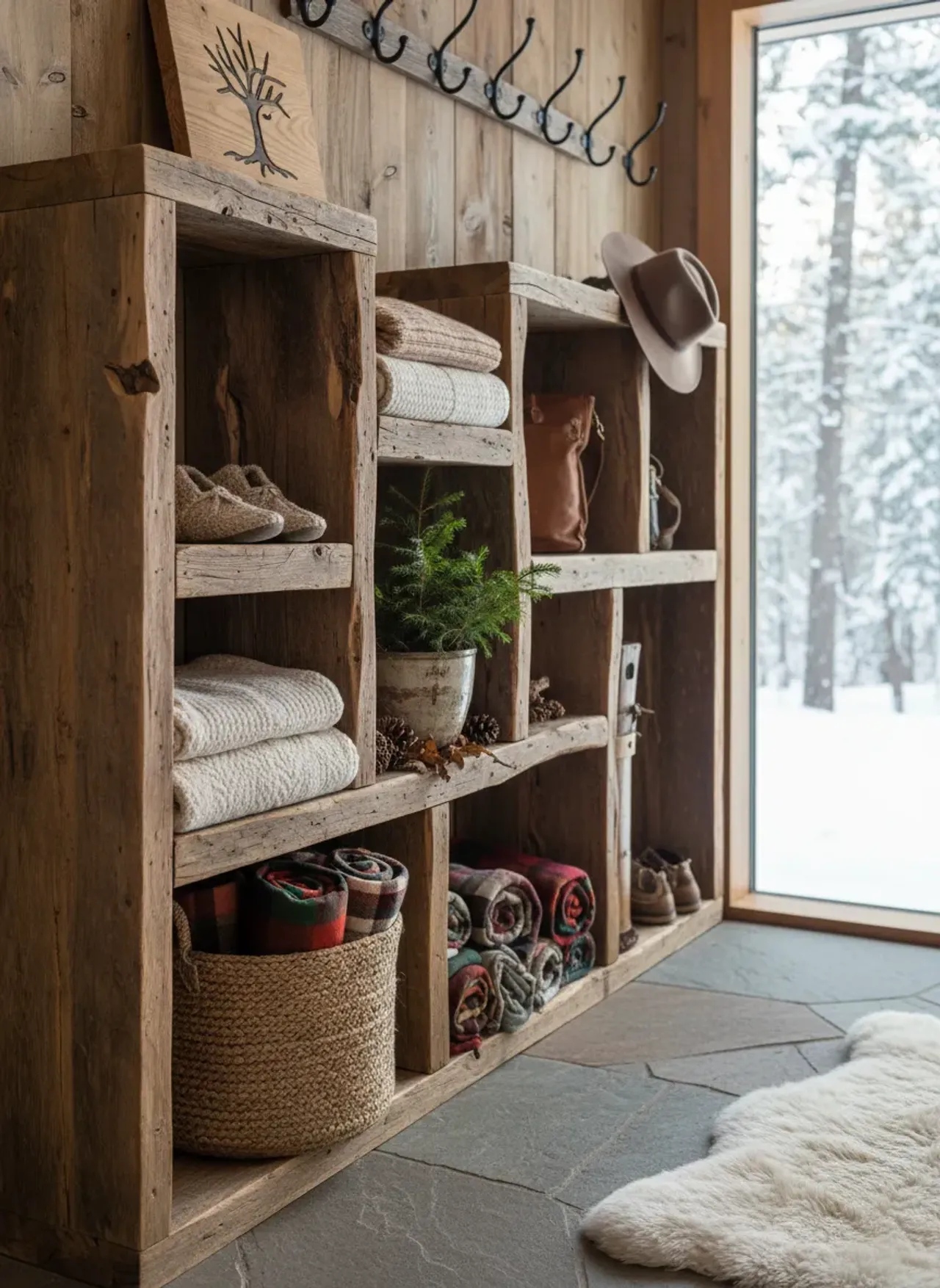
I’ve personally found that the entryway serves as the architectural handshake of your home. It dictates the immediate psychological transition from the chaotic, concrete-laden outside world into a sanctuary of personal restoration. When you cross that threshold, you shouldn’t be greeted by sterile drywall and chaotic piles of footwear. Instead, imagine an enveloping warmth—the distinct, tactile grounding of a mountain retreat. Injecting cozy cabin vibes into your foyer through rustic wood cubby designs is arguably the most effective way to establish this natural, decompressive atmosphere.
A natural entryway doesn’t just happen by stacking a few pine boards together. It requires intentional spatial dynamics, a deep understanding of wood grain characteristics, and a strategic approach to functional storage. We are talking about crafting heirloom-quality organizational systems that age beautifully, acquiring a rich patina from years of muddy boots, heavy winter coats, and woven scarves. True rustic design embraces imperfections—the knots, the saw marks, the varying tonal qualities of the heartwood—and elevates them into focal points of bespoke craftsmanship.
Quick Comparison: Top Picks
| Product | Rating | Check Price |
|---|---|---|
| Rustic Reclaimed Wood Cubby Bench | ⭐⭐⭐⭐⭐ | View on Amazon |
| Hand-Forged Iron Coat Hooks | ⭐⭐⭐⭐½ | View on Amazon |
| Woven Water Hyacinth Storage Baskets | ⭐⭐⭐⭐⭐ | View on Amazon |
The Biophilic Blueprint: Why the Cabin Aesthetic Resonates
Biophilic design is rooted in the human biological need to connect with nature. Incorporating organic materials into the immediate entrance of your home triggers a subconscious relaxation response. When you utilize authentic timber, forged iron, and woven textiles, you are curating an environment rich in sensory feedback.
The “cabin vibe” specifically thrives on texture and visual weight. Modern minimalist entryways often feel floating and ethereal, utilizing sleek laminates and hidden hardware. Rustic cubbies, conversely, are anchored. They command the space with undeniable gravity. The thick profiles of the stiles and rails, the raw edge of a benchtop, and the visible joinery all communicate durability. This visual sturdiness translates into a feeling of safety and permanence.
You’ll notice that the most striking cabin-style mudrooms rely heavily on the concept of “exposed utility.” Nothing is hidden. The coats hang in plain sight on heavy iron pegs; the firewood is stacked in dedicated lower bins; the winter gear sits in beautifully textured baskets. This organizational transparency is deeply rustic, mimicking the highly functional, no-nonsense layouts of historical trapper cabins and alpine lodges.
Timber Taxonomy: Sourcing the Soul of Your Cubbies
The success of your natural entryway hinges entirely on your lumber selection. Not all wood conveys the same narrative. Selecting the right species and origin is the foundational step in your architectural design.
Reclaimed Barnwood: The Undisputed Champion
If you want immediate, authentic character, reclaimed wood is peerless. Salvaged from century-old barns, factories, or structural beams, this timber features a history that cannot be replicated in a factory. You will find tight growth rings—a hallmark of old-growth forests that simply don’t exist in modern commercial farming.
Reclaimed oak or chestnut offers incredible density and resistance to the daily battering an entryway receives. The oxidized nail holes, the deep checking (natural cracking), and the original circular saw marks provide an unparalleled textural landscape. However, working with reclaimed lumber requires patience. You must carefully mill it to ensure it is structurally sound and free of hidden metal that could destroy your saw blades.
Knotty Pine and Cedar: The Accessible Alternatives
For a softer, more traditional cabin aesthetic, Eastern White Pine or Western Red Cedar are exceptional choices.
Pine is highly workable and takes stain beautifully, though it requires a pre-stain wood conditioner to prevent blotchiness due to its uneven cellular density. The prominent knots in pine instantly communicate a rustic vernacular. It is significantly softer than hardwoods, meaning it will dent and scratch over time. In a cabin aesthetic, we call this “instant antiquing.”
Cedar brings a distinct olfactory element to the entryway. The natural oils that make cedar resistant to rot and insects also emit that classic, aromatic woodland scent. Cedar’s warm, reddish undertones look spectacular when simply oiled, allowing the natural color variations to shine without artificial pigments.
Pro Tip: When sourcing timber for rustic cubbies, purposefully seek out “character grade” lumber. Commercial builders reject boards with extreme color variations, knots, and wild grain patterns. For cabin-style woodworking, these alleged defects are exactly what you want to feature as the centerpiece of your design.
Structural Anatomy: Designing for High-Traffic Foyer Dynamics
A beautiful piece of furniture is worthless if it fails to perform its primary duty. Entryway cubbies must manage chaos efficiently. I approach the design by dividing the vertical space into three distinct operational zones.
The Foundation: Footwear and Base Bins
The lowest 18 to 24 inches of your cubby system bear the brunt of the abuse. This zone handles wet boots, road salt, mud, and heavy footwear.
Instead of resting the wood directly on the floor where it can wick up moisture, build a recessed toe-kick using a highly durable, moisture-resistant material. Above this base, create deep, oversized cubbies. Standard 12-inch depths are insufficient for adult winter boots; aim for 15 to 18 inches of internal depth.
Integrating a seating area directly above these lower bins is crucial for ergonomics. If you are considering integrating seating, building a simple mudroom bench provides a structural anchor for your vertical cubbies. A thick, live-edge slab used as the benchtop creates an incredible juxtaposition against the geometric grid of the vertical dividers.
The Mid-Tier Canopy: Hanging and Staging
The space between the benchtop and the upper cubbies is your active staging area. This section requires ample vertical clearance—typically 40 to 50 inches—to accommodate long trench coats, oversized parkas, and dripping umbrellas.
Instead of a plain drywall backing, consider installing horizontal shiplap, beadboard, or tongue-and-groove planking to tie the entire unit together. This continuous wood backdrop reinforces the cabin aesthetic and protects your home’s walls from the constant friction of hanging garments.
The Upper Echelon: Seasonal and Long-Term Storage
Above the hanging zone, install your upper cubbies. This area, usually out of immediate arm’s reach, is reserved for seasonal rotation. Winter hats and heavy gloves live here during the summer, while sun hats and beach bags take over in December.
Sizing is critical here. Design the width and height of these upper compartments to perfectly house standardized woven baskets or vintage wooden crates. This hides the visual clutter of loose items while maintaining the organic texture of the space.
Advanced Joinery and Hardware Integration
Rustic doesn’t mean sloppy. In fact, a true cabin aesthetic demands rigorous, traditional joinery techniques to ensure the piece survives generations of use.
Forgoing Modern Fasteners
While pocket hole screws are incredibly fast, they lack the structural integrity and historical accuracy of traditional joinery. To achieve a truly authentic build, rely on dadoes, rabbets, and half-lap joints.
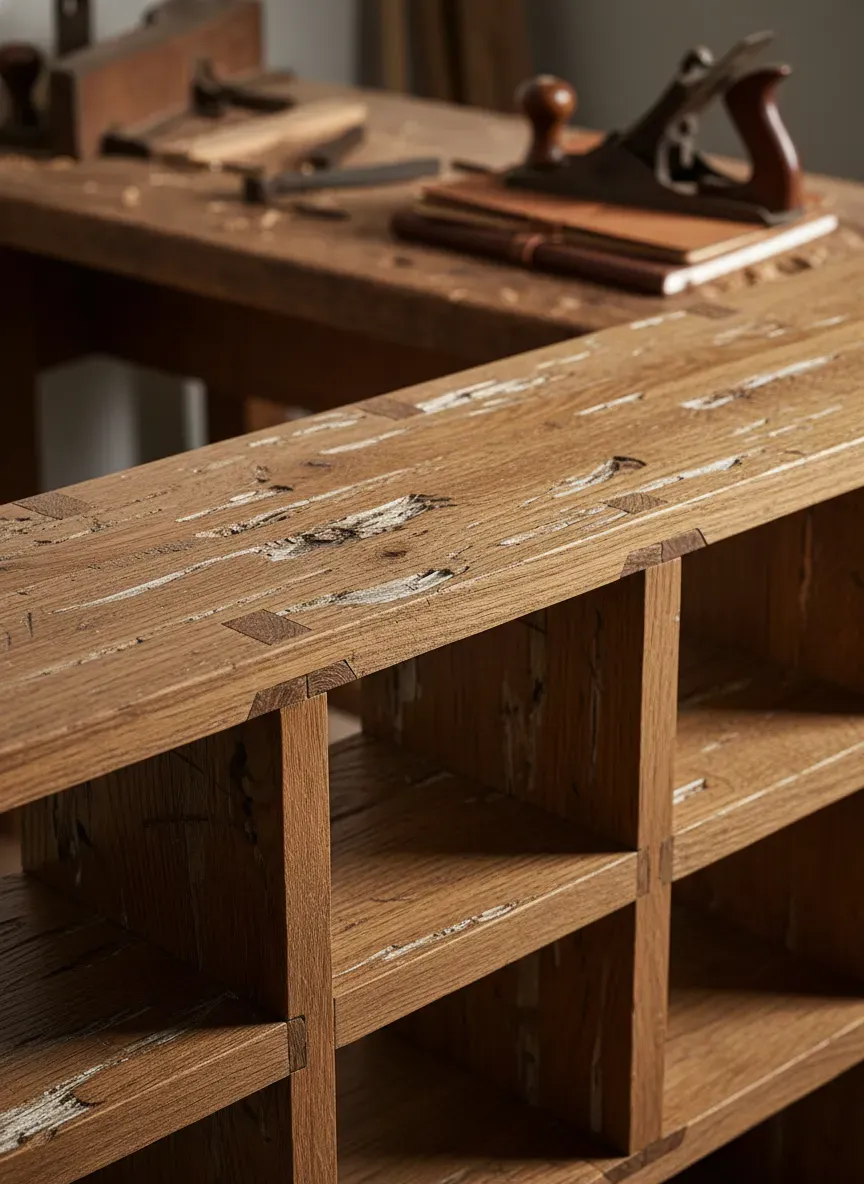
Routing a 3/4-inch dado into your horizontal benchtop to accept the vertical cubby dividers creates an incredibly strong mechanical bond that resists lateral shear forces. If you want to elevate the craftsmanship, consider using through-tenons wedged with a contrasting wood species. Seeing the end-grain of a dark walnut tenon poking through a thick slab of light oak is a hallmark of elite, rustic woodworking.
Heavy Metal: Selecting the Right Hardware
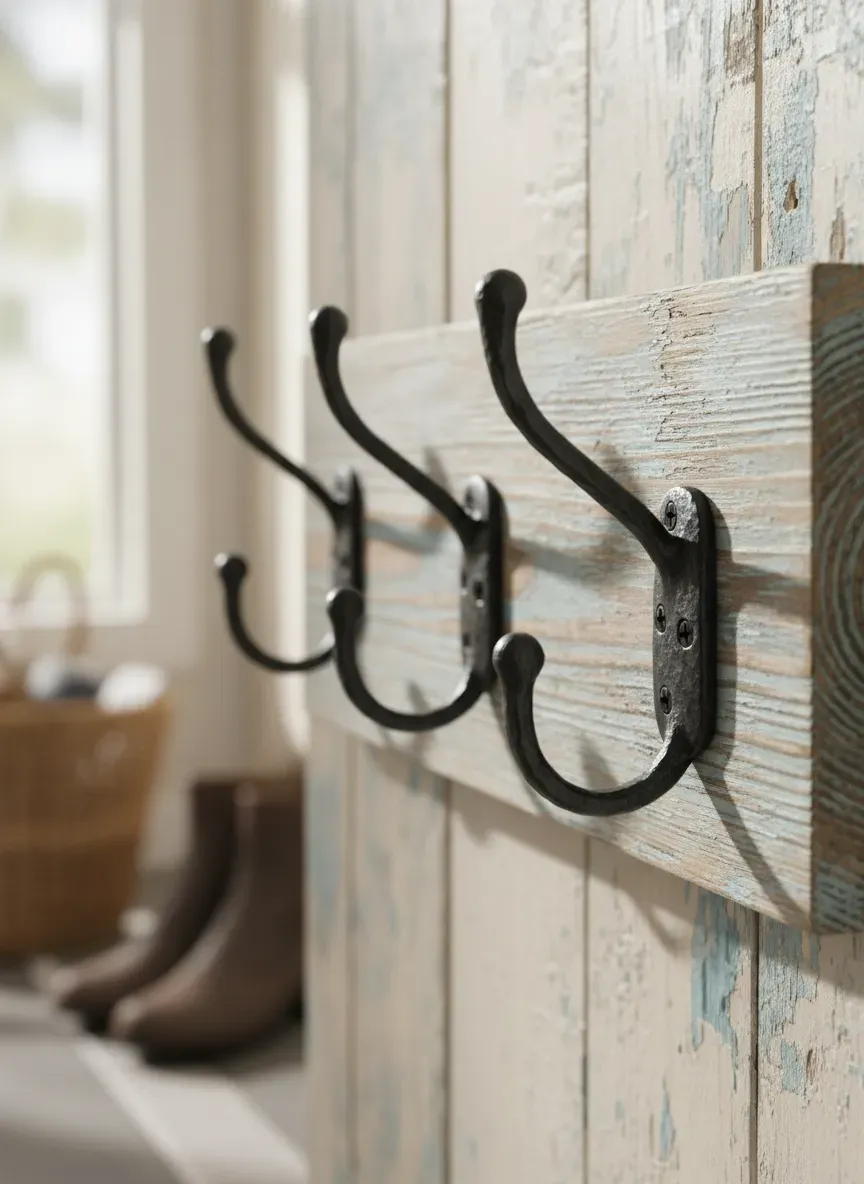
Hardware is the jewelry of your entryway. Flimsy, stamped-metal hooks finished in high-gloss chrome will instantly shatter the cabin illusion. You need mass and texture.
Opt for hand-forged wrought iron or distressed oil-rubbed bronze. Look for hooks that feature hammer marks from the blacksmith’s anvil. Heavy-duty cast iron bin pulls on lower drawers add an industrial-farmhouse weight that grounds the cabinetry. Ensure you mount these heavy hooks using substantial fasteners driven directly into the structural backing of your unit, as wet winter coats exert significant downward leverage.
Finishing Alchemy: Protecting Wood While Preserving the Raw Look
The most challenging aspect of rustic woodworking is applying a protective finish without making the wood look like it’s encased in cheap plastic. Traditional high-gloss polyurethanes completely destroy the tactile, raw nature of a cabin aesthetic.
Penetrating Oils and Hardwaxes
I highly recommend utilizing hardwax oils, such as Rubio Monocoat or Osmo Polyx-Oil. These are marvels of modern finishing chemistry combined with traditional aesthetics.
Unlike polyurethanes that sit on top of the wood to form a film, hardwax oils penetrate deep into the wood fibers, bonding molecularly. They protect the wood from the inside out while leaving the surface feeling entirely natural to the touch. Water will still bead up on a hardwax finish, making it perfectly suitable for a mudroom, but the wood retains its ultra-matte, raw visual appeal.
Distressing and Antiquing Techniques
If you are starting with pristine, new lumber, you may need to introduce some artificial aging to achieve the cabin vibe.
- Wire Brushing: Running a stiff wire brush along the grain removes the softer earlywood, leaving the harder latewood ridges intact. This creates a deeply textured, weathered surface that mimics decades of wind and rain exposure.
- Iron Acetate: Also known as “ebonizing” or “aging juice,” this is a chemical reaction created by dissolving steel wool in white vinegar. When brushed onto tannin-rich woods like oak or walnut, it instantly turns the wood a weathered, silvery-gray or deep charcoal, perfectly replicating century-old barn siding.
Key Takeaways for Rustic Finishing
- Avoid high-gloss, film-building finishes that create a “plastic” barrier.
- Prioritize penetrating oils that enhance the natural chatoyance (the three-dimensional shimmer) of the grain.
- Seal the end-grain thoroughly, as it acts like a bundle of straws, wicking moisture rapidly from wet boots and umbrellas.
- Test all chemical stains and aging solutions on scrap pieces first, as different wood species react wildly differently to tannins and dyes.
Common Pitfalls in Natural Entryway Design
Even with the best lumber and perfect joinery, it’s easy to derail a mudroom project through poor spatial planning.
The most frequent error I witness is a failure to calculate scale. In an attempt to maximize storage, homeowners often build cubbies that stretch too far into the hallway, suffocating the physical footprint of the entryway. A mudroom system should never impede the natural flow of traffic or prevent the front door from opening completely. If your foyer is narrow, sacrifice depth in the upper staging areas, bringing them back to a slim 8 to 10 inches, while maintaining depth only at the bench level.
Another critical oversight is lighting. Dark, heavily grained woods absorb light. A massive wall of stained walnut or aged barnwood can quickly turn a welcoming foyer into a gloomy cave. Counteract this by integrating warm, ambient lighting. Consider running a hidden LED strip channel along the top edge of the upper cubbies to wash the ceiling with light, or install rustic, seeded-glass sconces flanking the cabinetry to illuminate the staging area.
The Functional Curation: Styling Your Cubbies
The architecture is complete, the finish is cured, and the hardware is mounted. Now comes the final layer of the cabin aesthetic: the styling.
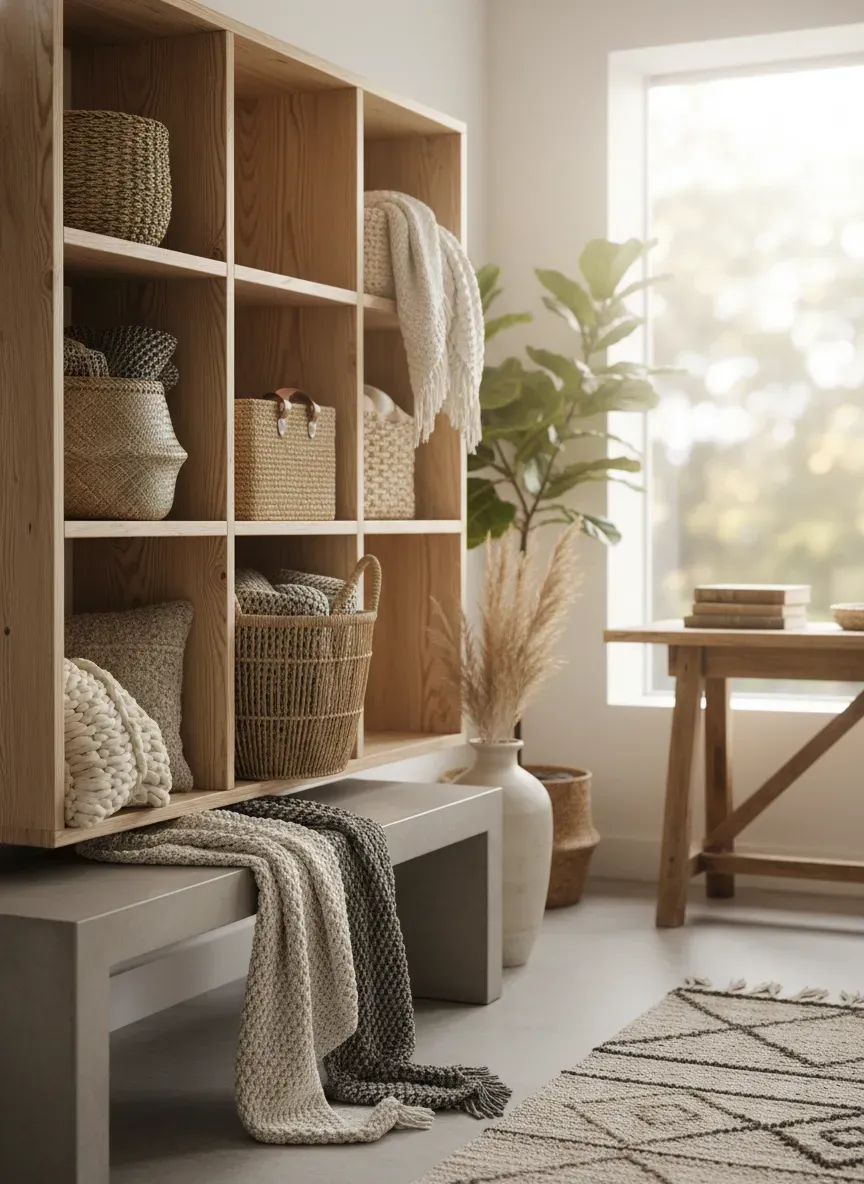
The items you place in and around your cubbies act as the narrative details of the space. Ditch the plastic storage bins entirely. Invest in heavy, hand-woven water hyacinth or rattan baskets for the upper cubbies. The organic weave introduces a new texture that complements the rigid linearity of the wood grain.
Introduce soft textiles to break up the hard surfaces. A heavy, vintage wool blanket in a classic buffalo check or heritage tartan neatly folded on the end of the bench instantly screams “mountain lodge.” Add an oversized, heavy-duty coir rug directly in front of the bench to capture debris before it travels into the house.
The Bottom Line: A genuinely rustic entryway isn’t about slapping some brown stain on plywood. It requires a harmonious balance of heavy, textured timber, ironmongery, and organic styling. By treating your foyer cubbies as architectural focal points rather than mere storage closets, you establish a powerful, grounding energy that welcomes you home the second you turn the key.
You might be looking at these elaborate, heavy-timber designs and thinking that achieving this level of craftsmanship requires hiring a high-end custom cabinet maker for ten thousand dollars. Here’s the real kicker: you can absolutely build this yourself, even if you don’t have a massive shop full of industrial tools. You just need the right blueprints to guide you past the frustrating trial-and-error phase.
I strongly suggest checking out Ted’s Woodworking. It is an absolute goldmine for anyone looking to transform their home with custom wood pieces. They offer a massive database of over 16,000 meticulously detailed woodworking plans, complete with step-by-step instructions, cutting lists, and detailed schematics that take all the guesswork out of complex joinery and structural design. Whether you want to build a simple farmhouse bench or an entire wall-to-wall mudroom cubby system, the exact plans are waiting for you.
Right now, you can grab lifetime access to the entire archive at a massive 75% discount. Don’t settle for flimsy, particle-board furniture from a big box store when you can craft your own heirloom-quality entryway.
Click here to claim your 75% discount and instantly access all 16,000 plans at Ted’s Woodworking. Start building the natural, cozy cabin entryway your home truly deserves.