
The Difference Between Coat Hooks and Utility Hooks in the Entryway
Discover the critical functional and aesthetic differences between coat hooks and utility hooks to optimize your entryway organization and protect your garments.
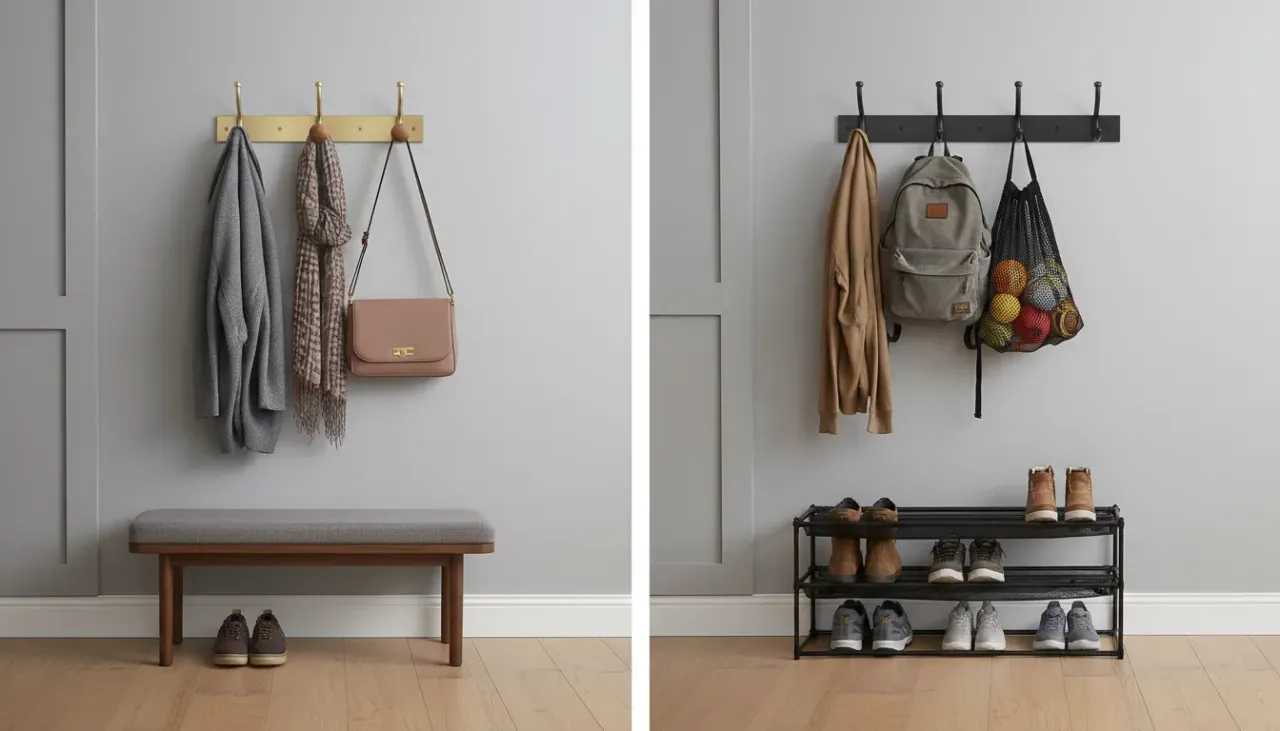
Feb 5, 2026 - Written by: linda wise

The entryway is the handshake of the home. It is the transitional space where the chaotic energy of the outside world meets the sanctuary of the interior. In this high-traffic zone, organization is not merely a matter of neatness; it is a matter of logistical necessity. While benches, consoles, and shoe racks play pivotal roles, the humble hook remains the workhorse of vertical storage. However, a common error in interior design and home organization is treating all hardware as interchangeable.
The distinction between a coat hook and a utility hook is significant, affecting everything from the longevity of your garments to the structural integrity of your walls. While they may appear to serve the same fundamental purpose—suspending an object against gravity—their engineering, aesthetic profile, and intended load-bearing capacities differ vastly. Understanding these nuances is essential for curating an entryway that is both elegant and functionally robust.
Defining the Hardware: Form Follows Function
To understand the best application for your space, one must first define the contenders. The terminology is often used loosely in big-box hardware stores, but among architects and hardware specialists, the differences are clear.
The Coat Hook
The coat hook is designed specifically for textiles. Its primary directive is to support the weight of heavy garments without distorting the fabric or leaving permanent indentations.
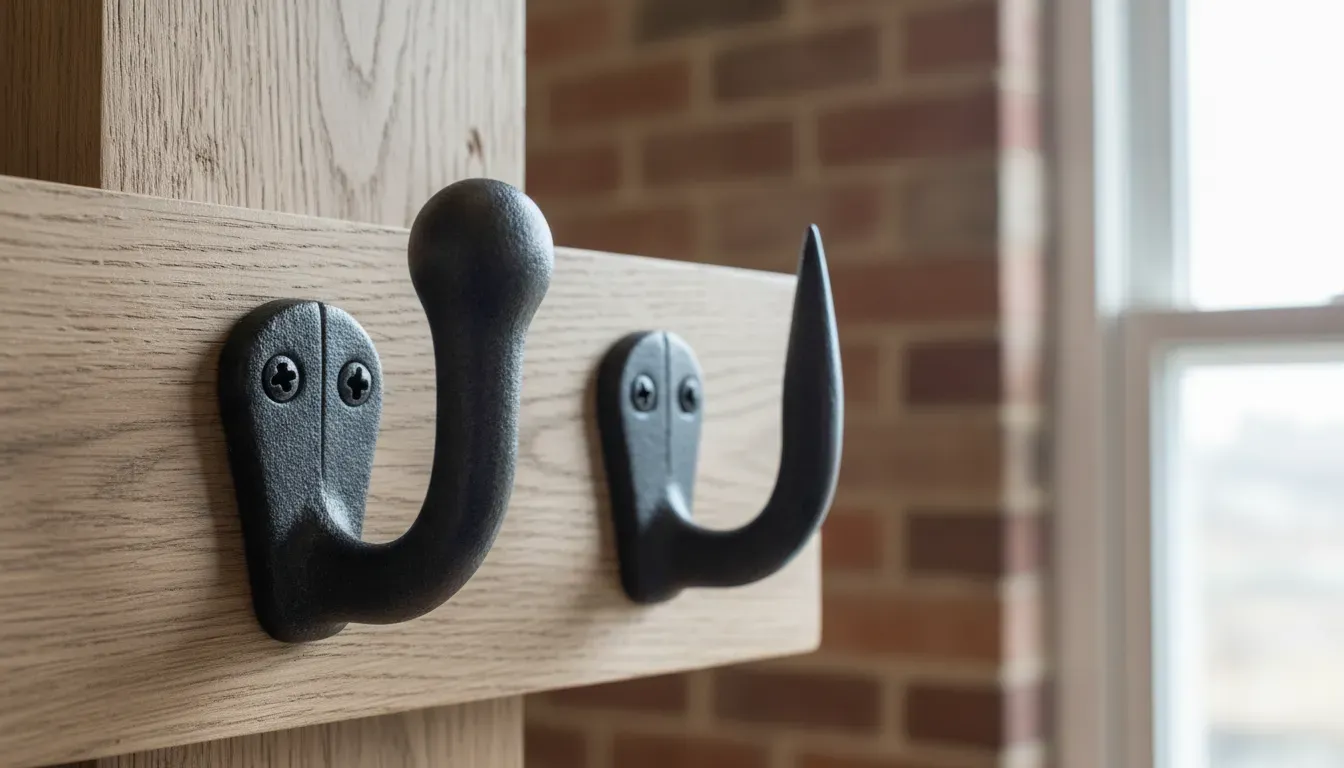
- Profile: Generally features a wider surface area or a rounded “acorn” tip.
- Architecture: Most commonly seen in a “double” format (a hat hook on top and a coat hook on the bottom).
- Projection: Extends further from the wall to allow bulky collars and hoods to hang freely without brushing against the mounting surface.
The Utility Hook
The utility hook is an industrial implement designed for tools, rigid loops, and items with specific hanging hardware (like the metal ring on a dog leash).
- Profile: Often thinner, angular, and lacking the protective rounded tips found on coat hooks.
- Architecture: Frequently singular, J-shaped, or S-shaped.
- Projection: Often shorter to keep heavy items closer to the center of gravity, reducing torque on the screw.
Structural Engineering and Weight Capacity
When designing a functional mudroom wall, one of the first calculations must be load capacity. This is where the divergence between coat and utility hooks becomes critical.
The Physics of the Utility Hook
Utility hooks are engineered for static, dense loads. Originally designed for garages, sheds, and workshops, they are constructed to hold ladders, hoses, and power tools. They are typically manufactured from stamped steel or galvanized wire. Because they are designed to hold items with rigid handles or grommets, the hook itself does not need to be voluminous.
The mounting plates on utility hooks are often vertical, allowing for installation directly into a wall stud. This is crucial because a utility hook is expected to bear significant weight—sometimes upwards of 50 to 75 pounds depending on the rating. In an entryway context, a utility hook is the superior choice for heavy, non-fabric items such as:
- Loaded backpacks (hung by the top loop).
- Heavy handbags.
- Dog leashes and harnesses.
- Sports equipment (tennis rackets, helmets).
For those seeking a robust solution for heavy bags in the entryway, high-strength options are essential.
Recommended Product: Heavy Duty Utility Storage Hooks
The Physics of the Coat Hook
Coat hooks, while durable, are rarely rated for the same weight extremes as utility hooks. A standard decorative coat hook made of zinc die-cast metal might have a weight limit of 10 to 35 pounds. This is more than sufficient for a wet wool trench coat or a leather jacket, but it may fail under the weight of a hiking pack loaded with gear.
The coat hook’s mounting plate is often wider or decorative, necessitating the use of wall anchors if a stud cannot be located. The arm of a coat hook is a lever; because it projects further out to accommodate puffy coats, it exerts more leverage on the screws. If a coat hook is subjected to the weight intended for a utility hook, it is likely to rip out of the drywall or snap at the neck.
Garment Care and Fabric Preservation
Perhaps the most sophisticated reason to distinguish between these two hardware types is the preservation of your wardrobe. The interaction between the metal hardware and the textile weave is a critical point of failure for many garments.
The “Hook Bump” Phenomenon
We have all experienced the tragedy of pulling a sweater off a hook only to find a permanent, nipple-like protrusion in the shoulder or collar. This is the result of gravity pulling the fabric tightly over a narrow surface area.
Utility hooks are notorious offenders in this regard. Their thin, often un-capped ends act almost like a dull blade. When a knit fabric hangs on a utility hook, the weight is concentrated on a few millimeters of yarn, stretching the fibers beyond their elastic limit.
The Ergonomics of Coat Hooks
High-quality coat hooks are designed with ergonomics in mind. They feature:
- Blunt Ends: Ceramic, wood, or rounded metal tips distribute the pressure over a wider area of roughly one square inch rather than a pinhead point.
- Curvature: The sweep of the hook arm is designed to mimic the natural drape of fabric, reducing stress points.
- Double Prongs: The classic “schoolhouse” hook offers a lower prong for the garment’s hang-loop and an upper prong for a hat or scarf. This separates items, ensuring that a sharp zipper from one jacket does not snag the silk lining of another.
If your entryway storage involves hanging delicate fabrics, wool coats, or rain jackets without hang-loops, a proper coat hook is non-negotiable.
Recommended Product: Vintage Cast Iron Double Coat Hooks
Aesthetic Integration and Materiality
The entryway sets the tone for the rest of the home. Therefore, the visual language of your hardware matters as much as its utility.
The Decorative Nature of Coat Hooks
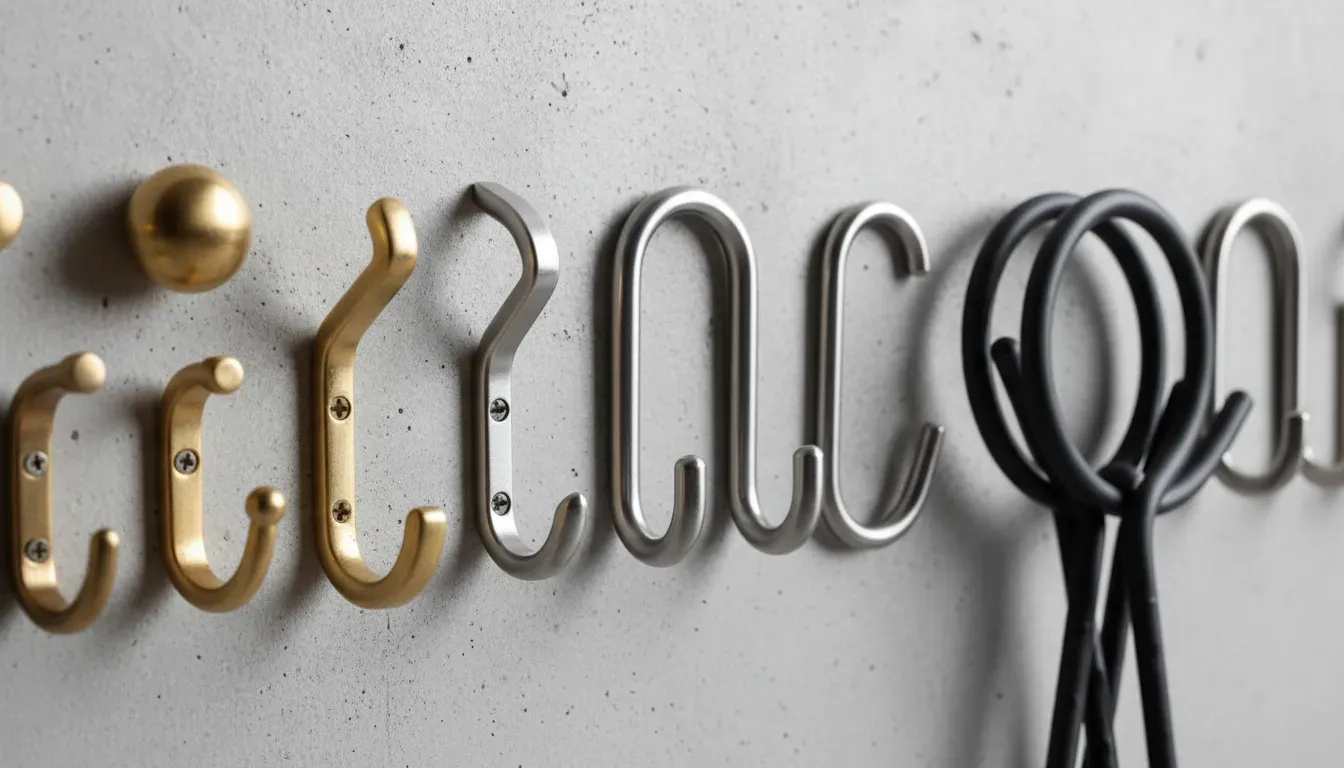
Coat hooks are treated as architectural hardware, similar to cabinet pulls or door handles. They are available in a spectrum of finishes—brushed brass, oil-rubbed bronze, matte black, and polished nickel. The base plates are often ornamental, featuring bevels or intricate casting details.
In a formal foyer or a hallway visible from the living room, coat hooks provide a sense of permanence and intention. They signal that the space is furnished, not merely equipped. When mounting these, alignment and spacing are paramount to maintaining a visual rhythm.
The Industrial Appeal of Utility Hooks
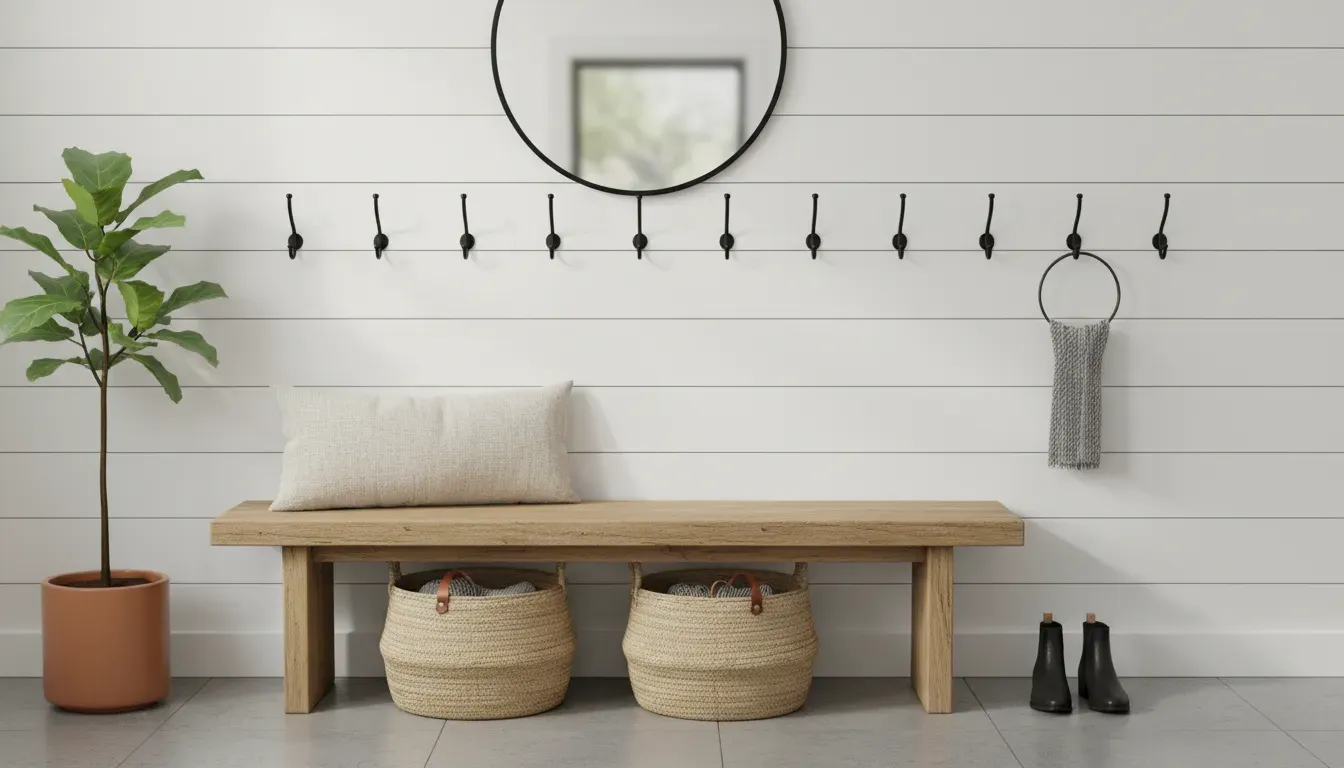
Utility hooks prioritize function over form. They are often rubber-coated (to prevent tool slippage) or made of raw galvanized steel. Historically, these were hidden in closets or mudrooms. However, the rise of “Industrial Chic” and “Farmhouse Modern” design has brought utility hardware into the open.
Using utility hooks in an entryway is a bold stylistic choice. It suggests a utilitarian, rugged lifestyle. This works exceptionally well in:
- converted lofts.
- rustic cabins.
- casual back-door mudrooms.
To elevate the look of utility hooks, designers often mount them on reclaimed wood boards or painted rails rather than directly into the drywall. This unifies the hooks into a single design element.
The Projection Factor and Space Planning
Space planning in narrow hallways requires a keen awareness of “projection”—the distance a fixture sticks out from the wall.
High-Traffic Corridors
In a narrow entryway, a large, gooseneck coat hook can be a hazard. A projection of four to five inches might snag the clothing of people walking by or cause injury if bumped into. In these tight confines, utility hooks or specialized “retractable” coat hooks are superior.
Utility hooks generally have a lower profile. Furthermore, because utility hooks are often J-shaped, they curve back toward the wall, presenting a smooth surface to the passerby rather than a protruding point.
Managing Bulk
Conversely, if the goal is to store winter parkas, the projection is your friend. A shallow utility hook will force a thick coat against the wall. This can cause:
- Moisture transfer from a wet coat to the paint or wallpaper.
- Ideally, air needs to circulate behind a damp garment to prevent mildew.
- The garment to slide off the hook constantly because the center of gravity is pushed forward by the bulk of the fabric.
A deep coat hook holds the garment away from the wall, allowing for airflow and secure storage.
Installation Nuances
The method of attachment varies significantly between the two, influencing where you can place them.
Coat Hook Installation
Coat hooks are frequently face-fixed with two small screws. Because of the decorative nature, the screw heads are often visible and matching in finish.
- Challenge: The screws are usually short. If you are not hitting a stud (and with two screws, you rarely hit a stud with both), you must rely on drywall anchors.
- Solution: The best practice is to mount coat hooks onto a wooden rail or batten board. You anchor the board to the studs, and then screw the hooks into the board. This provides infinite flexibility in spacing.
Utility Hook Installation
Utility hooks are often designed with a vertical two-screw alignment specifically to fit the width of a standard 2x4 stud.
- Challenge: You are limited to the location of your studs (usually every 16 inches).
- Solution: This limitation actually enforces good spacing for heavy items. If you are hanging heavy backpacks, adhere strictly to the stud locations using 2-inch wood screws.
Designing a Hybrid System
For the ultimate entryway, one need not choose exclusively between the two. The most efficient homes utilize a hybrid approach, recognizing that modern life involves both delicate coats and rugged gear.
The Zoned Approach
Create zones based on vertical height and intended user.
- The Upper Zone (Adults/Guests): Install a row of high-quality, decorative coat hooks at 60 to 65 inches high. This is for long coats, scarves, and guest usage. It preserves the aesthetic value of the entryway.
- The Lower Zone (Kids/Gear): Install a row of robust utility hooks at 36 to 48 inches high. This is the “high durability” zone. It is perfect for children’s backpacks (which are heavy and often dragged), dog leashes, and grocery bags.
The “Hidden” Utility
If your entryway includes a closet, use the coat hooks for the daily rotation of outerwear on the exterior wall, and install utility hooks on the inside of the closet door or side walls. This utilizes the “dead space” for items that don’t need to be displayed, such as umbrellas, reusable shopping totes, and cleaning tools.
Recommended Product: Wall Mounted Coat Rack Rail with Retractable Hooks
Material Science: Rust and Durability
The entryway is often a zone of moisture—rain-soaked jackets, snowy scarves, and humid umbrellas. The material composition of your hooks determines their lifespan.
Coat Hook Materials
- Solid Brass: The gold standard. It will not rust, though it may patina. It is soft, however, and can bend under extreme weight.
- Cast Iron: Extremely strong and aesthetically pleasing, but susceptible to rust if the powder coating chips. Damp coats on raw iron can lead to rust stains on fabric.
- Zinc Alloy: The most common affordable option. It is rust-resistant but brittle. If overloaded, it snaps rather than bends.
Utility Hook Materials
- Stainless Steel: Excellent for utility hooks in damp environments.
- Galvanized Steel: Industrial grade rust protection, but rough to the touch.
- Vinyl-Coated: The metal core provides strength, while the rubber dip protects the metal from rust and provides grip. This is excellent for preventing items from slipping, though the rubber can degrade over decades of UV exposure.
Conclusion: Making the Right Choice
The choice between coat hooks and utility hooks is not merely a purchase decision; it is a design strategy. By distinguishing between these two hardware types, you elevate your entryway from a chaotic dumping ground to a curated, functional space.
Use coat hooks when your priority is:
- Preserving the shape and integrity of clothing.
- Creating a decorative, welcoming aesthetic.
- Allowing airflow for damp garments.
- Supporting lighter, voluminous items like scarves and hats.
Use utility hooks when your priority is:
- Supporting concentrated weight (backpacks, bags).
- Holding rigid items (leashes, keys, tools).
- Creating an industrial or minimalist look.
- Maximizing vertical storage in tight spaces or behind doors.
The most successful entryway renovations respect these differences, often employing a strategic mix of both to accommodate the varied inventory of modern life. Before you drill the first hole, audit what you actually carry through the door. Let your lifestyle dictate the hardware, and your entryway will serve you effortlessly for years to come.