
The Anatomy of a Perfect Mudroom Wall Rack System
Discover the essential architectural components of a high-functioning mudroom wall rack system, blending organizational psychology with interior design.
Feb 5, 2026 - Written by: linda wise

The entryway is the transitional airlock of the home. It is where the chaos of the outside world meets the sanctuary of the interior. Yet, without a deliberate architectural strategy, this space often devolves into a cluttered repository of discarded footwear, piled coats, and misplaced keys. The solution lies not merely in buying a shelf, but in understanding the anatomy of a perfect mudroom wall rack system.
A truly effective mudroom system is more than a piece of furniture; it is an engineered workflow. It requires a balance of structural integrity, ergonomic design, and aesthetic cohesion. Whether you possess a dedicated mudroom or are carving out a functional niche in a narrow hallway, the principles of the “drop zone” remain consistent. By dissecting the wall rack system into its component parts, we can construct a storage solution that withstands the rigors of daily life while elevating the design language of your home.
The Foundation: Structural Integrity and Backing
Before a single hook is mounted, one must consider the canvas upon which the system rests. The mistake many homeowners make is treating a wall rack as a superficial add-on rather than a structural element. Winter coats, loaded backpacks, and heavy handbags exert significant downward shear force. A system anchored merely into drywall, even with heavy-duty toggles, will eventually fail under the strain of a family’s daily usage.
The Back Panel
The back panel serves a dual purpose: wall protection and structural distribution. Wet raincoats and muddy textures can wreak havoc on painted drywall. A robust back panel—often constructed from beadboard, shiplap, or solid plywood veneer—acts as a shield.
Furthermore, a back panel allows you to span multiple wall studs. By anchoring a horizontal ledger board or the panel itself into the studs, you create a solid surface where hooks can be mounted anywhere, not just where the framing dictates. This allows for symmetrical hook placement that satisfies the eye without compromising strength.
Material Selection
The choice of material dictates the longevity of the system.
- Solid Hardwoods: Oak, maple, and walnut offer the highest durability and screw-holding power. They are less likely to warp in the fluctuating humidity often found near entry doors.
- High-Grade Plywood: A cost-effective alternative to solid wood that offers better stability than MDF. When edged properly, it paints beautifully.
- MDF (Medium Density Fiberboard): While popular for painted built-ins due to its smooth finish, MDF must be sealed meticulously. If water from a rain-soaked umbrella seeps into raw MDF, it will swell and crumble.
The Upper Echelon: Overhead Storage and Cubbies
The top tier of a mudroom rack system is the zone of “secondary access.” This area is reserved for items that are not required daily or need to be kept out of reach of children. The anatomy of this section usually takes the form of an upper shelf or divided cubbies.
The Shelf Depth Equation
The depth of the upper shelf is critical. If it is too shallow (less than 10 inches), it becomes useless for storage bins. If it is too deep (more than 16 inches), it creates a shadowy overhang that makes the coat hook area feel cavernous and dark. The sweet spot generally lies between 12 and 14 inches. This depth accommodates standard storage baskets while maintaining a balanced profile.
The Role of Cubbies
Dividing the upper shelf into cubbies introduces organizational discipline. A long, open shelf often becomes a dumping ground where items migrate and clutter accumulates. Vertical dividers enforce boundaries. Assigning a specific cubby to each family member creates a sense of ownership and responsibility.
For aesthetic containment, integrating woven or wire baskets into these cubbies is essential. Baskets hide the visual noise of winter gloves, scarves, and miscellaneous gear, presenting a clean facade to the room.
To maximize this space, consider using uniform storage vessels. https://www.amazon.com/s?k=woven+storage+baskets+for+shelves&tag=hats0f8-20
The Core: Hooks and Hanging Hardware
The mid-section is the workhorse of the mudroom wall rack. This is where ergonomics meets hardware. The selection and placement of hooks define the system’s daily usability.
Hook Geometry and Spacing
A common error is overcrowding hooks. To allow bulky winter coats to hang freely without overlapping, hooks should be spaced a minimum of 10 to 12 inches apart. If space is tight, consider staggering hooks at different heights to allow for overlapping usage without bulk buildup.
The type of hook matters immensely:
- Double Hooks: The industry standard. The upper prong holds the heavy coat, while the lower prong manages bags or scarves.
- Tri-Hooks: These offer maximum utility but require more vertical clearance.
- Acorn or J-Hooks: Better for minimalist designs but offer less storage capacity per unit.
Vertical Zoning for Families
If the system serves a family with children, a single row of hooks at 60 inches high is insufficient. The anatomy of a family-friendly system includes a secondary rail.
- The Adult Line: Typically mounted at 60 to 65 inches from the floor. This accommodates long trench coats.
- The Junior Line: Mounted at 36 to 42 inches. This empowers children to hang their own backpacks and jackets, fostering independence.
When selecting hardware, look for cast iron or solid brass options that can support substantial weight. Zinc or hollow aluminum hooks often snap under the weight of a loaded school bag.
https://www.amazon.com/s?k=heavy+duty+coat+hooks&tag=hats0f8-20
The Anchor: Bench Seating and Lower Storage
While technically a “wall rack” discussion, a wall-mounted system is rarely complete without the grounding element of a bench. The bench serves as the visual base, balancing the weight of the upper cabinets, and provides a necessary function: a place to sit while putting on or removing shoes.
The Floating vs. Built-in Bench
- Floating Benches: These are mounted directly to the wall studs, leaving the floor underneath open. This creates a modern, airy look and allows for easy cleaning of the floor. However, they require significant structural reinforcement.
- Box Benches: These sit on the floor and offer deep internal storage. They are easier to install and can support more weight.
The Shoe Management Strategy
The space beneath the bench is the primary defense against the “shoe pile.” Leaving this space essentially open is a recipe for clutter. The anatomy of the lower section should include distinct zones for footwear.
- Open Cubbies: Ideal for frequently used shoes.
- Pull-out Drawers: Perfect for hiding unsightly sports gear or off-season footwear.
- Boot Trays: Essential for wet climates to protect the flooring material.
A dedicated storage bench can serve as a standalone anchor if a full built-in isn’t feasible. https://www.amazon.com/s?k=entryway+shoe+storage+bench&tag=hats0f8-20
Integration: Blending with Interior Design
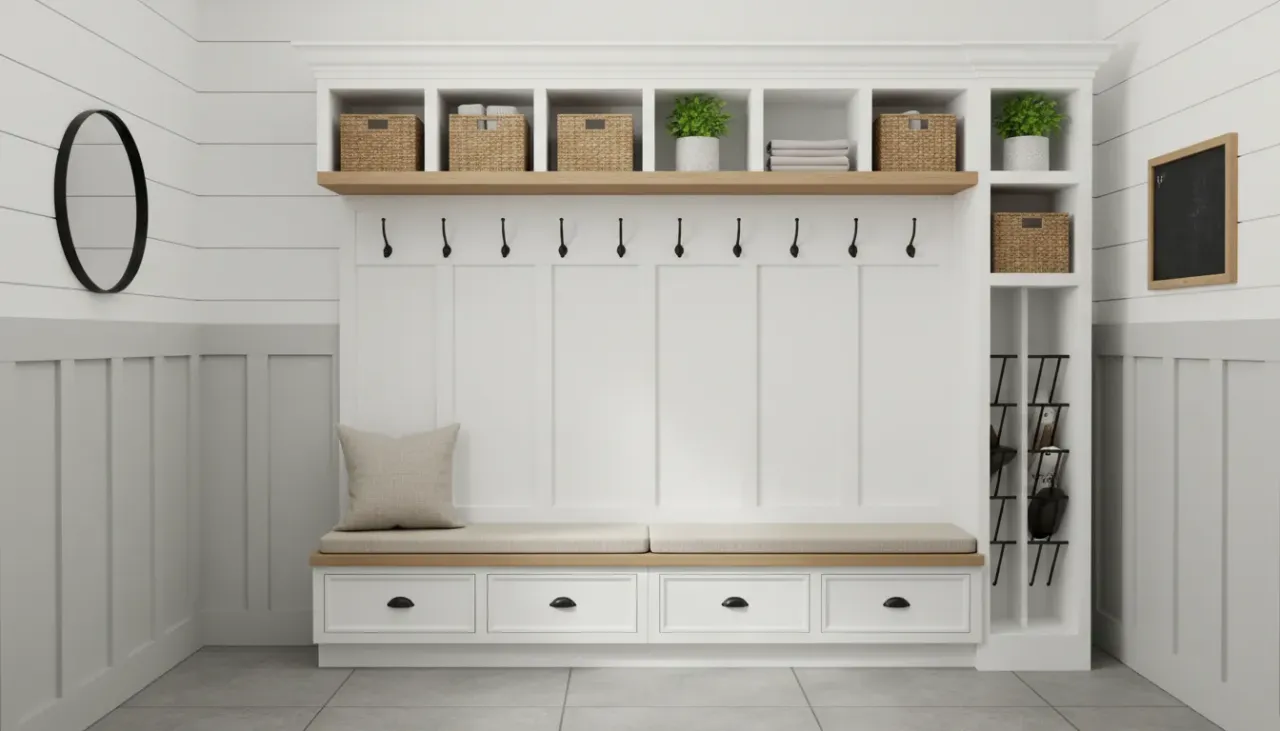
A mudroom rack should not look like an afterthought. It should harmonize with the home’s prevailing architectural style. This is achieved through trim work, paint, and hardware finish.
The Power of Millwork
To make a wall rack look “built-in” rather than “screwed on,” utilize trim. Crown molding along the top of the upper shelf draws the eye upward and integrates the unit with the ceiling. Fluted casing on the sides can hide the edges of the backing material, providing a polished, furniture-grade appearance.
Color Theory in the Mudroom
Because mudrooms are high-traffic zones prone to scuffs and dirt, the paint finish is as important as the color.
- Finish: Always use semi-gloss or high-gloss paint for the rack system. These finishes are durable and wipeable. Matte or eggshell finishes will hold onto dirt and oils from hands.
- Color Blocking: Consider painting the rack system a different color than the surrounding walls. A deep navy, charcoal, or forest green rack against neutral walls creates a stunning focal point and hides wear better than stark white.
Style Archetypes
- Farmhouse: Utilizes beadboard backing, chunky wooden corbels, and matte black wire hooks.
- Modern Industrial: Uses pipe fittings for rails, reclaimed wood shelves, and open-bottom designs.
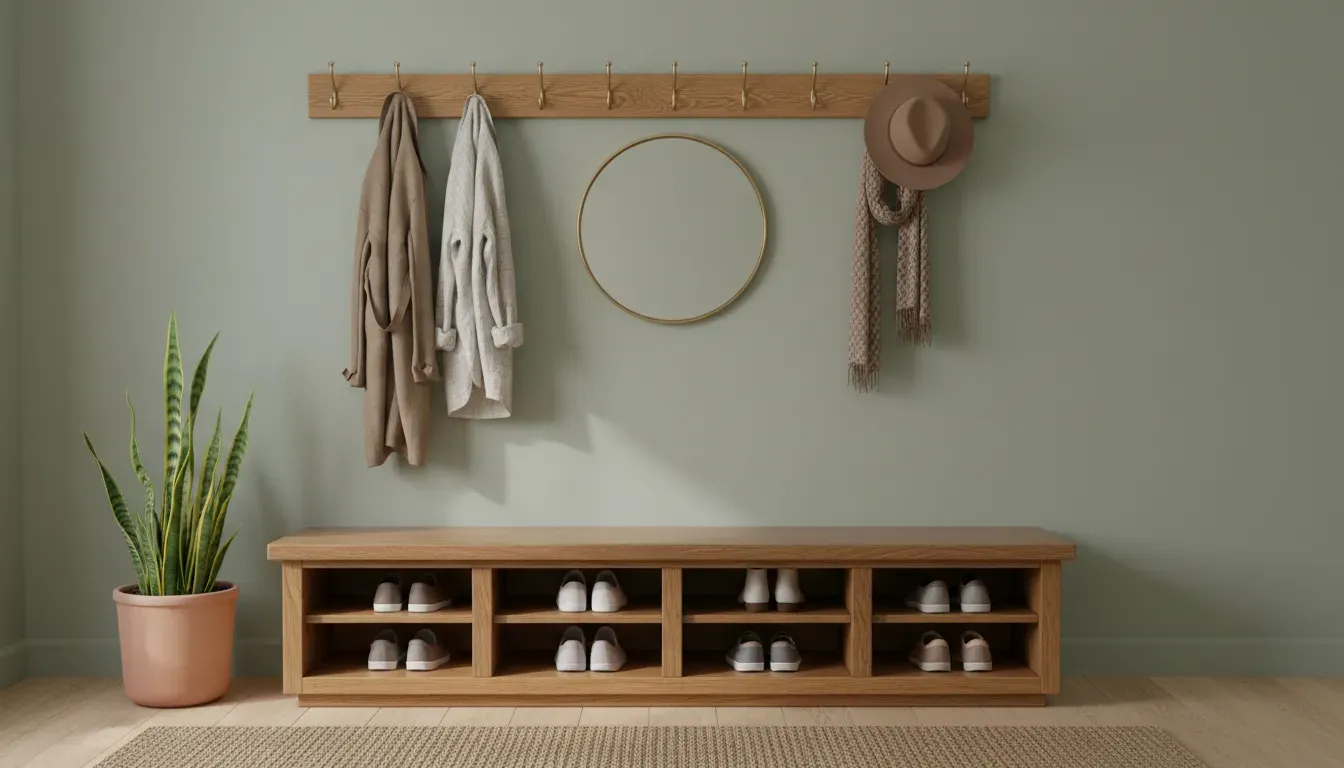
- Scandi-Minimalist: Features pale birch or maple wood, hidden mounting hardware, and simple wooden pegs instead of metal hooks.
For more ideas on optimizing limited areas, read our guide on Small Entryway Hacks.
The Variable of Lighting
Ideally, the anatomy of the mudroom rack includes integrated lighting. Shadows are the enemy of organization. If the upper shelf casts a shadow over the bench, the space can feel cramped and uninviting.
- Puck Lights: recessed into the bottom of the upper shelf can illuminate the coats and bench below.
- Sconces: Installing wall sconces above the top shelf adds ambient light and elevates the design from utilitarian to elegant.
- Motion Sensors: Given that entryways are often passed through with hands full, motion-activated lighting is a functional upgrade that enhances the user experience.
Installation Logistics and Measurements
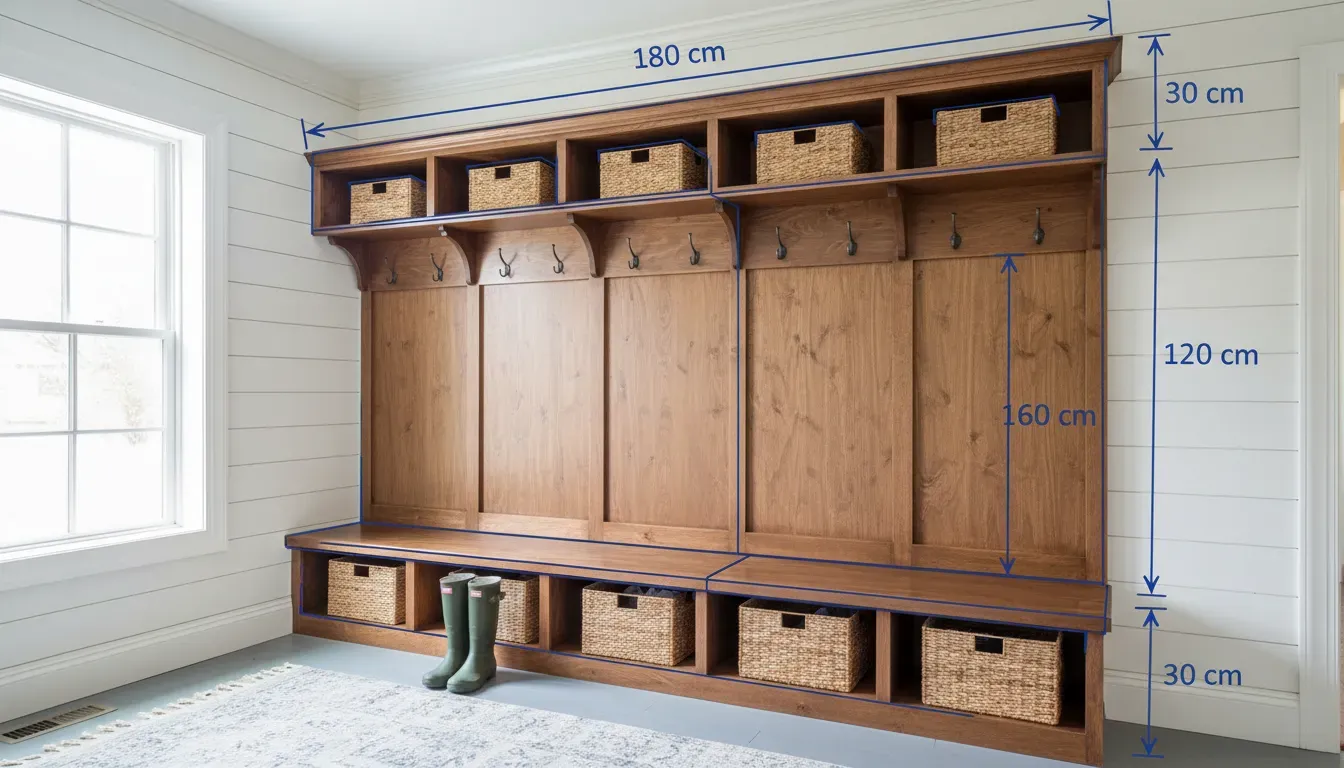
When planning the installation of your perfect system, the “Rule of Thirds” in vertical design is helpful. The bench typically occupies the lower third (18 inches high), the hanging zone occupies the middle (approx. 40-50 inches), and the upper storage occupies the top.
Critical Dimensions Checklist
- Bench Height: Standard seating height is 18 to 19 inches.
- Hook Height: Ideally 42 to 48 inches above the seat of the bench to prevent coats from pooling on the seat.
- Depth Clearance: Ensure the bench does not encroach on the door swing. Allow at least 36 inches of clearance for traffic flow in front of the unit.
Maintenance: The Long-Term Plan
The perfect system requires maintenance to remain perfect. The anatomy of the rack dictates the cleaning regimen.
- Seasonal Rotation: The upper shelves should be utilized for seasonal swaps. In summer, winter accessories move up high or into deep storage, replaced by sun hats and sunscreen baskets.
- Hardware Check: Every six months, inspect the hooks. Heavy coats can loosen screws over time. A quick tightening ensures the structural integrity remains compromised.
- Wood Care: If you have chosen natural wood components, an annual application of wood conditioner or wax will prevent drying and cracking, keeping the system looking pristine.
Conclusion
The anatomy of a perfect mudroom wall rack system is a convergence of form and function. It is not merely about storage; it is about lifestyle management. By carefully considering the backing, the shelf depth, the hook quality, and the integration of seating, you create a space that welcomes you home with order rather than chaos.
Whether you are building a custom unit from scratch or assembling a high-end modular system, respecting these architectural principles ensures your entryway remains a resilient, beautiful gateway to your home. Organization is not a destination, but a process—and the right infrastructure makes that process effortless. If you are looking to expand your organization beyond the entryway, consider exploring our insights on Garage Storage Optimization to bring order to every entry point of your home.