
Entryway Organization for Small Apartments: Utilizing Vertical Space with Wall Racks
Maximize your small apartment entryway by leveraging vertical space. Discover expert strategies for wall racks, floating shelves, and smart organization.
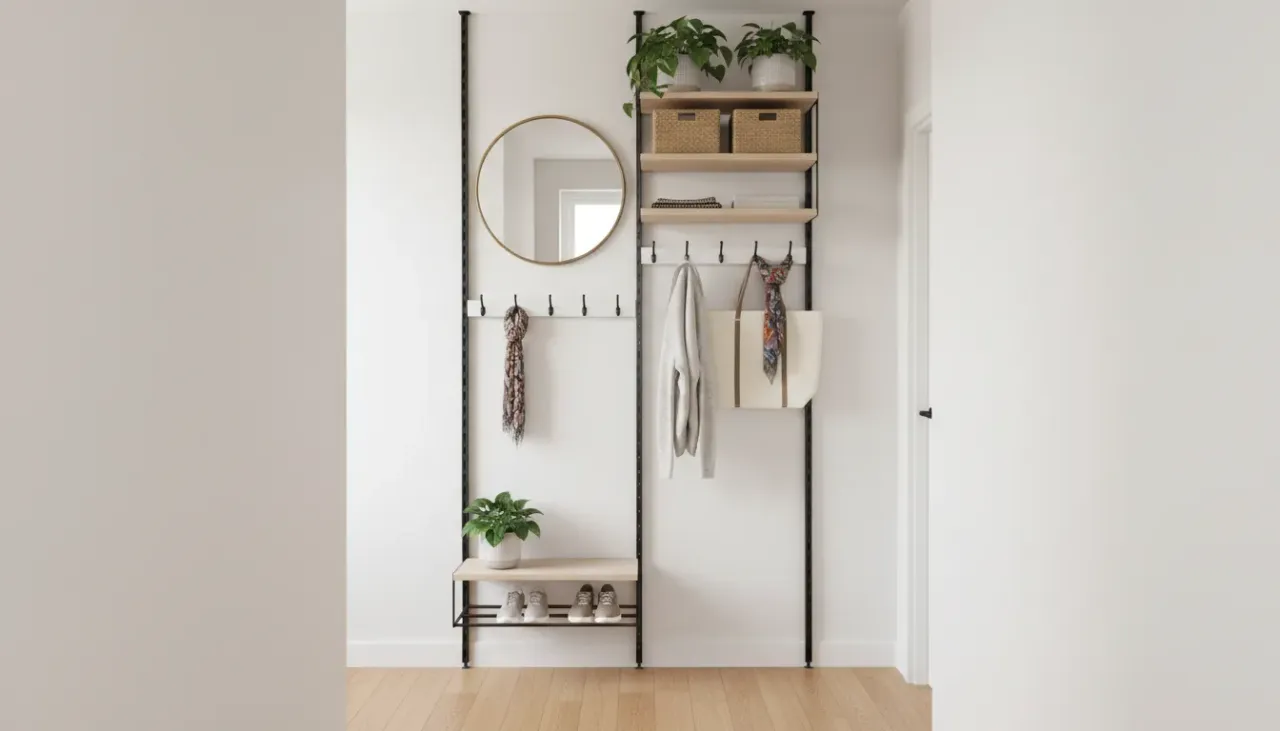
Feb 5, 2026 - Written by: linda wise

In the architecture of a small apartment, the entryway is often an afterthought. It is frequently nothing more than a transitional patch of floor behind the front door, yet it bears the heavy burden of being the “drop zone” for our daily lives. Keys, mail, coats, muddy boots, and umbrellas all converge in this singular, cramped square footage. When floor space is at a premium, the traditional solutions—bulky console tables, sprawling hall trees, or large shoe benches—are simply not viable options. They obstruct traffic flow and make a compact home feel claustrophobic the moment you step inside.
The solution lies not in expanding outward, but in expanding upward. Utilizing vertical space is the golden rule of urban living, and nowhere is this more critical than in the entryway. By shifting the focus from the floor to the walls, you can reclaim square footage while establishing a system that is both functional and aesthetically pleasing. Wall racks, floating shelves, and vertical organizers are the unsung heroes of small apartment organization.
This comprehensive guide will explore the strategic implementation of wall-mounted solutions to transform a chaotic entryway into a streamlined, welcoming vestibule. We will delve into the types of wall racks available, installation strategies for renters, and design principles that ensure your storage doubles as decor.
The Psychology of the Entryway
Before selecting hardware, it is essential to understand the psychological weight of this space. The entryway sets the tone for your entire home. A clutter-filled entrance induces a subconscious stress response immediately upon arrival. Conversely, an organized entry provides a sense of decompression and order. In a small apartment, where the living area is often visible from the door, this visual clarity is paramount.
Vertical organization forces a level of intentionality. When items have a specific hook or shelf, the habit of “dropping” is replaced by the habit of “placing.” This shift in behavior is crucial for maintaining order in limited square footage.
Assessing Your Vertical Potential
To maximize your space, you must first conduct a thorough audit of the available wall area. In many apartments, the “entryway” may be a narrow hallway or a simple wall segment adjacent to the kitchen or living room.
Identifying the Zones
Visualize your wall as a series of horizontal zones, each serving a distinct purpose:
- High Storage (Above 6 feet): This area is for items accessed infrequently, such as off-season accessories or decorative elements that draw the eye upward, creating the illusion of higher ceilings.
- Active Storage (4 to 6 feet): This is the prime real estate. It should be reserved for the items you use daily: coats, handbags, scarves, and dog leashes.
- The Landing Strip (3 to 4 feet): This acts as the replacement for a console table. It is the zone for keys, wallets, sunglasses, and sorting mail.
- Low Storage (Floor to 2 feet): While we are focusing on walls, the lowest vertical section is ideal for wall-mounted shoe racks or hooks for shorter items like umbrellas or reusable grocery bags.
Core Solutions: The Wall Rack Ecosystem
The term “wall rack” encompasses a wide variety of fixtures. Selecting the right type depends on your specific inventory and the aesthetic of your apartment.
The Accordion and Peg Rail
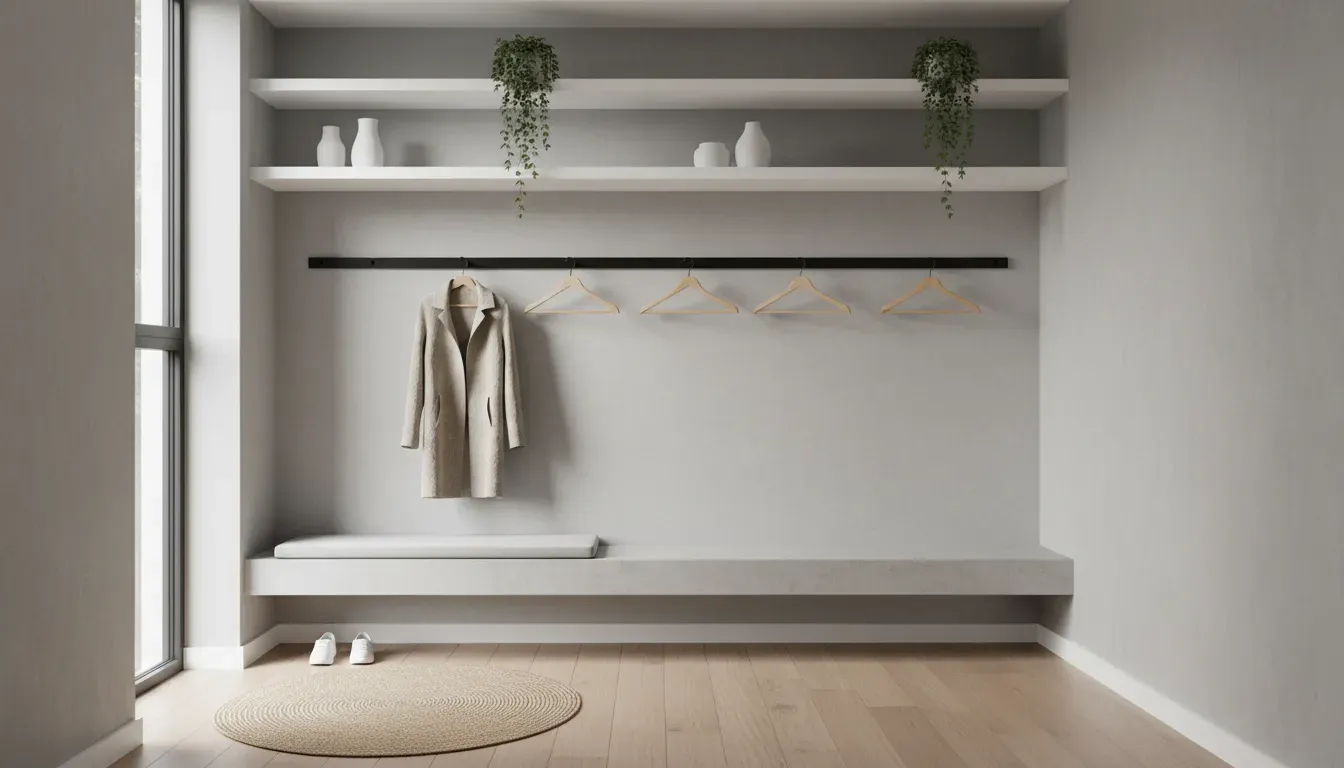
The classic accordion rack or Shaker-style peg rail offers timeless utility. These designs are particularly effective because they provide a high density of hanging points in a linear format.
A continuous peg rail running the length of a hallway can transform a blank wall into a massive storage engine. The beauty of the peg rail lies in its versatility; it can hold a heavy wool coat just as easily as a small picture frame or a dried flower arrangement. In narrow hallways, the low profile of the pegs ensures that nothing protrudes too far into the walking path when not in use.
For those seeking flexibility, expandable accordion racks allow you to adjust the width of the storage based on the wall space available. They add a geometric, architectural element to the wall that feels intentional rather than purely utilitarian.
Floating Shelves with Integrated Hooks
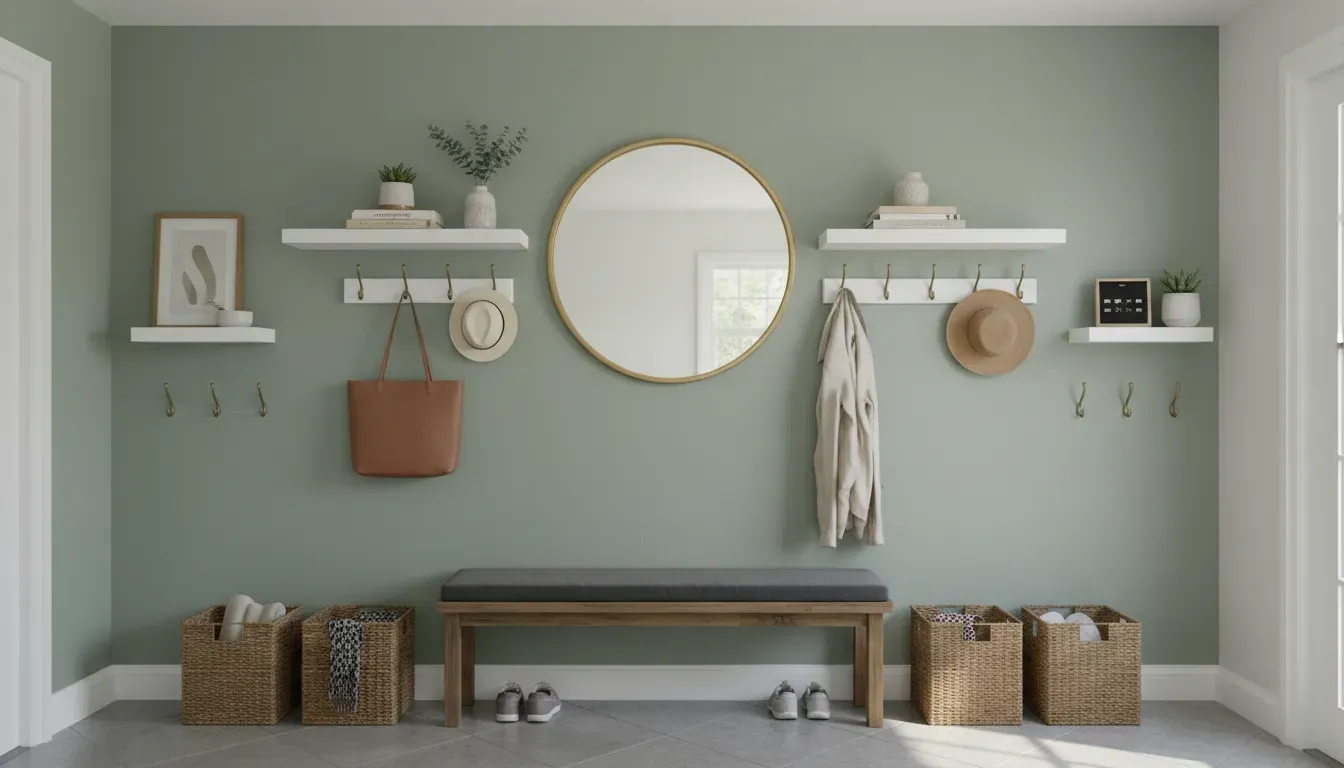
Hybrid furniture is the best friend of the small apartment dweller. A floating shelf with hooks underneath serves a dual purpose. The top surface acts as a display area for art, a mirror, or a catch-all bowl for keys, while the hooks below manage outerwear.
This configuration eliminates the need for a separate table and coat rack. When choosing this option, look for units with a lip on the shelf to prevent items from sliding off, and ensure the hooks are spaced widely enough to accommodate bulky winter jackets without overcrowding.
For a robust option that combines rustic aesthetics with industrial strength, consider investing in high-quality hardware.
https://www.amazon.com/s?k=Rustic+Wood+Coat+Rack+Shelf+Wall+Mounted&tag=hats0f8-20
Vertical Rails and Grid Systems
If horizontal space is restricted—for instance, if your entryway is a short wall between a door and a corner—vertical rails are the answer. These systems stack hooks on top of one another.
Grid systems, often made of wire mesh, allow for modular customization. You can attach baskets for mail, hooks for keys, and clips for reminders. This approach is visually lighter than solid wood shelving, making it ideal for spaces that lack natural light.
The Landing Strip: Managing Small Items
The biggest source of clutter in an entryway is not coats, but “micro-clutter”—mail, receipts, loose change, and keys. Without a surface to rest on, these items end up on the kitchen counter or dining table.
Wall-Mounted Organizers
To keep these items off surfaces, move them to the wall. A dedicated mail organizer with a key rack is non-negotiable for small apartments. Position this near a light switch for maximum visibility.
When selecting an organizer, prioritize depth. A unit that is too deep will encroach on your personal space, while one that is too shallow will not hold standard envelopes or magazines. A combination unit that includes a small chalkboard or corkboard can also serve as a family command center.
For a sleek, modern solution that handles both correspondence and keys efficiently:
https://www.amazon.com/s?k=Wall+Mounted+Mail+Organizer+with+Key+Hooks&tag=hats0f8-20
The Role of Mirrors
In a small entryway, a mirror is a functional necessity and a design trick. It allows for a final check before leaving, but more importantly, it reflects light and doubles the visual depth of the space.
Ideally, integrate a mirror into your wall rack system. A round mirror hanging above a floating shelf creates a focal point. Alternatively, mirrored cabinets can hide keys and clutter behind a sleek surface, maintaining a minimalist appearance.
Advanced Strategies: Shoes and Accessories
Shoes are notoriously difficult to organize without floor space. However, wall-mounted shoe storage is a growing trend in interior design.
Floating Shoe Racks
Metal tension racks or simple floating bars allow you to hang shoes by their heels. This keeps the floor completely clear, making vacuuming easier and the room feeling larger. By elevating the shoes, you also promote air circulation, which is beneficial for footwear hygiene.
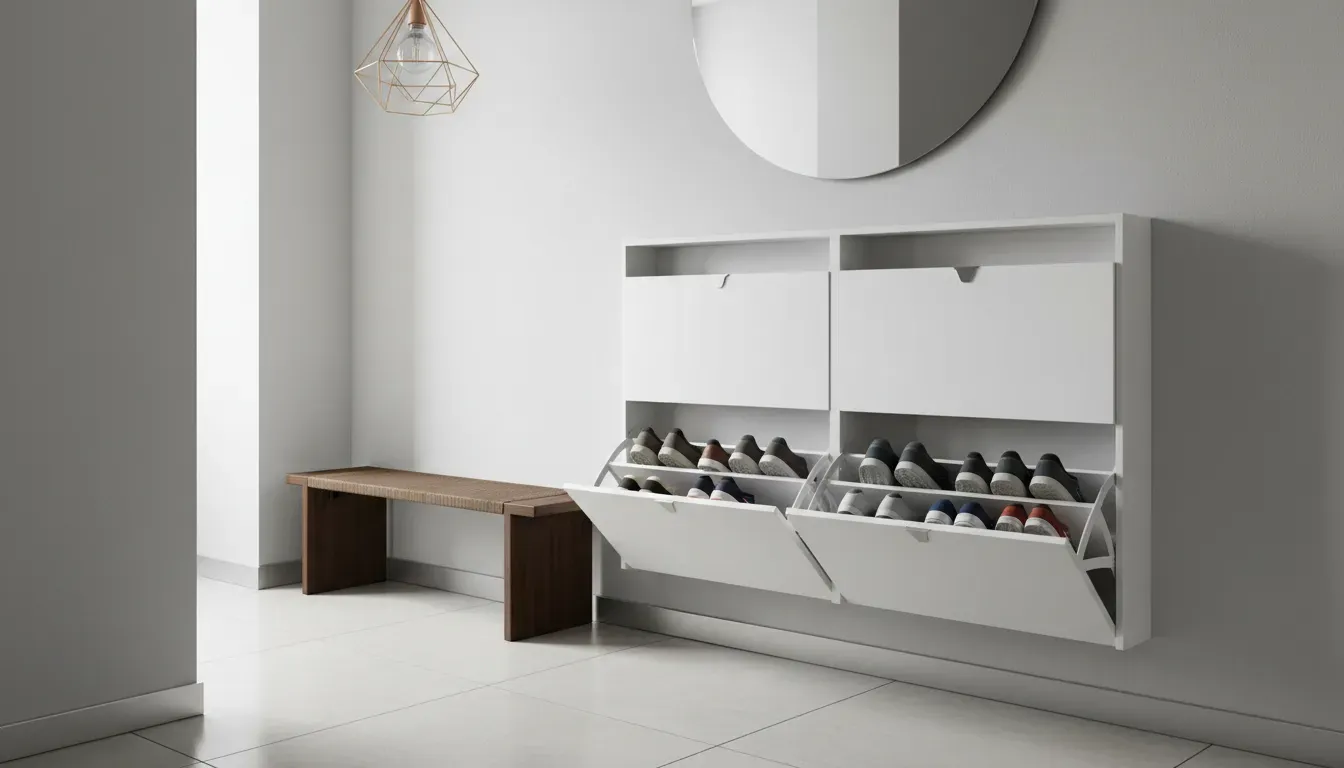
Slim Tilt-Out Cabinets
While technically furniture, ultra-slim tilt-out shoe cabinets are often anchored to the wall and protrude only a few inches. They utilize vertical height to store multiple pairs of shoes in a footprint that is significantly smaller than a standard shoe rack. The top of the cabinet can then serve as your landing strip surface.
Installation Guide: Securing Your Storage
The effectiveness of a vertical storage system is entirely dependent on its stability. A wall rack that pulls away from the drywall creates damage and frustration.
Finding the Studs
For any rack intended to hold coats or bags, anchoring into wall studs is mandatory. Drywall anchors can fail over time under the dynamic load of items being added and removed daily. Use a magnetic stud finder to locate the framing behind your walls. Standard studs are spaced 16 inches apart on center.
Renter-Friendly Options
If drilling into studs is prohibited by your lease, you are not entirely out of luck, though you must adjust your weight expectations.
- High-Strength Adhesive Hooks: Modern adhesive technology has improved significantly. Look for heavy-duty options rated for 5-10 pounds. Use these for lighter items like scarves, keys, and hats, rather than heavy winter coats.
- Over-the-Door Racks: If your entryway opens immediately into a closet or bathroom, the back of that door is prime real estate. Over-the-door racks require zero installation and can hold substantial weight.
- Tension Rods: If you have an alcove, a heavy-duty tension rod can create a hanging rail without a single screw.
Styling Your Vertical Entryway
Functionality does not require sacrificing style. Your wall rack system should complement the interior design of your apartment.
Material Consistency
Match the materials of your wall racks to other elements in your home. If you have mid-century modern furniture, opt for walnut wood tones and brass hardware. For an industrial loft aesthetic, black iron piping and distressed wood are appropriate choices.
The Rule of Odd Numbers
When arranging hooks or decorative items on a shelf, adhere to the rule of odd numbers. Arrangements of three or five items are visually more appealing and dynamic than even numbers. For example, style a shelf with a plant, a framed photo, and a small tray for keys.
Seasonal Rotation
In a small apartment, you cannot keep your entire year’s wardrobe at the door. Practice seasonal rotation. In summer, the heavy coat hooks should be used for lightweight jackets, sun hats, or tote bags. Heavy winter gear should be moved to deep storage closet organization elsewhere in the apartment. This keeps the visual “noise” of the entryway low.
For those looking to maximize corner spaces—often the most underutilized area in a room—a specialized corner rack can add storage where no standard shelf would fit.
https://www.amazon.com/s?k=Corner+Wall+Mount+Coat+Rack&tag=hats0f8-20
Maintenance: Keeping the System Working
The best organizational system will fail without behavioral maintenance. Vertical storage is highly visible; unlike a junk drawer, you cannot hide the clutter.
The “One In, One Out” Rule
Because wall space is finite, adopt a strict policy. If a new coat is purchased, an old one must be donated or moved to a secondary closet. If the mail organizer is full, it must be processed before more mail is added.
Weekly Reset
Dedicate five minutes once a week to “reset” the entryway. Re-hang coats that have slipped, clear out old receipts from the landing strip, and wipe down the shelf surfaces. This prevents the slow accumulation of entropy that leads to a messy home.
Conclusion
Living in a small apartment requires a shift in perspective. When the floor plan is limited, the walls offer a vast, untapped frontier for organization. By implementing a thoughtful system of wall racks, floating shelves, and vertical organizers, you transform your entryway from a point of congestion into a streamlined, welcoming threshold.
Remember that the goal is not just to store items, but to create a flow of life that supports your daily routine. A well-organized entryway saves you time looking for keys, reduces the stress of clutter, and welcomes you home with a sense of order. Look up, measure your walls, and start building your vertical sanctuary today.