
Eco-Friendly Entryway Benches with Storage Made from Reclaimed Wood
Discover how reclaimed wood storage benches combine sustainability with rustic elegance to transform your entryway into an organized, eco-conscious space.
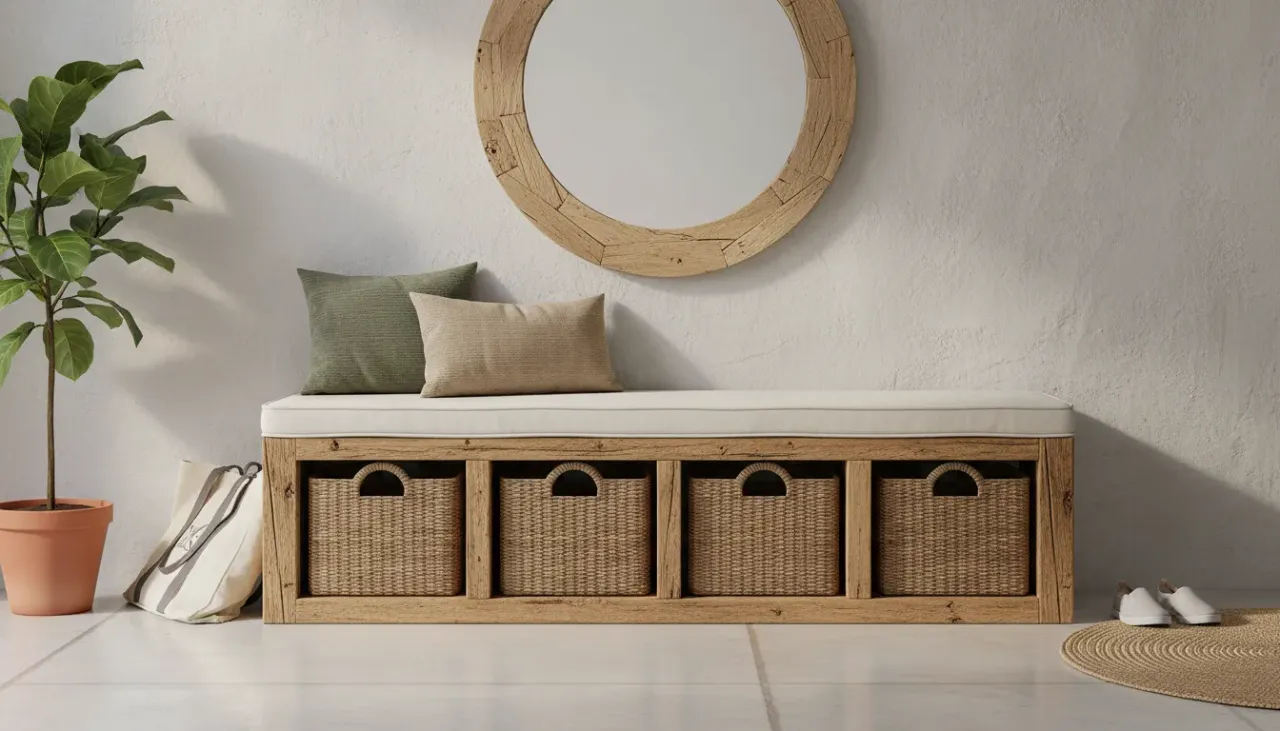
Feb 4, 2026 - Written by: linda wise

The entryway is the handshake of the home. It is the first point of contact for guests and the final threshold you cross before facing the world. Yet, this pivotal space often suffers from neglect, becoming a dumping ground for shoes, mail, and outerwear. The challenge lies in creating a space that is not only functional and organized but also aesthetically grounding and ethically sound.
In the contemporary interior design landscape, there is a distinct shift away from “fast furniture”—pieces made from particleboard and synthetic veneers that degrade quickly—toward materials with permanence and provenance. This is where eco-friendly entryway benches made from reclaimed wood have found their niche. These pieces offer a trifecta of benefits: robust storage solutions, unparalleled aesthetic character, and a significant reduction in environmental impact. By repurposing timber from old barns, factories, and warehouses, homeowners can curate an entryway that tells a story while preserving the planet.
The Aesthetic and Ethical Value of Reclaimed Wood
Reclaimed wood is not merely “old” lumber; it is material that has been seasoned by time and the elements. Unlike virgin timber harvested from young tree farms, reclaimed wood often comes from old-growth forests that were harvested a century or more ago. This wood is denser, more stable, and possesses a grain pattern complexity that is rarely found in modern lumber.
The Provenance of Patina
The visual appeal of reclaimed wood lies in its imperfections. Every knot, nail hole, saw mark, and oxidation stain serves as a testament to the wood’s previous life. In an entryway setting, a bench crafted from this material acts as a statement piece. It grounds the space with texture and warmth, providing an immediate sense of history.
Whether the wood was salvaged from a dilapidated barn in the Midwest or a textile factory in Manchester, the material carries a unique patina that cannot be replicated artificially. This natural weathering process creates a depth of color—ranging from silver-greys to deep, honeyed browns—that adds sophistication to both modern and rustic interiors.
Environmental Stewardship
Choosing reclaimed wood is a direct act of conservation. By utilizing existing timber, we reduce the demand for new logging, thereby preserving living forests which are crucial for carbon sequestration. Furthermore, the process of reclaiming wood keeps valuable materials out of landfills.
The carbon footprint of a reclaimed wood bench is significantly lower than that of a new piece of furniture. There is no energy expenditure required to fell, transport, and process raw logs. Instead, the energy is focused on deconstructing, cleaning, and refinishing existing material. For the eco-conscious homeowner, this is a tangible way to practice sustainability without sacrificing style.
Functional Design: Integrating Storage
While the material provides the beauty, the design must provide the utility. An entryway bench without storage is merely a seat; an entryway bench with storage is a comprehensive organization system. The integration of storage into reclaimed wood furniture requires skilled craftsmanship to ensure that the utility does not compromise the structural integrity or the visual flow of the piece.
Flip-Top Benches
The flip-top design is a classic solution for concealing clutter entirely. The seat of the bench operates on hinges, lifting to reveal a deep chest cavity. This is ideal for storing seasonal items that are not needed daily, such as winter scarves in the summer, or bulky items like backpacks and reusable grocery bags.
When selecting a flip-top bench made from reclaimed wood, pay close attention to the hardware. The weight of dense, old-growth timber requires heavy-duty hinges, often incorporating soft-close mechanisms to prevent slamming.
Open Cubbies and Shoe Shelves
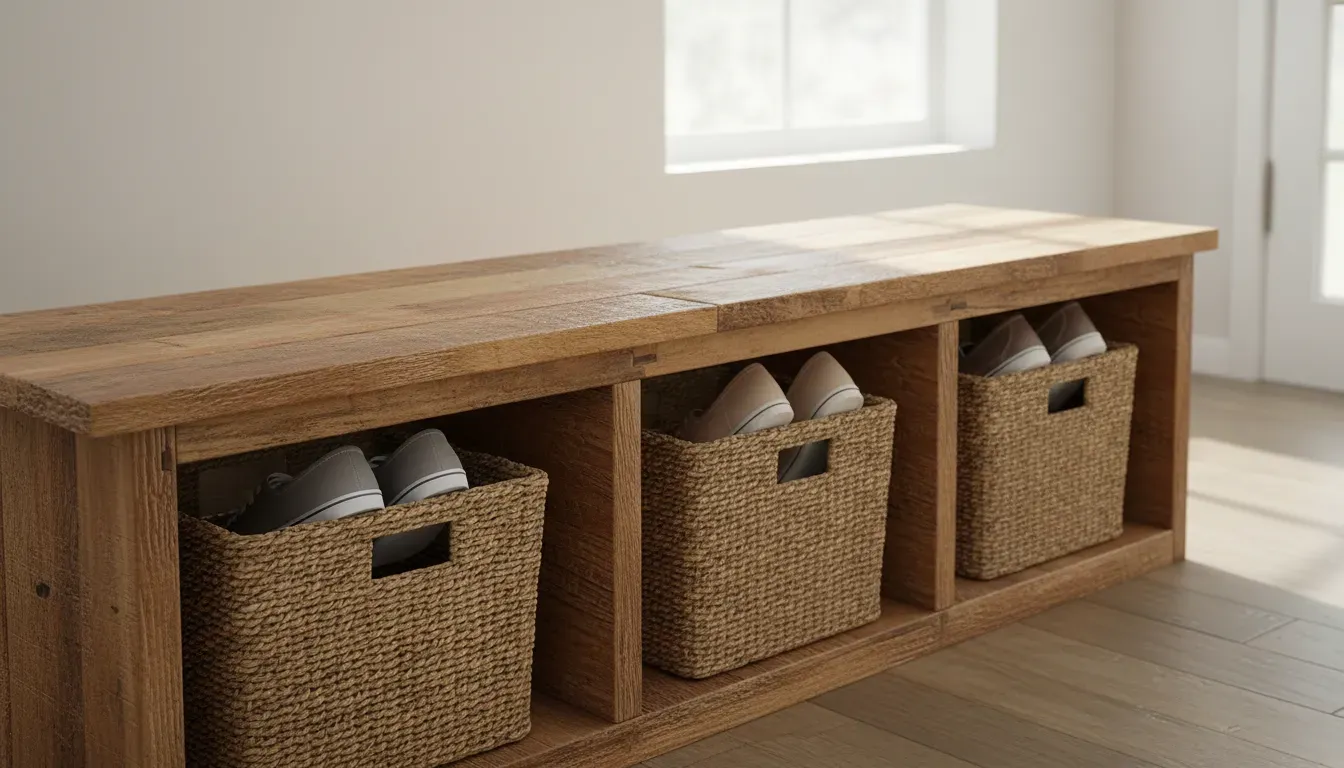
For high-traffic households, open storage is often more practical. Benches featuring lower cubbies or slat shelves allow for the immediate removal and stowage of footwear. This prevents the pile-up of shoes near the door, a common source of entryway anxiety.
The open design also allows the beautiful grain of the reclaimed wood to be visible on the interior surfaces. Many designers utilize the contrast between the rustic wood and organized baskets placed within the cubbies. Woven seagrass or wire baskets can slide into these spaces to hold smaller items like dog leashes or keys.
If you are looking for a piece that balances rustic charm with practical open storage, consider exploring options that combine metal framing with solid wood.
Shop Reclaimed Style Storage Benches on Amazon
Drawer Units
Drawers offer the cleanest look, hiding clutter while keeping items accessible. In reclaimed wood furniture, drawers are often constructed with dovetail joinery, showcasing the craftsmanship. The drawer fronts become a canvas for the wood’s character, perhaps featuring the rough-sawn texture of the original beam while the top surface is sanded smooth for seating comfort.
Synergy with Interior Styles
One of the misconceptions about reclaimed wood is that it is suitable only for “rustic” or “country” homes. In reality, the versatility of the material allows it to anchor a wide variety of design aesthetics.
Modern Industrial
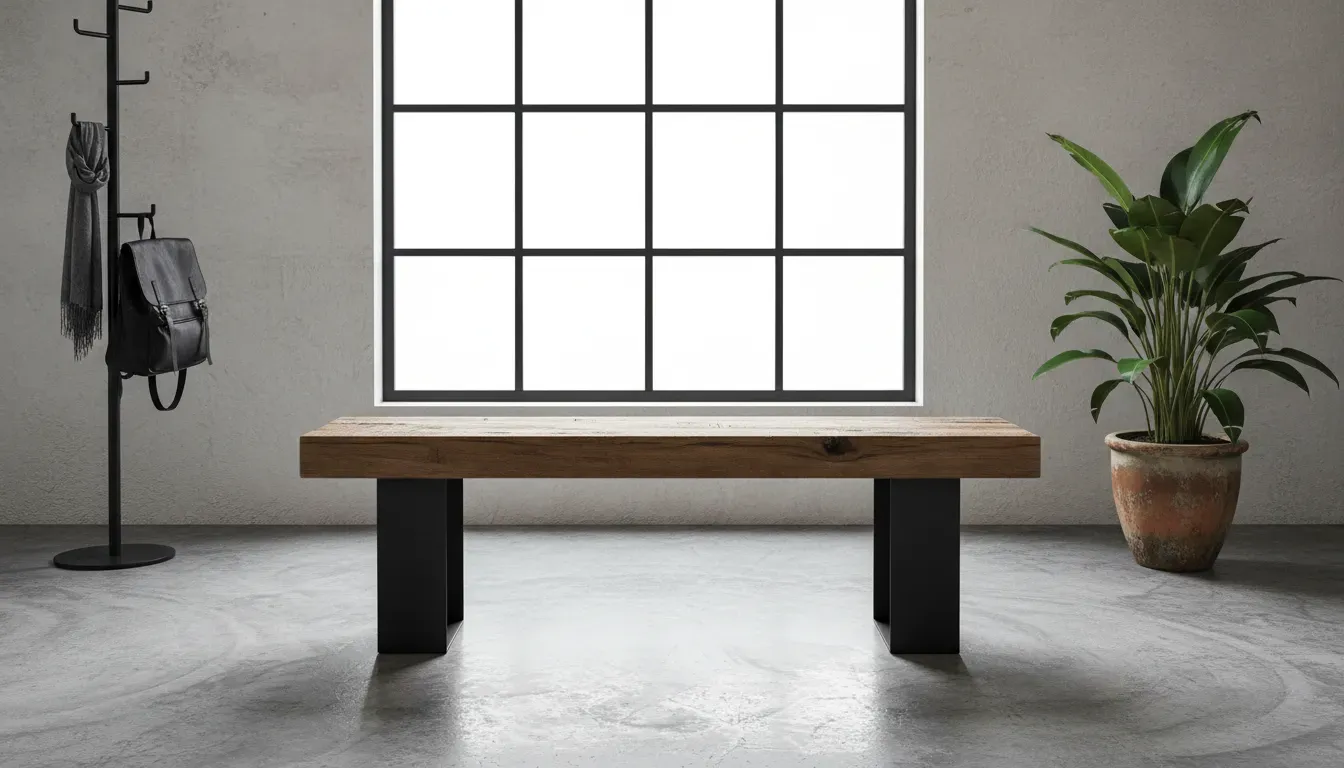
The industrial trend relies heavily on the marriage of raw materials. An entryway bench featuring thick slabs of reclaimed oak paired with blackened steel legs fits perfectly into an urban loft or a contemporary apartment. The coolness of the metal offsets the warmth of the wood, creating a balanced, masculine aesthetic.
Farmhouse and Cottage
For a softer look, reclaimed wood can be treated with a whitewash or a matte wax finish. This preserves the texture while lightening the color palette, making it suitable for airy, light-filled entryways. In these settings, the storage bench often serves as a cozy nook, perhaps styled with linen pillows and a throw blanket.
Scandi-Boho
Scandinavian design prioritizes functionality and natural elements. A reclaimed wood bench with clean lines and minimal ornamentation complements this style. The focus here is on the organic nature of the wood—pine or spruce with a lighter finish—promoting a sense of calm and simplicity as soon as one enters the home.
For more inspiration on blending different textures in your foyer, read our guide on Maximizing Hallway Decor.
Selecting the Right Wood Type
Not all reclaimed wood is created equal. The species of wood used will dictate the bench’s durability, color, and maintenance requirements.
Reclaimed Oak
Oak is the gold standard for durability. It is a hardwood that resists dents and scratches, making it an excellent choice for a bench that will see daily use. Reclaimed oak often comes from structural beams in barns and has a prominent, attractive grain. It tends to darken with age, acquiring a rich, golden-brown hue.
Reclaimed Pine
Pine is softer than oak but offers a distinctively rustic appeal. It was commonly used in flooring and siding in the 19th and early 20th centuries. Reclaimed pine often features “heart pine,” which is denser and more resinous than modern pine. It takes stains beautifully and usually retains more of the original saw marks and nail holes, offering high textural contrast.
Reclaimed Teak
If your entryway is prone to moisture—perhaps you live in a rainy climate or near the coast—reclaimed teak is a superior option. Teak is naturally high in oils that repel water and resist rot. Much reclaimed teak is sourced from old boats or outdoor structures. It possesses a smooth, tight grain and a color that ranges from leather-brown to a weathered silver-grey.
Authenticity and Greenwashing
As the popularity of the “rustic look” has surged, so has the prevalence of greenwashing. Many mass-market retailers sell furniture labeled as “distressed” or “vintage finish,” which is merely new wood that has been mechanically beaten with chains or chemically treated to look old.
To ensure you are buying truly eco-friendly reclaimed wood:
- Check the Grain: Old-growth wood has tight growth rings, significantly closer together than new lumber.
- Look for Imperfections: Authentic reclaimed wood will have random imperfections. If the “distressing” looks like a repeated pattern, it was likely done by a machine.
- Ask for the Source: Reputable artisans and sellers can often tell you exactly where the wood came from—a specific barn in Ohio, a factory in Detroit, or a fence in Oregon.
- Certifications: Look for FSC (Forest Stewardship Council) Recycled certification, which verifies that the timber is genuinely reclaimed.
If you are seeking a verified sustainable option that captures the essence of reclaimed aesthetics with modern reliability, browsing specialized collections is recommended.
Shop Sustainable Wood Entryway Furniture on Amazon
Maintenance and Care
Owning a piece of history requires a specific approach to maintenance. Unlike modern polyurethane-coated furniture, reclaimed wood often utilizes oil or wax finishes to maintain the tactile quality of the timber.
Cleaning
Avoid harsh chemical cleaners, silicone-based sprays, or ammonia. These can strip the natural patina and damage the wood fibers. Instead, dust regularly with a microfiber cloth. for deeper cleaning, use a damp cloth followed immediately by a dry one. Moisture is the enemy of wood; never let water sit on the surface.
Conditioning
Over time, wood can dry out, especially in climate-controlled homes with central heating. Apply a high-quality furniture wax or tung oil once or twice a year. This nourishes the wood, enriches the color, and provides a protective barrier against moisture and spills. Always test any product on an inconspicuous area first, such as the back leg or the underside of the seat.
Protecting the Surface
While reclaimed wood is rugged, it is not indestructible. If your bench is used for putting on shoes, grit from the soles can scratch the surface. Placing a runner rug in front of the bench can mitigate this. Additionally, avoid placing the bench in direct, harsh sunlight, which can bleach the color of the wood over time.
For detailed instructions on identifying and caring for different wood species, refer to our article on Identifying Real Wood Furniture.
The Investment Perspective
A custom or high-quality reclaimed wood bench is an investment. The cost is generally higher than mass-produced furniture due to the labor-intensive process of sourcing, de-nailing, kiln-drying, and milling the old timber. However, the return on investment is substantial.
Durability and Longevity
Old-growth wood is dimensionally stable. It has already done all the shrinking and expanding it is going to do. A well-constructed joinery bench will last for generations, potentially becoming an heirloom piece. Unlike particleboard which swells and crumbles when exposed to moisture, solid reclaimed wood can be sanded and refinished decades down the line.
Resale Value
Quality solid wood furniture holds its value. Because each piece is unique, there is a robust secondary market for reclaimed furniture. Should you ever decide to redesign your home, a reclaimed wood bench is much easier to sell than a flat-pack item.
DIY Potential: The Ultimate Eco-Project
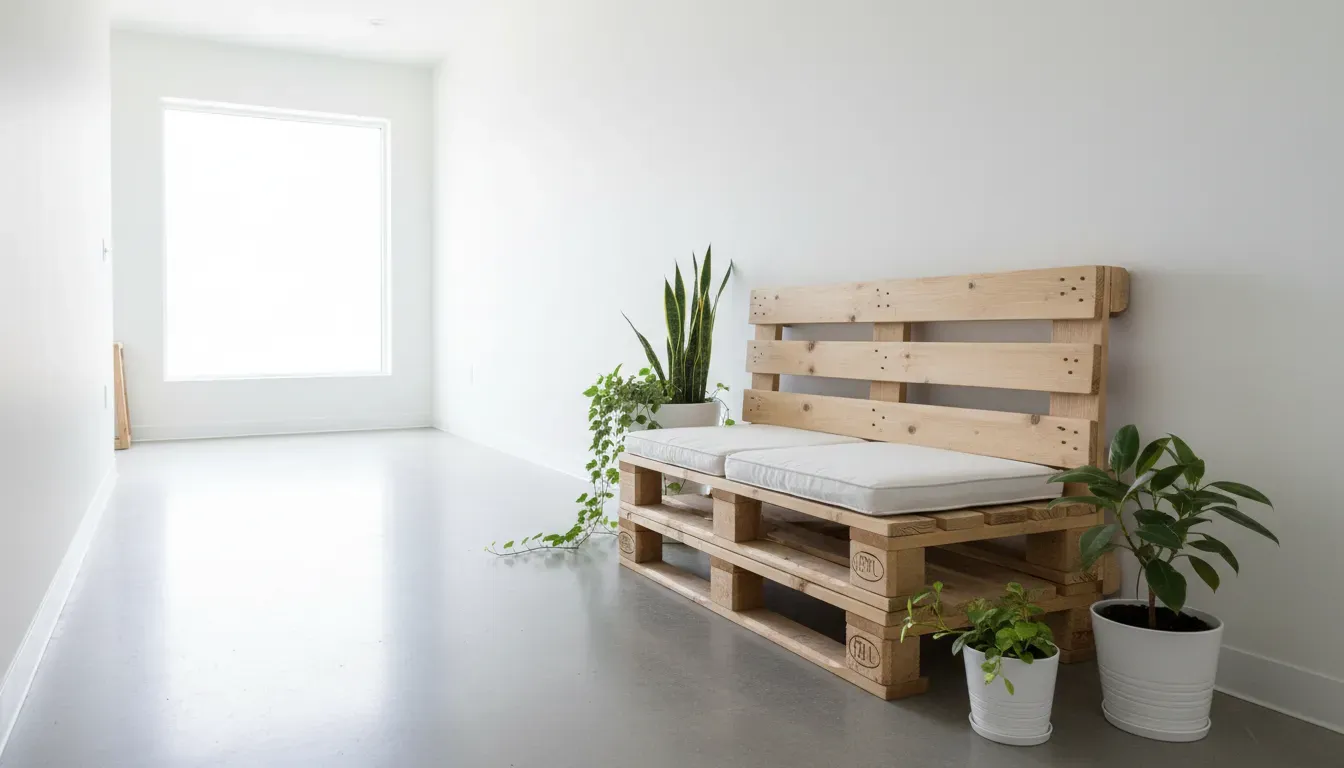
For the hands-on homeowner, creating an entryway bench from reclaimed wood is a rewarding project. Sourcing material can be an adventure in itself—scouring architectural salvage yards, contacting local demolition companies, or even repurposing wood from your own home renovations.
Building your own bench allows for complete customization of dimensions to fit your specific entryway niche. You can design the storage capacity to match exactly the number of family members or the types of shoes you own. However, working with reclaimed wood presents unique challenges. Hidden nails can damage saw blades, and the wood may require planing to achieve a level surface.
If you choose the DIY route, ensure you treat the wood for insects (kiln drying is best, but borate treatments work for DIYers) and seal it properly to prevent splinters.
Conclusion: A Conscious Welcome
The entryway sets the tone for the entire home. By choosing an eco-friendly bench made from reclaimed wood, you are making a deliberate design choice that values substance, history, and sustainability. You are rejecting the disposable culture of fast interiors in favor of something lasting.
These benches offer the practical storage needed to keep a home organized, hiding the chaos of daily life within a vessel of natural beauty. Whether you prefer the rough-hewn look of a farmhouse foyer or the sleek lines of an industrial loft, there is a reclaimed timber solution that fits. It is a purchase that benefits your home organization, your aesthetic enjoyment, and the environment simultaneously.
As we move toward a more sustainable future, the furniture we choose to live with matters. A reclaimed wood bench is not just a place to tie your shoes; it is a piece of the past, repurposed for the future, standing guard at the entrance of your sanctuary.