
Edgy Industrial Mudrooms: Metal Pipe Cubbies and Urban Storage Trends
Discover how to engineer an edgy industrial mudroom using metal pipe cubbies, raw materials, and urban storage trends that maximize both form and function.
Mar 29, 2026 - Written by: Linda Wise

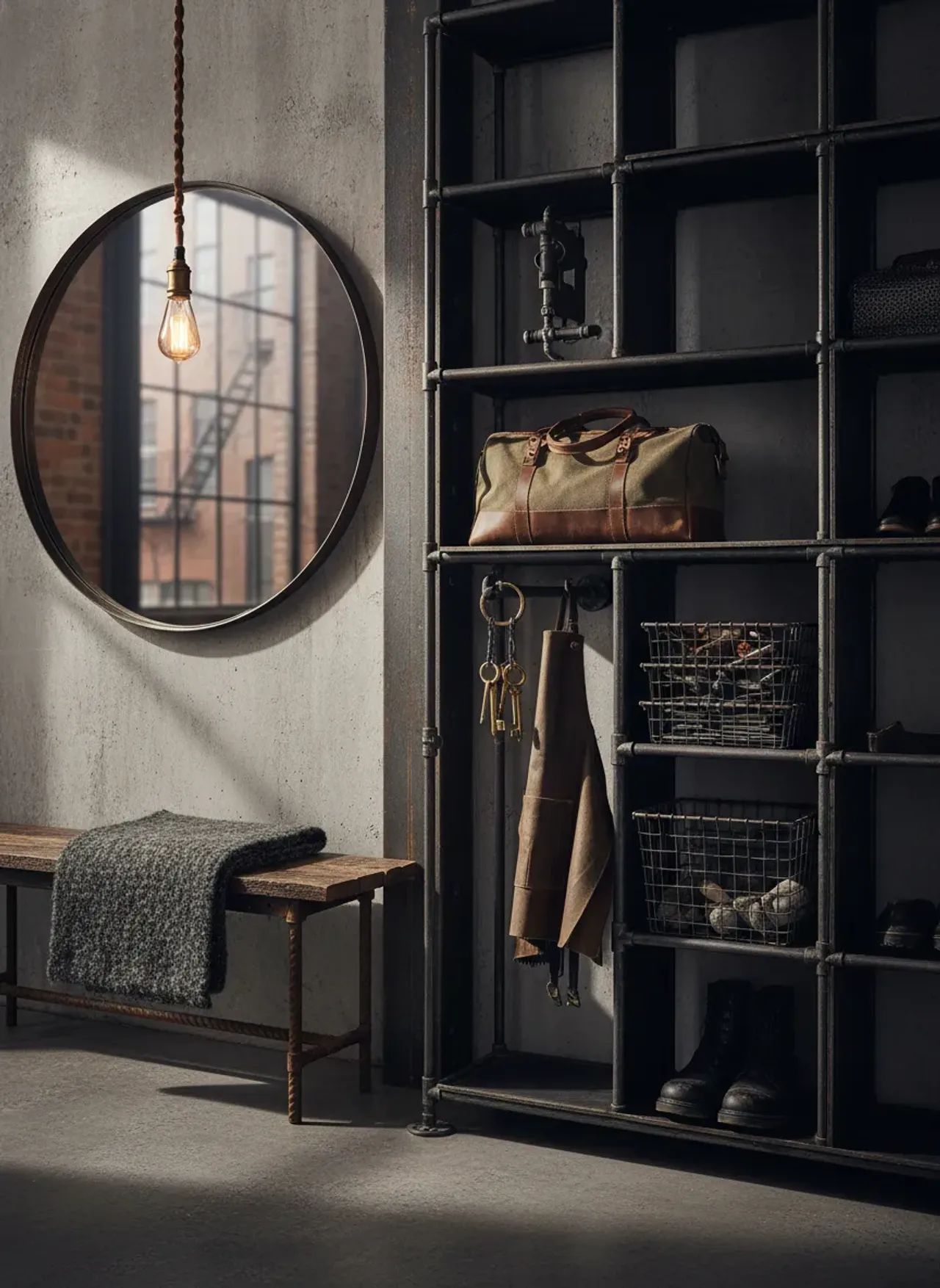
You open the front door, and instead of the usual chaotic pile of sneakers and discarded mail, you’re greeted by raw steel, distressed timber, and unapologetic structural geometry. Welcome to the era of the industrial mudroom. We have officially moved past the pristine, white-washed farmhouse aesthetic. Today’s high-traffic entryways demand something with a bit more grit, a lot more durability, and a visual weight that commands attention.
I’ve personally found that incorporating metal pipe cubbies into an entryway doesn’t just solve the eternal problem of shoe storage. It completely redefines the architectural language of your home’s most utilitarian space. It bridges the gap between a 1920s Brooklyn manufacturing plant and modern, hyper-functional residential design. But pulling off this look requires more than just a quick trip to the plumbing aisle and a handful of drywall screws. It demands an understanding of structural integrity, material patinas, and urban storage trends that actually perform under pressure.
Before we tear into the mechanics of threading iron pipes and distressing oak, take a look at the core hardware that sets the foundation for an edgy industrial drop zone.
Quick Comparison: Top Picks
The Anatomy of Urban Industrial Design
To build a mudroom that genuinely feels industrial—rather than like a cheap imitation—you have to respect the origins of the style. Industrial design was born out of necessity. Factories didn’t cover up ductwork or hide structural beams because it cost time and money to do so. They celebrated the mechanics of the building. Your mudroom needs to operate on the same philosophy.
Raw Materials Meet Functional Geometry
When you look closely at urban loft spaces, you’ll notice that nothing is purely decorative. Every element carries its own weight. In an entryway, this translates to utilizing materials in their most honest state. We are talking about hot-rolled steel, oxidized iron, exposed fasteners, and timber that still bears the scars of the saw blade.
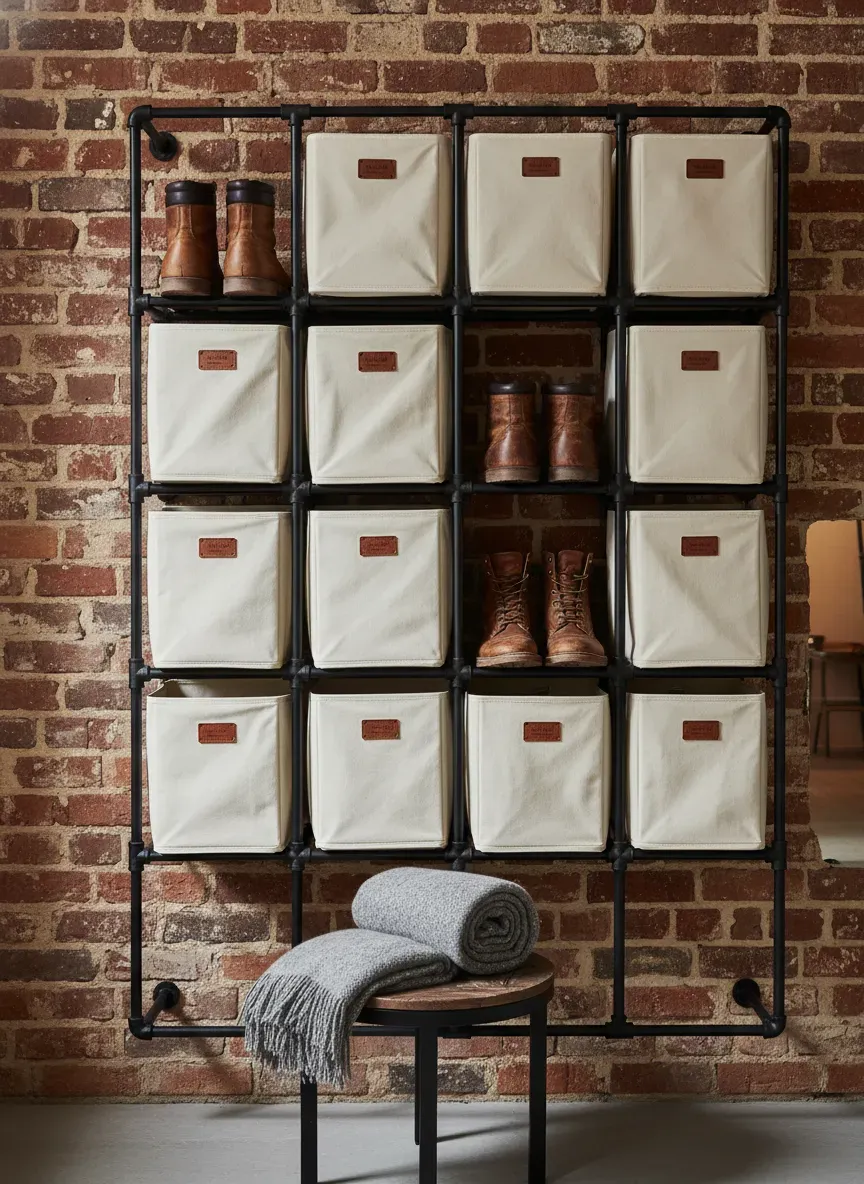
The structural geometry relies heavily on straight lines and right angles. Metal pipe cubbies perfectly encapsulate this. A grid of cubbies assembled from black steel pipe and thick wood slabs creates an instant focal point. The rigid, repetitive squares offer a sense of order, contrasting brilliantly with the inevitable chaos of winter coats, muddy boots, and canvas tote bags.
Why the Mudroom Demands Utilitarian Aesthetics
The mudroom is the airlock of your home. It takes the brunt of the weather, the dirt, and the daily friction of human life. Delicate materials simply do not survive here. If you install an MDF cabinet with a high-gloss finish, it will be chipped, scratched, and ruined within six months.
Industrial materials, however, thrive on abuse. A scratch on a piece of reclaimed scaffolding board doesn’t ruin it; it just adds to the patina. A scuff on a cast-iron flange only deepens its character. This is the exact reason why transitioning to edgy industrial mudrooms is less of a fleeting trend and more of a practical evolution in home layout planning.
Engineering Metal Pipe Cubbies: A Masterclass
Building custom metal pipe cubbies is one of the most rewarding DIY projects you can tackle, but it can also be an absolute nightmare if you don’t understand the hardware. You aren’t just buying shelves; you are essentially building a plumbing system that holds furniture grade lumber.
Sourcing the Right Hardware: Black Iron vs. Galvanized
Walk into any hardware store, and you’ll face two distinct choices in the pipe aisle: black iron (technically uncoated steel) and galvanized steel.
For a true urban edge, black iron is the undisputed king. It has a dark, charcoal-gray finish right off the shelf, providing that moody, aggressive contrast against light walls or warm wood tones. Galvanized pipe, with its shiny, zinc-coated finish, leans more toward a rustic farmhouse or nautical vibe.
Here’s the real kicker: black iron pipes from a hardware store are coated in a thick, nasty layer of industrial grease to prevent them from rusting during shipping. You cannot just screw them together and slap them on your wall.
Pro Tip: Before assembling anything, you must degrease every single piece of black iron hardware. Soak the pipes, flanges, and elbows in a bucket of hot water mixed with TSP (Trisodium Phosphate) or scrub them down with mineral spirits. Once the grease is gone, the raw steel will flash-rust if left untreated. Wipe them completely dry and immediately seal them with a clear matte polyurethane spray or a rub-on paste wax to lock in that raw metal look.
The Threading Conundrum
Industrial pipes use NPT (National Pipe Thread) standards. This means the threads are tapered. As you screw a pipe into a fitting, it gets progressively tighter until it locks up.
Why does this matter? Because when you are building a symmetrical grid of metal pipe cubbies, you will quickly discover that not every pipe tightens down to the exact same depth. One pipe might screw in half an inch, while another only goes in a quarter of an inch. If you force it, you risk stripping the threads. To maintain level shelving, you have to dry-fit your entire assembly on the floor, making micro-adjustments to the threads so that all your uprights are identical in height.
Flanges, Nipples, and Elbows: Decoding the Terminology
To map out your cubby system, you need to speak the language of pipe fittings:
- Floor Flanges: These are the flat, circular discs with four screw holes. You will use these to anchor your entire rig to the floor, the walls, and the underside of your wooden shelves.
- Nipples: Short lengths of threaded pipe (usually ranging from close-threaded to 12 inches). These determine the vertical height between your cubby shelves.
- Tees: T-shaped fittings used to branch off in three directions. These are critical for building continuous, multi-tier grid systems.
- Elbows: 90-degree turns used to cap off the top of your shelving unit and turn it back into the wall.
Wood Pairing: From Reclaimed Oak to Stained Plywood
The wood you select to thread through your metal piping will dictate the final soul of the mudroom. You want a species that carries enough visual weight to balance the heavy cast iron.
I highly recommend looking for reclaimed barn wood or thick scaffolding planks. The existing nail holes, saw marks, and irregular grain patterns play perfectly into the industrial narrative. If you are on a tighter budget, you can use standard 2x10 pine or even cabinet-grade birch plywood. However, you will need to distress the pine manually—using chains, wire brushes, and hammers—and apply an oxidizing stain (like a homemade iron-acetate solution made from steel wool dissolved in vinegar) to instantly age the wood by fifty years.
Architectural Integration: Layouts That Actually Work
A pile of beautifully distressed wood and degreased iron is useless without a strategic floor plan. The mudroom operates on a specific workflow: drop keys, remove coat, sit down, remove shoes, store gear. Your metal pipe cubbies need to facilitate this choreography seamlessly.
The Open-Concept Lockers
One of the most dominating urban storage trends right now is the open-concept locker rig. Instead of closed cabinet doors, the structure is completely exposed.
Imagine a system where the vertical dividers are made entirely of 3/4-inch black iron pipes spanning from floor to ceiling. Between these vertical pipe columns, you suspend wooden benches and upper cubby boxes. This layout works exceptionally well in narrow entryways because the lack of solid, opaque side panels allows light to pass through the structure, making the room feel significantly larger while still providing massive amounts of storage.
Boot Benches and Drop Zones
Every functional mudroom requires a seating element to deal with footwear. If you’re already looking at building a simple mudroom bench, integrating an overhead network of iron pipe cubbies takes the project from basic to architectural.
You can build the base of the bench using heavy 1-inch thick iron pipes, creating an open rack underneath for muddy boots to drip dry. Above the solid wood bench top, transition to a lighter 1/2-inch pipe to build a grid of smaller cubbies specifically sized for gloves, hats, and scarves. This tiered approach to pipe thickness creates a subtle hierarchy in the design, grounding the heavier elements at the floor and keeping the sightlines light near the ceiling.
Three Non-Negotiable Urban Storage Trends
Designing an edgy industrial mudroom isn’t just about the permanent fixtures. The accessories and secondary storage solutions you implement will ultimately make or break the aesthetic. If you fill a stunning custom iron rig with cheap plastic storage bins, the entire illusion shatters.
1. Wire Mesh Baskets and Visibility
In an industrial space, you don’t hide your gear; you display it efficiently. Heavy-duty wire mesh baskets are the ultimate urban storage solution. They mimic the look of old factory parts bins and allow you to see exactly what is inside without having to rummage around.
Opt for baskets with a matte black or heavily oxidized finish. Slide these into the smaller upper cubbies of your pipe grid to contain loose items like dog leashes, winter beanies, and mail. The crosshatch pattern of the wire mesh introduces a secondary layer of geometric texture that complements the rigid lines of the pipework perfectly.
2. Asymmetrical Shelving Rigs
While traditional mudrooms rely on perfect symmetry, modern urban design embraces a bit of controlled chaos. Asymmetrical shelving rigs create dynamic visual tension.
Instead of building a predictable 3x3 grid of cubbies, step the pipes down like a staircase. Create a tall vertical section on the left for hanging long trench coats, and build a dense, multi-tiered cubby system on the right for shoe storage. The beauty of threaded metal pipe is its absolute modularity. You can essentially build a giant adult Erector set that perfectly conforms to the weird architectural quirks of your specific entryway.
3. Brutalist Hardware and Oversized Hooks
Standard coat hooks look ridiculously fragile when mounted next to cast iron flanges. You need hardware that punches back.
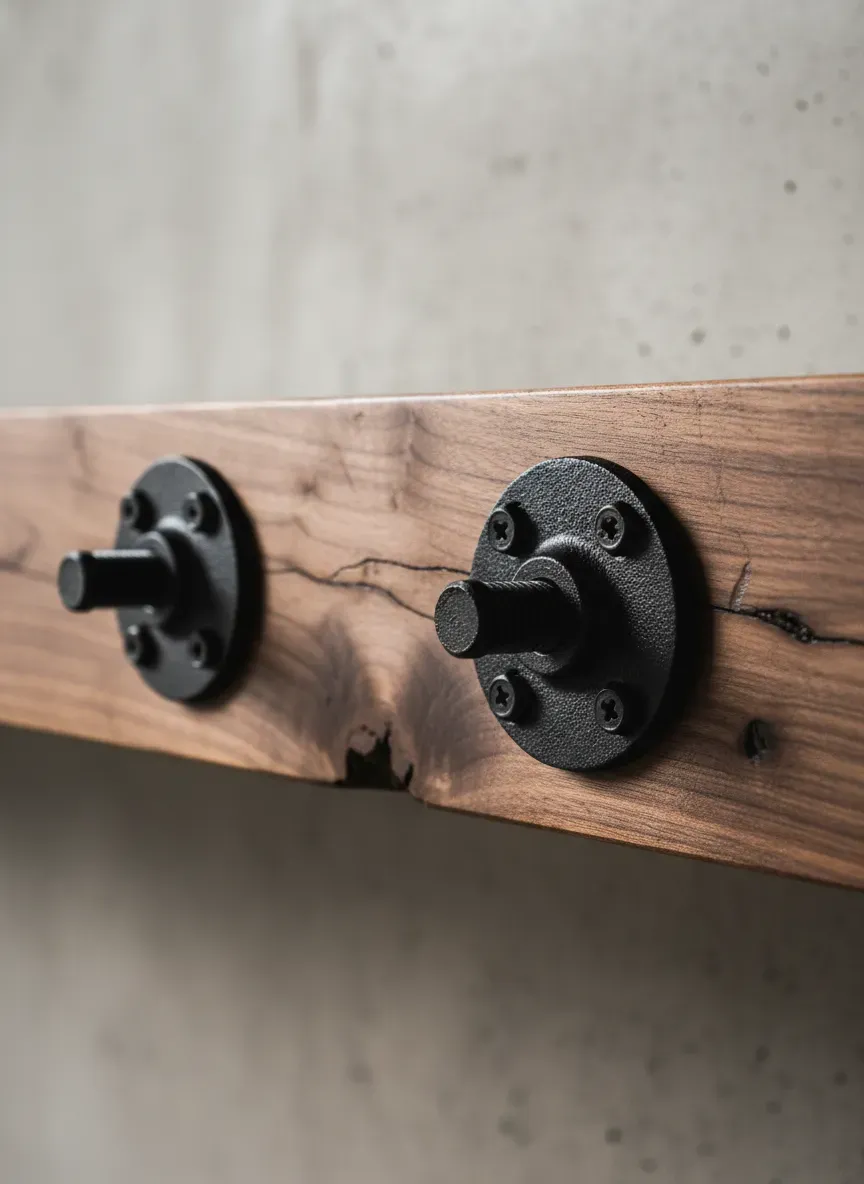
Look for brutalist, oversized hooks forged from raw steel. Better yet, build your own coat hooks using smaller 1/2-inch pipe fittings. A floor flange screwed to a wooden backing board, fitted with a 2-inch nipple and a pipe cap, creates a heavy-duty hook that could hold a wet 50-pound canvas tent without flinching. It ties the entire room together, ensuring that the industrial theme is consistent down to the smallest touchpoint.
The Physics of Installation: Avoiding Drywall Catastrophes
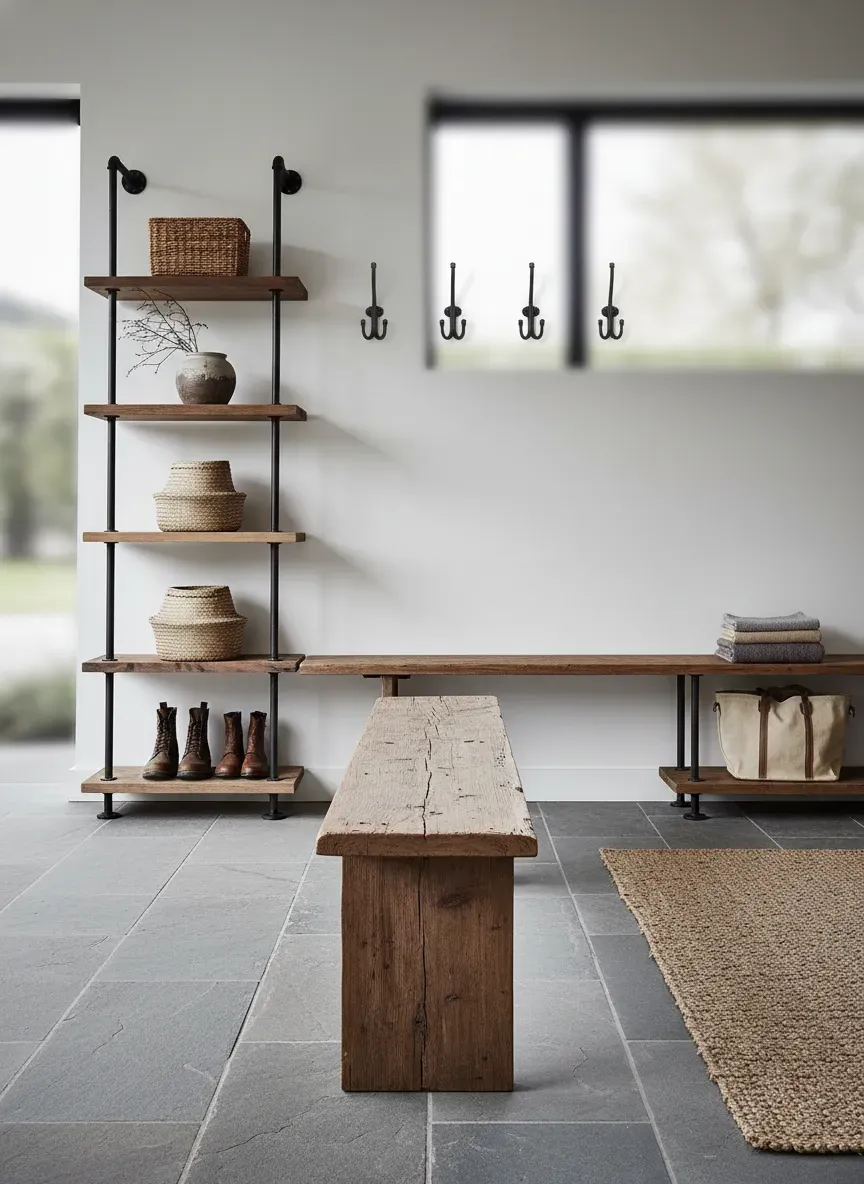
We need to talk about gravity. Metal pipe is incredibly heavy. Thick slab timber is incredibly heavy. When you combine the two and load them up with winter boots and heavy coats, you are creating massive sheer forces against your walls.
If you attempt to secure an industrial pipe cubby system to bare drywall using standard plastic anchors, the entire unit will rip out of the wall and crash to the floor. It’s not a matter of if; it’s a matter of when.
Ledger Boards and Stud Mapping
Your absolute first step in the installation process must be mapping out the studs in your mudroom wall. Your structural pipe flanges must bolt directly into the wooden framing of the house.
However, because the width of your cubbies rarely aligns perfectly with the 16-inch on-center spacing of modern wall studs, you will likely need to employ a ledger board system. A ledger board is a thick piece of lumber (often a 1x6 or 1x8) that you bolt horizontally across the wall, hitting every single stud along the way. Once this board is rock-solid, you can screw your iron pipe flanges directly into the ledger board at any interval you choose. It solves the stud-spacing issue and adds another fantastic layer of wood to the industrial design.
The Toggle Bolt Contingency
If you absolutely must secure a flange to an area of hollow drywall (perhaps for a light-duty upper cubby), you cannot use plastic expansion anchors. You must use heavy-duty toggle bolts.
Toggle bolts feature a set of spring-loaded metal wings that fold flat to push through a drilled hole, then snap open behind the drywall. As you tighten the bolt, it clamps the drywall tightly between the flange and the wide metal wings, distributing the load over a much larger surface area. Even then, keep the heavy items grounded on the floor-supported sections of your pipe grid.
Maintenance and Patina Over Time
One of the greatest joys of an edgy industrial mudroom is that it looks better as it ages. The anxiety of keeping an entryway pristine completely vanishes.
When the paste wax on your iron pipes eventually wears down and a tiny bit of surface rust blooms around a fitting, leave it. When someone drops a heavy pair of work boots and dents the edge of the reclaimed wood bench, leave it. This style is an exercise in wabi-sabi—finding beauty in imperfection and impermanence.
For routine maintenance, a dry microfiber cloth is usually all you need to dust off the metal framework. Once a year, you can rub a fresh coat of beeswax or finishing wax over the wood and metal to keep everything conditioned and protected from extreme moisture.
- Key Takeaways for Building an Industrial Mudroom:
- Always degrease and seal black iron pipes before bringing them into your home.
- Utilize reclaimed or artificially distressed thick-cut lumber to balance the heavy visual weight of the metal.
- Incorporate heavy wire mesh baskets for visible, high-impact storage.
- Never trust drywall anchors with heavy pipe rigs; always anchor to studs or utilize a solid wood ledger board.
- Embrace asymmetry to give the space a true, organic urban loft feel.
The Bottom Line: Transitioning your entryway into an edgy industrial mudroom is a bold architectural move that pays massive dividends in both durability and daily aesthetic satisfaction. By treating your storage like structural engineering, utilizing raw, unapologetic materials, and building custom metal pipe cubbies tailored to your exact floor plan, you create an entryway that doesn’t just hold coats—it commands respect.
The Blueprint to Build Your Own
Reading about the perfect industrial drop zone is one thing; actually cutting the lumber and building it to outlast your house is another entirely. If you’re ready to stop browsing inspiration photos and start assembling your own heavy-duty entryway benches, custom cubbies, and structural storage grids, you need precise, idiot-proof blueprints.
I’ve relied heavily on Ted’s Woodworking for years to bridge the gap between a wild idea and a finished, structurally sound piece of furniture. It is essentially an infinite library for builders. You get instant access to over 16,000 meticulously detailed, step-by-step woodworking plans, covering everything from rustic mudroom benches to complex overhead shelving rigs. You don’t need to be a master carpenter to follow them; the cut lists and schematics do all the heavy lifting for you.
Right now, you can grab the entire 16,000-plan archive at a massive 75% discount. Stop guessing on your dimensions and start building an entryway that makes a statement.
Click here to get instant access to all 16,000 plans and claim your 75% discount today.