
Entryway Benches with Storage and Integrated Coat Hooks: A 2-in-1 Solution
Discover how hall trees and entryway benches with storage optimize foyers. Explore styles, organization tips, and top product recommendations for a clutter-free home.
Feb 4, 2026 - Written by: linda wise

The entryway serves as the handshake of the home. It is the first space guests encounter and the final checkpoint before you leave for the day. Despite its pivotal role in domestic life, the foyer often becomes a magnet for chaos. Shoes are kicked off haphazardly, coats are draped over banisters, and bags land wherever gravity takes them. This daily accumulation of clutter disrupts the aesthetic flow of the home and creates unnecessary stress during morning departures.
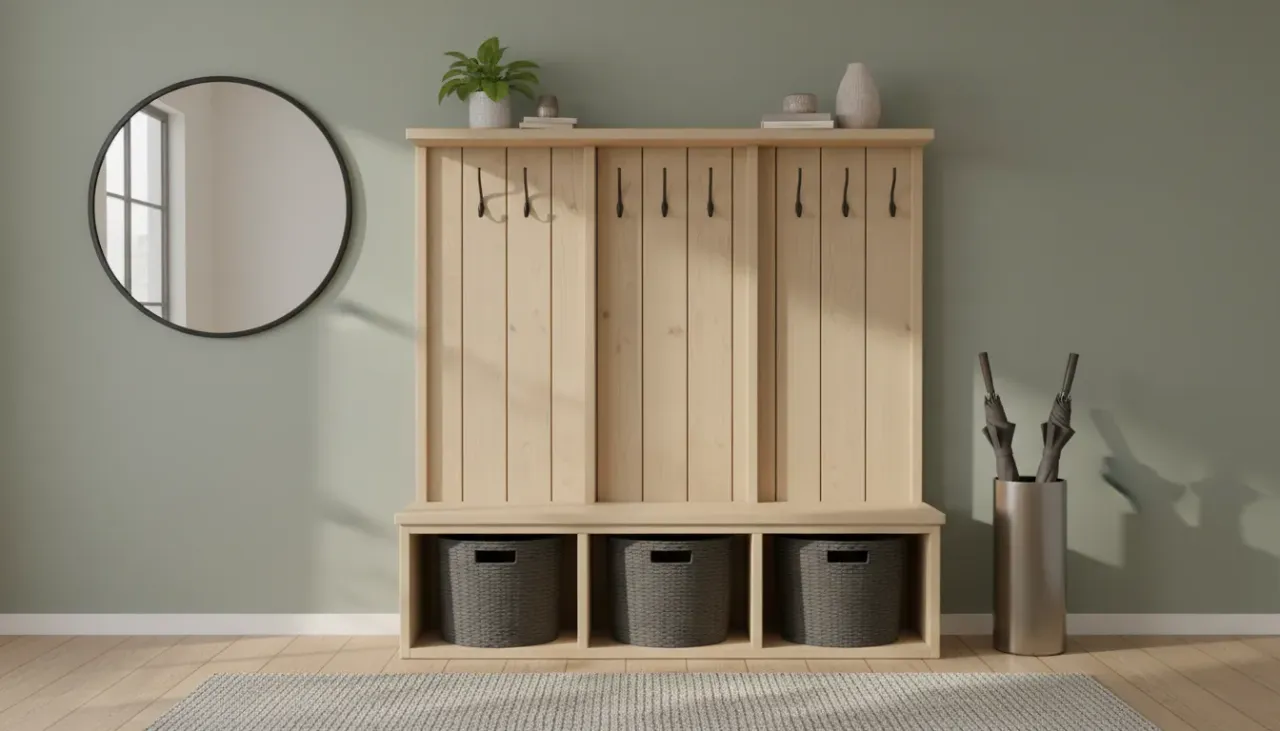
For homeowners seeking to reclaim this vital square footage, the solution often lies in vertical consolidation. The entryway bench with storage and integrated coat hooks—frequently referred to as a hall tree—offers a sophisticated, multifunctional answer to the disarray. By combining seating, shoe storage, and hanging space into a single cohesive unit, these pieces of furniture maximize utility without sacrificing style.
The Architecture of Organization: Why the 2-in-1 Model Works
The fundamental challenge of most entryways, particularly in apartments or older homes, is a lack of floor space. Placing a separate bench, a standalone coat rack, and a shoe rack often results in a visual bottleneck. The 2-in-1 solution addresses this by utilizing verticality. By drawing the eye upward and keeping the footprint relatively compact, these units provide a designated home for every essential item without overwhelming the room.
The Psychology of the “Drop Zone”
Human behavior favors the path of least resistance. When we enter our homes, our instinct is to shed layers immediately. If a designated spot does not exist, items land on the nearest surface. A bench with integrated hooks capitalizes on this instinct by creating a centralized “drop zone.”
The bench provides a comfortable place to sit while removing footwear, encouraging family members to take shoes off at the door rather than tracking dirt through the house. Simultaneously, the hooks offer an immediate repository for outerwear, eliminating the extra step of walking to a coat closet. When the storage solution aligns with natural human habits, organization becomes sustainable rather than a chore.
Deconstructing the Hall Tree: Key Features and Functions
To select the ideal unit for your home, it is essential to understand the anatomy of these furniture pieces. While designs vary from minimalist industrial frames to ornate wooden cabinetry, the core components remain consistent.
The Storage Bench Foundation
The base of the unit anchors the piece and lowers the center of gravity, ensuring stability. This section typically features one of three storage mechanisms:
- Open Cubbies: Ideal for rapid access and frequent use. These are often sized to fit standard baskets, allowing for a customizable aesthetic.
- Hinged Flip-Top: This style offers deep storage for off-season items, such as winter scarves or heavy blankets. However, it requires the user to clear the surface before accessing the contents.
- Drawers or Cabinets: These provide a cleaner look by concealing clutter completely. They are excellent for storing smaller items like dog leashes, shoe polish, or umbrellas.
The Vertical Panel and Hook System
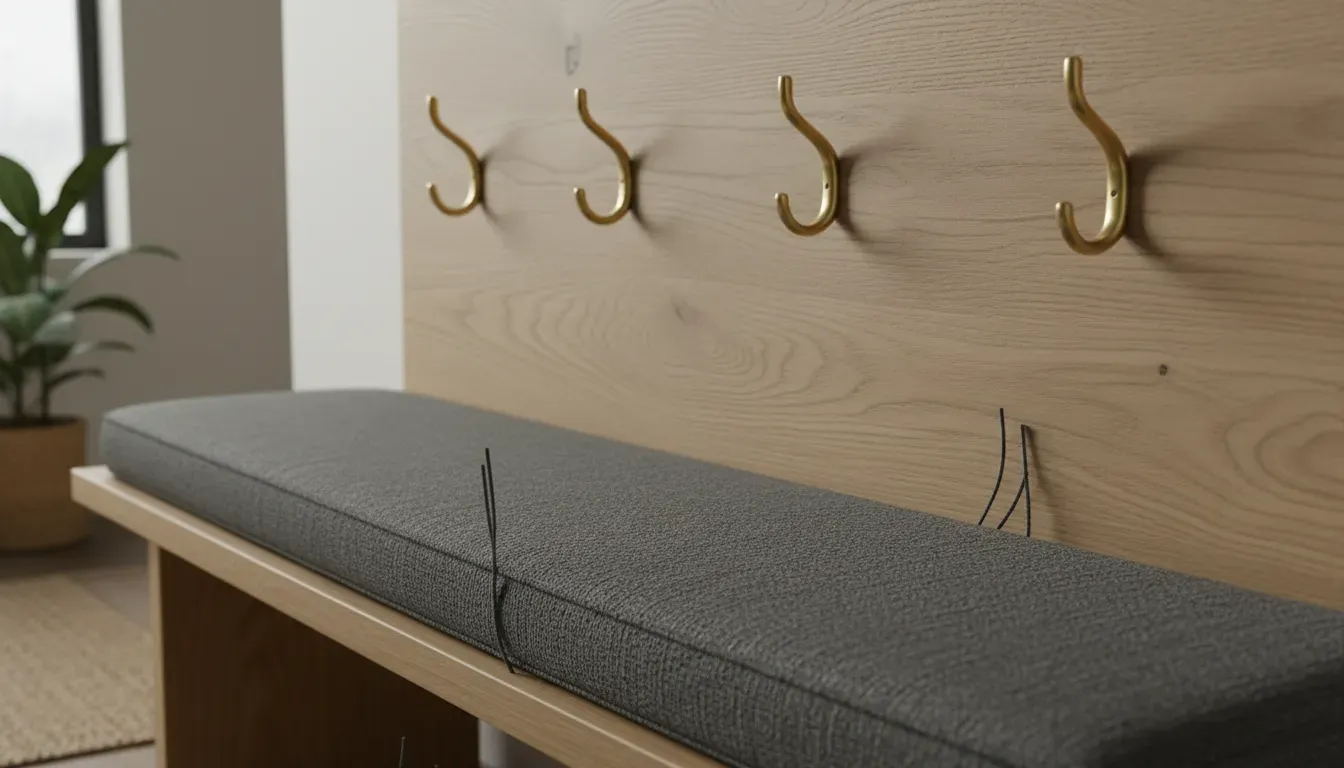
Rising from the bench is the back panel, which supports the coat hooks. The configuration of these hooks dictates the unit’s capacity. Double-pronged hooks double the storage potential, allowing for a heavy coat and a lighter scarf to share a single anchor point.
The structural integrity of the back panel is paramount. It must be robust enough to support heavy wool coats and backpacks without bowing or tipping. Many modern designs incorporate a safety anchor to attach the unit to the wall, a critical feature for households with children or pets.
The Upper Shelf
Many units utilize the very top of the structure for an additional shelf. This area is often overlooked but serves as prime real estate for decorative items that add warmth to the space, or for storage baskets containing rarely used items like seasonal hats or gloves.
Selecting the Right Style for Your Interior Design
Because this furniture piece is substantial, it acts as a focal point. It must harmonize with your existing decor rather than clash with it. The market offers a diverse array of aesthetic profiles.
Modern Farmhouse
The farmhouse aesthetic remains a dominant force in interior design, characterized by a blend of practicality and rustic charm. Hall trees in this style often feature beadboard backing, distressed wood finishes in white, gray, or reclaimed oak, and oil-rubbed bronze hardware.
These units prioritize warmth and often include open cubbies at the top and bottom, fitted with wire or wicker baskets. The bench area may include a tufted cushion upholstered in linen or durable cotton canvas.
Industrial Minimalism
For urban lofts or contemporary apartments, the industrial style offers a stripped-back, architectural look. These units typically combine matte black metal frames with engineered wood shelves in walnut or espresso finishes. The open-frame design keeps the sightlines clear, making the room feel larger and less obstructed.
Industrial benches are often lighter and easier to assemble, making them a practical choice for renters who move frequently. The hooks are often movable along a top rail, providing flexibility for bulky items.
Traditional and Transitional
Traditional designs mimic the look of built-in cabinetry. They often feature crown molding at the top, recessed paneling on the drawers, and solid plinth bases. These units are substantial and convey a sense of permanence. Transitional pieces bridge the gap, offering the clean lines of modern design with the warmth of traditional materials, making them versatile enough for almost any home.
Assessing Your Space: Measurement and Placement
Before purchasing a 2-in-1 storage bench, rigorous measurement is required. This is not merely about whether the piece fits against the wall, but how it interacts with the flow of traffic.
The Golden Rules of Measurement
- Width and Height: Measure the wall space, ensuring you account for baseboards, which can reduce available width by an inch or two. Check the ceiling height as well; tall units should have at least six inches of clearance from the ceiling to avoid looking cramped.
- Depth and Traffic Flow: This is the most critical dimension. Measure the depth of the unit and tape it out on your floor. Open the front door fully. Does the door swing hit the taped area? Is there enough clearance for a person to walk past someone sitting on the bench? A minimum of 36 inches of walkway clearance is recommended for comfortable movement.
- Visual Weight: In a small, narrow hallway, a solid wood unit with a closed back can feel imposing. In such spaces, an open metal frame or a unit with a mirror backing can help reflect light and reduce the sensation of crowding.
For those dealing with particularly tight spaces, consider reading our guide on Small Foyer Layouts to better understand spatial planning.
Top 3 Recommended Entryway Storage Benches
Based on durability, design versatility, and consumer satisfaction, we have identified three top-tier categories for entryway benches with integrated storage.
1. The Versatile Industrial Choice
For those seeking a blend of durability and modern aesthetics, a metal and wood combination is ideal. This style suits rental apartments and modern homes alike. Look for units that feature a sturdy steel frame to prevent wobbling, along with adjustable feet to handle uneven floors.
Recommended Search: Explore Industrial Hall Trees on Amazon
2. The Classic Farmhouse “Built-In” Look
If your goal is to add architectural character to your home, a substantial wooden unit with beadboard details and crown molding is the superior choice. These pieces mimic custom carpentry at a fraction of the cost. Prioritize units with varied storage options, such as a combination of drawers and shelves.
Recommended Search: Explore Farmhouse Entryway Benches on Amazon
3. The Compact Space-Saver
For narrow hallways or studio apartments, width is the enemy. You need a unit that maximizes vertical space while keeping a slim profile. Look for “mini” hall trees that offer a single column of hooks and a small shoe rack, often measuring less than 24 inches wide.
Recommended Search: Explore Narrow Hall Trees on Amazon
Organization Strategies: Beyond the Purchase
Acquiring the furniture is only the first step. To truly unlock the potential of your 2-in-1 solution, you must implement an organizational system. Without a system, the bench will simply become a new surface for old clutter.
The Seasonal Rotation Rule
A common mistake is treating the entryway bench as a permanent storage locker. It should be treated as a transit hub. The coats hanging on the hooks should be the ones currently in use.
In the height of summer, heavy wool coats should be moved to a deep storage closet, leaving the hooks free for light jackets, sun hats, or beach bags. Conversely, in winter, sandals should be removed from the shoe cubbies to make room for boots. This rotation keeps the entryway visually clean and ensures that the items you need are always accessible.
Categorizing with Baskets
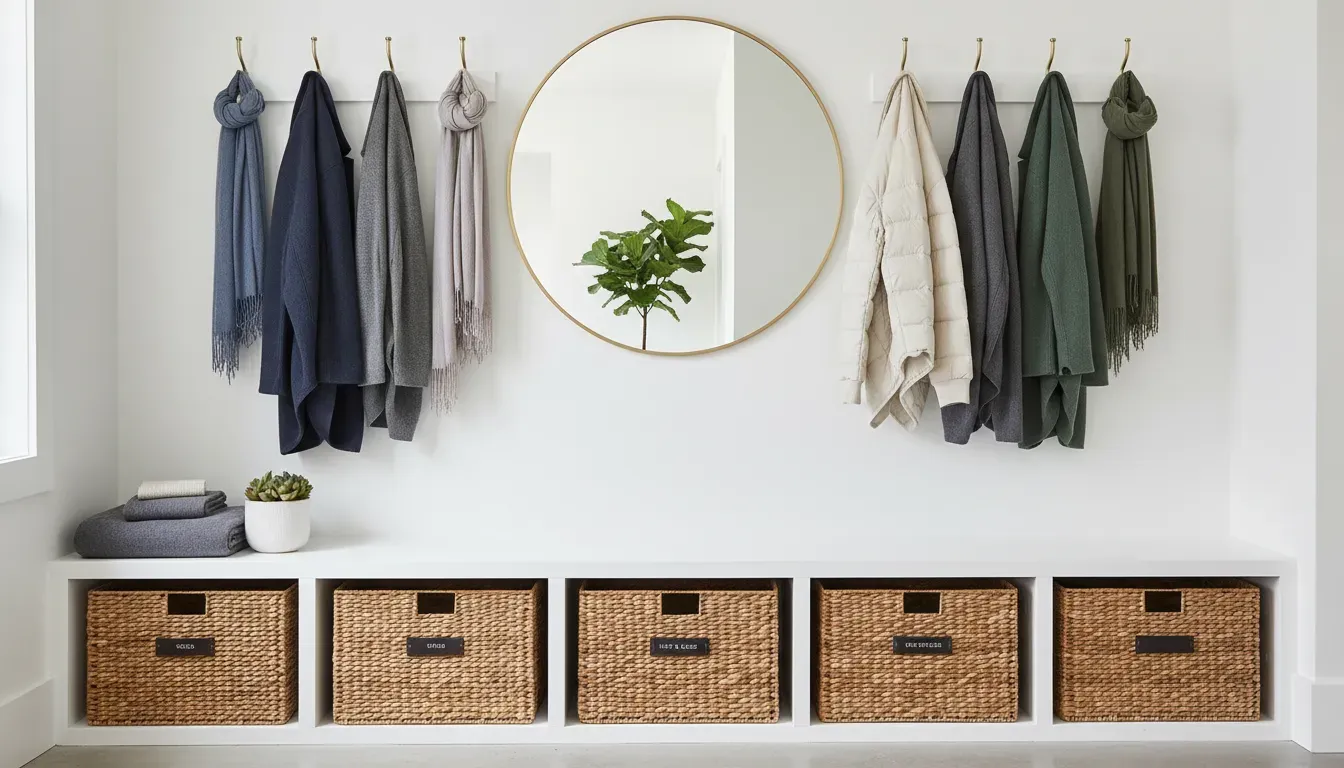
If your unit features open shelves, baskets are mandatory for maintaining a polished look. They hide the visual noise of mismatched gloves, scarves, and mail.
- Assign a Basket per Person: If space allows, give each family member a designated bin. This promotes accountability.
- The “Out the Door” Bin: Dedicate one small drawer or basket for essentials: sunscreen, lint rollers, sunglasses, and keys.
- Material Matters: Choose basket materials that complement the bench. Woven seagrass adds texture to painted wood, while felt bins look sleek against industrial metal.
Material Durability and Maintenance
An entryway bench sees heavy traffic. It is exposed to wet raincoats, muddy boots, and the friction of denim on seat cushions. Choosing the right material and maintaining it properly will extend the lifespan of your investment.
Engineered Wood vs. Solid Wood
Solid Wood: The most durable option. It can be sanded and refinished if scratched. However, it is susceptible to expansion and contraction with humidity changes. MDF (Medium Density Fiberboard): Often used in painted furniture. It is stable and smooth but hates moisture. If the paint chips and water enters the core, it can swell. Particle Board: The most affordable option, typically covered in a laminate veneer. It is functional but less durable. If you choose this, ensure the laminate is high-quality and scratch-resistant.
Caring for Metal Components
Industrial units with metal frames are generally low maintenance. However, wet coats dripping onto metal screws or joints can lead to rust over time. Wipe down the unit if it gets wet, and consider a clear matte sealant spray if you live in a humid or coastal environment.
Cushion Care
If your bench includes a cushion, the fabric choice is critical.
- Performance Fabrics: Look for Crypton or Sunbrella fabrics that resist stains and moisture.
- Removable Covers: Ensure the cushion cover has a zipper so it can be tossed in the washing machine.
- Leather/Faux Leather: Excellent for wiping clean, but can be punctured by keys or pet claws.
Advanced Customization: The DIY Built-In Hack
For the ambitious homeowner, a freestanding hall tree can be transformed into a custom feature wall. This “hack” increases the value of the home and elevates the design.
- Baseboard Integration: Remove the baseboards on the wall where the unit will sit. Place the unit flush against the drywall.
- Trim and Molding: Add trim around the edges of the unit to bridge the gap between the furniture and the wall.
- Paint Unification: Paint the unit, the trim, and potentially the wall behind it the same color. This monochrome technique makes the piece look like it was constructed with the house.
- Hardware Swap: Replace the standard hooks and drawer pulls that came with the unit with high-end brass or matte black hardware. This simple change can make a budget piece look expensive.
For more ideas on upgrading standard furniture, explore our article on DIY Entryway Modifications.
Balancing Function with Decor
While storage is the primary directive, the entryway sets the tone for the home. The bench should be styled, not just stocked.
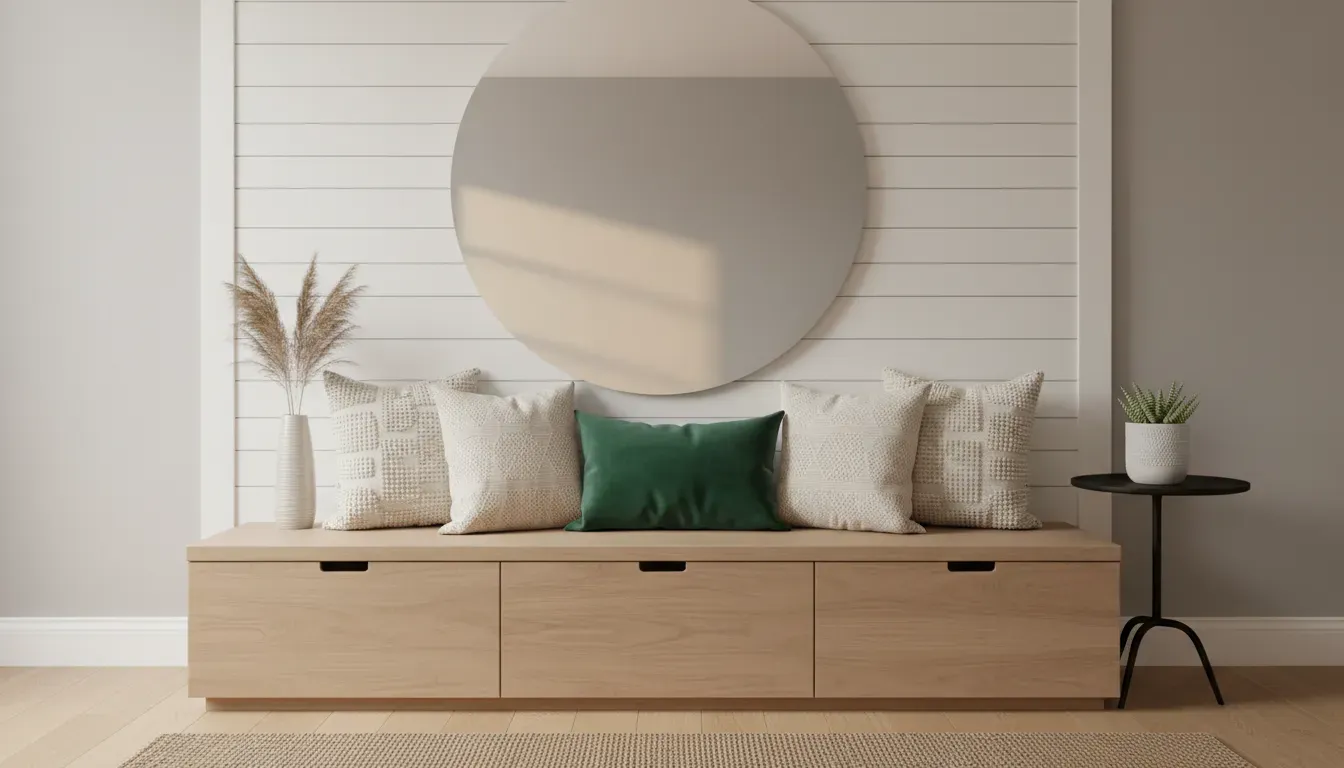
- Pillows and Throws: A throw pillow adds softness to the hard lines of the bench. Choose a fabric that introduces a pop of color or a texture that contrasts with the unit.
- Mirrors: If your unit does not have a mirror, consider hanging one on the wall adjacent to it. Mirrors reflect light, making small entryways feel larger, and allow for a final appearance check before leaving.
- Greenery: A plant placed on the top shelf breathes life into the space. For low-light entryways, a high-quality faux pothos or snake plant offers the visual benefit without the maintenance.
Troubleshooting Common Issues
Even with the best furniture, challenges can arise. Here is how to handle common entryway bench problems.
The “Overloading” Issue
Problem: The hooks are so full that items fall off, and the bench is unusable for sitting because it is covered in bags. Solution: Implement the “One-In, One-Out” rule. Limit the hooks to two items per person. Install secondary hooks in a less visible area (like the garage or a bedroom closet) for overflow storage.
The “Shoe Mountain” Effect
Problem: The shoe cubbies are full, so extra shoes pile up on the floor in front of the bench. Solution: This usually indicates that the storage provided does not meet the family’s volume needs. Place a secondary, slim shoe cabinet nearby, or use under-bench baskets to double the capacity of open cubbies.
Stability Concerns
Problem: The unit wobbles when a heavy coat is removed. Solution: This is a safety hazard. Always use the anti-tip hardware included with the unit. If the floor is uneven, use shims under the legs to level the piece.
Conclusion: Investing in Order
The entryway bench with storage and integrated coat hooks is more than a piece of furniture; it is an organizational instrument. By consolidating the functions of a coat rack, a shoe shelf, and a bench into a single vertical footprint, it resolves the spatial conflicts of the modern foyer.
Whether you opt for a sleek industrial frame to complement a city loft or a robust wooden hall tree for a busy family mudroom, the principles remain the same: assess your vertical and horizontal space, prioritize durable materials, and implement a rotation system to prevent clutter creep.
By establishing a definitive “drop zone,” you streamline the transition between the outside world and your private sanctuary. The result is a home that welcomes you with order and calm the moment you walk through the door.