Entryway Benches with Storage for Renters: Non-Permanent Solutions
Discover versatile, non-permanent entryway benches with storage designed for renters. Maximize space and style without risking your security deposit.
Feb 4, 2026 - Written by: linda wise

The entryway is the handshake of the home. It is the first space that greets you upon arrival and the last thing you see before departing. For renters, however, curating an entryway that balances high-end design with practical utility presents a unique set of challenges. Unlike homeowners who can install custom built-ins, knock down walls to create mudrooms, or mount heavy floating shelves, renters must operate within the strict confines of a lease agreement. The goal is to maximize storage and aesthetic appeal without sacrificing the security deposit.
The solution lies in non-permanent, freestanding furniture, specifically the entryway bench with integrated storage. This versatile piece serves as a sophisticated anchor for the foyer, providing a designated “drop zone” for the debris of daily life while defining the architectural space. This guide explores the strategic selection of entryway benches tailored for rental properties, focusing on modularity, mobility, and multifunctional design.
The Strategic Importance of the Drop Zone
In interior design psychology, the entryway sets the emotional tone for the rest of the dwelling. A cluttered entrance often signals a disorganized mind, creating a subtle background stress the moment one walks through the door. For those living in apartments or rental homes where square footage is often at a premium, the entryway bench is not merely a seat; it is an organizational command center.
A properly selected bench solves three critical problems inherent to rental living:
- Lack of Built-in Storage: Many rentals lack coat closets near the front door.
- Transience: Furniture must be durable enough to withstand daily use but portable enough to move to the next location.
- Spatial Definition: In open-plan apartments, a bench visually separates the “entry” from the living area without the need for permanent partitions.
Assessing Your Space: The Pre-Purchase Audit
Before investing in a piece of furniture, a rigorous audit of the physical space is required. Renters often make the mistake of purchasing based on aesthetics alone, only to find the piece obstructs traffic flow.
precise Measurements and Clearance
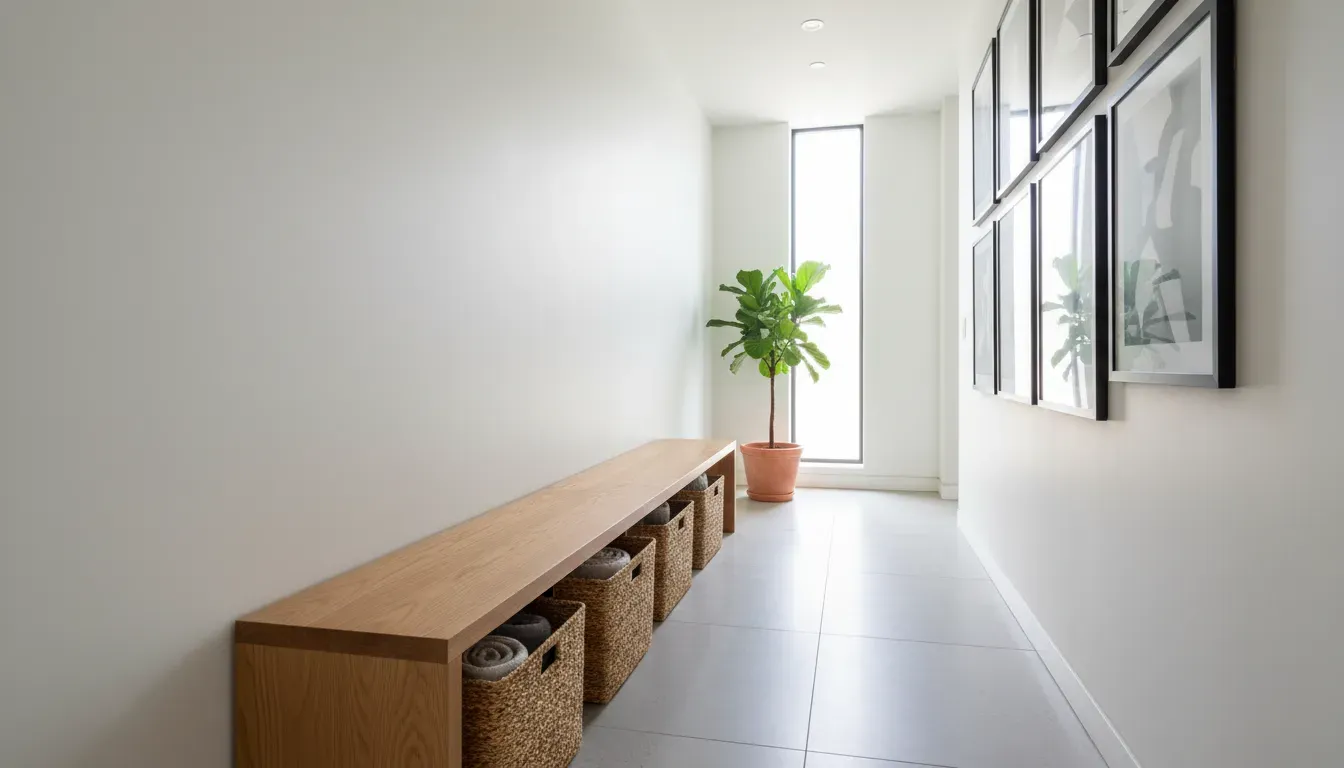
Measure the width of your hallway or foyer. Ideally, you should maintain at least 36 inches of clearance for walking paths to adhere to standard ergonomic guidelines. If your entryway is a narrow corridor, depth becomes the primary constraint. Look for “slim-profile” benches that are 12 to 15 inches deep rather than the standard 18 to 20 inches.
Furthermore, account for the swing radius of the front door. A storage bench placed too close to the entrance may prevent the door from opening fully, creating a cramped and frustrating experience.
Vertical Potential
While you may not be able to drill into the walls, you can utilize vertical space through furniture height. High-back benches or hall trees offer verticality that draws the eye upward, making small ceilings appear higher while utilizing the “dead space” above the seat for coat hooks and shelving.
Categorizing Storage Benches by Function
Not all storage is created equal. The type of bench you select should directly correlate with the items you need to store. Is your primary issue shoes, bulky winter coats, or general clutter like dog leashes and mail?
The Flip-Top Bench: The Deep Storage Solution
The flip-top bench features a hinged seat that opens to reveal a deep internal cavity.
- Best For: Bulky items that are not accessed daily, such as seasonal scarves, heavy blankets, or emergency supplies.
- Pros: It offers the cleanest visual lines. When closed, all clutter is completely hidden, maintaining a minimalist aesthetic.
- Cons: It is inconvenient for daily shoe storage. You must clear off the top of the bench—removing pillows or bags—to access the contents.
The Cubby and Basket System: High-Frequency Access
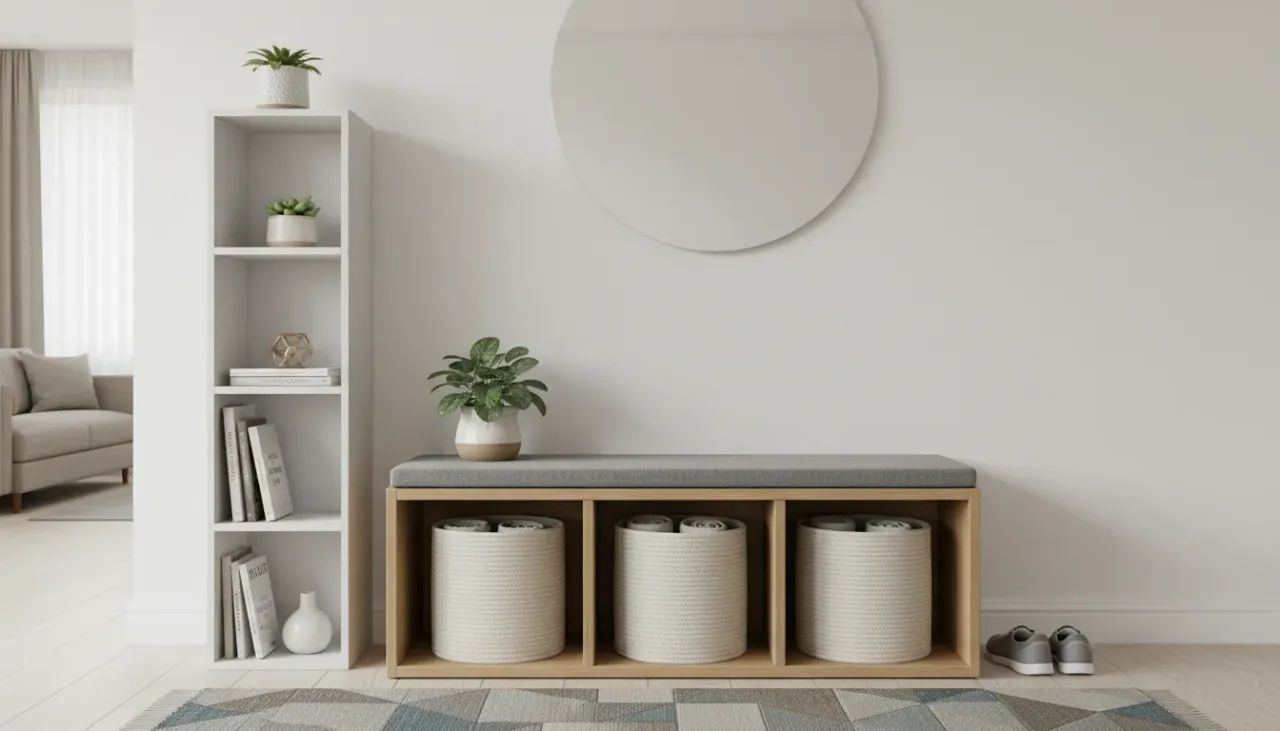
This style features open shelving or cubbies beneath the seat, often paired with wicker, wire, or fabric baskets.
- Best For: Daily footwear, school bags, and items that need to be grabbed quickly on the way out.
- Pros: Extreme accessibility. Baskets allow you to “categorize” clutter (e.g., one basket for mail, one for gloves), making it easier to maintain order.
- Cons: Without baskets, open cubbies can look messy if shoes are not arranged neatly.
The Shoe Rack Bench: Ventilation and Visibility
These benches feature slatted shelves underneath the seating area.
- Best For: High-volume shoe storage and damp climates.
- Pros: The slats provide air circulation, which is crucial for drying wet boots or athletic shoes to prevent odors. It allows for immediate visual identification of footwear.
- Cons: It offers no hidden storage for smaller items like keys or sunglasses.
The Hall Tree: The Renter’s Mudroom
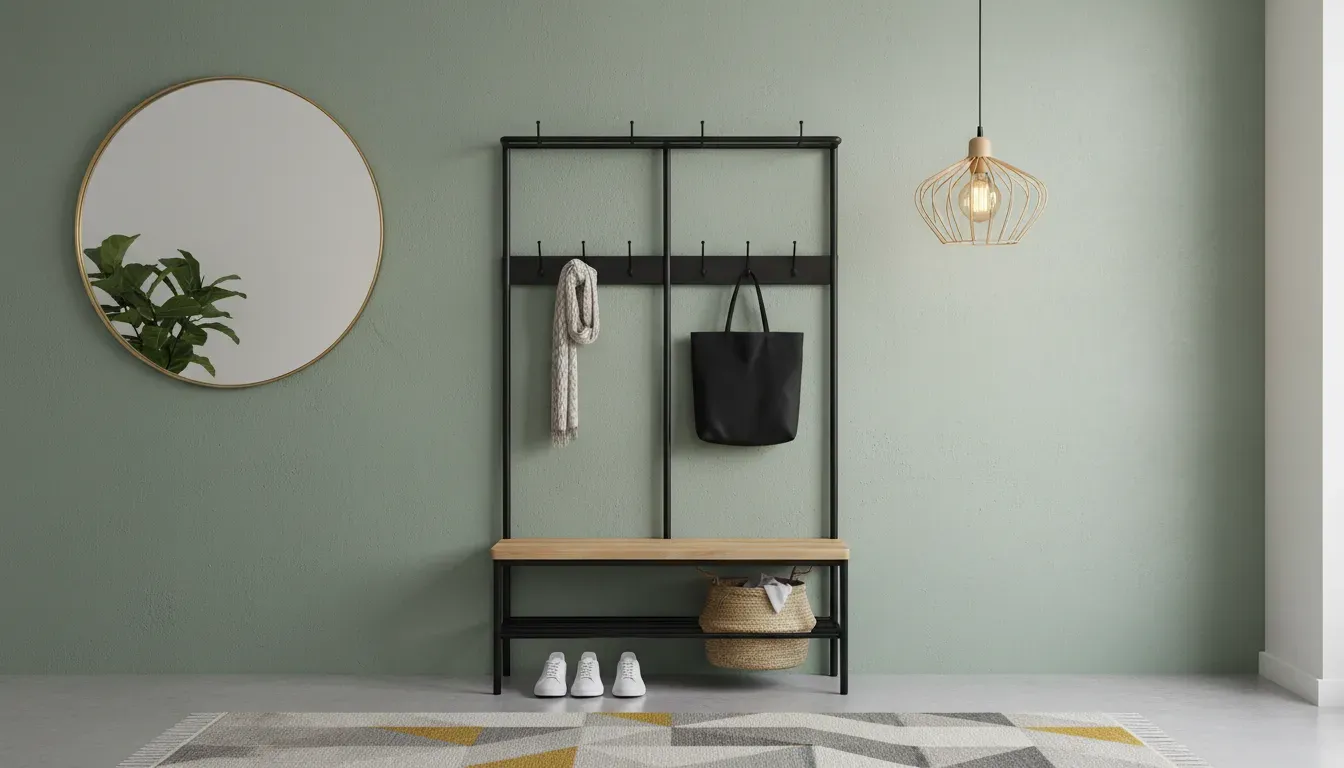
Perhaps the ultimate solution for renters, the hall tree combines a bench, shoe storage, and a back panel with hooks into a single freestanding unit.
- Best For: Apartments with zero closet space.
- Pros: It mimics the functionality of a built-in mudroom without requiring a single nail in the wall. It provides a comprehensive solution for coats, hats, bags, and shoes.
- Cons: These units are large and can be visually heavy. They require a wider wall segment to avoid looking crowded.
For those needing a robust, all-in-one solution that mimics a permanent fixture, consider a sturdy hall tree. Buy on Amazon
Material Selection: Durability vs. Portability
As a renter, the weight and durability of your furniture are paramount. You need materials that can withstand the wear and tear of daily life but are not so heavy that they become a burden during your next move.
Solid Wood vs. Engineered Wood
Solid wood offers longevity and can be refinished if scratched. However, it is heavy and expensive. Engineered wood (MDF or particleboard) is lighter and more affordable, but it is susceptible to water damage—a risk in entryways where wet umbrellas and boots are common. If choosing engineered wood, ensure it has a high-quality laminate or veneer finish to repel moisture.
Metal Frames
Industrial-style benches with metal frames are excellent for renters. They are typically lightweight, structurally rigid, and can be disassembled easily for moving. A metal shoe rack bench is often the most hygienic option as it is easy to wipe down and does not absorb odors.
Upholstery
An upholstered bench adds a touch of luxury and comfort, transforming the entryway into a welcoming lounge area. However, fabric in high-traffic zones is risky. Opt for performance fabrics, leather, or faux leather that can be wiped clean. Avoid light-colored linens that will inevitably show dirt from outdoor clothing.
For a balance of comfort and utility, a tufted ottoman bench with internal storage provides a soft place to sit while hiding clutter. Buy on Amazon
Integrating Vertical Storage Without Drilling
One of the greatest restrictions for renters is the inability to mount heavy shelving. However, relying solely on a bench wastes the vertical space above it. To create a fully functional entryway, you must pair your bench with wall-safe vertical solutions.
The Leaning Mirror and Ladder Technique
Instead of hanging a mirror, use a large, floor-length leaning mirror behind or next to your bench. This reflects light, making a small hallway feel double the size, and allows for a final outfit check. Similarly, a leaning blanket ladder can be used to drape scarves or hang S-hooks for bags, utilizing height without wall damage.
Over-the-Door Solutions
If your entryway is near a closet or utility door, utilize over-the-door organizers. These can hold items that would otherwise clutter the bench surface, such as keys, sunglasses, and mail. This keeps the bench clear for sitting and putting on shoes.
Tension Rod Systems
For a modern, architectural look, consider floor-to-ceiling tension rod systems. These install by pressure between the floor and ceiling, leaving no marks. They can be outfitted with hooks, mirrors, and small trays, creating a “floating” effect that pairs perfectly with a low-profile bench.
Aesthetic Cohesion: Styling the Rental Entryway
Once the functional pieces are in place, the challenge is to make the arrangement look intentional rather than temporary. Styling is what separates a “storage corner” from a “designed entryway.”
Anchoring with Rugs
A runner rug placed in front of the bench serves two purposes. Functionally, it catches dirt before it tracks into the home. Aesthetically, it frames the bench, grounding the furniture so it doesn’t look like it’s floating in an empty hallway. Choose a low-pile, washable rug for easy maintenance.
Lighting
Most rental entryways suffer from poor overhead lighting. Since you cannot rewire the ceiling, use a plug-in sconce if an outlet is nearby, or place a tall, slender floor lamp beside the bench. Battery-operated, motion-sensor puck lights can also be installed inside deep storage benches or cubbies to illuminate the contents.
The Rule of Three
When styling the surface of your bench (if it’s not strictly for sitting) or the shelf above it, use the rule of three. Group items in odd numbers—for example, a plant, a tray for keys, and a framed photo. This creates visual balance. However, ensure that décor does not impede the primary function of the bench: sitting.
For a streamlined look that combines seating with accessible footwear organization, a bamboo shoe bench is often the most versatile choice for varying decor styles. Buy on Amazon
Protecting Your Deposit: Essential Safeguards
The irony of non-permanent furniture is that it can still cause damage if not managed correctly. Heavy benches can scratch hardwood floors, and items rubbing against the wall can leave scuffs.
To ensure you get your full security deposit back:
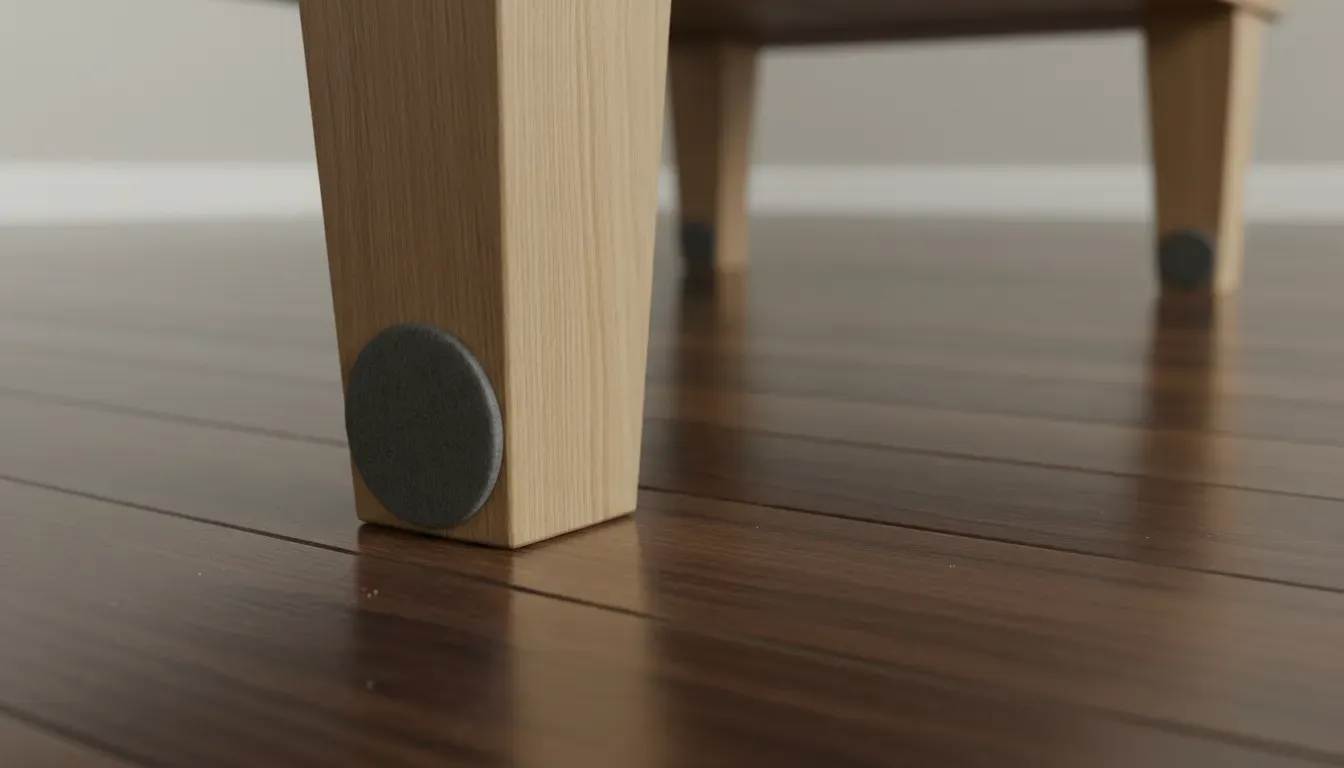
- Felt Pads: Immediately upon assembly, apply heavy-duty felt pads to the feet of your bench. This is non-negotiable for hardwood or vinyl plank flooring.
- Wall Bumpers: If your bench has a back or a lid that opens, place small clear silicone bumpers on the points that might contact the wall.
- Boot Trays: Place a plastic or rubber boot tray inside the cubby or underneath the bench. This catches melting snow and mud, protecting the floor from water damage and warping.
Modular Systems for the Frequent Mover
If you move every year or two, consider a modular storage bench system. These are comprised of individual cubes or units that can be stacked or arranged side-by-side. In a narrow hallway, they can be stacked vertically to form a tall shelf. In a wide foyer, they can be laid horizontally to form a long bench. This adaptability ensures that your investment retains its utility regardless of the floor plan of your next apartment.
For more insights on adapting furniture to different layouts, you might find our guide on Small Space Organization helpful.
Conclusion
Living in a rental property does not necessitate living with clutter or sacrificing style. The entryway bench with storage is a powerful tool in the renter’s arsenal, providing a non-permanent, high-impact solution to organization. By carefully measuring your space, selecting the right storage mechanism for your lifestyle, and protecting the existing architecture, you can create an entryway that feels welcoming, organized, and distinctly yours.
A well-organized home begins at the door. By establishing control over this transitional space, you set a standard of order and tranquility for the rest of your living environment.