
Entryway Storage for Studio Apartments: Defining Zones in Open Concept Living
Master the art of creating a functional foyer in a single-room home. Discover zoning strategies and storage solutions for studio apartment entryways.
Feb 2, 2026 - Written by: linda wise

The architecture of a studio apartment presents a unique paradox: it offers the freedom of open-concept living while simultaneously stripping away the structural boundaries that organize our daily rituals. In a traditional home, the foyer serves as a decompression chamber—a transitional space where the outside world is shed before entering the sanctuary of the living area. In a studio, however, the front door often swings open directly into the bedroom, the living room, or the kitchen. Without a defined landing strip, keys migrate to the dining table, coats drape over the sofa, and shoes create trip hazards near the bed.
Creating a functional entryway in a studio apartment is not merely about finding a place for your umbrella; it is an exercise in psychological zoning and spatial definition. By carving out a distinct “drop zone,” you protect the sanctity of your main living area and establish a sense of order that permeates the entire 400-square-foot residence. This comprehensive guide explores high-level strategies for manufacturing a foyer where none exists, utilizing vertical space, clever furniture arrangements, and visual cues to define zones without erecting walls.
The Psychology of the Transition Zone
Before selecting furniture or drilling hooks, it is essential to understand the architectural purpose of an entryway. This space acts as a filter. It captures the debris of the exterior world—mud, mail, rain, and exhaustion—preventing it from contaminating the areas designated for rest and nourishment.
In a studio apartment, the absence of walls requires us to build this filter using alternative methods. The goal is to create a pause. When you walk through the door, there should be a distinct moment of arrival before you transition into the rest of the apartment. This separation helps the brain switch modes from “public” to “private,” a critical shift for mental well-being in small spaces where work, sleep, and relaxation often overlap.
Assessing Your Traffic Flow
Begin by analyzing the immediate radius around your front door. Which way does the door swing? How much wall space is available immediately adjacent to the frame? Do you walk straight into the center of the room, or is there a narrow corridor?
The most common studio layouts generally fall into two categories regarding entryways: the “hallway entry,” where a narrow passage leads to the main room, and the “box entry,” where the door opens directly into the main square footage. Each requires a distinct storage strategy. The hallway entry demands slim, wall-hugging solutions to preserve walkability, while the box entry requires you to manufacture a sense of enclosure using perpendicular furniture placement or room dividers.
Grounding the Space: Visual Demarcation
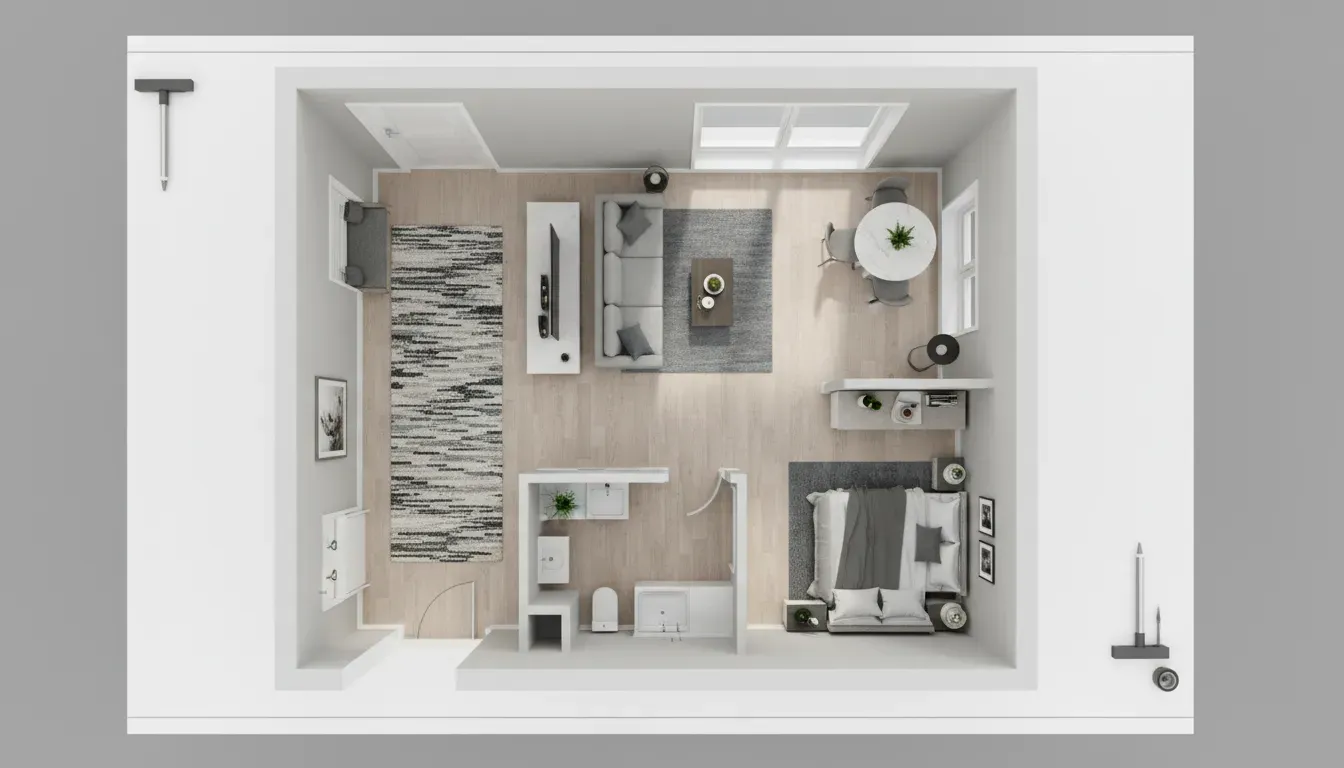
The most effective way to define a zone without vertical barriers is through the floor. A well-chosen rug does not just catch dirt; it signals to the eye where the entryway ends and the living room begins.
The Runner Effect
For narrow entries, a runner rug is indispensable. It directs the eye forward, creating a visual “path” that implies a hallway even if one does not exist architecturally. Choose a durable, low-pile material such as wool or a synthetic blend that can withstand high traffic and is easy to clean. Sisal and jute are excellent textural options that add warmth without dominating the color palette.
In “box” layouts, use a small area rug (typically 3x5 or a 4-foot round) to create an island of separation. If your apartment has hardwood or concrete floors, the tactile shift from hard surface to soft rug creates a subconscious boundary. Ensure the rug is positioned so that the door can clear it when opening, or choose a flat-weave style that creates no friction.
Lighting as a Boundary
Lighting is often overlooked in entryway design, yet it is a powerful zoning tool. In many studios, a single overhead fixture illuminates the entire room. To define the entryway, introduce a dedicated light source. If you have a console table, a small table lamp provides a welcoming glow that is distinct from the brighter overhead lights of the kitchen or living area.
For tighter spaces, a battery-operated wall sconce can add sophistication without requiring hardwiring. By keeping the entryway slightly dimmer or warmer than the rest of the apartment, you enhance the feeling of transition.
Vertical Velocity: Wall-Mounted Solutions
When floor space is at a premium, the only way to expand is upward. Vertical storage is the lifeblood of studio organization. By lifting items off the floor, you maintain visual flow and prevent the claustrophobic feeling of clutter.
The Floating Shelf and Hook System
A singular row of hooks is functional, but a tiered system is transformative. Install a high shelf for items used infrequently, such as off-season hats or decorative storage boxes. Below this, install a sturdy rail or individual heavy-duty hooks for coats and bags.
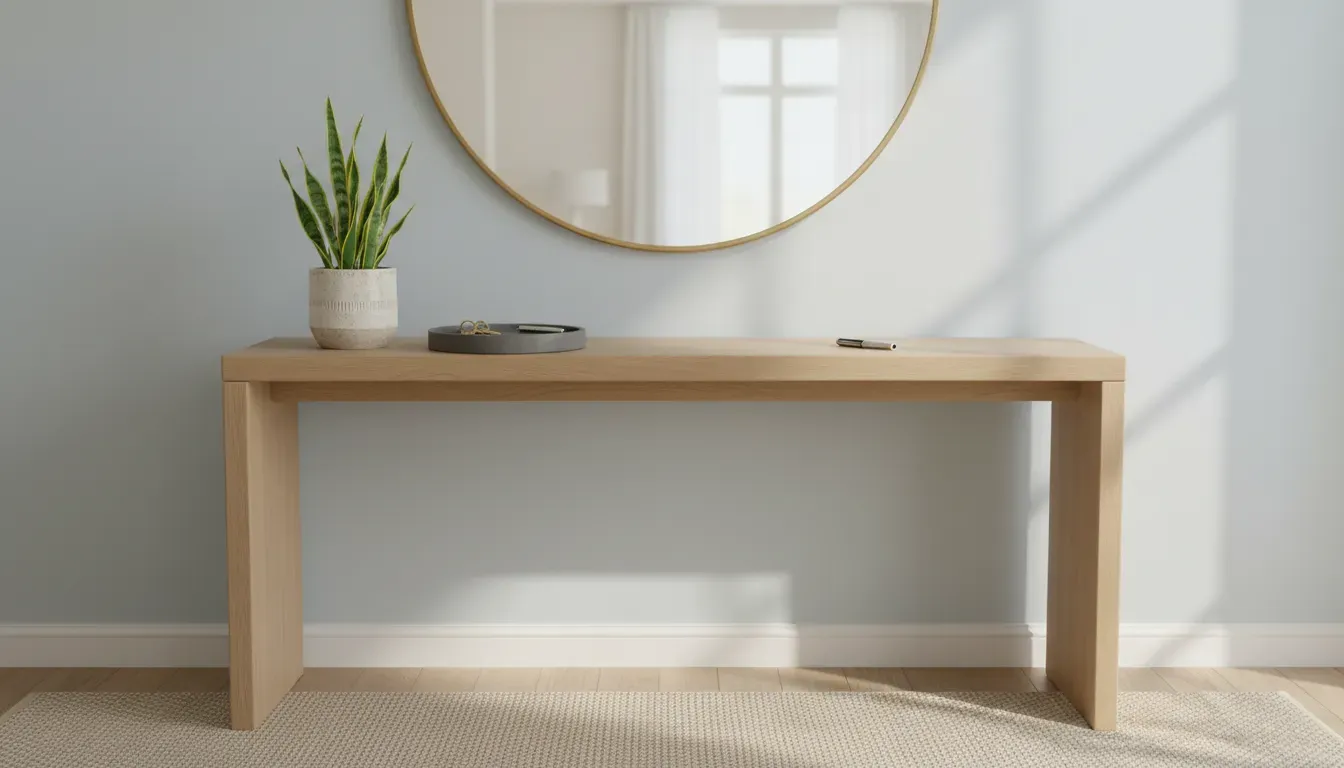
Consider the “floating console” approach. Instead of a table with legs that occupy floor space, mount a floating shelf at waist height. This serves as a surface for keys, mail, and sunglasses while leaving the space underneath completely open for shoes or a pet bowl.
To maximize this vertical strategy, look for all-in-one organizers that combine shelving, hooks, and even a small mirror.
Buy on Amazon: Wall Mounted Entryway Organizer
The Power of Mirrors
A mirror is non-negotiable in a small entryway. Beyond the practical necessity of checking your appearance before leaving, mirrors bounce light and trick the eye into perceiving depth. A large, round mirror placed above a console table breaks up the rigid lines of a rectangular apartment. Alternatively, a floor-to-ceiling mirror leaning against the wall can make a narrow entry corridor feel twice as wide.
Furniture with Footprint Efficiency
In a studio, every piece of furniture must earn its rent. The entryway furniture must be slim, multi-functional, and aesthetically cohesive with the rest of the apartment, as it will likely be visible from your bed or sofa.
The Slim Shoe Cabinet
One of the greatest inventions for small-space living is the tipping shoe cabinet. These units are remarkably shallow—often less than 10 inches deep—allowing them to fit behind doors or in narrow passages where a standard bookshelf would block traffic. Because the drawers tilt out rather than slide, they maximize interior capacity without requiring clearance space to open.
The top of a shoe cabinet doubles as a console surface. Style it with a small tray for keys, a plant for vitality, and a piece of art to establish personality. This transforms a utilitarian storage unit into a design feature.
Buy on Amazon: Slim Tipping Shoe Cabinet
The Multi-Functional Bench
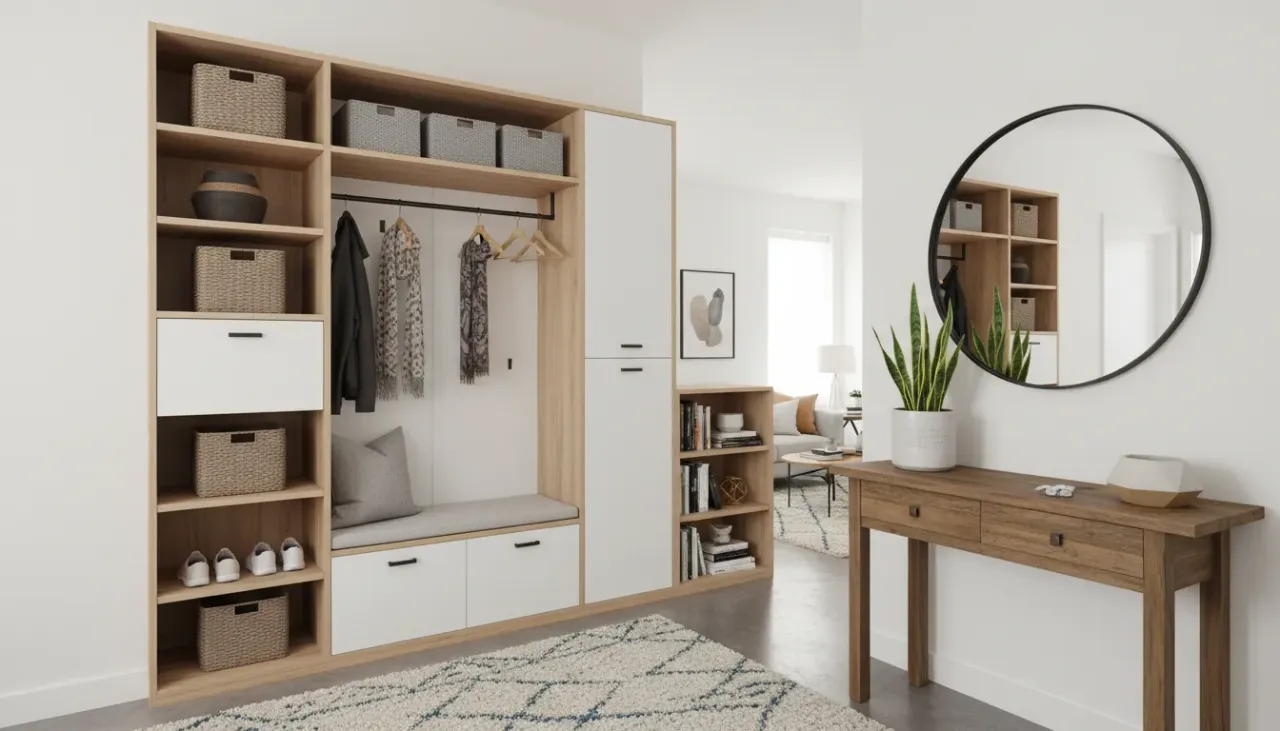
If your layout allows for slightly more depth, a storage bench offers a dual benefit: a place to sit while putting on shoes and a hidden compartment for storing them. Look for benches with a flip-top lid or open cubbies beneath. For a streamlined look, use matching baskets in the cubbies to conceal visual clutter.
For a cohesive aesthetic, choose a bench that complements your living room furniture. If your sofa is mid-century modern with tapered legs, find a bench with a similar silhouette. This visual harmony prevents the apartment from looking disjointed.
The “Fake Wall” Technique: Creating Separation
For studios where the front door opens directly into the living space with zero architectural buffer, you may need to manufacture a wall. This does not require construction; it requires strategic furniture placement.
The Perpendicular Divider
The most common method is to float your sofa. Instead of pushing the sofa against a wall, place it perpendicular to the front door, with its back facing the entrance. This creates a natural corridor behind the sofa. To refine this look, place a long, low console table against the back of the sofa. This “sofa table” can serve as the entryway drop zone, holding lamps, books, and keys, effectively acting as the foyer furniture.
Open Shelving Units
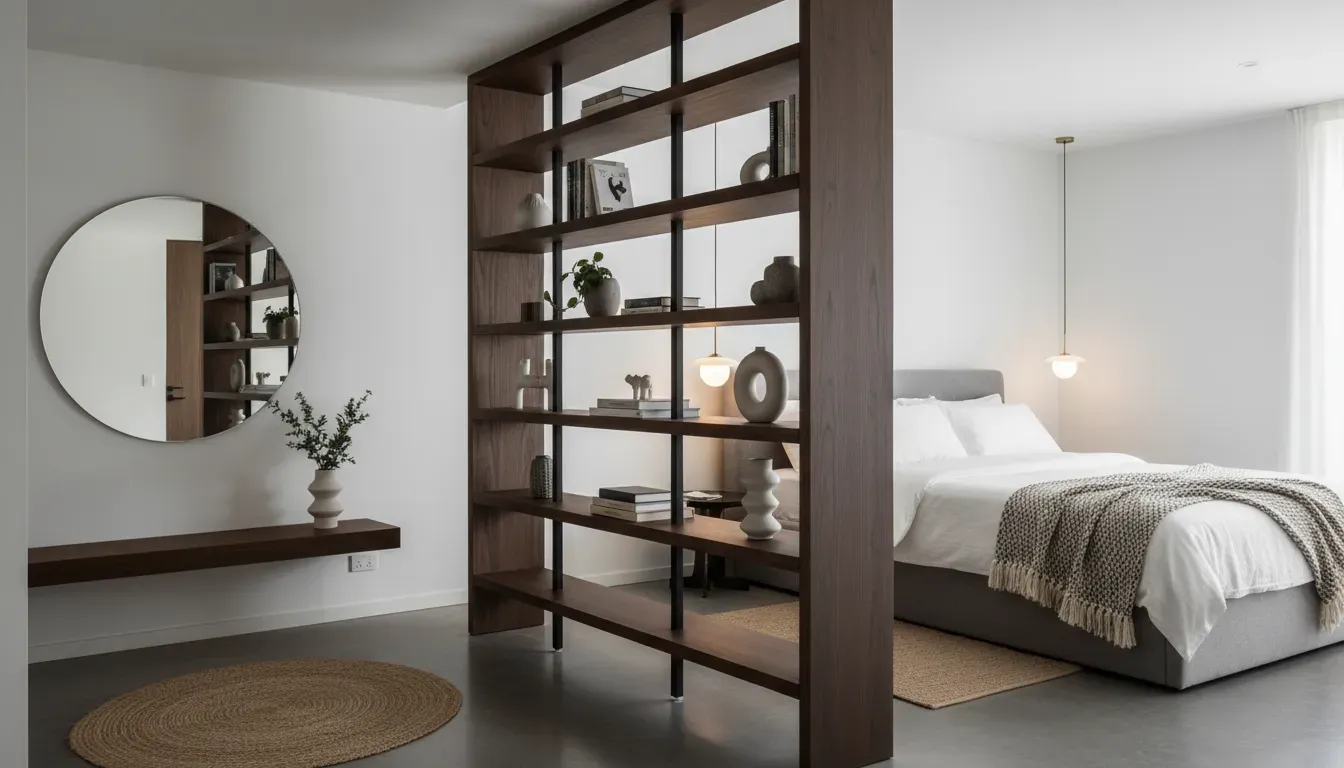
Tall, open shelving units are exceptional room dividers. When placed perpendicular to a wall near the entrance, they screen the view of the bed or living area from the door. Unlike a solid wall or a folding screen, open shelving allows light to pass through, ensuring the apartment remains airy and bright.
Use the lower cubbies of the shelf for entryway needs—shoes, bags, and umbrellas—while reserving the upper shelves for books, plants, and decor that serve the living room side. This dual-sided functionality is the epitome of studio efficiency.
Buy on Amazon: Cube Storage Organizer Bookshelf
Managing the “Closetless” Studio
Many vintage studios or converted industrial spaces lack a dedicated coat closet. This forces the resident to integrate wardrobe storage into the open living plan.
The Boutique Aesthetic
If your coats must be visible, treat them as a display. A freestanding garment rack made of copper pipe or matte black metal can look intentional and stylish rather than temporary. Limit the items on this rack to your current rotation—one heavy coat, a denim jacket, and a blazer. Store off-season outerwear in under-bed storage bins to keep the visual noise to a minimum.
Curating what is on display is crucial. Use matching hangers (wood or velvet) to create a uniform look. When storage is open, consistency is the key to avoiding a chaotic appearance.
Over-the-Door Efficiency
Do not underestimate the back of the front door itself. Over-the-door organizers have evolved beyond cheap plastic pockets. Modern metal racks can hold heavy coats, bags, and scarves. This utilizes space that is otherwise completely dead air. Just ensure the weight is reasonable so it does not impede the door’s function or damage hinges.
Styling for Cohesion: The Finishing Touches
Once the structure of the entryway is established, styling bridges the gap between the “foyer” and the rest of the studio.
Color Continuity
Because the entryway is visible from the rest of the room, the color palette should flow seamlessly. If your living area features calm neutrals and blue accents, the entryway rug and artwork should reflect those tones. A jarring color shift can make the apartment feel smaller and more fragmented.
The Catch-All Tray
The secret to a tidy entryway is the containment of small objects. Loose change, keys, lip balm, and receipts look like trash when scattered on a surface. When placed inside a ceramic bowl, a leather tray, or a woven basket, they look organized. This is a micro-zoning tactic: giving even the smallest items a designated home.
For more insights on maintaining order in compact living areas, you might explore our guide on small living room organization, which dives deeper into maintaining visual flow in tight quarters.
Renter-Friendly Adaptations
Most studio dwellers are renters, meaning permanent renovations are off the table. Fortunately, almost all the strategies discussed here are reversible.
- Tension Rods: If you have a weird alcove, a heavy-duty tension rod can create instant hanging space without drilling.
- Command Hooks: High-strength adhesive hooks are now capable of holding significant weight (up to 5-10 lbs for some models), making them suitable for coats and bags.
- Peel-and-Stick Wallpaper: To visually separate the entryway wall from the rest of the room, apply a panel of removable wallpaper. This creates a “feature wall” that clearly demarcates the zone.
Maintenance: The Habit of the Landing Strip
The most sophisticated storage system will fail without behavioral reinforcement. In a studio apartment, you cannot afford to leave items in the “foyer” for days, as the clutter will immediately encroach on your living space.
Adopt the “one-in, one-out” rule for the entryway. If a new pair of shoes enters the rack, an old pair goes to the closet or donation. Process mail immediately over the trash can or recycling bin; never let it settle on the console table.
Creating an entryway in a studio apartment is a triumph of design over architecture. It is about claiming space and asserting control over your environment. By defining this zone, you do not just gain a place to hang your hat; you gain a psychological buffer that allows your small home to feel like a sanctuary, distinct and protected from the world outside.
Frequently Asked Questions
How do I hide shoes in a studio entryway without a closet?
The best solution is a slim, tipping shoe cabinet. These units hide shoes completely while taking up very little floor depth. Alternatively, use opaque baskets under a bench or a console table to keep footwear out of sight.
Can I use a room divider to create an entryway?
Absolutely. Open shelving units (like IKEA Kallax styling) work best because they allow light to pass through, keeping the studio bright. You can also use curtains on a ceiling track or a folding screen, though these block light more significantly.
What is the minimum width needed for an entryway path?
Ideally, you should maintain a clearance of at least 36 inches for a comfortable walkway. In very tight studios, you can squeeze this down to 30 inches, but anything less will feel cramped and increase the likelihood of bumping into furniture.
How do I light an entryway that has no outlets?
Battery-operated wall sconces are an excellent solution. Many modern options are rechargeable and remote-controlled. You can also use motion-sensor LED strips under a floating shelf or inside a wardrobe rack for functional visibility.