Hall Tree Vs Entryway Bench

Confused between a hall tree and an entryway bench? Read our authoritative, field-tested comparative guide analyzing dimensions, storage capacities, installation limits, and design weight to make the perfect choice.

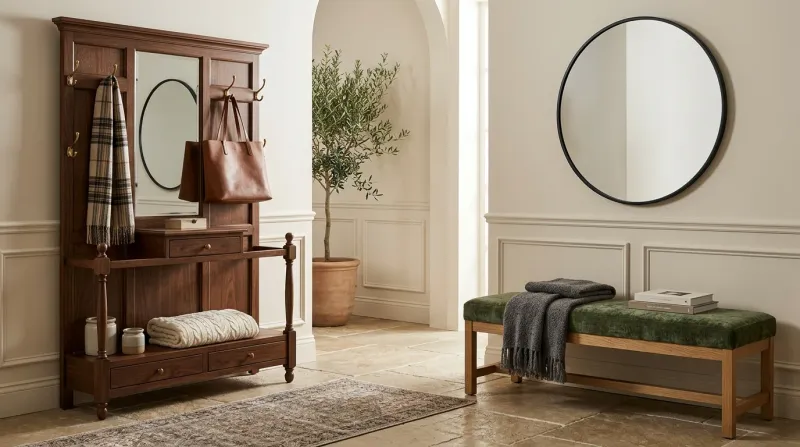
Professional editorial photograph comparing a tall wooden hall tree and a low-profile entryway bench side by side in a bright foyer

Jul 29, 2026 · Linda Wise

5 min read

The entry zone of your home is a high-traffic boundary. It handles mud, wet coats, heavy backpacks, keys, and the daily friction of departures and arrivals. If this zone lacks structural organization, chaos wins.

When configuring this space, you face a classic architectural crossroads: the Hall Tree versus the Entryway Bench.

One is a towering vertical monolith designed to centralize hanging storage, seating, and footwear organization into a single footprint. The other is a low-profile, horizontal platform focused on seating and low-level storage, preserving wall space and visual lines.

Choosing the wrong option wastes money and ruins foyer ergonomics. A hall tree that is too deep can block your front door’s swing radius. A bench that is too small leaves coats piled on kitchen chairs.

This guide breaks down the structural, spatial, material, and functional differences between hall trees and entryway benches to help you choose the right piece for your home.


Quick Comparison: Top Picks & Benchmarks

Before looking at the technical details, here is a quick overview of the top-performing entry organizers we have tested in the field.

ProductRatingCheck Price
VASAGLE Industrial Hall Tree with Bench4.8/5Check Price on Amazon
Prepac Shoe Cubby Entryway Bench4.6/5Check Price on Amazon
Walker Edison Solid Wood Entryway Bench4.7/5Check Price on Amazon

1. Understanding the Fundamentals: What is a Hall Tree vs. Entryway Bench?

To make an informed decision, you must first understand the structural anatomy and design goals of each option.

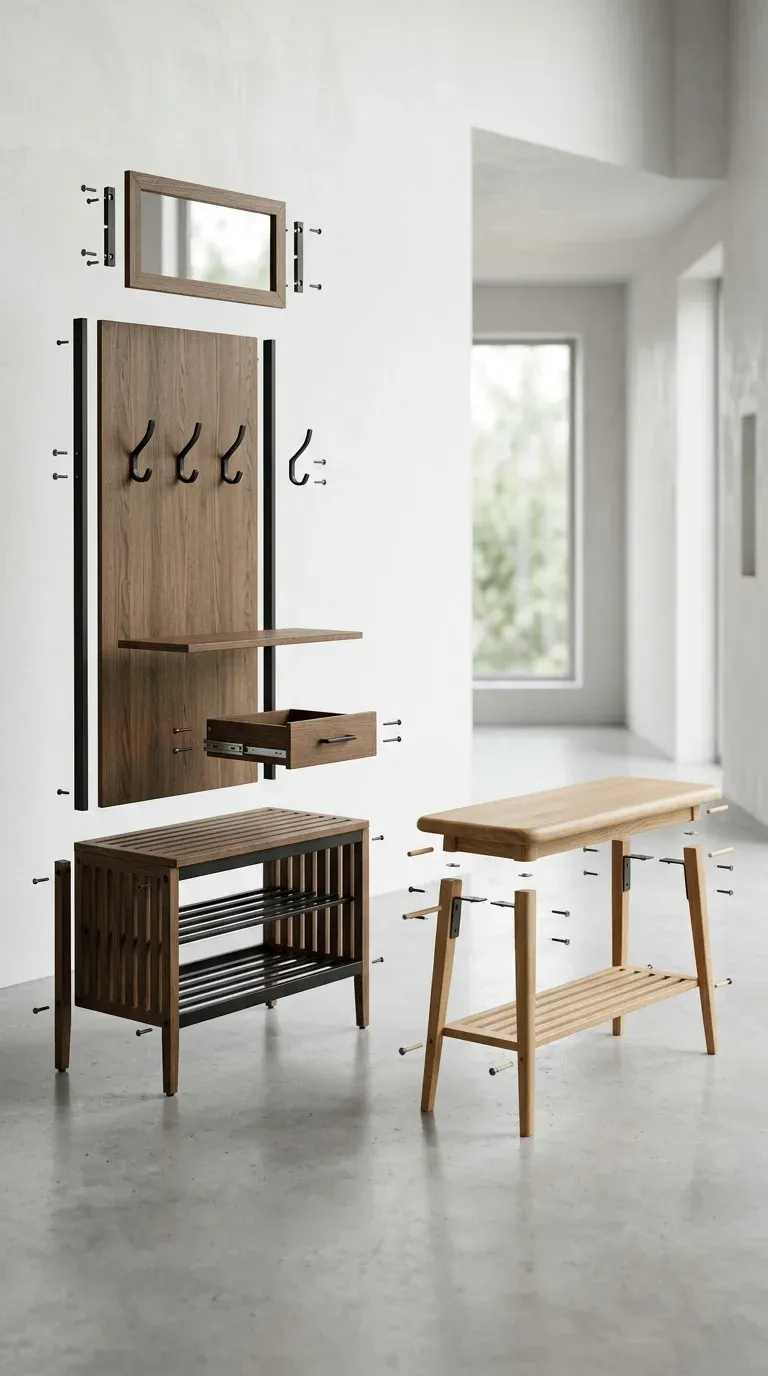
Exploded diagram showing the structural components of a modern hall tree vs a minimalist entryway bench

Anatomy of a Hall Tree

A hall tree is an all-in-one vertical furniture piece. Originating in the Victorian era to hold wet umbrellas and top hats, modern hall trees combine several storage features:

  • The Base: Usually a bench for sitting, which often sits atop shoe cubbies, drawers, or a lift-top storage chest.
  • The Back Panel: A tall vertical frame (ranging from 68 to 78 inches high) that protects your drywall from wet garments.
  • The Upper Rigging: A row of heavy-duty double coat hooks, often topped with a high shelf for storage baskets or seasonal gear.

A hall tree acts as a freestanding mudroom closet. It uses vertical wall space to keep items organized and off the floor.

Anatomy of an Entryway Bench

An entryway bench is a horizontal furniture piece that sits below the waistline. It focuses on seating first and storage second.

  • The Platform: A solid, upholstered, or slatted bench top designed to support sitting adults (usually rated for 250 to 400 lbs).
  • Under-Seat Storage: Typically features open shelves, sliding drawers, wire baskets, or shoe cubbies directly beneath the seat.
  • The Profile: Usually stands between 18 and 22 inches high, leaving the wall space above it completely open.

An entryway bench provides a convenient place to sit and put on shoes while keeping a clean, open look in your foyer.


2. Architectural & Spatial Footprint Analysis

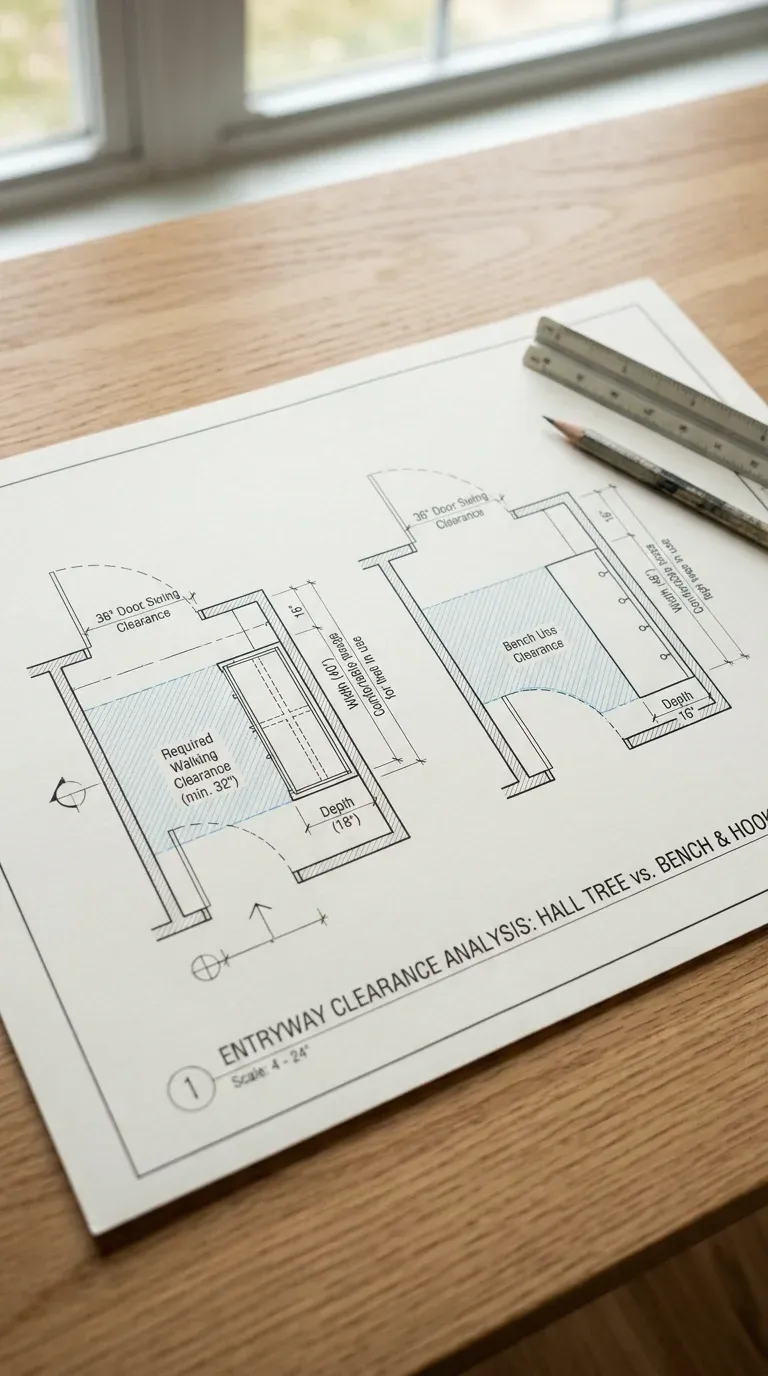
Space dictates function. Before buying any furniture, grab a tape measure and map out your entryway’s dimensions.

Floor plan diagram detailing clearance zones door swings and depth requirements for entryways

Vertical Clearance and Ceiling Heights

Standard hall trees require significant vertical space. Most models stand between 70 and 76 inches tall.

If you have low ceilings (under 8 feet) or bulkhead ductwork in your entryway, a tall hall tree can make the space feel cramped. It can block light from transom windows or crowd light switches and thermostat controls.

An entryway bench keeps your walls clear. Standing only 18 to 20 inches high, it fits easily under low windows, decorative wood paneling, or wall-mounted key organizers. It also leaves plenty of room for hanging wall art or large mirrors.

Projection and Depth Limitations

In narrow hallways, every inch of depth matters.

  • Hall Trees: Typically require a depth of 16 to 22 inches. The seat must be deep enough for an adult to sit comfortably, and the upper hooks need projection space so hanging coats do not drape over the seat.
  • Entryway Benches: Can be found in slim configurations with depths of just 12 to 14 inches. If your front door opens directly into a narrow hallway, a shallow bench keeps the walkway clear and safe.

Small Spaces and Awkward Corners

If your entryway is small or has an awkward layout, a standard rectangular hall tree might not fit. In these cases, look for specialized designs.

Choosing a corner-specific piece can help you maximize style in small spaces with a corner option, transforming an unused nook into a functional storage spot.

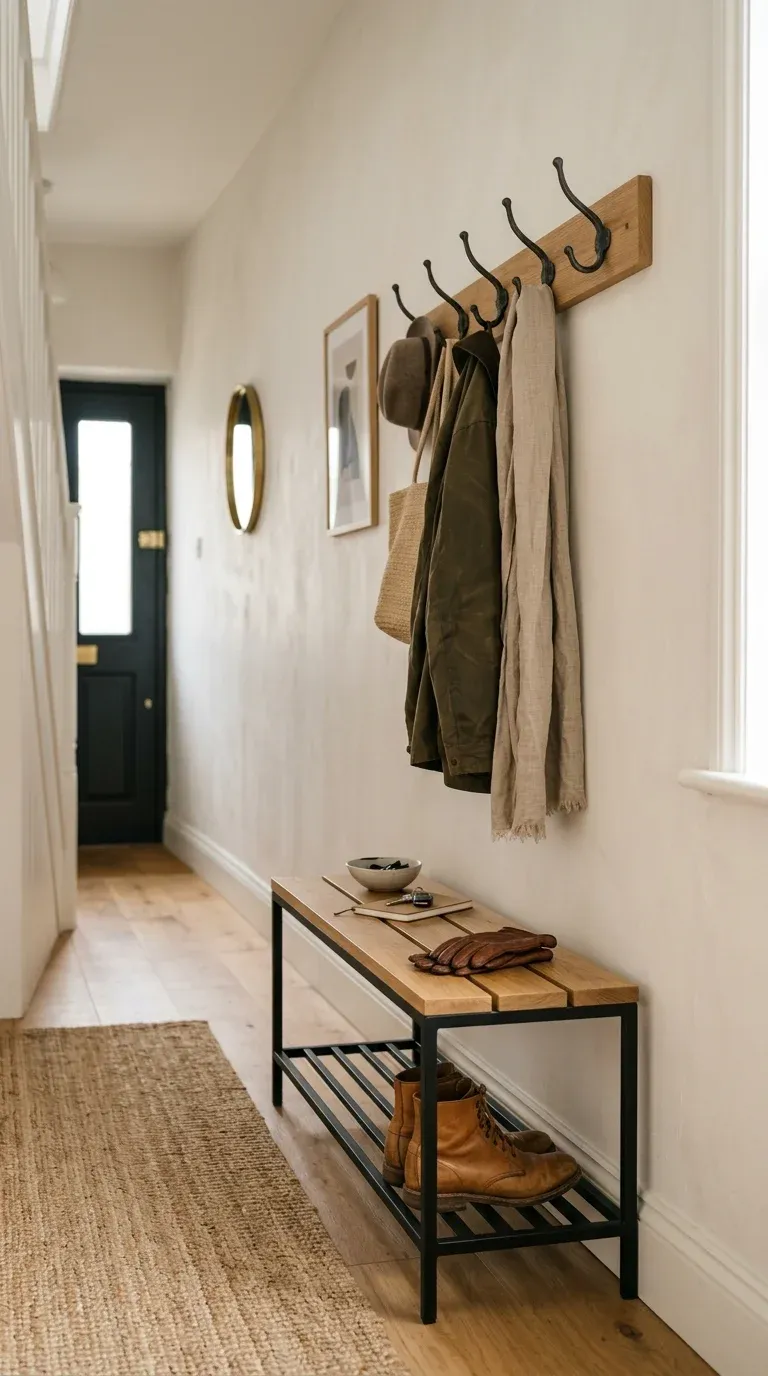
A narrow foyer showcasing a slimline metal entryway bench placed under a series of coat hooks

+-----------------------------------------------------------------------+
|                       SPATIAL FOOTPRINT COMPARISON                    |
+----------------------+-----------------------+------------------------+
| Metric               | Hall Tree             | Entryway Bench         |
+----------------------+-----------------------+------------------------+
| Average Height       | 68" to 78"            | 18" to 22"             |
| Average Depth        | 16" to 22"            | 12" to 18"             |
| Average Width        | 32" to 40"            | 24" to 48"             |
| Visual Weight        | High (Dominates Wall) | Low (Preserves Lines)  |
| Wall Modification    | Required (Anti-Tip)  | Optional               |
+----------------------+-----------------------+------------------------+

3. Material Composition & Structural Engineering

Not all entryway furniture is built to handle the daily wear and tear of a busy home. You need to consider the materials, weight limits, and hardware quality of any piece you choose.

Close-up of industrial metal joints and solid wood grain on heavy-duty entryway furniture

Solid Wood vs. Engineered Wood (MDF/Particle Board)

  • Solid Wood (Oak, Pine, Birch): Offers excellent screw-holding strength, resists moisture from wet coats, and can be sanded and refinished. Solid wood is the best choice for long-term durability.
  • MDF and Particle Board: Common in budget-friendly furniture. While flat and uniform, engineered wood is prone to swelling if exposed to wet shoes and dripping umbrellas. If you choose MDF, make sure it has a high-pressure laminate or water-resistant veneer.

Load Capacities and Weight Ratings

Always check the manufacturer’s weight ratings.

  • Seat Weight Limits: A quality entryway bench or hall tree seat should support at least 300 lbs. Cheaper models with thin particle board seats can sag or crack over time.
  • Hook Tensile Strength: On a hall tree, each hook should support at least 15 to 20 lbs. Heavy winter coats, laptop bags, and backpacks put significant stress on hooks. Look for zinc-alloy or cast-iron hooks secured with double wood screws, rather than cheap plastic hooks.

Hardware and Construction Quality

Look for high-quality hardware details:

  • Ball-bearing drawer slides: Ensure smooth operation when opening storage drawers.
  • Soft-close hinges: Prevent fingers from getting pinched on lift-top storage benches.
  • Leveling feet: Let you adjust the piece on uneven floors or tile transitions.

For a cohesive look that matches your home’s style, take your time choosing the right color and finish for your space to ensure the wood or metal tones complement your existing decor.

Field Note: If you have uneven tile floors in your entryway, look for furniture with adjustable leveling feet. Without them, a tall hall tree can wobble, putting extra stress on its wall anchors and making it feel unstable.


4. Deep Dive: Top Product Recommendations

Let’s take a closer look at three top-rated products, examining their specs, build quality, and best use cases.

Product 1: VASAGLE Industrial Hall Tree

This industrial-style hall tree is a versatile option for busy, high-traffic homes. It combines a matte black iron frame with rustic brown engineered wood shelves.

An industrial-style hall tree with black iron frame rustic wooden shelves and double coat hooks

  • Key Specs: 72” H x 33” W x 11.8” D; 9 removable hooks; 2 wire mesh shoe shelves.
  • Build Quality: Strong powder-coated steel frame. The engineered wood bench is reinforced by cross-bracing underneath, giving it a 176 lb load rating.
  • Pros: Very slim depth (under 12 inches) fits narrow hallways; plenty of movable hooks; budget-friendly.
  • Cons: Wire mesh shoe shelves can let dirt and water drip onto the floor below; lower seat weight capacity than solid wood models.
  • Best For: Narrow entryways and apartments that need vertical storage without taking up too much floor space.

Check Price on Amazon


Product 2: Prepac Shoe Cubby Entryway Bench

This clean, classic entryway bench focuses on shoe organization. It features a wide seating area over a grid of individual shoe cubbies.

White wooden entryway bench with twenty individual shoe cubbies in a bright coastal style mudroom

  • Key Specs: 22” H x 48” W x 16” D; 18 to 24 individual shoe cubbies.
  • Build Quality: Made from laminated composite woods. It features a sturdy 1-inch thick top bench surface that easily supports two sitting adults (up to 250 lbs).
  • Pros: Exceptional shoe storage capacity; wide seat; clean, simple look that fits most decor styles.
  • Cons: Very heavy to assemble; engineered wood construction is sensitive to puddles from wet shoes.
  • Best For: Families with lots of shoes who want to keep their footwear organized and off the floor.

Check Price on Amazon


Product 3: Walker Edison Solid Wood Entryway Bench

For those who prefer natural materials and a minimalist design, this solid pine bench offers a warm, mid-century modern look.

A mid-century modern solid wood bench with tapered legs and a lower slatted shoe shelf

  • Key Specs: 18” H x 42” W x 14” D; open lower slatted shelf.
  • Build Quality: Solid pine construction with a durable stained finish. Supports up to 300 lbs on the seat.
  • Pros: Genuine solid wood grain; very sturdy; open slatted shelf allows wet shoes to dry quickly.
  • Cons: Minimal storage capacity; no hidden storage compartments or drawers.
  • Best For: Minimalist homes, apartments, or as a seating accent in larger foyers.

Check Price on Amazon


5. Installation, Assembly, and Safety Protocols

Proper assembly and installation are essential for safety, especially if you have children or pets in your home.

Step-by-step graphic showing the installation of an anti-tip wall anchor into a wall stud

Anti-Tip Anchoring: Non-Negotiable for Hall Trees

Because hall trees are tall and top-heavy, you must anchor them to the wall.

A hall tree loaded with heavy coats and bags can tip forward if a child climbs on the seat.

  1. Locate the Wall Studs: Use a stud finder to locate the wood studs behind your hall tree. Do not rely on plastic drywall anchors for heavy tall furniture.
  2. Use Heavy-Duty Straps: Secure the top frame of the hall tree to the wall studs using steel L-brackets or heavy-duty nylon anti-tip straps.
  3. Check for Baseboard Clearance: Many high-quality hall trees feature a cutout at the base to fit over your baseboards. This allows the piece to sit flush against the wall for a more secure installation.

Assembly Complexity and Tools

  • Entryway Benches: Usually take 20 to 45 minutes to assemble. They require basic tools like a screwdriver and hex key.
  • Hall Trees: Often take 1.5 to 3 hours to assemble. They have more parts, including back panels, hooks, and top shelves. Having a helper makes aligning the tall back panels much easier.

Pro Tip: When assembling furniture with cam-lock fasteners, do not use an electric drill at high torque. This can easily crack the wood or strip the pre-drilled holes. Use a hand screwdriver for the final tightening to ensure a secure fit.


6. The Buyer’s Decision Matrix: Which One Should You Buy?

To choose the right option, consider your household’s daily habits, storage needs, and design preferences.

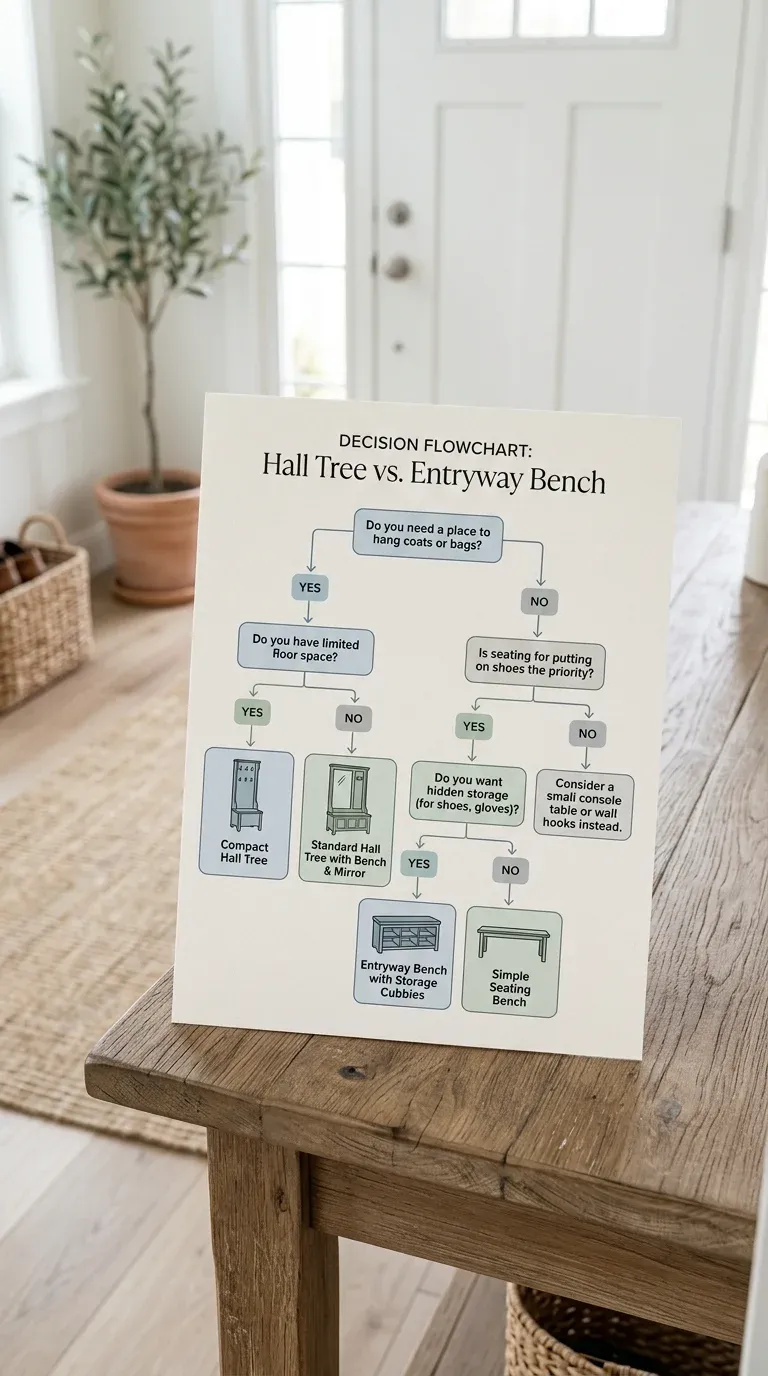
Flowchart guiding the reader through deciding between a hall tree and an entryway bench

Storage Needs

  • Choose a Hall Tree if: You have no nearby coat closet, and your family needs a place to hang jackets, dog leashes, and backpacks as soon as they walk through the door.
  • Choose an Entryway Bench if: You already have a coat closet but need a comfortable place to sit and take off your shoes, along with a little extra shoe storage.

Spatial Constraints

  • Choose a Hall Tree if: You have narrow hallways but high ceilings. This lets you use vertical wall space instead of taking up valuable floor space.
  • Choose an Entryway Bench if: Your entryway has low windows, decorative paneling, or light switches that a tall hall tree would block.

Visual and Style Preferences

For help finding the right style for your home, you can browse through our curated list of the best hall trees for every entryway type or read our comprehensive hall tree buying guide for expert design advice.

If you love the warm, cozy look of rustic design, you will enjoy looking at these stunning farmhouse hall trees.

+-----------------------------------------------------------------------+
|                         DECISION MATRIX                               |
+------------------------------------+----------------------------------+
| Buy a Hall Tree If:                | Buy an Entryway Bench If:        |
+------------------------------------+----------------------------------+
| - You have no entryway coat closet  | - You have a nearby coat closet  |
| - You need to hang backpacks/coats | - Your main goal is shoe storage |
| - You have tall ceilings           | - You have low windows or art    |
| - You want an all-in-one mudroom  | - You want an open, airy look    |
+------------------------------------+----------------------------------+

7. Maintenance, Durability, and Long-Term Value

An entryway piece must be durable enough to handle daily traffic, dirt, and moisture.

A person applying protective wood oil to the surface of a solid wood entryway bench

Protect Against Water and Dirt

  • Wet Shoes: Never place soaking wet boots directly onto unprotected MDF shelves. Use a plastic drip tray or a water-resistant boot mat to protect the wood.
  • Metal Parts: Wipe down powder-coated steel frames occasionally with a damp cloth to prevent rust from forming in humid environments.
  • Solid Wood: Apply a high-quality furniture wax or oil once a year to keep the wood hydrated and protect it from scratches and scuffs.

Cleaning Under and Behind the Furniture

  • Benches: Are easy to move out of the way, allowing you to sweep, vacuum, or mop the floor underneath.
  • Hall Trees: Are heavy and anchored to the wall, making them difficult to move. Look for models with open bottom shelves or enough clearance for a vacuum attachment to slide underneath.

8. Frequently Asked Questions (FAQ)

Can I use a hall tree if I have baseboard heating?

No, it is not recommended to place a heavy wooden hall tree directly in front of baseboard heaters. This blocks heat flow into the room and can dry out or warp the wood, creating a potential safety hazard. A slim, leggy metal entryway bench is a safer option that allows air to circulate.

How do I prevent a hall tree from scratching my walls?

To protect your walls, apply adhesive felt pads to any part of the hall tree’s back frame that touches the wall. Securely anchoring the piece to the wall studs also prevents it from shifting and rubbing against your drywall.

What is the ideal bench height for putting on shoes?

The standard, most comfortable seat height for adults is 18 inches. This height allows you to sit comfortably with your feet flat on the floor, making it easy to bend over and tie your shoes.

Can I turn an entryway bench into a hall tree later?

Yes. You can create a modular hall tree by hanging a row of wall-mounted coat hooks or a floating shelf directly above your entryway bench. This gives you the vertical storage of a hall tree while keeping the flexibility of two separate pieces.

Are fabric-upholstered entryway benches a good idea?

Upholstered benches look great and are very comfortable, but they require more maintenance. In a high-traffic mudroom, fabric can easily absorb moisture and stain from wet clothes and dirty shoes. If you choose an upholstered bench, look for durable, easy-to-clean fabrics like leather, faux leather, or outdoor-rated materials.

Top Picks: Best Entryway Essentials

Editor's shortlist with verified ratings. Prices and availability below — clicking an Amazon link earns us a small commission at no extra cost to you.

# Product Rating Reviews Tag Check Price
1 Vasagle Industrial Entryway Bench 4.5 8,420 Top Pick View on Amazon
2 Crosley Furniture Seaside Hall Tree 4.5 5,410 View on Amazon
3 Seville Classics 12-Pair Shoe Rack 4.5 6,420 Best Storage View on Amazon
4 Franklin Brass Wall Hooks (5-Pack) 4.5 9,820 View on Amazon
5 Simplihome Artisan Solid Wood Bench 4.5 3,127 Editor's Pick View on Amazon

Affiliate disclosure: As an Amazon Associate we earn from qualifying purchases. Tag: entreyway-20 — change in src/data/topPicks.ts.

Enjoyed this guide? Share it!

Share: