
Integrating Smart Home Tech: Entryway Racks with Charging Stations and Digital Key Hooks
Discover how to modernize your entryway by merging traditional storage with smart technology, featuring wireless charging and digital access management.
Feb 5, 2026 - Written by: linda wise

The modern entryway is undergoing a quiet revolution. For decades, this space served a singular, utilitarian purpose: a transitional zone for shedding coats, kicking off shoes, and dropping keys into a bowl. However, as our daily lives become increasingly tethered to technology, the physical infrastructure of our homes must evolve to support these digital dependencies. The traditional hall tree or console table, while aesthetically pleasing, often lacks the functionality required by the contemporary homeowner.
Enter the era of the tech-enabled entryway. This new design paradigm merges high-quality joinery and traditional storage solutions with sophisticated electronic integration. By embedding wireless charging capabilities, cable management systems, and digital key organizations into the furniture itself, homeowners can reduce visual clutter while ensuring their devices are primed for the day ahead. This guide explores the strategic integration of smart technology into entryway storage, transforming the foyer from a chaotic drop zone into a seamless hub of connectivity and organization.
The Evolution of the Entryway: From Drop Zone to Tech Hub
To understand the necessity of smart entryway furniture, one must first acknowledge the changing inventory of our pockets. Twenty years ago, leaving the house required a mechanical key and perhaps a wallet. Today, the “everyday carry” includes smartphones, smartwatches, wireless earbuds, portable power banks, and electronic key fobs. Each of these devices requires power, and each represents a potential point of friction if misplaced or uncharged.
The psychological impact of a disorganized entryway should not be underestimated. It is the first space one encounters upon returning home and the last one sees before departing. When this area is cluttered with tangled charging cables, misplaced adapters, and scattered devices, it creates a subconscious sense of disorder.
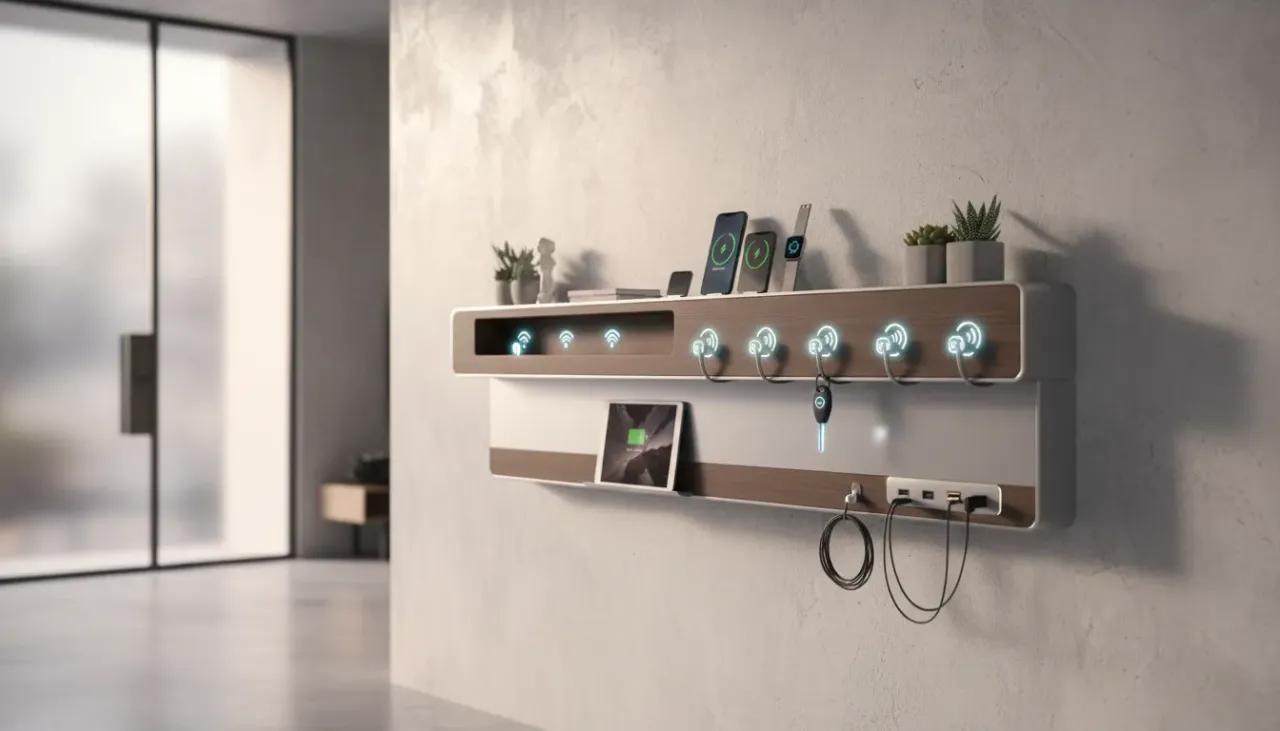
Smart entryway racks address this by rendering the technology invisible. The goal is not to turn the foyer into a server room, but rather to hide the utility within the furniture. A well-designed smart rack appears, to the naked eye, as a piece of elegant cabinetry. It is only upon interaction—placing a phone on a veneer surface to initiate charging or hanging a fob on a sensor-enabled hook—that the technological capabilities are revealed.
Wireless Charging Integration: Banish the Cord Clutter
The most immediate upgrade for any entryway storage solution is the integration of power. However, the unsightly nature of power strips and USB bricks often clashes with carefully curated entryway decor. The solution lies in Qi-standard wireless charging and concealed power delivery.
Understanding Induction Charging in Furniture
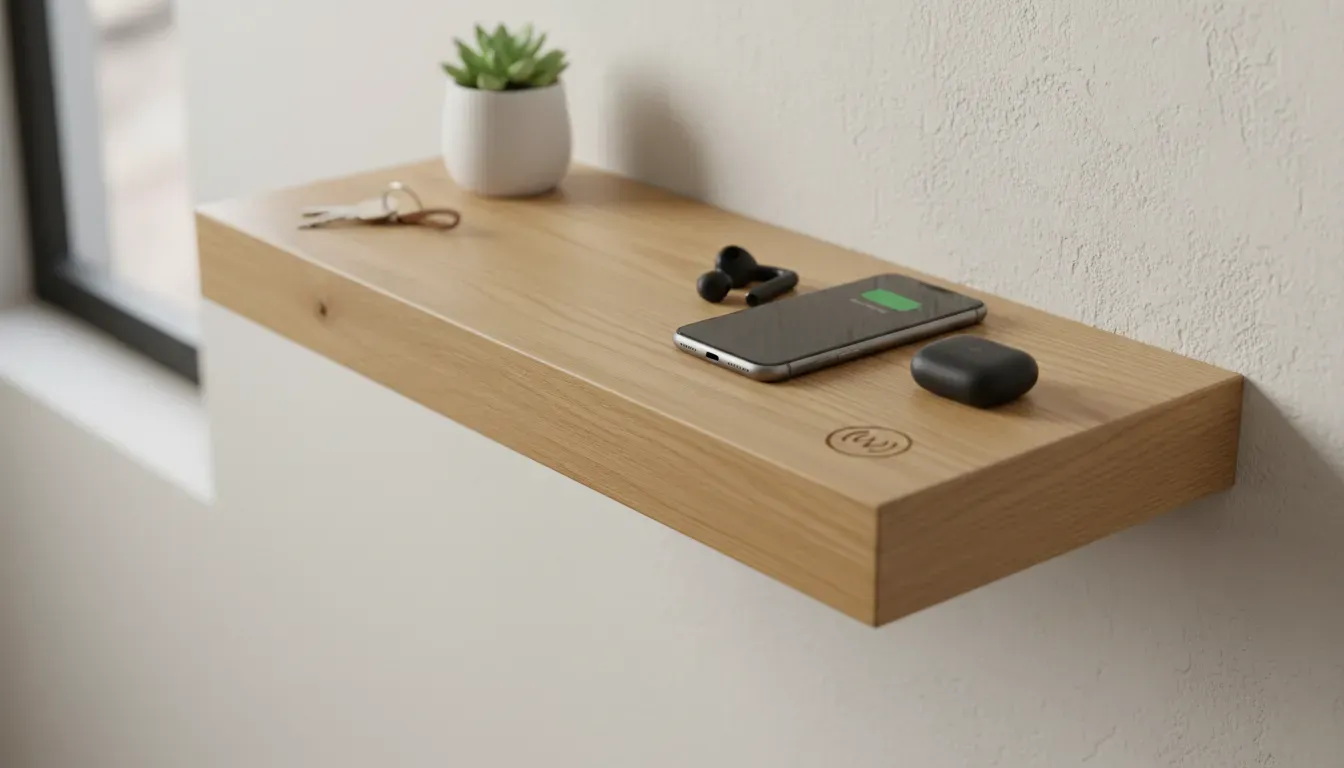
Wireless charging relies on magnetic induction. A coil in the charging pad creates an electromagnetic field, which induces a current in the coil within the device (smartphone or earbuds). For furniture integration, this presents specific challenges regarding material thickness. Standard wireless chargers have a limited range, often less than 5 millimeters.
When selecting or building an entryway rack with integrated charging, one must utilize long-range induction coils designed specifically for sub-surface installation. These units can transmit power through wood, stone, or glass surfaces up to 30 millimeters thick. This allows the technology to be completely hidden beneath the surface of a console table or shelf, maintaining the integrity of the material grain without visible plastic pads.
Retrofitting vs. Integrated Systems
For homeowners looking to upgrade their current setup, retrofitting is a viable option. This involves routing out the underside of a wooden shelf to reduce the material thickness, allowing a standard charger to function through the wood.
However, purpose-built furniture offers superior thermal management. Wireless charging generates heat; trapped heat can degrade battery health over time. High-end smart entryway racks incorporate passive ventilation channels or aluminum heat sinks within the chassis to dissipate thermal energy, ensuring that devices remain cool while charging.
For those seeking a turnkey solution that sits atop an existing console, a dedicated organizational station is a practical first step.
Check out the Wireless Charging Station Organizer on Amazon
Cable Management Architecture
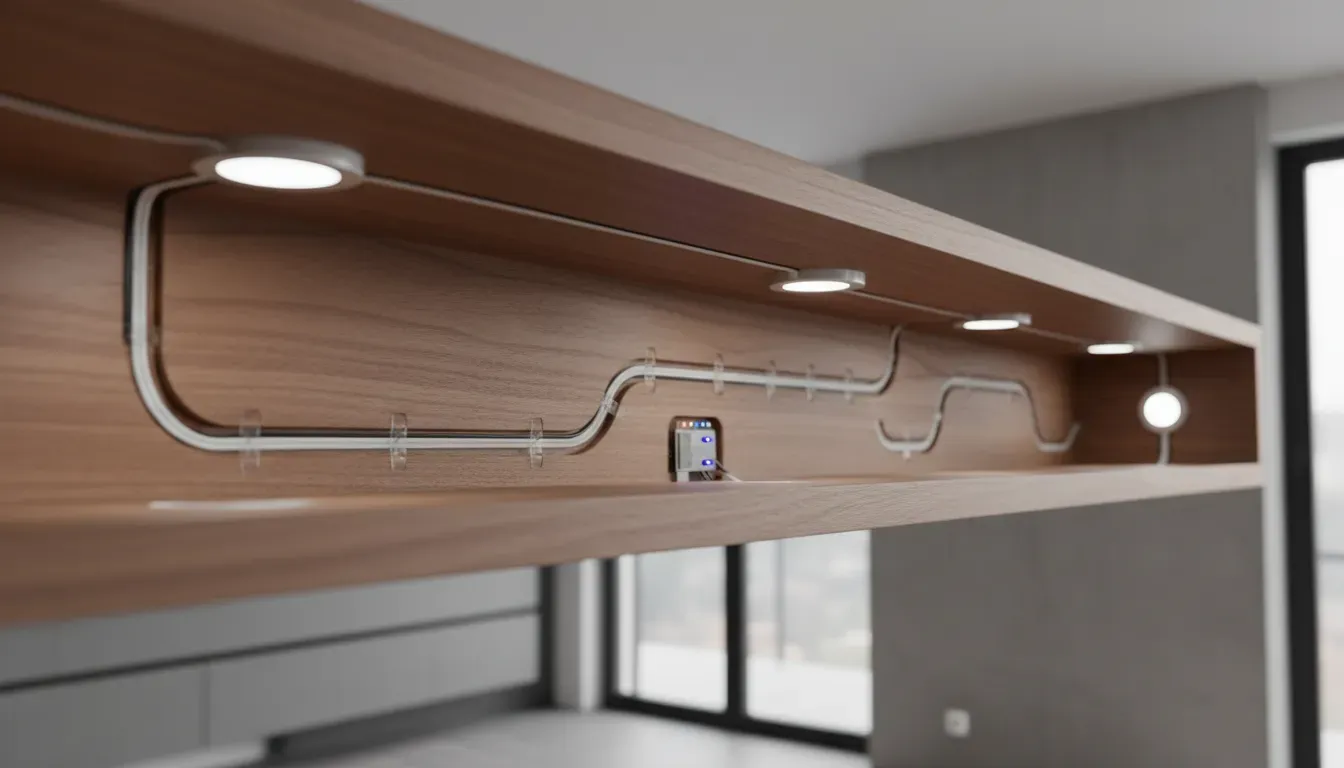
Even with wireless charging, the furniture itself must plug into a wall outlet. Sophisticated entryway racks utilize a “false back” or internal channel system. The power cord runs through the leg of the table or behind a specialized panel, exiting near the baseboard. This keeps the wall visual clean.
Furthermore, not all devices support wireless charging. A comprehensive smart rack should include discrete USB-C Power Delivery (PD) ports, perhaps recessed into the side of the unit or hidden inside a drawer. This allows for the rapid charging of high-drain devices or legacy tech without leaving cables draped across the tabletop.
Digital Key Hooks and Smart Access Management
While charging handles the power requirements of our devices, the management of physical and digital access tokens requires a different approach. The concept of the “key hook” is evolving.
The Rise of RFID and Smart Fobs
Modern vehicles and smart home locks often utilize bulky fobs or RFID tags. These are expensive to replace and easy to lose. A smart entryway rack can incorporate designated storage that goes beyond a simple metal hook.
Some advanced systems utilize conductive hooks or NFC (Near Field Communication) tags embedded behind the hook panel. When a user hangs their keys, the system registers the action. This can trigger home automation routines. For example, hanging your keys upon arrival could signal your smart home hub to turn on the living room lights, adjust the thermostat, and disarm the security system. Conversely, removing the keys could arm the perimeter sensors and turn off non-essential lighting.
Signal Blocking and Security
With the rise of relay attacks—where thieves amplify the signal from a key fob inside the house to unlock a car in the driveway—security is paramount. A high-end smart entryway rack should feature a Faraday box or shielded drawer.
This compartment is lined with conductive mesh (copper or nickel) that blocks radio frequency signals. Placing keys inside this designated “digital vault” ensures that the fob cannot communicate with the vehicle until it is intentionally removed. This blends physical security with home organization, providing peace of mind without requiring an ugly industrial lockbox.
Design Principles for Tech-Enabled Entryways
Integrating technology should never come at the expense of aesthetics. The entryway sets the tone for the entire home. Whether the style is Mid-Century Modern, Industrial, or Scandinavian Minimalist, the tech must be subservient to the design.
Material Selection and Signal Interference
Wood is the preferred material for smart entryways because it is radio-transparent, allowing WiFi and Bluetooth signals to pass through easily. Metal racks, while durable, can act as Faraday cages, blocking signals if routers or hubs are placed inside cabinets.
If metal is desired for an Industrial look, it should be used for the frame, while shelves and surfaces should remain wood or glass. For those integrating voice assistants (like smart speakers) into the unit, acoustic transparency is also a factor. Cabinet doors may require rattan or acoustically transparent fabric inserts to allow sound to travel while hiding the device.
The “Visible-Invisible” Balance
The user interface of the furniture should be subtle. Instead of bright LED status lights that disrupt the ambiance of a dim hallway, opt for haptic feedback or soft, indirect glow lighting. A small, under-shelf LED strip that pulses once when a phone begins charging is preferable to a constantly illuminated beacon.
For those who prefer a ready-made piece that balances modern design with utility, consider looking for console tables specifically designed with cable routing in mind.
Check out the Modern Smart Entryway Console on Amazon
DIY Project: Building Your Own Smart Entryway Rack
For the avid DIY enthusiast, creating a custom smart entryway rack allows for perfect adaptation to specific devices and spatial constraints. This section outlines the architectural approach to building such a unit.
Tools and Components
- Router and Plunge Base: Essential for hollowing out cavities for chargers and creating cable channels.
- Forstner Bits: For creating clean pass-through holes for wires.
- Long-Range Wireless Charging PCB: Purchase the internal components rather than a consumer-grade pad.
- NFC Stickers: Programmable tags for automation triggers.
- Hardwood Timber: Walnut, Oak, or Maple provide durability and aesthetic warmth.
Step-by-Step Integration Strategy
- Plan the Power Path: Before cutting wood, map out where the unit will stand relative to the nearest wall outlet. Design a hollow leg or a dado channel in the back panel to carry the main power cable from the floor to the distribution area.
- Route the Charging Zones: On the underside of the top surface, route a pocket for the wireless charger. Leave approximately 3mm to 4mm of wood remaining. Test the charging connection with your specific phone case before gluing the charger in place.
- Embed NFC Automation: Drill shallow recesses behind the key hooks. Place programmable NFC stickers in these recesses before mounting the hooks. Use a smartphone app to program the tag to trigger “Arriving Home” or “Leaving Home” scenes.
- Thermal Management: Drill small ventilation holes from the charger pocket to the back of the unit. This allows heat to escape, preventing the wood from warping and the charger from overheating.
- Finish Application: Apply a finish that is durable but not overly thick. Oil-based finishes (like Danish oil) are excellent as they penetrate the wood and don’t create a barrier that might slightly interfere with induction efficiency compared to thick epoxy layers.
Advanced Features: Sensors and Automation
Beyond charging and keys, the smart entryway rack can serve as the central nervous system for the home’s ambient intelligence.
Motion-Activated Lighting
Fumbling for light switches with hands full of groceries is a common annoyance. Integrating motion sensors into the entryway rack solves this. Passive Infrared (PIR) sensors can be recessed into the toe-kick or the underside of the main shelf.
When motion is detected, the rack can illuminate a soft LED strip directed at the floor. This provides enough light to remove shoes and hang coats without blinding the user with overhead lighting. This feature also enhances safety, acting as a nightlight for late-night arrivals.
Voice Assistant Integration
The entryway is a prime location for a voice assistant. It allows users to check the weather, traffic conditions, or calendar reminders immediately before stepping out the door. However, smart speakers can clutter the surface.
A sophisticated approach involves mounting the smart speaker inside a vented cabinet or using a specifically designed bracket that hangs it beneath the shelf. This keeps the countertop clear for mail and keys while ensuring the microphone can still hear commands.
Selecting the Right Equipment
When sourcing components or buying pre-made smart furniture, technical specifications matter. Not all chargers are created equal, and not all materials will last in a high-traffic area.
Power Output and Standards
Ensure that any integrated wireless charger supports the Qi standard and offers at least 15W of power. “Fast charging” requires higher wattage; 5W or 7.5W chargers will struggle to top up a modern battery during a brief stop at home.
For USB ports, look for USB-C PD (Power Delivery) capable of at least 30W. This ensures that the port can charge tablets or even small laptops, adding versatility to the station.
Durability and Wear
The entryway is a high-impact zone. Keys scratch surfaces; wet umbrellas introduce moisture. If the smart rack has a veneer surface, ensure it is high-quality and sealed against moisture. For key hook areas, consider a backing of leather or felt. This protects the wood from the repeated scratching of metal keys and adds a tactile element of luxury.
To manage the influx of cables that might accumulate inside the unit, a heavy-duty cable management box is essential to keep the internal wiring safe from dust and getting snagged.
Check out the Heavy Duty Cable Management Box on Amazon
Future-Proofing Your Home’s Entrance
Technology moves faster than furniture trends. A well-built console table might last fifty years, while the charging standard it contains might be obsolete in five.
Modular Systems
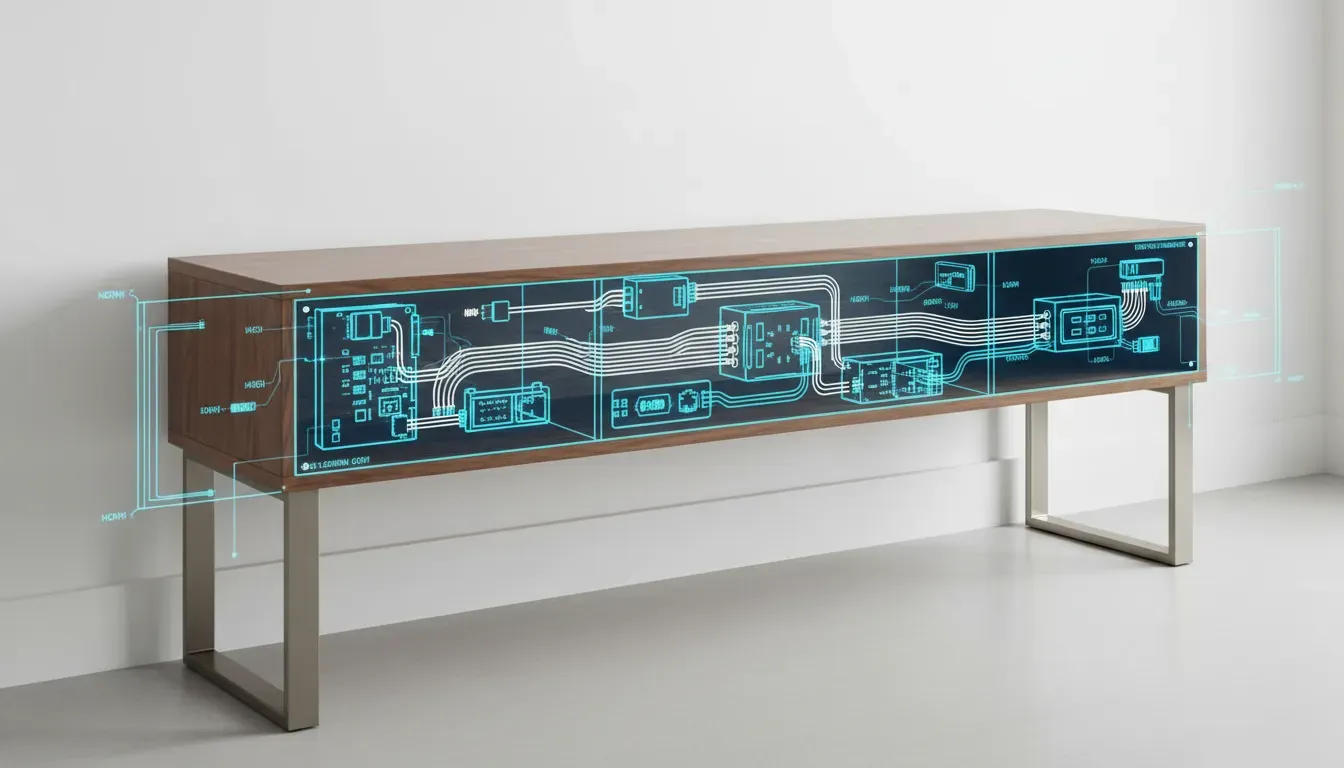
The smartest investment is a modular system. Avoid furniture where the electronics are permanently epoxied into the structure with no access. Look for designs that feature removable access panels or standardized mounting brackets. This allows you to swap out the wireless charging pad for a newer model or replace a faulty USB port without discarding the entire piece of furniture.
The Role of AI in Organization
As Artificial Intelligence becomes more integrated into domestic life, the entryway will likely become more proactive. Future iterations of smart racks may include weight sensors on shelves to detect if an item (like a wallet) has been left behind, alerting the user via their phone. Cameras integrated into the unit could scan mail as it is placed down, automatically sorting bills from junk mail digitally.
While these technologies are on the horizon, the fundamental principle remains: the furniture must support the user’s lifestyle, not complicate it.
Conclusion
Integrating smart home technology into entryway racks is more than a gadget-lover’s pursuit; it is a logical response to the demands of modern living. By combining storage solutions with power and connectivity, we reclaim the entryway from clutter.
Whether you choose to retrofit an antique heirlooom with hidden sensors, build a custom unit from scratch, or invest in a modern piece of smart furniture, the goal remains the same. You are creating a space that welcomes you home, secures your digital and physical keys, and ensures you are powered up for whatever tomorrow brings. The smart entryway is not just about technology; it is about creating a frictionless transition between the sanctuary of the home and the outside world.