
Making Entryway Storage Invisible: Integrating Organization with Minimalist Design
Discover the art of invisible storage. Learn how to integrate organization with minimalist design to create a calm, clutter-free entryway.
Feb 2, 2026 - Written by: linda wise

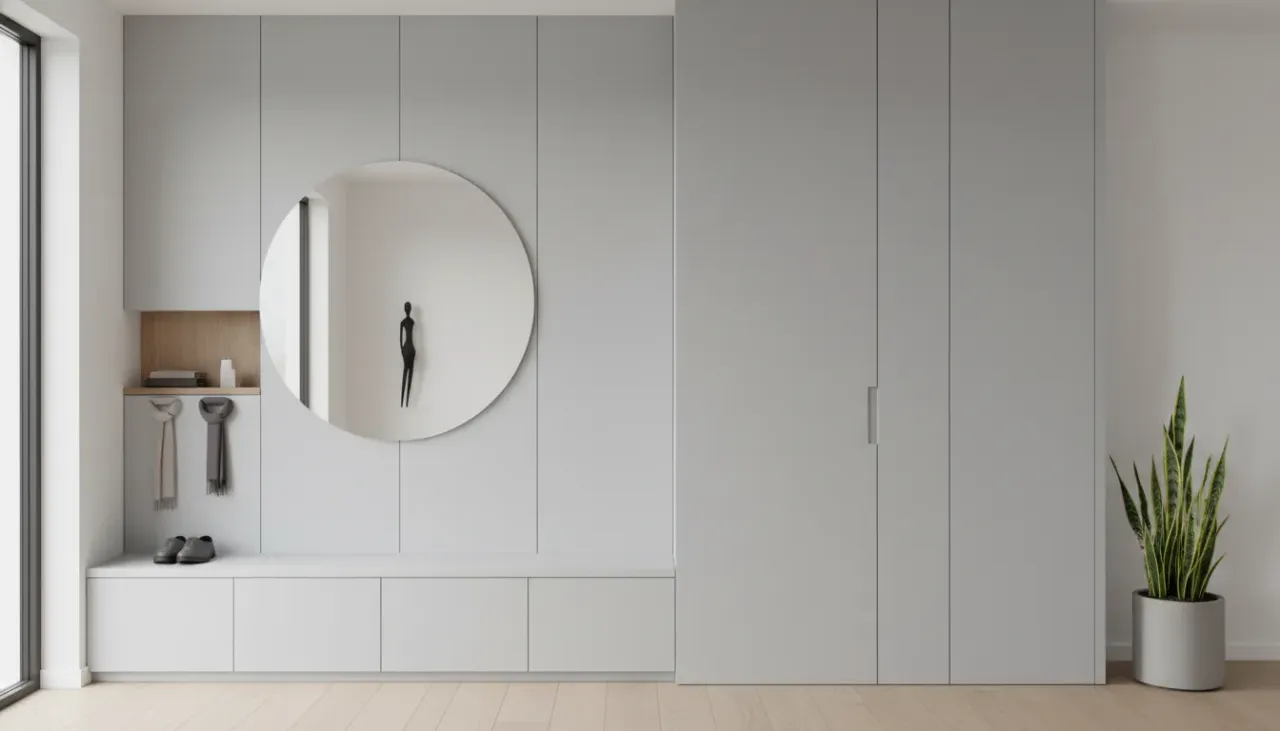
The entryway serves as the architectural handshake of the home. It is the transitional threshold between the chaotic, demanding external world and the sanctuary of private life. However, this critical space often succumbs to the “drop zone” phenomenon, where keys, coats, mail, and shoes accumulate in a visual cacophony that disrupts the sense of peace before one has even fully entered the residence. The challenge for the design-conscious homeowner is not merely to organize these items but to make the means of organization vanish entirely.
True minimalism in the entryway is not about the absence of possessions; it is about the absence of visual noise. It requires a strategic approach where storage solutions are seamlessly integrated into the architecture and design of the room. When executed correctly, invisible storage allows the entryway to function as a high-performance utility space while maintaining the aesthetic purity of an art gallery. This guide explores the principles, architectural techniques, and furniture selections necessary to achieve complete visual calm in your home’s entrance.
The Philosophy of the Invisible Threshold
To master invisible storage, one must first adopt a shift in perspective regarding the function of the entryway. In standard interior design, storage is often treated as furniture—distinct, visible units placed against a wall. In minimalist integration, storage is treated as infrastructure. It should possess the same visual weight as a wall or a floor, receding into the background to allow light and space to take center stage.
The psychological impact of a clutter-free entry cannot be overstated. “Cognitive load” refers to the amount of working memory resources used by the brain. A visual environment filled with disparate objects—a pile of shoes, a coat rack bristling with jackets, a table strewn with mail—increases cognitive load, creating a subconscious sense of stress immediately upon arrival. By concealing these necessary items, we reduce that load, fostering an immediate physiological response of relaxation.
The Principle of Negative Space
Negative space, or the empty space around and between the subject of an image, is the defining characteristic of minimalist design. In an entryway, invisible storage protects this negative space. If a shoe rack is visible, it consumes visual bandwidth. If the shoes are hidden behind a seamless panel that matches the wall color, the eye glides over the surface, perceiving the space as larger and more open.
Architectural Integration: Building It In
The most effective way to render storage invisible is to integrate it into the structural fabric of the home. This often requires moving beyond off-the-shelf furniture and considering carpentry or customized built-in solutions.
Flush Floor-to-Ceiling Cabinetry
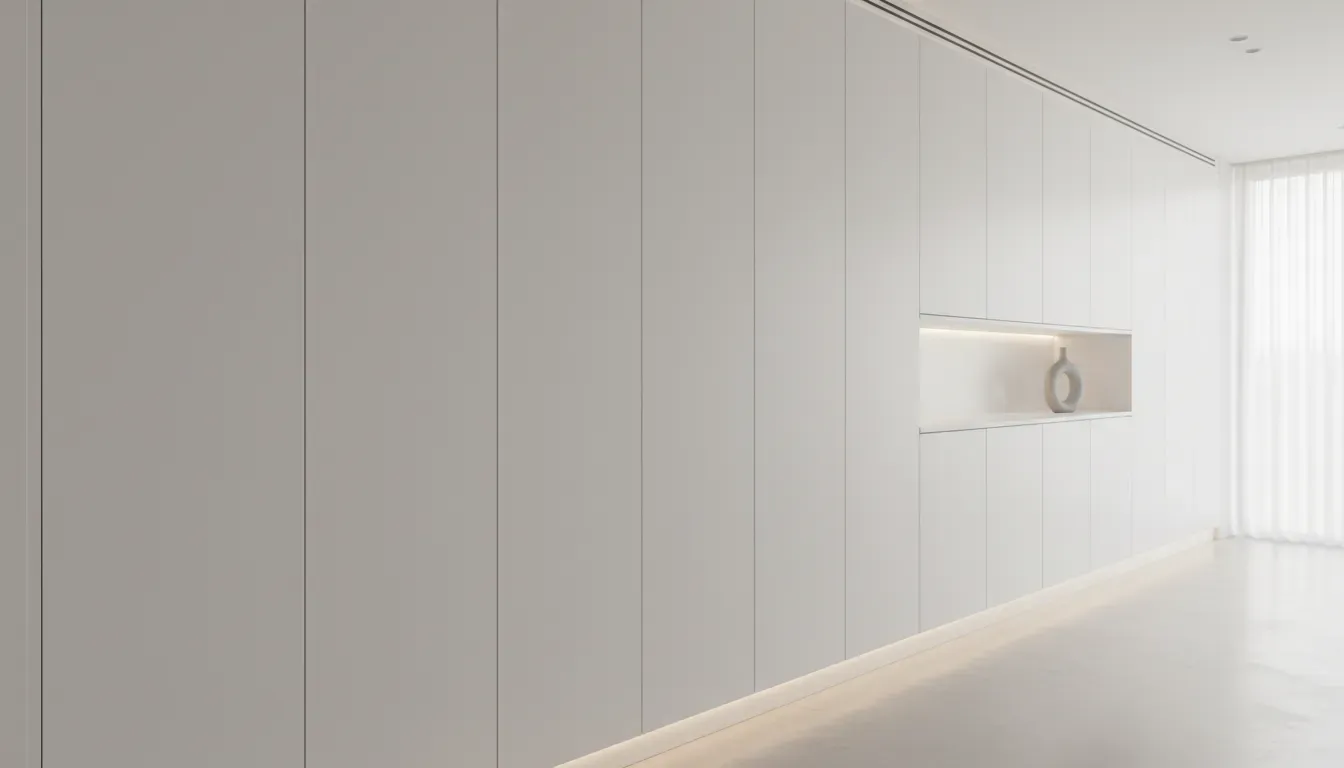
The holy grail of invisible storage is the floor-to-ceiling joinery wall. By extending cabinets from the very bottom of the floor to the crown of the ceiling, the unit ceases to look like a wardrobe and begins to look like a structural wall.
To achieve true invisibility with this method:
- Color Matching: Paint the cabinet doors the exact same shade and finish (matte or eggshell) as the surrounding walls.
- Shadow Gaps: Instead of heavy trim, utilize shadow gaps (recessed reveals) at the floor and ceiling to create a clean, modern architectural line.
- Hardware Elimination: Remove handles and knobs entirely. Utilize high-quality push-to-open latches (often called “touch latches”). This leaves the surface completely unbroken, presenting a solid plane of color to the eye.
Inside these cabinets, the organization must be rigorous. Designated zones for coats, shelves for bags, and specifically measured cubbies for shoes ensure that the chaos is contained, not just hidden.
Recessing and Niche Utilization
If the architectural footprint allows, recessing storage into existing wall cavities is a powerful technique. By framing out a wall or utilizing the space between studs, you can create shallow storage for keys, mail, and accessories that sits flush with the drywall. A panel covering this niche, perhaps disguised as a mirror or a piece of artwork on hinges, effectively erases the storage from existence.
For those with staircases near the entry, the triangular void beneath the stairs offers prime real estate. However, a standard door leading to a dark cavern is often inefficient. Modern invisible design utilizes pull-out drawers integrated into the stair risers or tall, vertical pull-out units (similar to pantry pull-outs) that blend perfectly with the staircase paneling.
Deceptive Furniture: Form Disguising Function
When structural renovations are not feasible, such as in rental properties or specific architectural layouts, the burden of invisible storage falls upon deceptive furniture. These are pieces that appear to serve a purely decorative or singular purpose but conceal substantial organizational capacity.
The Monolithic Console
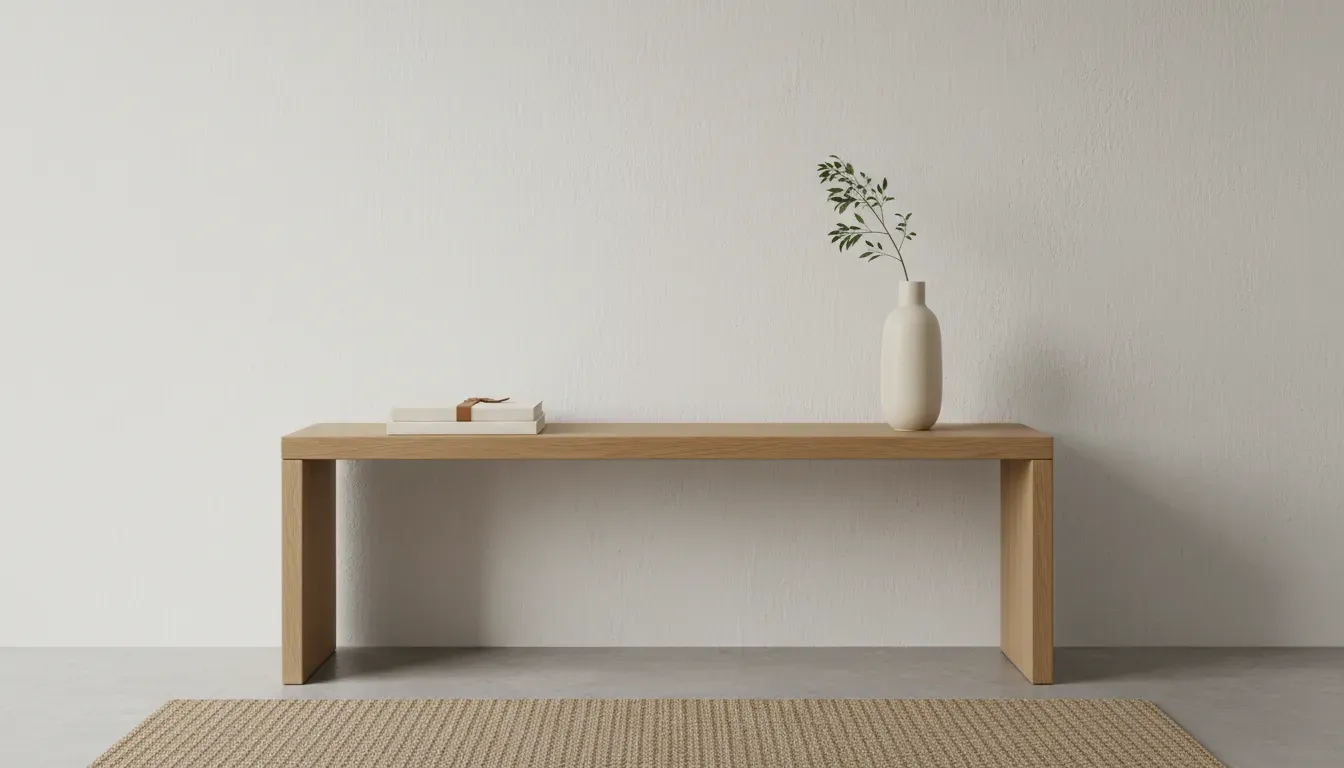
A console table is a staple of entryway decor, but traditional open-leg consoles expose the wall behind them and offer zero concealment. The minimalist alternative is the “monolithic” or “waterfall” console with enclosed sides and a solid front.
Look for floating consoles that mount directly to the wall. By keeping the floor visible underneath, the room retains a sense of openness, yet the unit itself can house deep drawers. The key here is the drawer mechanism. Hidden runners and beveled edges allow you to open the drawer by gripping the underside, eliminating the need for visual hardware.
The Storage Bench
Seating is essential in an entryway for removing shoes, but a simple bench is a wasted opportunity for concealment. A box-style bench with a flip-top lid or front-opening seamless drawers can swallow bulky items like backpacks, umbrellas, and seasonal accessories.
To maintain the minimalist aesthetic, choose a bench with clean lines and upholstery that complements the neutral tones of the room. Avoid tufted buttons or ornate legs. A simple, rectangular prism upholstered in linen or constructed of light oak maintains the “invisible” profile.
If you are looking for a piece that balances sleek design with hidden utility, consider a storage bench that prioritizes clean lines and hidden compartments.
Shop Minimalist Storage Benches
Visual Camouflage Techniques
Beyond the physical structure of the storage, various optical illusions and design tricks can be employed to mask the presence of organizational systems.
The Mirror Deception
Mirrors are functionally necessary in an entryway for a final appearance check, but they are also potent tools for camouflage. A full-length mirror can be mounted on heavy-duty hinges to serve as the door to a shallow wall cabinet. This cabinet, perhaps only four inches deep, is sufficient to hold keys, sunglasses, wallets, and mail sorters. To the guest, it is simply a mirror reflecting light and expanding the space; to the homeowner, it is the command center of the home.
Material Continuity
Continuity is the enemy of clutter. When materials change frequently—wood floor, metal rack, plastic bin, glass table—the eye is drawn to the differences. To make storage invisible, aim for material continuity.
If you have wood paneling in the hallway, construct the storage doors out of the same veneer with the grain matched perfectly. If the walls are plaster, consider a micro-cement finish on the storage unit to blend it seamlessly. The goal is to make the storage unit appear as part of the building’s skin rather than an object attached to it.
For further reading on creating a cohesive aesthetic through material selection, you might explore our guide on Minimalist Material Palettes.
The Micro-Organization within the Macro
There is a danger in invisible storage: the “junk drawer” effect. When clutter is hidden behind a beautiful, seamless door, it is tempting to simply throw items inside without order. However, this eventually leads to overflow. If the storage is frustrating to use because it is disorganized, family members will stop using it, and clutter will return to the visible surfaces.
Therefore, the interior of your invisible storage must be meticulously organized. This is where micro-organization comes into play.
Categorization and Containment
Every category of item needs a defined home within the hidden space. This requires internal dividers. A drawer intended for keys and wallets should be fitted with shallow trays or dividers to prevent shifting. A cabinet for shoes needs angled shelves or pull-out rails to maximize vertical density.
Bamboo or clear acrylic dividers are excellent choices as they maintain the clean aesthetic even inside the drawer. The psychological reward of opening a pristine white drawer to find perfectly compartmentalized items reinforces the habit of putting things away.
Shop Drawer Organizers and Dividers
Verticality and Hooks
Coat storage presents a unique volume challenge. While a closet is ideal, narrow entryways may not accommodate the depth required for hangers (typically 24 inches). In these scenarios, face-forward hanging bars or high-density hooks mounted on the back wall of a shallow cabinet are effective.
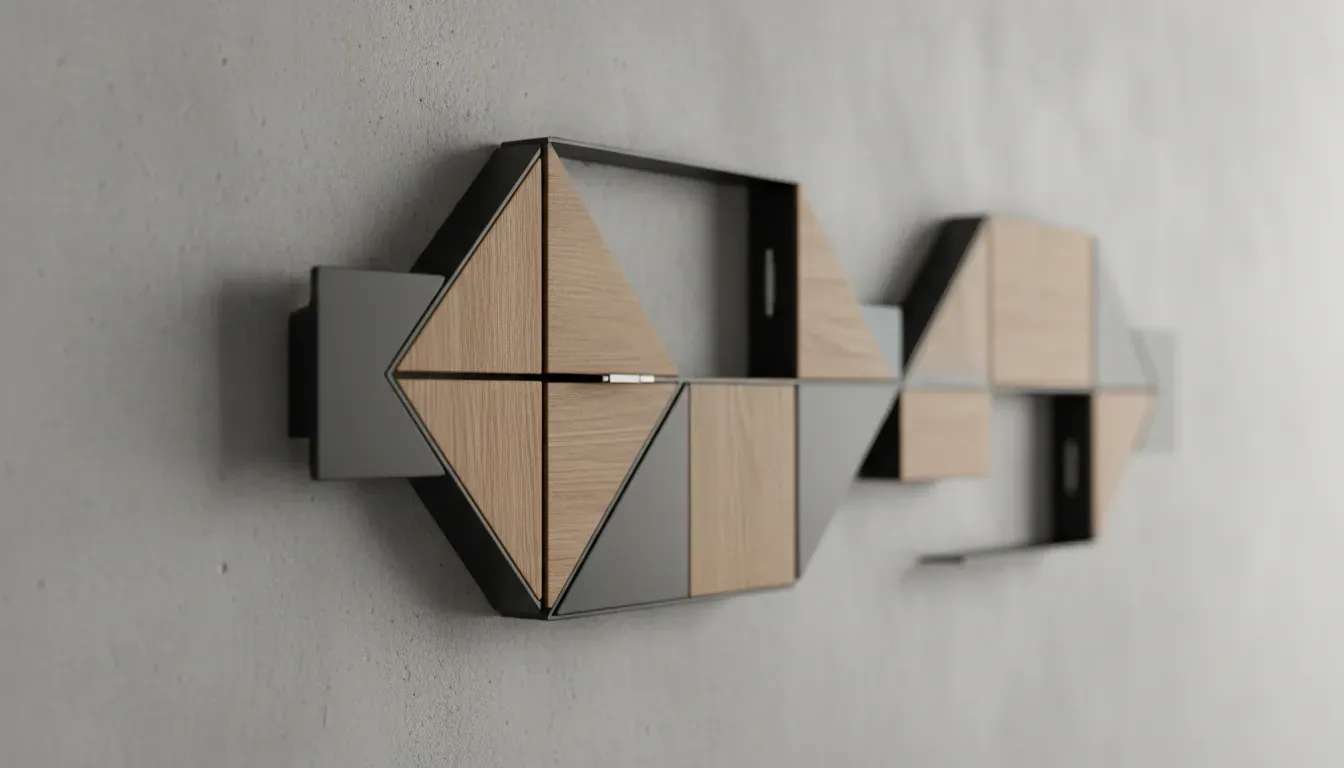
For exposed walls where a cabinet is impossible, consider “piano key” style hooks. These are wooden or metal rails with retractable hooks that fold flat against the wall when not in use. When empty, they look like a piece of sculptural wall art or a textured architectural detail; they only reveal their function as storage when absolutely necessary.
Solutions for Specific Spatial Constraints
Not all entryways allow for grand architectural interventions. Here is how to apply invisible storage principles to challenging layouts.
The Narrow Hallway
In urban apartments or older homes, the entryway is often a narrow corridor. Here, depth is the limiting factor. Standard cabinets will encroach on the walkway. The solution is the “tip-out” shoe cabinet. These units are exceptionally slim—often less than 10 inches deep—because the shoes are stored vertically in tilting drawers.
To make a tip-out cabinet invisible, choose a unit that floats off the floor and mount it to the wall. Replace the standard top with a piece of wood or stone that matches your other furniture, or paint the unit the same color as the wall. This turns a utilitarian shoe holder into a sleek, floating architectural ledge.
Shop Slim Tip-Out Shoe Cabinets
The Open Concept Entry
In homes where the front door opens directly into the living room, there are no walls to hide behind. Here, you must create a “phantom” entryway using furniture that acts as a room divider.
A low, long credenza placed perpendicular to the wall can define the entry zone. The back of the credenza (facing the living room) should be finished and attractive, while the front (facing the door) houses the shoe racks and drawers. Alternatively, a freestanding wardrobe with mirrored doors can reflect the living space, making the unit feel less intrusive while creating a distinct vestibule area.
Lighting: The Final Layer of Concealment
Lighting is often underutilized as a tool for hiding storage. Shadows attract the eye to gaps and unevenness. By washing a wall of built-in cabinets with uniform light, you flatten the visual plane, making seams disappear.
Wash Lighting
Install recessed lighting or a linear LED strip along the ceiling line above your storage wall. This “wall washing” technique bathes the cabinet fronts in soft light, reducing the contrast of the shadow gaps and making the unit appear as a solid, glowing surface.
Conversely, use focal lighting to misdirect the eye. A stunning pendant light or a picture light over a piece of art draws attention away from the utility aspects of the room. If the eye is captivated by a sculpture on a pedestal, it is less likely to scrutinize the joinery of the shoe cabinet next to it.
The Ritual of Maintenance: One In, One Out
Even the most sophisticated invisible storage system has a physical limit. Minimalism is a practice, not just a design aesthetic. To maintain the functionality of your hidden storage, you must adopt the “one in, one out” rule.
The entryway is a filter. It is where junk mail should be immediately recycled, not stored. It is where seasonal rotation is critical. In summer, heavy winter coats should be moved to deep storage (closets in bedrooms or basements), leaving the entryway storage light and accessible for current needs. If your invisible storage becomes packed to capacity, the overflow will inevitably spill out into the visible space, breaking the minimalist illusion.
For a comprehensive checklist on maintaining this order, refer to our article on Decluttering Rituals for High-Traffic Zones.
Conclusion
Making entryway storage invisible is an exercise in restraint and precision. It requires looking at the space not as a collection of problems to be solved with plastic bins, but as a cohesive volume where architecture and organization merge.
By utilizing flush joinery, deceptive furniture, and rigorous internal organization, you transform the entryway from a chaotic dumping ground into a serene transition space. The goal is to create a home that greets you not with a to-do list of items to put away, but with a breath of fresh air. When the mechanics of living are concealed, the beauty of the design—and the peace of the inhabitants—can truly flourish.
The investment in invisible storage is an investment in your daily mental well-being. It sets the tone for the entire home, signaling that this is a place of order, calm, and intentionality.