
Minimalist Entryway Organizers: Achieving Clean Lines with Wall-Mounted Storage
Discover how to transform your foyer with minimalist entryway organizers. Learn to master wall-mounted storage for a clutter-free, sophisticated home entrance.
Feb 5, 2026 - Written by: linda wise

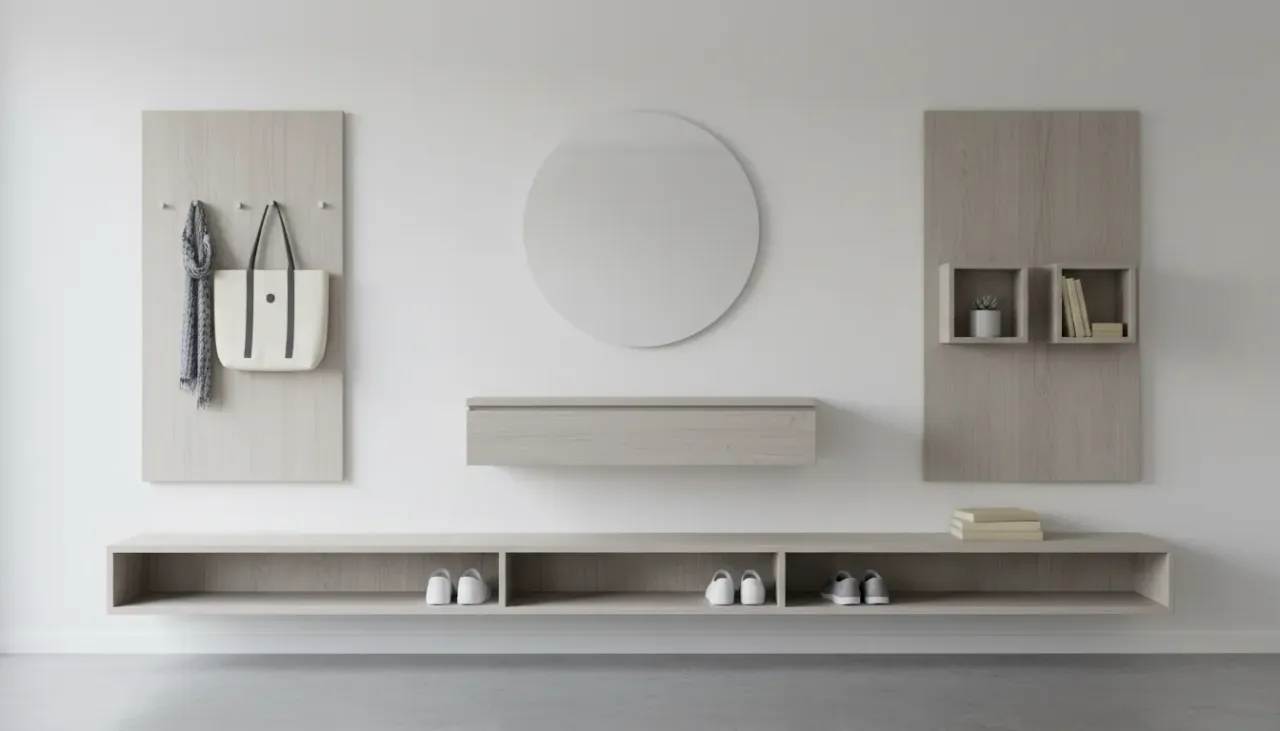
The entryway is the architectural handshake of your home. It creates the first impression for guests and serves as the transition point where the outside world is shed and the sanctuary of the interior begins. However, this critical zone often succumbs to the chaos of daily life. Piles of shoes, tangled coats, and misplaced keys can instantly disrupt the serenity of a living space. For the discerning homeowner, the solution does not lie in bulky furniture that consumes valuable floor space, but rather in the sophisticated application of minimalist entryway organizers and wall-mounted storage.
Achieving clean lines in an entryway requires a shift in perspective. It demands that we look up from the floor and utilize the vertical plane. Wall-mounted solutions offer a unique duality: they provide the robust functionality required to house everyday essentials while maintaining an air of visual weightlessness. By floating storage off the ground, you expand the perceived square footage of the area, allowing light to travel freely and creating an atmosphere of calm, intentional design.
This comprehensive guide explores the intersection of minimalism and utility. We will delve into the psychology of clutter, the architectural benefits of floating storage, and the specific products and installation techniques necessary to curate an entryway that is as efficient as it is elegant.
The Psychology of the Minimalist Threshold
To understand the necessity of minimalist organization, one must first appreciate the psychological impact of the entryway. This space acts as a decompression zone. When you walk through the door, your brain processes the environment immediately. Visual noise, defined by cluttered surfaces and obstructed pathways, triggers a subtle cortisol response. A disorganized entry signals unfinished business and chaos, preventing true relaxation from the moment of arrival.
Minimalism is often misunderstood as simply having fewer things. In the context of interior design, it is more accurately defined as the removal of the unnecessary to allow the necessary to speak. “Clean lines” refers to the uninterrupted visual flow of a room. When furniture is mounted to the wall, the floorboards continue underneath the piece, signaling to the eye that the room extends further than it actually does. This is particularly vital in entryways, which are often narrow corridors or small foyers.
By adopting a wall-mounted strategy, you are not merely organizing possessions; you are curating a sensory experience. You are deciding that the first feeling associated with your home should be one of order, spaciousness, and breathability.
Assessing Your Vertical Canvas
Before purchasing hardware or drilling holes, a thorough assessment of the architectural canvas is required. Every entryway presents unique challenges, from narrow widths to awkward corners or radiator placements.
Understanding Traffic Flow
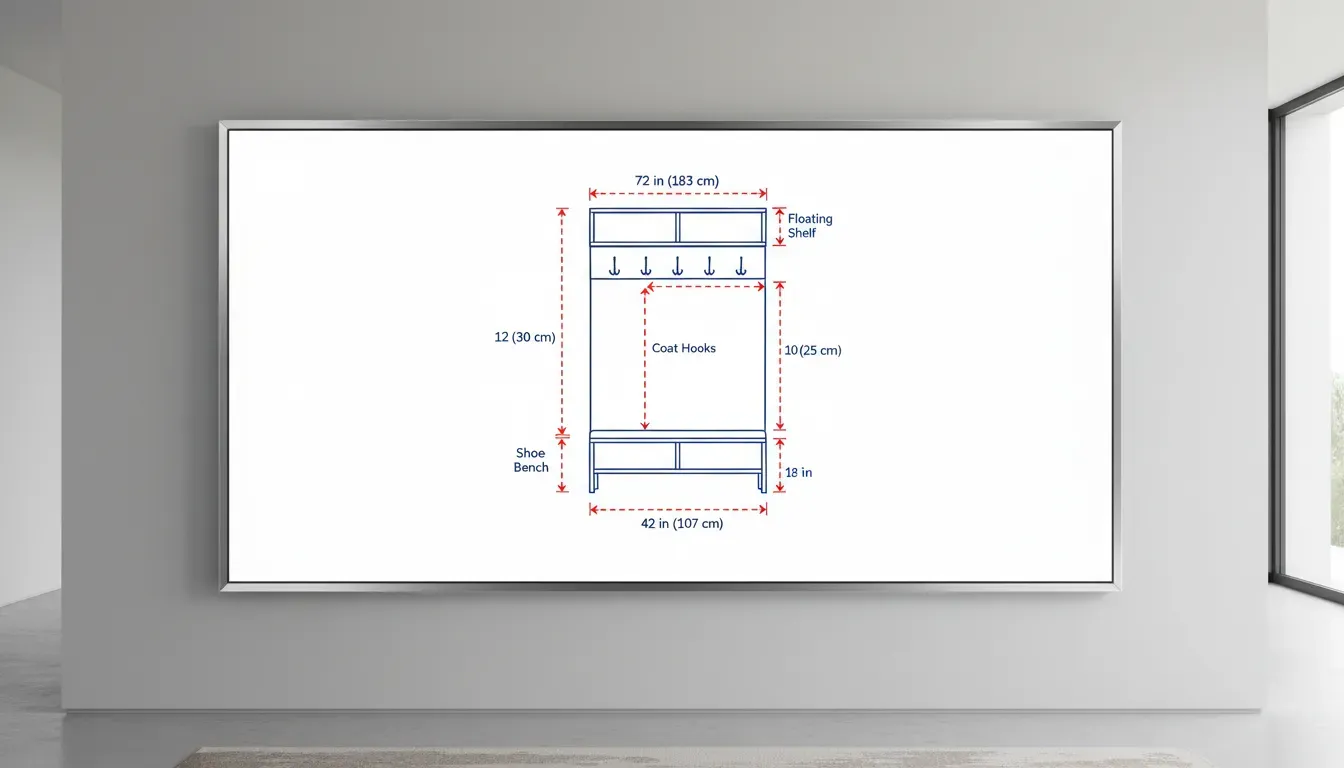
Begin by analyzing how people move through the space. In a narrow hallway, protruding hooks or deep shelves can become physical obstructions. The standard rule of clearance suggests keeping at least 36 inches of walkway open, though 42 inches is preferred for comfort. Wall-mounted units should be positioned so they do not impede the swing of the front door or catch on clothing as one passes by.
Identifying Wall Composition
The structural integrity of your wall dictates the type of storage you can install. Drywall, plaster, brick, and concrete all require different anchoring methods. For heavy winter coats and bags, locating studs is non-negotiable. If you intend to mount a floating console that will hold significant weight, you must ensure your fastening system interacts directly with the framework of the house, not just the surface material.
The Pillars of Wall-Mounted Organization
Minimalist entryways rely on three primary categories of wall-mounted fixtures: floating surfaces, suspension hardware, and modular systems. Each serves a distinct function and, when combined, creates a comprehensive storage ecosystem.
Floating Shelves and Consoles
The floating console is the centerpiece of the minimalist entryway. Unlike a traditional table with legs, a floating shelf hovers, creating negative space beneath it. This serves two purposes: it simplifies cleaning and provides a dedicated spot for tucking away shoes or baskets without visual clutter.
When selecting a floating shelf, consider the depth. A “landing strip” style shelf, typically 6 to 10 inches deep, is sufficient for keys, mail, and a small decorative element. It provides a surface for the “drop zone” rituals without encroaching on the room. For those needing drawer space, floating cabinets offer concealed storage for unsightly items like dog leashes or sunglasses, maintaining a pristine exterior.
Hooks, Rails, and Pegs
To keep clean lines, the suspension hardware must be deliberate. Individual wall hooks allow for precise spacing tailored to your needs. For a truly minimalist look, consider retractable hooks that flip up flush with the wall when not in use. This dynamic utility ensures that the wall remains flat and unadorned when coats are removed.
Alternatively, a peg rail offers a classic Shaker-inspired aesthetic that aligns well with modern minimalism. The continuous line of a rail unifies the storage, creating a horizontal datum line that guides the eye.
Vertical Shoe Storage
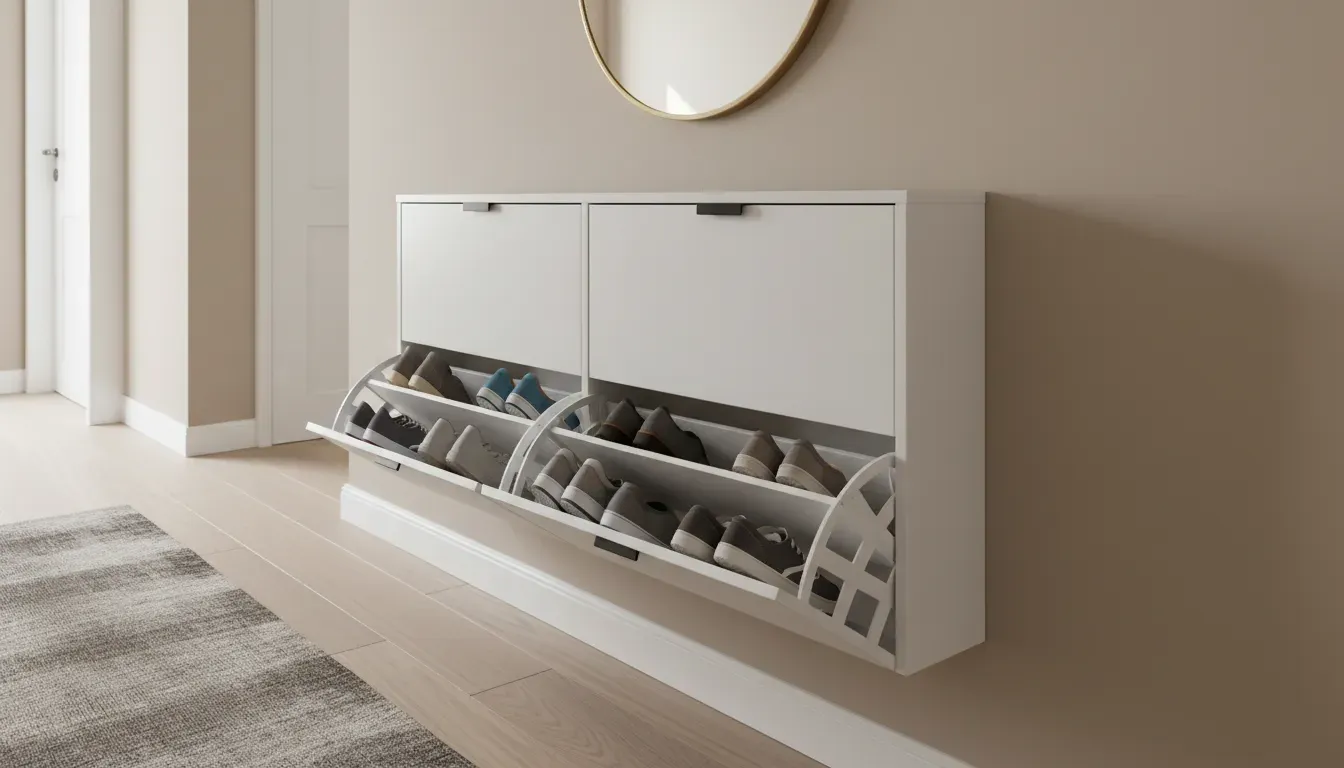
Shoes are the primary antagonist of clean floors. Wall-mounted shoe cabinets are a revelation for narrow spaces. These units typically feature tilt-out drawers that are slim in profile—often less than 10 inches deep—yet capable of holding multiple pairs of footwear. By lifting shoes off the floor and concealing them behind a flat front, you eliminate the visual “trip hazard” and maintain the sleek geometry of the hallway.
Material Selection for Clean Aesthetics
In a minimalist design, where ornamentation is scarce, the materials themselves become the decoration. The texture, grain, and finish of your organizers will define the character of the entryway.
Natural Wood: warm woods like walnut, white oak, or ash introduce organic texture to sterile spaces. A live-edge floating shelf can soften the rigid lines of a modern apartment, while a smooth, sanded oak peg rail reinforces Scandi-style simplicity.
Metal: Matte black steel or brushed brass offers a striking contrast, particularly against white or light gray walls. Metal shelves are often thinner than wood, allowing for an even lower profile. They convey an industrial, contemporary edge.
Acrylic: For the ultimate “barely there” look, clear acrylic shelves and hooks allow light to pass through them completely. This is an excellent strategy for extremely small foyers where any visual obstruction feels overwhelming.
Curated Product Recommendations
To assist you in executing this vision, we have identified three high-performance products that exemplify the principles of minimalist, wall-mounted design.
1. The Architectural Floating Console For the main landing zone, you need a piece that balances warmth with geometry. A solid wood floating shelf with a hidden drawer provides the perfect spot to hide keys and mail while displaying a vase or sculpture. Check Price on Amazon
2. The Retractable Wall Hook System Nothing disrupts a clean wall like protruding hooks when they are empty. A multi-hook rack where the hooks flip up when unused transforms from a tool into a piece of modern wall art. Check Price on Amazon
3. The Ultra-Slim Shoe Cabinet To keep the floor visible and clear, a wall-anchored shoe cabinet is essential. Look for models with a high-gloss or matte white finish to blend seamlessly with standard trim and drywall. Check Price on Amazon
Installation Best Practices for Visual Balance
The difference between a cluttered wall and a designed wall often comes down to placement. In minimalist design, negative space—the empty space around objects—is as important as the objects themselves.
The Datum Line
Establish a datum line, or a consistent height, for your primary elements. If you are installing a row of hooks, they should be perfectly level. A laser level is an indispensable tool for this task. The standard height for coat hooks is approximately 60 inches from the floor, accommodating longer coats without them dragging, while remaining accessible to most adults.
Spacing and Rhythm
Avoid crowding your wall-mounted elements. If you are installing individual hooks, space them at least 8 to 12 inches apart. This prevents coats from overlapping into a bulky mass and allows each item to hang cleanly. When mounting a shelf above hooks, ensure there is sufficient vertical clearance so that items on the shelf do not feel visually crushed by the ceiling, and hanging items do not brush against the shelf brackets.
Concealed Mounting
True minimalism abhors visible screws. Opt for floating shelves that use internal brackets or keyhole mounting systems. If visible hardware is unavoidable, ensure it matches the finish of the organizer exactly. The goal is for the storage to appear intrinsic to the wall, not merely attached to it.
Styling Your Wall-Mounted Storage
Once the infrastructure is in place, the styling determines the final aesthetic. This is where the discipline of minimalism is tested.
The Rule of Three
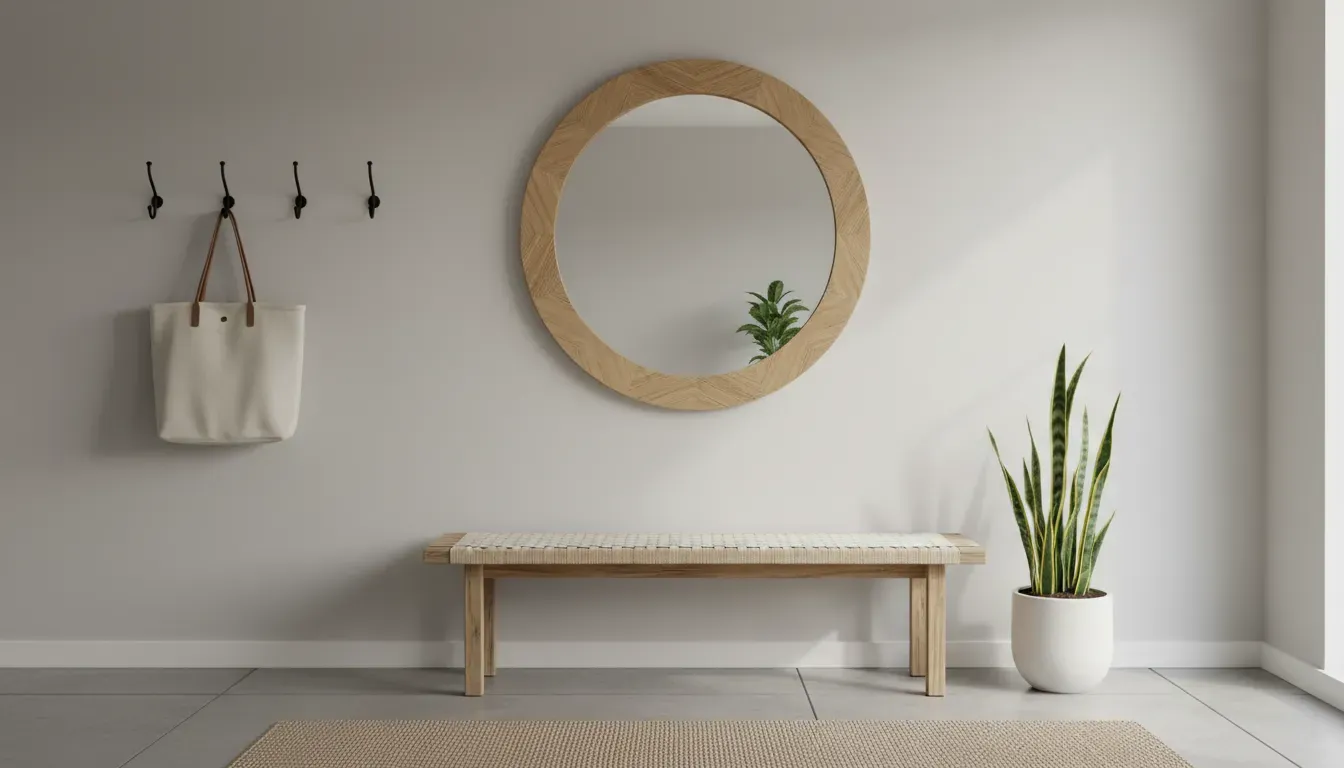
When styling a floating console, employ the rule of three. Group items in odd numbers, which the human eye finds more dynamic and pleasing. For an entryway, this might look like: a tall element (a mirror or artwork leaning against the wall), a flat element (a tray for keys), and a sculptural element (a small plant or ceramic bowl).
Uniformity in Accessories
If you require baskets for hats or gloves, ensure they are identical. A row of mismatched bins creates visual noise. A set of three identical felt or wire baskets placed on a high shelf creates a rhythm that registers as a single design element rather than multiple disparate objects. For more ideas on unifying your storage containers, read our guide on Maximizing Aesthetic Consistency.
The Art of Empty Space
Do not feel compelled to fill every hook or shelf inch. Leaving a hook empty implies that there is room for a guest; it signals hospitality and capacity. An overfilled rack suggests a home at its breaking point. Periodically purge the entryway of items that belong in the closet to maintain this breathing room.
Solutions for Small Spaces and Narrow Hallways
In urban apartments or older homes, the entryway may be nothing more than a sliver of wall behind the door. Here, wall-mounted storage is not just a style choice; it is a survival mechanism.
The Vertical Stack
When horizontal width is limited, build up. Install a vertical array of single hooks, spaced 12 inches apart vertically. This allows you to store a bag, a coat, and a scarf in a footprint no wider than 6 inches.
The Mirror Strategy
Combine storage with reflection. A wall-mounted mirror with an integrated shelf or hooks serves a dual purpose. It provides a storage function while the mirror bounces light around the tight space, optically expanding the hallway. Mirrors are essential for checking one’s appearance before leaving, making this a highly functional pairing.
Corner Utilization
Corners are often dead space. Floating corner shelves can transform this neglected area into a functional drop zone for keys and wallets without encroaching on the main walkway. Rounded corner shelves are particularly effective in tight spaces as they remove sharp edges that could catch on clothing. For more on handling difficult corners, consider our article on Corner Storage Solutions.
Maintaining the Minimalist Standard
Achieving a minimalist entryway is a project; maintaining it is a habit. The clean lines of your wall-mounted storage will only endure if the volume of items is controlled.
The Seasonal Rotation
Your entryway organizer should not hold your entire wardrobe. It is a transit hub, not a warehouse. Implement a strict seasonal rotation. In summer, heavy wool coats and boots must be relocated to a bedroom closet or dedicated storage area, replaced by light jackets and sandals. This keeps the visual weight of the entryway light and relevant to the current weather.
The One-In, One-Out Rule
To prevent hook saturation, adopt the “one-in, one-out” policy. If a new jacket enters the rotation on the rack, an old one must be moved to long-term storage. This discipline ensures that your carefully measured spacing remains intact.
Daily Reset
Make it a ritual to clear the “landing strip” shelf every evening. Sort the mail immediately—recycle the junk, file the bills. Return keys to their bowl. A clear surface in the morning sets a tone of preparedness and calm for the day ahead.
Integrating Lighting
Lighting plays a pivotal role in emphasizing clean lines. Ideally, wall-mounted storage should be illuminated to prevent it from creating dark shadows. A sconce positioned above a floating console highlights the display items and adds warmth. If hardwiring is not an option, battery-operated, rechargeable picture lights or motion-sensor LED strips mounted beneath a floating shelf can provide functional task lighting that elevates the sophistication of the joinery.
Conclusion
The transition from a cluttered foyer to a minimalist sanctuary is paved with intentional choices. By embracing wall-mounted storage, you reclaim the floor, creating an illusion of space that invites calm and order. Whether through the installation of a sleek floating console, the rhythmic placement of architectural hooks, or the utility of a slim shoe cabinet, the result is the same: an entryway that breathes.
Clean lines are not merely an aesthetic preference; they are a tool for living. They reduce the cognitive load of entering your home, allowing you to shed the stress of the outside world the moment you cross the threshold. With the right materials, precise installation, and a commitment to curating your possessions, your entryway can become a testament to the elegance of efficiency.
Start by measuring your space today. Visualize the potential of your vertical walls, and begin the process of elevating your home’s first impression. The peace of mind that comes with an organized welcome is an investment that pays dividends every time you walk through the door.