
Minimalist Mudroom Magic
Transform your chaotic entryway into an architectural palate cleanser. Discover the exact dimensions, materials, and styling secrets for perfect white mudroom cubbies.
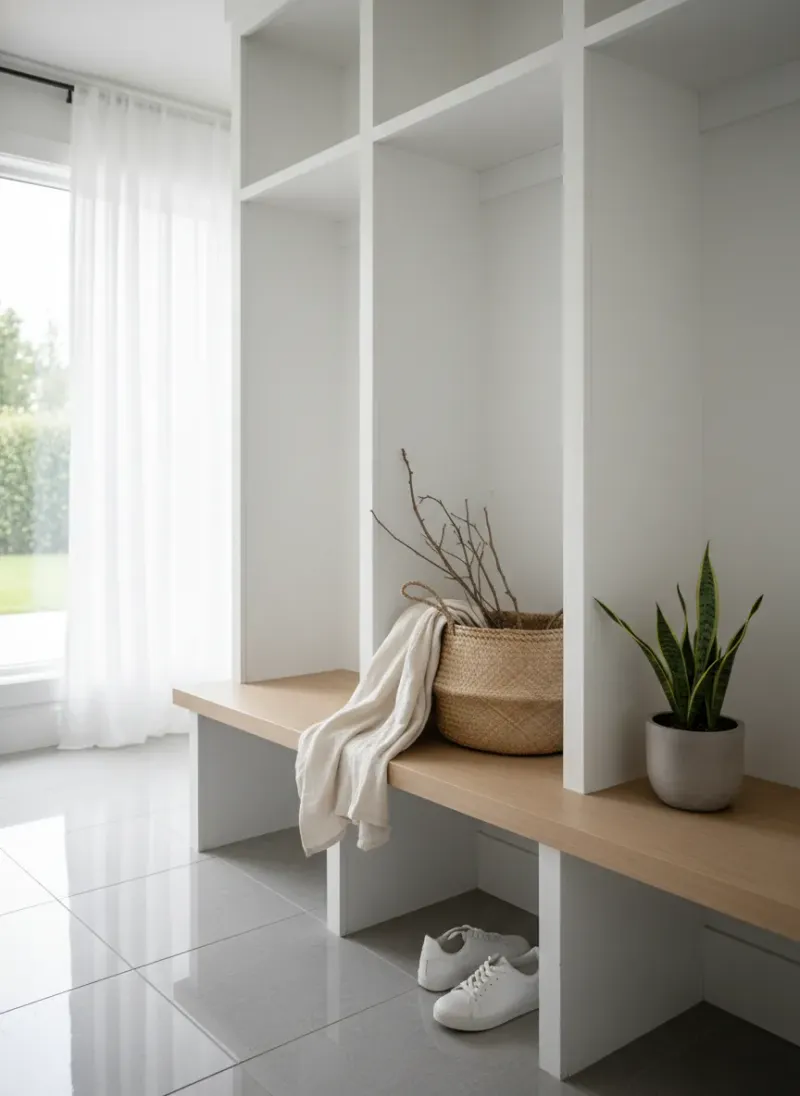
Mar 29, 2026 · Linda Wise
15 min readThe front door swings open. Immediately, a visceral reaction takes hold as your eyes dart across the landscape of your entryway. Muddy boots act as tripwires. Oversized winter coats hang precariously off a solitary, overwhelmed hook. Mail teeters on the edge of a console table, threatening to spill into the abyss of stray umbrellas and rogue dog leashes.
It’s maddening.
We’ve all been held hostage by entryway chaos. The modern home requires a designated drop zone, a transitional space where the grit of the outside world is shed before entering the sanctuary of your living areas. The antidote to this daily visual assault isn’t simply “more storage.” It requires strategic, visually silent organization. Enter the minimalist white cubby system.
I’ve spent years observing how spatial design impacts our daily stress levels, and I can tell you definitively: nothing resets the psychological baseline quite like walking into a mudroom anchored by clean, geometric, white storage. It acts as an architectural palate cleanser.
Before we dive deep into the anatomy, dimensions, and styling of these organizational workhorses, here are three standout pre-fabricated options that can kickstart your mudroom transformation if you aren’t quite ready to build from scratch.
The Psychology of the Drop Zone
Why do white cubbies work so exceptionally well in an entryway? It comes down to cognitive load.
When you enter a house, your brain immediately processes the visual data of the room. A pile of multicolored coats, patterned backpacks, and assorted footwear creates immense visual noise. This visual cacophony literally spikes cortisol levels. You haven’t even taken off your shoes, and you’re already stressed.
White cabinetry operates as a visual neutralizer. By encapsulating the chaotic items—the neon running shoes, the bulky plaid scarves—within crisp, white architectural frames, you immediately impose order on the chaos. The white framing draws the eye to the geometry of the furniture rather than the mess contained within it.
Furthermore, mudrooms are notoriously starved for natural light. Often shoehorned into hallways, garage transition zones, or windowless nooks, these spaces can easily feel cavernous. Stark white paint possesses a high Light Reflectance Value (LRV), bouncing whatever ambient light exists around the room, making a cramped corridor feel expansive and breathable.
Pro Tip: If your mudroom lacks a window, avoid cool, blue-toned whites. They will look dingy and clinical under artificial lighting. Opt for a warm white with subtle yellow or umber undertones to mimic the warmth of natural sunlight.
Anatomy of the Perfect Minimalist Cubby System
A beautifully painted box is useless if it doesn’t function properly. The magic of a minimalist mudroom lies in its precise, utilitarian dimensions. I’ve personally seen gorgeous, expensive custom builds fail utterly because the designer didn’t understand the physical reality of winter coats or men’s boots.
Dimensions That Actually Work
You need a spatial hierarchy. The lower zone belongs to footwear. The mid-zone is the seating and drop-area. The upper zone is for hanging, and the highest strata is reserved for out-of-season bulk storage.
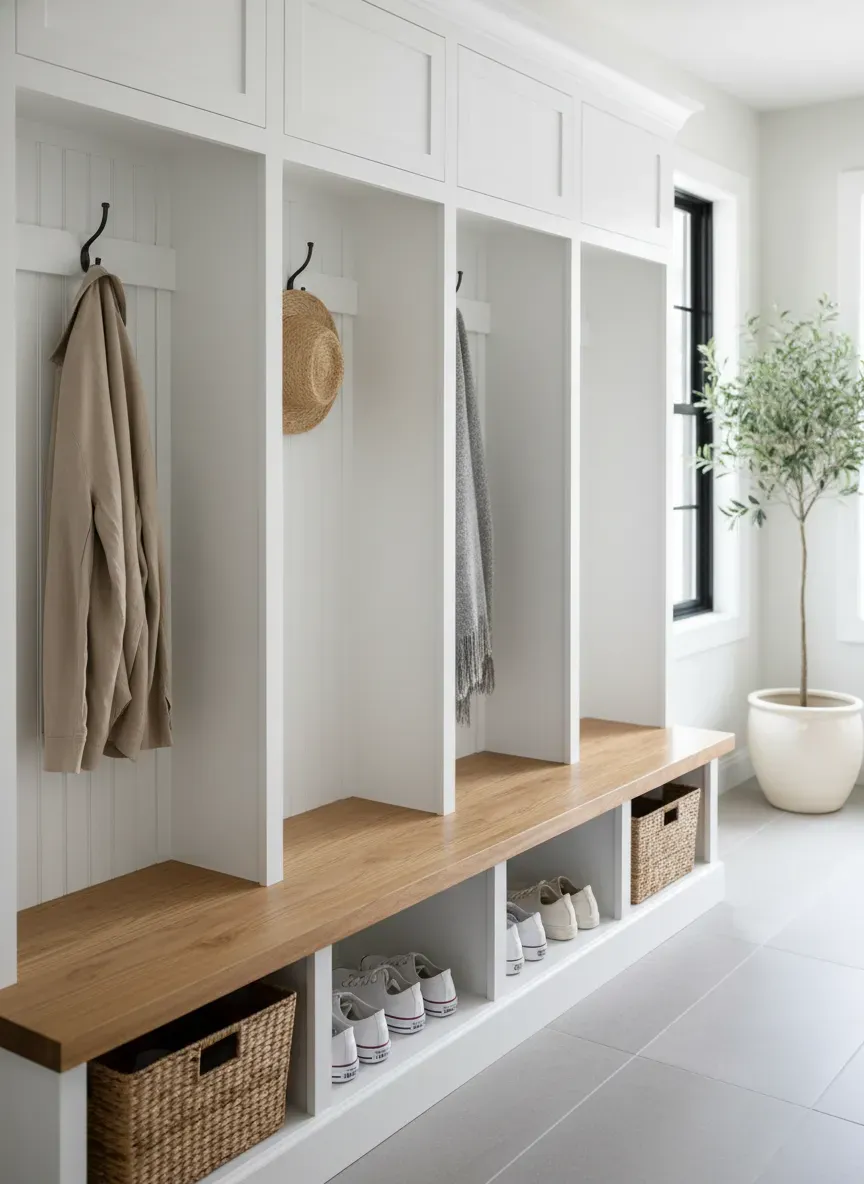
The Base (Shoe Storage): Standard adult shoes require a depth of at least 12 inches, but 14 to 15 inches is vastly superior if you have the floor space. Why? Because men’s work boots and women’s tall winter boots need breathing room. If the cubby is too shallow, the heel hangs over the edge, instantly destroying the minimalist aesthetic you worked so hard to achieve. Height-wise, aim for 8 inches for standard sneakers and flats, and at least 14 inches for boot cubbies.
The Bench: The bench is the anchor. The optimal seating height is 18 inches from the floor. This provides the ideal ergonomic angle for an adult to sit and tie their shoes without straining their lower back. If you are adding a thick seat cushion, remember to subtract the compressed thickness of the cushion from your wood base height.
The Hanging Zone: Here is where most people miscalculate. Winter coats are bulky. If you place your hooks too close together, the coats will push against each other, bulging out into the room and making the space feel cramped. Space your hooks a minimum of 8 to 10 inches apart. The vertical clearance between the top of the bench and the bottom of the hooks should be no less than 40 inches, though 48 inches is the gold standard. This ensures a long trench coat won’t puddle awkwardly on the bench seat below.
The Upper Cubbies: This space, usually starting around 68 to 72 inches off the ground, is prime real estate for matching, textured baskets. Store your winter gloves, summer hats, and rarely used sports gear here. Depth should mirror your bench or slightly recede to prevent a top-heavy visual feel.
Material Selection: The Great Debate
When constructing or purchasing a white cubby system, material dictates longevity. Wood movement is a real concern in a high-traffic, fluctuating-temperature environment like an entryway.
Many purists insist on solid wood for everything. I respectfully disagree. When aiming for a flawless, minimalist white finish, solid wood can be your worst enemy. Wood expands and contracts with humidity changes. This movement inevitably cracks the rigid paint along the joints, turning your pristine white minimalist dream into a shabby-chic nightmare within a year.
For the vertical dividers and upper boxes, Medium Density Fiberboard (MDF) or high-grade cabinet plywood is actually superior. MDF is dimensionally stable; it doesn’t warp, and crucially, it has no grain. When primed and painted, it yields a glassy, perfectly smooth finish that defines minimalist cabinetry.
However, do not use MDF for the bench seat. The bench will take a beating from heavy bags, metal zippers, and damp clothing. For the bench, you want a hardwood. A solid white oak or walnut bench top left in its natural wood tone provides a stunning organic contrast against the stark white of the cubbies, warming up the minimalist design instantly.
Designing for Different Demographics
Your specific lifestyle should dictate the micro-architecture of your cubbies. A single professional needs a vastly different setup than a family of five with three kids in traveling sports leagues.
The Family Battle Station
If you have children, open cubbies are mandatory. Kids will simply not open a cabinet door, place their shoes neatly inside, and close the door. It defies their nature. The path of least resistance is key.
Assign one distinct vertical column to each family member. This creates immediate accountability. When a stray lacrosse stick is left in the hallway, everyone knows exactly whose column it belongs in. Incorporate heavy-duty, double-pronged hooks. Kids rarely use hangers; they need a robust piece of metal they can blindly throw a jacket loop over.
DINKs and Empty Nesters
For those without children, or whose children have flown the coop, the mudroom can shift from a pure battle station to a highly curated architectural feature. You can afford to integrate closed storage.
Tall, slab-front cabinet doors with push-to-open latches (eliminating the visual clutter of hardware) can hide coats completely. This pushes the minimalist aesthetic to its absolute limit, resulting in a wall that looks less like a closet and more like custom architectural paneling.
Integrating White Cubbies into Existing Architecture
The difference between a space that looks “furnished” and a space that looks “designed” lies in the integration. Dropping a freestanding white hall tree against a wall is fine, but building it into the wall is magic.
Dealing with Awkward Nooks and Sloped Ceilings
Mudrooms frequently occupy the architectural leftovers of a floor plan. Under-stairway spaces are notorious for this. Embracing the awkward geometry is crucial. Instead of fighting a sloped ceiling, step down your cubby heights to match the pitch.
Scribing is your best friend here. Walls are never perfectly plumb, and floors are never perfectly level. A scribe molding—a thin piece of trim that bridges the gap between the rigid edge of your cubby and the wavy drywall—creates a seamless, built-in look. Without it, the dark shadow line of the gap will draw the eye and ruin the clean aesthetic.
If you’re starting from scratch and want to tackle the foundation first, mastering the art of building a simple mudroom bench is your crucial first step. Once the bench is perfectly level and secured to the studs, constructing the vertical dividers becomes exponentially easier.
Baseboards, Crown Molding, and That Built-in Look
To make your cubbies feel like they have always been part of the home, you must marry them to the room’s existing trim.
Remove the room’s baseboard where the cubbies will sit. Once the unit is installed, wrap the room’s baseboard around the bottom of the cubby base. Do the same with the crown molding at the top. This simple trick tricks the eye into believing the cabinetry is a structural element of the house, vastly increasing the perceived value of your home.

Paint, Finish, and Hardware: The Unsung Heroes
A minimalist aesthetic leaves no room to hide. Without ornate carvings or heavy distressing to distract the eye, the quality of your paint finish and the choice of your hardware become the focal points.
Choosing the Right White
“Just paint it white” is a recipe for disaster. There are thousands of whites, each with distinct undertones that will react aggressively to your lighting.
- Cool Whites (Blue/Gray undertones): Excellent for modern, south-facing mudrooms that receive abundant warm sunlight. They look crisp and gallery-like. (e.g., Benjamin Moore Decorator’s White).
- Warm Whites (Yellow/Red undertones): Essential for north-facing or windowless rooms. They prevent the space from feeling like a hospital corridor. (e.g., Sherwin Williams Alabaster or Benjamin Moore White Dove).
- True Neutrals: The safest bet if you are unsure. (e.g., Benjamin Moore Chantilly Lace).
The Chemistry of the Finish
Wall paint will not survive a mudroom. Latex wall paint remains soft and rubbery even when fully cured; if you place a heavy ceramic planter on a latex-painted bench, it will stick, and tear the paint off when moved.
You need an enamel or an alkyd-modified paint. Products like Benjamin Moore Advance or Sherwin Williams Urethane Trim Enamel level out beautifully, eliminating brush marks, and cure to a rock-hard, cabinet-grade finish. For a truly modern minimalist look, opt for a Satin finish. It provides enough sheen to be easily wipeable but avoids the plastic, dated look of high-gloss.
Hardware That Pops
Because the canvas is stark white, your hardware acts as jewelry. Minimalist doesn’t mean boring.
Matte black hardware offers a high-contrast, graphic punch that pairs beautifully with modern farmhouse or industrial-leaning aesthetics. If you want something softer and more luxurious, unlacquered brass is having a massive resurgence. Over time, the brass will develop a living patina where hands touch it most, adding a subtle layer of organic history to your pristine white setup.
Avoid cheap, hollow hardware. In a minimalist space, tactile feedback matters. When you grab a coat hook, it should feel heavy, solid, and cold to the touch.
Maintenance: Keeping White Cubbies Actually White
The elephant in the room regarding white mudrooms is, of course, the mud. How do you maintain a pristine aesthetic in the dirtiest room in the house?
First, embrace the magic eraser, but use it sparingly. Melamine sponges are essentially ultra-fine sandpaper. They will remove scuff marks from black rubber soles effortlessly, but aggressive, repeated use will eventually dull the sheen of your paint.
For daily maintenance, a simple microfiber cloth dampened with warm water and a drop of dish soap is superior to harsh chemical sprays.
The real secret to keeping the white clean, however, lies in the flooring directly in front of the cubbies. Invest in a high-quality, deeply textured waterhog mat. If you stop the dirt before it reaches the bench, the cabinetry stays pristine. Furthermore, line the bottom of the shoe cubbies with a custom-cut piece of heavy-duty, clear vinyl or a textured rubber matting. This protects the painted wood from wet soles and can be easily removed and hosed off in the driveway.
- Key Takeaways for Maintenance:
- Use alkyd-enamel paint for a scrubbable surface.
- Line shoe cubbies with removable, washable mats.
- Address scuffs weekly to prevent them from becoming overwhelming.
- Protect the natural wood bench top with three coats of water-based polyurethane.
The Great Debate: Open vs. Closed Storage
Achieving minimalism doesn’t necessarily dictate one specific style of storage. The debate between open cubbies and closed cabinets is fierce among interior designers.
Open cubbies force discipline. If your coats are out in the open, they must be hung neatly. This is fantastic for the minimalist aesthetic if you can maintain the habit. It also provides incredibly fast access during the morning rush.
Closed storage (cabinet doors over the hooks and shoe racks) is the cheat code for minimalism. You can throw your items inside in a chaotic heap, close the door, and the room instantly looks like a high-end architectural digest spread.
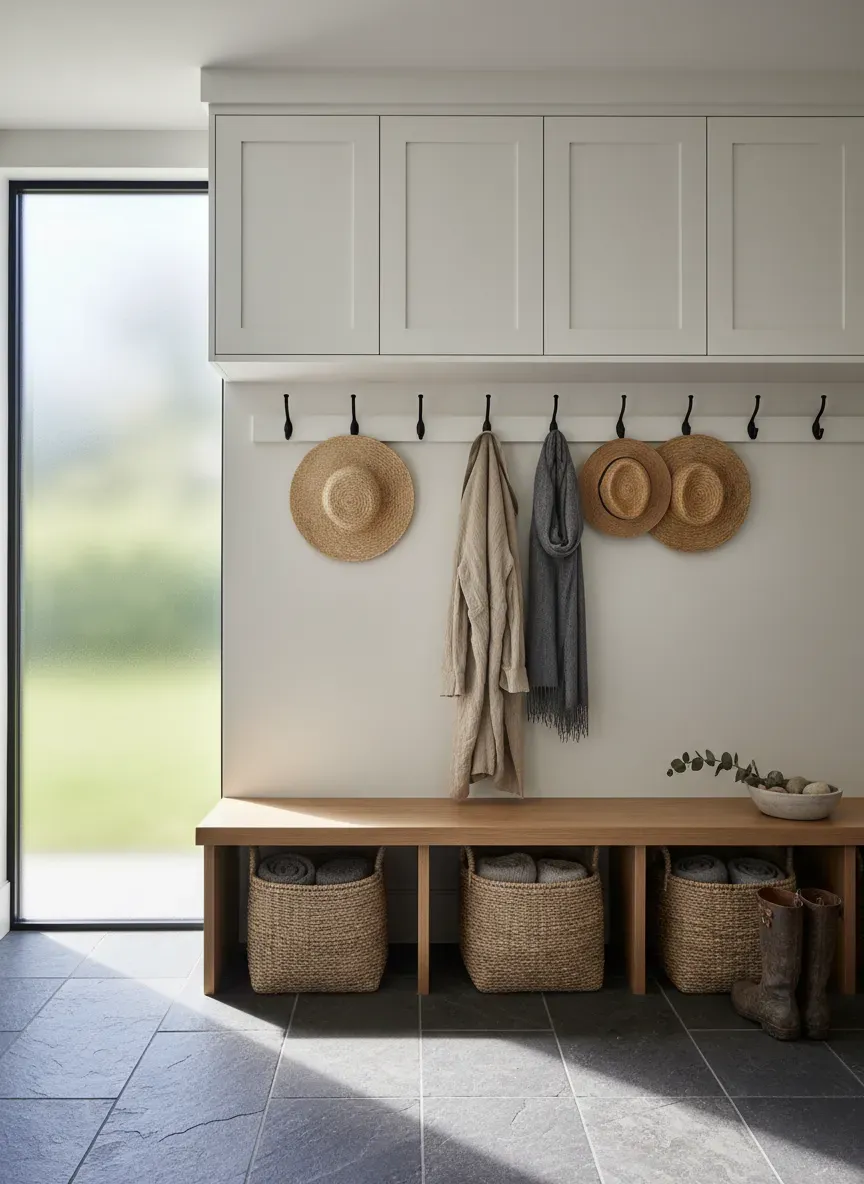
The best mudrooms often utilize a hybrid approach. Open hooks for the daily-driver coats and dog leashes, flanked by tall, closed cabinetry for off-season gear, bulky winter boots, and unsightly items like vacuum cleaners or bulk paper towel rolls.
The Bottom Line on Mudroom Mastery
The Bottom Line: A minimalist white mudroom isn’t about stripping away character; it’s about engineering a space that actively lowers your stress levels. By utilizing stark, reflective white finishes, exacting ergonomic dimensions, and a smart mix of open and closed storage, you transform a utilitarian drop-zone into a breathtaking architectural transition space.
It takes planning, precise execution, and a commitment to maintaining the system, but the daily psychological reward of walking into a calm, organized home is immeasurable.

Stop Guessing Measurements. Build Your Dream Entryway with Confidence.
Transform awkward hallways, cramped foyers, and cluttered mudrooms into organized sanctuaries. Includes 20 measured floor plans, facing photo spreads, the 36-inch planning rule, the shoe pairs formula, and 7 printable worksheets.
Core Edition ($17.99) · Flagship Photo Edition v5 ($39.99) — compare editions
