
Modular Entryway Storage Systems: Customizing Your Small Space Organization
Discover how modular entryway storage systems can transform small spaces. Learn to design, organize, and customize a functional drop zone.
Feb 2, 2026 - Written by: linda wise

The entryway is the handshake of the home. It is the first space that greets you upon arrival and the last thing you see before departing into the world. In sprawling estates, grand foyers offer ample room for armoires and coat closets. However, for urban dwellers and those living in compact footprints, the entryway is often little more than a transitional sliver of square footage—a narrow hallway or a small patch of wall behind the front door.
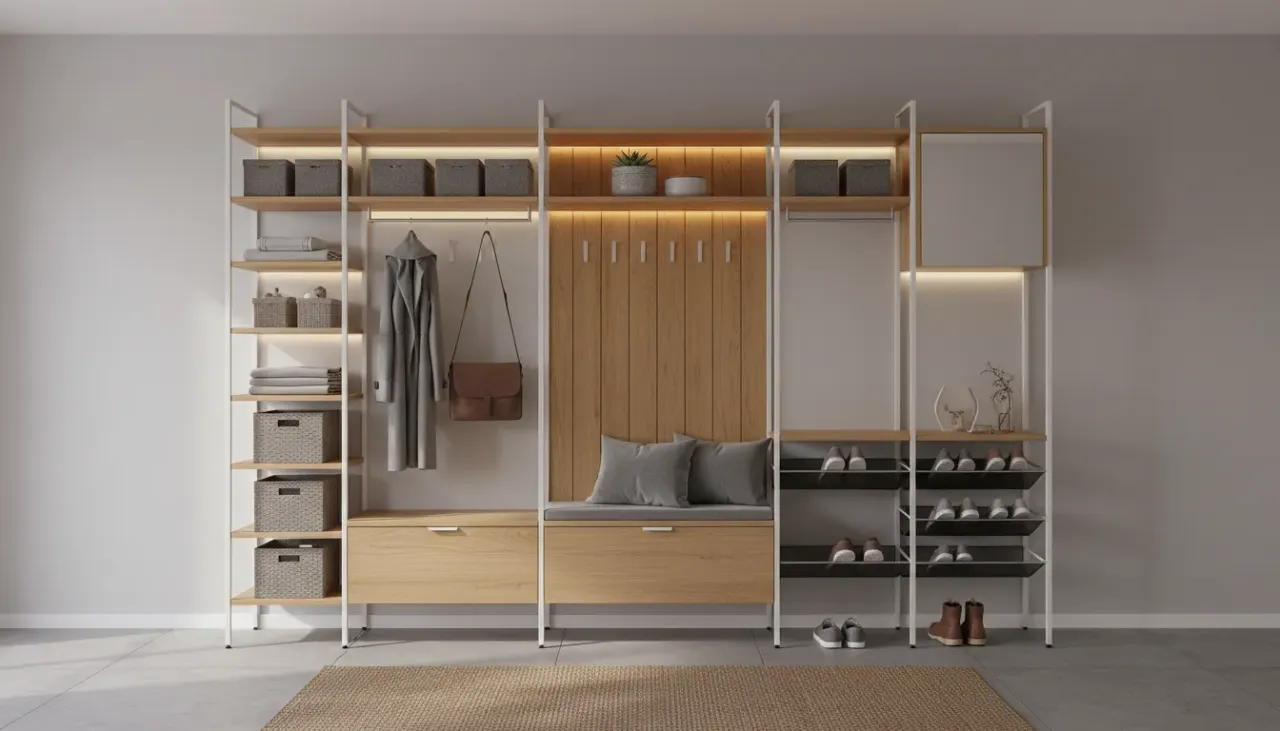
Designing for these constrained spaces requires a shift in perspective. Standard furniture often proves too bulky, obstructing traffic flow and creating visual weight that makes a small room feel claustrophobic. The solution lies in modular entryway storage systems. By utilizing components that can be mixed, matched, and adjusted, homeowners can create a bespoke organization strategy that maximizes vertical potential while minimizing floor impact.
This comprehensive guide explores the mechanics, aesthetics, and practical application of modular storage, empowering you to reclaim your entrance and establish a sense of order the moment you walk through the door.
The Philosophy of Modular Design
To master small space organization, one must first understand the core advantage of modularity. Unlike static furniture—such as a solid wood hall tree that comes in fixed dimensions—modular systems are composed of independent units that function together as a whole. This adaptability allows the furniture to mold to the architecture of the room, rather than forcing the room to accommodate the furniture.
In an entryway context, modularity offers three distinct advantages:
- Scalability: You can start with a few essential pieces, such as a rail of hooks and a floating shelf, and expand the system as your needs change or your budget allows.
- Vertical Efficiency: Modular systems often rely on wall-mounted tracks or stacking units. This draws the eye upward and utilizes the “air space” of a room, leaving the floor clear for walking or shoe storage.
- Customization: Whether you need more shoe storage and less coat hanging space, or vice versa, a modular system can be configured to reflect your specific lifestyle requirements.
Assessing Your Architecture
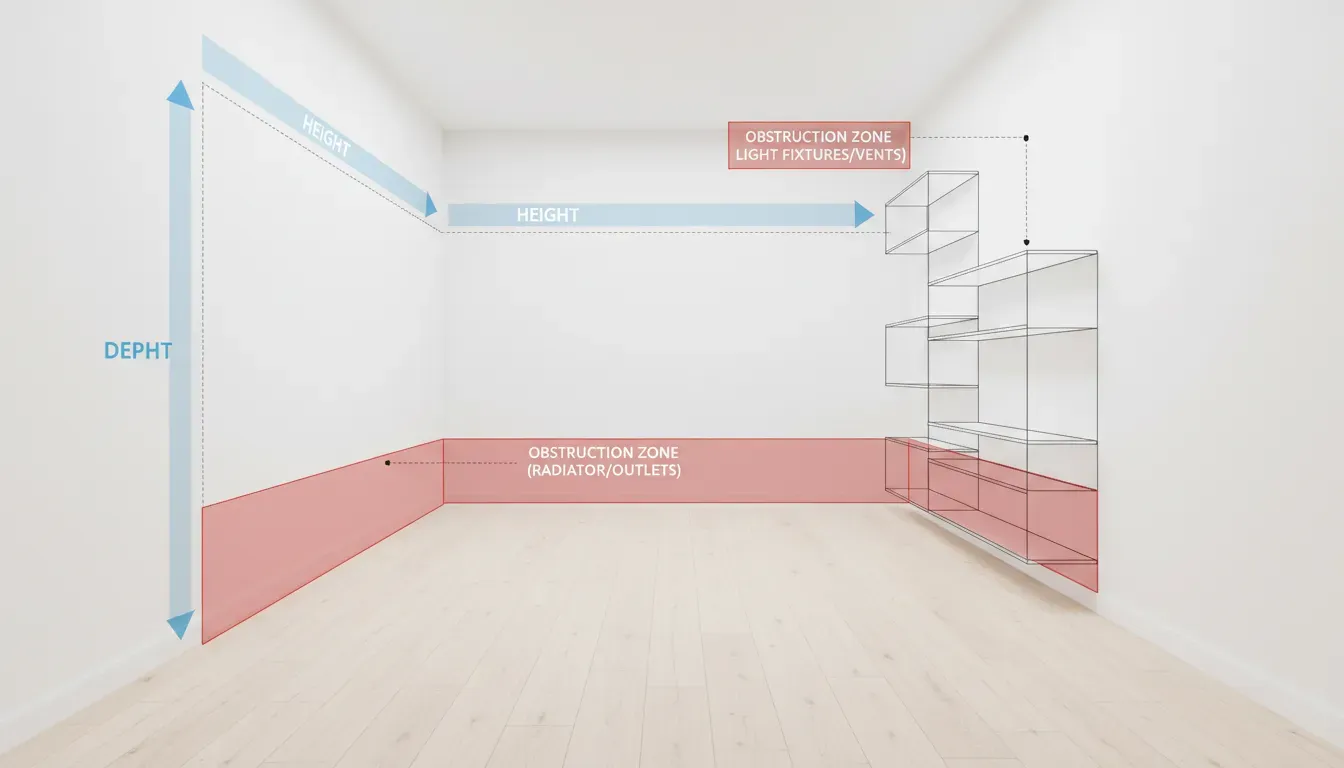
Before purchasing a single bracket or bin, a rigorous architectural audit of your entryway is essential. In small spaces, an inch of miscalculation can be the difference between a functional hallway and a cramped bottleneck.
Begin by measuring the primary wall you intend to use. Note the height of the ceilings, as high-mounted shelving can provide excellent long-term storage for off-season items. Crucially, measure the depth available behind the door. If your front door swings open against the storage wall, you must ensure your system is shallow enough to prevent collision. Standard coat racks are often 12 to 15 inches deep; for tight spaces, look for modular systems with a profile of 8 to 10 inches.
Identify obstructions such as light switches, thermostats, intercoms, and electrical outlets. A modular system shines here, as rails and shelves can be positioned specifically to bridge over or around these necessary home features without blocking access.
Core Components of a Modular Entryway
A successful modular system acts as a “machine for living.” It processes the items you carry—keys, mail, coats, shoes, bags—and routes them to their designated homes. To achieve this, the system typically relies on a combination of four core components.
1. The Anchor: Rails and Wall Grids
The foundation of most vertical modular systems is the track or grid. Mounted securely into wall studs, these elements bear the weight of the system. In industrial-style setups, this might look like a metal grid from which baskets and hooks are suspended. In more minimalist Scandinavian designs, it is often a simple wooden rail or a metal cleat hidden behind shelves.
The beauty of the rail system is flexibility. If you buy a winter coat that is longer than expected, you can simply unclip the lower shelf or hooks and move them down, accommodating the new length without tools.
2. The Landing Strip: Floating Surfaces
Every entryway needs a surface for the “drop.” This is where keys, wallets, and mail land immediately upon entry. In a modular setup, floating shelves serve this purpose without the bulk of table legs.
Ideally, position a shallow shelf at roughly waist height (30 to 36 inches from the floor). This creates a visual anchor similar to a console table but maintains an open sightline to the floor, which psychologically makes the hallway appear wider.
3. The Mudroom Simulation: Bench and Shoe Storage
In a small apartment, you likely do not have a dedicated mudroom. A modular system can simulate this functionality. A low bench component serves two purposes: it provides a place to sit while putting on shoes, and it creates a defined “zone” for footwear underneath.
If a bench is too deep for your hallway, consider wall-mounted shoe cabinets. These units often feature tip-out drawers that store shoes vertically, drastically reducing the depth required.
For those looking to integrate a highly adaptable wall unit that combines shelf space with hanging capabilities, consider exploring versatile wall organizers.
Amazon Product Recommendation: Modular Wall Organizer System
4. The Concealer: Bins and Cabinetry
Open shelving is aesthetically pleasing when styled perfectly, but in a busy home, it often becomes cluttered. Modular systems allow you to integrate closed storage. This can take the form of actual cabinet boxes that clip onto the rails or standardized baskets that slide onto shelves. “Concealers” are vital for hiding visual noise such as dog leashes, winter gloves, and miscellaneous mail.
Configuring for Traffic Flow
The arrangement of your modular components dictates the flow of movement in your home. In a narrow hallway, the “triangle of friction” is the enemy. This occurs when the storage system impedes the natural walking path or the opening of the door.
The Linear Progression
For long, narrow halls, arrange your modular system in a linear progression that mimics your arrival sequence.
- Zone 1 (Closest to Door): The “Quick Drop.” Hooks for keys and a small shelf for mail. This prevents you from carrying clutter deeper into the home.
- Zone 2 (Mid-Section): The “Heavy Lifting.” Coat hooks and bag storage. Place this slightly further down so that someone taking off a coat doesn’t block the door for the next person entering.
- Zone 3 (Deepest Section): The “Long Term.” Shoe storage or closed cabinets for items not accessed daily.
The Vertical Stack
If you only have a small patch of wall behind the door (a “return” wall), utilize a vertical stack configuration.
- Top Tier (6ft+): A shelf for hats or bins containing off-season accessories.
- Mid Tier (Eye Level): A mirror with a small integrated shelf for keys. Mirrors are excellent for small spaces as they reflect light and expand the sense of roominess.
- Lower Tier (Waist to Knee): Heavy-duty hooks for bags and coats.
- Ground Tier: A sleek, slim shoe rack.
Because footwear is often the primary source of entryway clutter, investing in a specialized, slim-profile cabinet can revolutionize a tight space.
Amazon Product Recommendation: Slim Shoe Storage Cabinet
Materials and Visual Weight
When selecting a modular system, the material finish plays a significant role in how large or small the space feels.
Metal and Wire: Wire shelving systems are visually “light.” Because you can see through the shelves and brackets, they do not create a solid wall of color that advances toward the eye. They are excellent for very tight spaces or industrial aesthetics. However, the contents of the shelves are fully visible, requiring disciplined organization.
Wood and Laminate: Solid shelves add warmth and texture. Light woods like birch, maple, or white oak are preferable for small spaces as they reflect light. Dark walnuts or espresso finishes can feel oppressive in a narrow, dimly lit hallway. If you choose solid shelving, ensure the brackets are slim and unobtrusive.
Acrylic and Glass: For the ultimate “invisible” storage, some modern systems utilize acrylic components. While stunning, these are best reserved for households with minimal clutter, as every item is on display.
Customizing with Accessories
The framework of your modular system is the skeleton; the accessories are the muscle. This is where you truly customize the functionality to your habits.
Hook Variety
Not all hooks serve the same purpose. “J” hooks are standard for coats, but “S” hooks are often better for bags with wide straps. Double hooks allow you to store a hat and a scarf on the same vertical axis. Consider adding a few magnetic hooks if your system has metal components, offering a temporary holding spot for receipts or reminders.
The Basket Strategy
To maintain a clean aesthetic, uniform baskets are non-negotiable. If you have open shelves, using identical bins creates a rhythm that is pleasing to the eye. This “repetition” calms the visual chaos of the items inside.
Assign baskets by person or by category. For example, in a family of four, each member gets one basket for their gloves, sunglasses, and personal items. Alternatively, categorize by utility: “Pet Care,” “Winter Gear,” and “Outgoing Returns.”
For woven textures that add warmth to metal systems, natural fiber baskets are a timeless choice.
Amazon Product Recommendation: Woven Storage Baskets for Shelves
Installation Best Practices
The success of a modular system relies heavily on proper installation. Unlike a freestanding wardrobe, a wall-mounted system transfers the load to your home’s structure.
1. Finding the Studs: You must anchor the primary vertical standards or horizontal tracks into wall studs. Use a magnetic or electronic stud finder to locate the framing behind the drywall. If the placement of your system does not align perfectly with the studs, you must use high-quality toggle bolts or heavy-duty drywall anchors specifically rated for the weight you intend to store. Remember, winter coats and filled backpacks are deceptively heavy.
2. The Level Line: Modular systems are unforgiving of slopes. A track that is slightly off-level will cause shelves to rock and items to slide. Use a 4-foot spirit level or a laser level to ensure your initial track is perfectly horizontal.
3. Weight Distribution: When loading your system, place the heaviest items (like books or heavy tools) on the lower shelves. This lowers the center of gravity and reduces the sheer force on the top wall anchors.
For more detailed advice on handling difficult layouts, you might find our guide on configuring awkward hallway angles helpful.
Seasonal Rotation: The Modular Advantage
One of the most overlooked aspects of small space organization is seasonal management. A static coat rack is often overwhelmed in winter and barren in summer. A modular system adapts.
Winter Configuration: In colder months, maximize hanging space. Remove an extra shelf to allow for the length of trench coats and parkas. Add extra hooks for scarves and heavy wool bags. The focus is on capacity and drying—ensure there is enough airflow between wet coats.
Summer Configuration: As the weather warms, heavy coats move to deep storage (under the bed or in a bedroom closet). You can now reconfigure the entryway system. Lower the hooks to accommodate beach bags and tote bags. Add an extra shelf for sunscreen, sunglasses, and hats. The entryway transforms from a heavy utility zone to a light, breezy transit station.
Aesthetic Integration: Making it Look Built-In
While modular systems are bought in parts, the goal is often to make them look like a cohesive part of the home’s architecture. This elevates the look from “temporary storage” to “custom design.”
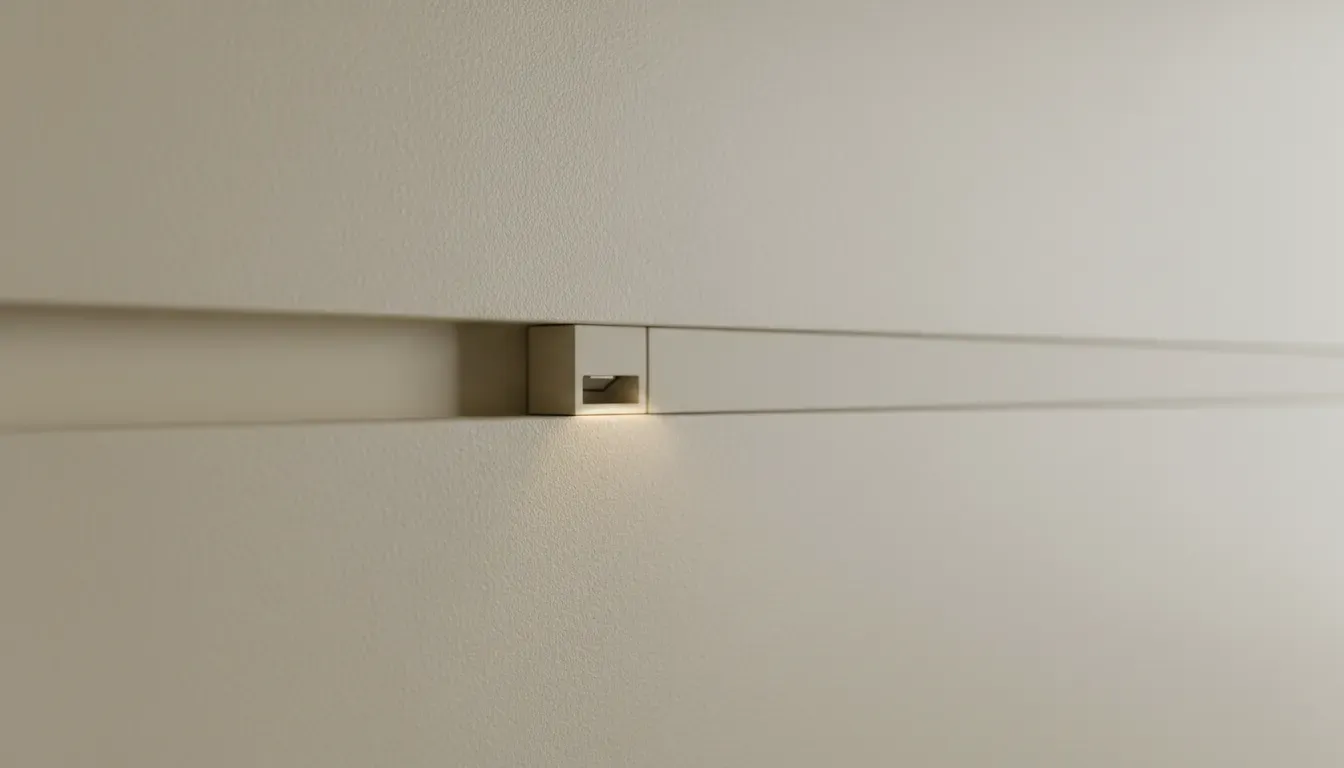
Paint Camouflage: Consider painting the vertical standards (the metal tracks) the same color as your wall. When the hardware blends into the background, the shelves appear to float, and the visual clutter of the mechanics disappears.
Lighting Integration: Clip-on LED strip lights or rechargeable puck lights can be attached to the underside of shelves. This illuminates the shelf below, providing task lighting for finding keys and adding a sophisticated ambiance to the hallway in the evening.
The Baseboard Hack: Most modular systems hang above the floor, but if you want a built-in look, measure your system so the bottom component sits just above the baseboard. This makes cleaning the floor easy while grounding the furniture visually.
Troubleshooting Common Small Space Issues
Even with the best system, challenges arise. Here is how to address common friction points in compact entryways.
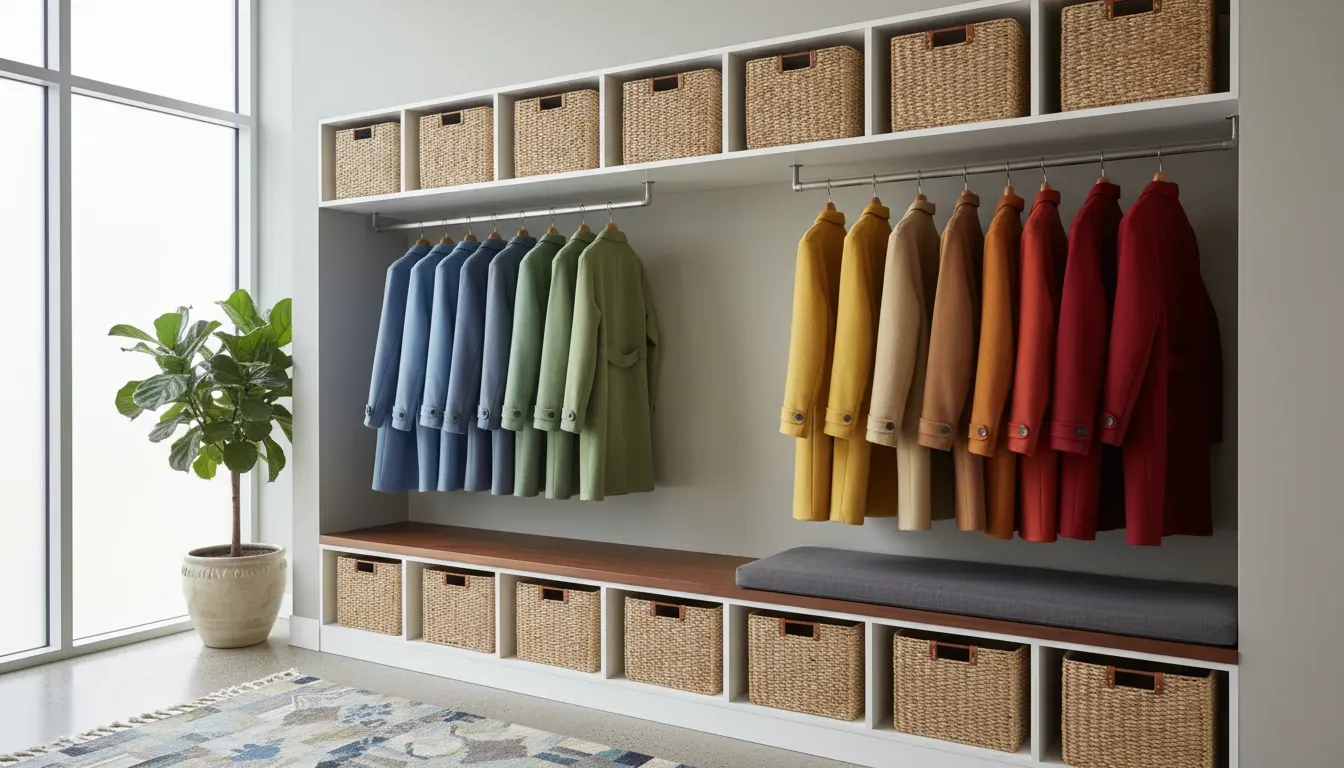
The “Visual Overload” Problem: If your entryway looks messy despite being organized, you likely have too much “visual noise.” The solution is to reduce the color palette. Coordinate your storage accessories (hangers, baskets, hooks) to a single material or color. If possible, even coordinate the coats you keep on display. A row of neutral coats looks tidier than a mix of neon rain jackets and plaid wool.
The “No Wall Space” Problem: If your entryway is essentially just a door opening into a living room, you may not have a wall for a full system. In this case, use the door itself. Over-the-door modular racks offer a surprising amount of storage for shoes and bags. Alternatively, look for tension pole systems that wedge between the floor and ceiling, requiring no drilling and occupying a footprint of only a few inches.
The “Rental” Restriction: If you cannot drill holes, your modular options are limited but not non-existent. heavy-duty tension rod systems allow for shelves and hooks without damaging walls. Additionally, freestanding modular wire racks can be customized vertically without wall attachment, provided they are not overloaded to the point of tipping.
Conclusion
Embracing a modular entryway storage system is about more than just finding a place for your keys. It is about architectural empathy—listening to what your small space can offer and responding with a solution that respects those limits.
By selecting the right components, respecting the flow of traffic, and utilizing vertical space, you can transform a cramped, chaotic entrance into a streamlined threshold that welcomes you home with order and calm. The flexibility of modular design ensures that as your life evolves—through seasons, hobbies, and household growth— your entryway will be ready to adapt right along with you.