
The Narrow Hallway Dilemma: Ultra-Slim Entryway Storage Cabinets and Systems
Solve the tight foyer puzzle with our guide to ultra-slim entryway storage. Discover space-saving cabinets, vertical systems, and design hacks for narrow halls.
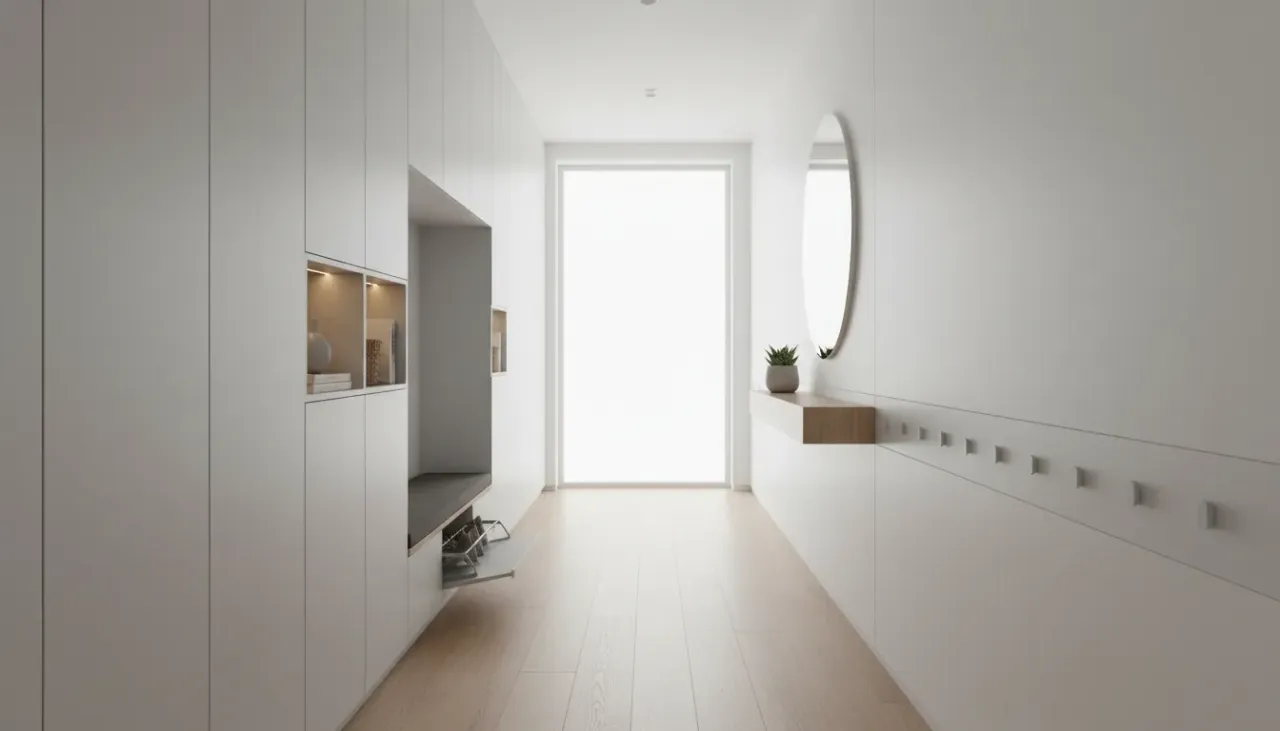
Feb 1, 2026 - Written by: linda wise

The entryway is the handshake of the home. It is the first space that greets you after a long day and the final impression guests receive before they depart. However, for many living in urban apartments, historic row houses, or efficiently designed modern builds, the entryway is less of a grand foyer and more of a bottleneck. This brings us to the “Narrow Hallway Dilemma”: the friction between the necessity of storage and the scarcity of square footage.
When a hallway measures less than forty inches in width, standard furniture becomes an obstruction rather than an asset. A traditional console table or shoe rack can impede traffic flow, create visual clutter, and make the simple act of carrying groceries into the house a navigational hazard. Yet, the need for a “drop zone”—a designated place for keys, mail, shoes, and coats—remains universal.
The solution lies in a specific, highly engineered category of furniture: ultra-slim entryway storage. By leveraging vertical space and utilizing depths of ten inches or less, homeowners can reclaim their hallways. This guide explores the mechanics, aesthetics, and strategic implementation of slim storage systems that prioritize spatial efficiency without sacrificing style.
The Mathematics of the Narrow Hallway
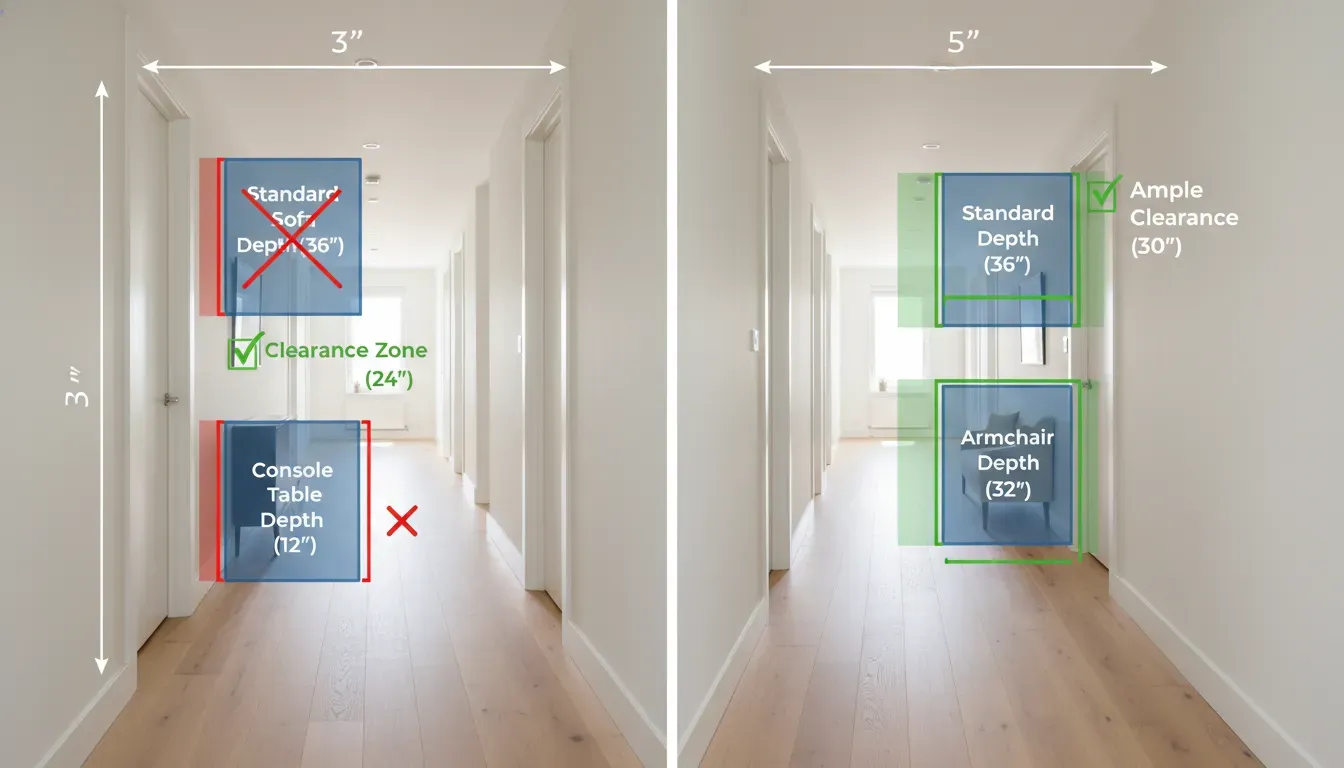
Before selecting furniture, one must understand the architectural constraints of the space. In interior design, “clearance” is the golden rule. For a hallway to feel comfortable, a minimum passage width of 36 inches is recommended by most building codes and design standards. If your hallway is exactly 40 inches wide, placing a standard 16-inch deep cabinet against the wall leaves only 24 inches of walking space. This creates a claustrophobic tunnel effect.
To maintain a comfortable flow, storage in narrow corridors should ideally project no more than 7 to 10 inches from the wall. This “ultra-slim” category requires a shift in how we perceive storage. Instead of storing items horizontally (like shoes side-by-side on a flat rack), we must think vertically and angularly.
Assessing Your Vertical Real Estate
When the footprint is limited, the volume must be found on the Y-axis. High ceilings are an often-underutilized asset in narrow halls. Floor-to-ceiling solutions draw the eye upward, making the space feel larger while maximizing capacity. However, one must be wary of “visual weight.” A dark, bulky cabinet that reaches the ceiling can make a narrow hall feel like a canyon. The key is to balance capacity with sleek, unobtrusive profiles.
The Tipping Bucket Shoe Cabinet: An Engineering Marvel
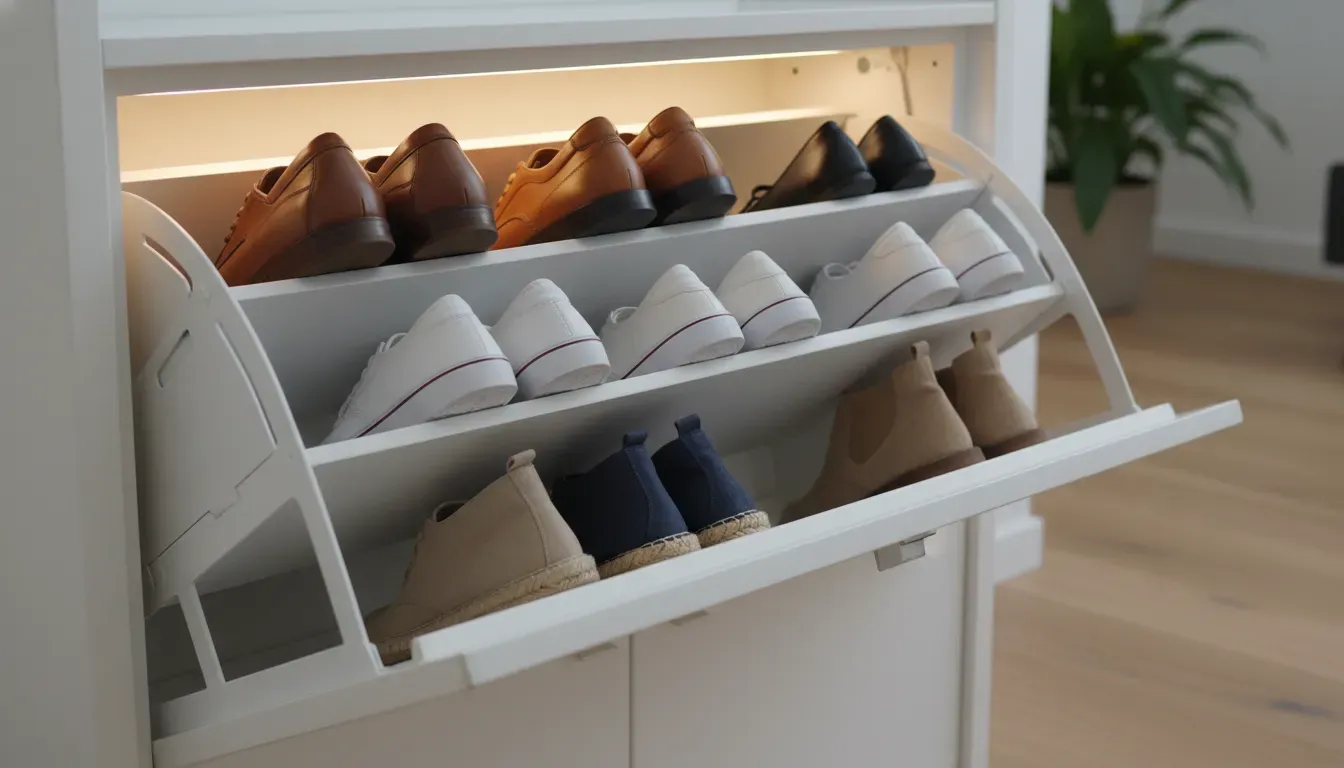
The cornerstone of the ultra-slim entryway is undoubtedly the tipping bucket shoe cabinet. Unlike traditional shelves where shoes rest flat, requiring a depth of at least 12 to 14 inches (the length of an average adult shoe), tipping cabinets store footwear vertically or at a steep angle.
How It Works
These cabinets utilize a pivot mechanism. The drawer front pulls down, revealing a compartment where shoes are slipped in toe-first. When closed, the shoes stand nearly upright. This clever engineering allows the cabinet depth to shrink to as little as 6.5 to 9 inches, saving crucial floor space while accommodating relatively large shoe sizes.
Material Selection and Durability
Because these cabinets are high-traffic items—opened and closed multiple times a day—material quality is paramount.
- Metal Systems: Powder-coated steel cabinets are increasingly popular in industrial and modern minimalist designs. They are magnetic (useful for notes), extremely durable, and often thinner than wood alternatives.
- Engineered Wood: High-density fiberboard (HDF) or MDF with a durable veneer is common. While cost-effective, ensure the pivot hardware is metal rather than plastic to prevent wear over time.
- Solid Wood: Rare in ultra-slim profiles due to the risk of warping, but highly desirable for its aesthetic warmth.
For those seeking a high-quality example of this mechanism, consider exploring top-rated options.
Shop Slim Tipping Shoe Cabinets on Amazon
Installation Safety
A critical note on ultra-slim cabinets is stability. Because they are tall and shallow, their center of gravity is precarious. When a drawer is opened, the weight shifts forward. It is not merely a recommendation but a requirement to anchor these units to the wall studs. Most reputable systems come with anti-tip hardware; never skip this step during installation.
The Floating Console: Defying Gravity
If floor space is at an absolute premium, or if you prefer a look that facilitates easy cleaning, floating storage is the superior choice. A wall-mounted console table or shelf eliminates legs, which visually expands the floor area. Seeing the floor extend all the way to the wall tricks the brain into perceiving the hallway as wider than it is.
The “Landing Strip” Concept
A floating console serves as the home’s “landing strip.” This is strictly for the items you need immediately upon entering or leaving: keys, sunglasses, wallets, and outgoing mail. It prevents these items from migrating into the living room or kitchen.
For narrow hallways, look for floating consoles with a depth of 6 to 8 inches. Many designs incorporate a shallow drawer for hiding clutter, while the surface remains clear for a decorative vase or a lamp.
Styling the Floating Shelf
Since the shelf itself is minimal, the styling above and below it carries the design weight.
- Above: A large mirror is essential. It reflects light and doubles the visual depth of the hallway.
- Below: This space can be left empty for an airy feel, or utilized for tucking away baskets containing slippers or umbrellas.
For more ideas on maximizing restricted areas, you might find our guide on small space organization particularly useful.
Vertical Wall Systems: Hooks, Rails, and Pegboards
When cabinetry is not an option due to extreme narrowness (under 36 inches), wall-mounted systems offer functionality with zero footprint. The modern approach moves beyond the simple coat rack into modular systems that can be customized to changing needs.
The Shaker Peg Rail Revival
The Shaker peg rail is a centuries-old design that has seen a massive resurgence. It consists of a simple strip of wood with pegs spaced evenly along its length. It can run the entire length of a hallway, providing infinite flexibility. In a narrow hall, a peg rail installed at a high level (60 inches or higher) allows coats to hang without brushing against shoulders as you walk by.
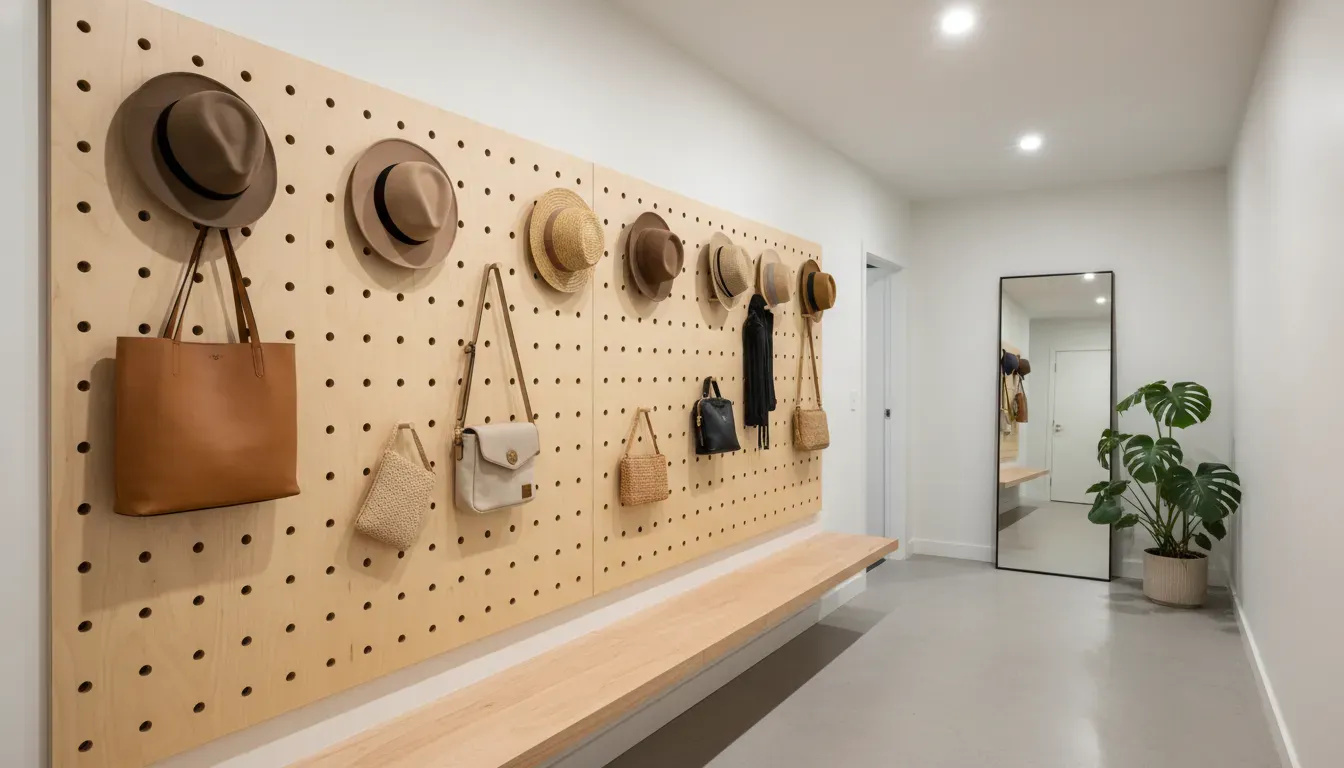
Modular Pegboards
For a more industrial or contemporary look, pegboards offer high-density storage. Originally relegated to the garage, high-end wood or metal pegboards allow you to arrange shelves, hooks, and bins in a layout that suits your specific inventory. You can designate a lower zone for children’s backpacks and an upper zone for hats and scarves.
Recessed Storage: The Renovation Route
If you are in the position to renovate, the ultimate solution to the narrow hallway dilemma is recessed storage. By cutting into the drywall and utilizing the space between the studs, you can create niches or cabinets that sit flush with the wall.
Standard interior walls have a depth of about 3.5 to 4 inches between studs. This is sufficient depth for:
- Key hooks
- Mail slots
- Spice-rack style shelves for sunglasses
- Recessed full-length mirrors that open to reveal jewelry or accessory storage
This approach requires more effort and investment but results in a completely unobstructed walkway.
Visual Expansion: Mirrors and Lighting
Storage is physical, but the feeling of space is psychological. Once you have selected your ultra-slim furniture, the next step is to employ visual tricks to make the hallway feel expansive.
The Strategic Use of Mirrors
Mirrors are the oldest trick in the designer’s book for a reason. In a narrow hallway, a large mirror does not just check your appearance; it acts as a virtual window.
- Placement: Avoid placing a mirror directly opposite a cluttered area. Ideally, it should reflect a light source or an open doorway into another room.
- Scale: Go big. An oversized round mirror breaks up the linear monotony of a hallway, while a floor-to-ceiling mirror at the end of the hall creates the illusion of an infinite corridor.
Lighting the Void
Shadows are the enemy of small spaces. Poor lighting in a narrow hallway creates dark corners that make the walls feel like they are closing in.
- Sconces: Wall sconces are preferable to overhead pot lights in narrow spaces as they wash the walls with light, pushing them visually outward. Choose slim-profile sconces that comply with ADA standards (projecting no more than 4 inches) to avoid collisions.
- Temperature: Opt for warm white bulbs (2700K-3000K). Cool light can make a windowless hallway feel sterile and clinical.
The Drop Zone Organization Strategy
Even the best ultra-slim cabinets will fail if the organizational system inside them is flawed. Narrow storage requires strict discipline. This is where the “One In, One Out” rule becomes essential.
Categorization and Containment
Inside your slim drawers or tipping buckets, small items tend to migrate. Use drawer dividers to separate keys from lip balm. For shoe cabinets, categorize by frequency of use. Daily wear shoes go in the top compartments; seasonal or occasion shoes belong elsewhere in the home or in the lower, harder-to-reach tiers.
To keep your surfaces clear, consider a dedicated wall-mounted organizer.
Shop Wall Mounted Entryway Organizers on Amazon
Dealing with “The Overflow”
A narrow hallway cannot be the primary storage facility for a family of four. It is a transit zone. Bulky winter coats, sports gear, and infrequently used boots must be stored in bedroom closets or dedicated mudrooms. The slim entryway system is strictly for the essentials of the current season.
Choosing the Right Aesthetic
The style of your storage unit dictates the atmosphere of the entry. In a small space, coherence is key.
The Minimalist Approach
White or light-colored cabinetry that matches the wall color can make the storage unit “disappear.” This is ideal for extremely tight spaces where you want to minimize visual noise. Handleless, push-to-open mechanisms further reduce visual clutter and prevent clothing snags.
The Statement Piece
Conversely, you might choose to lean into the drama. A slim console in a bold color like navy or emerald green, set against a neutral wall, turns the furniture into a focal point. This draws the eye to the design rather than the dimensions of the hall.
Wood Tones and Texture
Natural wood introduces warmth and texture, preventing the hallway from feeling like a sterile hotel corridor. Walnut or oak veneers on slim cabinets add sophistication. If using wood, ensure the grain direction (vertical vs. horizontal) complements the space. Vertical grain can heighten the room; horizontal grain can elongate it.
Troubleshooting Common Issues
Even with the best ultra-slim systems, challenges arise. Here is how to navigate common pitfalls.
Problem: The Baseboard Obstruction Most furniture has a flat back, but your walls have baseboards. This creates a gap where things fall behind the cabinet, and it wastes an inch of precious depth.
- Solution: Look for cabinets with a “notch” or cutout at the bottom specifically designed to clear baseboards. Alternatively, mount the cabinet on the wall above the baseboard line.
Problem: Outlet Blocking Your perfect spot for the console covers the only power outlet in the hall.
- Solution: Before installing, cut a neat access hole in the back panel of the cabinet. This allows you to plug in a lamp or charging station inside the unit, hiding the cords completely.
Problem: The “Door Swing” Conflict Your front door opens inward and hits the storage unit.
- Solution: You must respect the door swing radius. Place your storage unit beyond the arc of the door. If space does not permit, utilize the back of the door itself for storage using heavy-duty over-the-door hooks or racks.
For those interested in broader home organization strategies, see our article on minimalist home decor.
Console Tables vs. Shoe Cabinets: Which Do You Need?
The choice between a console table and a shoe cabinet depends on your primary pain point.
-
Choose a Console Table If: Your primary clutter consists of paper, mail, keys, and small electronics. You have a closet nearby for coats and shoes, but need a surface for decor and small items.
- Recommendation: Look for tables with “waterfall” edges or glass tops to reduce visual bulk.
- Shop Narrow Console Tables on Amazon
-
Choose a Shoe Cabinet If: The floor is littered with footwear. You trip over sneakers when entering. You need to hide visual chaos.
- Recommendation: Prioritize units with ventilation holes in the back to prevent odors in enclosed spaces.
Conclusion: Embracing the Constraints
The narrow hallway dilemma is not a tragedy; it is a design challenge that invites creativity. By shifting our perspective from standard furniture dimensions to ultra-slim, vertical solutions, we can transform a cramped corridor into a functional, welcoming entryway.
Whether you opt for the mechanical ingenuity of a tipping bucket shoe cabinet, the airy elegance of a floating console, or the utilitarian charm of a peg rail system, the goal remains the same: to create a smooth transition from the outside world into your sanctuary.
Remember that in a narrow space, every inch counts. Measure twice, anchor your furniture securely, and curate your possessions ruthlessly. With the right ultra-slim systems, your hallway will no longer be a bottleneck, but a streamlined introduction to the rest of your home.