
Mudroom Locker Depth Guide: The New Ergonomic Standards for 2026
Stop guessing your millwork dimensions. We break down the 2026 ergonomic standards for mudroom locker depth to prevent clutter and maximize flow.
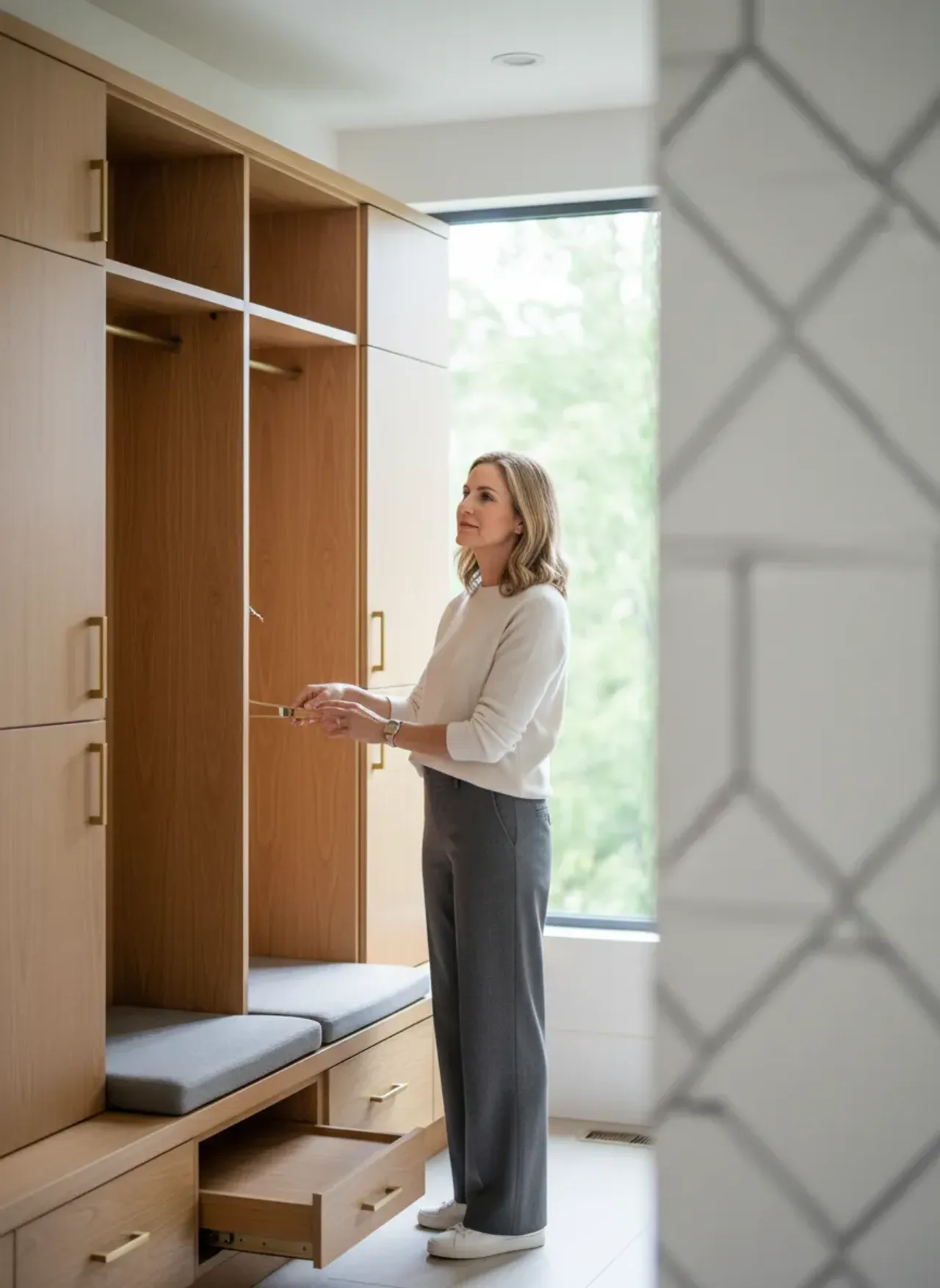
Feb 26, 2026 - Written by: Linda Wise

You know that feeling when you try to close a cabinet door, but a single coat sleeve is stubbornly fighting back? It’s not just a minor annoyance; it’s a symptom of a fundamental design failure. For years, I’ve watched homeowners and even seasoned contractors treat mudroom dimensions as an afterthought, defaulting to standard kitchen cabinet depths that simply don’t translate to the bulk of modern life.
The reality of entryway storage has shifted. We aren’t just storing windbreakers anymore. We are managing hockey bags, oversized hiking backpacks, and winter parkas that seem to double in volume every season.
If you are planning a renovation or a new build, you need to throw out the old rulebook. The “standard” 12-inch depth is dead. We are entering a new era of spatial utility. This is the definitive look at the mudroom locker depth guide, specifically calibrated for the ergonomic standards emerging in 2026.
The Psychology of Depth: Why “Standard” Fails
Before we talk numbers, we have to talk about flow. A mudroom is a high-traffic transition zone. It is the airlock between the chaos of the outside world and the sanctuary of your home. When the lockers are too shallow, gear spills out into the walkway, tripping you up—literally and figuratively.
Conversely, I’ve seen custom builds where the lockers were essentially caverns. If you build them 28 inches deep, you lose things. Gloves disappear into the abyss, never to be seen again until spring cleaning. The “sweet spot” is a moving target that depends entirely on user height, gear type, and the architectural constraints of your hallway.
Pro Tip: Never assume your architect has accounted for the “Puffy Coat Factor.” Most blueprints show generic 2D squares that look tidy on paper but fail the 3D reality test.
The New Golden Numbers for 2026
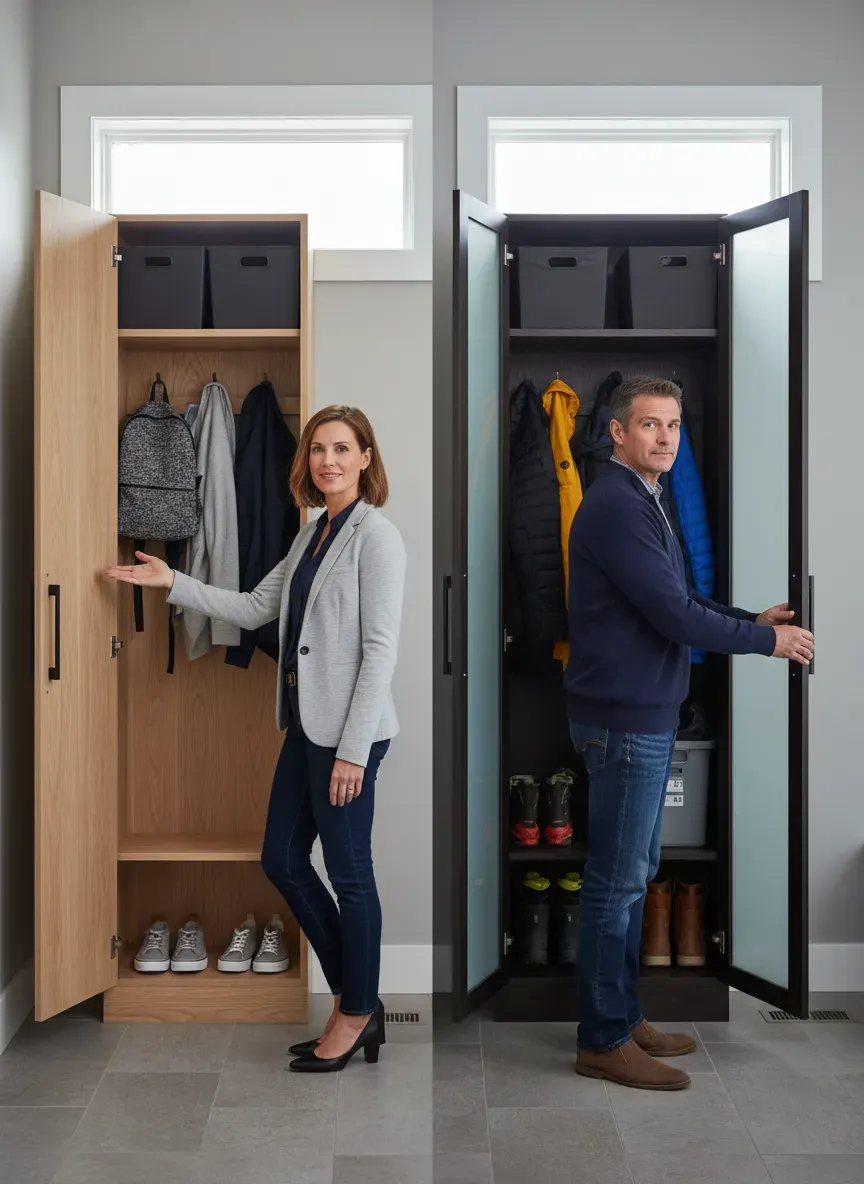
We are seeing a trend toward 18 to 20 inches as the new ergonomic baseline for closed lockers, replacing the archaic 15-inch standard. Here is why that matters.
The 12-Inch Trap (Avoid This)
Bookcases are 12 inches deep. Upper kitchen cabinets are 12 inches deep. Mudroom lockers should almost never be 12 inches deep.
I still see this happening in budget builds. At 12 inches, a standard hanger (which measures 17-18 inches wide) has to be angled. This means you can fit perhaps two coats in a locker that should hold five. Unless you are exclusively using hooks for light cardigans, avoid this depth at all costs.
The 15-Inch Compromise
For years, 15 inches was the go-to. It saves floor space, which is great for narrow hallways. If your mudroom is a tight corridor, you might be forced into this dimension. However, you will need to rely heavily on hooks rather than hanger rods. If you try to use a rod, the shoulders of your coats will rub against the door, eventually causing wear on both the fabric and the paint.
The 18-Inch Standard (The 2026 Baseline)
This is where utility meets comfort. At 18 inches, you have enough clearance for a standard hanger to sit perpendicular to the back wall without fighting the door. It allows for a backpack to be hung on a hook without propping the door open.
If you want the best experience, I highly recommend checking out the Brainerd Heavy Duty Coat and Hat Hook. These have the projection necessary to utilize that 18-inch depth effectively, allowing you to layer a scarf, a bag, and a coat on a single anchor point.
The 24-Inch Luxury
If you have the square footage, 24 inches is the depth of a standard closet. This offers immense storage capability. However, it comes with a warning: visual bulk. A bank of 24-inch deep cabinetry can feel oppressive in a small room. It encroaches on your “breathing room.” If you go this deep, consider open cubbies rather than full doors to break up the visual weight.
Bench Depth vs. Locker Depth: The Ergonomic Disconnect
Here is the kicker that trips up most DIYers: Your bench should not be the same depth as your upper lockers.
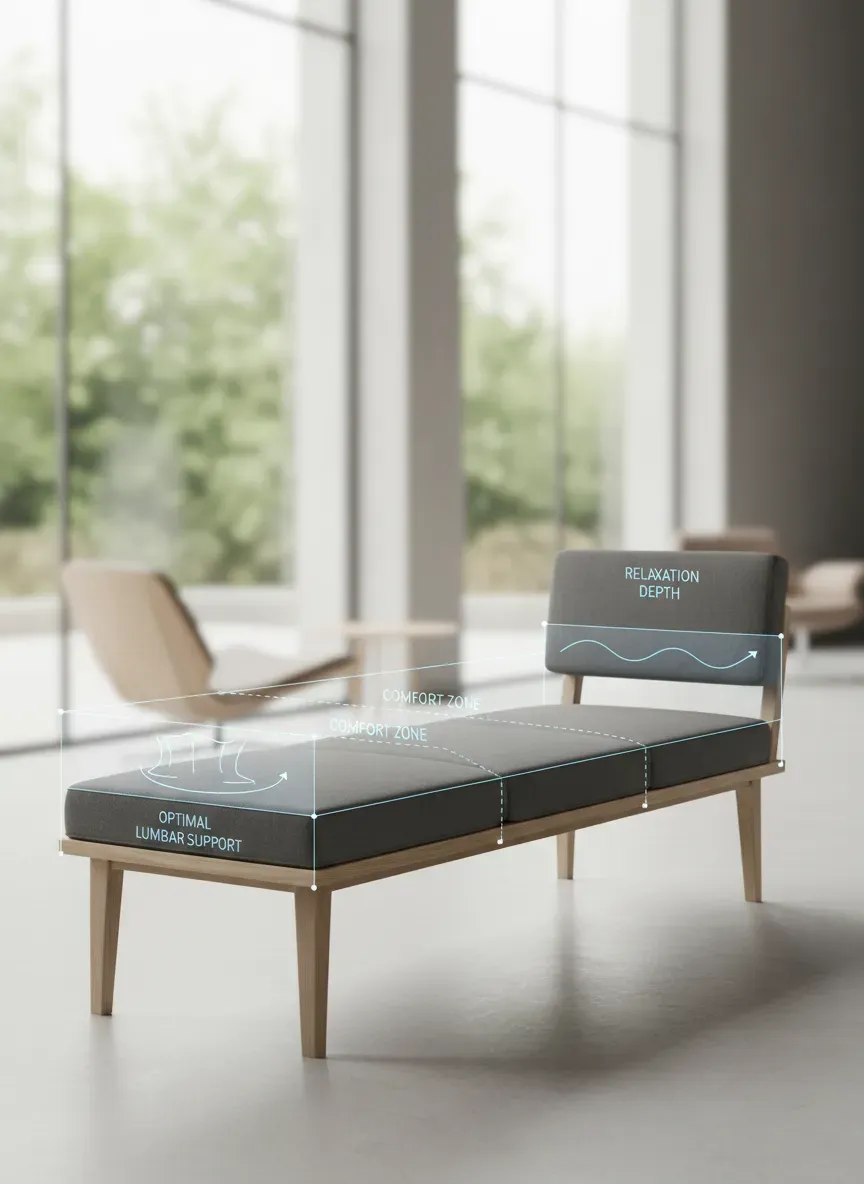
If your upper lockers come down to meet the bench at the same depth, you have created a vertical wall, not a seat. To sit comfortably, the human body needs “butt space” (to put it bluntly) and shoulder clearance.
The “Step-Back” Design
The most ergonomic design for 2026 involves a step-back approach.
- Lower Drawers/Bench: 20 to 22 inches deep.
- Upper Lockers: 14 to 16 inches deep.
This differential creates a natural seating area. You can sit down to tie your shoes without banging your head on the upper cabinets. It also creates a visual ledge that makes the room feel larger.
Key Takeaway: Always aim for a minimum 4-inch difference between your bench depth and your upper cabinet depth if you want adults to be able to sit comfortably.
When mapping out your built-ins, you have to verify your blueprint against standard depth and height measurements to ensure the millwork actually fits the wall without blocking door casings or light switches. I’ve seen entire installations halted because someone forgot to account for a light switch plate.
Adapting for Specific Gear: The “Active Depth” Concept
“Active Depth” is a term I use to describe how much space your gear occupies when it is hanging naturally, not when it is squished flat.
The Backpack Dilemma
School backpacks are getting heavier and bulkier. A loaded high school backpack can easily be 12 inches deep off the body. If you use a 12-inch locker, that bag is on the floor.
For families with students, I suggest an open lower cubby system below the bench. To keep this looking tidy, you need durable containment. I’ve personally had great success using the Spectrum Diversified Wire Storage Basket. They are rugged enough to handle cleats and heavy books, and their dimensions fit perfectly into a standard 18-inch deep lower cubby, hiding the mess while keeping it accessible.
Winter Gear and The “Puff”
In colder climates, you need to account for the “puff” of down jackets. A row of three down jackets on hooks requires significantly more lateral and depth space than denim jackets. If you are in a snowy region, push for that 20-inch depth. It allows air to circulate around damp coats, which is critical for drying and preventing mildew odors.
The Vertical Equation: Height Matters Too
Depth doesn’t exist in a vacuum. It interacts with height. If you build deep upper cabinets (15”+) but mount them too low, you create a “head-strike zone.”
For 2026 standards, if your upper cabinets are 15 inches deep, the bottom of that cabinet should be at least 60 inches off the floor to clear the sightline of most adults. If you need them lower for kids, make them shallower (12 inches).
The Shoe Zone
The space underneath the bench is prime real estate. But how deep should it be? If it’s too deep (24 inches), shoes get kicked to the back and lost.
The Bottom Line: A 20-inch bench depth is perfect for shoes. It allows for two rows of kids’ shoes or one pair of large adult boots. To keep the floor from getting ruined by melting snow, you need a tray that fits exact dimensions. The Rubbermaid Configurations Custom Closet Deluxe Kit offers adjustable shelving that can be repurposed here, or look for rigid boot trays that match your millwork width.
Common Pitfalls to Watch Out For
Even with the right numbers, execution is everything. Here are the mistakes I see repeated on job sites.
- Ignoring Baseboards: If you are buying pre-fabricated locker units, remember that your walls have baseboards. A unit that is 18 inches deep might actually stick out 19 inches once you account for the gap behind it caused by the baseboard. You either need to remove the baseboard or scribe the unit to the wall.
- The Light Switch Conflict: As mentioned earlier, deep lockers cast shadows. If your light switch is right next to the locker, a 24-inch deep unit might make it awkward to reach the switch.
- The Door Swing: If your mudroom has a door leading to the garage or kitchen, ensure the swing of that door doesn’t collide with the corner of your new lockers. This sounds obvious, but it happens more often than you’d think.
- Blocking HVAC Vents: Mudrooms are often small and rely on a single floor register. Don’t build your bench directly over the only heat source in the room without installing a toe-kick vent deflector.
Custom vs. Semi-Custom: What to Buy?
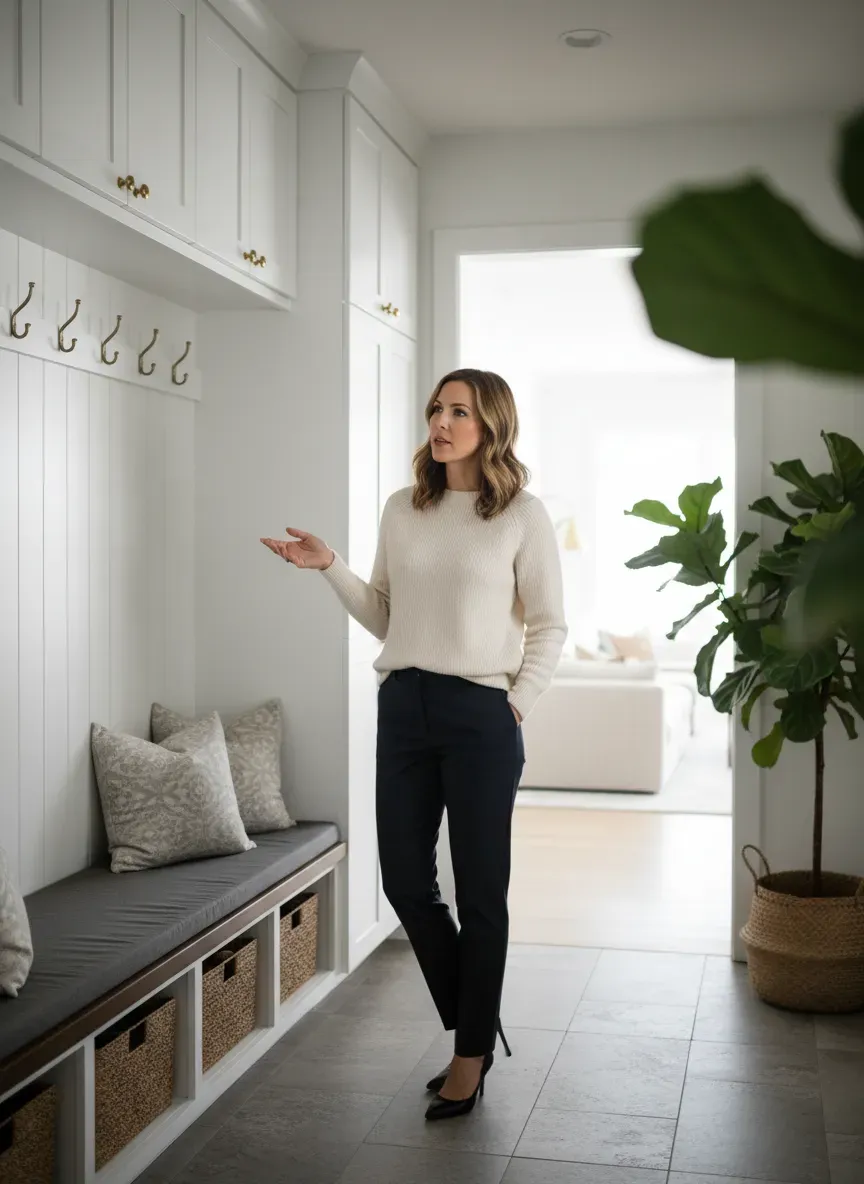
Not everyone can afford a $10,000 custom millwork package. The good news is that semi-custom cabinetry is catching up to these ergonomic standards.
Many kitchen cabinet manufacturers now offer “tall pantry” cabinets that are 18 or 24 inches deep. These can be easily repurposed as lockers. You simply leave the doors off or install shorter doors to create open cubbies.
If you are going the DIY route with plywood, you have total control. I recommend buying high-quality birch plywood and ripping it to exactly 19 inches. Why 19? Because you can get two 19-inch strips out of a 48-inch wide sheet of plywood with plenty of room for saw kerf and waste, maximizing your material yield while hitting that ergonomic sweet spot.
Future-Proofing Your Entryway
The standards for 2026 focus on adaptability. We are moving away from fixed, rigid stalls toward systems that can evolve.
Consider using adjustable shelving pin holes along the entire vertical height of the locker interior. When the kids are toddlers, you can have low hooks and shelves. As they grow into teenagers with long coats and lacrosse sticks, you can remove the shelves and raise the hooks.
Designing for the correct depth is about predicting the future chaos of your household and mitigating it with geometry. It’s not just wood and screws; it’s lifestyle engineering.
By adhering to the 18-inch to 20-inch active depth standard and ensuring a step-back design for seating, you create a mudroom that serves you, rather than one you have to serve. Measure your gear, check your hallway clearance, and build for the life you actually live.