
Retro-chic Mid-century Mudrooms
Discover how to design a stunning mid-century modern mudroom. Dive deep into walnut cubbies, vintage styling, and expert woodworking tips for your entryway.
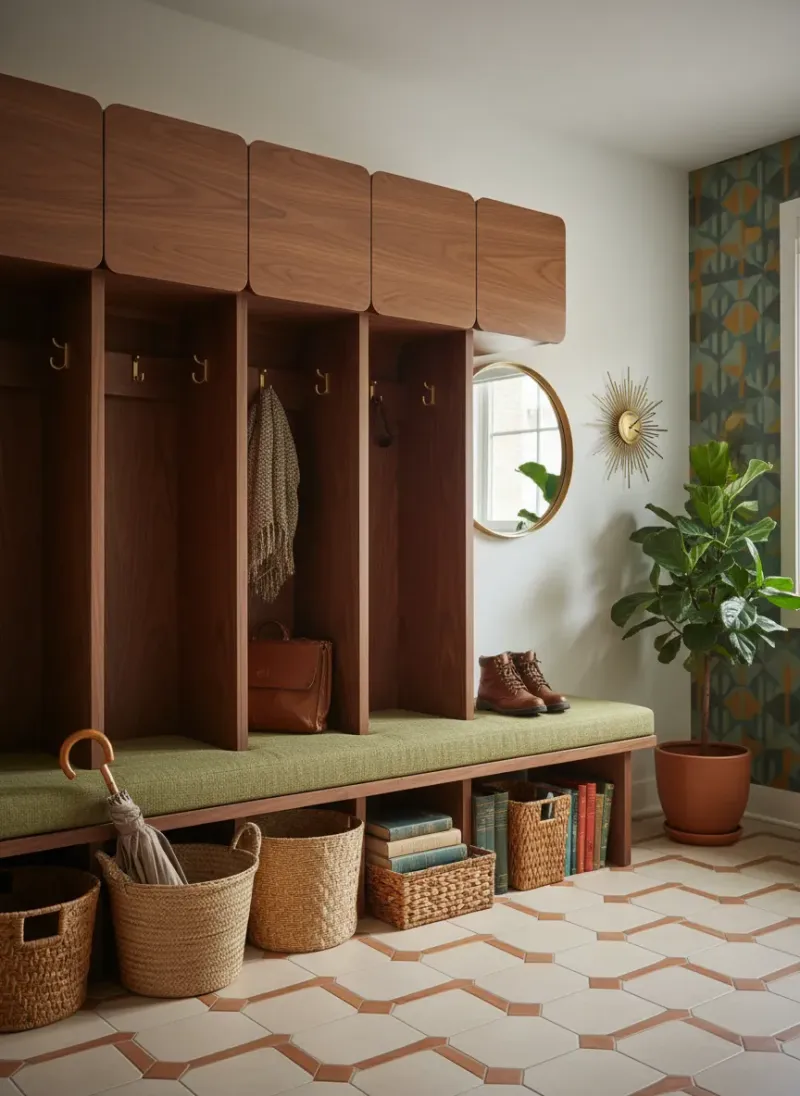
Mar 29, 2026 · Linda Wise
15 min readThe entryway is the handshake of your home. It’s the very first tactile and visual experience you, your family, and your guests encounter upon crossing the threshold. Yet, for decades, mudrooms were relegated to the realm of pure, uninspired utility. We built chunky, painted-white farmhouse lockers, slapped on some wrought-iron hooks, and called it a day.
But I’ve personally found that treating your mudroom as a mere utility closet is a massive missed opportunity. Enter the mid-century modern (MCM) revival.
Bringing retro-chic styling into a functional space like a mudroom completely flips the script on entryway design. We’re talking about the rich, chocolatey warmth of walnut grain. Sleek, uncompromised lines. Subtle brass accents that catch the afternoon light. Creating a mid-century mudroom isn’t about building a time capsule; it’s about applying the timeless principles of the 1950s and 60s—organic materials, geometric restraint, and seamless functionality—to the chaotic demands of modern life.
If you are ready to elevate your drop zone from a cluttered mess of boots and backpacks into an architectural focal point, you are in the right place.
Shopping the bench itself? Start with our ranked picks in the Top 5 MCM entryway benches — walnut, teak, and oak models with storage noted — and our brand-level West Elm vs Article comparison for build quality and value.
The Anatomy of a Mid-Century Mudroom
To nail the retro-chic aesthetic, you have to understand the underlying DNA of mid-century design. It is deceptively simple. The uninitiated often think they can just paint some MDF mustard yellow, throw in a sputnik chandelier, and achieve the look. They are wrong.
True mid-century design relies heavily on the honesty of its materials. In the mudroom context, this means your storage cubbies shouldn’t try to hide what they are. They need to celebrate the wood, the joinery, and the spatial hierarchy of the room.
Why Walnut is the Undisputed King of MCM Storage
Walnut is the beating heart of mid-century interior architecture. You’ll notice that the iconic designers of the era—Charles and Ray Eames, George Nelson, Jens Risom—leaned heavily on American Black Walnut. Why? Because its tight grain pattern and complex color variations (ranging from pale sapwood to deep, purplish-brown heartwood) offer a level of visual intrigue that oak or maple simply cannot match.
When you construct mudroom cubbies out of walnut, you are immediately elevating the space. The wood carries an inherent sophistication. It absorbs light beautifully when treated with a penetrating oil finish, emitting a soft, ambient glow rather than the harsh, reflective glare of high-gloss polyurethane.
For a mudroom, where dirt, moisture, and scuffs are inevitable, walnut is also incredibly forgiving. The natural variegation in the grain helps to camouflage minor dings and scratches. Over time, walnut develops a stunning patina, growing slightly lighter and warmer as it is exposed to UV light.
Tapered Legs, Brass Hardware, and Geometric Restraint
A defining characteristic of mid-century casework is that it rarely sits flush on the floor. Heavy, floor-bound cabinetry feels oppressive. Mid-century design prefers to breathe.
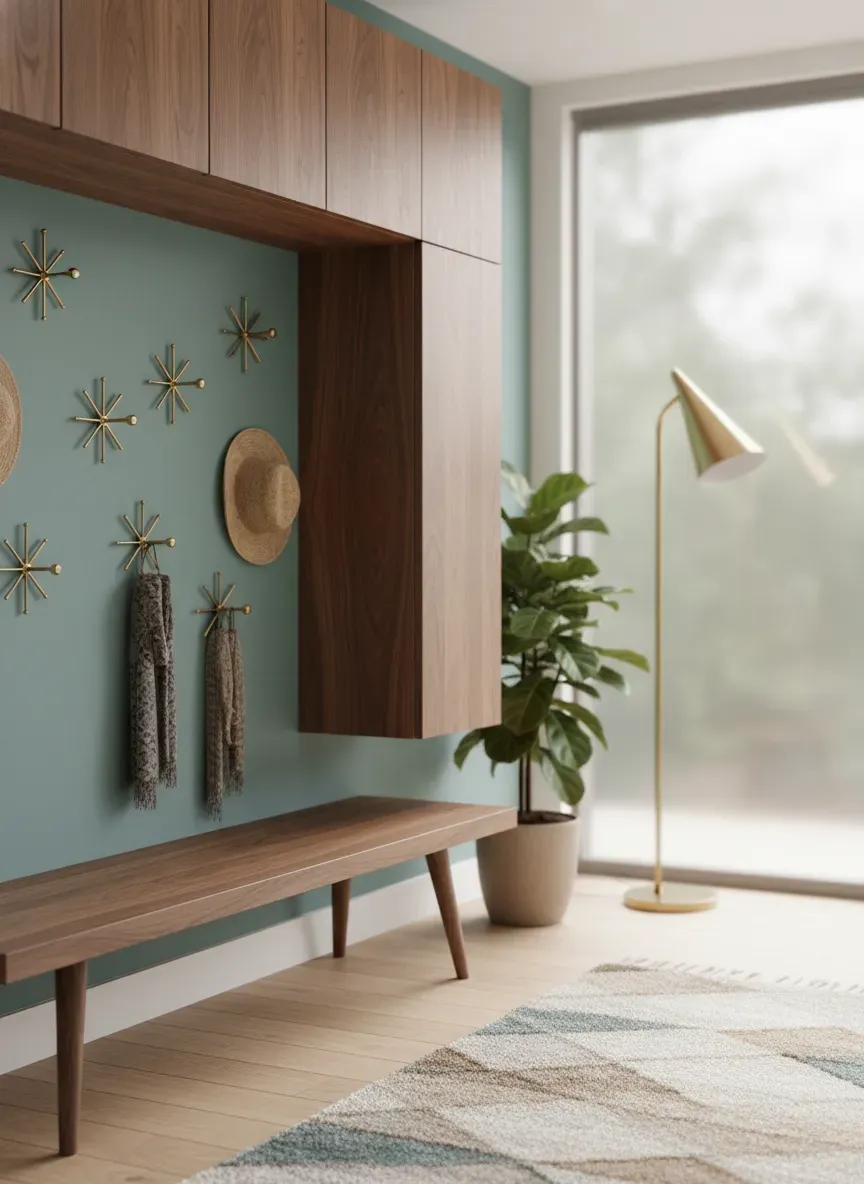
By elevating your walnut mudroom lockers on tapered, angled legs, you create an illusion of lightness. The cabinetry appears to float. This simple design choice makes a cramped entryway feel vastly more spacious. You can sweep underneath it easily, and it immediately telegraphs “vintage furniture” rather than “built-in closet.”
Designing Your Walnut Cubbies: Form Meets Function
Building beautiful furniture is one thing. Building a highly functional drop-zone that survives the onslaught of winter boots, dripping umbrellas, and heavy backpacks requires meticulous planning.
Drafting the Perfect Dimensions
Here’s the real kicker about mudroom design: if the proportions are off by even a few inches, the space becomes functionally useless. I’ve seen gorgeous walnut lockers that were simply too shallow to hold an adult winter coat on a hanger, rendering them obsolete on day one.
You need to balance the elegance of retro-chic design with cold, hard ergonomics.
- Depth: A standard cubby depth should be 18 to 20 inches. This provides ample space for large winter boots and allows you to install a hanging rod if desired. Anything shallower, and your coats will spill out into the hallway.
- Bench Height: The seating area must sit between 17 and 19 inches from the floor. This is the optimal ergonomic height for tying shoes.
- Vertical Coat Clearance: Leave an absolute minimum of 42 inches of vertical drop space for adult coats. If you frequently wear long trench coats, push this to 50 inches.
Balancing Coat Space and Shoe Storage
To maintain that crisp, geometric mid-century look, avoid creating symmetrical grids. Symmetrical grids look like a school locker room. Instead, employ asymmetrical dividers.
Imagine a bank of three lockers. Instead of identical vertical towers, perhaps the left section is a tall, uninterrupted closet for long coats. The middle section features an open bench with a floating walnut shelf above it for keys and mail. The right section is a stack of open cubbies for shoes. This asymmetry mimics the iconic silhouettes of vintage credenzas and room dividers.
If you’re looking to lay the groundwork before tackling complex veneering or asymmetrical casework, mastering the basics of building a simple mudroom bench is a fantastic primer. It allows you to dial in your joinery skills before committing to expensive walnut materials.
Sourcing Materials: Authentic Vintage vs. High-Quality Reproductions
Procuring the right materials is where many DIYers and designers hit a wall. Solid walnut is breathtakingly expensive. A single board foot of premium, kiln-dried black walnut can easily run into double digits, making a wall-to-wall solid wood mudroom a budget-busting endeavor.
But here is a secret straight from the mid-century manufacturing playbook: the mid-century masters rarely used solid wood for large case goods. They used high-quality veneers.
Plywood with Walnut Veneer
Veneered plywood is actually superior to solid wood for mudroom cubbies. Solid wood expands and contracts violently with seasonal humidity changes. In an entryway—where the front door is constantly opening to freezing cold or humid summer air—solid wood panels will warp, cup, and crack.
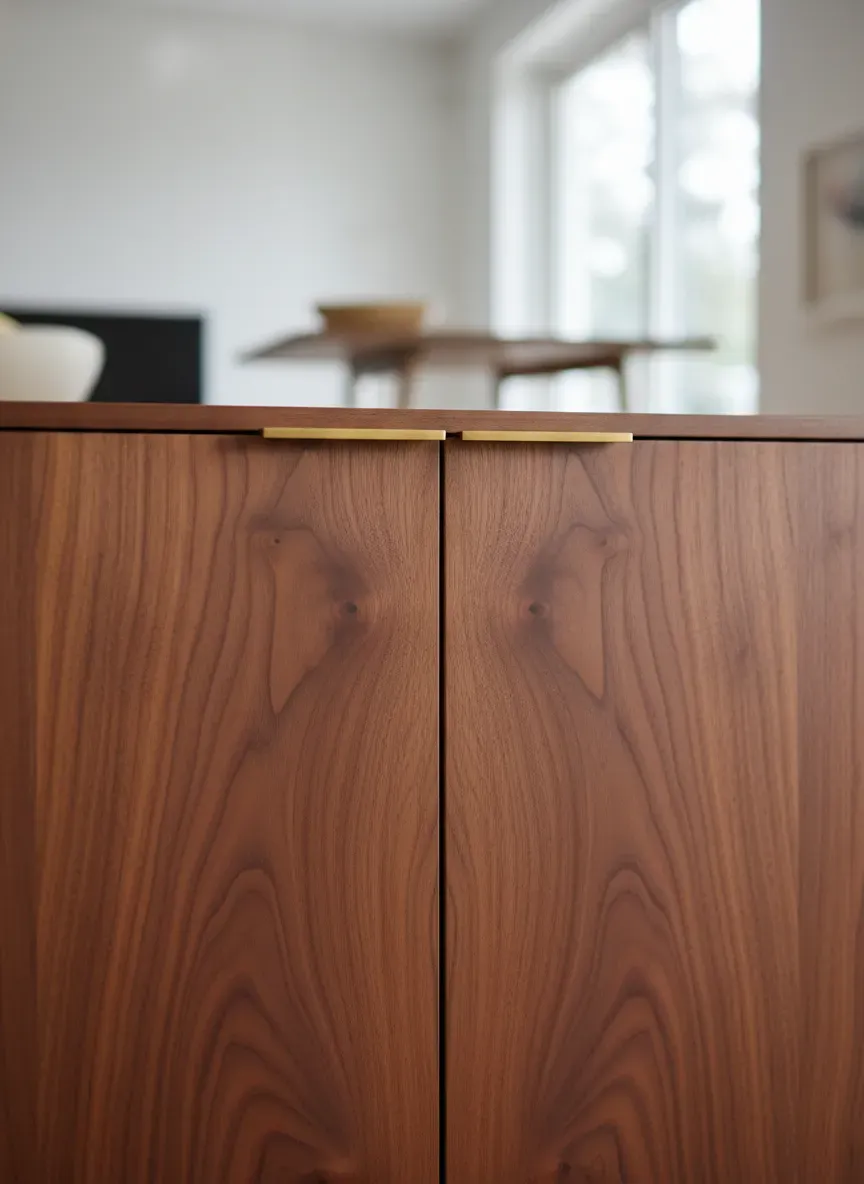
A high-quality, cabinet-grade plywood core with a real walnut veneer offers the exact same visual impact with strong structural stability. You can source beautifully book-matched veneer panels where the grain pattern mirrors itself seamlessly across the cabinet doors. This creates a mesmerizing, continuous flow of woodgrain that is the hallmark of high-end MCM design.
Navigating Edge Banding Like a Pro
The dead giveaway of amateur casework is exposed plywood edges. To achieve a seamless, high-end retro look, you must conquer edge banding.
Pro Tip: Do not rely on cheap, pre-glued iron-on edge banding for a high-traffic mudroom. The constant friction of sliding boots and baskets will catch the edges and peel them back. Instead, rip thin strips of solid walnut (about 1/8th to 1/4 inch thick) and glue them to the exposed plywood edges using a brad nailer and premium wood glue. Flush-trim them with a router. This creates an indestructible, solid-wood edge that looks totally authentic.
Solid Walnut Accents
Save your solid walnut budget for the high-touch areas. The bench seat itself should ideally be edge-glued solid walnut. This is the surface that will take the most abuse. A thick, 6/4 (an inch and a half) solid walnut slab bench adds a profound sense of gravity and quality to the entire build.
Elevating the Aesthetic: Color Palettes and Textures
Walnut is the star of the show, but it needs a supporting cast to truly sing. The colors and textures you surround your cubbies with will determine whether the room feels like a sophisticated 1960s architectural digest or a dark, oppressive cave.
Mustard Yellows, Teals, and Burnt Orange
Mid-century color palettes are legendary for their bold, optimistic hues balanced by earthy neutrals. Because walnut is inherently dark and warm, you need to introduce contrast.
If you are painting the wall behind your open cubbies, consider a muted, muddy teal. Colors like Sherwin-Williams’ “Dark Night” or Benjamin Moore’s “Aegean Teal” create a stunning chromatic backdrop that makes the orange and purple undertones of the walnut pop off the wall.
Alternatively, if you want a brighter, more playful “atomic era” vibe, a pale mustard yellow or a soft, chalky sage green works wonders. Avoid stark, sterile builder-grade whites. They create too harsh of a contrast and wash out the subtle warmth of the wood. Look for off-whites with warm, creamy undertones.
Slat Walls and Acoustic Paneling Textures
One of the most impactful ways to introduce authentic retro texture into your mudroom is by incorporating a vertical slat wall. Wood slats were used extensively in 1950s homes as room dividers and architectural features.
Installing a walnut slat wall as the backing for your mudroom bench not only adds immense visual depth, but it also provides a clever, durable surface for mounting heavy-duty coat hooks. The vertical lines of the slats draw the eye upward, making the ceiling feel higher and the entryway feel grander.
- Key Takeaways for Slat Walls:
- Keep the slats narrow (around 1 inch wide) with a 1/2-inch gap between them for maximum retro effect.
- Paint the wall behind the slats flat black or a dark charcoal before installation to create a deep shadow line.
- Finish the slats with a matte penetrating oil, like Rubio Monocoat or Danish Oil, to preserve the raw, tactile feel of the wood.
Common Pitfalls When Channeling Retro-Chic (And How to Dodge Them)
Designing a heavily stylized room is walking a tightrope. Lean too far in one direction, and the space becomes a caricature. Here are the traps I see people fall into time and time again when attempting a mid-century mudroom.
The Trap of Over-Thematizing
There is a fine line between “retro-chic” and “theme park.” You do not need a rotary phone on the bench, a retro-styled mini-fridge in the corner, and wallpaper covered in literal boomerangs.
The most successful MCM spaces rely on restraint. Let the walnut cubbies do the heavy lifting. Allow the clean lines and the beautiful wood grain to be the focal point. Use vintage elements sparingly—perhaps a single, authentic mid-century umbrella stand or a vintage ceramic catch-all tray for keys.
Ignoring the Scale of the Space
Mid-century furniture is famously low-profile. The sofas were low, the credenzas were long and lean. Applying this geometry to a mudroom requires careful scaling.
If you build towering, floor-to-ceiling lockers that completely enclose the space, you lose the airy, cantilevered feeling essential to the style. If you must go to the ceiling for storage reasons, use open shelving at the top rather than closed cabinet doors. Keep the bulk of the visual weight below eye level.
Practical Applications: Putting It All Together
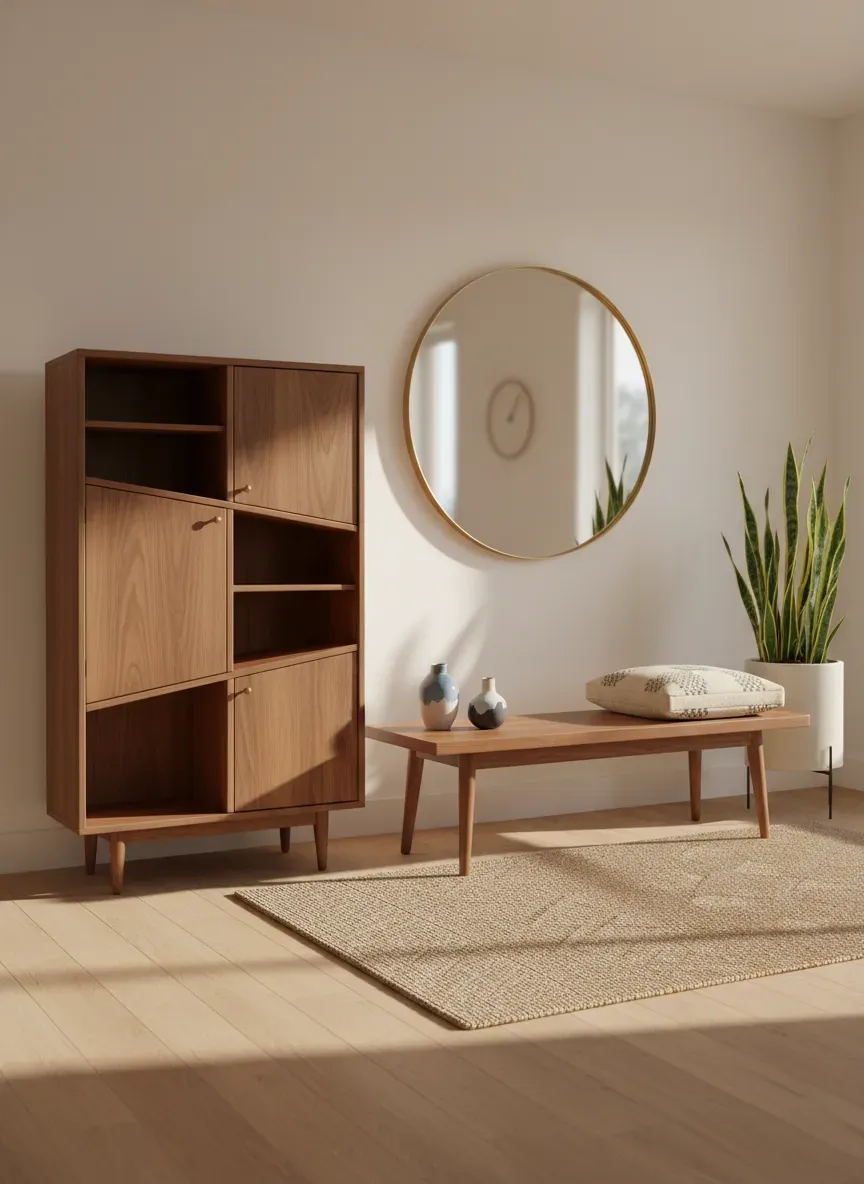
We’ve covered the wood, the geometry, and the colors. Now, let’s talk about the finishing touches that transform a collection of wooden boxes into a cohesive, highly functional entryway.
Lighting the Entryway
Lighting is the jewelry of any room, but in a mid-century space, it acts as a primary architectural feature.
Avoid recessed can lights if you can help it. They cast harsh, downward shadows that flatten the beautiful grain of your walnut. Instead, opt for semi-flush mount fixtures or striking sconces.
- Sputnik Chandeliers: A classic choice. The radiating arms provide excellent, multi-directional ambient light, perfect for illuminating the dark interiors of your cubbies.
- Cylinder Sconces: Mount matte black or brushed brass cylinder sconces on either side of a vintage mirror above the bench. This provides incredibly flattering, indirect light.
- Globe Pendants: Simple, frosted glass globes hanging from brass rods offer a soft, diffused glow that beautifully mimics the lighting found in original Eichler homes.
Hardware Selection
Your hardware choices will make or break the retro-chic illusion. Avoid modern, chunky stainless steel bar pulls at all costs. They will instantly drag your gorgeous walnut casework into the 2010s.
Instead, look for integrated hardware. Routered finger pulls—where the lip of the drawer or door is angled to allow your hand to grip it directly—are the absolute pinnacle of MCM design. They keep the face of the cabinets completely flush and uninterrupted.
If you prefer external hardware, seek out unlacquered brass. Unlacquered brass will naturally tarnish and patina over time from the oils in your hands, giving the mudroom a lived-in, historically accurate feel. Look for delicate, tapering pulls, small brass knobs, or atomic-inspired starburst backplates.
Crafting Your Own MCM Masterpiece
Building a custom, walnut-veneered mid-century mudroom from scratch is an incredibly rewarding undertaking. It challenges your precision, tests your finishing skills, and ultimately leaves you with a breathtaking architectural feature that stops guests in their tracks the moment they open the front door.
You aren’t just slapping together some storage bins; you are crafting heirloom-quality casework. The warmth of the walnut, the elegant taper of the legs, and the brilliant functionality of the asymmetrical cubbies will completely revolutionize how your family interacts with your entryway.
The Bottom Line: Don’t settle for a generic drop zone. By applying the disciplined, material-focused principles of mid-century modern design, your mudroom can become the most stylish space in your entire house.
But I know what you’re thinking. Getting the exact measurements, figuring out the complex joinery for floating cabinets, and generating a cut list for expensive walnut plywood can be incredibly daunting. One wrong cut on a sheet of premium walnut veneer, and you’ve wasted hundreds of dollars.
Here’s the real kicker: you don’t have to guess. I constantly get asked how to actually draft the blueprints for these types of custom built-ins without having a degree in interior architecture.

Stop Guessing Measurements. Build Your Dream Entryway with Confidence.
Transform awkward hallways, cramped foyers, and cluttered mudrooms into organized sanctuaries. Includes 20 measured floor plans, facing photo spreads, the 36-inch planning rule, the shoe pairs formula, and 7 printable worksheets.
Core Edition ($17.99) · Flagship Photo Edition v5 ($39.99) — compare editions
