
From Rustic to Refined: 5 Farmhouse Entryway Benches Defining the 2026 Market
Discover the evolution of modern farmhouse design through the lens of 2026's top entryway benches. We analyze materials, storage utility, and the shift toward refined aesthetics.
Feb 22, 2026 - Written by: Linda Wise

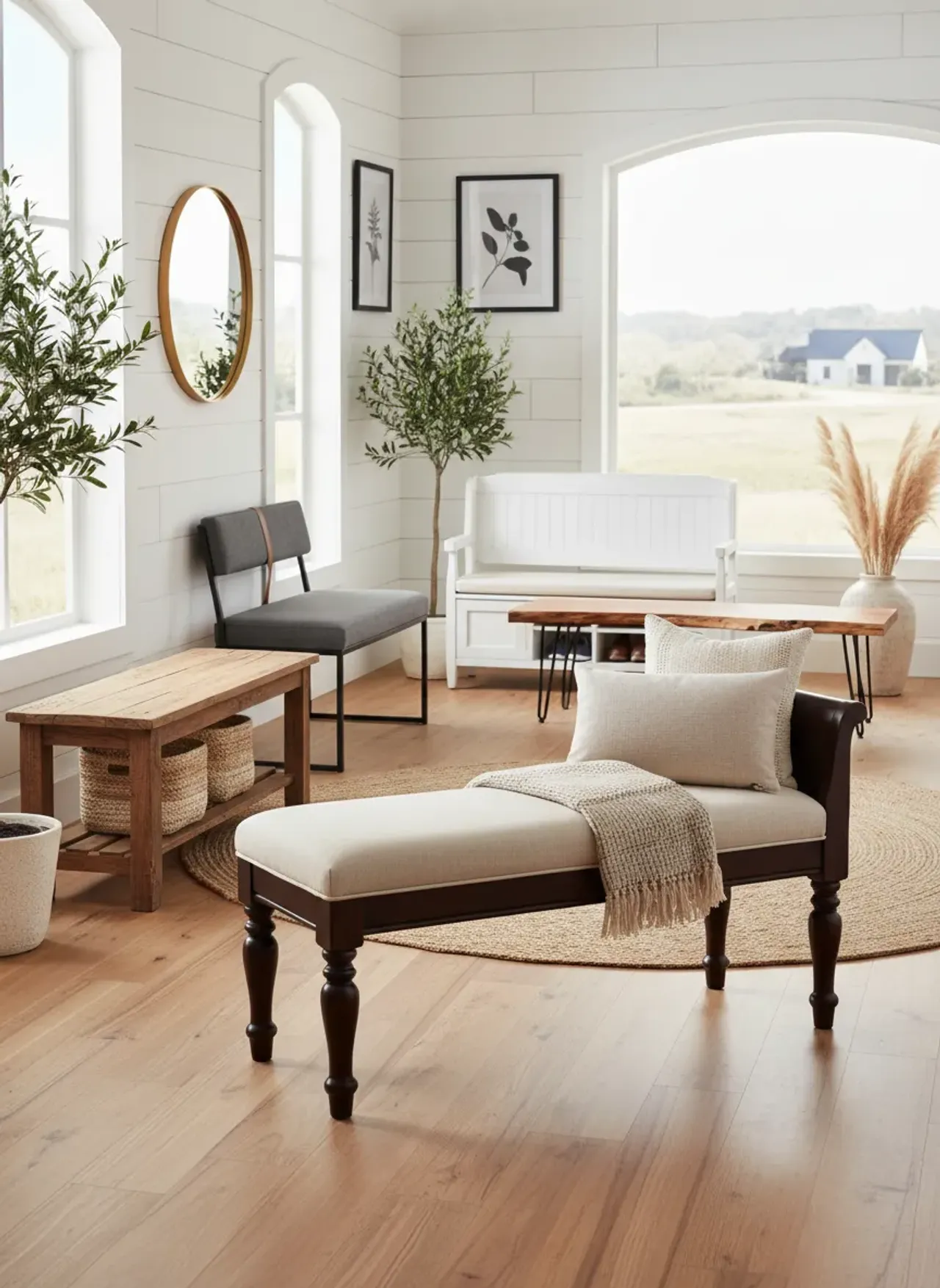
The entryway is the handshake of the home. It sets the expectation for everything that follows. For the better part of a decade, the “Farmhouse” aesthetic was dominated by distressed white paint, aggressive shiplap, and chunky, unrefined lumber. But if you’ve been paying attention to the design shifts leading into 2026, you’ve noticed a pivot. The market has matured. We aren’t seeing the kitschy barn aesthetic anymore; we are witnessing a transition to what I call “Heritage Refinement.”
This evolution is fascinating because it retains the warmth and approachability of the country style but marries it with the clean lines of European minimalism and the functional pragmatism of modern living.
When I consult with clients on foyer design, the bench is rarely just a seat. It is an architectural anchor. It serves as the drop zone for life’s debris while simultaneously acting as a sculptural element. In this deep dive, I’m going to walk you through the five bench archetypes that are currently dominating the high-end and mid-market sectors, and why the shift from “rustic” to “refined” is the most important trend you need to understand right now.
The Shift: Why “Rough” is Out and “Refined” is In
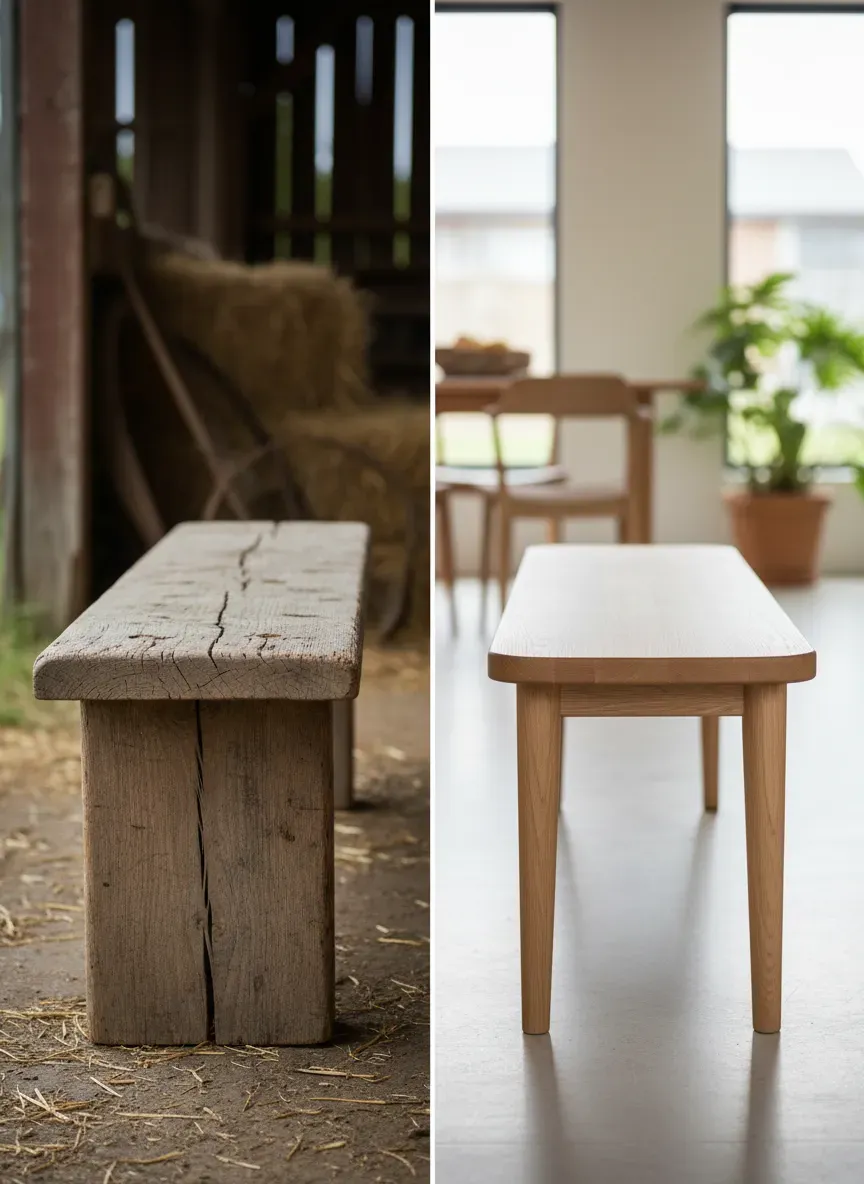
The early 2010s were obsessed with “reclaimed” looks that often felt manufactured. You know the type—brand new wood beaten with chains to look old. Today, authenticity is the currency of interior design.
In 2026, the farmhouse aesthetic is quieter. It relies on material honesty rather than artificial distressing. We are seeing a move toward:
- Smoother grains: Maple and white oak over knotty pine.
- Mixed materials: The integration of matte black metal, woven leather, and cane.
- Silhouette focus: Spindles and tapered legs replacing blocky 4x4 posts.
This doesn’t mean the farmhouse soul is dead. It means it has grown up.
1. The Modern Windsor: Architecture Meets Function
The first archetype defining the current market is the spindle-back bench. Historically rooted in 18th-century English design, the Windsor style has been stripped back for the modern age.
Why is this taking over? Because entryways are often narrow. A solid, blocky bench stops the eye, making a small foyer feel claustrophobic. The negative space created by the spindles allows light to pass through, maintaining an airy, breathable atmosphere.
I recently worked on a project where the hallway was barely four feet wide. A traditional storage box bench would have killed the flow. We opted for a black oak spindle bench, and the difference was night and day. It provided the necessary seating without the visual weight.
Pro Tip: When selecting a spindle bench, look for a “saddle seat” contour. Flat plank seats become uncomfortable after a few minutes, while a scooped seat shows a higher level of craftsmanship and comfort.
If you are looking to nail this look, I highly recommend looking at the Safavieh Home Parker Spindle Back Bench. It captures that perfect balance between historical silhouette and modern durability, specifically in the matte finishes that are trending this year.
2. The “Hidden Vault” Hybrid
While visual lightness is great, real families have clutter. The “Mudroom” concept has migrated from the back door to the front door in many open-plan homes, necessitating storage that doesn’t look like storage.
The crude “lift-top” benches of the past—where you had to disturb the throw pillows to get your shoes—are being phased out. The 2026 market favors the “Hidden Vault” style. These units feature pull-out drawers on soft-close glides or sliding tambour doors.
The refinement here is in the hardware. We are seeing unlacquered brass and knurled iron handles that act as jewelry for the piece. The wood tones are deeper—think walnut or roasted ash—which hides scuffs better than the whitewashed surfaces of yesteryear.
For those navigating tight quarters, you might find that some of these pieces overlap with designs featured in our review of space-saving solutions for compact areas. The goal is to maximize cubic inches of storage without expanding the footprint.
3. The Structural Woven Bench
Texture is the secret weapon of the refined farmhouse look. Since the color palettes are often monochromatic (creams, beiges, warm grays), the interest must come from tactile dissonance.
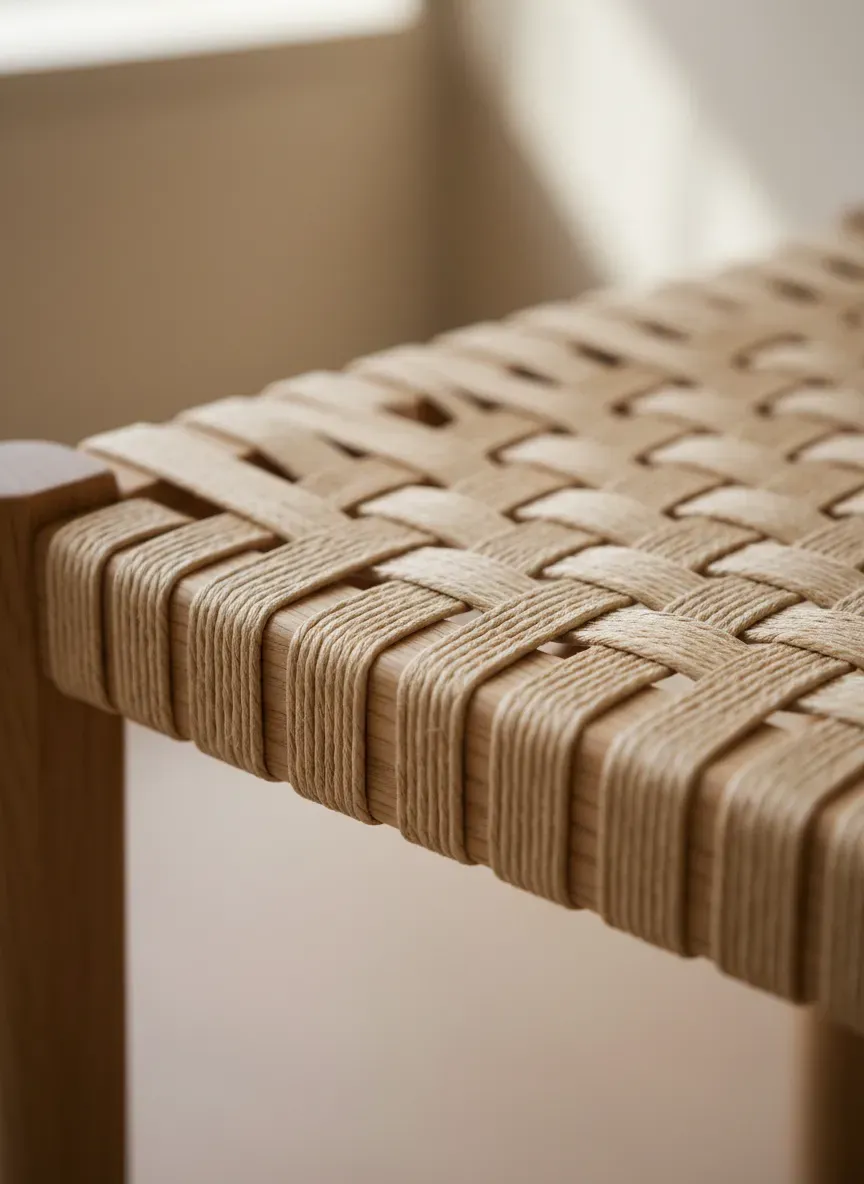
Enter the Structural Woven Bench. This archetype typically features a solid wood frame (often teak or oak) with a seat constructed from Danish cord, woven leather, or seagrass.
Why this works:
- Durability: High-quality Danish cord is incredibly strong and resistant to sagging.
- Warmth: The organic material brings an earthiness that bypasses the “cold” feeling of modern minimalism.
- Versatility: This style bridges the gap between farmhouse and “Japandi” (Japanese-Scandi), making it a future-proof investment.
I’ve personally found that woven benches are the most forgiving when it comes to styling. You don’t need to pile them with pillows; the texture of the seat is the art.
For a stunning example of this craftsmanship, check out the Poly and Bark Weave Bench. The interlace pattern is tight, and the wood finish usually leans toward those neutral, organic tones that anchor a room without dominating it.
4. The Upholstered French Country Revival
We can’t talk about “refined” without nodding to the French influence. However, the 2026 version eschews the toile patterns and heavy carving. Instead, we are seeing linen-wrapped benches with subtle fluting or turned legs.
This is where the “High-Low” mix shines. A linen bench looks expensive. It suggests a home where people take their shoes off not because they have to, but because the floors are pristine.
The Fabric Factor: If you have kids or pets, the word “linen” might induce panic. Don’t worry. The market has shifted almost entirely to “Performance Fabrics”—Crypton and high-rub-count polyesters that mimic the weave of natural linen but repel stains like plastic.
I often steer clients toward benches with a single, long cushion rather than tufting. Tufted buttons tend to collect dust and crumbs. A sleek, flat upholstery job feels more contemporary and is significantly easier to vacuum.
5. The Industrial-Organic Fusion
The final archetype is the evolution of the metal-and-wood trend. Five years ago, this meant black iron pipes and reclaimed barn wood. It was heavy, dark, and often looked like it belonged in a steampunk bar.
The 2026 iteration is slimmer. We are looking at powder-coated steel in gunmetal or bronze, paired with highly finished, live-edge wood that has been sanded to a satin touch. The “live edge” is subtle—a gentle wave rather than a jagged cliff.
This style works exceptionally well if your home leans towards a cleaner aesthetic but you want to inject that farmhouse warmth. Interestingly, this fusion often shares DNA with mid-century modern profiles. If you appreciate those clean lines, you should explore how mid-century designs interact with storage needs, as the crossover potential here is massive.
A standout in this category is the Walker Edison Furniture Entryway Bench. While they offer various styles, their mixed-material options perfectly illustrate how metal legs can support a rustic top without feeling clunky.
Key Takeaways for the 2026 Shopper
- Avoid “Faux” Aging: If the paint looks like it was sanded off by a machine in a factory, skip it. Natural wear is beautiful; fake wear is tacky.
- Check the Joinery: In the refined market, visible screws are a no-go unless they are decorative. Look for dovetails and mortise-and-tenon joints.
- Height Matters: Standard seat height is 18 inches. Anything lower than 16 inches is difficult for adults to stand up from; anything higher than 20 inches feels like a barstool.
Material Science: What Lasts?
When we talk about “Refined Farmhouse,” we are implicitly talking about longevity. The disposable furniture era is waning. Consumers are demanding heirlooms.
The Wood Hierarchy
- White Oak: The king of 2026. It’s hard, durable, and takes stains beautifully without turning yellow (unlike pine).
- Walnut: For a moodier, richer look. It is softer than oak but hides dirt well.
- Rubberwood/Mango Wood: These are the sustainable heroes. They are byproducts of the fruit and latex industries. They are distinctively hardwood and offer great value, though they can be sensitive to humidity changes.
The Finish
Look for matte, water-based polyurethanes. The high-gloss “gym floor” look contradicts the natural ethos of the farmhouse style. You want the wood to look like wood, not plastic.
Styling Your Bench: The “Less is More” Approach
Once you have secured the perfect bench, the temptation is to cover it. Resist that urge.
In the refined farmhouse entryway, the bench is the stage, not the storage locker.
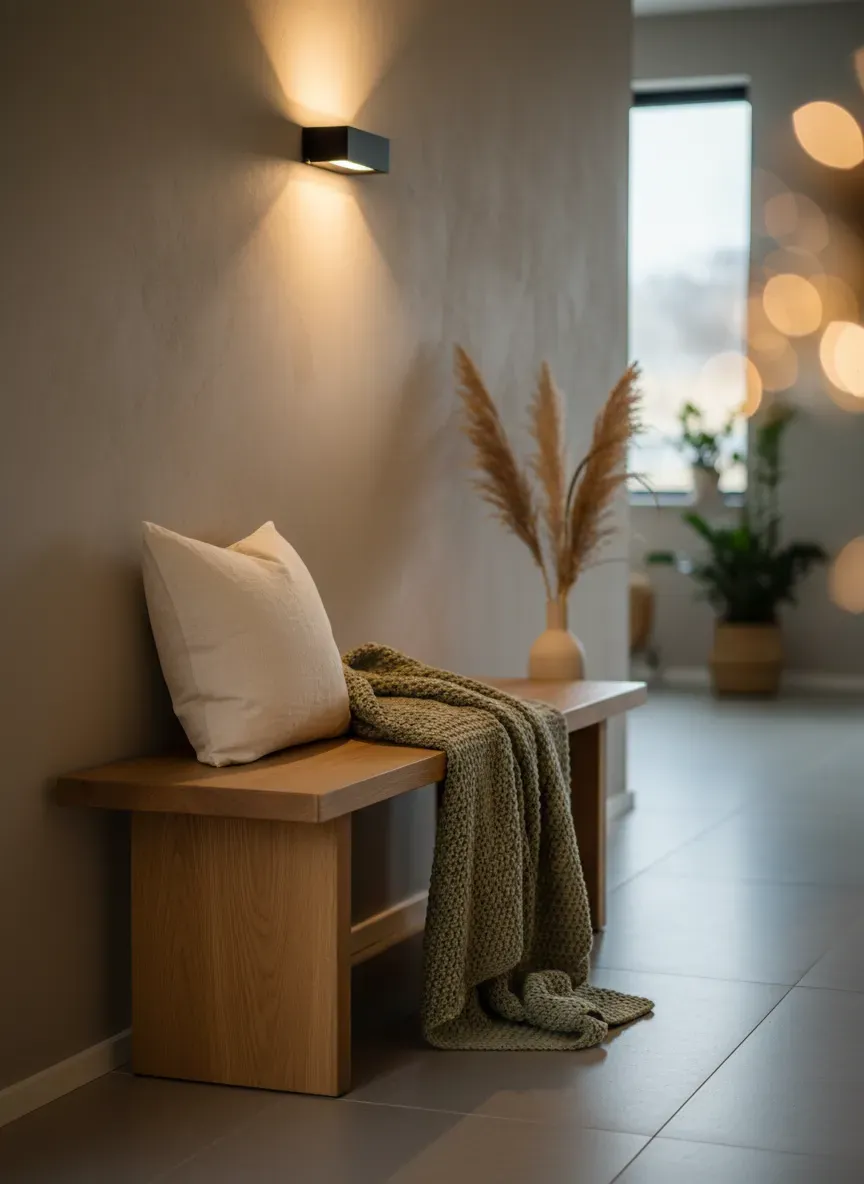
- The Rule of Three: One throw pillow, one throw blanket (draped casually, not folded perfectly), and one structural element nearby (like a tall plant or a basket on the floor).
- Lighting: Wall sconces flanking the bench create a focal point. If hardwiring isn’t an option, battery-operated picture lights above the bench are a game-changer.
- Rug Pairing: Since the benches are often leggy, the rug underneath anchors the vignette. Vintage Turkish runners or high-quality jute offer the necessary grounding.
Common Pitfalls to Avoid
I’ve seen too many stunning entryways ruined by a bench that doesn’t fit the context.
1. Ignoring Scale: A 36-inch bench on a 10-foot wall looks like a mistake. A 72-inch bench blocking a doorway is a fire hazard. Measure your wall, and aim for the bench to cover about two-thirds of the available length.
2. The “Matchy-Matchy” Trap: Do not buy a bench that perfectly matches your floor. If you have oak floors, get a painted bench, a metal bench, or a walnut bench. You need contrast. If the wood tones are identical, the furniture disappears into the floor, and the room looks flat.
3. Function Over Form (to a fault): Yes, you need storage. But if you buy a giant wooden box that looks like a coffin just because it holds 20 pairs of shoes, you’ve sacrificed the entryway’s soul. For comprehensive strategies on balancing these needs, I recommend reading our comprehensive breakdown of farmhouse bench utility, which dives deeper into the specific trade-offs of different storage types.
The Bottom Line
The transition from rustic to refined is not just a trend; it is a correction. It is the design world admitting that we went a little too far with the shiplap and barn doors, and swinging the pendulum back toward timelessness.
The benches defining the 2026 market are quieter, better made, and designed to integrate with a modern lifestyle rather than mimicking a 19th-century barn. Whether you opt for the architectural precision of the Modern Windsor or the tactile luxury of a Structural Woven bench, the goal is the same: create an entryway that welcomes you home with dignity, warmth, and style.
Choose pieces that feel good to the touch, materials that age gracefully, and silhouettes that let the light in. That is the definition of modern farmhouse refinement.