
Seasonal Strategy: Rotating Your Entryway Hooks and Racks for Maximum Efficiency
Master the art of entryway organization by implementing a seasonal rotation strategy for your hooks and racks to maximize space and efficiency.
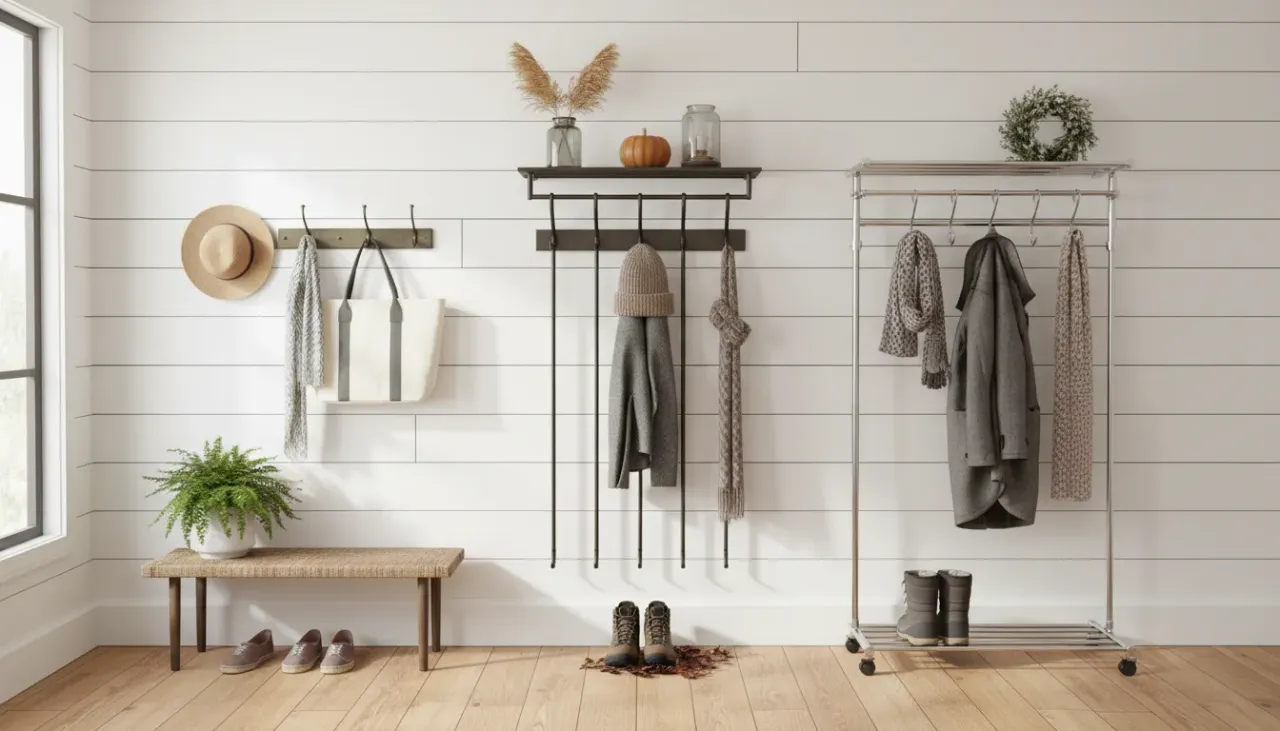
Feb 5, 2026 - Written by: linda wise

The entryway is the architectural handshake of your home. It is the first space that greets you upon arrival and the last space you see before departing. Despite its critical role in setting the tone for the entire residence, it often succumbs to a state of chaotic accumulation. This phenomenon is rarely due to a lack of effort but rather a lack of strategic adaptation. The requirements of a foyer in July are vastly different from those in January, yet many homeowners utilize a static storage system year-round.
To achieve true spatial harmony and operational efficiency, one must adopt a dynamic approach: the seasonal rotation of entryway hardware. This strategy involves more than merely swapping out coats; it requires a thoughtful calibration of your hooks, racks, and organizational zones to accommodate the shifting volume, weight, and nature of seasonal gear. By treating your entryway as a fluid, adaptable staging area, you can eliminate clutter, protect your garments, and elevate the aesthetic appeal of your home.
The Psychology of the Landing Strip
Before delving into the mechanics of hardware rotation, it is essential to understand the psychological impact of the entryway. In interior design theory, this area is often referred to as the “landing strip.” It is a transitional zone where the cognitive load of the outside world is shed. When this space is disorganized, the brain registers it as an immediate stressor, preventing the necessary mental shift from “alert” to “rest.”
A static entryway setup often fails because it ignores the variable of volume. Winter clothing is bulky, heavy, and often wet. Summer items are lightweight, numerous, and prone to tangling. When you attempt to force winter parkas onto hooks spaced for light denim jackets, the visual and physical result is overcrowding. This overcrowding leads to items falling on the floor, obstructed pathways, and a general sense of disarray.
By implementing a rotation strategy, you acknowledge the changing physics of your wardrobe. This proactive management reduces decision fatigue—you are no longer fighting with a hanger to retrieve a coat—and creates a sense of arrival that is calm, collected, and intentional.
Assessing Your Foundation: The Hardware Audit
The first step in a successful seasonal strategy is a rigorous audit of your existing infrastructure. Not all hooks are created equal, and understanding the weight limits and spatial requirements of your hardware is paramount.
Weight Capacity and Anchor Integrity
Begin by inspecting the anchoring of your current racks and hooks. Over time, the repeated stress of heavy bags and coats can loosen drywall anchors or strip screws. Before a new season begins, particularly the transition into autumn or winter, test the stability of every fixture. If a hook wiggles, it is a liability.
Consider upgrading to heavy-duty solutions if you notice sagging. For those with plaster or drywall who cannot locate a stud exactly where needed, toggle bolts offer superior holding power compared to standard plastic plugs.
The Material Hierarchy
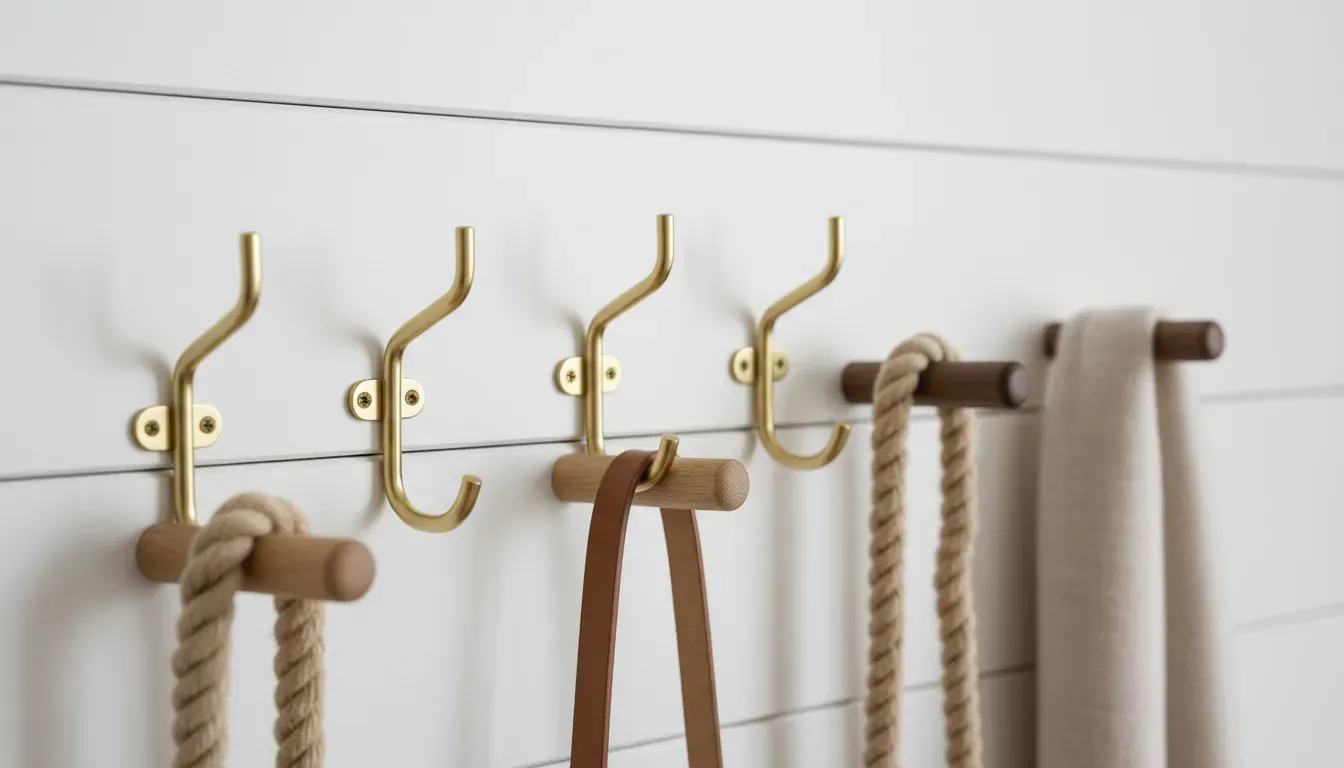
The material of your hooks should dictate their usage. Delicate silk scarves or lightweight rain shells can be damaged by rough, industrial iron hooks with burrs. Conversely, a heavy wool trench coat may bend a thin aluminum decorative hook.
- Wood and Rounded Plastic: Ideal for knits and delicate fabrics to prevent misshaping (shoulder bumps).
- Brushed Nickel and Stainless Steel: excellent for wet environments or rain gear as they resist corrosion.
- Cast Iron and Brass: Best suited for heavy loads, providing the structural integrity required for winter gear.
Spring: The Transition to Volatility
Spring presents a unique challenge: volatility. The weather fluctuates between cold mornings, rainy afternoons, and mild evenings. Consequently, the entryway must accommodate a mix of light layers and rain protection.
Prioritizing Airflow
The primary objective during spring rotation is managing moisture. Raincoats and umbrellas require vertical space to drip-dry without touching the wall or other garments. If your current setup involves a dense cluster of hooks, spring is the time to decommission every other hook to increase spacing. This “negative space” allows air to circulate around damp fabrics, preventing mildew and musty odors.
Hardware Adjustments
If you utilize a modular rail system, slide your hooks further apart. If you rely on fixed hooks, use the lower hooks for umbrellas and the higher hooks for trench coats. This is also the ideal time to introduce a dedicated vessel for wet accessories.
Consider integrating a specialized rack that can handle wet items without warping.
Check out Heavy Duty Wall Mounted Drying Racks on Amazon
The Mudroom Element
Spring brings mud. If your entryway includes a bench with storage underneath, rotate out the heavy winter boots for rain boots (wellies). Ensure that the flooring or rugs near the hooks are durable and washable. The hook rotation should facilitate a “hover” capability, where long raincoats do not pool on the floor, keeping the hemlines clean.
Summer: Volume and Accessibility
As temperatures rise, the bulk of the garments decreases, but the quantity of accessories often increases. Summer entryways are plagued by “grab-and-go” items: sun hats, beach bags, dog leashes, pool towels, and light cardigans.
Vertical Density
Unlike spring, where spacing is key for drying, summer allows for higher density. You can re-engage the hooks you left empty during the rainy season. However, the risk here is tangling. Long bag straps and thin leashes tend to weave together if not managed correctly.
Switch from single-prong hooks to double or triple-prong variations if possible. The upper prong can hold a sun hat (preserving its shape), while the lower prong holds a tote bag. This vertical stacking maximizes utility without expanding the footprint.
The Height Adjustment
If you have children, summer is the most active season. Adjusting hooks to a lower level—or installing a temporary lower rail—empowers younger family members to manage their own gear. A command-strip based solution can serve as a temporary summer fix for hanging swim bags and baseball caps at a child-friendly height, protecting your permanent wall structure.
For those looking to optimize their wall space for smaller items like keys and sunglasses which proliferate in summer, a console table with integrated hooks is often a wise addition.
Check out Entryway Console Tables with Hooks on Amazon
Autumn: The Layering Matrix
Autumn is the season of accumulation. Residents start the day with a jacket, shed it by noon, and perhaps grab a vest for the evening. This results in multiple layers per person residing in the entryway simultaneously.
The “One In, One Out” Rule
To manage the autumn swell, the rotation strategy must include a strict policy of curation. The rack is no longer for storage; it is for active transit. Deep storage closets should be utilized for the coats not currently in the weekly rotation.
During this phase, assess the texture of your hooks. Autumn fashion often involves knits and scarves. Rough hardware will snag cashmere or wool blends. Inspect your hooks for any damage that may have occurred during the summer (sand or salt corrosion) and polish them. If you use S-hooks on a rail, ensure the ends are capped or rounded.
For more insights on managing overflow during this season, read our guide on Hidden Storage Solutions for Small Spaces.
Winter: The Heavy Lifting
Winter is the ultimate test of your entryway’s structural integrity. The rotation strategy here is purely focused on weight distribution and wall protection.
Structural Reinforcement
Parkas, wool greatcoats, and snow pants are significantly heavier than their seasonal counterparts. A single family’s winter gear can weigh upwards of 50 pounds. This is not the time for adhesive hooks or tension rods.
When rotating for winter, move the heaviest items to the hooks anchored directly into studs. Use peripheral hooks (drywall anchored) for lighter items like scarves and hats. This strategic placement prevents catastrophic failure of the rack system.
Wall Protection Protocols
Winter coats are often abrasive (zippers, buttons, stiff canvas) and can damage wall paint. Furthermore, they may be damp from snow. To mitigate this, consider installing a temporary backing board or wainscoting behind your rack if you do not already have one. Alternatively, ensure your hooks project far enough from the wall (at least 3 to 4 inches) so that bulky coats hang freely without rubbing against the plaster.
Accessory Management
Winter requires a distinct strategy for “smalls”—gloves, beanies, and earmuffs. These items are notorious for getting lost. Hanging them on standard coat hooks is inefficient.
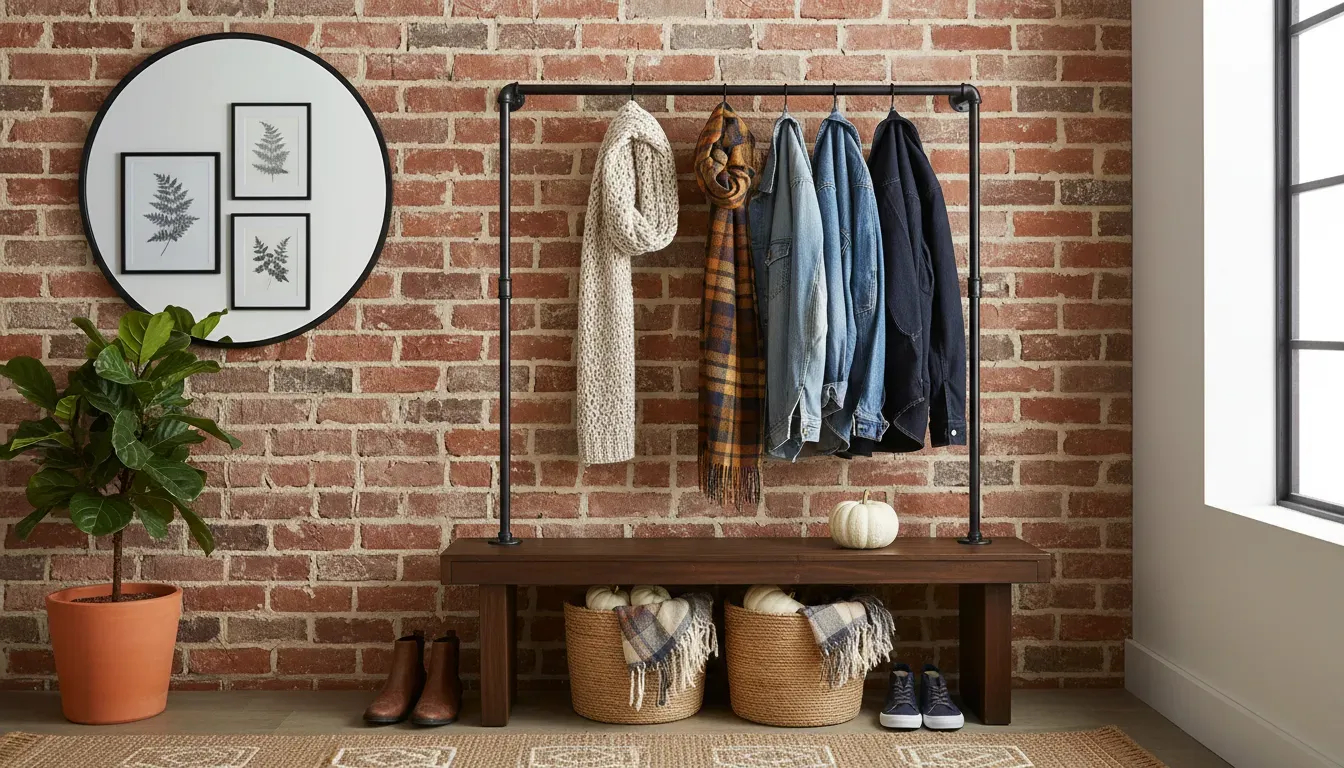
The solution is to rotate in a hanging basket system or a rack with integrated clips. By clipping gloves together and hanging them, you facilitate drying and prevent loss. If you prefer a furniture-based solution, a sturdy hall tree with a bench provides the necessary leverage for removing boots while offering robust hooks for heavy coats.
Check out Industrial Hall Trees with Storage Bench on Amazon
Zoning and Ergonomics
Regardless of the season, the concept of zoning remains a constant variable in your rotation efficiency. A linear arrangement of hooks often leads to a “first come, first served” mentality where the hooks closest to the door are overloaded while the distant ones remain empty.
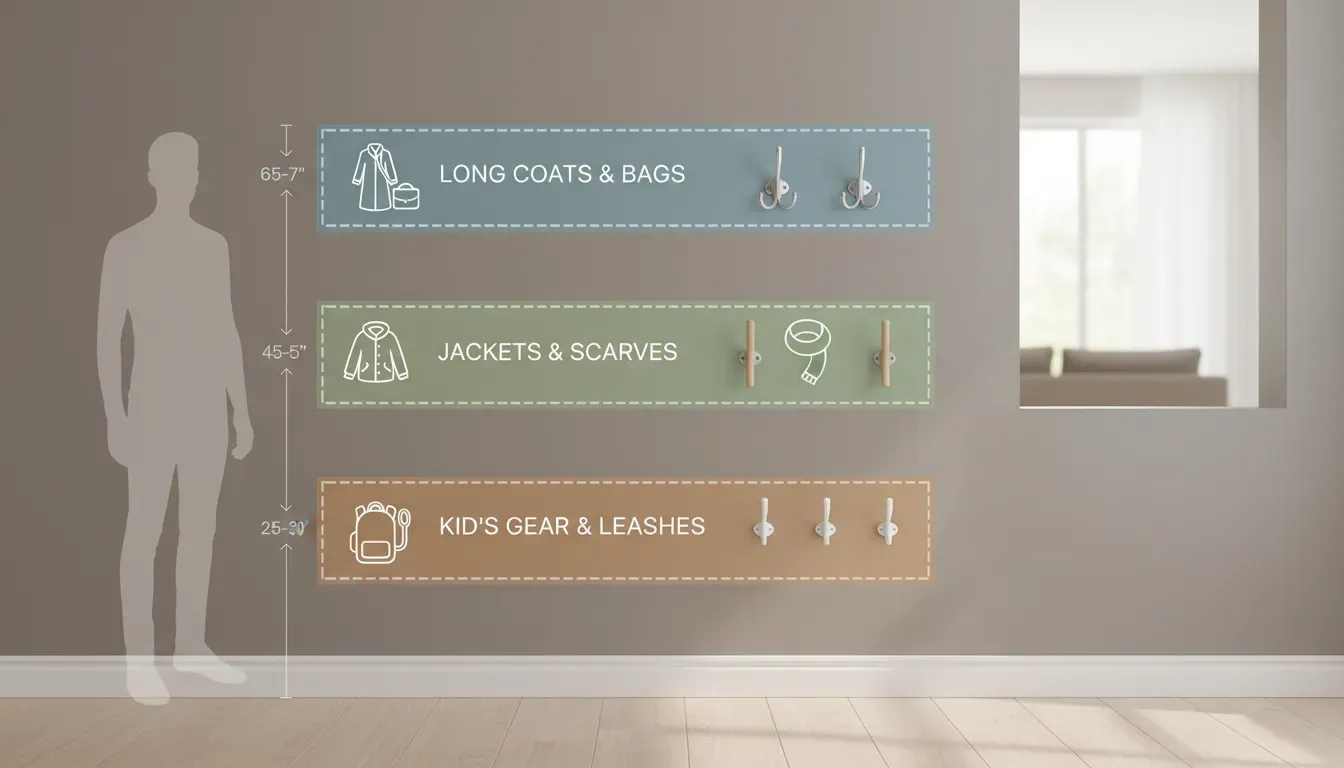
The High-Low Split
Implement a high-low split system.
- Upper Zone (60-65 inches): Reserved for long coats and items used by adults.
- Middle Zone (45-50 inches): Ideal for bags, purses, and shorter jackets.
- Lower Zone (30-36 inches): Designated for children’s items or shoe-related accessories like shoehorns and lint rollers.
By visualizing your wall as a grid rather than a single line, you triple the storage potential. During your seasonal rotation, evaluate if the zones need shifting. For example, as children grow, their designated zone should creep upward, requiring you to relocate hooks.
Aesthetic Coherence Through Rotation
Functionality is the priority, but aesthetic coherence is the goal. Your entryway sets the design language for the home. A pile of mismatched plastic hangers and bent hooks disrupts this language.
Treat your hooks as decorative hardware. When rotating for the season, consider swapping the actual hook styles if you utilize a modular system (like pegboards or french cleats).
- Summer: Light woods, white metals, and colorful accents.
- Winter: Dark bronzes, iron, and rich walnut woods.
This subtle change signals a shift in the home’s atmosphere, embracing the season rather than just enduring it. It turns the chore of organization into an act of interior design curation.
Maintenance: The Unsung Hero of Efficiency
The final component of the rotation strategy is maintenance. Hardware is mechanical; it requires care.
- Tighten Fasteners: As mentioned, seasonal changes in humidity can cause wood to expand and contract, loosening screws. A quarterly tightening ensures safety.
- Clean the Contact Points: The tips of hooks accumulate oils from leather and residue from synthetic fabrics. Wipe them down with a mild degreaser to prevent transferring grime to clean coats.
- Inspect for Burrs: Metal hooks can develop sharp edges over time. A quick pass with fine-grit sandpaper can save an expensive silk lining from destruction.
Conclusion
The “set it and forget it” mentality is the enemy of an organized home. By adopting a seasonal rotation strategy for your entryway hooks and racks, you transform a static, cluttered choke-point into a dynamic, efficient filter for your daily life.
This process allows you to respect the changing needs of your household, extending the lifespan of your garments and your walls. It creates a space that breathes, adapts, and welcomes you home with order and elegance. Start your audit today; assess your anchors, categorize your seasonal volume, and curate your landing strip. The efficiency you gain at the door will ripple through the rest of your home.