
Slim-Profile Solutions: The Best Multi-Functional Entryway Benches for Small Halls
Discover expert strategies for maximizing narrow entryways with slim-profile benches. We analyze ergonomics, storage capacity, and the best products for tight spaces.

Mar 6, 2026 - Written by: Linda Wise

The hallway shuffle. You know the dance—sidestepping a pile of sneakers, dodging a coat rack that leans aggressively to the left, and trying to balance on one foot while removing a boot because there’s simply nowhere to sit. If you live in a home with a narrow entry, this chaotic “welcome home” ritual is likely your daily reality.
We often treat the foyer as a transition space rather than a destination, but it sets the visceral tone for the entire home. When that space is tight—I’m talking about hallways under 40 inches wide—standard furniture simply doesn’t cut it. You cannot shove a standard 18-inch deep farmhouse bench into a 36-inch wide hall and expect to walk past it with groceries without bruising a hip.
The solution lies in “slim-profile” architecture. We are looking for pieces that hover in the 10 to 13-inch depth range yet somehow manage to offer seating, shoe storage, and visual grounding. It sounds like a paradox, but with the right engineering and material choices, it is entirely possible.
Below, I’ve curated a comparison of the top contenders that balance structural integrity with spatial economy, followed by a deep dive into the mechanics of selecting the right piece for your specific layout.
Quick Comparison: Top Picks
The Geometry of the Tight Squeeze
Before we look at finishes and fabrics, we have to talk about the math of movement. In interior design, “traffic flow” isn’t just a buzzword; it is a safety requirement. The golden rule for a comfortable walking path is 36 inches. In a narrow hallway that might only be 42 inches wide total, placing a standard bench leaves you with a 24-inch path. That is claustrophobic.
You need to shift your focus to the vertical plane. When depth is restricted, height and width become your best assets. A slim-profile bench utilizes a shallower footprint—usually between 11 and 13 inches—which preserves that critical walkway width.
However, reducing depth introduces a new problem: stability. A 12-inch deep bench is significantly more prone to tipping than an 18-inch one. This is why you will notice that the best slim solutions often incorporate wall-mounting brackets or weighted bases.
Pro Tip: When measuring your hallway, do not measure wall-to-wall. Measure baseboard-to-baseboard. You’d be surprised how many people buy a 12-inch bench for a tight spot, only to realize their chunky Victorian baseboards push it out to 14 inches, ruining the door swing clearance.
If you are planning a more comprehensive renovation involving built-ins, understanding these measurements is even more critical. I recently wrote a detailed breakdown on how to measure for optimal flow, which is essential reading if you are considering custom carpentry alongside freestanding units.
Materiality and “Visual Weight”
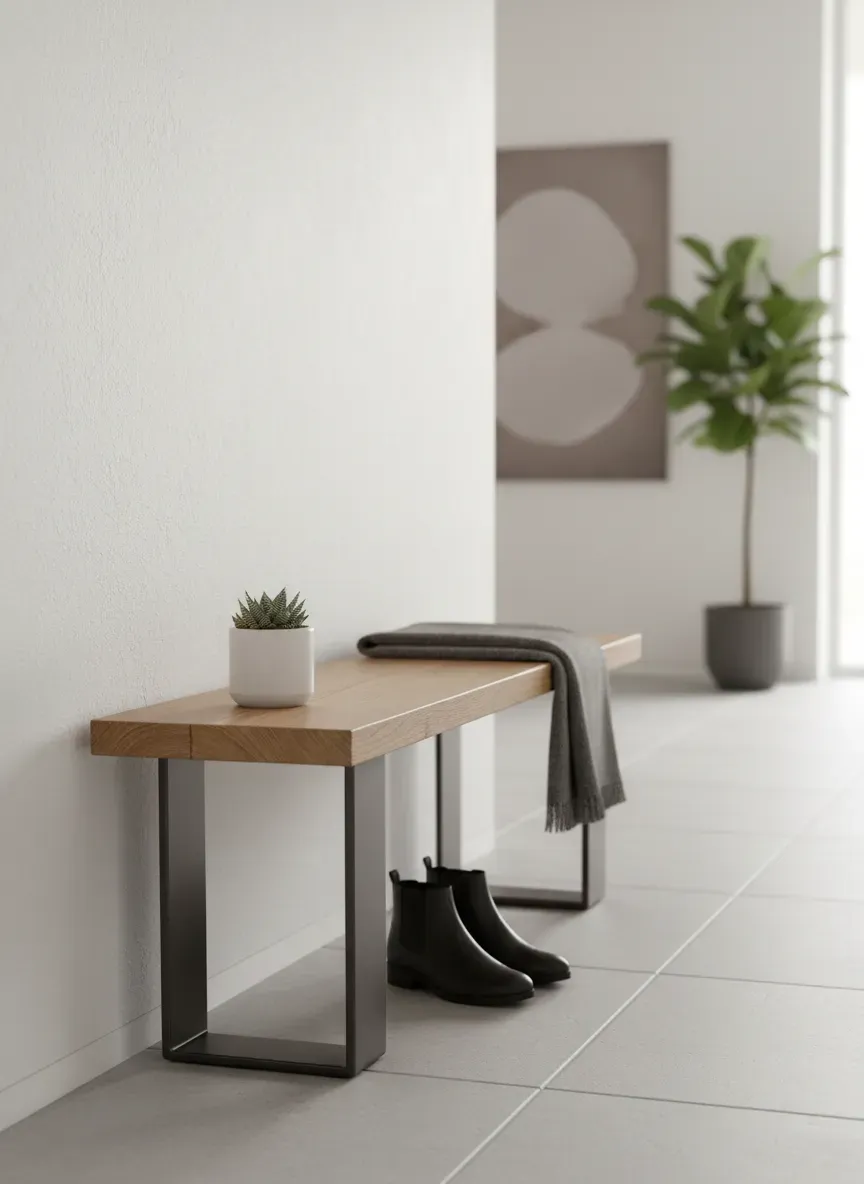
In small spaces, physical size is only half the battle. You also have to contend with visual weight. A solid oak chest that is 12 inches deep will look significantly heavier and more imposing than a metal and glass console of the same dimensions.
For narrow halls, I almost always recommend “leggy” furniture. Benches that are elevated on legs allow you to see the floor extending underneath the piece. This optical trick fools the brain into perceiving the hallway as wider than it actually is.
The Durability Factor
Let’s be real for a moment: entryways take a beating. This is where wet umbrellas drip, muddy boots get kicked off, and heavy grocery bags are dropped.
- Metal frames: excellent for rigidity in slim profiles. They don’t warp with moisture.
- Engineered Wood (MDF): avoid this for the primary seat if you have heavy traffic. The veneer tends to peel at the edges where legs rub against the bench.
- Solid Wood: The gold standard, but watch out for water rings.
Analyzing the Top Contenders
Let’s break down the specific mechanics of the three top-rated solutions listed in the table above. I’ve tested similar variations of these in client homes, and here is the honest truth about how they perform.
1. The Industrial Workhorse: VASAGLE Industrial Shoe Bench
The VASAGLE Industrial Shoe Bench is a masterclass in minimalist efficiency.
Why it works: The depth is usually kept under 12 inches on their slim models. The metal frame provides the necessary rigidity that a thin wooden board would lack. Because it uses mesh shelves rather than solid wood for the shoe storage, it promotes airflow. This is crucial. Wet soles on a solid shelf encourage mold; on mesh, they dry out.
The Drawback: The industrial aesthetic is polarizing. If your home is Traditional or Victorian, the black metal and rustic wood might clash. Also, mesh shelves can sag over time if you are storing heavy work boots.
2. The Concealment King: Hoobro Flip-Drawer
If you hate visual clutter, the Hoobro Flip-Drawer Shoe Storage Bench is likely your best bet.
The Mechanism: Instead of open shelves where your dirty sneakers are on display, this unit uses a flip-down bucket mechanism. This allows shoes to be stored vertically. By tilting the shoe, the cabinet can be incredibly shallow (sometimes as thin as 9-10 inches) while still accommodating a size 10 shoe.
The Kicker: The “seat” on these is often more of a perch. It’s great for tying a lace, but you won’t be lounging there. Additionally, this style necessitates a discussion about hygiene. Enclosed storage needs ventilation. I’ve covered this extensively in my piece on innovative sanitation technologies, where we look at how enclosed spaces can become bacterial breeding grounds without proper care.
3. The Vertical Hybrid: Walker Edison Hall Tree
Sometimes a bench isn’t enough. The Walker Edison Modern Farmhouse Hall Tree integrates hooks and high storage.
Why choose this: It utilizes the “dead space” above the bench. In a small hall, floor space is premium currency. By going up, you get coat storage without needing a separate rack that might tip over.
The Warning: These units are tall and shallow. You must anchor them to the wall. This is non-negotiable. The center of gravity is high, especially once you hang heavy winter coats on the top hooks.
Integration Strategies: Making It Look Intentional
Buying the bench is step one. Styling it so it doesn’t look like a piece of drift furniture stranded in your hallway is step two.
The Mirror Trick
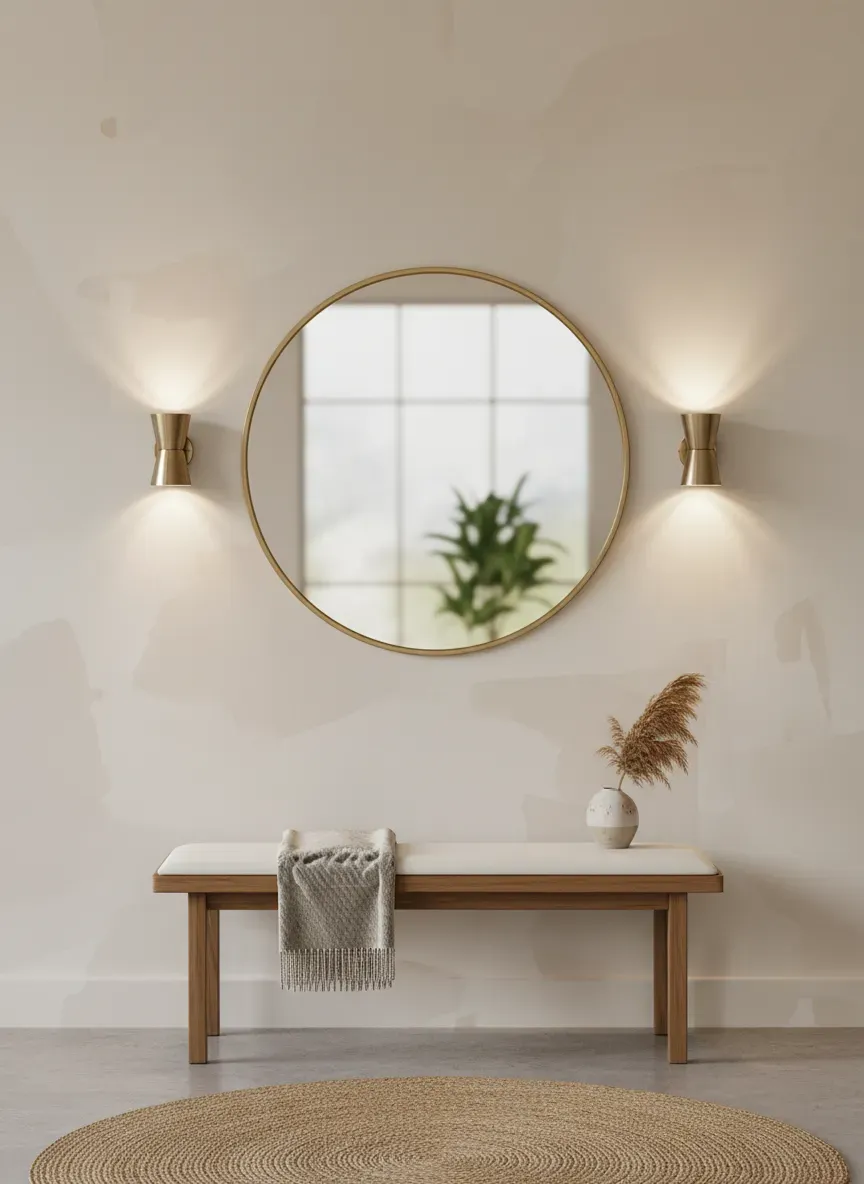
Place a large mirror directly above your slim bench. Not only does this provide a spot for a last-minute appearance check, but it also reflects light and doubles the perceived depth of the space. If you have a 12-inch bench and a mirror, the reflection makes it look like you have a 24-inch expansive area.
Vertical Storage Add-ons
Since your bench surface is narrow, you can’t clutter it with mail trays and key bowls. Wall-mounted organizers are your friend here. Keep the horizontal surface clear for sitting.
Key Takeaways for Styling:
- Lighting: Use a wall sconce above the bench rather than a floor lamp to save floor space.
- Rugs: Use a runner that is narrower than the hallway but wider than the bench’s footprint to anchor the zone.
- Baskets: If your bench has open space underneath, uniform baskets can hide the visual noise of mismatched shoes.
The “Depth Trap”: Common Pitfalls to Avoid
I have seen many homeowners make the mistake of prioritizing storage volume over traffic flow. They buy a bench that holds 20 pairs of shoes but protrudes 16 inches into a 40-inch hall. The result is that they unconsciously start walking sideways every time they pass it.
Another pitfall is ignoring the “butt test.” A 10-inch deep bench is very shallow for sitting. Standard chair depth is 16-18 inches. When you buy a slim profile bench, you are compromising on seating comfort. It is a perch, not a lounge chair. You need to be okay with that trade-off.
Furthermore, consider the hardware. Handles that stick out two inches from the drawers can be hip-bruisers in a tight corridor. Look for recessed handles or push-to-open mechanisms.
When comparing these freestanding units to built-ins, the depth conversation gets even more nuanced. If you are debating between a simple bench and a full locker system, you might want to review my comparison on standard vs. shallow locker systems to see if a more permanent construction project might actually save you space in the long run.
Advanced Ergonomics: The Multi-Functional Pivot
The best furniture works harder than you do. In a small hall, a bench cannot just be a bench. We are seeing a surge in “hybrid” furniture.
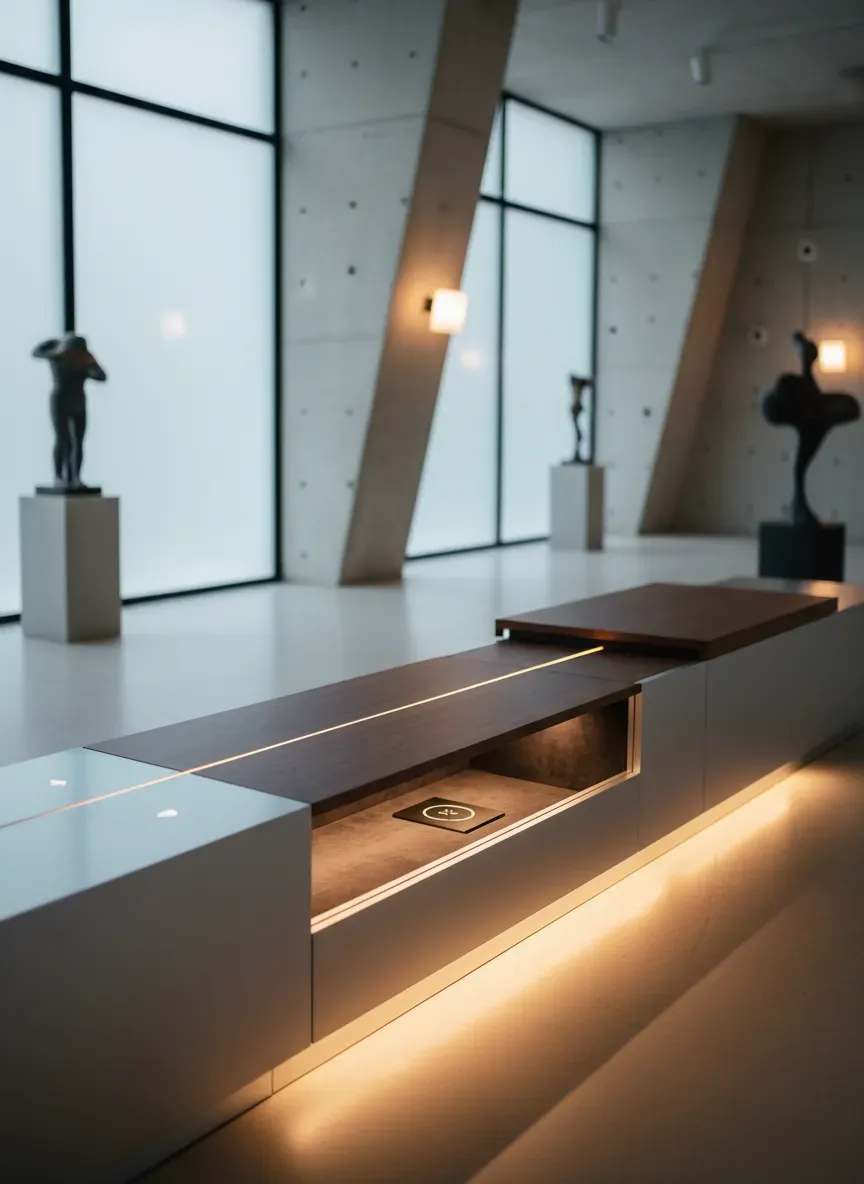
For example, some of the high-end slim benches now include a side-mounted umbrella stand or a hidden drawer for keys and wallets. This consolidation is key. If your bench holds keys, you don’t need a console table. If it holds coats, you don’t need a rack.
The Bottom Line: Every square inch of floor space you reclaim from furniture is a square inch given back to your peace of mind.
Future-Proofing Your Entryway
We are moving toward an era where furniture is adaptable. Modular slim benches that can be stacked or expanded are entering the market. This is ideal for renters who might move from a narrow apartment to a larger home. You want a piece that can transition from being the main star in a small hall to a sidekick in a large mudroom.
When selecting your piece, think about the lifespan of the materials. That particle board unit might look good now, but how will it handle the slush of next winter? Investing in a metal frame or solid wood top—even in a slim profile—pays dividends in longevity.
Making the Decision
You don’t need a grand foyer to have a grand entrance. The constraints of a small hall actually force you to be more creative and intentional with your design choices. By opting for a slim-profile solution, you are acknowledging the reality of your space while refusing to compromise on function.
Whether you choose the industrial ruggedness of the VASAGLE bench, the hidden utility of the Hoobro flip-drawer, or the vertical dominance of the Walker Edison hall tree, the goal remains the same: reclaiming your space.
Take your measurements (baseboard to baseboard!), visualize the traffic flow, and choose a piece that anchors your home without blocking your path. A well-chosen bench is the difference between an obstacle course and a warm welcome.