
Shoe Sterilizer Cabinet: Do Uv Cabinets Work? 5 Picks
Shoe sterilizer cabinet test: do UV sanitizing cabinets kill odor? Pros, cons, tech explained and 5 best units compared.
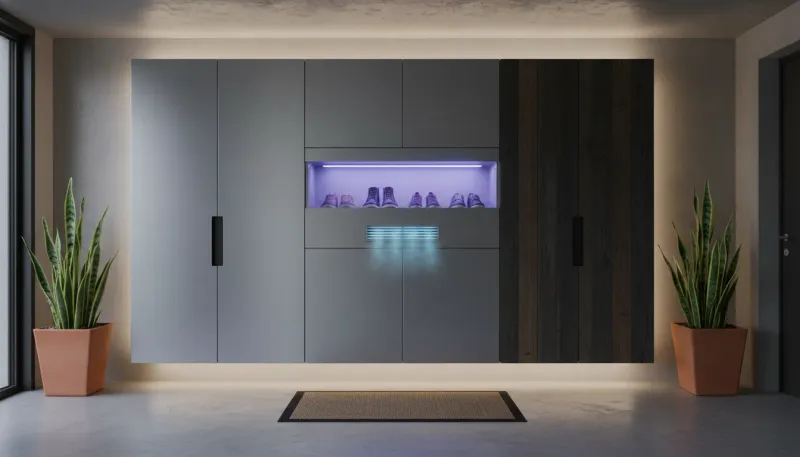
Jan 30, 2026 · Linda Wise
15 min readDoes a shoe sterilizer cabinet really kill odor? We test UV sanitizing cabinets — how they work, pros, cons and 5 best units.
Smart shoe storage now does more than hide shoes — some cabinets dry, deodorize, and sanitize with UV, which changes the whole conversation.
For most of housekeeping history, shoe storage was a container problem: racks, cubbies, and baskets that simply contained the smell. The smart shoe rack era changes the verb. Today’s cabinets actively dry damp boots, circulate air past sneakers, kill surface bacteria with UV-C, and even rotate shoes to the front on motorized tracks. The question isn’t whether the tech exists — it does — it’s which features are worth real money and which are marketing with a power cord.
I’ve tested my skepticism on all of it. Here’s the honest breakdown of smart shoe storage solutions: what each tier does, whether it works, and what it should cost.
Smart Shoe Storage Solutions (beyond the bench)
Think of smart storage as three escalating tiers, all of which solve the same base problem differently:
- Tier 1 — climate: heated and ventilated units that dry, dehumidify, and circulate air. They interrupt the wet-shoe decay cycle: moisture, fungus, odor.
- Tier 2 — sanitation: UV-C lamps and ozone that actively kill surface bacteria and neutralize odor molecules at the source.
- Tier 3 — automation: motorized racks and carousels that move the shoes themselves.
Every tier needs one thing a dumb rack never did: power. That changes placement. A smart cabinet must sit near an outlet, which anchors it in your floor plan the way a built-in would. It’s the point where the entryway starts behaving like a room with appliances — plan the outlet before you plan the bench.
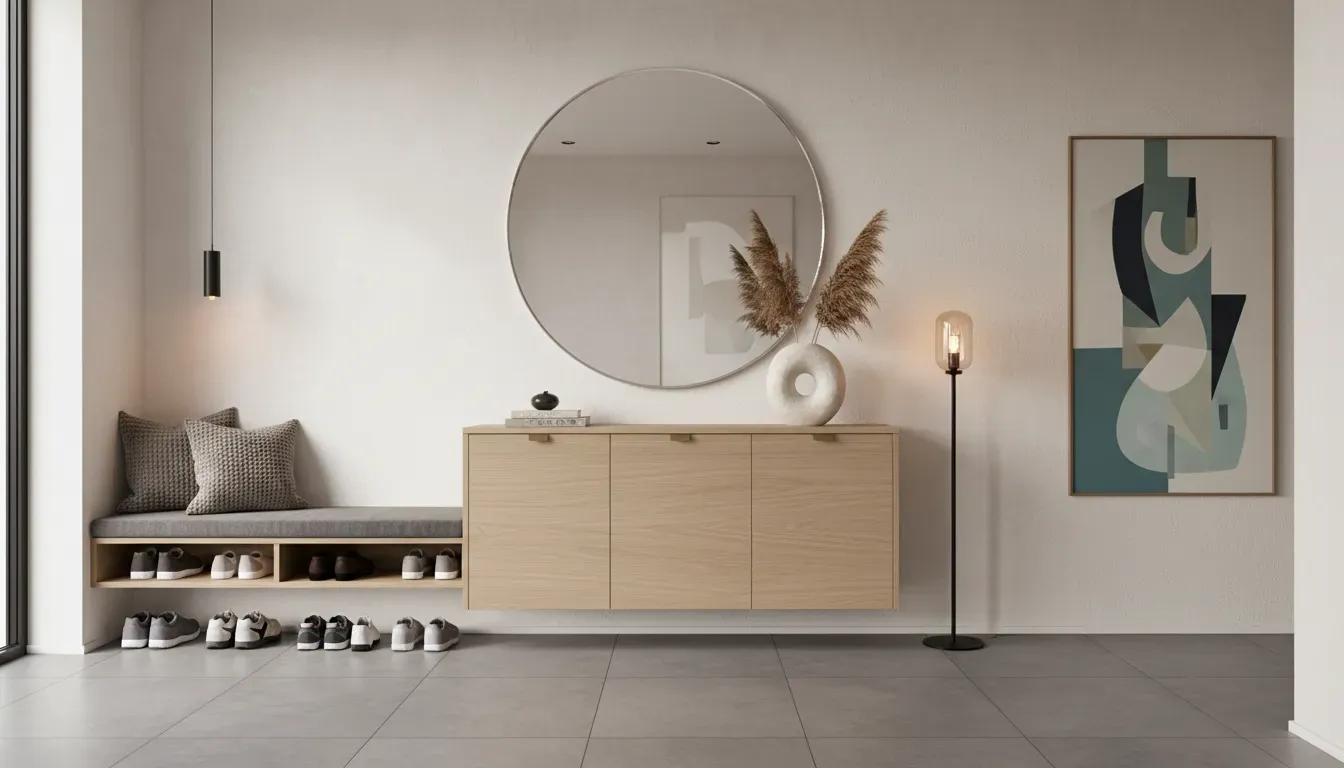
Shoe Sterilizer Cabinets & UV Shoe Sanitizers (do they work? honest answer)
Yes — with honest caveats.
UV-C light (200 to 280 nanometers) genuinely damages the DNA of bacteria and viruses it reaches, and the research behind it is decades old, not marketing. In a shoe cabinet, UV lamps bathe the exposed surfaces of the shoes placed inside, killing the street-level bacteria soles collect — the E. coli and Klebsiella city sidewalks hand you daily. Ozone, used in many of these cabinets, goes further: it’s a gas, so it penetrates fabric and porous leather to oxidize odor molecules that light can’t reach, then converts back to oxygen before the door unlocks.
The caveats are where the marketing tries to hide:
- UV only works where light lands. The inside of a deep boot, the insole, and the space under the heel stay untouched. It’s surface sanitation, not sterilization.
- Damp shoes stay damp. A UV cabinet without drying is sanitizing a petri dish — moisture, then fungus, then smell, then UV again. Drying comes first; UV is the finishing step.
- Safety must be engineered, not assumed. UV-C burns eyes and skin. A quality cabinet has a door sensor that kills the lamps the instant the door cracks open. If a listing doesn’t mention a safety cutoff, walk away.
- Prices: real units run roughly 900.
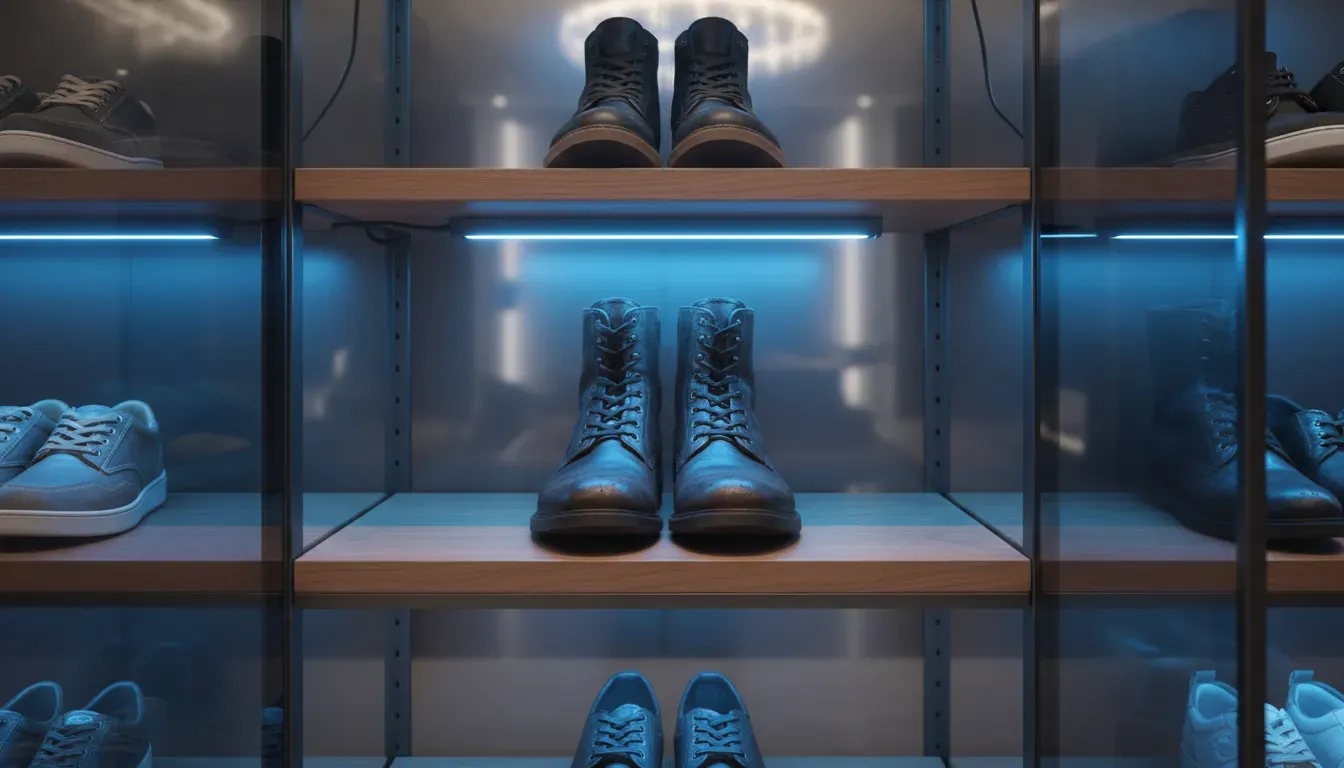
So do they work? For surface bacteria and persistent odor, yes, meaningfully. For athlete’s-foot-level hygiene, they’re a meaningful layer, not a cure. And here’s the practical truth behind the hype: a UV cabinet is a luxury, not a necessity — but if you’re a runner or a hockey parent, it stops being optional. Those two households generate the exact conditions — sweat, bacteria, recurring odor, expensive gear — that the tech exists for.
Ventilated & Heated Shoe Storage (winter boots, athletes)
The most useful tier is also the least glamorous: heated, ventilated storage. Forced air at 104 to 115°F — warm enough to dry, cool enough to never hurt leather or melt sneaker glues — pulls moisture out of soaked boots in a few hours instead of a few days.
What it saves you from is easy to see in any New England mudroom: leather that dries unevenly and cracks, insoles that break down from trapped sweat, and the permanent odor that lives in a boot that never fully dries. Athletes care for the same reasons — a marathoner’s trainers are a documented fungal cargo hold — and winter families care because nothing ruins January mornings faster than a damp boot.
Buying notes: forced-air units beat static heat elements, look for under-45 dB operation for entryways near living rooms, and check that the unit’s shelves clear your tallest boot. These typically run 400 for cabinet forms and 150 for simple boot dryers.
Automated & Motorized Shoe Racks (the next tier)
The luxury end of the market moves the warehouse to your hallway. Motorized carousels rotate pairs to the front on a track — load 24, retrieve any pair by button. Motorized lifts raise and lower full-height racks in closets the way parking garages lift cars. These units are real, they’re wonderful, and they’re rare for good reasons: they cost 3,000, need engineering-grade installation, and their motors are the moving part that eventually needs service.
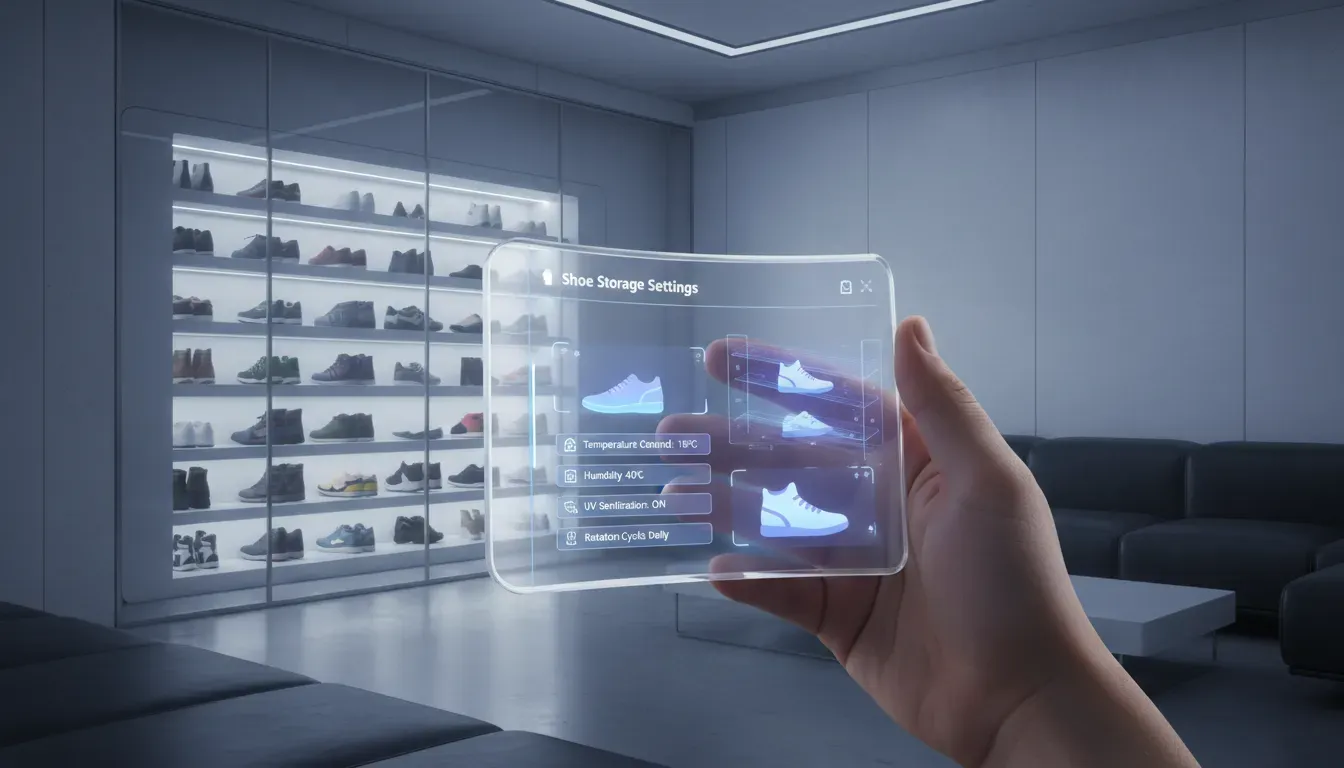
For almost everyone, the honest verdict is: the automation is the feature you’ll love twice and service once a year. The drying and sanitizing pay you back daily. If you’re budgeting a smart entryway, spend the automation money on heating and UV first — then let a motorized rack be the splurge when the space deserves it.
Smart vs. Simple: What’s Actually Worth It
The full field, compared honestly:
| Option | What it does | Typical price | Best for |
|---|---|---|---|
| Open rack / basket bench | Stores shoes, nothing more | $30–150 | Budget entryways, kids’ daily rotation |
| Heated boot dryer | Dries 1–2 pairs with forced air | $40–150 | Runners, wet climates, the boot problem |
| Ventilated wooden cabinet | Airflow + bench surface, some drying | $150–500 | Family entryways that need a seat anyway |
| UV shoe sanitizer cabinet | UV-C + ozone + drying cycles | $300–900 | Athletes, odor battles, health-conscious homes |
| Motorized carousel / lift | Automated retrieval, press a button | $1,000–3,000+ | Big collections, closet spaces, the splurge |
The pattern you should notice: the price jumps pay for real functionality, not screens. Drying pays for itself in boot lifetime alone; ventilation keeps a family’s cabinet breathable; UV is the point where the cabinet becomes a hygiene appliance. Skip the gimmicks — phone apps that just toggle a timer, “smart” lights that do nothing else — and spend on the three verbs that matter: dry, ventilate, sanitize.
And the simplest honest advice: if your entryway is tidy and dry, a great 500 cabinet that never gets plugged in. The smart tier earns its price in households with boots, athletes, and recurring odor — and that’s the test I use for everything here. Does the function fix a problem you actually have, or a problem the brochure invented?
— Linda Wise, professional home organizer and residential storage designer
Stop Guessing Measurements. Build Your Dream Entryway with Confidence.
Transform awkward hallways, cramped foyers, and cluttered mudrooms into organized sanctuaries. Includes 20 CAD floor plans, facing real-home photo spreads, the 36-Inch Clearance Rule, the Shoe Pairs Formula, and 7 printable worksheets.
Core Edition ($17.99) · Flagship Photo Edition v5 ($39.99)
