
How to Style Your Entryway Benches with Storage Like an Interior Designer
Master the art of balancing function and aesthetics. Learn professional techniques to style entryway storage benches for a clutter-free, welcoming home.
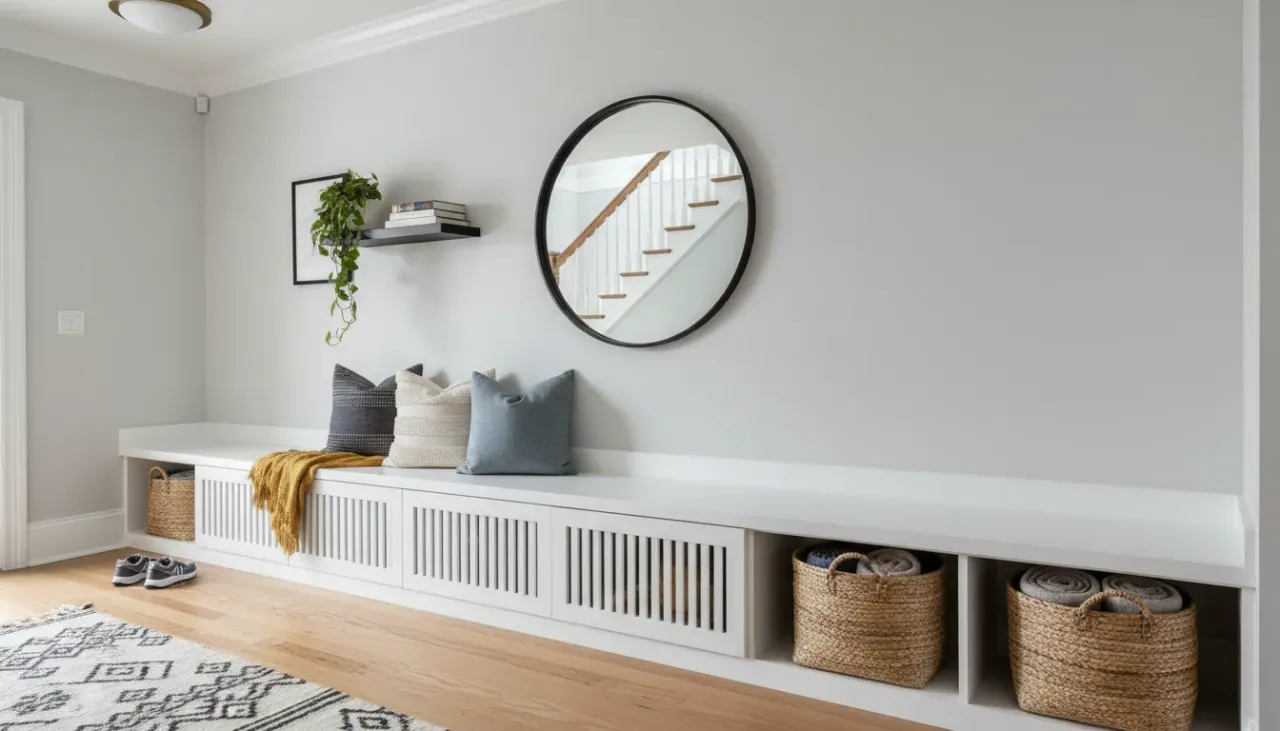
Feb 3, 2026 - Written by: linda wise

The entryway is the handshake of your home. It is the first space guests encounter and the last thing you see before facing the world. Despite its importance, this transitional space often falls victim to a chaotic accumulation of shoes, mail, and outerwear. The solution lies in a piece of furniture that is as hardworking as it is stylish: the storage bench.
However, purchasing a bench is merely the first step. To truly elevate your foyer, mudroom, or hallway, you must move beyond mere utility and embrace the principles of interior design. Styling an entryway bench requires a delicate balance of visual weight, texture, and practical organization. When executed correctly, a storage bench serves as a sophisticated anchor that sets the tone for the rest of your residence while discreetly hiding the clutter of daily life.
This comprehensive guide will walk you through the professional techniques required to style your entryway bench. We will explore the nuances of material selection, the art of textile layering, vertical integration, and the subtle organizational hacks that keep the space pristine.
The Foundation: Selecting the Right Bench for Your Space
Before you can style a vignette, you must ensure the foundation is solid. The bench you choose dictates the design direction. An interior designer evaluates a piece of furniture based on three primary criteria: scale, material, and storage mechanism.
Assessing Scale and Proportion
Nothing disrupts the flow of an entryway more than furniture that is ill-fitted to the room. A bench that is too small will look lost in a grand foyer, while an oversized piece in a narrow hallway will create a claustrophobic bottleneck.
Measure your available wall space carefully. Ideally, you should leave at least 18 inches of clearance on either side of the bench to allow for traffic flow and visual breathing room. If your entryway is a long, narrow corridor, consider a shallow bench with a depth of 12 to 15 inches. For larger, square foyers, a deeper bench (18 to 22 inches) provides a more substantial presence and comfortable seating.
Materiality and Aesthetic Cohesion
The material of your bench should converse with the architecture of your home.
- Wood: Solid wood benches in oak, walnut, or mahogany add warmth and timeless appeal. They work exceptionally well in farmhouse, mid-century modern, and traditional homes.
- Metal and Upholstery: For a contemporary or industrial look, seek out benches with metal frames. Upholstered tops add softness but require performance fabrics to withstand the wear and tear of a high-traffic zone.
- Painted Finishes: A painted bench can introduce a pop of color or blend seamlessly with your wainscoting for a built-in look.
The Storage Mechanism
The type of storage defines how you style the piece.
- Open Cubbies: These require strict organization, usually achieved through uniform baskets. They offer the easiest access for shoes.
- Flip-Top Lids: These provide a clean, furniture-like appearance as the mess is completely hidden. However, you cannot style the top heavily with rigid decor, as it needs to be lifted frequently.
- Drawers and Doors: These offer the best of both worlds—concealed storage that is accessible without disturbing the seat.
For those looking to upgrade their foundation, finding a versatile base is key.
Check out this highly rated Entryway Storage Bench on Amazon
The Art of Softening: Layering Textiles
Once your bench is in place, the immediate task is to soften the hard edges. Entryways are often dominated by hard surfaces—tile floors, wood doors, and drywall. Textiles are essential for introducing comfort, sound absorption, and visual interest.
The Pillow Formula
Pillows are the jewelry of the living room, and they are equally important in the entryway. However, simply tossing two matching pillows on the ends is a novice mistake. Designers use the “rule of three” or asymmetry to create a dynamic look.
If your bench is wide (over 48 inches), anchor one corner with a large square pillow (20 to 22 inches). Layer a slightly smaller square (18 inches) with a contrasting texture in front of it. On the opposite side, place a single lumbar pillow. This asymmetry draws the eye across the bench.
For smaller benches, a single, substantial lumbar pillow in the center often looks more sophisticated than two small squares crowded at the ends.
Texture Mixing: Avoid using the same fabric for the bench cushion and the pillows. If the bench is wood, use a velvet or linen seat cushion. If the bench is upholstered in smooth leather, choose pillows in chunky knits, faux fur, or woven wool. This tactile contrast creates depth.
Throws and Blankets
A throw blanket is a versatile styling tool. It adds a vertical line to a horizontal piece of furniture and introduces a casual, lived-in elegance.
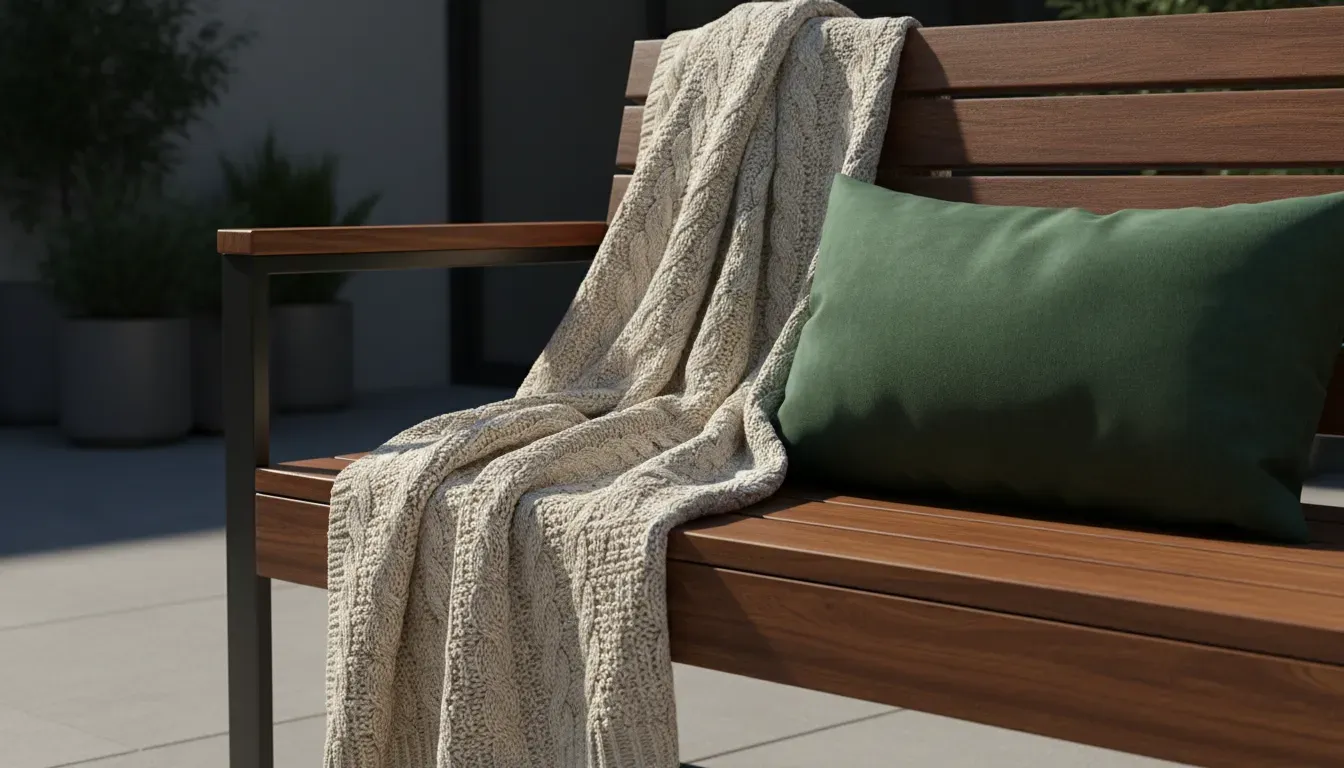
- The Waterfall Drape: Fold the throw lengthwise into a long strip and drape it over the center or one side of the bench, allowing it to hang down the front. This breaks up the visual block of the storage unit.
- The Casual Toss: For a more relaxed, “perfectly imperfect” vibe, pinch the center of the throw and drape it diagonally across a corner.
- The Basket Tuck: If your bench has open cubbies, rolling a blanket and placing it in a basket adds texture to the lower visual plane.
Anchoring the Vignette: Wall Decor
A bench does not exist in a vacuum. The wall space directly above it is part of the same visual composition. To style like a designer, you must treat the bench and the wall above it as a single unit.
The Power of Mirrors
Mirrors are the best friend of the entryway. They bounce natural light into often-dim spaces and allow for a final outfit check before leaving.
- Round Mirrors: A large round mirror softens the rectangular lines of a storage bench.
- Arched Mirrors: These add architectural interest and height.
- Placement: Hang the mirror so the center is at eye level, roughly 57 to 60 inches from the floor. Ensure the width of the mirror (or artwork) is roughly two-thirds the width of the bench. If it is too small, it will look disconnected; too wide, and it will look top-heavy.
Artwork and Gallery Walls
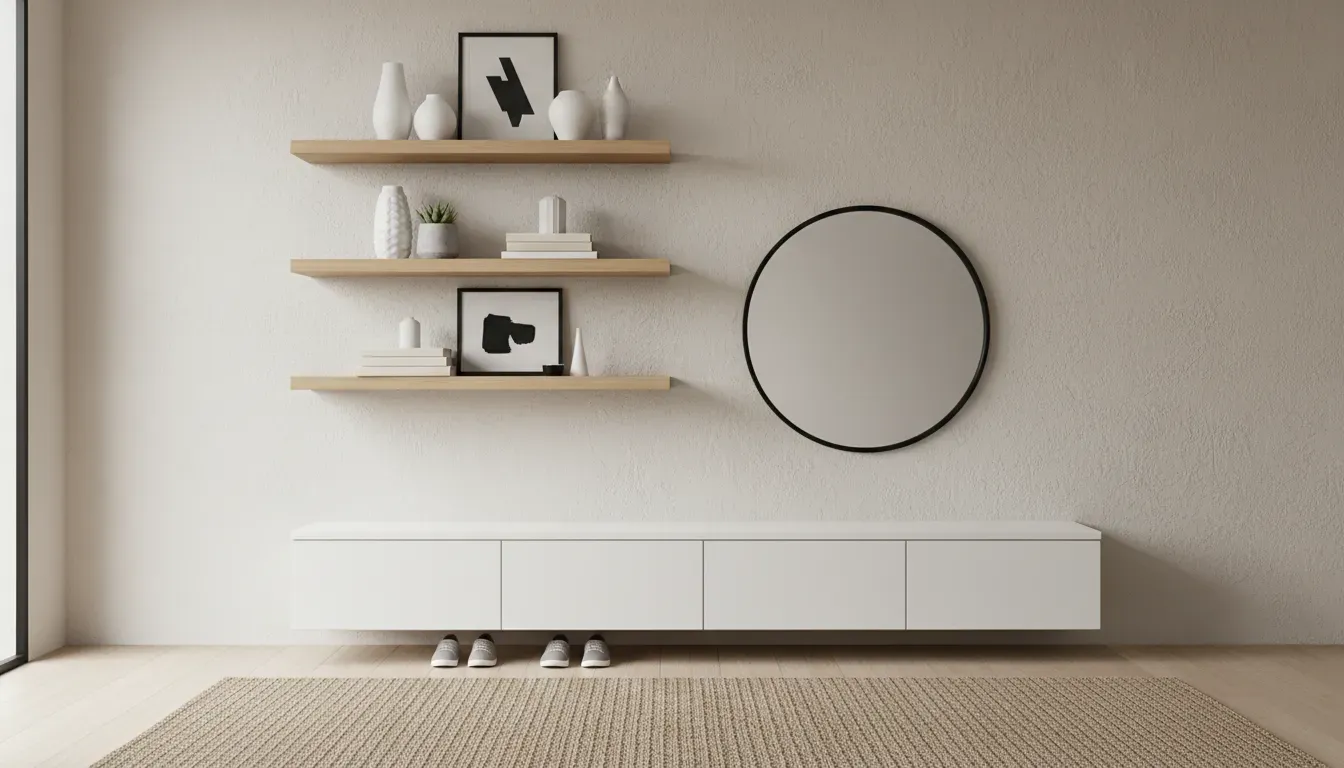
If you have a mirror elsewhere, the space above the bench is prime real estate for art. A large statement piece creates a focal point. Alternatively, a gallery wall of smaller frames can add personality. When creating a gallery wall, keep the arrangement tight and centered over the bench to maintain a cohesive vertical line.
Functional Wall Storage
In smaller homes, vertical space must be functional. Installing a row of high-quality wall hooks above the bench transforms the area into a mudroom substitute. Ensure the hooks are mounted high enough so that hanging coats do not pool on the bench seat. This setup allows you to sit on the bench to put on shoes without battling hanging fabric.
For more ideas on integrating vertical storage, you might enjoy our guide on Small Foyer Decor Ideas.
Organizing the Abyss: Baskets and Bins
If you have chosen a bench with open shelves or cubbies, the contents of those shelves are visible to everyone who enters. You cannot simply stuff shoes and umbrellas in them and hope for the best. This is where baskets become essential styling tools.
Uniformity is Key
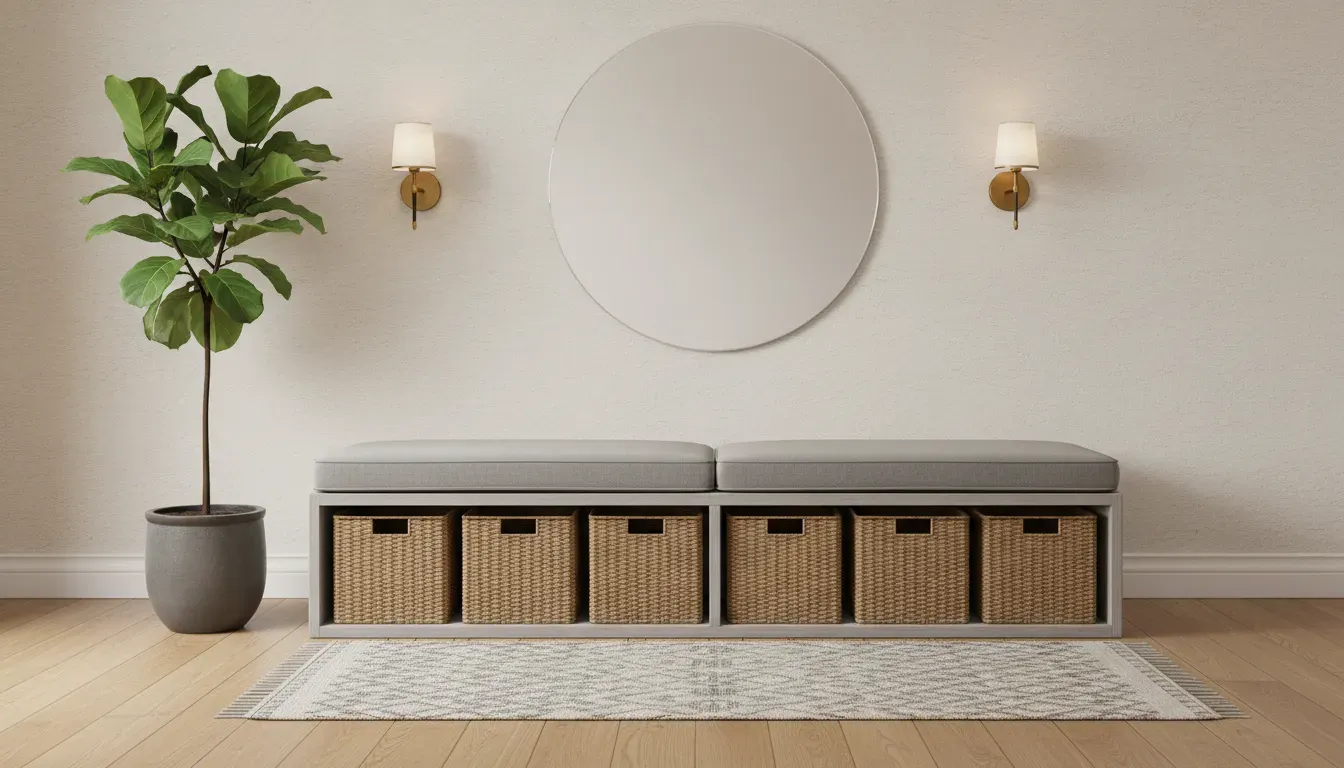
To avoid a cluttered look, use identical baskets for every cubby. This repetition calms the eye and hides the chaos within. Whether you choose wire, wicker, felt, or canvas, ensure they fit the cubbies perfectly. A basket that is too small looks cheap; one that is too tight will scratch the furniture.
Material Selection
- Woven Seagrass or Hyacinth: These add natural warmth and texture, contrasting beautifully with painted white or grey benches.
- Wire Baskets with Liners: These offer an industrial farmhouse aesthetic. The liners are crucial for hiding small items and preventing shoes from falling through.
- Felt Bins: These provide a modern, soft look and are excellent for storing scarves and gloves as they won’t snag delicate fabrics.
For a polished look, consider upgrading your storage containers.
Explore Woven Storage Baskets on Amazon
The Devil is in the Details: Accessories and Styling
Once the textiles and wall decor are sorted, it is time for the finishing touches. These small accessories bridge the gap between a furniture showroom look and a real home.
The Catch-All Tray
If your bench is a flip-top or has a solid wood surface, place a tray on one side. A tray serves as a designated “landing zone” for keys, sunglasses, and mail. By corralling small items onto a tray, you prevent them from looking like clutter. Choose a material that contrasts with the bench—a brass tray on wood, or a leather tray on a painted surface.
Bringing Life with Greenery
Every room needs a living element. A tall potted plant placed next to the bench softens the transition between the furniture and the rest of the room. A Fiddle Leaf Fig or a Snake Plant adds vertical height.
If you do not have floor space, a small succulent or a vase of fresh flowers on a floating shelf above the bench adds vibrancy. If your entryway lacks natural light, high-quality faux stems in a ceramic vase can achieve the same effect without the maintenance.
Lighting the Scene
Lighting is often the forgotten element of entryway styling. While overhead lighting is standard, adding ambient lighting creates a welcoming atmosphere.
- Sconces: Installing wall sconces on either side of the mirror or art above the bench frames the vignette and provides soft illumination.
- Table Lamps: If your bench is long enough, or if you have a console table adjacent to it, a small lamp adds warmth.
Seasonal Transitions: Keeping the Look Fresh
One of the joys of a well-styled entryway is its adaptability. Because the “bones” (the bench, the mirror, the wall color) remain constant, you can completely change the look by swapping out accessories.
Spring and Summer
In the warmer months, focus on light and airy textures. Swap heavy velvet pillows for linen or cotton in pastel shades or botanical prints. Replace wool throws with lightweight Turkish towels or cotton blankets. Use the storage baskets for beach towels, sunscreen, and sandals. Fresh cut flowers or light greenery should be prominent.
Autumn and Winter
As the temperature drops, the entryway becomes the command center for cold-weather gear. Layer on heavier textures like faux fur, chunky wool, and velvet in rich jewel tones—navy, emerald, burgundy, or burnt orange.
- Functionality Shift: Move sandals to deep storage and bring boots to the front. Ensure you have a designated spot for wet items, perhaps adding a rubber boot tray next to the bench to protect your floors.
- Decor: Incorporate dried wheat, branches, or heavier ceramics to reflect the season.
Advanced Organization: Inside the Bench
Styling is not just about what you see; it is about how the piece functions. An interior designer ensures that the storage works.
Shoe Management
Shoes are the primary enemy of a tidy entryway.
- Dividers: If you have a deep flip-top bench, use adjustable dividers to create compartments. This prevents shoes from becoming a giant pile.
- Heel to Toe: Inside cubbies or on shelves, arrange shoes heel-to-toe. This saves space and allows you to fit more pairs in a single row.
The “Szone” Strategy
Assign specific zones within the bench to family members. If you have three cubbies and three children, label them or assign a specific basket to each child. This ownership encourages the family to maintain the organizational system.
Hidden Compartments
Use small zippered pouches within your larger baskets to hold tiny items like spare keys, lip balm, or dog waste bags. This micro-organization prevents the bottom of the basket from becoming a graveyard of loose objects.
Find specialized Shoe Organizers on Amazon
Common Mistakes to Avoid
Even with the best intentions, it is easy to make styling errors that detract from the overall effect.
1. Overcrowding
There is a fine line between “styled” and “cluttered.” Do not fill every inch of the bench surface. Leave negative space. If you have pillows, a throw, and a tray, ensure there is still a clear place to actually sit. If the bench is no longer functional as a seat, you have over-styled it.
2. Ignoring Durability
The entryway is a high-traffic zone. Delicate silks, fragile glass, and light-colored rugs that stain easily are poor choices here. Choose materials that are forgiving. Rugs should be durable (wool or polypropylene) and easy to clean. Bench fabrics should be treated with stain guard.
3. Blocking the Flow
Ensure that your styling does not impede movement. A basket placed on the floor next to the bench should not be a tripping hazard. Hooks above the bench should not be so low that coats hit you in the head when you sit down.
Creating a Cohesive Color Story
Your entryway creates the first impression of your home’s color palette. The bench styling should act as a preview of the rooms that follow.
If your living room features blues and greys, incorporate those tones into the entryway pillows and artwork. If your home is neutral and beige, stick to creams, tans, and natural woods for the bench styling. This continuity creates a sense of harmony and flow as you move from the entrance into the main living areas.
Conclusion
Styling an entryway bench with storage is an exercise in dualities: hard and soft, hidden and displayed, functional and beautiful. By selecting the right foundation, layering textiles with intention, and utilizing vertical space, you transform a simple piece of furniture into a design statement.
Remember that the goal is not just to create a picture-perfect vignette, but to design a system that supports your lifestyle. A beautifully styled bench that cannot hold your family’s shoes is a failure of design. Conversely, a highly functional bench that looks chaotic is a missed opportunity for beauty.
Take the time to assess your needs, measure your space, and curate your accessories. With these interior design principles, your entryway bench will become a welcoming beacon of organization and style, proving that even the most hardworking areas of your home can be effortlessly elegant.
For more insights on optimizing your home’s entrance, read our article on Maximizing Narrow Hallways.