
Stylish Functional Entryway: Storage Ideas & Wall Organizers That Work
A stylish functional entryway is design and function together — 10 photos-first ideas, wall organizer styling, and small-entryway rules that keep the look.
May 25, 2026 · Linda Wise
15 min readA stylish, functional entryway is the design equivalent of a good haircut — you notice it instantly, and you never notice the work.
Style is the color, function is the hook height. You need both or you have a Pinterest graveyard.
It’s the quietest rule in interior design, and it explains every entryway failure I’ve ever been hired to fix. Some clients buy beautiful furniture and can’t find their keys; others build military-grade storage systems and feel embarrassed when guests arrive. The entryways that work — that look stunning in real life, not just in photos — all hit one formula: one piece that makes the room feel intentional, paired with one piece engineered for the actual daily drop. This guide walks the formula, then gives ten photos-first ideas, the wall organizer treatment, and the rules that keep small entryways stylish.
The Stylish-Functional Formula (one pretty piece + one smart piece)
Every entryway that works is built from exactly two kinds of pieces: the pretty anchor and the functional workhorse.
The pretty anchor carries the style: a round mirror, a sculptural lamp, a bench in a color you love, an oversized art print. It’s the piece guests remember. The functional workhorse carries the daily load: hooks at the right height, a shoe cubby that fits the boots you own, a tray that catches keys before they hit the floor.
The formula’s power is the pairing: a gold-leaf mirror against a wall of black coat hooks. A rattan bench with a metal tray on top. A walnut console with a wire basket underneath. The pretty piece gives the smart piece permission to exist. If you buy a stunning bench and leave the wall bare, the entryway looks like a showroom staged for a catalog that never gets used. If you only buy the workhorses, it looks like a garage. One of each, always.
Entryway Storage Ideas That Don’t Ruin the Look
Storage only ruins an entryway when it competes with the design. These ideas do the opposite:
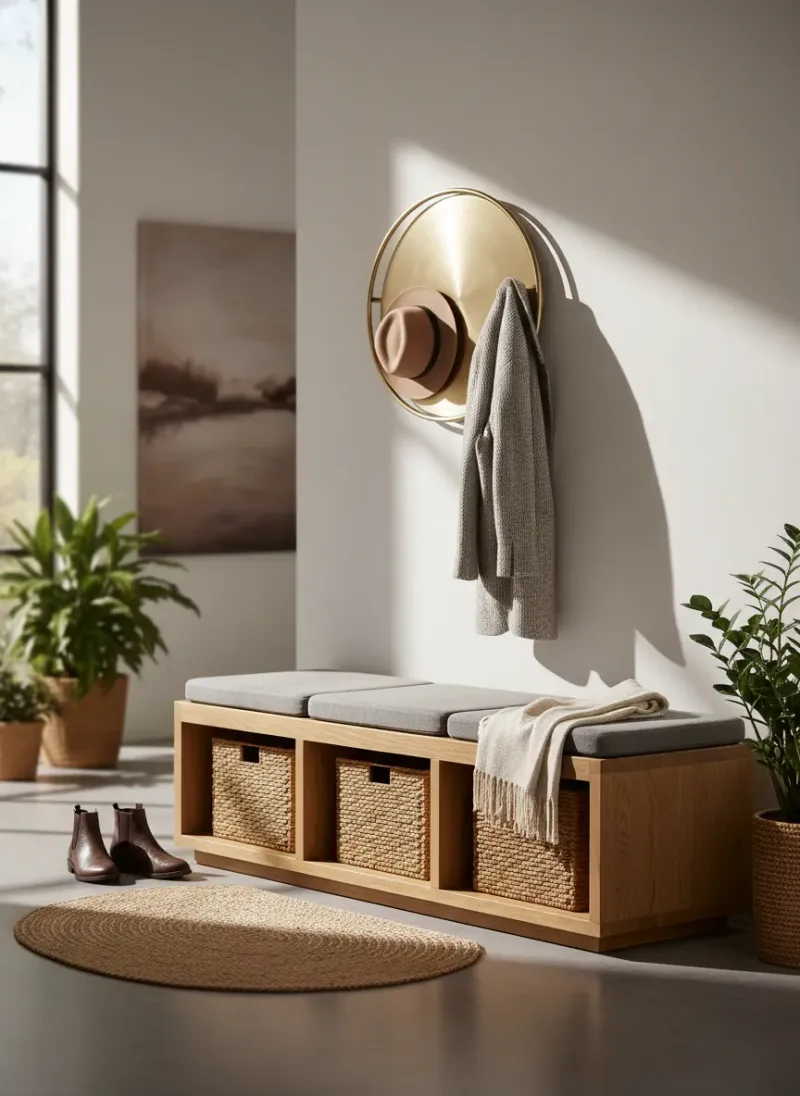
- Uniform baskets, every time. Matching woven baskets in open cubbies hide chaos and read as texture. Mismatched baskets read as clutter wearing a costume.
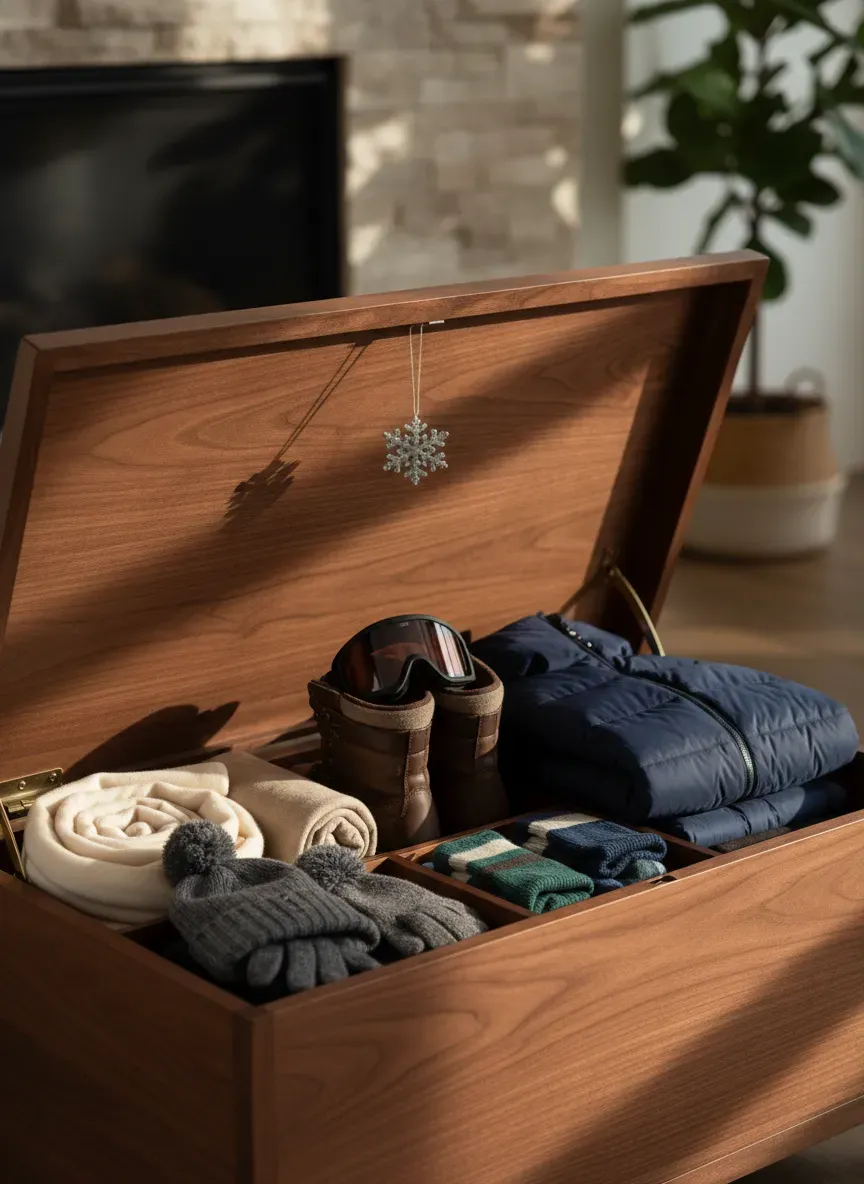
- Concealed bench storage. A bench with a lift-top or hidden cubby holds the out-of-season gear — winter scarves in July — while the visible surface stays clear.
- Tray-based catch-alls. A single tray on the bench or console gives keys, sunglasses, and mail one sanctioned home. Style it like a still life and it doubles as decor.
- Hooks styled as a set. Five identical hooks spaced evenly at the same height look like architecture. Five random hooks look like a fumbled catch.
- The boot tray you’ll actually use. A handsome rubber tray — or one that matches the floor tone — catches mud at the threshold. It’s the most useful twenty dollars in the foyer.
- Float the hard stuff. Wall-mounted shelves and racks keep the floor clear and the light flowing, one of the fastest wins in a tight entry.
Stylish Functional Entryway Examples (10 photos-first ideas)
These are built to be seen, not just read. Picture them against your own front door:
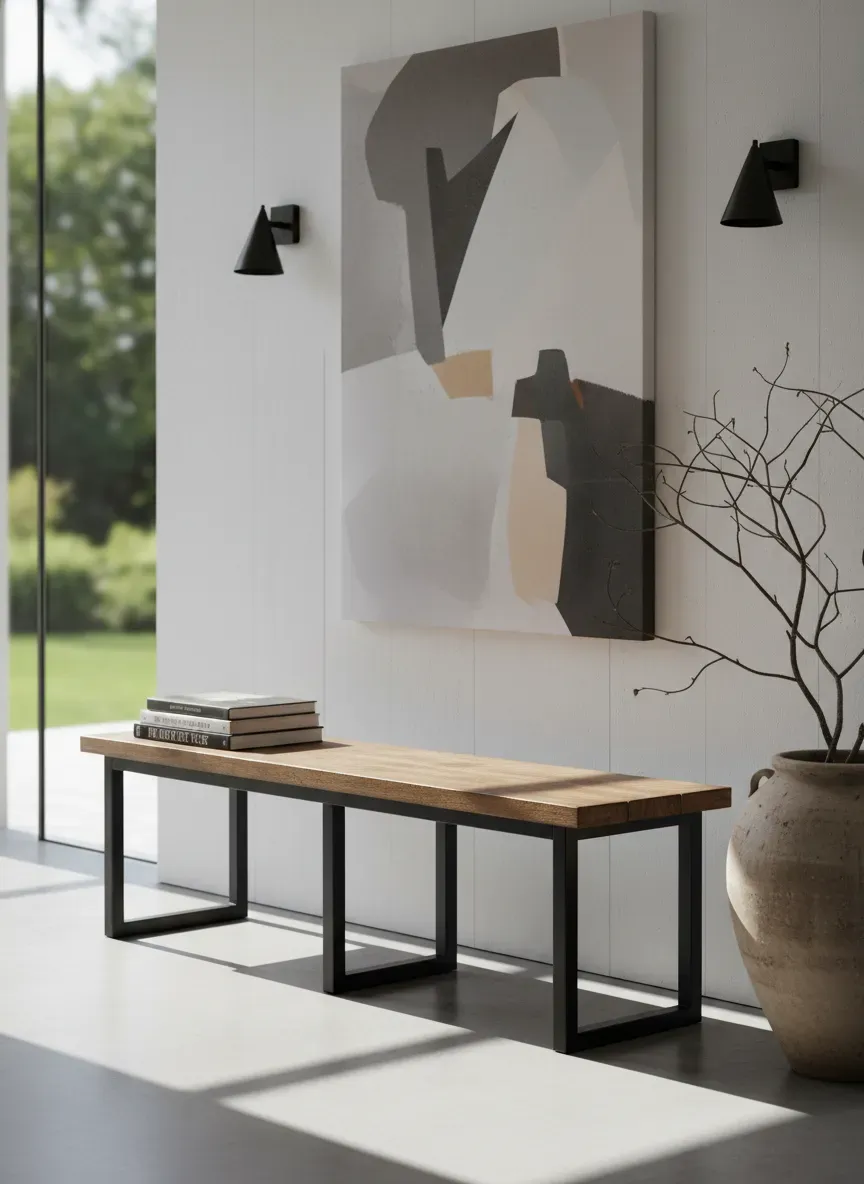
- The gallery wall drop. One long bench, one oversized framed piece, hooks tucked at bench height. Guests see art; you see the rack.
- The leaning mirror trick. A full-length mirror leaning beside the bench doubles the light and makes the foyer feel twice as wide.
- The sculptural bench moment. Choose the bench as the statement — rattan, fluted oak, or slatted wood in a saturated color — and keep everything around it quiet.
- Layered lighting, done small. A table lamp on the console, a picture light above the art, and nothing else. Instant warmth, zero overhead glare.
- The lift-top payoff. A solid wood lift-top bench with hydraulic hinges — open it and the family’s winter gear disappears. Furniture-grade function that also looks the part.
- Textural contrast on purpose. Woven baskets against a lacquered bench, linen cushions against a steel frame. The rule: every material should have a different finish from its neighbor.
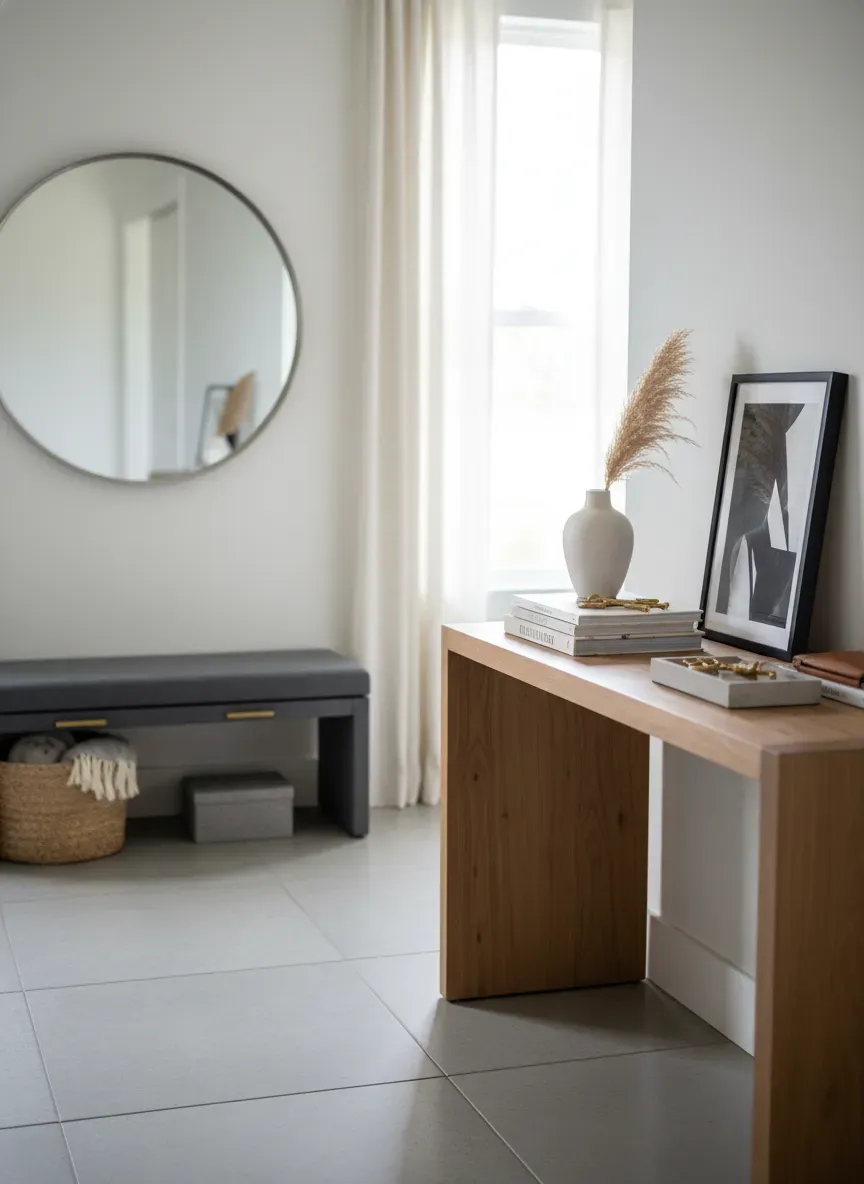
- The mirror-plus-bench composite. Mirror centered over the bench, flanked by hooks — the classic arrangement done right: everything aligned, one family of finishes.
- Shoe display as decoration. A wall shelf where the sneakers are visible and perfectly lined up. Style choice, not clutter — the sneakers become the art.
- The balanced corridor. Bench and console positioned so visual weight is distributed across opposite walls, so the hallway never tips sideways.
- One accent, full commitment. One color with presence — a deep green bench, a cobalt wall, a terracotta tray — and everything else neutral. Decisive entryway, untroubled mornings.
The Entryway Wall Organizer as Style Anchor
The wall organizer is the piece that makes the entryway read as designed — the grid of hooks, shelf, and mirror that turns a blank wall into a composition. The style-anchor version shares three traits:
- Unity over utility. Hooks in a row with a floating shelf above and a mirror above that: one axis, one finish family, real rhythm. Utility came second — that’s why it looks good.
- Height that serves the room. Hooks at 52 to 60 inches for adults, a lower row for kids. When everything hangs almost out of sight, the wall stays visually clear.
- A frame around the function. A wall organizer looks intentional when it has edges — a painted arch behind it, a shelf line, a mirror border. Give the function a boundary and it becomes architecture.
Applied: hooks, shelf, and mirror on one wall; bench below; tray on the bench. That’s the entire entryway, fully styled, and every piece earns its place daily. For more variations on this exact problem, our 15 genius entryway storage ideas do a deeper pass on the same wall.
Small Entryway, Full Style (rules for tight spaces)
Small entryways fail differently: not from bad taste, but from overpopulation. These rules keep the style and the function honest:
- One palette, three materials max. White walls, wood bench, black metal hooks — stop there. Every additional material adds visual gravity a small foyer can’t carry.
- Keep the bench shallow. 14 to 16 inches deep, never more. Depth is the dimension a small entryway can least afford.
- Buy the verticality. Wall shelf, hooks, and a mirror above the bench exploit the empty air; the floor stays for feet. This is the wall organizer rule, applied to everything.
- Hang the mirror first. The mirror is the biggest surface in a small foyer, and it doubles the perceived space — choose it like you choose the paint.
- One accent, disciplined. A single color accent anywhere — tray, cushion, art — and the room reads curated, not sparse.
- Edit weekly. If it hasn’t been worn in seven days, it lives in the closet, not the entryway. Style needs empty space to breathe.
The haircut test applies: walk in, glance around. If you notice the entryway before you notice yesterday’s mail on the floor, you’ve got it right. Style is the color, function is the hook height — and the entryway that honors both is the one that feels finished every single day of the week.
— Linda Wise, professional home organizer and residential storage designer
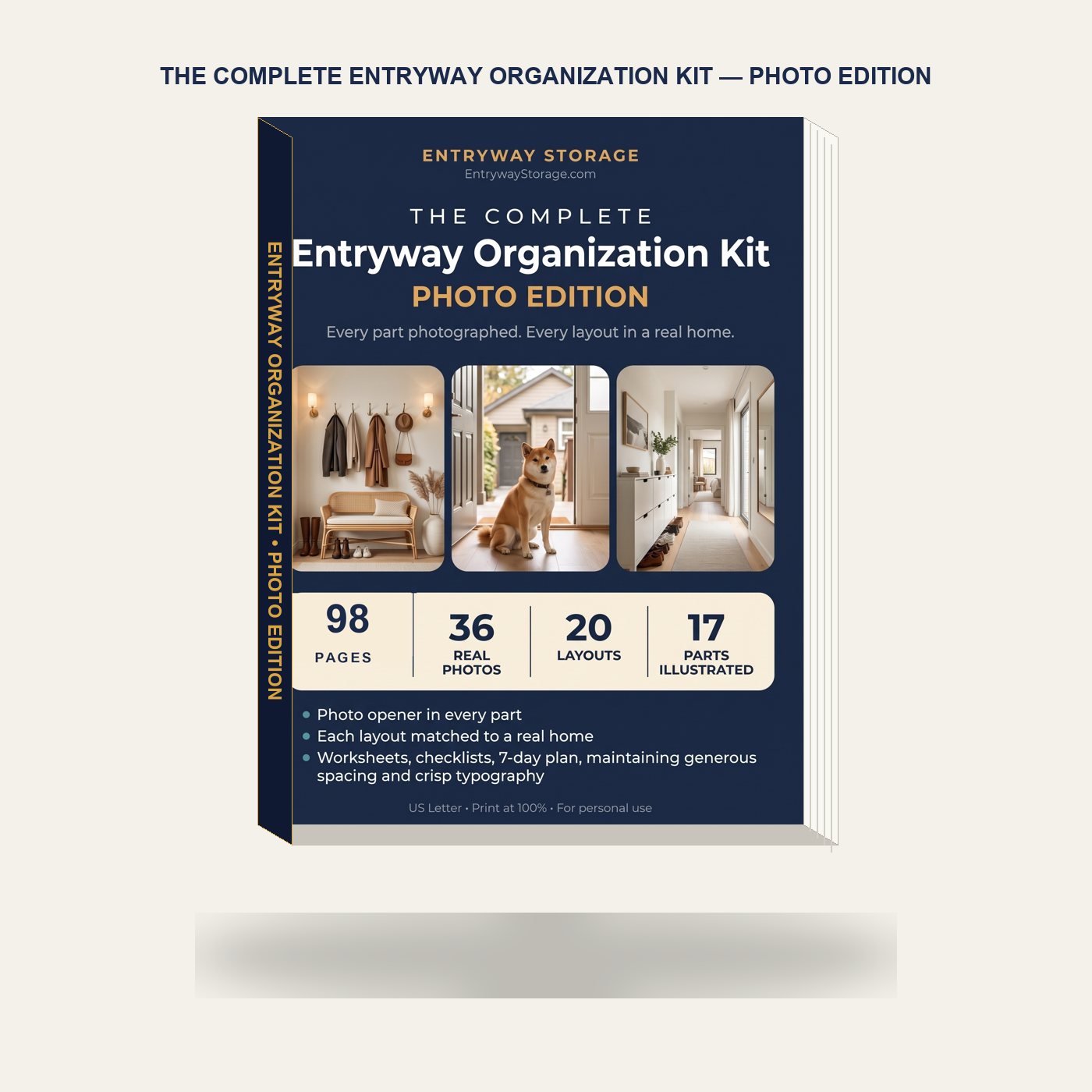
Stop Guessing Measurements. Build Your Dream Entryway with Confidence.
Transform awkward hallways, cramped foyers, and cluttered mudrooms into organized sanctuaries. Includes 20 CAD floor plans, facing real-home photo spreads, the 36-Inch Clearance Rule, the Shoe Pairs Formula, and 7 printable worksheets.
Core Edition ($17.99) · Flagship Photo Edition v5 ($39.99)
