
Top 5 MCM Entryway Benches for Small Spaces: Style Meets Storage Functionality
Discover the top 5 Mid-Century Modern entryway benches designed for compact foyers. We analyze style, hidden storage, and spatial economy for small homes.
Feb 22, 2026 - Written by: Linda Wise

The entryway is the handshake of your home. It’s the first thing guests see and the last thing you experience before facing the world. Yet, for those of us navigating city apartments or older homes with modest footprints, this critical zone is often little more than a cramped corridor. The struggle to balance aesthetics with the desperate need for shoe storage is real.
I’ve spent years analyzing interior layouts, and I consistently return to one design era that solves this spatial puzzle better than any other: Mid-Century Modern (MCM).
Why MCM? It’s not just about the “Mad Men” vibe. The design philosophy of the mid-20th century was obsessed with functionalism and visual lightness. Tapered legs, low profiles, and clean lines allow light to pass through furniture, making a tight space feel significantly larger.
If you are trying to maximize a tiny foyer, you don’t need a bulky chest; you need a strategic piece of furniture. We are going to break down the top five MCM entryway benches that marry iconic style with hard-working storage functionality.
The “Visual Weight” Paradox in Small Entryways
Before we dive into the specific recommendations, you need to understand the mechanics of visual weight. In a small hallway, floor space is your most valuable currency.
When you place a solid, blocky bench in a narrow corridor, it eats up the room visually, even if the physical dimensions fit. The magic of Mid-Century Modern lies in its “legginess.” By elevating the storage compartment on slender, tapered legs, you reveal more floor area. This tricks the eye into perceiving the room as expansive.
Pro Tip: Always measure the depth of your entryway with the door fully open. A bench deeper than 15 inches can often impede the traffic flow or make the space feel claustrophobic.
If you are looking for a broader overview of this aesthetic, I’ve written extensively about mid-century entryway benches with storage, but today we are laser-focused on the compact heavy hitters.
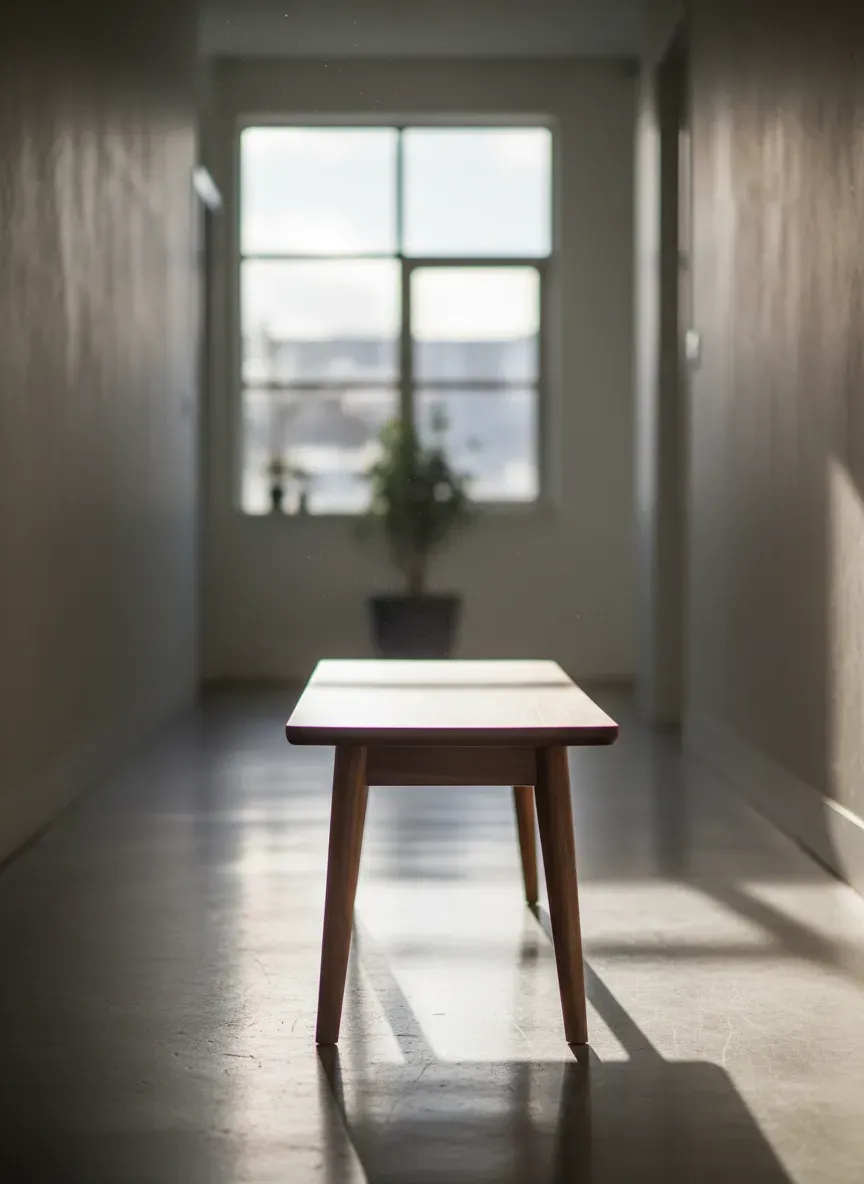
1. The Asymmetrical “Telephone” Bench
Best for: Micro-entryways needing a designated drop zone.
The asymmetrical bench—often referred to as a “gossip bench” or “telephone table” in vintage catalogues—is a masterclass in multitasking. Historically, this was where you sat to chat on a rotary phone. Today, that raised side table is the perfect landing pad for keys, mail, and sunglasses, while the seated portion allows you to tie your shoes.
Why It Works for Small Spaces
The split-level design breaks up the horizontal line, adding vertical interest without bulk. Typically, these units come with a small drawer under the table section or a cubby under the seat.
If you want the best experience in this category, I highly recommend checking out the Simpli Home Harper Solid Wood Entryway Storage Bench. It captures that quintessential 1960s silhouette but reinforces it with solid rubberwood, meaning it won’t wobble when you sit down to pull off your winter boots. The distinct grain patterns and the rich walnut finish provide warmth without overwhelming a white-walled corridor.
Functional Analysis
- Storage: Usually features a single drawer for small items (keys/wallet) and open space beneath for 2-3 pairs of daily shoes.
- Footprint: These are often narrower than standard benches, sometimes clocking in at just 12-14 inches deep.
- Aesthetic: High-impact. It acts as a piece of sculpture as much as furniture.
2. The Upholstered Flip-Top Ottoman
Best for: Hiding the “ugly” clutter completely.
Sometimes, you don’t want to see the shoes. Or the dog leashes. Or the reusable grocery bags. For the ultimate clean look, the upholstered flip-top bench is your secret weapon. While many ottomans lean towards bulky contemporary styles, specific MCM iterations feature the requisite splayed legs and textured fabrics (think tweed or boucle) that anchor the look.
The Hidden Advantage
The primary benefit here is concealed volume. You aren’t limited to what fits on a shelf; you can utilize the entire internal cavity.
For a piece that feels luxurious but remains highly practical, look at the Christopher Knight Home Teneil Mid-Century Modern Fabric Bench. The rolled side pillows give it a sophisticated flair, softening the hard architectural lines of a hallway. It invites you to sit, but the interior storage is robust enough to swallow bulky winter scarves or unsightly piles of sneakers.
You might notice that this style contrasts sharply with other design languages. For instance, if you compare this to farmhouse entryway benches, the farmhouse style relies on heavy, solid bases and distressed wood. The MCM ottoman keeps the storage but lifts it off the ground, maintaining that crucial airflow.
3. The Slatted Wood Bench with Shoe Rack
Best for: The minimalist purist and high-traffic homes.
This is perhaps the most recognizable MCM form: the Nelson-inspired platform bench. However, the original platform benches were just slats—great for museums, terrible for holding mud-caked boots. The modern adaptation for small spaces adds a lower tier specifically for footwear.
Structural Integrity
These benches are essentially architectural skeletons. They are incredibly strong yet visually transparent. Because you can see through the slats, they virtually disappear in a small room.
I’ve found that the Modway Gridiron Mid-Century Modern Bench offers an exceptional balance of price and durability. The metal legs provide a slight industrial edge that prevents the mid-century wood tones from feeling too “antique,” making it versatile for transitional homes.
- Key Takeaways:
- Airflow: Wet shoes dry faster on slats than in enclosed cubbies.
- Durability: Solid wood or metal construction lasts decades.
- Versatility: Can double as a coffee table if you move apartments.
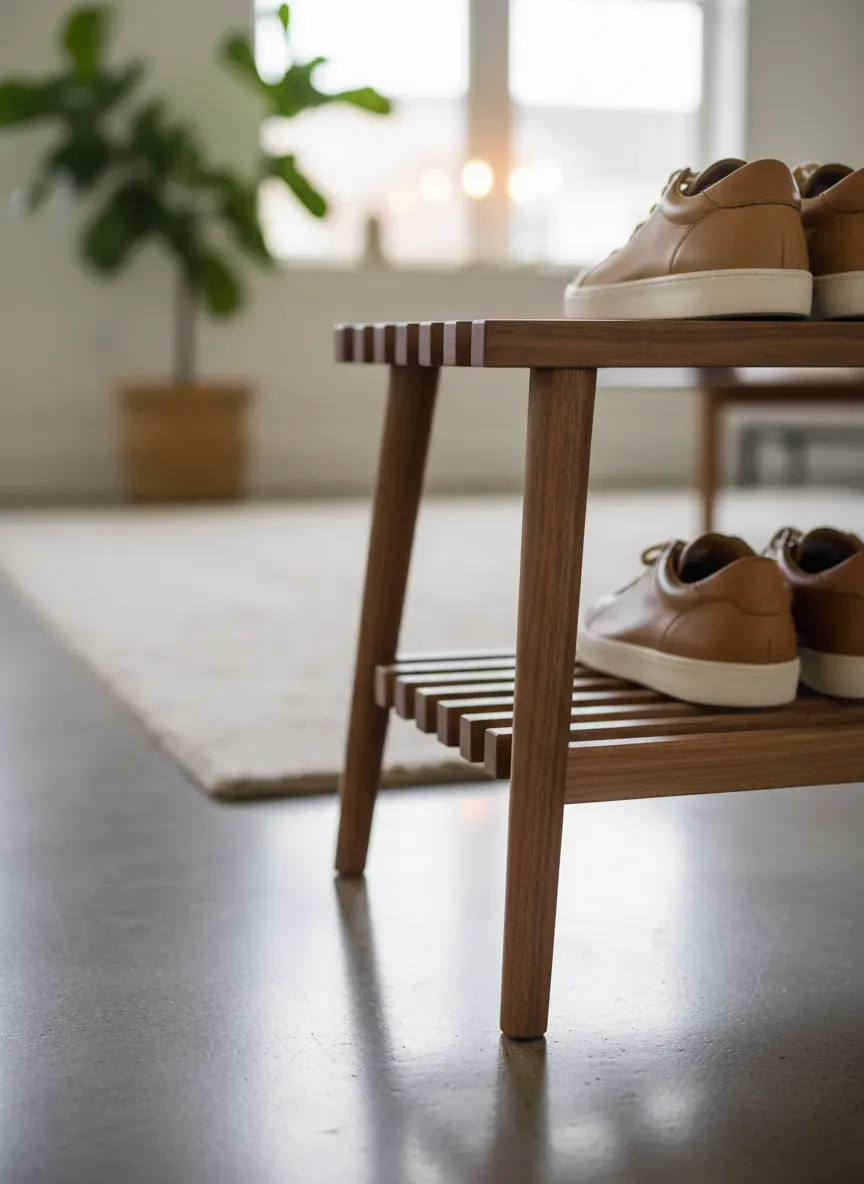
4. The Cubby-Style Bench (The Organizer)
Best for: Families who need designated spots for everything.
While open slats are stylish, some of us need structure. The cubby bench brings order to chaos. The MCM twist on this usually involves a wooden frame encasing the cubbies, sitting atop those signature conical legs.
Managing the “Classroom” Vibe
The danger with cubby benches is that they can look like kindergarten furniture. The fix is in the finish and the hardware. Look for walnut veneers, beveled edges, and the absence of cheap plastic backing.
If you are working with extremely limited width, you might want to explore lists of compact entryway benches with storage that specifically target widths under 30 inches. However, for a standard small entry, an MCM cubby bench allows you to categorize: kid’s shoes left, running shoes right, dog gear center.
5. The Cabinet Bench (Sliding Doors)
Best for: Dust protection and sleek lines.
Finally, we have the cabinet bench. This features sliding doors or hinged cabinets beneath the seat. It is the dressiest option of the five. It hides the clutter like the ottoman but offers the hard surface of a wood bench.
The Credenza Effect
Think of this as a mini-credenza you can sit on. The sliding doors are particularly brilliant for tight entryways because you don’t need swing clearance. You can access your storage without stepping back and hitting the opposite wall.
The Bottom Line: If your entryway is narrow (a “gunstock” hallway), always prioritize sliding doors over hinged doors or drawers that pull out.
Material Matters: Walnut, Teak, and Acorn
When shopping for these pieces, the finish defines the aesthetic.
- Walnut: The gold standard for MCM. It’s dark, rich, and hides scuffs well. It pairs beautifully with brass hardware and greenery.
- Acorn/Honey: Lighter and warmer. This works better in foyers with poor lighting, as it doesn’t absorb what little light exists.
- Teak: Harder to find in modern reproductions due to sustainability and cost, but offers a distinct reddish-orange hue that screams 1960s authenticity.
Don’t ignore the upholstery. If you choose a padded bench, look for “performance” fabrics. A velvet bench looks stunning on day one, but if you sit on it with a wet raincoat, you’ll regret it. Polyester blends that mimic tweed are often the most forgiving for entryway wear and tear.
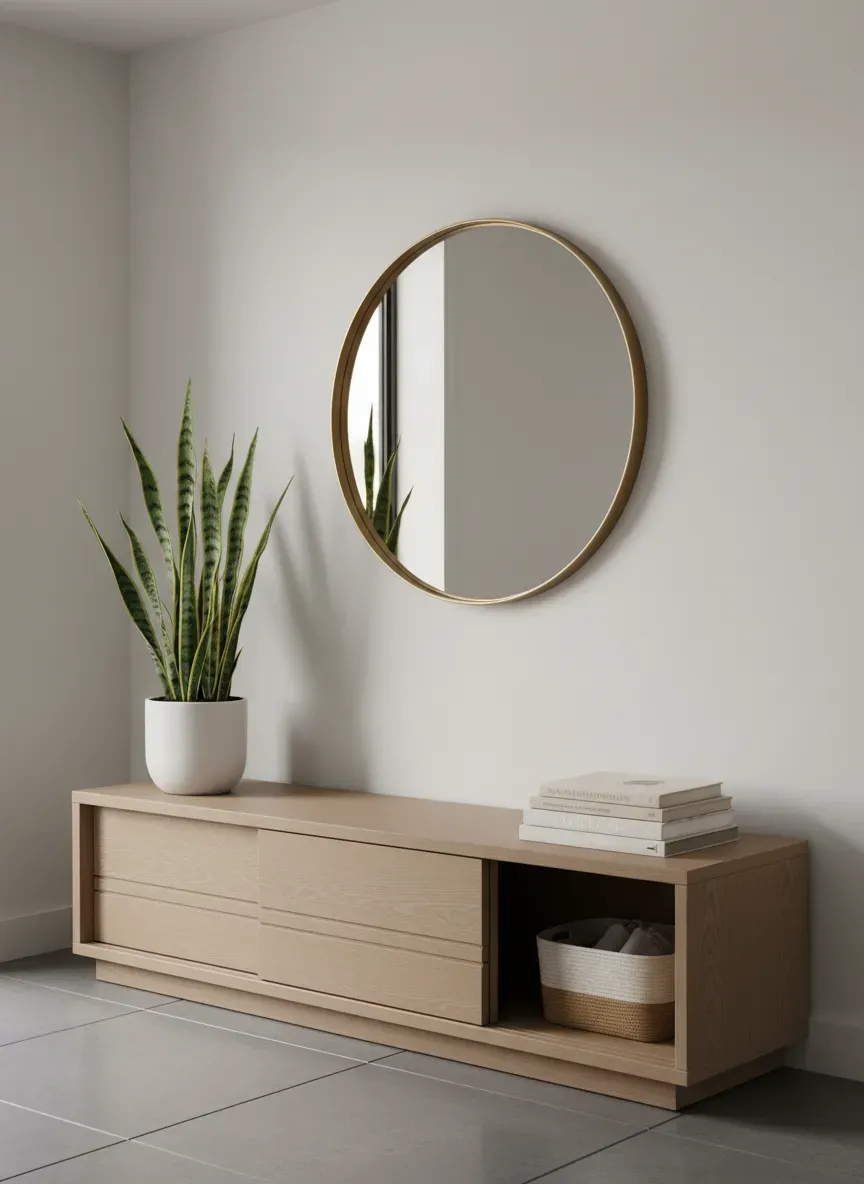
Styling Your MCM Bench for Maximum Impact
You have selected the bench. Now, how do you style it so it doesn’t look like a lonely piece of furniture in a hallway? The goal is to create a vignette that serves a purpose.
The Rule of Verticality
Since you are saving floor space with a compact bench, utilize the wall space above it.
- Mirrors: A large round or oval mirror is non-negotiable in a small foyer. It reflects light and allows for a final outfit check.
- Hooks: Install a row of Eames-style hang-it-all hooks or simple brass pegs above the bench. This takes the coat storage load off the bench itself.
- Lighting: If you don’t have space for a floor lamp, a wall sconce above the bench adds ambiance and functionality.
The “Drop Zone” Tray
Even if your bench is just for sitting, place a small tray on one end (if length permits) or on a shelf nearby. This catches the loose change and keys that otherwise end up scratching the wood finish of your beautiful new piece.
Common Pitfalls to Avoid
I’ve seen many well-intentioned homeowners make expensive mistakes when buying MCM furniture for small spaces.
- The “Replica” Trap: Be careful with extremely cheap replicas. Mid-century design relies on engineering—specifically, the strength of those thin legs. Cheap particle board joints will fail under the lateral stress of daily sitting.
- Ignoring the Baseboard: When measuring depth, remember that your baseboards stick out. A 12-inch deep bench might sit 13 inches from the wall.
- Over-propping: Don’t cover the bench in so many throw pillows that you can’t actually sit down. Functionality must come first in a small entry.
Final Thoughts on Curating Your Space
Choosing the right MCM bench is about respecting the architecture of your home while demanding utility from every square inch. Whether you opt for the sculptural asymmetry of a telephone bench or the hidden depths of a storage ottoman, the principles remain the same: clean lines, elevated profiles, and honest materials.
When you finally slide that bench into place, it transforms the vibe from “cluttered hallway” to “curated arrival experience.” It’s a small change that pays dividends every time you walk through the door.
So, grab your tape measure, check your swing clearance, and bring a touch of mid-century sophistication to your small space.