
The Ultimate Guide to Choosing Entryway Hooks: Style, Strength, and Placement
Master the art of entryway organization. Learn how to select the perfect hooks for style, load-bearing capacity, and optimal placement in your home.
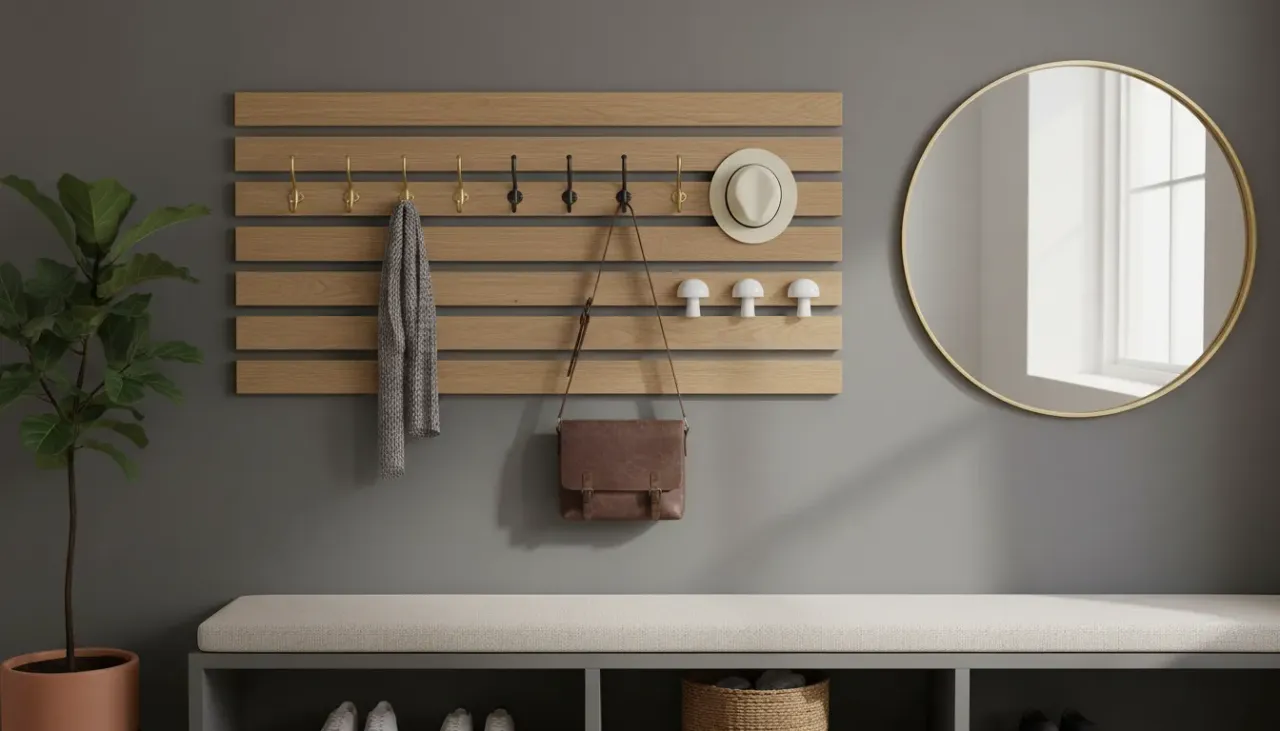
Feb 4, 2026 - Written by: linda wise

The entryway is often referred to as the handshake of the home. It is the first space guests encounter and the last thing you see before facing the world. Despite its prominence, this transitional zone is frequently susceptible to clutter. Piles of coats, tangled scarves, and misplaced keys can quickly turn a welcoming foyer into a chaotic obstacle course. While elaborate mudroom lockers and custom cabinetry are excellent solutions, they are not always feasible for every space or budget. Enter the humble entryway hook: the unsung hero of home organization.
Selecting the right hook may seem like a trivial hardware decision, but it is a choice that sits at the intersection of physics, ergonomics, and interior design. A hook that is too small will fail under the weight of a heavy winter parka. A hook placed too high becomes useless for children. A hook that clashes with your architectural style disrupts the visual harmony of your home.
This comprehensive guide delves deep into the mechanics and aesthetics of wall hooks. We will explore how to balance heavy-duty utility with refined design, ensuring your entryway remains both functional and elegant.
The Anatomy of Performance: Understanding Hook Strength
Before considering aesthetics, one must address the primary function of a hook: holding weight. The frustration of a hook bending, snapping, or ripping out of the wall is entirely preventable with an understanding of load-bearing mechanics.
Load Capacity and Material Integrity
Not all metals are created equal. When browsing for hardware, you will typically encounter materials ranging from plastic and zinc alloys to solid brass and cast iron.
Zinc Die-Cast: This is the most common material for budget-friendly decorative hooks. While zinc allows for intricate detailing and smooth finishes, it is relatively brittle. A standard zinc hook may be rated for 10 to 35 pounds, which is sufficient for light jackets and umbrellas but risky for heavy backpacks or wet wool coats.
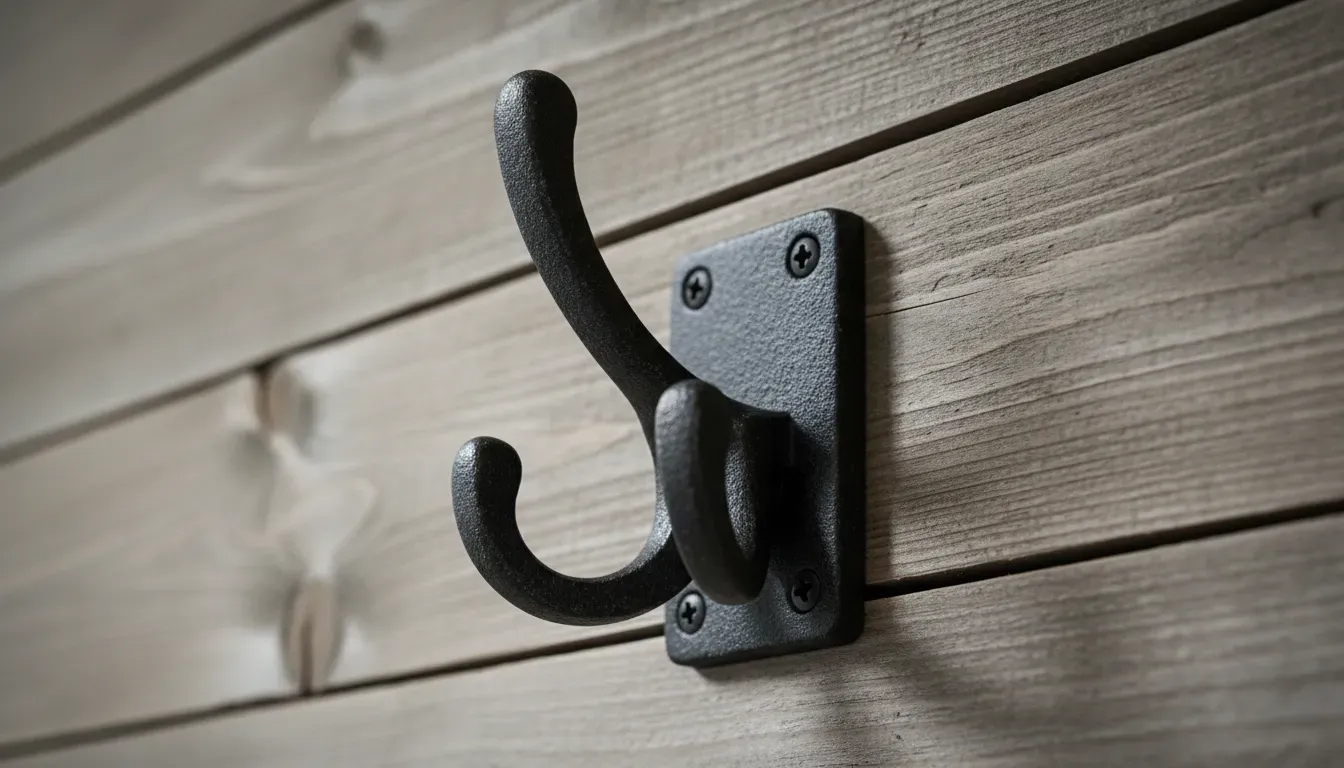
Cast Iron: For maximum durability, iron is superior. It offers a rugged, often rustic aesthetic and boasts immense tensile strength. A properly cast iron hook rarely bends; however, it requires protection against rust if used in humid environments or damp mudrooms.
Solid Brass and Stainless Steel: These materials offer the best balance of strength and corrosion resistance. Solid brass is softer than steel but incredibly durable for household use, while stainless steel offers a modern look with high load-bearing capabilities.
Single vs. Double vs. Triple Hooks
The configuration of the hook itself dictates its utility.
- Single Hooks: Best for minimalist designs or narrow spaces. They hold one item securely but are inefficient for high-traffic family homes.
- Double Hooks (Over-Under): The classic “schoolhouse” design. The larger top prong holds a coat or hat, while the smaller bottom prong manages lighter items like scarves or keys. This effectively doubles your storage density without requiring more wall space.
- Tri-Hooks and Swivel Hooks: These feature moveable arms or three distinct prongs. While excellent for maximizing storage, one must be wary of overcrowding. Accessing the bottom layer of a loaded tri-hook can be cumbersome.
Defining Your Aesthetic: Style Categories
Once you have determined the necessary strength, the focus shifts to design. The hardware you choose acts as jewelry for your walls, accentuating your home’s architectural character.
The Modern Minimalist
In contemporary and Scandinavian-inspired homes, the goal is to reduce visual noise. Hooks in this category often feature geometric shapes—cylinders, squares, or simple curves—without ornamentation. The finish is paramount here. Matte black, brushed nickel, and satin brass are the standards.
Ideally, modern hooks should disappear when in use and look like sculptural art when empty. Wood pegs, particularly in white oak or walnut, are also a staple of this aesthetic, offering a softer, organic touch that prevents the space from feeling too clinical.
Industrial and Rustic
For farmhouse, industrial, or loft-style spaces, hardware should feel substantial and grounded. This style favors raw materials and visible mechanics. Look for pipe-fitting designs, hammered iron finishes, and exposed screw heads.
The “acorn” tip hook or the classic swan-neck shape works exceptionally well here. Backplates made of reclaimed wood or distressed metal can add an extra layer of texture, turning a simple storage solution into a focal point.
If you are looking to upgrade your space with hardware that bridges the gap between sleek design and rugged durability, consider exploring specific collections that cater to this balance.
Shop Modern Minimalist Wall Hooks on Amazon
Traditional and Vintage
Traditional homes, including Victorians, Colonials, and Craftsman styles, benefit from hardware with historical references. Porcelain-tipped hooks, ornate floral backplates, and antique brass or oil-rubbed bronze finishes complement the intricate molding and trim often found in these entryways.
In these settings, uniformity is key. A row of identical, high-quality traditional hooks mounted on a stained wood rail creates a sense of order and permanence that aligns with the architecture.
Strategic Placement: The Science of Spacing
Even the most beautiful, heavy-duty hooks will fail to organize your life if they are installed poorly. Placement requires a strategy that accounts for the size of the items being hung and the people using them.
The Height Hierarchy
There is no single “correct” height for a coat hook, but there are standard zones based on ergonomics.
- The Adult Zone (60 to 66 inches): This is the standard height for adult coats. It ensures that long trench coats or dresses do not drag on the floor while remaining reachable for the average adult.
- The Accessibility Zone (48 to 54 inches): This lower height is ideal for Universal Design, making hooks accessible for wheelchair users, shorter adults, or older children.
- The Kid Zone (36 to 42 inches): If you want children to hang up their own backpacks and jackets, the hooks must be within their reach. Installing a secondary row of hooks at this height is a brilliant strategy for family organization.
Horizontal Spacing
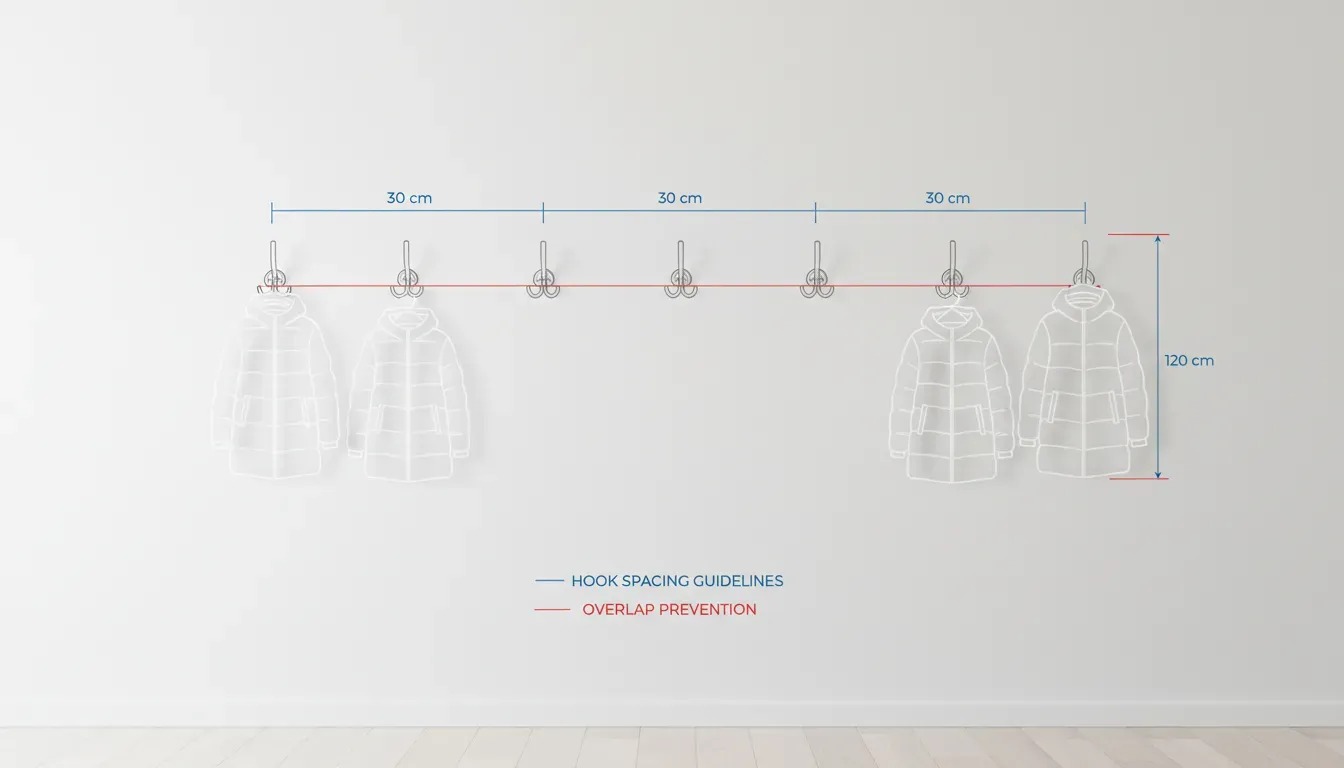
Overcrowding is the enemy of a functional entryway. If hooks are placed too close together, bulky winter coats will overlap, making it difficult to retrieve a single item without knocking others down.
- Minimum Spacing: 8 inches center-to-center. This is the absolute minimum for light jackets.
- Ideal Spacing: 10 to 12 inches center-to-center. This allows for thick parkas and backpacks to hang side-by-side without fighting for space.
If you are working with limited wall real estate, you may need to get creative. Staggering hooks—placing them alternately high and low—can allow you to fit more storage into a narrow horizontal span without the items overlapping at the shoulders. For more insights on handling tight quarters, read our guide on maximizing small entryway storage.
Installation: Anchoring for Longevity
The durability of your storage system depends as much on the installation method as it does on the hook material. A cast iron hook attached only to drywall will eventually rip out, leaving unsightly damage.
The Gold Standard: Stud Mounting
Whenever possible, drive your screws directly into the wooden wall studs. Studs are typically spaced 16 inches apart on center. If your desired hook placement aligns with these studs, you are in luck. Use wood screws that are at least 1.5 to 2 inches long to penetrate through the drywall and deep into the timber.
The Rail Solution
Because studs rarely align exactly where you want your hooks, the “hook rail” or “coat rack” is often the superior structural choice. By mounting a piece of wood horizontally across the wall, spanning two or more studs, you create a solid substrate. You can then attach as many hooks as you like to the wood rail at any interval, regardless of where the studs are located behind it.
Wall Anchors: When Studs Aren’t an Option
If you must mount a hook directly to drywall in a hollow space, standard plastic conical anchors are insufficient for coats. They pull out easily under dynamic loads (the action of pulling a coat off the hook).
Instead, opt for:
- Toggle Bolts: These feature spring-loaded wings that open behind the wall, distributing weight over a larger area. They can hold significant weight.
- Self-Drilling Metal Anchors: These screw into the drywall and have a deep thread, offering better holding power than plastic plugs, though less than toggle bolts.
For those seeking a robust solution that fits a farmhouse or industrial aesthetic, heavy-duty hooks often come with matching hardware, but upgrading the anchors is always a wise investment.
Shop Heavy Duty Rustic Coat Hooks on Amazon
Material Science: Finishes and Environments
The environment of your entryway dictates the longevity of the hook’s finish. A coastal home with salty air, or a mudroom that sees damp raincoats, requires different materials than a dry, climate-controlled apartment hallway.
Understanding Finishes
- Powder Coating: This is a dry powder applied electrostatically and then cured under heat. It creates a hard finish that is tougher than conventional paint. Matte black powder coating is popular for its resistance to chipping and scratching.
- Lacquer vs. Unlacquered Brass: Lacquered brass stays shiny forever but can look synthetic. Unlacquered brass is a “living finish” that will patina and darken over time, developing a unique character. However, in high-humidity areas, this patina can turn to verdigris (green corrosion) if not maintained.
- Chrome and Nickel: These plated finishes are highly durable and easy to clean, making them excellent choices for high-traffic areas. Brushed finishes hide fingerprints better than polished ones.
Advanced Configurations: Beyond the Basic Row
While a straight line of hooks is functional, modern entryway design often calls for more integrated solutions. Combining hooks with other storage elements creates a “drop zone” that manages not just coats, but the entirety of your daily carry.
The Shelf-Hook Combo
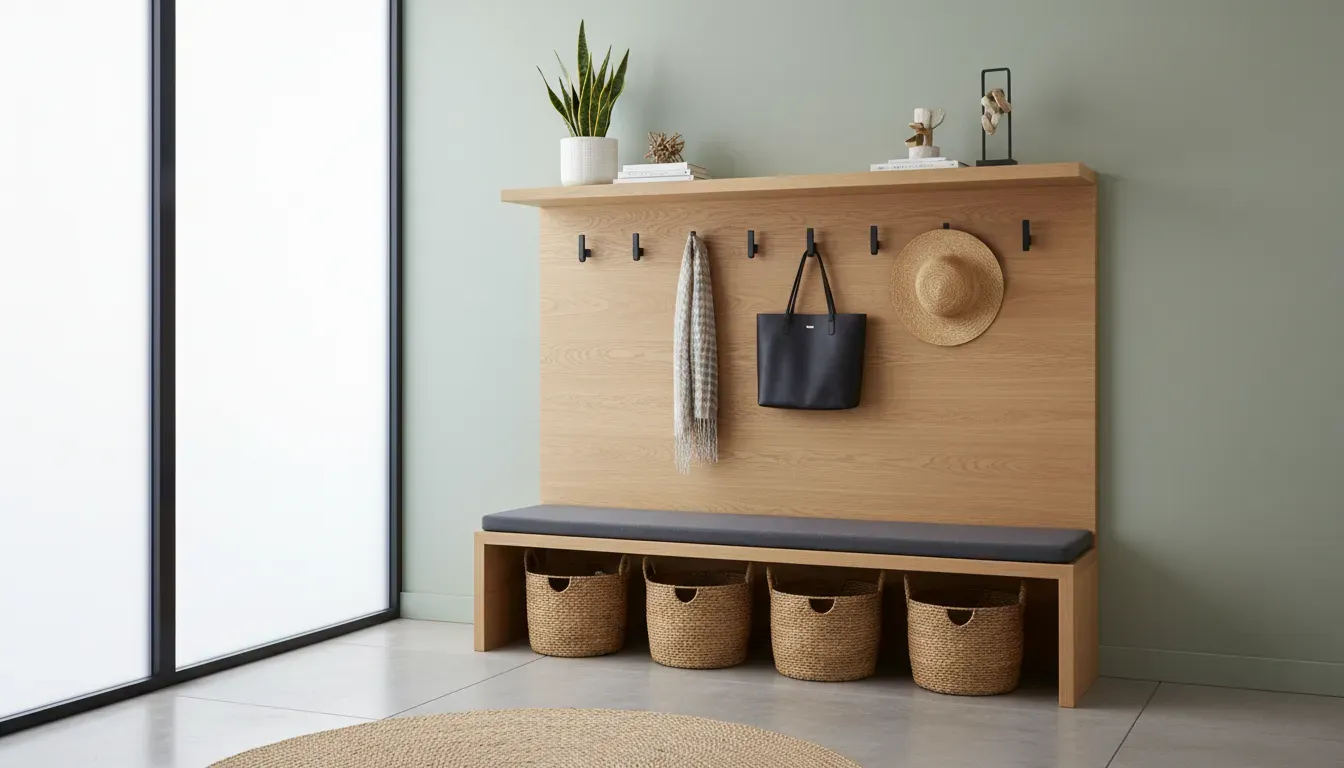
Adding a shelf above your hooks serves two purposes. Aesthetically, it frames the storage area. Functionally, it provides a landing pad for items that cannot be hung, such as sunglasses, wallets, or decorative plants. It also prevents hats placed on the hooks from sliding upward and marking the wall.
The Vertical Stack
In narrow corners behind doors, vertical storage is efficient. Installing a vertical rail with hooks arranged from top to bottom utilizes the full height of the room. This is particularly effective for bag storage, where the items hang lower than coats.
Cubbies and Lockers
For families, assigning a specific “zone” to each member creates accountability. A unit that combines a bench, overhead cubbies, and hooks offers a dedicated spot for shoes, coats, and bags. While this often requires furniture rather than simple hardware, many wall-mounted units mimic this functionality.
Shop Entryway Shelf With Hooks on Amazon
Protecting Your Garments
The profile of the hook tip matters significantly for garment care. Sharp or pointed hooks can distort the shape of fabrics, leaving “bumps” in the shoulders of sweaters or knits. Worse, they can puncture linings.
For delicate items, look for hooks with:
- Ceramic or Wooden Knobs: These increase the surface area in contact with the fabric, distributing the weight and preventing distortion.
- Wide, Flat Tips: Contemporary hooks often use a wide metal band rather than a rod, which supports straps and collars gently.
- Rubberized Coatings: Some modern hooks feature non-slip rubber tips which protect fabric and prevent slick raincoats from sliding off.
Maintenance and Care
High-quality hardware requires minimal maintenance, but neglect can lead to failure.
Tightening: The screws holding hooks can loosen over time due to the repetitive downward force and vibration of items being hung and removed. Check the tightness of your hooks every six months. If a screw spins loosely, the hole has stripped. You will need to remove the hook, insert a larger anchor, or patch the hole and move the hook slightly.
Cleaning: Clean metal hooks with a damp cloth and mild soap. Avoid abrasive scrubbers or harsh chemical cleaners, as these can strip protective lacquer or scratch powder coatings. For unlacquered brass, occasional polishing will restore shine, or you can leave it to patina naturally.
Conclusion
Choosing the right entryway hooks is an exercise in balance. It requires weighing the load of your life—the heavy coats, the overstuffed backpacks—against the visual lightness you desire in your home. It demands attention to the unseen mechanics of wall anchors and studs, just as much as the visible elegance of brass or matte black finishes.
By selecting high-quality materials, adhering to ergonomic spacing rules, and installing with structural integrity in mind, you transform a simple piece of hardware into a cornerstone of home organization. A well-planned entryway does not just store your belongings; it welcomes you home with order and style.
Whether you are renovating a mudroom or simply trying to tidy up a small apartment foyer, the principles remain the same: strength, style, and strategic placement. With these guidelines, you are equipped to curate an entryway that stands the test of time and traffic.