
Ultra-Slim & Multi-Functional: The Best Shoe Storage Benches for Small Homes
Master your entryway with our expert guide to ultra-slim, multi-functional shoe storage benches. Maximize space without sacrificing style or utility.

Mar 6, 2026 - Written by: Linda Wise

You know the sound. It’s the dull thud of a heavy grocery bag hitting the floor, followed immediately by the sharp curse of tripping over a wayward sneaker. If you live in a city apartment, a townhouse, or a home with a “compact” footprint, the entryway is often the most volatile square footage you own. It’s the bottleneck of the home.
The challenge isn’t just clutter; it’s geometry. Most standard furniture is simply too deep for a narrow corridor. A typical 18-inch deep bench turns a navigable hallway into an obstacle course. This is where the concept of “Ultra-Slim” becomes not just a design choice, but a functional necessity.
I’ve spent years analyzing spatial dynamics in small homes, and I can tell you that the difference between a 12-inch depth and a 15-inch depth is massive when you’re carrying laundry. We aren’t just looking for a place to sit; we need a piece of furniture that acts as a storage vault, a seating area, and a decor anchor, all while maintaining a low profile.
Below, I’ve broken down the architecture of the perfect slim bench and selected three heavy-hitters that solve these specific problems.
Quick Comparison: Top Picks
| Product | Rating | Check Price |
|---|---|---|
| VASAGLE Indestic Shoe Bench with Cushion | ⭐⭐⭐⭐⭐ | View on Amazon |
| Haotian Storage Bench with Flip Drawer | ⭐⭐⭐⭐½ | View on Amazon |
| Prepac Hall Tree and Bench Combo | ⭐⭐⭐⭐½ | View on Amazon |
The Geometry of “Ultra-Slim”: What Actually Fits?
When marketers use words like “compact,” they are often playing fast and loose with measurements. In the world of narrow entryways, an inch is a mile. I define “Ultra-Slim” as any unit with a depth of 13 inches or less. Standard cabinetry usually sits at 24 inches, and standard bookshelves at 12 to 14 inches.
If your hallway is 36 inches wide—a standard minimum for many building codes—placing a 15-inch bench leaves you with 21 inches of walking space. That is claustrophobic. You need that extra clearance for hip room, especially if you are wearing a winter coat.
The Verticality Principle
Since we cannot expand outward, we must expand upward or utilize clever internal mechanics. This brings us to the distinction between “shelving” and “tipping buckets.”
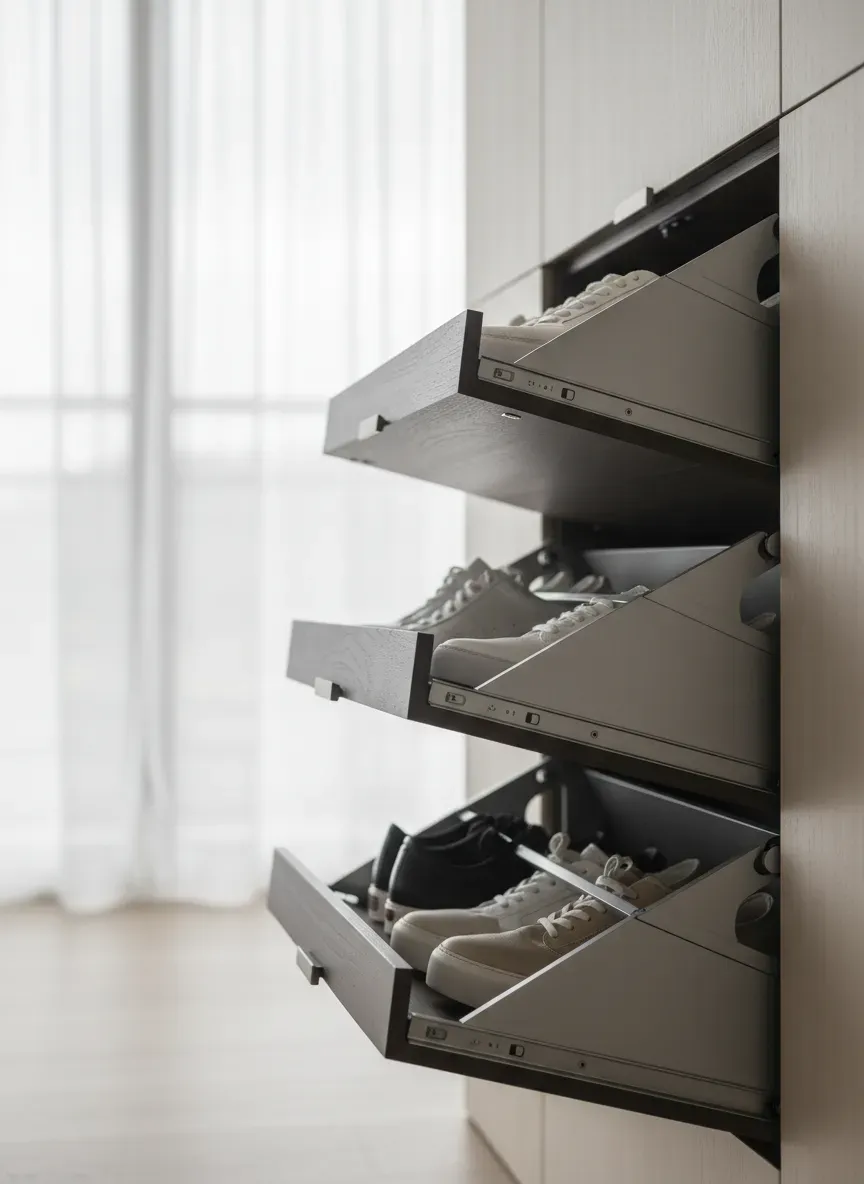
Traditional shelves require enough depth for the shoe to sit flat (roughly 11-13 inches for men’s sizes). Tipping bucket mechanisms, however, store shoes vertically at an angle. This allows the cabinet depth to shrink to as little as 9 or 10 inches while still accommodating large footwear.
Pro Tip: Always measure your “door swing” radius. A slim bench is useless if your front door bangs into the corner of it every time you enter the house.
If you are dealing with a larger renovation, understanding how furniture depth interacts with built-ins is crucial. I often refer clients to our guide on standard locker dimensions to see how bench depths correlate with overhead storage.
Product Deep Dive: The Top Contenders
I have selected these three specific models because they represent three distinct engineering approaches to the small-space problem: The Industrial Hybrid, The Flip-Drawer Specialist, and The Vertical Integrated System.
1. The Industrial Hybrid: VASAGLE Indestic Shoe Bench
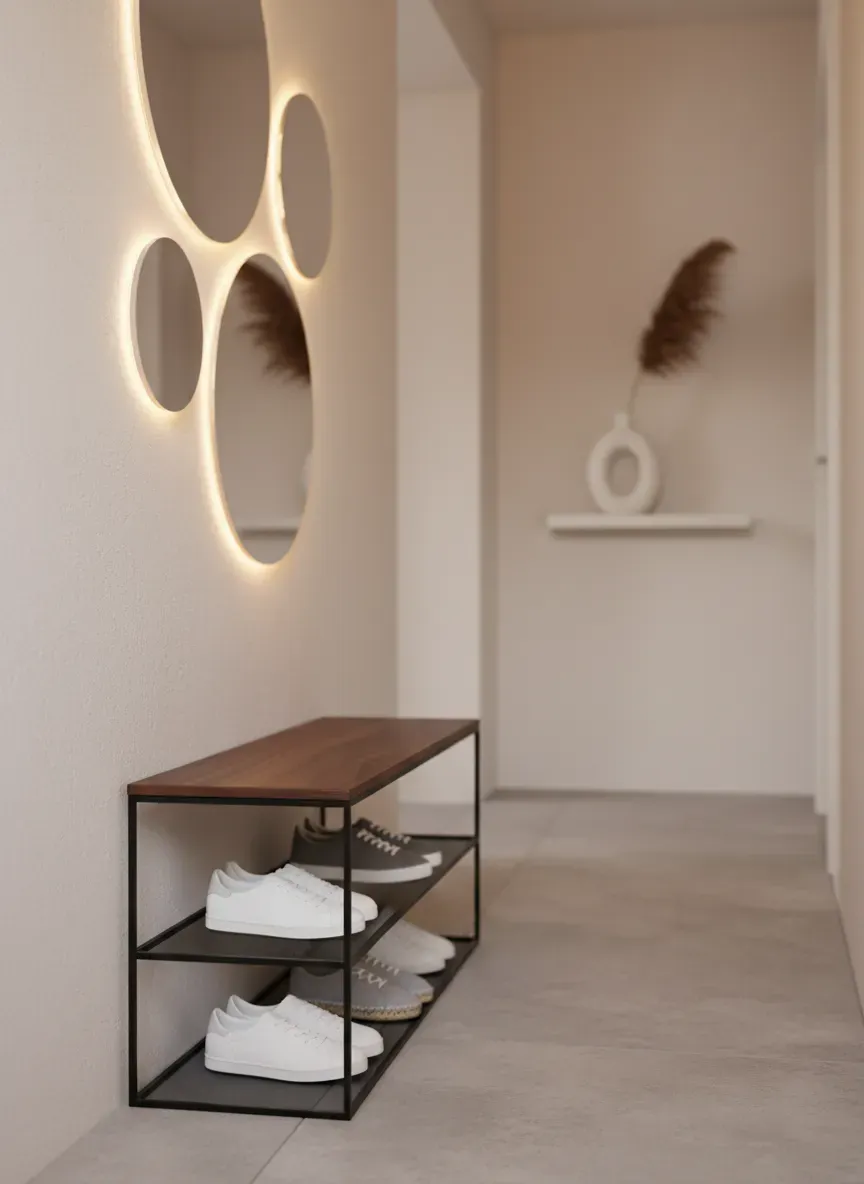
This is for the homeowner who needs rugged utility. The VASAGLE Indestic Shoe Bench with Cushion utilizes a metal frame mixed with engineered wood.
Why it works:
- Visual Lightness: Because it uses a wire grid for the shelves rather than solid wood, it allows light to pass through. In a small hallway, seeing the floor underneath the furniture tricks the brain into thinking the room is larger than it is.
- ** airflow:** If you have active kids or runners in the house, enclosed cabinets can become odor traps. The open grid ensures constant ventilation.
- The “Sit” Factor: The cushion is firm but forgiving. It adds a texture of softness to an otherwise hard-edged space.
However, be warned: Open storage requires discipline. If you throw muddy boots on here haphazardly, it will look messy. This bench demands that you curate what you store.
2. The Flip-Drawer Specialist: Haotian Storage Bench
For those who want the clutter gone, not just organized. The Haotian Storage Bench with Flip Drawer is a masterclass in concealing chaos.
The Mechanics: Instead of shelves, the front panel pulls forward on a hinge, revealing a basket-style compartment. This allows you to drop shoes in vertically.
- Depth Saver: This unit is significantly slimmer than standard benches because the shoes stand upright.
- Visual Calm: When closed, it looks like a high-end piece of carpentry. No laces, no mud, no visual noise.
- Multi-Function: It usually includes a small side drawer for keys, sunglasses, or dog leashes.
I’ve found that these units are particularly good for “outside” shoes—the ones you slip off immediately upon entering to keep floors clean. If you are interested in how technology is changing how we store and sanitize footwear, you might want to read about UV sanitizing innovations which are starting to be integrated into closed cabinets like this.
3. The Vertical System: Prepac Hall Tree Combo
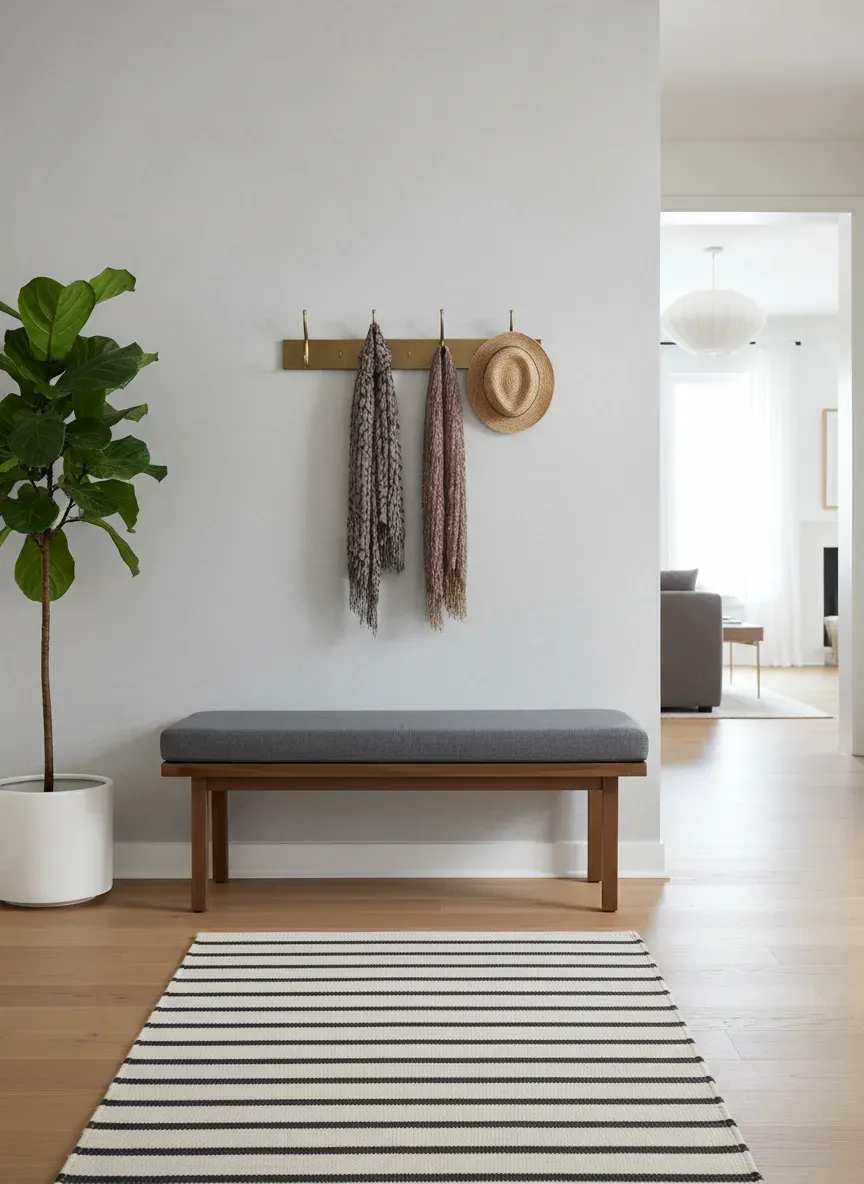
Sometimes, a bench isn’t enough. You need a command center. The Prepac Hall Tree and Bench Combo integrates hooks and upper cubbies with the lower bench.
The Trade-off: This unit dominates the wall. In a tiny foyer, this can be overwhelming if not placed correctly. However, the footprint remains slim. It utilizes the “dead space” above the bench that usually goes to waste.
- Coat Management: Eliminates the need for a separate coat rack, which frees up floor space elsewhere.
- Defined Zone: It creates a “mudroom” feel even in a home that lacks a dedicated mudroom.
Materiality and Durability: What Lasts?
When buying slim furniture, stability is the primary concern. A 10-inch deep cabinet is inherently less stable than a 20-inch deep one. It has a higher center of gravity, especially when you open a heavy drawer.
Engineered Wood (MDF/Particle Board): Most affordable options are made from this. It’s fine for low-traffic homes, but moisture is the enemy. If you live in a snowy climate, melting snow from boots can cause the laminate to peel or the wood to swell.
- The Fix: Use a rubber boot tray on the shelf, or apply a clear waterproof sealant to the joints during assembly.
Metal and Solid Wood: These are heavier and more expensive, but the weight is an asset here. A heavy steel frame anchors the unit to the floor, preventing that wobble you often feel when sitting down to tie your shoes.
The Anchor Rule: Regardless of the material, if you buy a tall or ultra-slim unit, you must anchor it to the wall. This isn’t just for earthquakes; it’s for daily use. Constant tugging on a flip-drawer will eventually shift the unit if it isn’t secured to a stud.
Installation Hacks for Tight Spaces
You’ve bought the bench. Now, how do you make it look like it was custom-built for your alcove?
1. The Baseboard Surgery
Most furniture has flat backs. Most walls have baseboards. This creates a 1-inch gap behind the unit where dust collects and keys fall into the abyss.
- The Expert Move: Carefully remove the baseboard where the bench will sit. Push the bench flush against the drywall. This saves you an inch of walkway space (crucial in narrow halls) and gives it a built-in look.
2. The Light Switch Dilemma
In small entryways, light switches are often placed at awkward heights. Ensure your tall storage or hall tree doesn’t block access to the switch. If it does, consider installing a smart switch that can be voice-activated or controlled via remote, so physical access is less critical.
3. Rug Clearance
If you place a runner rug in front of the bench, ensure the flip-drawers or cabinet doors can clear the pile height of the rug. I’ve seen countless clients buy a beautiful thick wool rug, only to realize they can’t open their shoe storage.
For those planning a more extensive remodel involving lockers or built-ins, getting the measurements right regarding clearance is vital. I recommend checking our breakdown on planning layout depths to avoid these expensive mistakes.
Aesthetic Integration: Making It Disappear
The goal in a small room is often to make the storage “disappear.” You want the utility without the visual bulk.
Color Matching: Paint the unit the same color as your wall. This technique, known as “drenching,” reduces visual noise. If the bench blends into the background, the room feels larger.
Mirror Magic: Hang a large mirror directly above the bench. This serves two purposes:
- It allows for a final outfit check.
- It reflects light and doubles the perceived depth of the hallway.
Floating Options: If floor space is truly at a premium, consider a wall-mounted floating bench. While storage capacity is often lower, seeing the floor extend all the way to the wall creates an optical illusion of vastness. However, ensure your wall studs can handle the dynamic load of a person sitting.
Key Takeaways for the Buyer
Before you click “Add to Cart,” run through this mental checklist:
- Measure twice, buy once: Check the width of your hallway. Subtract the depth of the bench. Is there at least 30 inches of walking space left? (24 inches is the absolute bare minimum).
- Check the Shoe Size: If you have size 13 feet, standard flip-drawers might not fit your shoes straight on. You may have to angle them, which reduces capacity.
- Ventilation: If the unit is fully sealed, does it have back-panel ventilation holes? If not, drill them yourself.
- Hardware Quality: The hinges are the first thing to fail on cheap furniture. Look for metal hardware, not plastic pivots.
The Bottom Line
You do not have to sacrifice a functional entryway just because your square footage is limited. The market for ultra-slim, multi-functional furniture has exploded in quality and ingenuity.
Whether you choose the rugged openness of the VASAGLE or the concealed sleekness of the Haotian, the key is intention. Don’t just buy a box to put shoes in. Buy a system that streamlines your departure and welcomes you home with order, not obstacles.
Invest in the right dimensions, secure it properly, and your narrow hallway will transform from a stumbling block into the most efficient room in your house.