
Upholstered Entryway Benches with Storage: Comfort Meets Clutter Control
Discover how upholstered entryway benches with storage transform chaotic foyers into organized, welcoming spaces. Design tips, material guides, and top picks.
Feb 3, 2026 - Written by: linda wise

The entryway is the handshake of the home. It is the first space guests encounter and the final checkpoint before you step out into the world. Yet, for many households, this critical transition zone often devolves into a chaotic landscape of discarded shoes, piled mail, and misplaced bags. The challenge lies in balancing the need for heavy-duty organization with the desire for a welcoming, sophisticated aesthetic.
Enter the upholstered entryway bench with storage. This piece of furniture is a hybrid workhorse, seamlessly blending the softness of seating with the utility of containment. It anchors the foyer, provides a practical place to sit while putting on shoes, and discreetly swallows the clutter that threatens to overrun your front door. In this comprehensive guide, we will explore how to select, style, and maximize the potential of storage benches, ensuring your entryway remains both functional and elegant.
The Psychology of the Entryway
Before delving into the mechanics of furniture selection, it is essential to understand the psychological role of the entryway. In interior design, this space creates the “landing experience.” When you walk through the door, your environment immediately influences your mood. A cluttered, chaotic space can trigger cortisol spikes and stress, while a streamlined, organized area signals safety and relaxation.
An upholstered bench serves as a visual anchor. Unlike a simple wooden rack or a utilitarian metal shelf, the addition of fabric—whether velvet, linen, or leather—introduces texture and warmth. It invites you to pause. This pause is functional, allowing you to remove shoes and transition from “outdoor mode” to “indoor mode,” but it is also mental. The presence of a soft seat suggests that the home is a place of comfort, not just a storage facility for your belongings.
Anatomy of a Storage Bench: Choosing the Right Style
Not all storage benches are created equal. The market offers a variety of mechanisms and designs, each suited to different storage needs and spatial constraints. Understanding the anatomy of these benches is the first step toward making an informed purchase.
The Flip-Top Mechanism
The flip-top bench is perhaps the most traditional form of storage seating. The entire seat cushion is hinged, lifting to reveal a deep, cavernous compartment underneath.
- Best For: Large, bulky items. This is the ideal solution for storing seasonal items like winter blankets, heavy coats that are out of rotation, or sports gear.
- Pros: It offers the cleanest look. When closed, the hardware is hidden, and the piece looks like standard furniture. It maximizes internal volume since there are no drawer slides or dividers eating up space.
- Cons: Accessibility can be an issue. You must clear the top of the bench to access the contents. If you plan to style the bench with throw pillows or use it constantly for seating, moving those items to open the lid can become tedious.
The Drawer-Based Bench
For those who prioritize organization over bulk storage, the drawer-based bench is superior. These units feature pull-out drawers built into the base of the seat.
- Best For: Smaller, everyday items. Think dog leashes, winter hats, gloves, mail, or reusable shopping bags.
- Pros: You can access the contents without disturbing the person sitting on the bench or moving styled pillows. It allows for better categorization of items.
- Cons: Drawers reduce the overall storage volume due to the hardware and construction framework. They are rarely large enough for boots or heavy blankets.
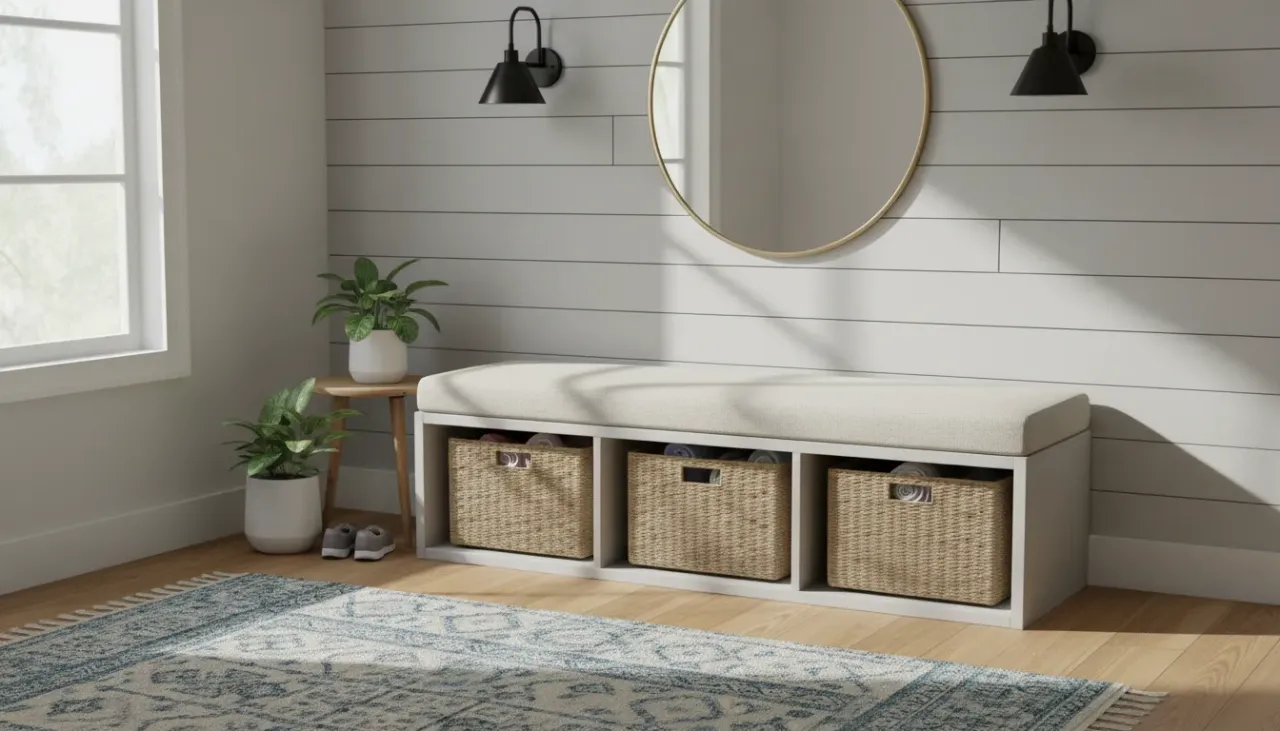
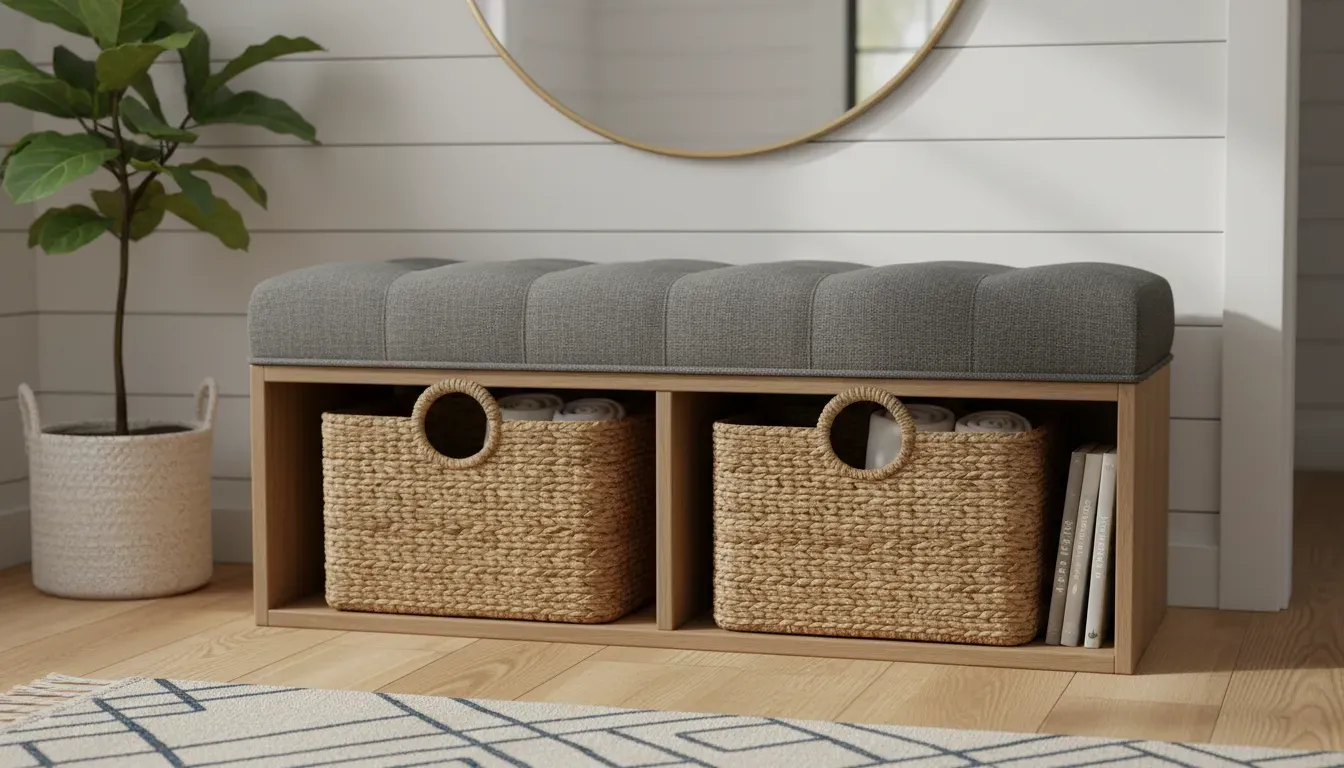
The Cubby and Basket System
This style features open shelving beneath the upholstered seat, often fitted with wicker, wire, or fabric baskets.
- Best For: Shoes and quick-access items. This is a favorite for families with children, as the baskets can be pulled out entirely, making clean-up easier.
- Pros: It offers visual texture. The contrast between the upholstery and the basket material (like seagrass or rattan) adds depth to the decor. It is also the most flexible; you can remove the baskets to display books or shoes directly.
- Cons: It can look cluttered if the baskets are not uniform or if they are overfilled. Open cubbies require more dusting than closed drawers.
Material Matters: Selecting the Right Upholstery
Because an entryway bench sees high traffic, fabric selection is critical. This furniture piece will be subjected to damp coats, muddy paws, heavy grocery bags, and the friction of daily sitting. You need a material that marries durability with style.
Performance Velvet and Microfiber
Modern synthetic velvets are a marvel of textile engineering. They offer the opulent look of traditional velvet but are often hydrophobic and stain-resistant.
- Durability: High. Tight weaves prevent cat claws from snagging and make it difficult for liquids to penetrate immediately.
- Aesthetic: Luxurious and deep. Velvet reflects light, adding a sense of dimension to small entryways.
- Maintenance: Easy to spot clean with water-based solvents.
Leather and Faux Leather
For a classic, masculine, or industrial aesthetic, leather is the gold standard.
- Durability: Extremely high. Leather develops a patina over time that tells a story. High-quality faux leathers (PU or PVC) are also easy to wipe down, making them ideal for muddy environments.
- Aesthetic: Timeless and grounding. Leather works well in farmhouse, mid-century modern, and industrial interiors.
- Maintenance: Requires conditioning to prevent cracking (for real leather). Faux leather is virtually maintenance-free but may peel after several years of heavy use.
Treated Linen and Cotton Blends
Natural fibers offer a breathable, organic look that suits coastal, Scandi, and farmhouse styles. However, in an entryway, untreated natural fibers are a risk.
- Durability: Moderate. Natural fibers are absorbent. Look for “performance linen” or fabrics treated with Crypton or similar stain repellents.
- Aesthetic: Light, airy, and casual.
- Maintenance: Can be difficult to clean if not treated. Slipcovered versions are excellent because the cover can be removed and washed.
For more insights on maintaining entryways, consider reading our guide on high-traffic flooring solutions to pair with your bench.
Sizing and Scale: The Golden Rules
Nothing disrupts the flow of a home like ill-fitting furniture. An entryway bench that is too large will block traffic flow; one that is too small will look like an afterthought.
- Width: Measure your available wall space. Ideally, you want 6 to 12 inches of breathing room on either side of the bench so it does not look wedged in.
- Depth: This is crucial for entryways, which are often narrow hallways. Standard bench depth is between 15 and 20 inches. Ensure you have at least 30 to 36 inches of clearance in front of the bench to walk past comfortably, especially if doors open into the space.
- Height: Standard seating height is 18 to 20 inches. If you plan to hang coat hooks above the bench, ensure they are high enough (usually 60 inches from the floor) so that hanging coats do not pool on the bench seat.
Top Recommendations for Upholstered Storage Benches
To help you navigate the vast market, we have curated three top-tier recommendations available on Amazon. These selections balance construction quality, storage capacity, and aesthetic appeal.
1. The Sophisticated Modern Choice For homes that lean towards contemporary or glam aesthetics, a tufted velvet ottoman bench is a stunning focal point. Look for deep button tufting and lucite or metallic legs.
- Product Recommendation: Christopher Knight Home Tufted Velvet Bench
2. The Farmhouse Functionalist If your goal is rustic charm and heavy-duty organization, a wooden bench with a cushioned top and cubby storage is the answer. This style often incorporates sliding barn door mechanics or wicker baskets.
- Product Recommendation: Walker Edison Farmhouse Entryway Storage Bench
3. The Mid-Century Minimalist Clean lines, tapered legs, and simple fabric upholstery define this style. A flip-top mechanism usually preserves the sleek silhouette, making it perfect for smaller apartments.
- Product Recommendation: Simpli Home Mid Century Storage Ottoman Bench
Integrating the Bench into Your Design Scheme
An upholstered bench should not exist in a vacuum. To create a cohesive look, it must be integrated into a larger design vignette. This involves layering textures and balancing visual weight.
Wall Treatments and Art
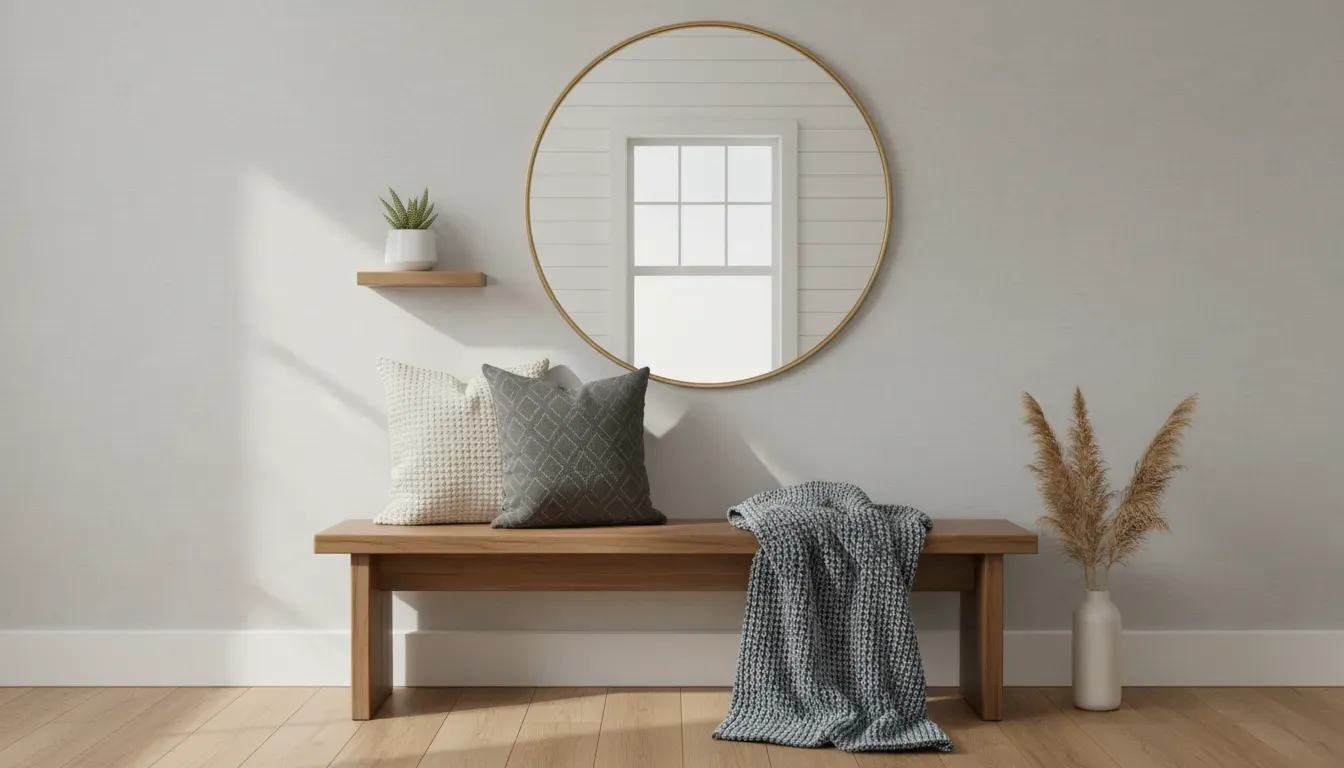
The wall space above the bench is prime real estate. A large, oversized mirror is a strategic choice; it reflects light to make a narrow hallway feel wider and provides a last-minute check before you leave the house. Alternatively, a gallery wall of black-and-white photography can add personality without overwhelming the space with color.
If you are using a solid-color bench, consider using wallpaper on the wall behind it to create a feature zone. The pattern of the wallpaper will contrast beautifully with the solid upholstery.
Lighting the Space
Lighting sets the mood. While overhead lighting is standard, adding sconces on either side of the bench creates a sophisticated, hotel-like atmosphere. If hardwiring isn’t an option, battery-operated sconces or a nearby floor lamp can provide soft, ambient illumination that highlights the texture of the bench fabric.
Pillows and Throws
This is where you can play with trends without committing to a new piece of furniture. If your bench is neutral (beige, grey, cream), use throw pillows to introduce seasonal colors—burnt orange for autumn, sage green for spring. A textured throw blanket draped over the arm or corner of the bench adds softness and suggests comfort, reinforcing the “welcome home” feeling.
Organization Hacks: Inside the Bench
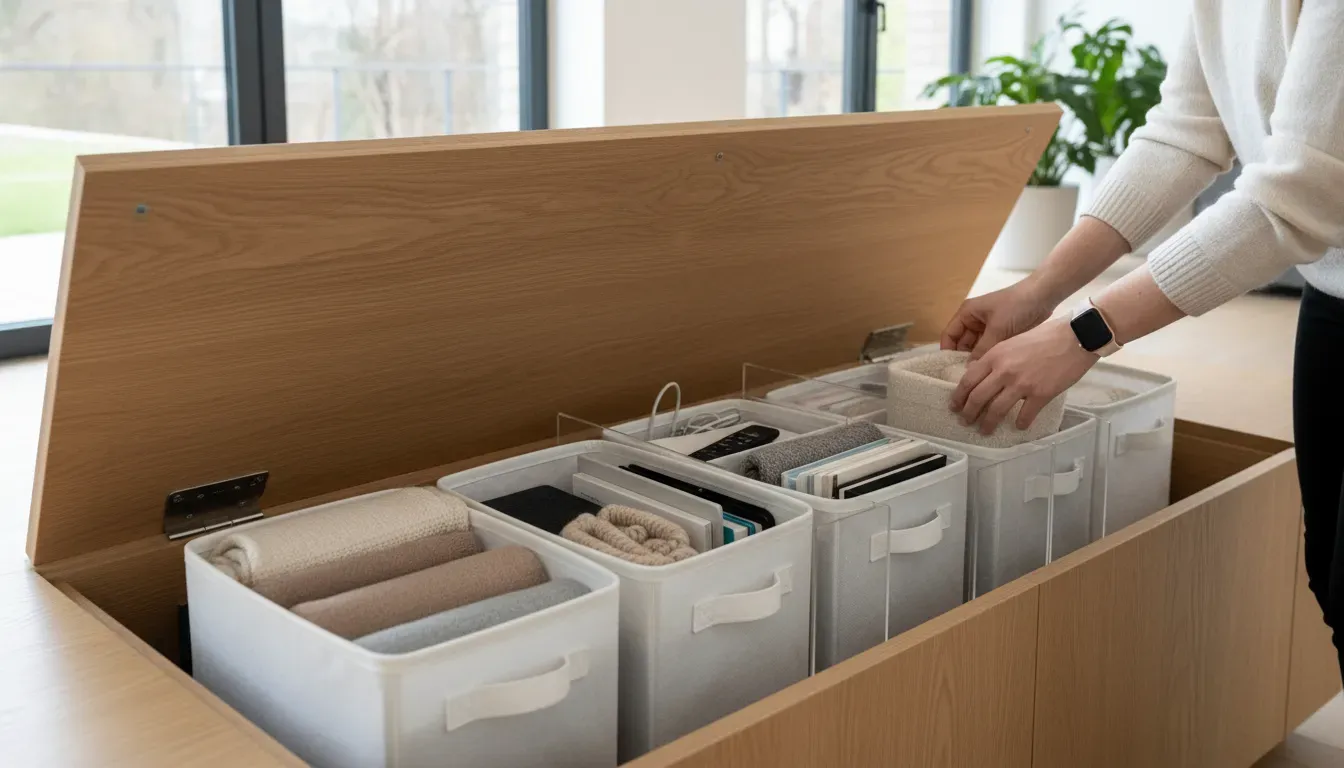
The danger of a storage bench, particularly the flip-top variety, is that it becomes a black hole where items go to die. To prevent this, you must organize the interior of the storage space.
- Vertical Dividers: If you are storing shoes in a flip-top bench, use vertical acrylic dividers. This keeps pairs together and prevents a pile-up at the bottom.
- labeled Bins: For drawer or cubby benches, label the bins. Assign a specific bin to each family member. This enforces accountability; if the “Alex” bin is full, Alex must purge items before adding more.
- Vacuum Seal Bags: If using the bench for seasonal storage (winter coats in summer), use vacuum seal bags. They compress bulky items, tripling your storage capacity and protecting fabrics from dust and moths.
- Cedar Blocks: Entryways can be damp. Toss a few cedar blocks or silica gel packets into the storage compartment to absorb moisture and keep the interior smelling fresh.
For those struggling with extremely tight spaces, you might also find value in our article on vertical storage solutions for small foyers.
DIY Potential vs. Buying Retail
Is it better to build or buy? The answer depends on your skill level and specific dimensions.
Buying Retail:
- Pros: Immediate gratification, professional finishes, guaranteed structural weight limits.
- Cons: Fixed dimensions may not perfectly fill an alcove.
DIY Custom Build:
- Pros: You can build wall-to-wall in a recessed niche, maximizing every inch. You have total control over the fabric choice.
- Cons: Upholstery is a difficult skill to master. Getting professional-looking tufting or piping requires practice. Structural integrity is dependent on your carpentry skills.
A common middle ground is “semi-custom.” Buy a sturdy, open shelving unit (like the IKEA Kallax), reinforce it, add feet to raise it off the ground, and construct a custom upholstered cushion to sit on top. This provides the custom look for a fraction of the price.
Maintenance and Care for Long-Term Use
An entryway bench is an investment. To ensure it lasts, adopt a regular maintenance routine.
Weekly: Vacuum the upholstery using the upholstery attachment. This removes dust and microscopic grit that acts like sandpaper, wearing down fibers over time. Monthly: Wipe down the legs and hardware. If the bench has wooden components, use a wood cleaner to keep the finish hydrated. Seasonally: Check the hinges on flip-top benches. The constant opening and closing can loosen screws. Tighten them to prevent the lid from becoming misaligned. Immediate: Blot spills immediately. Do not rub. Rubbing pushes the liquid deeper into the padding. Keep a stain remover stick in a nearby drawer for emergencies.
Conclusion
The upholstered entryway bench with storage is more than just a place to sit; it is a strategic tool in the battle against household entropy. It bridges the gap between the chaotic outside world and the sanctuary of your home. By carefully selecting the right mechanism, choosing durable performance fabrics, and integrating the piece into your wider design scheme, you create an entryway that is efficient, organized, and deeply welcoming.
Whether you opt for a sleek velvet tufted piece or a robust farmhouse bench with baskets, the result is the same: a home that greets you with order and comfort from the very first step. Invest in your entryway, and you set the tone for the entire home.