
10 Best Mudroom Benches with Shoe Storage for a Clutter-Free Entryway
Transform your chaotic entryway into an organized sanctuary. Discover our top 10 expert-vetted mudroom benches featuring integrated shoe storage, durable materials, and brilliant spatial design.
Mar 13, 2026 - Written by: Linda Wise
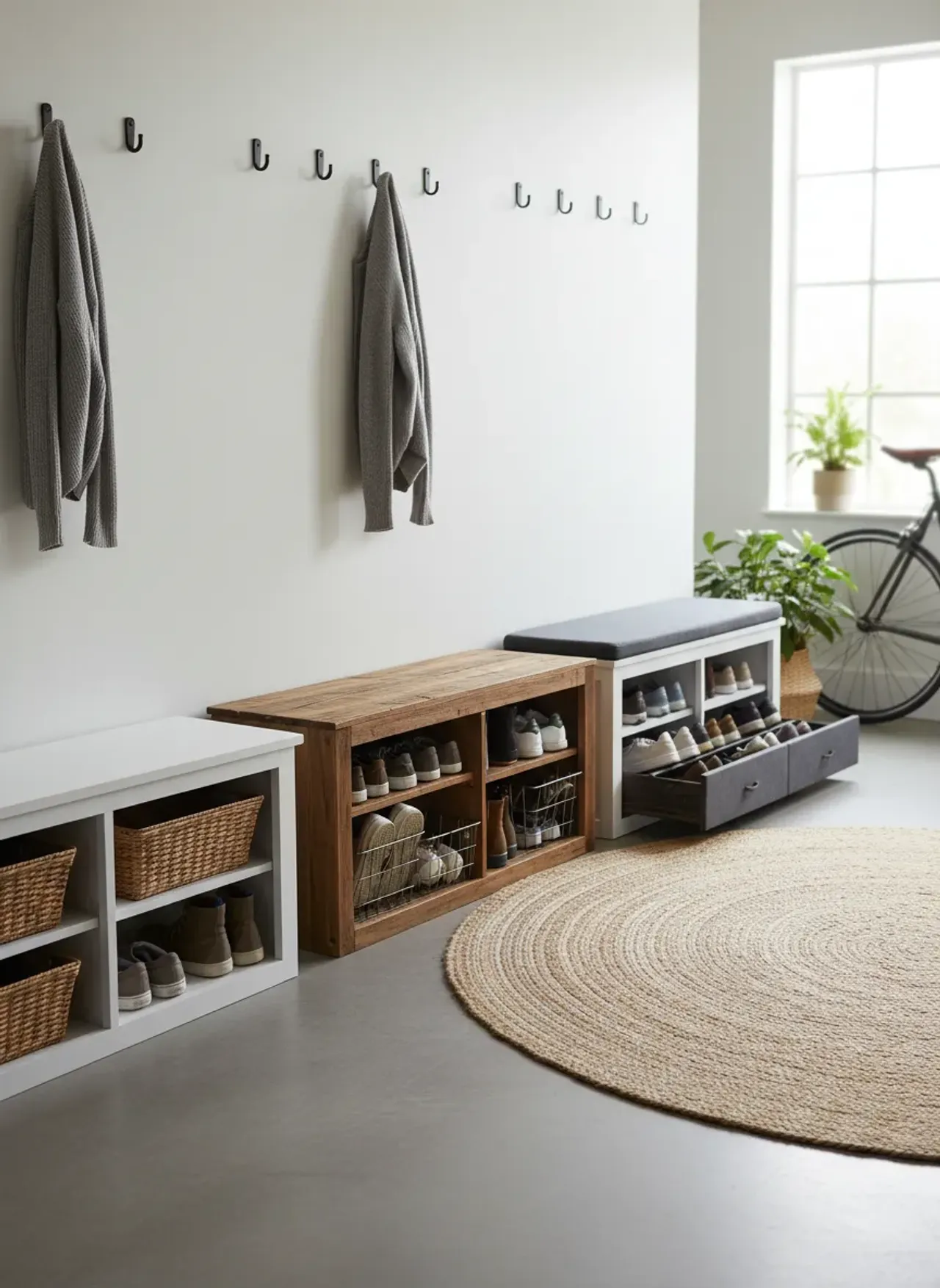
The threshold of your home dictates its entire kinetic flow. Walk into a foyer scattered with rogue sneakers, mud-caked winter boots, and discarded backpacks, and your cortisol levels spike before you even take off your coat. I’ve personally found that the fundamental difference between a chaotic house and a serene sanctuary starts at the front door. You need an anchor point. You need a highly functional, spatially efficient drop zone.
We demand a lot from our entryways. They must act as a transitionary lock between the raw elements of the outside world and the pristine comfort of our living spaces. Yet, homeowners continually try to solve this architectural dilemma with flimsy fabric shoe racks or disjointed coat trees that topple over at the slightest provocation. The actual solution requires robust furniture engineering: a heavy-duty mudroom bench with integrated shoe storage.
After evaluating hundreds of foyer layouts, testing weight capacities, and scrutinizing the durability of various wood veneers against the aggressive reality of road salt and wet dog paws, I’ve curated a definitive list. These aren’t just places to sit while you tie your laces. They are structural interventions designed to reclaim your floor space.
Here is an immediate look at the heavy-hitters before we break down the mechanics of the top 10 best mudroom benches with shoe storage for a clutter-free entryway.
Quick Comparison: Top Picks
| Product | Rating | Check Price |
|---|---|---|
| Prepac Wide Hall Tree Bench | ⭐⭐⭐⭐⭐ | View on Amazon |
| Vasagle Industrial Shoe Bench | ⭐⭐⭐⭐½ | View on Amazon |
| Walker Edison Farmhouse Barn Door Bench | ⭐⭐⭐⭐½ | View on Amazon |
The Architectural Psychology of a Drop Zone
Before diving into the specific models, we have to unpack why a bench fundamentally alters how a family interacts with a space. Humans are creatures of immediate convenience. If a teenager has to open a closet door, pull out a bin, and place their shoes inside, they simply won’t do it. The shoes will be kicked off in the middle of the hallway.
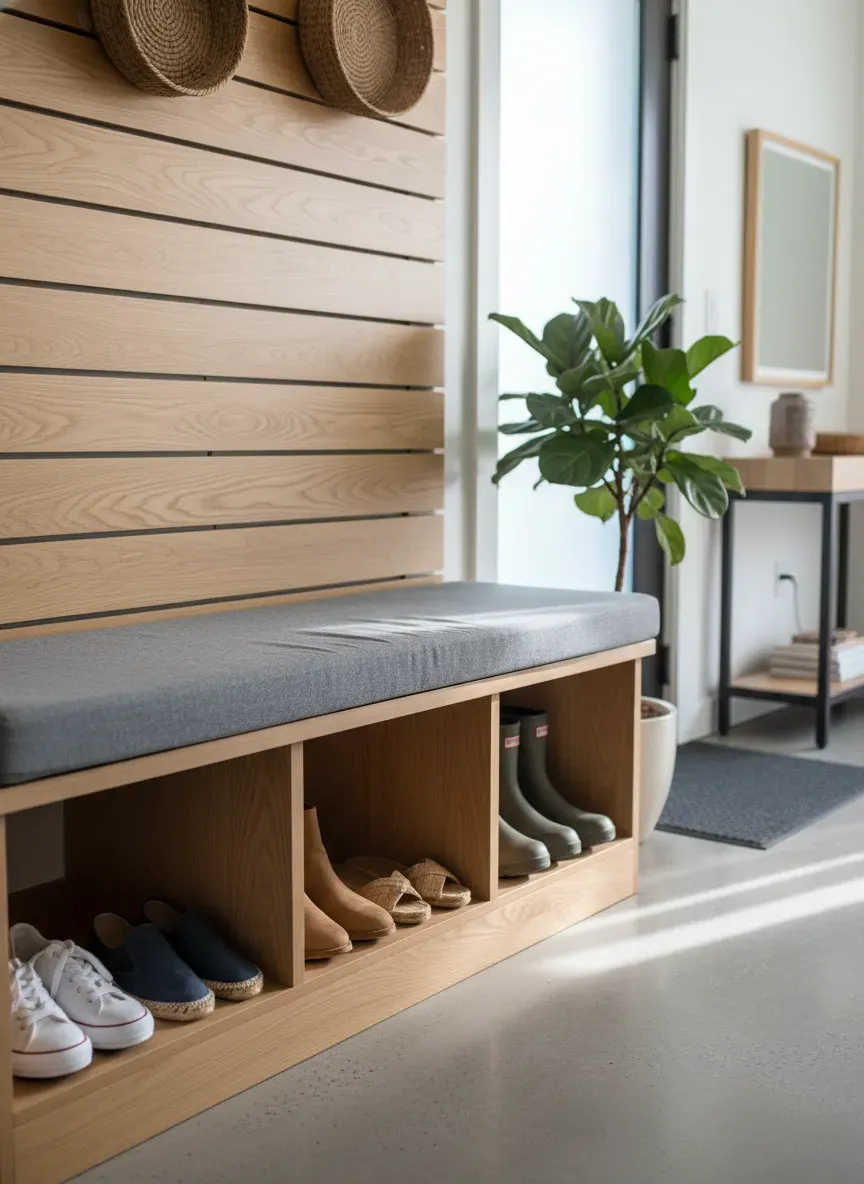
A mudroom bench provides path-of-least-resistance organization. By offering a horizontal surface at a standard seating height (typically 18 inches off the ground), it invites the user to pause. The storage—whether cubbies, shelves, or hidden compartments—lives precisely where the shoes are removed. This microscopic reduction in friction is the secret to maintaining a spotless entryway.
The 10 Best Mudroom Benches with Shoe Storage
1. The Prepac Wide Hall Tree Bench
If you possess the wall space for a comprehensive unit, the Prepac Wide Hall Tree Bench is an absolute juggernaut of organization. I love this piece because it eliminates the need for a separate coat rack. It features a sprawling lower bench section segmented into 24 individual shoe cubbies. Let that sink in. Twenty-four pairs of shoes, instantly categorized.
The brilliance here lies in the cubby dimensions. They are appropriately sized for men’s oxfords and women’s flats, keeping them separated so they don’t scuff against one another. The composite wood construction wrapped in a durable laminate holds up exceptionally well against daily abrasion, while the upper hooks manage heavy winter parkas without buckling.
2. Vasagle Industrial Shoe Bench
For urban apartments or homes leaning into a modern warehouse aesthetic, the Vasagle Industrial Shoe Bench delivers an incredibly high strength-to-weight ratio. Engineered with a powder-coated steel frame and a dense engineered wood top, it can easily support over 190 pounds of static weight.
You’ll notice that the shelving consists of tight metal mesh. This is a critical design feature. Solid shelves accumulate dirt and dried mud, requiring constant wiping. Mesh shelves allow dirt to fall straight through to the floor, meaning you only have to run a vacuum underneath the bench once a week rather than scrubbing individual compartments. It’s a low-maintenance dream for households tracking in heavy debris.
3. Walker Edison Farmhouse Barn Door Bench
Sometimes, the visual chaos of visible shoes is just as stressful as having them scattered on the floor. Enter the Walker Edison Farmhouse Barn Door Bench. This unit features a smooth-gliding barn door mechanism operating on an exposed metal track.
You can slide the door to conceal the messiest boots while leaving aesthetic baskets exposed on the other side. The MDF construction is reinforced with high-grade structural hardware, preventing the swaying or wobbling common in flat-pack furniture. I highly recommend this unit for transitional living spaces where your entryway flows directly into your living room, demanding a more polished, furniture-grade appearance.
4. Bush Furniture Salinas Hall Tree with Shoe Storage Bench
Leaning heavily into a relaxed, coastal-cottage aesthetic, the Bush Furniture Salinas model brings a distinct warmth to a foyer. The tapered legs and curved base rails elevate the piece slightly off the floor, which visually lightens the bulk of the furniture in tighter spaces.
Its storage compartment utilizes a drop-down cabinet rather than open cubbies or sliding doors. This mechanical choice provides a wide, unobstructed cavity perfect for tossing in awkwardly shaped items like rollerblades, oversized rain boots, or even dog leashes. The tumbled pewter hardware adds a tactile richness that elevates the entirely engineered-wood construction.
5. Home Decorators Collection Oxford Bench
When you need your entryway to feel like a bespoke, built-in architectural feature, the Oxford Bench steps up to the plate. Built from a combination of solid hardwood and robust MDF, this bench relies on a traditional flip-top lid.
Here’s the real kicker regarding flip-top mechanics: safety. The Oxford integrates slow-close pneumatic hinges. If you have toddlers running around, the last thing you want is a heavy wooden lid slamming down on little fingers. The interior cavity is cavernous, easily swallowing up knee-high winter boots that simply do not fit in standard 6-inch cubbies.
6. Sauder Boulevard Cafe Upholstered Bench
Comfort often takes a backseat to utility in mudroom design, but the Sauder Boulevard Cafe bench marries both effortlessly. It features an integrated, tufted cushion upholstered in a resilient, stain-resistant fabric.
Beneath the seating area lies a minimalist grid of powder-coated steel. Because the footprint is relatively shallow, it forces a disciplined approach to shoe storage. It won’t hold your family’s entire seasonal wardrobe, but it will perfectly manage the three or four pairs you wear daily. The perforated metal backboard adds a subtle industrial texture without overpowering the room.
7. Crosley Furniture Seaside Lodge Bench
Distressed finishes are highly strategic in high-traffic zones. The Crosley Seaside Lodge bench utilizes a heavily distressed, rubbed-through paint finish that actively hides the inevitable dings and scratches caused by errant umbrella tips and hockey sticks.
The shoe storage is divided into two deep, open bays. I suggest utilizing fitted rattan or wire baskets within these bays to modularize the storage. You can pull a basket out, dump the sandy flip-flops in the yard, and slide it back in without bringing the mess indoors. The beadboard detailing on the back panel provides a timeless, architectural quality.
8. Rivet Modern Upholstered Storage Bench
Mid-century modern enthusiasts often struggle to find mudroom furniture that doesn’t look like it belongs in a rustic farmhouse. The Rivet Modern bench solves this with clean lines, tapered wooden peg legs, and a heavily textured, woven upholstery.
The storage here is completely concealed within a sliding drawer system. This requires a bit more clearance in front of the bench to operate smoothly, but the visual payoff is immense. When closed, it simply looks like a high-end accent piece. It is ideal for formal foyers where guests are greeted immediately upon entry.
9. YITAHOME Shoe Cabinet Bench with Cushion
If density is your primary goal, the YITAHOME bench operates almost like a filing cabinet for footwear. It utilizes a tilt-out drawer mechanism. Instead of resting flat on shelves, shoes are stored vertically at an angle inside the drawers.
This mechanical pivot allows the bench to maintain an incredibly slim profile—often less than 12 inches deep—while still accommodating men’s size 12 sneakers. It is a masterpiece of spatial engineering for narrow urban hallways. The high-density foam cushion attached to the top ensures you don’t sacrifice comfort for this extreme level of utility.
10. Hoobro Narrow Shoe Bench
For those dealing with the absolute minimum amount of square footage—perhaps a side entrance or a tiny garage vestibule—the Hoobro Narrow bench is the ultimate space-saver. It features a rustic brown top board that acts as the seat, supported by a surprisingly rigid iron frame.
With two tiers of steel mesh shelving beneath the seat, it holds exactly what you need to get out the door. Its lightweight nature means you can easily physically pick it up to mop the floor beneath it, a highly underrated feature for utilitarian spaces.
Spatial Ergonomics: Fitting the Bench to Your Blueprint
Purchasing a bench purely based on aesthetics is a rookie mistake. The most beautiful piece of furniture will become a daily annoyance if it chokes the kinetic flow of your hallway. You have to map the physical footprint against the operational space required by humans moving through the area.
Navigating Clearance and Depth
First, consider the swing radius of your front door. A bulky bench placed too close to the hinges will prevent the door from opening fully, causing immediate structural damage to both the door frame and the bench.
When planning your layout, naturally, understanding standard locker depth requirements is critical before committing to a bulky piece. A standard bench depth runs between 15 to 18 inches. This provides enough surface area for an adult to sit comfortably without feeling like they are sliding off. However, if your hallway is tight, you might find yourself navigating the sweet spot between 12 and 24 inches of clearance to ensure two people can walk past each other without turning sideways. If you are operating in a narrow corridor, tilt-out storage or slimline wire racks are mandatory to preserve that essential walking path.
Pro Tip: Tape out the dimensions of your prospective bench on the floor using blue painter’s tape. Leave it there for 48 hours. Walk past it with a load of groceries. Try putting on your shoes within that taped box. This physical rehearsal will instantly reveal if a piece is too large for your space.
Material Science: What Survives Winter Slush and Summer Sand?
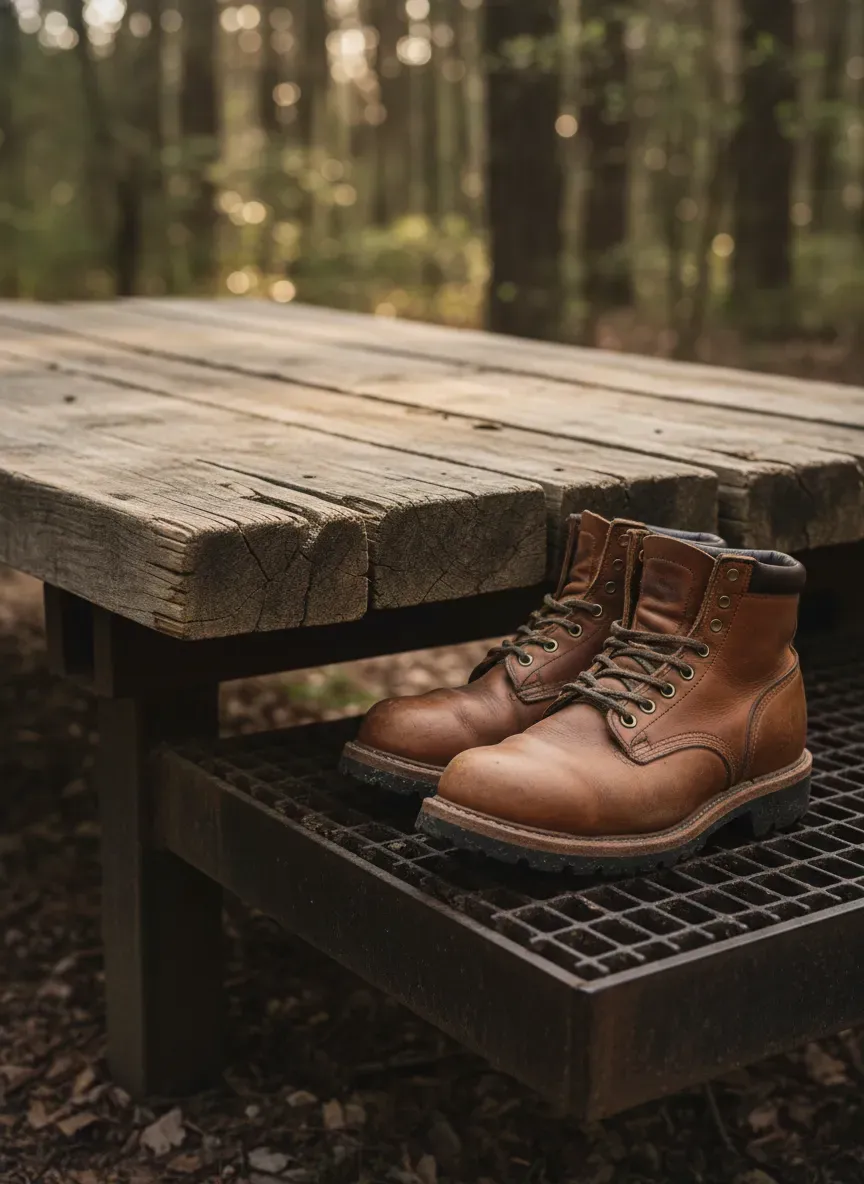
The entryway is a hostile environment for furniture. It is subjected to rapid temperature fluctuations, high humidity from wet coats, abrasive particulate matter (sand, salt, gravel), and heavy impact forces. Choosing the right material dictates whether your bench lasts a decade or a season.
Solid Wood vs. Engineered Composites
Solid hardwoods—like oak, maple, or acacia—offer unmatched longevity and the ability to be sanded and refinished if they take heavy damage. However, solid wood expands and contracts with humidity. If your entryway is poorly insulated, a solid wood top might warp over time.
Engineered woods (MDF or particleboard wrapped in melamine or laminate) are incredibly stable in fluctuating temperatures. They won’t warp. The weakness here lies in the edge banding. If water from a melting snow boot sits on a poorly sealed MDF seam, the core will absorb the moisture, swell like a sponge, and ruin the piece entirely. If you opt for an engineered wood bench, ensure it has a high-quality, seamless laminate finish, or use a waterproof boot tray on the bottom shelf.
The Metal Advantage
Powder-coated steel is the undisputed king of mudroom durability. The powder-coating process bakes the color onto the metal, creating a thick, protective skin that is highly resistant to chipping, rusting, and scratching. Unlike painted iron, which will flake when struck by a heavy boot, powder-coated steel absorbs the impact.
If your aesthetic leans toward metal, ensure the joints are fully welded rather than just bolted together. Bolted joints will slowly loosen over time as weight is repeatedly applied and removed from the bench, leading to an annoying squeak every time you sit down.
The Hidden Physics of Shoe Storage
Not all shoe storage is created equal, and failing to account for the physical dimensions of your family’s footwear will render your new bench useless.
The Boot Dilemma
Standard cubbies are engineered for low-top sneakers and flat dress shoes, usually offering about 5 to 6 inches of vertical clearance. If you live in a climate that demands heavy winter wear, Hunter boots, or Blundstones, a standard cubby bench will fail you. You must seek out benches with adjustable shelving or asymmetrical storage bays that offer at least 12 to 14 inches of vertical height on one side.
The Ventilation Mandate
Footwear inherently traps moisture and odor. Storing damp shoes in a completely sealed, unventilated box—like a poorly designed flip-top bench—creates a microclimate perfect for mold and mildew.
If you prefer closed storage to hide the visual clutter, look for designs that incorporate louvered doors, rattan webbing, or a slight gap along the back panel to allow for passive airflow. The Walker Edison barn door model excels here, as the sliding track leaves a natural gap for air to circulate even when the door is technically “closed.”
Mistakes Homeowners Make When Outfitting a Mudroom
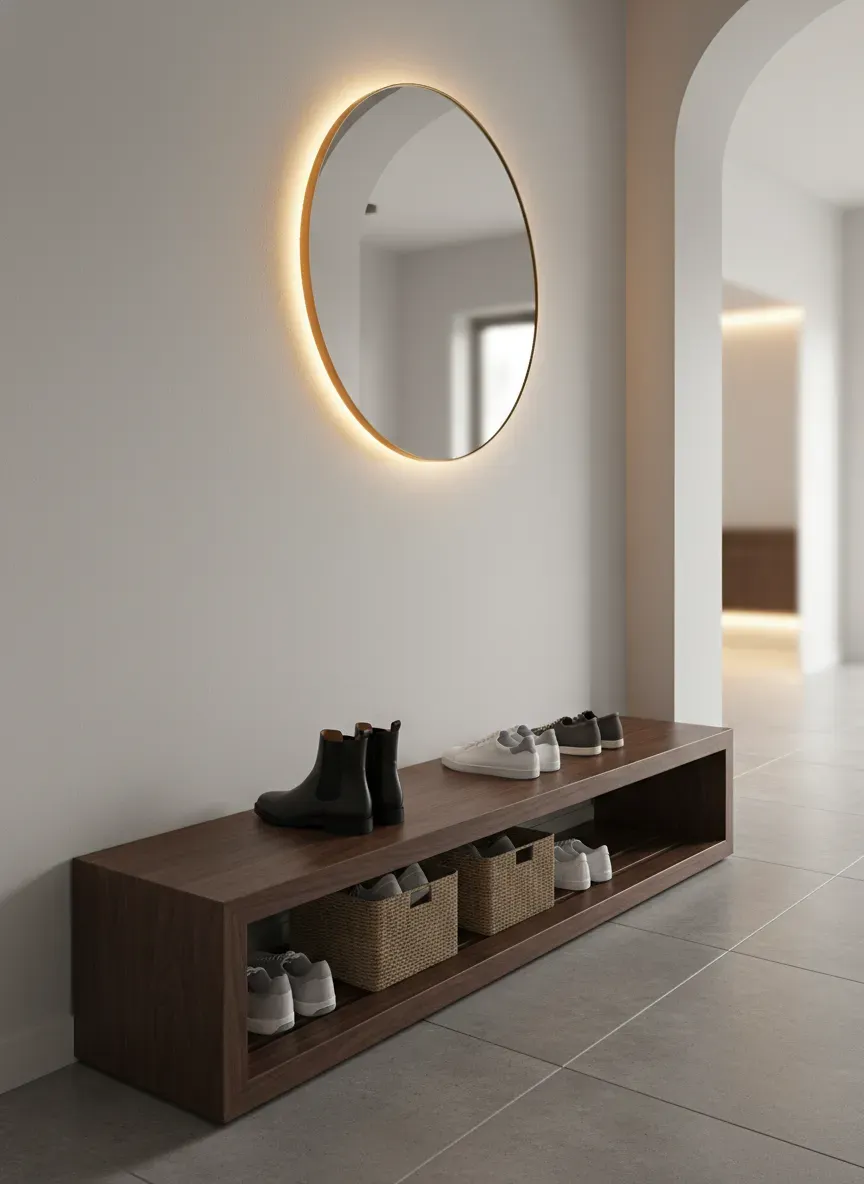
Even armed with the best furniture on the market, execution can falter. I see the same organizational traps play out time and time again.
Key Takeaways for Flawless Execution:
- Underestimating Weight Capacity: Do not buy a bench rated for 150 pounds if a 200-pound adult will be sitting on it daily to lace up work boots. Always look for a static load capacity exceeding 250 pounds to account for the dynamic force of someone dropping down onto the seat.
- Ignoring Baseboards: If your home features thick, decorative baseboards, a bench with a solid back panel won’t sit flush against the wall. This leaves a gap where keys, mail, and small items will inevitably fall. Look for benches with recessed backs or legs that allow the unit to clear the baseboard.
- Failing to Modularize: A bench alone isn’t a complete system. Pair your bench with heavy-duty woven baskets for the open shelves. Baskets act as organizational firewalls, keeping the dirt contained to a removable, cleanable vessel rather than grinding directly into the furniture.
- Neglecting the Floor Protection: A heavy wooden bench sliding on a hardwood floor will leave deep gouges over time. Always apply heavy-duty felt pads to the feet of your bench before loading it with weight. If the bench has metal legs, use rubberized slip-on caps to prevent scratching.
Pro Tip: Implement the “One In, One Out” rule at the door. A mudroom bench is a staging area, not a long-term archival storage unit. If the bench holds eight pairs of shoes, and you buy a ninth, an older pair must be relocated to a bedroom closet. Establishing this physical boundary prevents the entryway from regressing into a clutter zone.
The Final Verdict on Entryway Organization
Reclaiming your foyer from the chaos of daily life doesn’t require a massive architectural renovation. It simply demands intentionality. By introducing a structurally sound, intelligently designed mudroom bench, you are forcing organization into the natural flow of your home.
Whether you require the massive, compartmentalized capacity of a wide hall tree, the slim, tilt-out ingenuity of a narrow cabinet, or the rugged durability of an industrial steel rack, the correct piece of furniture changes the psychological tone of your house. Stop tripping over your own boots. Measure your space, assess your seasonal storage needs, and invest in a drop zone that works as hard as you do.
The Bottom Line: A well-executed entryway acts as a filter for the rest of your home. Secure a bench that handles your specific footprint and footwear demands, and watch the ambient stress of your daily departures and arrivals completely evaporate.