
15 Best Built-In Mudroom Bench and Locker Ideas for a Clutter-Free Entryway
Discover expert-level built-in mudroom bench and locker concepts. Transform your chaotic entryway into a highly functional, architecturally stunning drop zone.
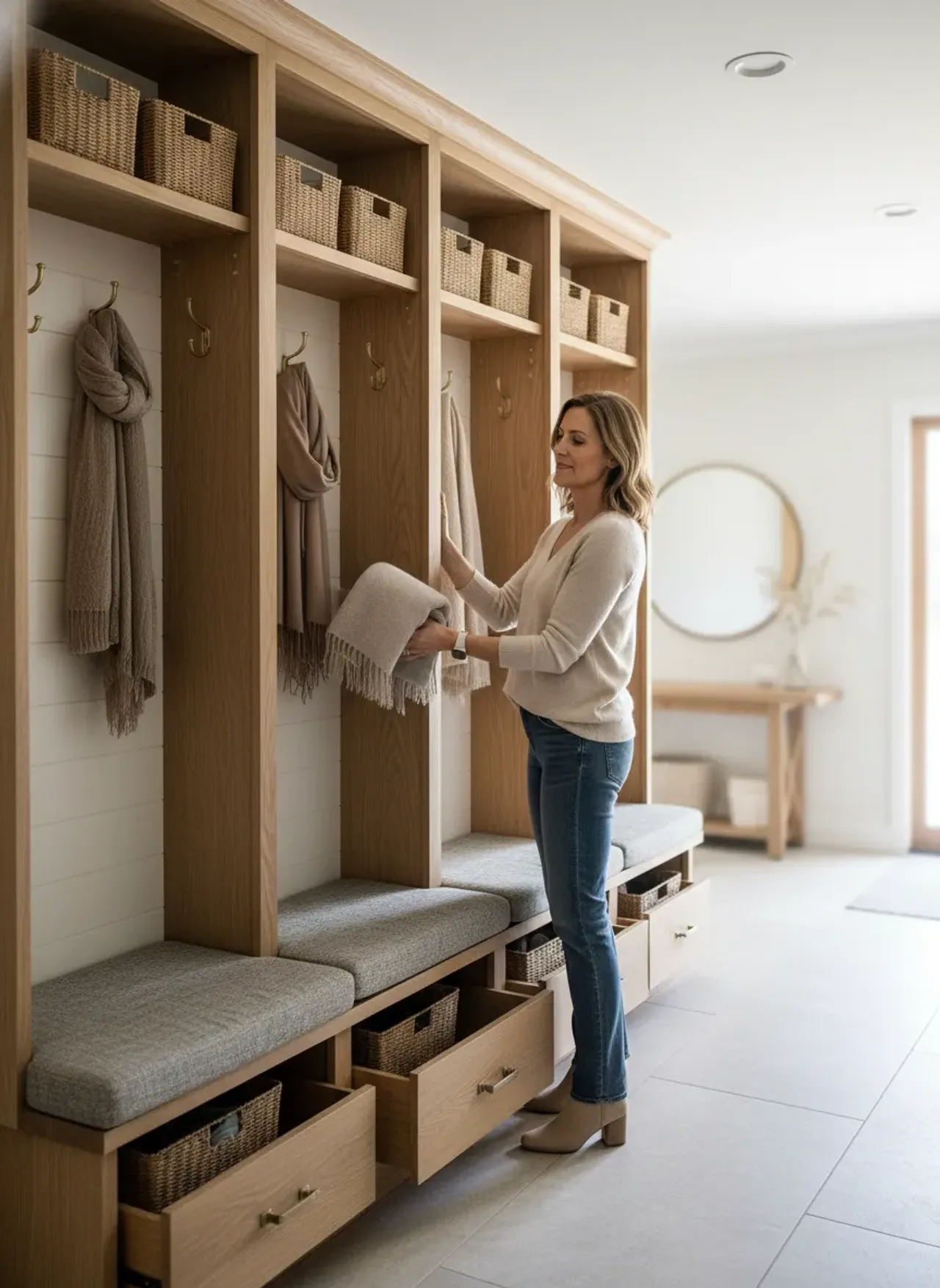
Mar 14, 2026 - Written by: Linda Wise
The entryway is the tactical command center of your home. If your current setup resembles a chaotic dumping ground for stray cleats, damp coats, and an endless avalanche of cardboard boxes, you are certainly not alone. I’ve personally found that the fundamental difference between a stressful, cluttered arrival and a seamless homecoming lies entirely in architectural intentionality.
You cannot simply throw a freestanding bench against a wall and expect it to handle the aggressive daily friction of modern family life. True functionality requires dedicated millwork. Built-in mudroom benches and lockers provide a bespoke spatial taxonomy—a specific, engineered home for every single item that crosses your threshold.
Before we dive into the specific design configurations that will revolutionize your floor plan, here is a quick look at the hardware and accessories I constantly specify for my own high-end residential builds.
Quick Comparison: Top Picks
| Product | Rating | Check Price |
|---|---|---|
| Heavy-Duty Cast Iron Coat Hooks | ⭐⭐⭐⭐⭐ | View on Amazon |
| Woven Seagrass Storage Baskets | ⭐⭐⭐⭐½ | View on Amazon |
| Customizable Linen Bench Cushion | ⭐⭐⭐⭐⭐ | View on Amazon |
The Anatomy of a High-Functioning Drop Zone
Understanding the theory behind entryway storage prevents costly construction mistakes. A mudroom must bridge the gap between heavy-duty utility and interior aesthetic continuity. It serves as the physical airlock between the harsh outside world and the sanctuary of your living room.
When you start conceptualizing your build, the dimensions are unforgiving. A locker that is too shallow becomes entirely useless for bulky winter gear, while one that is too deep swallows shoes into a dark, unreachable abyss. I cannot stress enough how critical the initial measuring phase is. For instance, determining exactly how deep your mudroom lockers need to be is the single most important mathematical decision you will make. It dictates whether the space feels incredibly bespoke or frustratingly cramped.
A successful built-in integrates three non-negotiable zones:
- The Lower Tier: Engineered for heavy footwear, muddy boots, and sports equipment. This needs durable, easily cleanable materials.
- The Seating Plane: An ergonomic transition area. It must be structurally sound enough to support multiple adults simultaneously.
- The Vertical Cache: Utilizing the wall space for coats, bags, and seasonal overflow.
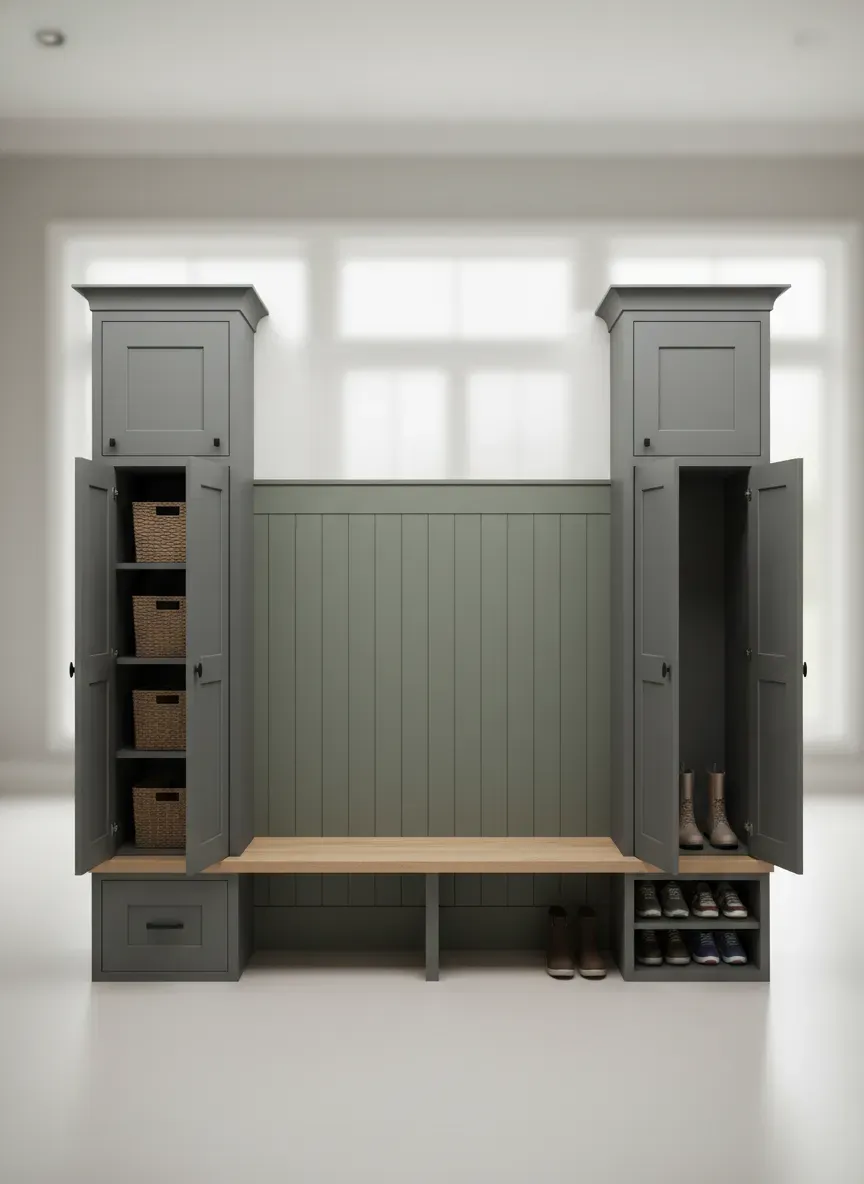
15 Best Built-In Mudroom Bench and Locker Ideas
Here are fifteen expertly curated architectural approaches to taming entryway chaos. These concepts range from traditional millwork to cutting-edge modern utility, ensuring there is a structural solution for every footprint.
1. The Floor-to-Ceiling Monolith
If you possess the ceiling height, use it. Taking your built-in cabinetry all the way to the crown molding draws the eye upward, making the room feel significantly larger while maximizing cubic storage volume. The topmost cubbies—often accessed only by a rolling library ladder or a step stool—become the perfect sanctuary for out-of-season gear like ski pants, heavy wool blankets, or obscure camping equipment.
2. The Shiplap and White Oak Synergy
Texture creates warmth. One of my favorite combinations pairs crisp, vertically oriented nickel-gap shiplap (painted in a highly durable, scuff-resistant satin enamel) with a thick, raw white oak bench seat. The oak provides organic visual relief and stands up brilliantly to the abrasive wear of denim rivets and metal zippers. Finish the wood with a hardwax oil rather than polyurethane; it allows you to easily spot-repair scratches without sanding down the entire bench.
3. Ventilated Athletic Lockers
For households managing relentless sports schedules, closed cabinetry quickly becomes an olfactory nightmare. Enter the ventilated locker. By integrating custom metal mesh inserts or louvered wooden panels into the cabinet doors, you allow continuous airflow. This passive ventilation actively dries damp hockey gear, soccer cleats, and rain-soaked jackets out of sight, preventing the buildup of mildew and bacteria.
4. Closed-Door Minimalism
Visual clutter induces psychological stress. If your priority is a pristine, showroom-quality aesthetic, opt for full-overlay slab doors that conceal every inch of your storage. When the doors are shut, the built-in mimics a seamless paneled wall. Push-to-open latch hardware eliminates the need for visible pulls or knobs, resulting in a hyper-modern, monolithic block that hides the chaotic reality of your family’s daily life.
5. The Corner L-Shape Configuration
Corners are notoriously difficult to utilize effectively, often becoming dead zones where umbrellas and boots pile up indiscriminately. An L-shaped built-in wraps the geometry of the room, doubling your seating capacity. The key to mastering this layout is the corner junction itself. I highly recommend designing the corner as an open, curved bench to avoid sharp hip-check hazards, shifting the vertical lockers strictly to the flanking straight walls.
6. Integrated Pet Stations
Our dogs and cats generate just as much clutter as we do. Forward-thinking mudrooms now feature dedicated architectural cutouts specifically for pet management. Imagine a lower bench cavity intentionally left open to house a custom-fit orthopedic dog bed, flanked by pull-out drawers that store thirty-pound bags of kibble in airtight bins. You can even plumb a pot-filler faucet directly over a built-in water bowl station to completely automate hydration.
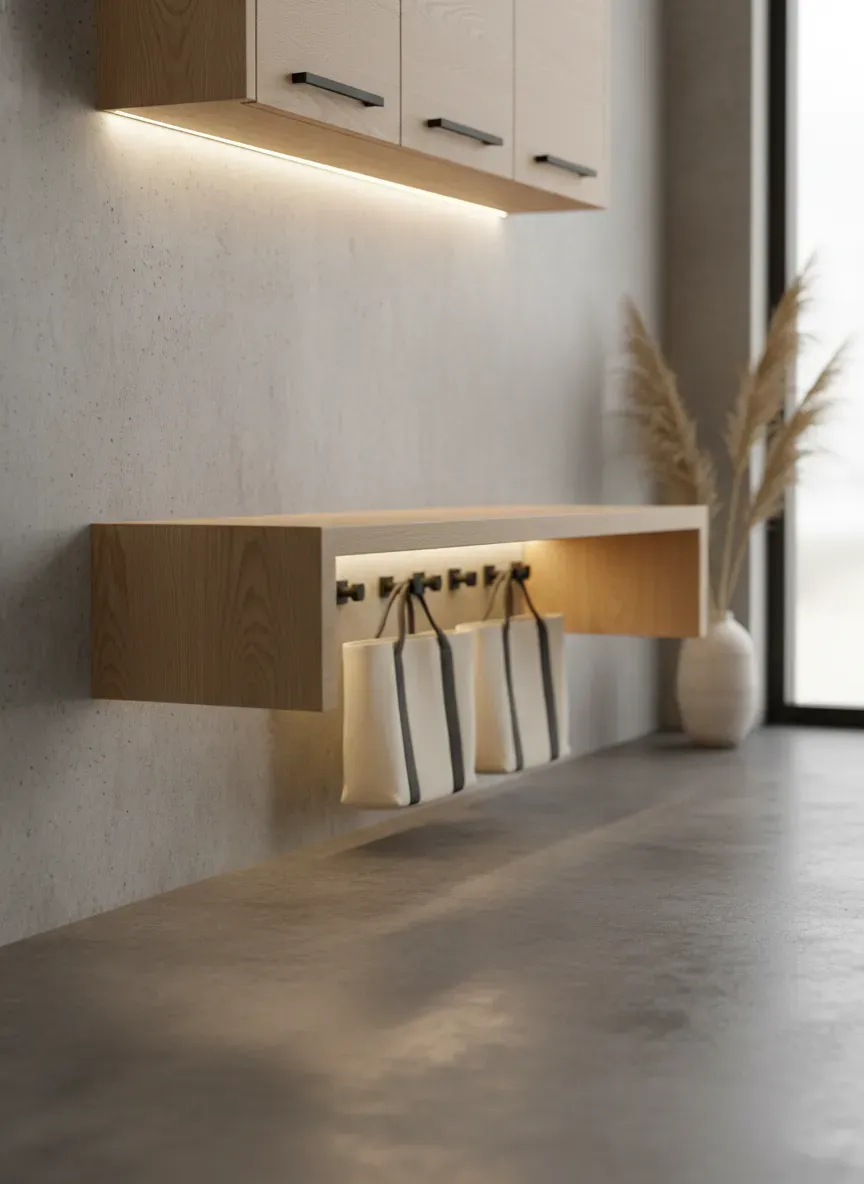
7. The Floating Bench Illusion
Traditional built-ins feature a solid toe-kick that meets the floor, but suspending the bench seat securely from the wall studs creates a striking “floating” illusion. This is particularly brilliant for tight, narrow hallways because exposing the floor underneath visually expands the footprint of the room. Furthermore, it allows a robotic vacuum to clean effortlessly beneath the drop zone, entirely eliminating dust bunnies.
8. Double-Tiered Open Cubbies
Why settle for one row of storage when two provides exponential utility? A double-tiered cubby system features a lower row of expansive baskets for daily-use items (sneakers, backpacks) and a secondary, slightly shallower upper row for smaller accessories (gloves, beanies, sunglasses). This forces a hyper-specific organizational hierarchy.
9. Color-Drenched Chromatic Continuity
We are witnessing a massive shift away from sterile white mudrooms. Color-drenching—painting the bench, lockers, shiplap backings, crown molding, and even the ceiling in a single, saturated hue—creates a moody, sophisticated atmosphere. Deep forest greens, rich navy blues, and muted terracottas camouflage dirt and scuff marks much better than bright whites, making this aesthetic choice surprisingly practical.
10. Slat-Wood Acoustic Paneling
Drawing heavy inspiration from Japandi design principles, incorporating vertical oak or walnut slats as the backing for your mudroom bench introduces incredible architectural rhythm. Beyond the stunning visual texture, the felt backing typically associated with acoustic slat panels absorbs echoing noise. This significantly dampens the chaotic clatter of dropping keys, slamming doors, and heavy boots in what is usually a highly reverberant space.
11. The Beadboard Classic
For historic homes, modern slab cabinetry feels jarringly out of place. Beadboard paneling offers an immediate injection of classic, coastal, or cottage character. To elevate this traditional look, I suggest using beadboard that features a wider plank profile rather than the standard narrow grocery-store paneling. Pair it with unlacquered brass hardware that will naturally patina over time, reacting to the oils on your hands to create a living finish.
12. Industrial Pipe and Wire Mesh
If your entryway endures extreme abuse—perhaps on a working farm or a highly active rural property—delicate millwork will not survive. An industrial-grade built-in using welded square steel tubing for the framework and heavy-gauge wire mesh for the locker dividers is virtually indestructible. Combine this aggressive metal framework with reclaimed scaffold boards for the bench seat to achieve an authentic, rugged aesthetic that wears its scars proudly.
13. Drawers Over Open Shoe Bins
The classic mudroom mistake is leaving all footwear exposed in open cubbies right at floor level. It always looks messy, regardless of how neatly you align your sneakers. The superior structural solution is installing deep, heavy-duty soft-close drawers directly beneath the bench seat. These drawers completely hide the visual noise of twenty pairs of shoes. Reserve a minimal open cavity underneath the drawers exclusively for sliding in the single pair of slippers or boots you are currently wearing.
14. The Charging Station Niche
Modern life is tethered to lithium-ion batteries. Integrating a recessed technology niche directly into your locker framework solves the problem of tangled cords cluttering your kitchen counters. Hide electrical outlets featuring direct USB-C ports inside a shallow, eye-level cabinet. This becomes the designated drop zone for iPads, smartphones, and wireless earbuds, ensuring every device is fully charged before you walk out the front door.
15. The Individual “Stall” Approach
When you have multiple children, territorial disputes over storage space are inevitable. Designing distinct, physically separated locker “stalls” gives each family member definitive ownership of their real estate. Use solid plywood dividers that run from the bench seat all the way to the upper cubbies.
Pro Tip: Nothing ruins the functionality of these beautiful individual stalls faster than overcrowded winter gear. I constantly remind my clients to prioritize calculating the ideal spacing between hooks to prevent the dreaded “coat avalanche.” If your hooks are mounted too closely, taking one jacket off will inevitably drag three others onto the floor.
Practical Applications & Material Selection
The execution of a flawless mudroom built-in relies entirely on your material choices. Drywall and standard builder-grade MDF (Medium Density Fiberboard) simply cannot withstand the impact of heavy backpacks and wet umbrellas.
Substrate and Framing
For the core structure of your lockers, always specify ¾-inch cabinet-grade plywood. Birch or maple veneers are ideal because they take paint beautifully and hold screws with far greater tension than particleboard. If you choose to use MDF for the doors and trim to achieve a perfectly smooth, knot-free painted finish, ensure it is moisture-resistant MDF (often green-core). Standard MDF swells irreparably the moment a wet snow boot sits against it for too long.
The Seating Surface
The bench seat requires robust structural integrity. You’ll notice that standard pine boards dent easily under the pressure of sharp objects or heavy buckles. Hardwoods like white oak, ash, or hickory are infinitely superior. If you are painting the bench to match the lockers, consider a solid maple top—it is incredibly dense and provides an unyielding surface for a hard enamel paint finish.
Hardware Resiliency
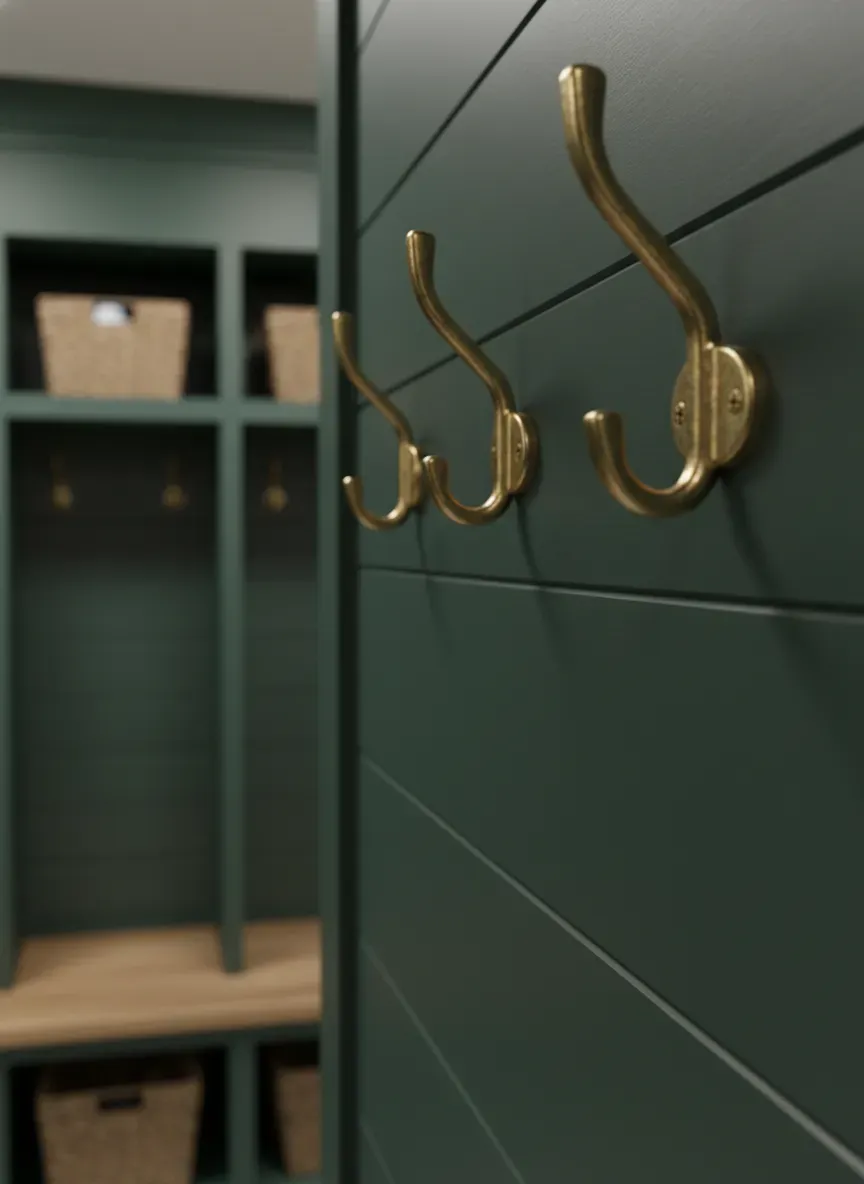
Do not skimp on your hooks or drawer slides. Heavy winter coats holding wet scarves and keys weigh significantly more than you think. Sourcing hardware that is over-engineered for the task is crucial. A set of Heavy-Duty Cast Iron Coat Hooks will easily support massive loads without ripping out of the wood. Mount these hooks securely into solid wood blocking, never just into paneling or drywall.
For drawers, insist on under-mount, soft-close hardware rated for at least 100 pounds. When a drawer is fully loaded with heavy winter boots, cheap side-mount slides will warp, buckle, and eventually fail, leaving you with a stuck drawer that ruins the functionality of the entire unit.
Softening the Space
Millwork is inherently rigid and angular. To introduce tactile comfort, integrate a custom-upholstered seating pad. A Customizable Linen Bench Cushion made with high-density memory foam provides necessary ergonomic relief when lacing up complex footwear. Choose performance fabrics—like those treated with Crypton or high-grade outdoor canvas—so you can easily scrub away mud stains without ruining the textile.
To manage loose items on the upper shelves, deploy Woven Seagrass Storage Baskets. The organic woven texture breaks up the monotonous flat planes of painted cabinetry while aggressively concealing winter hats, dog leashes, and reusable grocery bags.
Common Pitfalls When Designing Entryway Storage
Even the most beautiful Pinterest-worthy mudrooms can fail spectacularly in real-world applications. Here are the most egregious errors I see homeowners and inexperienced contractors make.
- Neglecting Baseboard Integration: A built-in should look like it grew out of the architecture of the house. Dropping a cabinet against a wall and leaving the room’s baseboard running behind it looks incredibly cheap. The correct method involves removing the existing baseboards, installing the built-in flush to the drywall, and then wrapping the baseboard seamlessly around the bottom of the new cabinetry.
- Inadequate Shoe Clearance: A standard men’s winter boot is tall. If you design your lower shoe cubbies based on the height of a low-profile sneaker, you will render the storage useless for six months of the year. Always measure your tallest piece of footwear and add two inches of breathing room.
- Ignoring Outlet Placement: Before the framing stage begins, locate your electrical outlets. Building a massive locker system that permanently covers the only wall outlet in the hallway is an amateur mistake. Relocate outlets to the interior of the lockers or bring them forward onto the baseboard of the bench.
- Poor Lighting: Mudrooms are highly functional spaces that require excellent visibility. Relying on a single overhead flush-mount light casts harsh shadows directly into the locker cavities. Integrate low-voltage LED channel lighting under the upper cubbies to illuminate the seating area, or wire hardwired library sconces above each locker stall for a dramatic, high-end hotel aesthetic.
- Failing to Account for HVAC: If your proposed built-in wall contains a forced-air return vent or a heating register, you cannot just cover it up. You must construct a ducted channel through the base of your cabinetry and install a custom toe-kick register. Blocking airflow alters the atmospheric pressure of your home and severely damages your HVAC efficiency.
Key Takeaways
- Prioritize Millwork: Custom built-ins provide structural resilience that freestanding furniture cannot match.
- Measure Relentlessly: Locker depth and hook spacing dictate the ultimate success or failure of the project.
- Embrace Ventilation: Wet gear requires airflow. Integrate mesh or louvers if you opt for closed cabinetry.
- Invest in Hardware: Soft-close drawer slides and cast iron hooks are mandatory for long-term durability.
- Blend Aesthetics with Brutal Utility: Use hard-wearing materials like white oak and performance fabrics without sacrificing your home’s design vernacular.
The Bottom Line: Designing a mudroom is an exercise in anticipating human behavior. We naturally drop our burdens the second we walk through the door. By implementing a highly structured, architecturally sound built-in locker system, you are not fighting against that natural instinct; you are intelligently accommodating it. The result is a home that greets you with order, serenity, and a perfectly engineered spot for your favorite jacket.