
15 Small Entryway Shoe Storage Ideas
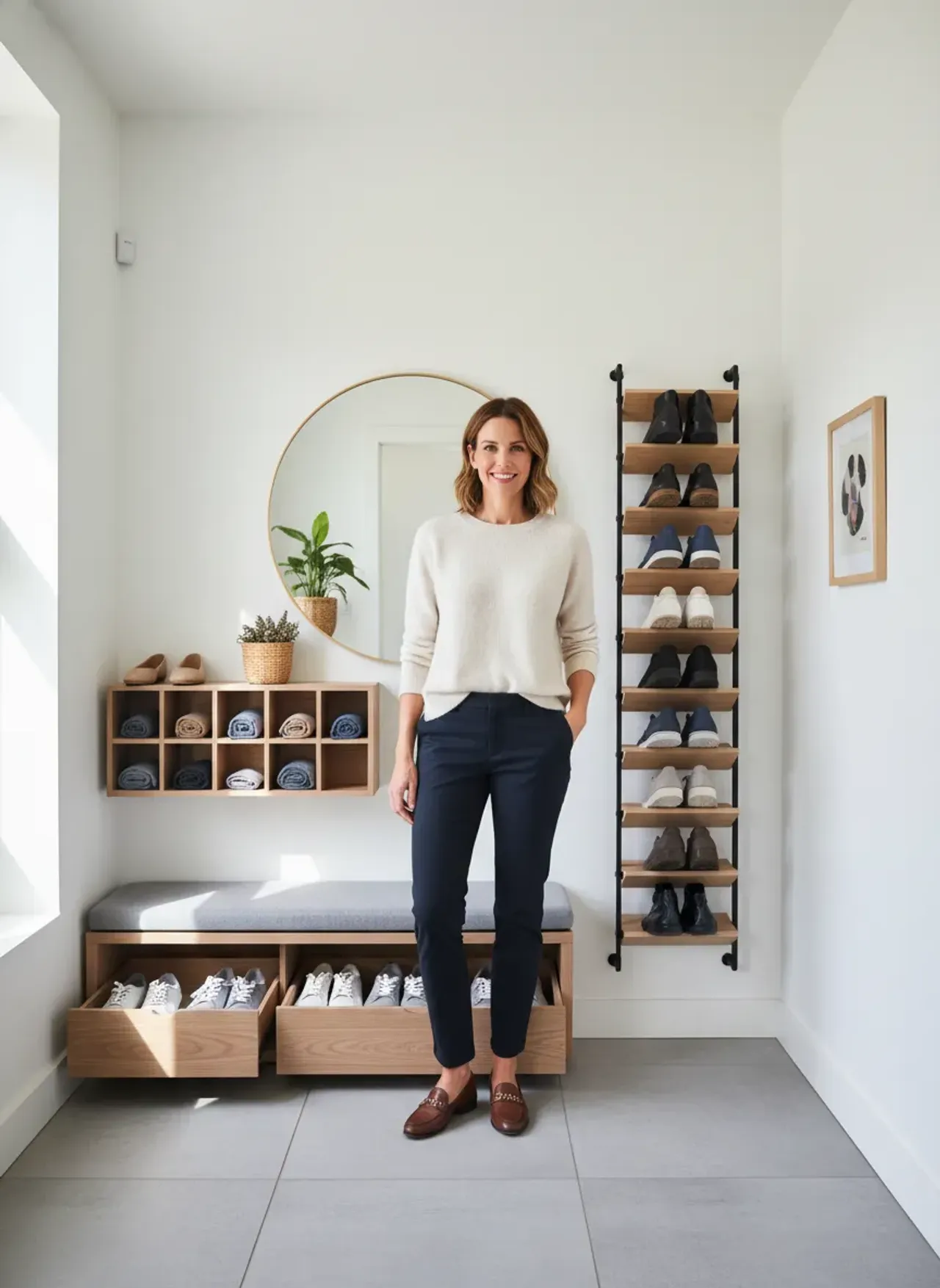
Tired of tripping over sneakers? Discover 15 brilliantly engineered small entryway shoe storage ideas that maximize space without sacrificing aesthetic appeal.
Mar 15, 2026 - Written by: Linda Wise
I remember the exact moment I realized my entryway was a hazard zone. It involved a rogue winter boot, a hastily balanced cup of scalding coffee, and a very bruised shin. Small entryways aren’t just mildly frustrating; they represent a fundamental failure in household logistics. You walk through the front door expecting the sanctuary of home, and immediately, your space greets you with a chaotic barricade of footwear.
We tolerate this friction daily because we falsely believe a tight footprint limits our options to ugly plastic trays or wobbly wire racks. Shift your perspective. The constraints of a tiny vestibule actually force brilliant, highly customized design solutions. When square footage is scarce, you have to engineer vertically, think multi-dimensionally, and demand that every piece of furniture pulls double duty.
I’ve personally found that conquering entryway clutter transforms the entire psychological landscape of a home. You breathe easier. Guests aren’t doing an awkward tap-dance over your running shoes. To get you started on this transformation, I’ve curated a meticulous breakdown of storage solutions that range from clever retail finds to weekend DIY projects.
Quick Comparison: Top Picks
Before we dive into the architectural theories and custom hacks, here are three brilliantly engineered, off-the-shelf solutions that consistently solve the small entryway dilemma.
| Product | Rating | Check Price |
|---|---|---|
| Slim Tipping Shoe Cabinet | ⭐⭐⭐⭐⭐ | View on Amazon |
| Industrial Entryway Bench with Shoe Rack | ⭐⭐⭐⭐½ | View on Amazon |
| Over-the-Door Hanging Shoe Organizer | ⭐⭐⭐⭐ | View on Amazon |
Vertical Ascendancy: Reclaiming Your Walls
When floor space is non-existent, the only logical direction is up. Most homeowners drastically underutilize their vertical real estate, treating walls merely as places to hang art rather than structural opportunities for storage.
1. The Tipping Bucket Mechanism
The physics of the tipping bucket cabinet are nothing short of genius. Standard shelving requires a depth of at least 12 inches to accommodate an adult shoe sitting flat. By utilizing a hinged mechanism that stores shoes at a sharp angle, these cabinets slash the required depth down to a mere 6 or 7 inches. They sit flush against the wall, masquerading as a sleek console table. You can drop your keys on top, while your bulky sneakers remain entirely hidden inside.
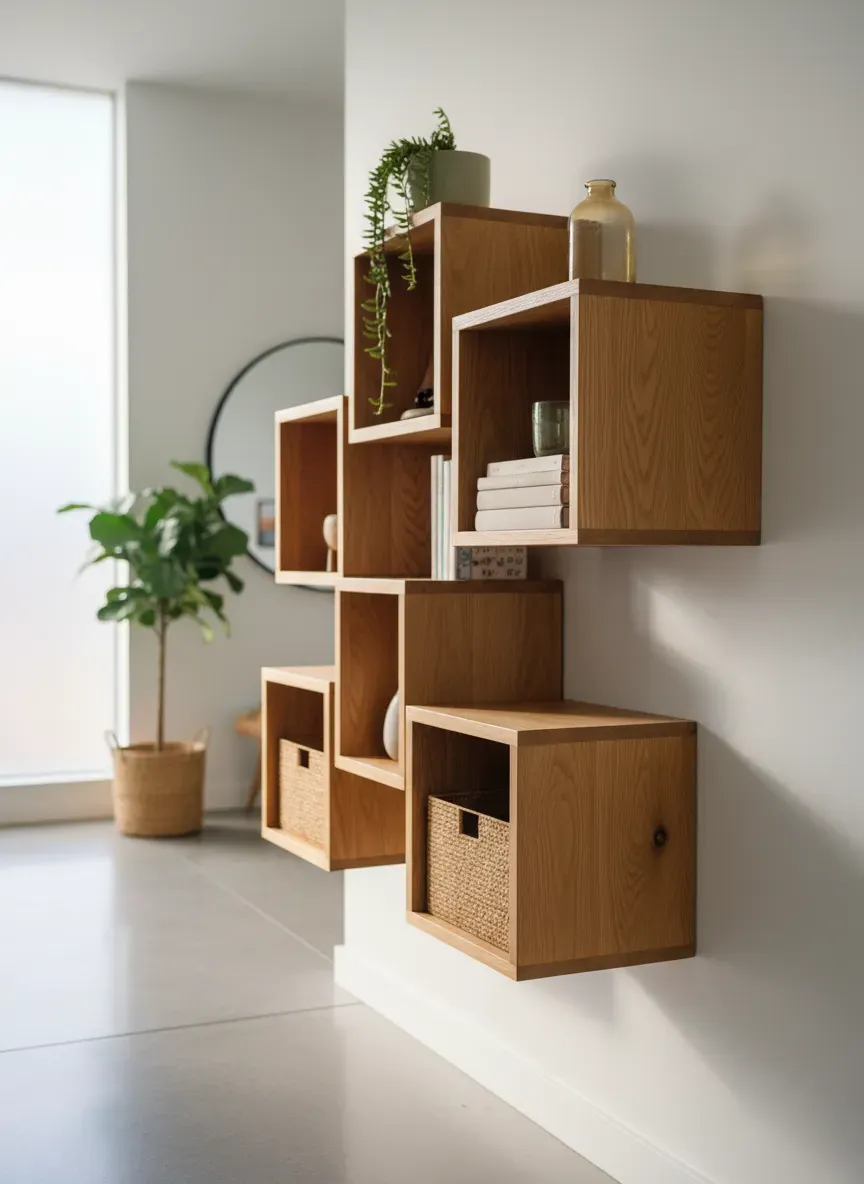
2. Cantilevered Floating Cubbies
Heavy, floor-bound furniture visually shrinks a room. Floating wooden cubbies, anchored securely to your wall studs, solve this optical illusion. By keeping the floor entirely visible beneath the unit, you trick the human eye into perceiving a much larger square footage. I recommend staggering these cubbies asymmetrically. It breaks up the rigid geometry of a narrow hallway and provides customized nooks—taller slots for ankle boots, shorter ones for loafers.
3. The Industrial Pegboard Wall
Typically relegated to garages and workshops, heavy-duty pegboards are experiencing a renaissance in modern interior design. Mount a floor-to-ceiling slab of birch or matte-black pegboard right next to your door. Using wooden dowels, you can create a highly modular, infinitely adjustable shoe wall. Need to accommodate towering winter boots in January? Move the pegs. Switching to flat sandals in July? Reconfigure the layout in seconds.
4. Tension Rod Alcove Engineering
If your entryway features a strange, recessed alcove—perhaps a quirk of old architecture—don’t board it up. Instead, install heavy-duty tension rods across the gap. Placed in parallel pairs (one slightly higher in the back, one lower in the front), these rods cradle your shoes perfectly. It’s a completely drill-free intervention, making it the holy grail for renters who want zero damage left behind.
5. The Leaning Ladder Rack
Sometimes, drilling into plaster isn’t an option. The leaning ladder rack operates on gravity and friction. Its wide base grips the floor while the angled top rests gently against the wall. The rungs serve as perfectly spaced tiers for your footwear. Because the structure is inherently open, it allows wet shoes to breathe and dry effectively, preventing that notorious damp-sneaker odor from permeating your house.
Camouflaged Utility: Furniture That Lies
If a piece of furniture in a small vestibule only serves one function, it’s wasting space. Multi-tasking is mandatory.
6. The Upholstered Storage Bench
It looks like a plush, inviting place to sit while you tie your laces. Underneath, however, it’s a vault. Look for benches that utilize a gas-strut hinge, allowing the lid to stay open hands-free. This is where you stash the off-season footwear. Your heavy winter pac-boots live here during the summer, completely out of sight.
7. Vintage Trunks with Compartmentalized Inserts
I love the juxtaposition of a battered, antique steamer trunk sitting in a modern entryway. It injects instant character. But throwing shoes into a hollow trunk creates a disorganized nightmare. The secret is fabricating rigid, grid-like inserts out of thin plywood or heavy corrugated plastic. This transforms the cavernous interior into precise, individual cubbies, protecting your expensive leather brogues from getting scuffed by dirty sneaker soles.
8. Drop-Down Console Tables
A high-end console table often features what looks like a solid, decorative front panel. In reality, that panel drops down on soft-close hinges to reveal a shallow shoe rack. When calculating the spatial tolerances for this kind of built-in look, it’s critical to factor in the swing radius of the doors. If you’re designing a larger built-in system around this concept, you might want to consult a comprehensive mudroom locker depth guide to ensure your drop-down doors don’t collide with opposite walls.
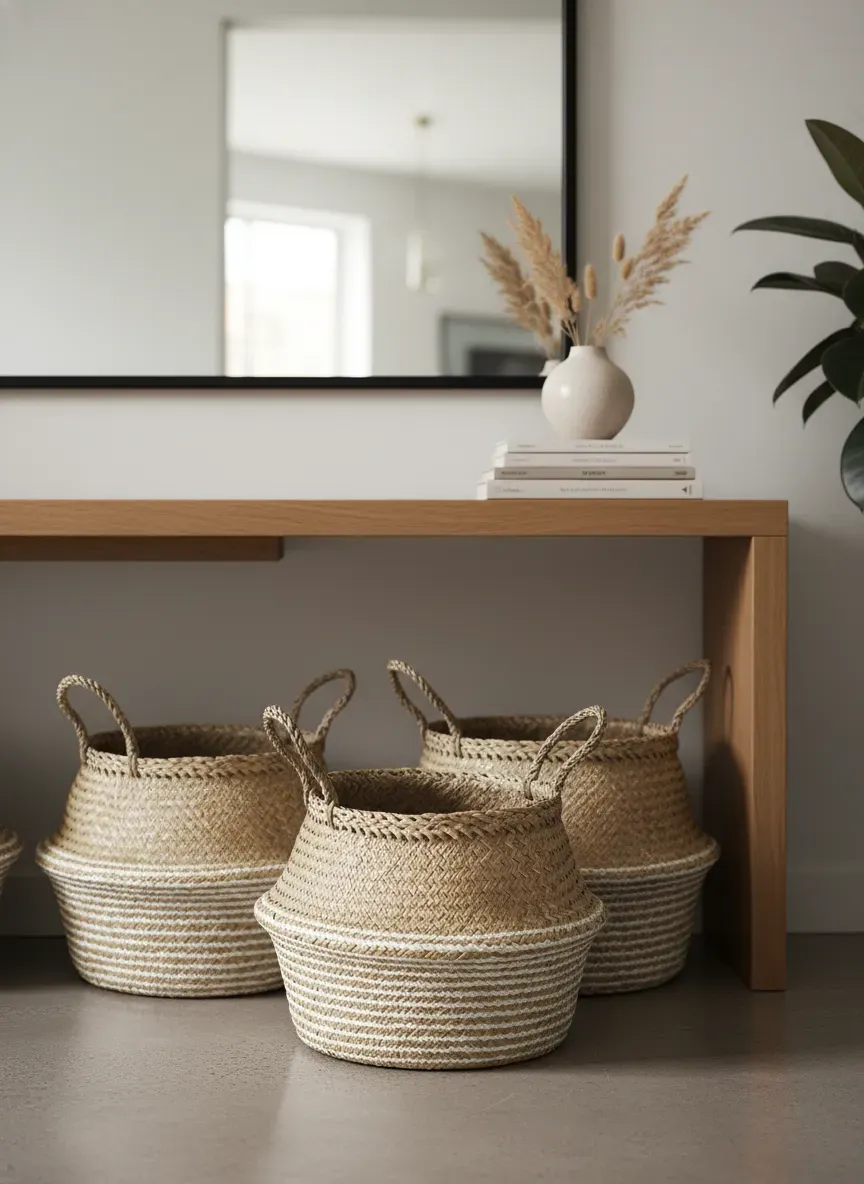
9. Woven Belly Baskets Under Open Consoles
Not all shoes need to be meticulously lined up. Flip-flops, canvas slip-ons, and children’s shoes are often better suited for the “drop and go” method. Slide two or three oversized, structured seagrass baskets beneath a minimal metal console table. The baskets add vital textural warmth to the entryway while swallowing a massive volume of casual footwear in an instant.
10. The Hollow Ottoman Cube
If your entryway barely has room to open the front door, a massive bench won’t work. Instead, opt for a single, structured ottoman cube. Choose one with a removable lid. It provides that essential seating for a quick shoe change, but internally, it holds exactly two pairs of your most frequently worn shoes. It’s the definition of a micro-solution for a micro-space.
Architectural Anomalies: Exploiting Dead Zones
Look closely at your entryway. There are pockets of space you are entirely ignoring because convention tells you they aren’t meant for storage.
11. Behind-the-Door Canvas Cascades
The space behind your open front door is a complete dead zone. Reclaim it. High-quality, heavy-canvas shoe organizers can be hung from the top hinges of the door itself. Avoid the cheap, clear plastic variants—they look instantly messy. Heavy cotton canvas or dyed linen organizers feel intentional and bespoke, blending into the background while holding up to a dozen pairs of low-profile shoes.
12. Radiator Cover Conversions
Older homes often feature bulky cast-iron radiators right in the entryway. Instead of viewing this as a nuisance, box it in. Build a slatted wooden radiator cover that extends an extra 10 inches on one side, creating built-in shelving. The residual heat from the radiator will actually help dry damp boots in the winter—just ensure you leave adequate ventilation gaps so you don’t bake your expensive leather goods.
13. Under-Stair Micro-Drawers
If your entryway features a staircase immediately upon walking in, you are sitting on a goldmine of cubic volume. The triangular wedge beneath the first few steps is usually sealed off with drywall. Knock it out. Install heavy-duty, full-extension drawer glides. You can create pull-out shoe racks that slide seamlessly into the architecture of the stairs. Navigating the sweet spot of 12 to 24 inches in depth requires precision here, ensuring the drawers pull out far enough to be useful without blocking the swing path of your front door.
14. Skirting Board Pull-Outs
This is an advanced carpentry hack, but the payoff is staggering. The bottom four inches of your cabinetry or walls—the toe-kick or skirting board area—is hollow. By converting your baseboards into shallow, rolling drawers on caster wheels, you create a hidden sanctuary for flat shoes. Sandals, slippers, and flats slide right under your existing furniture, completely invisible to the naked eye.
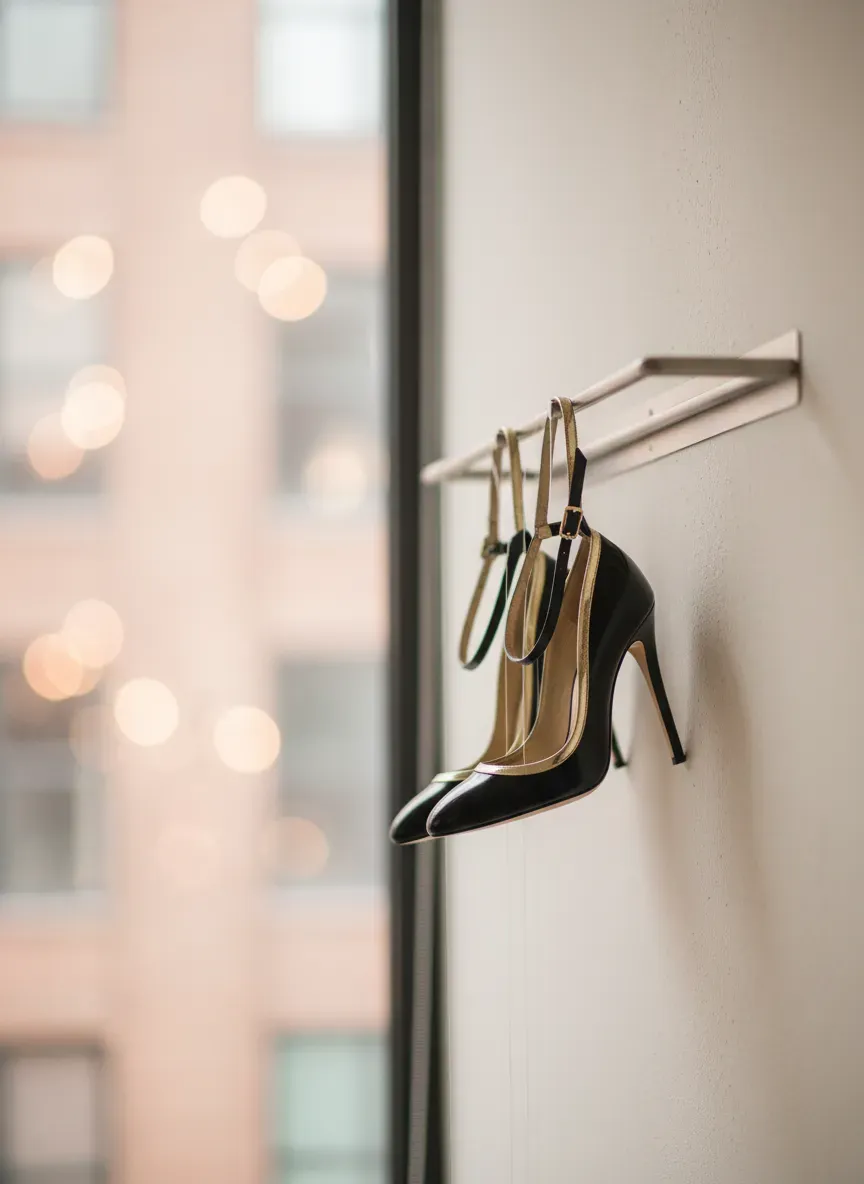
15. Crown Molding Shoe Rails
Heels possess a unique architectural advantage: they can hang. By installing a simple strip of picture-rail or crown molding a few feet off the ground along a narrow hallway, you create a ledge specifically designed to catch the heel of a pump. The shoes hang flush against the wall, creating a display that looks remarkably like modern art while keeping the floor completely clear.
The Theory of Spatial Ergonomics in Vestibules
You can buy all the storage solutions in the world, but if you don’t understand the physical flow of your specific space, you’ll still end up frustrated. Entryways are high-friction zones. People are usually moving quickly—rushing out to work, or stumbling in exhausted.
Pro Tip: Never place a shoe rack directly in the primary swing path of the door. Measure the exact arc of your door when fully opened. If your storage solution encroaches on that invisible boundary by even a half-inch, it will cause daily psychological annoyance and physical damage to your furniture.
Furthermore, consider the ergonomic footprint of the human body. When someone bends down to unlace a shoe, their body requires approximately 36 inches of clearance from the wall to their posterior. If your hallway is only 40 inches wide, placing a 12-inch deep shoe rack on the wall means nobody can comfortably bend over to use it. This is exactly why the tipping bucket mechanisms and floating shelves mentioned earlier are so critical—they respect the biomechanics of the human body in tight quarters.
Material Selection: Balancing Durability with Aesthetics
The entryway is arguably the harshest environment in your home. Shoes track in abrasive grit, corrosive road salt, pooling rainwater, and mud. Delicate materials will be destroyed here within a single season.
When selecting or building your storage:
- Avoid untreated particleboard: The moment a wet boot sits on cheap MDF, the material will swell, warp, and crumble.
- Embrace powder-coated steel: For wire racks or industrial shelving, powder coating resists rust infinitely better than standard paint.
- Seal your wood: If you are using natural timber for floating shelves or benches, it must be sealed with a marine-grade polyurethane or a hard-wax oil. You need a surface that allows you to wipe away a muddy footprint with a damp rag without stripping the finish.
- Implement drip trays: For any system holding winter boots, integrate a removable, washable silicone or copper drip tray at the base level. Protect your floors at all costs.
Key Takeaways
- Verticality is your greatest asset in a tight vestibule.
- Furniture must serve dual purposes—if you can’t sit on it or store things inside it, it doesn’t belong in a small entryway.
- Off-the-shelf items are great, but custom-built solutions that utilize the exact dimensions of your space will always yield superior results.
- Always factor in the swing radius of your front door and the ergonomic space required for a human to bend over.
The Bottom Line You do not have to live with a mountain of shoes blocking your front door. The solutions exist. The challenge lies merely in assessing your specific spatial constraints and executing a strategy that outsmarts your square footage. Stop throwing your boots in a pile and start engineering your entryway.
Here’s the real kicker: while the Amazon finds I mentioned earlier are fantastic quick-fixes, the absolute best way to maximize a strangely shaped, tiny entryway is to build the storage yourself. When you dictate the exact millimeter of a floating shelf or a hidden bench, you eliminate dead space entirely.
If you’re thinking, “I’m not a master carpenter,” don’t worry. I’ve personally found that having the right blueprints completely changes the game. You should absolutely check out Ted’s Woodworking. They provide an insane database of over 16,000 step-by-step woodworking plans, including hundreds of highly specific entryway benches, tipping shoe cabinets, and floating cubbies. The instructions are incredibly clear, even for total beginners, and right now you can grab access at a massive 75% discount. Build the exact piece your entryway desperately needs, and finally put an end to the shoe-clutter chaos.