
15 Small Hallway Decor Ideas to Make Your Entryway Feel Cozy and Welcoming
Discover 15 designer-approved small hallway decor ideas to transform your narrow entryway into a cozy, functional, and welcoming space with expert styling tips.
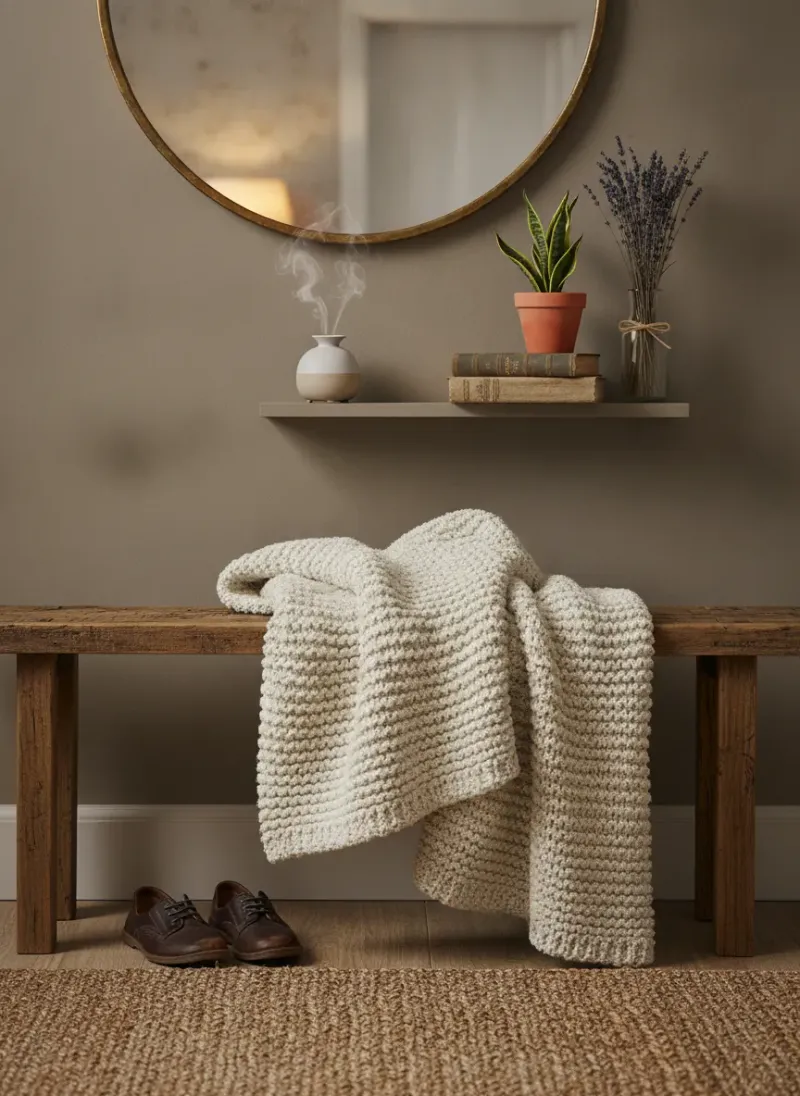
Jun 8, 2026 · Linda Wise
15 min readThe entryway is the handshake of your home. It is the very first space that greets you after a long, exhausting day, and it is the opening chapter of the story your home tells to guests. Yet, more often than not, the small hallway is treated as a utilitarian afterthought—a narrow landing strip where muddy shoes, discarded mail, and stray keys go to collect dust.
When you are dealing with a tight footprint, decorating can feel like a high-stakes puzzle. How do you inject personality and warmth into a cramped corridor without making it feel claustrophobic? The secret lies in a delicate balance of scale, lighting, and functional aesthetics. By shifting your perspective from “how do I squeeze furniture in here?” to “how can I maximize visual flow?”, you can transform even the tightest vestibule into an inviting, curated zone.
Below is a curated selection of highly effective, space-saving pieces designed to anchor your small entryway, balancing functional utility with high-end aesthetic appeal.
The Psychology of Small Space Transitions
Before diving into specific decor tactics, it is worth understanding how our brains perceive narrow transitions. In architectural psychology, a hallway is a high-velocity transit zone. Because we are constantly moving through it, our eyes naturally scan the horizon for light, open pathways, and vertical boundaries.
When a hallway is cluttered or poorly lit, it triggers a subtle “fight or flight” compression response. The walls feel like they are closing in. To counteract this, we must employ design strategies that encourage “slow-velocity” appreciation—elements that catch the eye, soften the boundaries, and draw the gaze upward rather than focusing on the narrowness of the floor.
15 Designer-Approved Small Hallway Decor Ideas
1. Embrace the Power of Floating Consoles
When floor space is at an absolute premium, legs are your enemy. Any furniture piece that sits flat on the floor instantly chops up the visual plane, making the hallway look smaller. A wall-mounted, floating console is a game-changer. By leaving the floor underneath completely clear, your eye tracks all the way to the baseboards, which instantly fools the brain into perceiving more square footage.
I highly recommend looking at the Nathan James Harper Floating Console Table. It offers a clean, minimalist profile with just enough drawer space to tuck away keys, wallets, and outgoing mail, without encroaching on your physical path.
- How to style it: Place a simple ceramic tray on top for daily essentials, and hang a round mirror directly above to balance the sharp horizontal lines of the shelf.
2. Layer Soft Textures with Low-Profile Runner Rugs
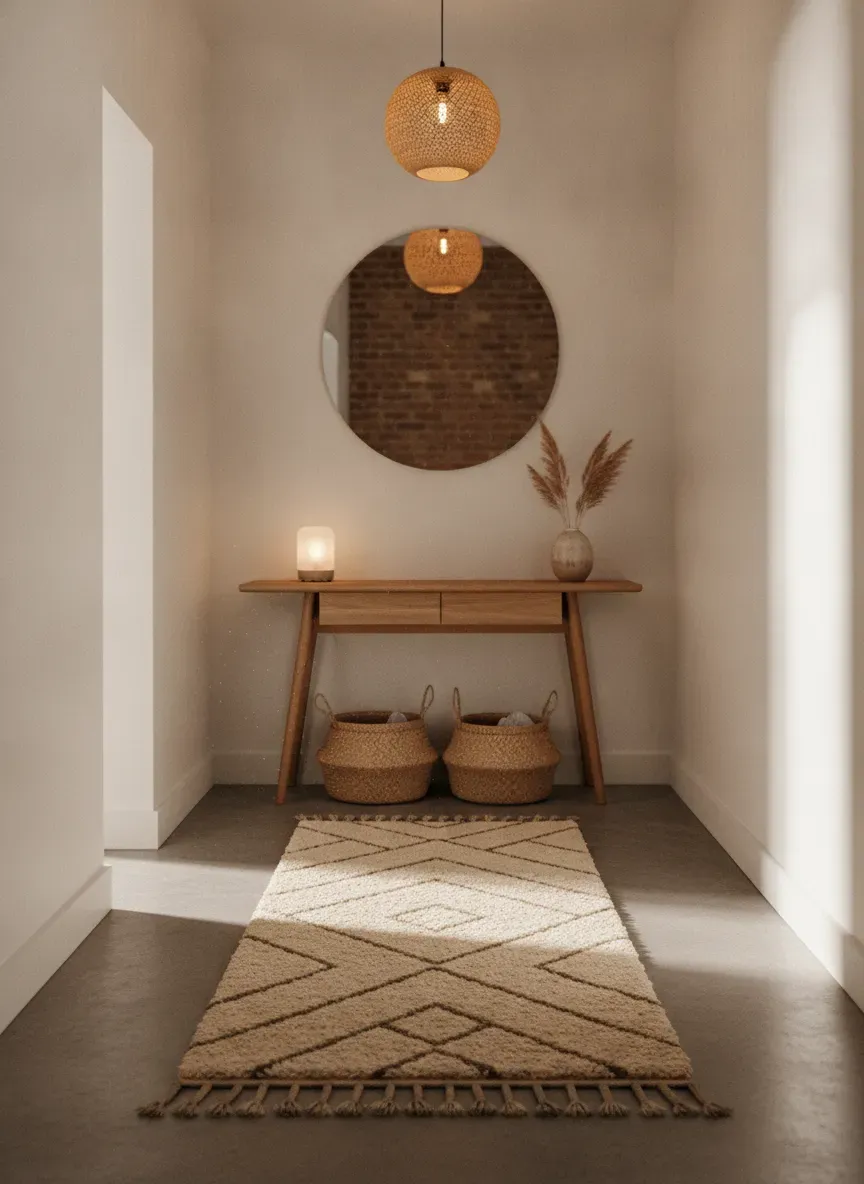
Do not underestimate the grounding power of a high-quality runner rug. A long, narrow rug acts as a visual runway, guiding the eye through the space while softening the acoustics of hard wood or tile floors. The key here is pile height. High-pile shag rugs are a tripping hazard in high-traffic zones and will prevent doors from swinging open.
For an elegant, durable solution, the Loloi II Loren Collection Runner Rug is strong. Its printed traditional patterns mimic the faded look of a priceless antique, but its flat-weave polyester construction is highly stain-resistant and easily handles the daily scuffs of incoming foot traffic.
- Pro Tip: Always use a high-quality, non-slip rug pad underneath your runner to prevent shifting and bunching, which can ruin the clean lines of your hallway.
3. Utilize Vertical Shoe Storage Cabinets
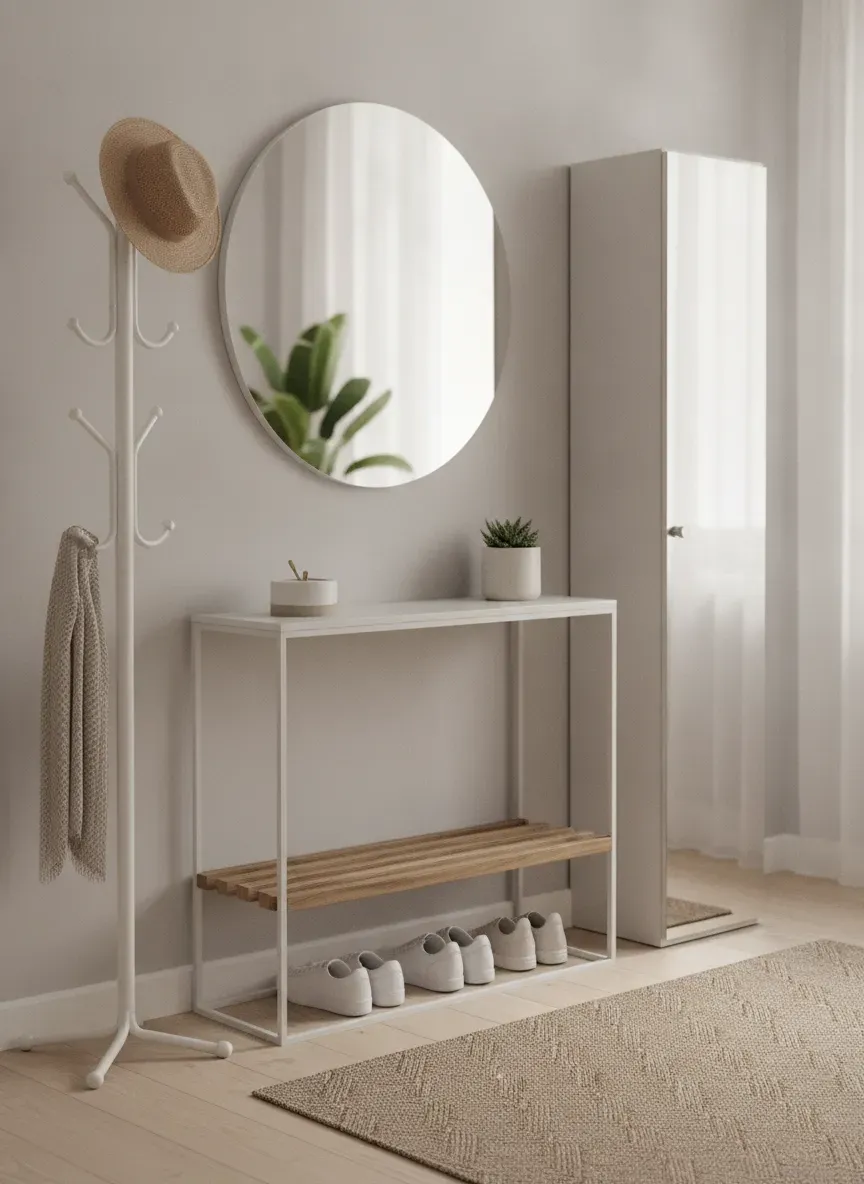
Nothing destroys a cozy atmosphere faster than a mountain of scattered shoes by the front door. Traditional shoe racks leave footwear exposed to the eye, contributing to visual noise. Instead, opt for ultra-slim, tipping-bucket shoe cabinets that hug the wall.
The Tribesigns Slim Shoe Storage Cabinet is an exceptional choice. It features a depth of less than ten inches, allowing it to sit comfortably behind doors or in incredibly narrow corridors while keeping up to a dozen pairs of shoes completely out of sight.
Pro Tip: Replace the standard hardware on your shoe cabinet with custom brass or matte black pulls to instantly elevate the piece and make it look like custom built-in cabinetry.
4. Incorporate Large-Scale Mirrors to Bounce Light
Many decorators make the mistake of choosing a small, delicate mirror for a small hallway. This is a missed opportunity. A massive, oversized mirror—whether it is a tall arched floor mirror anchored securely to the wall or a wide horizontal landscape mirror—doubles the visual depth of the corridor.
By placing a mirror opposite a doorway or adjacent to a window from an adjoining room, you catch natural light and bounce it deep into the darkest corners of the hallway. This instantly breaks the tunnel effect.
5. Create a Statement with Accent Wallpaper
It may sound counterintuitive to put a bold pattern in a small space, but interior design thrives on drama. A subtle, neutral wall can sometimes make a narrow hallway feel bland and institutional. A vibrant, high-quality wallpaper—whether a classic botanical print, a textured grasscloth, or a whimsical geometric pattern—creates an immersive experience.
If you are hesitant to commit to all four walls, try wrapping just the ceiling or the far end-cap wall of the hallway. This creates a focal point that draws you forward through the corridor.
6. Install a Strategic Peg Rail or Hook Array
If your entryway lacks a dedicated coat closet, wall-mounted storage is non-negotiable. However, hanging a massive, bulky coat rack will instantly choke a tight hallway. A continuous wooden peg rail offers a streamlined, Shaker-style alternative that looks beautiful even when empty.
When hanging hooks or peg rails, pay close attention to layout; understanding the ideal spacing to keep items organized and far apart is essential to prevent bulky winter coats from overlapping into a messy, visually heavy jumble.
- Key Takeaways for Hook Placement:
- Mount the main rail at approximately 60 inches from the floor for adult coats.
- Install a secondary, lower rail at 36 inches if you have children, allowing them to hang up their own backpacks and jackets.
- Limit the number of hung items to two per peg to keep the aesthetic clean and uncluttered.
7. Incorporate Mood-Enhancing Sconces and Soft Lighting
Boob lights (you know the ones—those flush-mount dome fixtures builder-grade homes love) are the enemy of ambiance. They cast a harsh, downward glare that accentuates shadows and makes narrow walls feel like they are closing in.
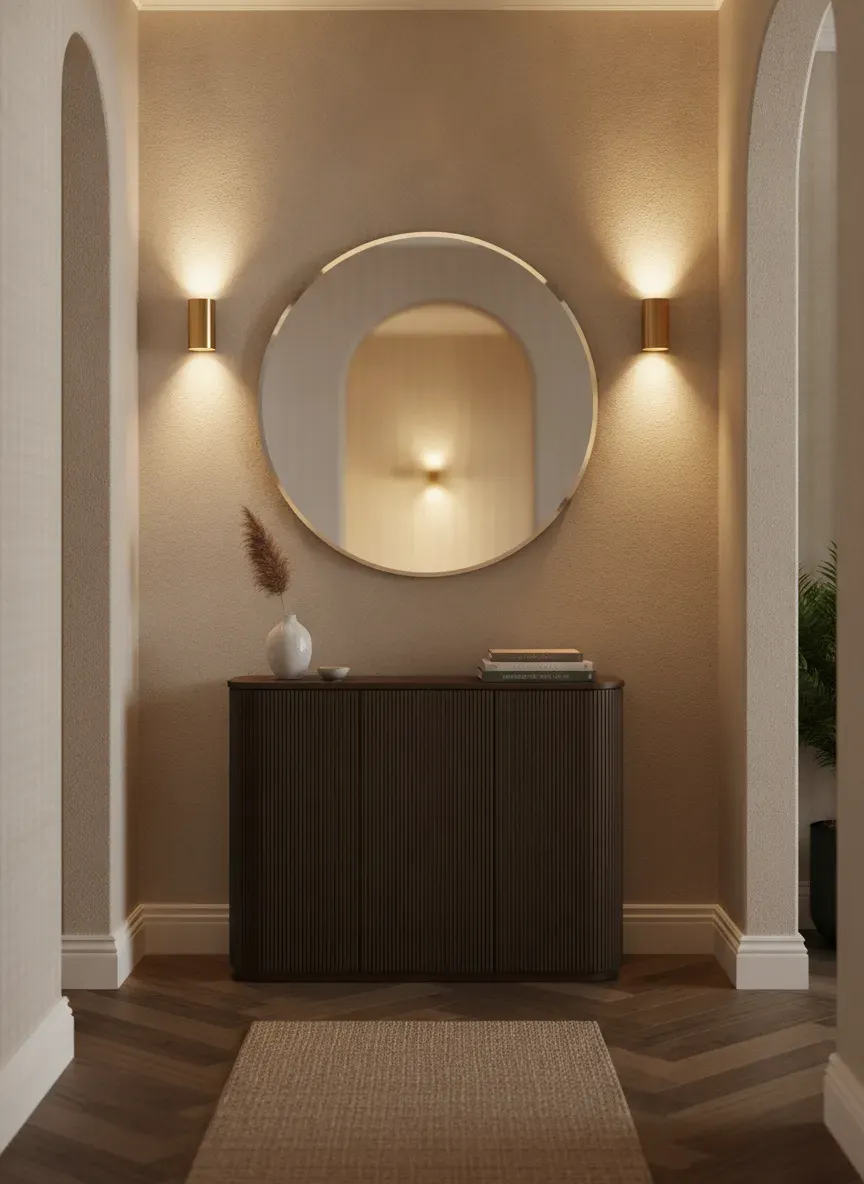
Instead, opt for wall sconces. They wash the walls with warm, indirect light, drawing the eye outward. If you do not want to hire an electrician to run wires through your drywall, look for battery-operated, remote-controlled LED puck lights that you can pop directly into wireless sconces.
8. Introduce Warm Wood Tones and Natural Materials
To make a transitional space feel cozy rather than sterile, you must introduce organic textures. Cold drywall and hard flooring need to be balanced with the warmth of wood grain, woven rattan, or raw clay.
Consider adding a small oak stool, a woven seagrass basket for umbrella storage, or a simple raw-wood frame around your favorite print. These small tactile details tell our nervous system that we have entered a safe, warm, and lived-in home.
9. Leverage the “Third Dimension” with Ceiling Statements
When you cannot design outward, you must design upward. The ceiling is often called the “fifth wall,” yet it is almost universally painted flat white and ignored.
To make your small hallway feel cozy and intimate, consider painting the ceiling a deep, moody hue—like forest green, navy blue, or even a warm charcoal. Alternatively, installing simple wood paneling or beadboard overhead adds architectural interest that elongates the entire corridor.
10. Curate a Compact Gallery Wall with Personal Art
A long hallway wall is a blank canvas just begging for a story. Instead of hanging one massive piece of art that might feel overwhelming up close, curate a tight, linear gallery wall.
- The Grid Method: Use identical frames with wide white mats and black-and-white family photographs. Hang them in a perfect, level grid of four or six. This clean alignment looks incredibly intentional and sophisticated.
- The Eclectic Method: Mix frames of different textures and materials, but keep a cohesive color story (for example, all warm neutrals, or all blues and creams) to avoid visual chaos.
11. Anchor the Space with a Small-Scale Bench
If you have just enough width to accommodate a seat, do not hesitate to add a bench. A bench is a universal symbol of welcome—it literally invites you to sit down, take your shoes off, and stay a while.
Look for a bench with an open metal or wooden frame rather than a solid boxy storage trunk. The open space beneath the seat maintains that crucial visual floor space, and you can slide a couple of low-profile woven baskets underneath to corral winter gloves, dog leashes, or kid gear.
12. Introduce Biophilic Elements with Low-Light Plants
Plants bring life, movement, and oxygen into stagnant transitional spaces. Of course, most small hallways suffer from a distinct lack of natural light. The solution is to choose resilient, low-light-tolerant plant varieties.
- Snake Plants (Sansevieria): Their architectural, upright leaves take up very little horizontal space, making them perfect for tight corners.
- ZZ Plants (Zamioculcas zamiifolia): Virtually indestructible, with glossy green leaves that reflect whatever light is available.
- Pothos (Epipremnum aureum): Place a pothos on top of a high shelf or console and let its leafy vines drape down gracefully over the edge.
13. Create Illusionary Zones with Paint Techniques
Paint is the most cost-effective tool in your design arsenal. You can use it to visually alter the proportions of your hallway.
- Color Drenching: Paint the walls, baseboards, doors, and trim the exact same color. This eliminates the stark contrast lines that define where a wall ends and a door begins, tricks the eye, and makes the space feel infinitely larger and more cohesive.
- Half-and-Half Walls: Paint the bottom half of the wall a darker, grounding color (like a rich olive or terracotta) and the top half a warm, light cream. This mimics the classic look of wainscoting while visually pushing the ceiling higher.
14. Incorporate Sleek and Functional Catch-All Trays
A clean hallway is a cozy hallway. To prevent your console table from becoming a chaotic dumping ground for pocket contents, establish a dedicated system.
A beautiful marble, leather, or brass catch-all tray acts as a designated landing pad. It is a tiny detail, but it establishes a daily ritual. When your keys have a beautiful home, you are less likely to misplace them, and the simple act of placing them in a curated tray brings a sense of order to your arrival home.
15. Use Monochromatic Color Palettes to Minimize Visual Noise
In a small, confined area, too many contrasting colors can feel like a sensory assault. A monochromatic or analogous color palette creates a soothing, spa-like transition from the outside world.
Think soft greiges, warm taupes, sandy beiges, and soft creams. By layering different tones, textures, and finishes within the same color family, you achieve rich depth and visual interest without overwhelming the senses.
Pitfalls to Avoid When Styling a Small Hallway
When we get excited about decorating, it is incredibly easy to make classic spatial blunders. Here is what you should actively avoid to keep your small hallway functional and beautiful:
Over-Accessorizing (The “Knick-Knack” Trap)
It is tempting to place a tiny vase here, a stack of books there, and a cute sign on the wall. In a small space, dozens of tiny decor pieces translate directly to visual clutter. The Bottom Line is simple: choose fewer, larger items over many small ones. One substantial, gorgeous ceramic vase on your console will always look cleaner and more high-end than five small decorative objects.
Ignoring the Swing Path of Doors
Before mounting shelves, hooks, or placing benches, physically measure the path of your front door and any adjacent closet doors. There is nothing more frustrating than a door that bangs into a console table every time a guest arrives, or a coat rack that prevents your closet door from opening past a 45-degree angle.
Relying on Cool-Tone Lighting
Avoid “cool daylight” LED bulbs (anything above 3000K). They emit a blue-toned light that mimics a clinical office setting. Instead, look for bulbs labeled “warm white” or “soft white” (ideally 2700K). Warm light instantly softens corners, flatters skin tones, and creates that coveted, cozy candle-lit glow.
Your Actionable Weekend Makeover Plan
Transforming your entryway does not require a massive budget or weeks of renovation. Here is a simple, step-by-step weekend plan to breathe new life into your small hallway:
Saturday Morning: Clear and Prep
Remove absolutely everything from the hallway, including rugs, wall art, and clutter. Give the walls a thorough wipe down and vacuum the baseboards. Assess the space in its rawest form.
Saturday Afternoon: Paint and Light
If you are planning to paint or hang wallpaper, tackle it now. If you are keeping the walls as-is, take this time to swap out your overhead light bulb for a warm-toned LED, or mount those wireless battery-operated sconces.
Sunday Morning: Install the Anchors
Hang your heavy items. Mount your floating console, hang your large mirror, or secure your shoe cabinet to the wall. (Always use drywall anchors or screw directly into studs—the last thing you want is a heavy mirror pulling plaster down).
Sunday Afternoon: The Styling Layer
Roll out your low-profile runner rug. Hang your functional hooks or peg rail. Finally, place your catch-all tray on the console, introduce a touch of life with a low-light plant, and step back to enjoy your warm, welcoming transition zone.
Final Thoughts
At the end of a long, chaotic day, walking through a beautifully styled, organized hallway feels like a deep, restorative exhale. By prioritizing visual flow, embracing smart vertical storage, and introducing soft, warm layers, your tiny entryway can finally become the inviting sanctuary you deserve to come home to.

Stop Guessing Measurements. Build Your Dream Entryway with Confidence.
Transform awkward hallways, cramped foyers, and cluttered mudrooms into organized sanctuaries. Includes 20 measured floor plans, facing photo spreads, the 36-inch planning rule, the shoe pairs formula, and 7 printable worksheets.
Core Edition ($17.99) · Flagship Photo Edition v5 ($39.99) — compare editions
