
Bag Searches Vs. Pre-entry Locker Storage: the Ultimate Venue Security Guide
Discover whether manual bag searches or pre-entry lockers offer the best security and guest experience. An expert analysis of venue ingress optimization.
Jul 4, 2026 · Linda Wise
5 min readThe entryway of your venue is where security policies collide with guest expectations. Security managers are tasked with preventing threats, while operations directors focus on speed, throughput, and keeping visitors happy. For years, the default response to safety concerns was simple: search every bag at the gate. But as crowds grow larger and safety threats become more complex, this traditional approach is showing its age.
Manual bag inspections often lead to long queues, frustrated guests, and security blind spots caused by staff fatigue. This has led many modern facilities to adopt a different approach: banning large bags at the gate and requiring visitors to store them in pre-entry lockers.
This guide will compare physical bag searches against pre-entry locker systems. We will look at how each approach affects throughput times, security outcomes, labor costs, and the overall guest experience.
Quick Comparison: Top Picks
| Product | Rating | Check Price |
|---|---|---|
| Garrett Super Scanner V | ⭐⭐⭐⭐⭐ | View on Amazon |
| AdirOffice Steel Storage Locker | ⭐⭐⭐⭐½ | View on Amazon |
| Clear Vinyl Tote Bags Bulk | ⭐⭐⭐⭐½ | View on Amazon |
The Psychology of the Entryway
The guest experience starts long before a ticket-holder sits in their seat or approaches the stage. It begins in the queue. The psychological impact of waiting in line is well-documented in operations research: unoccupied time feels longer than occupied time, and anxiety makes waits seem even more drawn out.
When guests see a long, slow-moving line caused by slow bag searches, their stress levels rise. They worry about missing the start of the show or game, which can make them less cooperative when they finally reach the security checkpoint.
[Arrival at Outer Perimeter]
          │
          ├─────────────────────────┐
          ▼                         ▼
  [Bag-Free Ingress]        [Bag Search Lanes]
          │                         │
     (Fast-track)            (Manual Check)
          │                         │
          ▼                         ▼
   [Rapid Screening]         [Friction & Delay]
          │                         │
          └──────────┬──────────────┘
                     ▼
             [Venue Interior]
On the other hand, a clear and consistent policy—such as requiring large bags to be stored before entry—sets expectations early. When guests know what to do before they join the queue, it removes guesswork.
By separating bag storage from the main entry point, venues can create a smoother, more efficient screening process. This helps keep guests calm and cooperative, making it easier for security staff to spot potential issues.
Deep Dive into Bag Searches (The Status Quo)
Manual bag inspection has been the standard for venue security for decades. It is a straightforward approach: a guest presents their open bag, and a security officer inspects its contents before allowing them through the gate.

Operational Mechanics
To work well, manual bag searches require a highly structured setup. A typical lane includes queuing barriers, a table for bags to be placed on, and a metal detection zone.
Using hand-held scanners like the Garrett Super Scanner V helps security teams check guests quickly without relying only on physical pat-downs.
The process follows a set sequence:
- The Prep Zone: Guests are asked to open all bag zippers and pockets while waiting in line.
- The Table Inspection: A security officer uses a non-conductive tool to slide items around, looking for prohibited goods without putting their hands directly into the bag.
- Secondary Screening: If an unusual item is spotted, the guest is guided to a separate table to keep the main line moving.
The Human Factor: Training, Bias, and Fatigue
The main weakness of manual bag searches is that they rely entirely on human performance. During a four-hour shift, a security guard might look into hundreds of bags. As time goes on, fatigue sets in, and their attention to detail naturally drops.
Human bias also plays a role. Guards may unconsciously search some guests more thoroughly than others, which can lead to complaints about unfair treatment.
Additionally, manual searches create potential liability risks. If a guard touches a guest’s personal belongings or handles sensitive items inappropriately, it can lead to disputes or legal issues for the venue.
Throughput Statistics and Bottlenecks
The math behind manual bag searches explains why they often cause delays at busy events:
- Average Search Time: A standard bag search takes between 15 and 45 seconds, depending on the size of the bag and how many compartments it has.
- Throughput Capacity: A single security lane can handle roughly 80 to 120 guests per hour if most of them are carrying bags.
- Peak Flow Challenges: Most guests arrive in the 45 minutes leading up to an event. If 10,000 people show up at once and half of them have bags, a venue would need an impractical number of security lanes to prevent long delays.
These delays can tempt security staff to rush their checks to keep the lines moving, which compromises safety.
Pro Tip: If your venue still relies on manual bag searches, switch to a clear bag policy using Clear Vinyl Tote Bags Bulk. This allows security staff to inspect bag contents at a glance, reducing search times by up to 60% and keeping lines moving.
Deep Dive into Pre-Entry Locker Storage (The Modern Pivot)
To avoid the delays and security challenges of manual searches, many forward-thinking venues are moving toward a “bag-free” model. Under this system, guests are not allowed to bring bags into the venue at all, except for small clutches or medical bags.
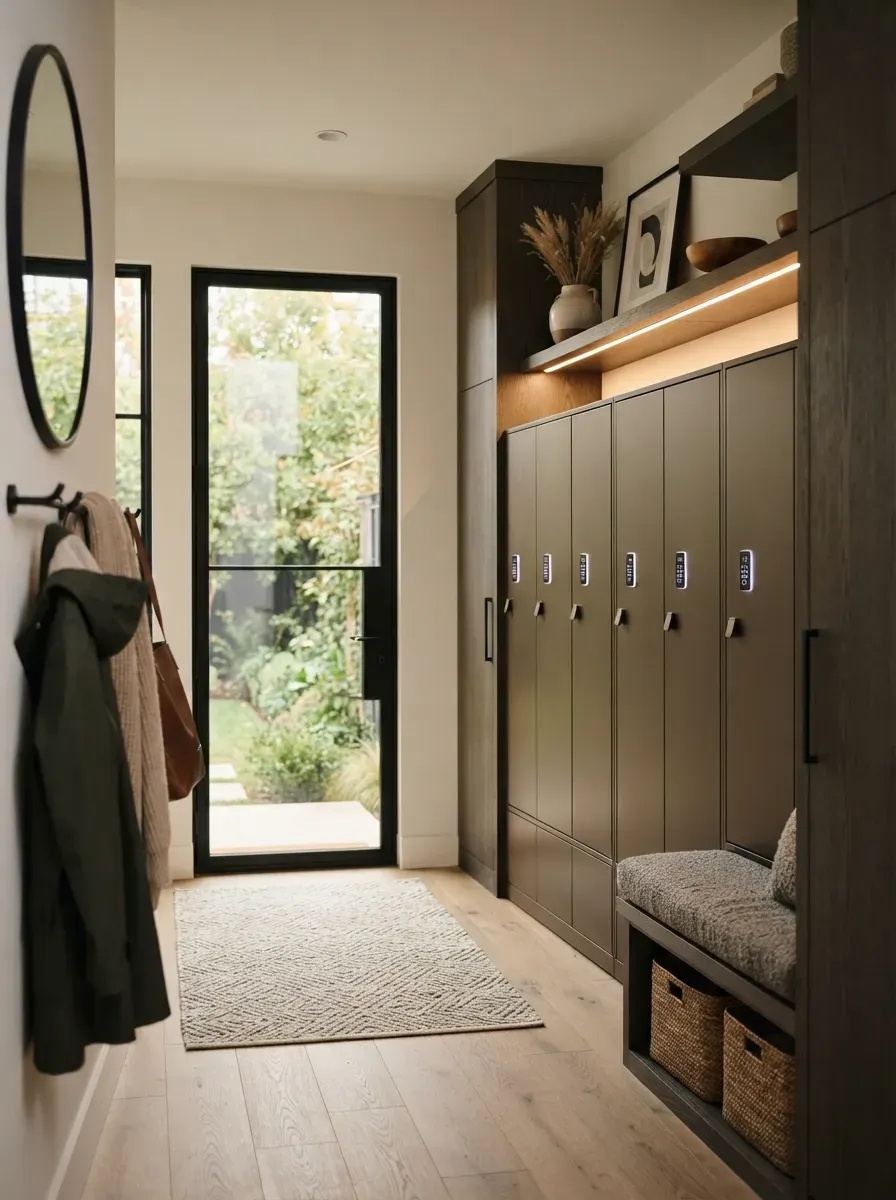
Instead, they are directed to secure locker storage units located outside the main security perimeter.
How Locker Programs Work
Pre-entry locker systems are designed to be simple and user-friendly. Modern setups usually feature self-service kiosk terminals or mobile app integration:
- Approach and Reservation: Guests scan a QR code on the locker unit using their smartphone, or they use a central touchscreen kiosk.
- Payment and Allocation: The guest selects a locker size, pays via a contactless terminal, and receives a digital key or a single-use PIN.
- Secure Storage: The guest places their bag inside the locker, closes the door, and goes straight to the fast-track security lane.
These locker bays are typically modular and weatherproof, allowing venues to place them near public transport links or parking lots. This makes it easy for guests to drop off their belongings before they even reach the entrance.
The Logistics of Bag-Free Zones
Creating a bag-free zone requires clear signage and communication. Guests need to know about the policy before they arrive at the venue.
This information should be shared on the venue’s website, ticket purchase confirmation emails, and social media channels.
Signs should be placed along major walking routes leading to the venue, giving guests plenty of notice to use the locker bays before they reach the security lines.
Using durable outdoor lockers, such as the AdirOffice Steel Storage Locker, ensures that stored items remain safe and protected from the weather.
Reducing Venue Liability Inside the Perimeter
From a security standpoint, keeping bags out of the venue altogether reduces risks significantly. Without bags inside, security teams do not have to worry about guests carrying concealed weapons, alcohol, or recording equipment into the seating areas.
It also eliminates the risk of trip hazards in aisles and seating rows, which helps keep emergency exit paths clear.
Additionally, using an external locker system shifts the responsibility of protecting personal property away from venue staff.
Since guests lock and retrieve their own bags using secure digital pins, the venue is far less likely to face claims for lost or damaged items.
Head-to-Head Comparative Analysis
| Feature | Manual Bag Searches | Pre-Entry Locker Storage |
|---|---|---|
| Throughput Speed | Slow (15–45 seconds per guest) | Fast (rapid walk-through screening) |
| Upfront Cost (CapEx) | Low (tables, basic signage, wands) | High (purchasing or leasing smart lockers) |
| Ongoing Labor Cost | High (requires dedicated search staff) | Low (requires minimal monitoring staff) |
| Security Risk Profile | Medium-High (vulnerable to human error) | Low (bags are kept outside the venue) |
| Revenue Generation | None (pure operational expense) | High (rental fees can generate steady income) |
| Guest Convenience | Medium (keeps bags close, but causes delays) | Medium-High (creates fast lines, but requires storage step) |
Throughput & Speed (Friction vs. Flow)
When it comes to speed, pre-entry lockers are the clear winner. By removing bag inspections from the main gates, security staff can focus on quick metal detector scans or body scanner checks.
This can increase throughput from around 100 people per hour per lane to over 500 people per hour.
This dramatic improvement cuts wait times down, allowing guests to get inside the venue quickly and spend more time at concession stands and merchandise booths.
Capital Expenditure (CapEx) vs. Operational Expenditure (OpEx)
The financial models for these two approaches are very different:
- Manual Bag Searches: This setup has low upfront costs, requiring only simple folding tables, crowd control barriers, and basic hand wands. However, the ongoing operational costs are high. You need to hire, train, and manage a large team of security staff for every single event.
- Pre-Entry Locker Storage: This requires a larger initial investment to buy and install the locker units. However, those costs can often be offset. Many locker companies offer revenue-sharing models where guests pay a small rental fee (e.g., $5 to $10) to store their bags. Over time, these locker units can pay for themselves and turn into a steady source of income for the venue.
Security Efficacy
Even the most thorough manual bag search cannot match the security of keeping bags out of the venue entirely. Bags have hidden compartments, false bottoms, and fabric layers that can easily hide small weapons or contraband from a rushed security guard.
By requiring guests to leave their bags in secure external lockers, you eliminate these risks within the venue’s secure perimeter.
Manual Search Security Profile:
[Threat Source] ──► [Manual Inspection (Human Error Risk)] ──► [Threat Inside Venue]

Locker-Based Security Profile:
[Threat Source] ──► [External Locker Storage] ──► [Threat Kept Outside Perimeter]
Guest Satisfaction & Accessibility
While pre-entry locker systems offer excellent speed and security, they do require careful planning to ensure they remain accessible to everyone.
Venues must make exceptions for guests with medical equipment, childcare needs, or other special requirements.
Security staff should be trained on how to handle these exceptions professionally. They can use dedicated lanes equipped with manual search tables and tools like the Garrett Super Scanner V to check medical bags quickly and safely.
Hybrid Models: The Gold Standard
For many venues, the best solution is not choosing one option over the other, but combining both into a hybrid system.
By using pre-entry lockers alongside a strict clear-bag policy, you can get the best of both worlds: speed, security, and convenience.

In a hybrid setup, the rules are simple and easy for guests to follow:
- Small Clutches & Clear Bags: Allowed inside the venue after a quick check.
- Large Backpacks & Opaque Bags: Must be stored in the pre-entry lockers.
This clear distinction gives guests options. Those who want to bring small personal items can do so using clear bags, which are easy for security staff to check at a glance.
Meanwhile, guests who arrive with larger bags from work or travel can store them safely in the locker bays.
This approach keeps the security lines moving quickly while still accommodating the needs of different visitors.
Actionable Implementation Blueprint
If you are looking to update your venue’s entryway security, here is a step-by-step plan to help you transition smoothly:
1. Run the Numbers
Take a look at your current visitor numbers, peak arrival times, and average wait times. Identify where the bottlenecks are occurring. If bag searches are the primary cause of your delays, transitioning to a locker-based or hybrid system is likely your best option.
2. Choose the Right Location for Your Lockers
Identify space outside your main ticket-scanning area for the locker units. This area should be easy for guests to find as they approach the venue, but placed far enough from the main gates to prevent crowding around the locker kiosks.
3. Update Your Communication Strategy
Make sure your guests know about your bag policy well before event day. Update your website, booking confirmation emails, and social media pages. Use clear, simple language to explain what types of bags are allowed and where the locker storage is located.
4. Train Your Security Team
Ensure your staff understand how to enforce the new policies consistently. Train them on how to handle exceptions for medical or childcare bags quickly and professionally, and make sure they know how to guide guests to the locker bays if they arrive with oversized items.
5. Review and Adjust
Monitor how the new system performs during its first few events. Track queue times, guest feedback, and locker usage rates. Use this information to make adjustments, such as adding more signage or adjusting locker pricing, to keep the entry process running as smoothly as possible.
Product Spotlights
To help you choose the right tools for your venue’s security setup, here is a closer look at three top-rated products that can help improve safety and efficiency.
1. Garrett Super Scanner V
This hand-held metal detector is an industry standard for security screening. It features one-button operation, clear audio and silent vibrate alarms, and long battery life, making it a reliable tool for security staff during long shifts.
- Best For: Secondary screening lanes, checking medical bags, and conducting fast physical security checks at the gate.
- Why It’s Worth It: It is highly sensitive and durable, helping security teams detect concealed metal objects quickly without requiring intrusive physical searches.
2. AdirOffice Steel Storage Locker
A heavy-duty steel locker system that offers secure, durable storage for guest belongings. Built from high-grade steel, it is designed to withstand heavy use in busy public areas.
- Best For: Setting up secure, long-lasting storage areas outside your venue’s main entrance.
- Why It’s Worth It: The robust construction and secure locking mechanisms provide guests with peace of mind, knowing their personal belongings are safe while they enjoy the event.
3. Clear Vinyl Tote Bags Bulk
Purchasing clear vinyl bags in bulk is an excellent option for venues implementing a hybrid security policy. These durable, transparent bags allow staff to inspect contents in seconds.
- Best For: Handing out to guests at the gates or selling as approved venue bags for visitors carrying personal items.
- Why It’s Worth It: They dramatically cut down inspection times, helping you maintain high security standards while keeping your entry lines moving quickly.
The Bottom Line: Finding the right balance between venue security and guest convenience is a continuous process. While manual bag searches are a familiar option, they often create bottlenecks and are vulnerable to human error. Transitioning to a pre-entry locker system or a clear-bag hybrid model helps keep threat-carrying items outside your perimeter, reduces operational friction, and gets your guests out of the queue and into the venue much faster.
Top Picks: Best Entryway Essentials
Editor's shortlist with verified ratings. Prices and availability below — clicking an Amazon link earns us a small commission at no extra cost to you.
| # | Product | Rating | Reviews | Tag | Check Price |
|---|---|---|---|---|---|
| 1 | Vasagle Industrial Entryway Bench | 8,420 | Top Pick | View on Amazon | |
| 2 | Crosley Furniture Seaside Hall Tree | 5,410 | — | View on Amazon | |
| 3 | Seville Classics 12-Pair Shoe Rack | 6,420 | Best Storage | View on Amazon | |
| 4 | Franklin Brass Wall Hooks (5-Pack) | 9,820 | — | View on Amazon | |
| 5 | Simplihome Artisan Solid Wood Bench | 3,127 | Editor's Pick | View on Amazon |
Affiliate disclosure: As an Amazon Associate we earn from qualifying purchases.
Tag: entreyway-20 — change in src/data/topPicks.ts.