
What Is a Narrow Console Table? Ideal Depth for Hallways
Learn what a narrow console table is, the ideal depth for hallways, and how to choose the perfect slim entryway table for your space.

Jun 29, 2026 · Linda Wise
15 min readIn This Guide
- What is a narrow console table and how it differs from standard consoles
- Ideal console table depth for hallways under 4 feet wide
- Best narrow console tables for tight entryways
- How to measure your hallway before buying
- Styling and storage ideas for slim console tables
- Common placement mistakes to avoid
What Is a Narrow Console Table?
A narrow console table is a slim, elongated table designed to sit against a wall in tight spaces like hallways, entryways, and small apartment foyers. Unlike standard console tables, narrow models压缩 their depth to fit into areas where a deeper table would block foot traffic or make a room feel cramped.
The entryway of a home is a spatial handshake. It sets the tone, dictates the flow of traffic, and quietly handles the daily influx of keys, mail, and bags. Yet, in many modern floor plans, this crucial transition zone is reduced to a cramped corridor or a tight sliver of wall space behind a front door. This is where standard furniture fails. When a typical 18-inch deep accent cabinet or sideboard is placed in a tight hallway, it turns a natural pathway into an annoying obstacle course.
The narrow console table is the design world’s response to this spatial puzzle. By compressing depth while retaining height and width, these specialized pieces provide a functional surface without cannibalizing valuable floor space.
Narrow Console Table vs. Standard Console Table
The key difference between a narrow console table and a standard console table comes down to depth. Standard console tables typically measure between 14 and 18 inches deep, while narrow console tables压缩 that depth to 8 to 11.8 inches.
+-------------------------------------------------------------+
|              Console Table Depth Comparison                 |
+-------------------------------------------------------------+
| Standard Console: [===================] 14" to 18"          |
|                                                             |
| Narrow Console:   [===========] 8" to 11.8"                |
+-------------------------------------------------------------+| Feature | Narrow Console Table | Standard Console Table |
|---|---|---|
| Depth | 8–11.8 inches | 14–18 inches |
| Best for | Hallways, small entryways | Living rooms, wide foyers |
| Walking clearance | Leaves 30+ inches | May block narrow paths |
| Storage capacity | Limited | Moderate to high |
What Is a Narrow Console Table Used For?
Narrow console tables serve multiple purposes in small spaces:
- Key and mail drop zone: A landing spot for everyday items as you enter the home
- Decorative display: A surface for table lamps, vases, and small art pieces
- Space definition: Creating a visual boundary in open-concept layouts
- Hidden storage: Holding baskets, shoes, or bins underneath
- Behind-sofa table: Adding function to a floating sofa setup
How Narrow Is Considered “Narrow”?
In the furniture industry, anything deeper than 12 inches starts to encroach on high-traffic walkways, while anything shallower than 8 inches struggles to hold practical items like a catch-all tray, a table lamp base, or mail organizers. A true narrow console table falls between 8 and 11.8 inches deep.
What Is the Ideal Console Table Depth for a Hallway?
The ideal console table depth for a hallway depends on your hallway width and how much walking clearance you need. The goal is to add function without blocking foot traffic.
Best Console Table Depth for a Hallway Under 4 Feet Wide
For hallways under 4 feet (48 inches) wide, you need an ultra-slim console table. Here’s the math:
- A comfortable walking path requires at least 36 inches of clear space
- If your hallway is 48 inches wide and you subtract 36 inches for walking, you have 12 inches remaining for a table
- This means an 8 to 11-inch deep console table is your best option
+------------------------------------------+
|              Hallway (48" wide)          |
+------------------------------------------+
|                                          |
|    [========] <-- Slim Console Table     |
|                                          |
|    =======> <-- Min. 36" Walkway         |
|                                          |
|                                          |
+------------------------------------------+
How Much Walking Clearance Do You Need?
The National Kitchen and Bath Association recommends a minimum of 36 inches of clear walking space in hallways and entryways. For high-traffic areas, 42 to 48 inches is more comfortable, especially if multiple people pass through regularly.
| Hallway Width | Recommended Table Depth | Remaining Walkway |
|---|---|---|
| 36 inches | 6–8 inches | 28–30 inches |
| 42 inches | 8–10 inches | 32–34 inches |
| 48 inches | 8–12 inches | 36–40 inches |
| 60+ inches | 12–15 inches | 45–48+ inches |
Narrow Console Table Depth: 6, 8, 10, 12, and 15 Inches
Not all narrow console tables are created equal. Here’s how different depths stack up:
- 6 inches: Ultra-slim. Best for very tight hallways under 36 inches wide. Limited to small decor items.
- 8 inches: The sweet spot for narrow hallways. Holds a table lamp, small tray, and mail organizer.
- 10 inches: Versatile depth. Accommodates most entryway essentials without blocking foot traffic.
- 12 inches: Upper limit of “narrow.” Works well in hallways 48 inches or wider.
- 15 inches: Transitional depth. Not truly narrow, but slimmer than standard consoles.
How to Measure Your Hallway Before Buying
Follow these steps to get accurate measurements:
- Measure hallway width at the narrowest point (wall to wall)
- Subtract 36 inches for comfortable walking clearance
- Account for baseboards — they can reduce usable depth by 1–2 inches
- Check door swing paths — make sure the table won’t block any doors
- Note outlet locations — ensure the table won’t cover electrical outlets

What Console Tables Work Best in Small Hallways?
Small hallways demand smart furniture choices. The best narrow console tables for tight entryways combine slim dimensions with smart storage solutions.
Best Narrow Console Tables for Tight Entryways
When shopping for a small hallway, prioritize these features:
- Depth under 11 inches to preserve walking space
- Wall-mountable options to save floor space
- Open bottom design for visual lightness
- Built-in storage like shelves or small drawers
Wall-Mounted vs. Freestanding Console Tables
| Feature | Wall-Mounted | Freestanding |
|---|---|---|
| Space saving | Excellent — no legs on floor | Good — takes floor space |
| Stability | Very stable (attached to wall) | Depends on design |
| Installation | Requires drilling into wall | No installation needed |
| Flexibility | Fixed position | Can be moved easily |
| Best for | Very tight spaces, renters with permission | Anyone wanting flexibility |
Wall-mounted console tables are ideal for hallways under 36 inches wide where every inch of floor space matters. Freestanding models work better in slightly wider hallways where you want the option to rearrange.
Narrow Console Tables With Drawers
Drawers on a narrow console are typically only 6 to 9 inches deep. While they won’t hold bulky items, they are perfect for storing:
- Keys and sunglasses
- Charging cables and phone accessories
- Mail and small office supplies
- Dog leashes and small pet accessories
Narrow Console Tables With Storage Shelves
A secondary shelf near the bottom of the table acts as both a structural brace and a storage spot. Use it for:
- Woven baskets for shoes and accessories
- Small storage bins for seasonal items
- Books or decorative objects
- Entryway essentials like umbrellas
Slim Console Tables With an Open Design
Open-frame console tables made from metal or thin wood create visual lightness. They let light pass through, making small hallways feel larger. Look for:
- Metal-framed tables with mesh or slatted shelves
- C-shaped or X-shaped base designs
- Tables with minimal visual bulk
How to Choose the Right Narrow Console Table
Choosing the right narrow console table requires balancing dimensions, style, and functionality. Here’s what to consider.
Ideal Table Depth
The ideal depth depends on your hallway width. For most narrow hallways, 8 to 11 inches is the sweet spot. Measure your hallway, subtract 36 inches for walking clearance, and choose a table that fits within the remaining space.
Choosing the Right Console Table Width
Width varies more than height or depth, usually spanning from 30 inches up to 60 inches. The ideal width is determined by your wall space:
- 30–36 inches: Best for compact foyers or between two interior doors
- 36–48 inches: Standard width for most entryways
- 48–60 inches: Perfect for long, narrow hallways that need a visual anchor
What Console Table Height Works Best?
The height of a narrow console table typically ranges from 30 to 34 inches. This range aligns with the average human hand drop — you want to drop your keys or wallet onto a surface without bending down or lifting your arms awkwardly.
A height of 30 to 34 inches also allows the table to sit comfortably flush against the back of most standard sofas, keeping it hidden from view while remaining functional.
Stability and Weight Capacity
Because a narrow console table has a small footprint, its engineering must be precise. When you reduce the depth of a piece of furniture while maintaining its height, you alter its center of gravity. Look for:
- Weighted bases: Heavy solid-iron or steel lower stretchers that pull the center of gravity downward
- Adjustable leveling feet: Essential for stabilizing the table on uneven hardwood or carpet
- Wall-anchoring hardware: Any narrow console table standing over 30 inches tall with a depth under 12 inches should be anchored to the wall, especially in homes with kids or pets
Rounded vs. Square Corners
In tight hallways, rounded corners are safer. They prevent hip bumps and reduce the risk of injury when navigating narrow spaces. Square corners offer a more modern, angular aesthetic but can be hazardous in high-traffic areas.
Storage vs. Minimalist Design
Choose based on your needs:
- Storage-focused: Tables with drawers, shelves, or cabinets for entryway clutter
- Minimalist: Open-frame designs that prioritize style over storage
- Hybrid: Tables with one shelf for light storage without visual bulk
Floor and Wall Clearance
Always check:
- Baseboard clearance: Thick baseboards can prevent a table from sitting flush against the wall
- Outlet access: Make sure the table won’t cover electrical outlets
- Door swing paths: Ensure the table won’t interfere with opening and closing doors
Where Should You Place a Narrow Console Table?
Placement is just as important as choosing the right table. Here are the best spots for a narrow console table.
Behind the Front Door
If your front door opens directly into a wall, a narrow console table can turn that dead space into a functional landing zone. Make sure the table sits at least 36 inches away from the door’s swing arc to allow comfortable entry and exit.
Along a Long Hallway Wall
Long, blank hallways benefit from a narrow console table that breaks up the monotony of the wall. A 48–60 inch wide table adds visual interest without blocking foot traffic. Style it with a mirror above to create depth and make the hallway feel wider.
Beside an Entryway Bench
Pair a narrow console table with an entryway bench for a complete drop zone. The bench provides seating for putting on shoes, while the table holds keys, bags, and decor.
Under an Entryway Mirror
Hanging a mirror above a narrow console table creates the illusion of more space. The mirror reflects light and makes tight entryways feel larger and more open.
In a Small Apartment Entryway
For apartments with limited entry space, a wall-mounted narrow console table is the best option. It provides a surface for essentials without taking up any floor space. Pair it with wall hooks for coats and bags.
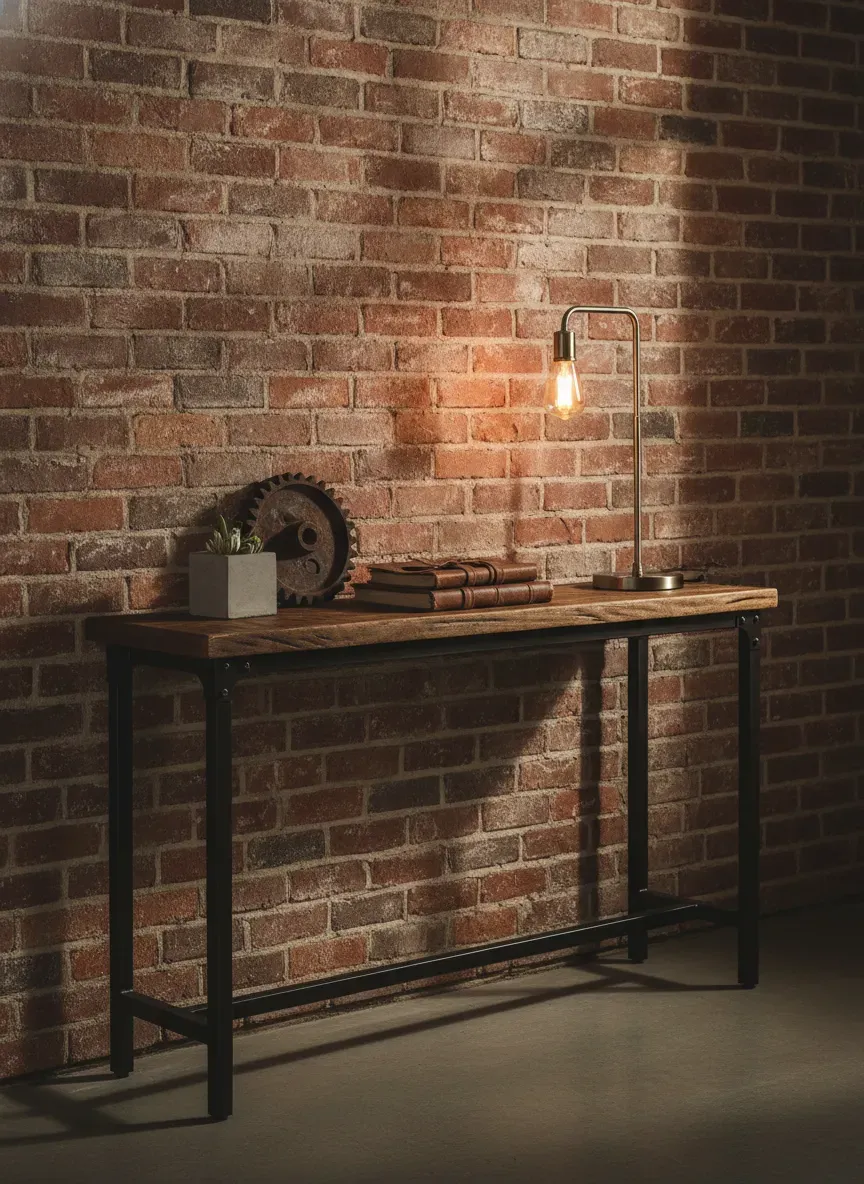
How to Style a Narrow Console Table in a Small Space
Styling a narrow console table requires a thoughtful approach. Because surface space is limited, it’s easy for the table to look cluttered rather than styled.
+--------------------------------------+
|            [Mirror]                  |
|                                      |
+--------------------------------------+
| o [Tray] /| | <-- High-Low-Wide     |
| /|\ [====] / | (Plant) | Layering Formula
+======================================+
Choosing the Right Mirror or Wall Art
A large round mirror or framed artwork above the table adds visual height and makes the wall feel taller. Choose a piece that’s roughly two-thirds the width of the table for balanced proportions.
How Many Decorative Items Should You Use?
Follow the rule of three: arrange items in groups of three or five for a natural, balanced look. On a narrow console, aim for 3–5 items maximum to avoid clutter.
Lighting Ideas for a Slim Console Table
- Table lamps: Choose slim, tall lamps that don’t take up much surface space
- Wall sconces: Mount on either side of a mirror for ambient lighting
- LED strip lights: Place under the table for a subtle glow
- Cordless rechargeable lamps: Eliminate cord clutter entirely
Keeping the Surface Functional and Clutter-Free
Use the “High-Low-Wide” layering formula:
- The High Element (Anchor): A tall, vertical piece like a mirror or artwork
- The Low Element (Functional): A decorative tray or shallow bowl for keys and mail
- The Wide/Organic Element (Softener): A plant, vase with branches, or stack of books
Group items in odd numbers, vary textures (matte ceramics, warm wood, polished metal, natural greenery), and keep the floor clear with matching woven baskets or structured canvas bins.
How to Use the Space Under a Narrow Console Table
The space beneath a narrow console table is valuable real estate for storage and style.
Baskets for Shoes and Accessories
Woven baskets or structured canvas bins tucked under the table provide hidden storage for shoes, scarves, gloves, and other accessories. Choose baskets that match your decor style for a cohesive look.
Small Storage Bins
Plastic or fabric storage bins work well for seasonal items like hats, gloves, and sunglasses. Label them for easy access.
Ottomans and Stools
A small ottoman or stool tucked under a C-frame console table provides extra seating without taking up permanent floor space. Pull it out when needed, tuck it away when not in use.
Decorative Storage Solutions
Use the bottom shelf or floor space for decorative storage that doubles as style:
- Vintage suitcases stacked for a eclectic look
- Woven seagrass baskets for a coastal vibe
- Metal wire bins for an industrial aesthetic
Best Materials for Narrow Hallway Console Tables
The materials used in a narrow table affect both its physical stability and how large it looks in a room.
Solid Wood
Oak, walnut, and maple offer classic beauty and natural weight. A solid wood slim table has a grounded, premium feel, but it requires skilled joinery to remain stable without bulky support brackets. Solid wood is durable and develops character over time.
Reclaimed Wood
Reclaimed wood adds rustic charm and sustainability to your entryway. Each piece has unique grain patterns and weathering that tell a story. However, reclaimed wood can be heavier and may require more maintenance.
Metal and Wood
Wrought iron and powder-coated steel paired with wood tops create an industrial-modern aesthetic. Metal provides excellent structural strength with minimal thickness, allowing for open, airy designs that let light pass through, making small hallways feel larger.
Engineered Wood
MDF and engineered wood with veneers are often used in budget-friendly designs. Engineered wood resists warping and cracking better than solid wood in humid environments. However, because it is less dense, lightweight MDF tables require careful wall-anchoring to prevent wobbles.
Which Material Is Best for High-Traffic Entryways?
For high-traffic entryways, metal-framed tables with engineered wood tops offer the best balance of durability, stability, and style. The metal frame provides structural strength, while the engineered wood top resists scratches and moisture. Solid wood is a close second if you’re willing to invest in quality.
Common Narrow Console Table Placement Mistakes
Even experienced decorators can make mistakes when placing a narrow console table. Avoid these common pitfalls.
Choosing a Table That Is Too Deep
The most common mistake is choosing a table that’s too deep for the space. Always measure your hallway first and subtract 36 inches for walking clearance. A table that blocks foot traffic defeats its own purpose.
Blocking the Main Walking Path
A console table should enhance your hallway, not become an obstacle. Make sure there’s at least 36 inches of clear walking space beside the table at all times.
Ignoring Door Swing Clearance
Before placing a table, check that it won’t interfere with door swings. A table placed too close to a door frame can prevent doors from opening fully or cause people to squeeze past.
Choosing an Unstable Lightweight Table
Ultra-slim tables with light frames can tip easily, especially on carpet or uneven floors. Look for tables with weighted bases, adjustable leveling feet, and wall-anchoring hardware.
Overcrowding the Tabletop
A narrow console table has limited surface space. Resist the urge to fill every inch with decor. Follow the rule of three and leave some breathing room between items.
Forgetting Wall and Floor Measurements
Always account for:
- Baseboards that can push the table away from the wall
- Electrical outlets that may be covered by the table
- Uneven floors that require leveling feet
- Crown molding or chair rails that affect placement
The Downsides of Narrow Console Tables
While narrow console tables are space-saving solutions, they do have some limitations.
Limited Storage Capacity
The slim profile means less storage space compared to standard consoles. Drawers are shallower, shelves hold fewer items, and the tabletop accommodates less decor.
Smaller Decorative Surface
With only 8–11.8 inches of depth, you can’t display large decor pieces. Stick to slim lamps, small vases, and compact trays.
Stability Considerations
The high center of gravity makes narrow tables more prone to tipping. Wall anchoring is often necessary, especially in homes with children or pets.
When a Narrow Console Table Is Not the Best Choice
A narrow console table isn’t ideal when:
- You need significant storage capacity
- Your hallway is already wide enough for a standard console
- You want to display large decorative items
- You prefer a heavy, grounded furniture look
Narrow Console Table Measurement Checklist
Use this checklist before purchasing a narrow console table.
Measure Hallway Width
Measure at the narrowest point, wall to wall. Account for baseboards, which can reduce usable depth by 1–2 inches.
Measure Available Wall Length
Determine how much wall space you have for the table. Leave at least 6–12 inches of space on either side for visual balance.
Check Door and Door-Swing Clearance
Open every door in the hallway and measure the swing arc. Make sure the table won’t block any doors from opening fully.
Calculate Remaining Walking Space
Subtract the table depth from your hallway width. You need at least 36 inches of remaining walking space for comfortable passage.
Choose Your Maximum Table Depth
Based on your calculations, determine the maximum depth your table can be. Round down to the nearest inch for safety.
FAQ: Narrow Console Tables
What is a narrow console table?
A narrow console table is a slim, elongated table designed to sit against a wall in tight spaces. It typically measures between 8 and 11.8 inches deep, compared to standard console tables that are 14–18 inches deep.
What is a narrow console table used for?
Narrow console tables serve as key and mail drop zones, decorative display surfaces, space dividers in open layouts, and storage solutions with baskets or bins underneath.
What is the ideal depth for a narrow console table?
The ideal depth is 8 to 11.8 inches. This range fits comfortably in tight spaces without blocking walkways while still holding practical items like table lamps and mail organizers.
How deep should a console table be for a narrow hallway?
For hallways under 4 feet wide, choose a console table that’s 8 to 11 inches deep. This leaves at least 36 inches of walking clearance.
What console table depth works in a hallway under 4 feet wide?
An 8 to 11-inch deep console table works best in hallways under 4 feet (48 inches) wide. This maintains the recommended 36 inches of walking space.
What console tables work best in small hallways?
Wall-mounted console tables, open-frame metal designs, and tables with built-in storage shelves work best in small hallways. Prioritize depth under 11 inches and open-bottom designs.
What is the best height for a narrow console table?
The best height is 30 to 34 inches. This aligns with the average human hand drop, making it easy to set down keys and bags without bending.
Can a narrow console table be stable on a wood floor?
Yes, but look for tables with adjustable leveling feet to compensate for uneven surfaces. Wall anchoring is recommended for tables over 30 inches tall with depths under 12 inches.
How much clearance should you leave around a console table?
Leave at least 36 inches of clear walking space beside the table. For high-traffic areas, 42–48 inches is more comfortable.
Can you put a console table behind an entryway door?
Yes, but make sure the table sits at least 36 inches away from the door’s swing arc to allow comfortable entry and exit without obstruction.
Final Takeaway: Choose a Console Table That Fits Your Walking Space
A narrow console table should add storage and style without making your hallway feel cramped. Measure the available wall and walking clearance first, then choose the shallowest table that provides the function you need.
The best narrow console table is one that:
- Fits within your hallway’s depth allowance
- Maintains at least 36 inches of walking clearance
- Offers the storage or display functionality you need
- Matches your home’s aesthetic
- Includes stability features like leveling feet or wall anchoring
Reading Next
- Narrow Console Table vs. Standard Console Table: What’s the Difference?
- Narrow Console Table Uses: 15 Ways to Style a Slim Entryway Table
- Narrow Console Storage: Smart Solutions for Small Spaces
Featured Collection
Browse our curated selection of narrow console tables designed for hallways and small entryways. Each piece is selected for its slim profile, durable construction, and space-saving design.
