
15 Stylish Narrow Entry Benches Perfect for Small Spaces
Discover 15 expertly curated narrow entry benches designed to maximize small spaces without sacrificing style. Learn design strategies, technical dimensions, and storage hacks.
Jun 26, 2026 · Linda Wise
15 min readThe entryway is your home”™s handshake. It sets the tone, welcomes guests, and serves as the launchpad for your daily routine. Yet, in many apartments, historic homes, and modern townhouses, this crucial zone is reduced to a cramped, awkwardly proportioned sliver of space. When you are working with a hallway that feels more like a bowling alley than a foyer, choosing standard furniture is a recipe for bruised shins and a cluttered floor plan.
That is where the narrow entry bench comes in.
A high-quality narrow bench is an essential spatial hack. It anchors the entryway, offers a dedicated spot to slide off shoes, and hides daily clutter—all while occupying a footprint of twelve inches or less. I have spent years helping clients optimize tight floor plans, and I can tell you that finding the sweet spot between utility and visual weight is an art form. You do not just need a seat; you need a piece of furniture that respects the traffic patterns of your home.
Below is a quick overview of our top three recommended benches for tight spaces, balancing industrial durability, hidden storage, and sustainable organic textures.
The Anatomy of a High-Performance Narrow Entry Bench
Before you click “add to cart” on any slim bench, you must understand the physical constraints and structural demands of small-space furniture. It is not enough for a bench to look sleek; it has to survive the daily wear and tear of heavy bags, wet coats, and high-velocity seating.
+-------------------------------------------------------------+
| TYPICAL NARROW BENCH |
| |
| Depth: 10" - 13" (Saves crucial floor real estate) |
| Height: 17" - 19" (Ergonomic sweet spot for seating) |
| |
| +-----------------------------------------------------+ |
| | SOLID TOP | |
| +-----------------------------------------------------+ |
| | [Storage Cubby / Shoe Rack / Slatted Shelf] | |
| +-----------------------------------------------------+ |
+-------------------------------------------------------------+
Depth vs. Stability: The Golden Ratio of Narrow Furniture
The most critical dimension of a narrow entryway bench is its depth. A standard dining or mudroom bench typically measures between 15 and 18 inches deep. In a narrow hallway, that depth will choke the flow of traffic.
For tight entries, you want to target a depth of 10 to 13 inches.
Here is the real kicker: as a bench gets narrower, its center of gravity shifts. A bench that is only 10 inches deep is far more prone to tipping forward when you sit on the edge to tie your shoes. To counteract this, look for benches with:
- Outward-flared legs or splayed bases that widen the footprint at the floor level without obstructing your walking path at hip height.
- Heavy base materials, such as solid iron, steel frames, or heavy oak, paired with lighter tops to keep the center of gravity low.
- Wall-anchoring hardware compatibility, which is crucial if you have active kids or pets.
Material Integrity: Solid Wood vs. Engineered Composites
In an entryway, your furniture is exposed to temperature swings, wet umbrellas, and mud-covered boots. The materials you choose will dictate whether your bench looks pristine five years from now or begins to warp and peel within six months.
- Solid Hardwoods (Oak, Walnut, Acacia): These woods offer incredible longevity and can be sanded down and refinished. They naturally carry more weight, which improves the stability of a thin frame.
- Powder-Coated Steel and Iron: Perfect for industrial, minimalist, or modern designs. Steel structures are incredibly rigid, allowing for ultra-thin profiles (often less than an inch thick) that still support upwards of 300 pounds.
- MDF and Engineered Wood with Laminate: Highly budget-friendly and resistant to warping from moisture. However, if the laminate gets chipped, moisture can penetrate the core, causing it to swell. If you go this route, ensure the edges are sealed with high-quality edge banding.
The Ergonomics of Putting on Shoes: Height Considerations
The standard ergonomic height for a seat is 17 to 19 inches. Any lower, and adults with knee or back issues will struggle to stand up. Any higher, and your feet will dangle, making it awkward to bend over and tie laces.
When measuring your space, also consider the clearance underneath. If you plan to store boots beneath the bench, you need at least 12 inches of vertical clearance. If you are only storing flats and sneakers, a double-tiered rack with 6-inch clearances will double your shoe capacity without raising the seat height.
15 Best Narrow Entry Benches for Small Spaces
Let”™s dive into fifteen exceptional narrow entryway benches that successfully balance style, structural integrity, and smart space planning.
1. The Industrial Minimalist: VASAGLE Industrial Shoe Bench
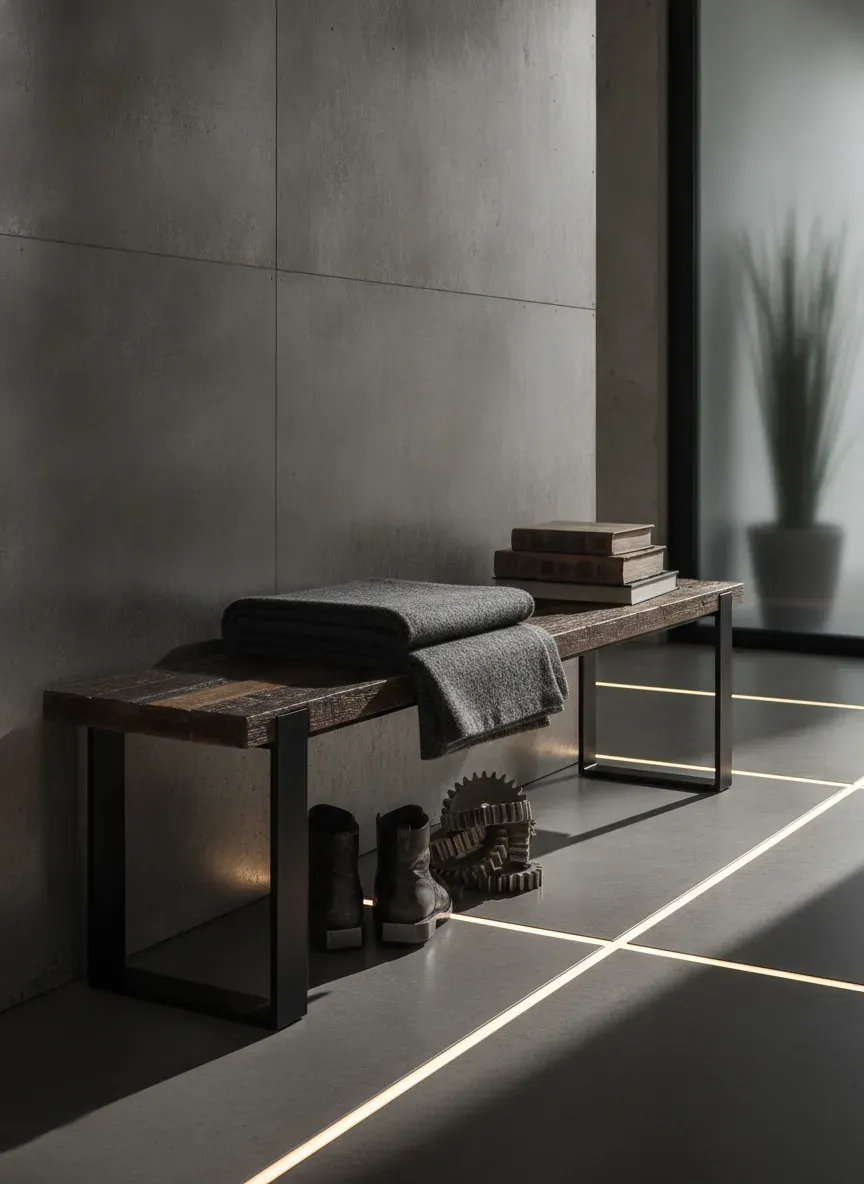
For those who love the raw, unrefined look of loft living, this industrial marvel is a masterclass in spatial efficiency. Measuring just under 12 inches deep, it hugs the wall while offering a robust seating platform.
The combination of a rich, rustic engineered wood top and a heavy-duty matte black steel frame ensures that it doesn’t wobble when you sit. The two lower mesh shelves are perfect for keeping shoes off the floor, allowing air to circulate around wet soles. I’ve personally found that the open-shelf design keeps the entryway looking airy, as you can see the floor beneath and behind the structure.
2. The Mid-Century Slatted Bench
Slatted benches are a darling of the mid-century modern aesthetic, and for good reason. The gaps between the wooden slats allow light to pass through, reducing the visual weight of the furniture. Typically crafted from warm acorns, teak, or walnut, a 12-inch deep slatted bench functions beautifully as both a seat and an impromptu display stand for art books or a potted snake plant.
3. The Hidden Champion: SONGMICS Storage Ottoman Bench
If your primary struggle is keeping clutter out of sight, a storage ottoman is your best ally. This slim, fabric-upholstered bench serves a dual purpose. It offers a comfortable, padded seat while concealing a spacious storage chest beneath the lid.
It is ideal for stashing winter gloves, dog leashes, or reusable shopping bags that otherwise create visual chaos on your countertops. Look for models featuring faux leather or high-rub-count linen fabrics to ensure they survive high-traffic use.
4. The Scandinavian Trestle Bench
Characterized by clean lines, light woods (such as birch or ash), and functional simplicity, the Scandinavian trestle bench is perfect for bright, minimalist entries. These benches often feature a slightly tapered seat and angled legs, providing excellent stability within a narrow 11-inch depth.
5. The Eco-Friendly Classic: SONGMICS 3-Tier Bamboo Bench
Bamboo is one of the most resilient, sustainable, and moisture-resistant materials available for home furnishings. This three-tier bench is an absolute workhorse for compact entryways.
Its naturally light, organic grain brings warmth to cold hallways, while its water-resistant properties mean you can drop snowy boots directly onto its slatted shelves without worrying about water rings or rot. It’s incredibly lightweight, making it easy to shift out of the way when you’re cleaning or moving large items through the front door.
6. The Floating Wall-Mounted Perch
If you want to maximize floor space, get rid of the legs entirely. A wall-mounted floating bench can be installed at your exact ergonomic height. By keeping the floor completely clear, you create a seamless line of sight that makes even the tiniest vestibule feel twice as wide. Just make sure to anchor this style securely into at least two wall studs.
7. The Cast Iron and Reclaimed Wood Bench
This rustic powerhouse combines rugged, thick timber with heavy cast-iron legs. The sheer mass of the materials keeps a 10-inch deep bench rock-solid. It is an excellent option for families who need a durable, indestructible piece of furniture that gains character from every ding, scrape, and muddy boot.
8. The Mirrored Shoe Cabinet Bench
Borrowing design cues from European apartments, this hybrid piece features a slim seat on top of a tipping shoe drawer. Instead of sliding shoes onto open shelves, you pull down a front panel that stores shoes vertically. When closed, it is a sleek, ultra-thin cabinet that occupies less than 10 inches of depth.
9. The Acrylic Ghost Bench
For the ultimate optical illusion, an acrylic bench is unbeatable. Because it is completely transparent, it virtually disappears into the room, allowing your flooring, rugs, or wallpaper to take center stage. It”™s an ideal choice for glamorous, modern, or maximalist entries where a wood or metal bench would compete with bold decor.
10. The Velvet and Brass Luxe Settee
Who says small spaces can’t be glamorous? A narrow metal frame finished in brushed gold or brass, topped with a rich velvet cushion, brings instant sophistication to your home”™s entrance. Keep the depth to 12 inches, and use the empty space beneath the frame to tuck away a pair of elegant storage baskets.
11. The Live-Edge Slab Bench
If you want a one-of-a-kind statement piece, look for a live-edge wooden bench. Craftsmen can cut these slabs thin—around 11 to 12 inches—retaining the natural, organic curve of the tree trunk on the outer edge. Mounted on slim metal hairpin legs, it strikes a beautiful balance between rustic warmth and mid-century design.
12. The Metal Wire-Grid Bench
Popular in high-modern and industrial spaces, this bench features a frame constructed entirely of powder-coated steel wire. The grid pattern on the seat and shoe shelf keeps the piece visually transparent while providing a surprisingly comfortable, sturdy seat. Add a custom leather seat pad to introduce a touch of warmth and softness.
13. The Farmhouse Trestle Bench
Bring cozy, classic style to your foyer with a narrow farmhouse-style bench. Featuring thick, stylized legs and a distressed paint finish (often in cream, sage, or navy), this bench looks best paired with warm wood tones. It’s a great choice for creating an inviting, lived-in feel right at your front door.
14. The Cubby-Style Organizer Bench
For homes with school-aged children, a cubby bench is indispensable. Each family member gets their own dedicated slot for backpacks, shoes, or sports gear. To keep this narrow, look for vertical cubby configurations rather than wide horizontal bins, ensuring the depth remains under 13 inches.
15. The Mission-Style Oak Bench
With a focus on straight vertical lines, exposed joinery, and rich quartersawn oak, Mission-style furniture is incredibly sturdy. A narrow Mission bench provides a solid, traditional presence that grounds a space, making it perfect for arts-and-crafts style homes or traditional interiors.
Designing Around Your Narrow Bench
Once you”™ve selected the perfect narrow bench, the challenge shifts to styling and organizing the surrounding vertical and horizontal space. In a small entryway, a single piece of furniture cannot exist in a vacuum; it must work in harmony with your walls, lighting, and tech.
Maximizing Vertical Space: Pegs, Hooks, and Mirrors
The secret to a functional narrow entryway is utilizing the vertical plane. If you have a bench that is only 11 inches deep, you cannot have bulky coats hanging off the back of it, or they will drape over the seat and crowd the pathway.
Instead, pair your bench with wall-mounted hooks. I highly recommend learning about hanging coat hooks at the correct height to ensure your long winter coats hang clean off the floor without dragging across your bench or blockading your seating area.
+-------------------------------------------------------------+
| VERTICAL WALL CONFIGURATION |
| |
| [ MIRROR ] --> Expands room visually, allows checks |
| |
| O O O O --> Hooks (Staggered to prevent bulk) |
| |
| +-----------------------------------------------------+ |
| | BENCH SEAT (18" H) | |
| +-----------------------------------------------------+ |
| | [Shoes] | [Shoes] | [Shoes] | [Shoes] | |
| +-----------------------------------------------------+ |
+-------------------------------------------------------------+
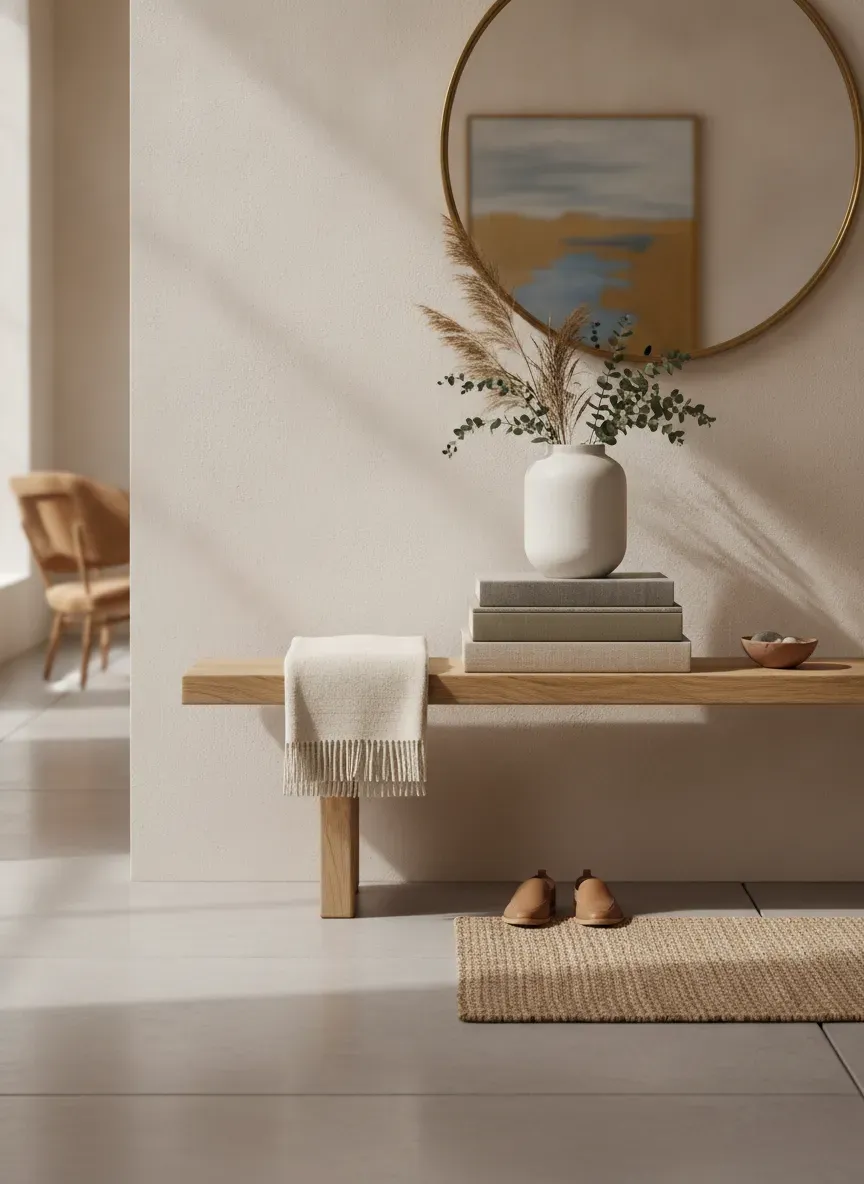
Directly above your bench, hang a large round or rectangular mirror. A mirror serves two purposes: it allows you to do a quick appearance check before leaving the house, and it bounces light around a dark hallway, creating the illusion of a much wider room.
If you are a modern homeowner, you might also consider integrating smart technology into your foyer, such as low-profile smart screens, key trackers, or motion-activated ambient lighting beneath your bench. This keeps your entry functional without cluttering the narrow surface of your new seating.
Pro Tip: If your hallway is exceptionally narrow, stagger your wall hooks at different heights (e.g., some at 65 inches for long coats, others at 45 inches for bags and kids’ jackets). This prevents all the bulk from gathering at a single level, keeping the silhouette of your hallway slim and passable.
Lighting and Visual Tricks to Expand Tiny Foyers
Dark corners make a space feel cramped. To make your narrow entryway feel expansive, combine your slim bench with strategic lighting choices.
- Sconces: Mount slim, swing-arm wall sconces on either side of your mirror. This draws the eye upward and keeps valuable tabletop space clear.
- Under-Bench LED Strips: Install a motion-activated LED strip underneath the seat of your bench. When you walk in the door at night, a soft glow will illuminate the floor, making the footprint of the room feel wider and helping you find your shoes without turning on harsh overhead lights.
- Color Blocking: Paint the lower half of the wall behind the bench a slightly darker color than the top half. This horizontal division stretches the visual length of a corridor, a classic technique used in professional narrow hallway design strategies.
DIY vs. Buying: Can You Build the Perfect Custom Bench?
If you have highly specific architectural constraints—such as an awkward alcove, an active heating radiator, or an angled wall—you might find that commercial benches just don’t fit the bill. In these instances, embarking on a DIY build is a highly rewarding alternative.
If you are considering this route, I suggest reading up on the fundamentals of building your own custom entryway furniture to understand the structural joins and load-bearing math required for stable seating.
Sourcing Raw Materials for Custom Depth
When building a custom narrow bench, your primary challenge is sourcing wood that is thick enough to resist bowing under weight but narrow enough to fit your space.
- Reclaimed Scaffolding Boards: Typically 2 inches thick and 9 to 10 inches wide, these boards make incredible, heavy-duty bench tops. They require heavy sanding and sealing but offer instant historic character.
- Butcher Block Offcuts: Many home improvement stores sell pre-cut birch or oak butcher block counters in 12-inch depths. These are incredibly strong and provide a clean, modern aesthetic.
- Metal Hairpin Legs: The easiest way to complete a DIY narrow bench is to source a beautiful piece of wood and screw heavy-duty steel hairpin legs into the base. Opt for 3-rod hairpin legs rather than 2-rod versions; the third rod adds critical torsional stiffness that prevents a narrow bench from wobbling laterally.
Safety Standards: Anchoring and Anti-Tip Engineering
If your DIY bench is under 11 inches deep and stands over 18 inches tall, safety must be your top priority.
To prevent accidents, you should secure the bench directly to the wall studs using L-brackets mounted beneath the seat. These brackets are invisible to anyone standing up, but they ensure that if someone trips and grabs the edge of the bench, or if a child decides to use it as a step stool, the unit will not tip forward.
Common Pitfalls When Outfitting a Small Entryway
Even with the best intentions, it is easy to make mistakes when styling a cramped space. Here are three common traps to avoid when choosing and positioning your narrow entryway bench.
1. Ignoring the Baseboard and Molding Clearance
This is the single most common mistake I see homeowners make. They measure their hallway wall from plaster to plaster, buy a bench that matches those dimensions perfectly, and then find that the bench sits two inches away from the wall because of thick, decorative baseboards.
Always measure your space at the floor level, taking into account the depth of your baseboards and shoe moldings. If your bench has straight, vertical legs, it will be pushed away from the wall by the molding, leaving an ugly gap where dust, keys, and mail can slip down.
- Solution: Look for benches with inset legs, splayed legs, or a frame that is notched at the back to clear standard baseboard heights.
2. Choosing Form Over Function (The “Too Pretty to Sit On” Trap)
We have all seen those gorgeous, minimalist benches on social media—the ones made of delicate, highly polished acrylic or featuring paper-thin cushions that look like art installations.
While beautiful, if your bench is so delicate that you worry about scratching it every time you drop your keys, or if it is so uncomfortable that your family avoids using it, it is failing at its primary job. An entryway bench must be a workhorse. Choose tactile, forgiving materials like textured oak, powder-coated steel, or high-performance performance fabrics that actually welcome daily use.
3. Overcrowding the Floor Plan
Just because a bench can physically fit into a space does not mean it should. You need to maintain a clear “path of travel.”
In interior design, the standard hallway corridor should ideally maintain a clear width of 36 inches. While you can get away with 30 inches in tight residential spaces, dropping below that will make your home feel cramped, dark, and difficult to navigate when carrying groceries or luggage. If your hallway is only 38 inches wide, even a 10-inch bench is pushing the limits of comfort. In those ultra-tight cases, consider a folding wall-mounted seat that can be tucked completely flat when not in use.
Key Takeaways
- Prioritize Depth: For tight hallways, keep your bench depth strictly between 10 and 13 inches to maintain a clear walking path.
- Focus on Stability: Look for designs with flared legs, heavy bases, or wall-anchoring hardware to counteract the higher center of gravity found in narrow furniture.
- Embrace Multipurpose Design: Choose benches that incorporate open shoe shelves, hidden storage drawers, or vertical cubbies to maximize utility per square inch.
- Style Vertically: Stagger wall hooks, hang a large light-reflecting mirror, and use slim sconces to draw the eye upward and keep the floor footprint clear of clutter.
The Bottom Line: Don’t let a small entryway limit your home’s potential. By choosing a thoughtfully engineered, stylishly narrow bench, you can transform a chaotic, cramped hallway into a welcoming, highly organized zone that makes a stunning first impression. Measure your space twice, invest in durable materials, and style your new focal point with confidence.
