
7 Best Small Mudroom Bench and Storage Solutions for Narrow Entryways
Struggling with a narrow corridor? Discover expert-approved small mudroom bench and storage solutions designed to maximize your tight entryway without sacrificing style.
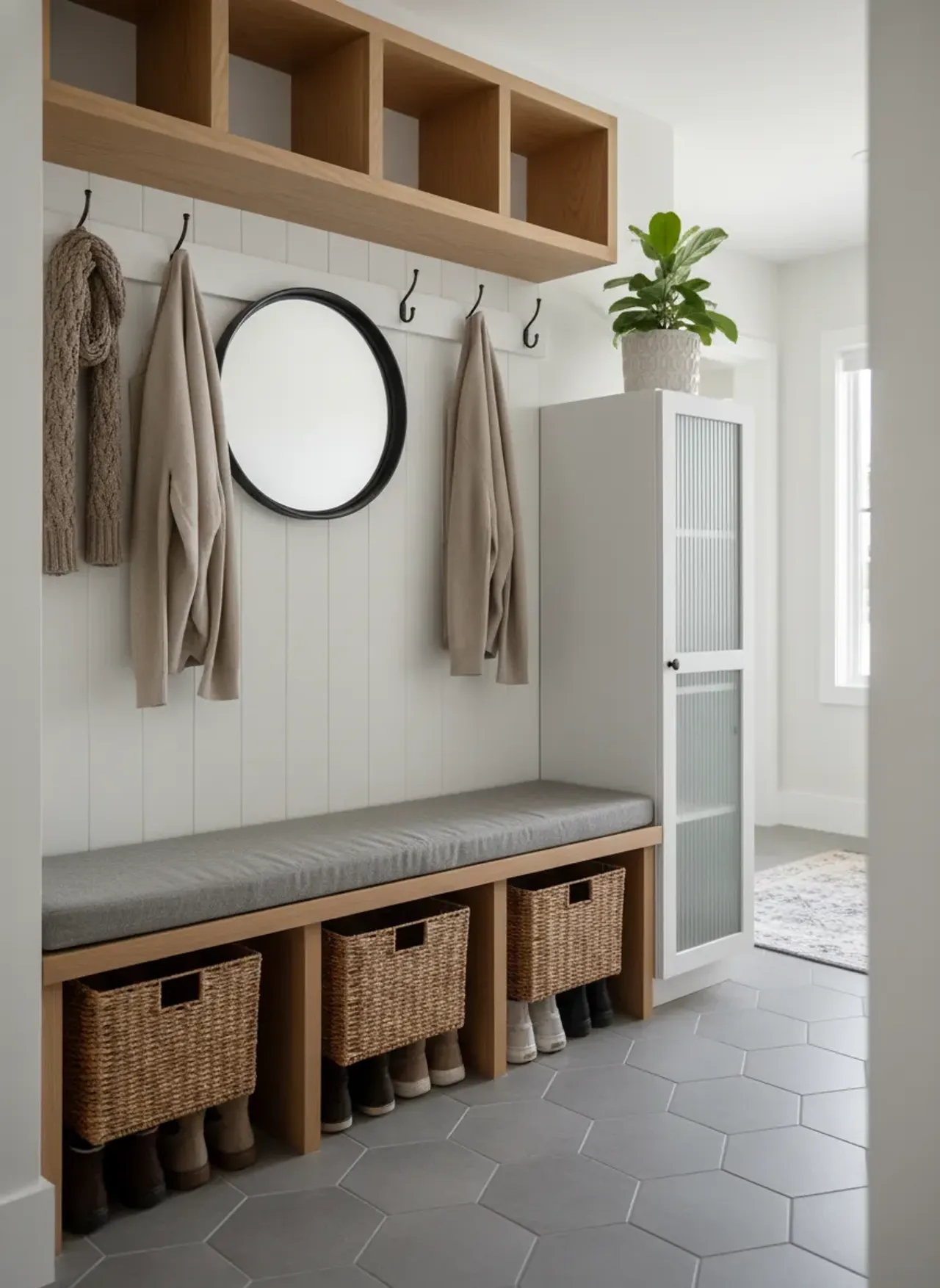
Mar 14, 2026 - Written by: Linda Wise
You walk through the front door, hands burdened with heavy grocery bags, and immediately perform an involuntary tap dance to avoid crushing a stray pair of winter boots. Sound familiar? Narrow corridors possess a unique brand of spatial cruelty. They serve as the highest-traffic artery of your home, yet offer the least amount of square footage to manage that daily chaos.
I’ve personally found that designing for a “bowling alley” entryway requires throwing traditional furniture metrics out the window. You simply cannot squeeze a standard 24-inch-deep bench into a 48-inch-wide hallway and expect your family to comfortably navigate the remaining bottleneck. Instead, the strategy must shift toward spatial economy, utilizing vertical planes, multi-functional hardware, and slim-profile silhouettes that trick the eye while capturing the clutter.
Here’s the real kicker: a tight floorplan doesn’t mean you have to sacrifice the luxury of a dedicated drop zone. By selecting the precise type of organizational furniture, you can engineer a highly efficient micro-mudroom. Below, we dissect the seven best small mudroom bench and storage solutions specifically manufactured for narrow entryways, blending architectural theory with practical, everyday utility.
Quick Comparison: Top Picks
| Product | Rating | Check Price |
|---|---|---|
| Prepac Space-Saving Entryway Organizer | ⭐⭐⭐⭐⭐ | View on Amazon |
| VASAGLE Narrow Hall Tree | ⭐⭐⭐⭐½ | View on Amazon |
| Crosley Furniture Seaside Corner Bench | ⭐⭐⭐⭐ | View on Amazon |
The Physics of the Narrow Foyer
Before we evaluate specific furniture pieces, we must understand the ergonomic math of a confined hallway. Standard architectural guidelines dictate that a residential hallway should provide at least 36 inches of clear walking space. If your entryway is 48 inches wide, that leaves you with a mere 12 inches of allowable depth for any storage solution.
This strict limitation drastically changes how we source furniture. A standard bench operates on a horizontal plane, consuming floor space. In narrow corridors, our organizational framework must transition to the vertical plane. We must exploit the 8-to-9 feet of wall space stretching toward the ceiling. When you start determining how deep your mudroom lockers actually need to be, you’ll quickly realize that anything exceeding 15 inches in a tight corridor will feel oppressive and disruptive to foot traffic.
1. The Ultra-Slim Tilt-Out Shoe Cabinet with Integrated Seat
When standard cubbies fail, tilt-out mechanisms reign supreme. Traditional shoe racks force footwear to sit flat, requiring a minimum depth of 12 to 14 inches just to accommodate an adult’s sneaker. A tilt-out cabinet stores shoes vertically against the door face, dropping the overall depth requirement of the unit to an astonishing 7 to 9 inches.
Why It Works for Narrow Spaces
These units hug the baseboard. By selecting a model that incorporates a sturdy, reinforced top panel, you instantly gain a momentary seating surface. While it may not offer the plush comfort of a deep, upholstered library bench, it provides exactly what is necessary: a stable perch for 45 seconds while you lace up your running shoes.
Expert Implementation
Look for models constructed from engineered wood with a melamine finish, as they resist the inevitable moisture and grit brought in from the outside. To maximize utility, install floating shelves directly above the cabinet for mail, keys, and sunglasses, essentially creating a staggered, multi-tiered drop zone that barely encroaches on your walking path.
Pro Tip: If your tilt-out cabinet lacks a factory-installed cushion, affix a custom-cut, high-density foam pad using heavy-duty Velcro. This keeps the pad from sliding off when bumped by passersby while maintaining that ultra-low profile.
2. The Wireframe Vertical Hall Tree
Solid wood hall trees—those massive, monolithic structures reminiscent of Victorian manors—are the enemies of the narrow corridor. They carry heavy visual weight, absorbing light and making a tight space feel claustrophobic. Enter the wireframe or mixed-material hall tree.

The Visual Trickery of Open Framework
By utilizing slim, powder-coated steel frames paired with thin wooden shelving, these units provide all the functionality of a traditional mudroom locker without the visual bulk. You can see the wall through the furniture. This transparency is a crucial interior design tactic for maintaining a sense of volume in a restricted area.
Structural Considerations
A quality narrow hall tree will feature a base bench that doesn’t exceed 14 inches in depth, flanked by a soaring vertical spine equipped with staggered coat hooks. Because the footprint is so small, these units are highly susceptible to tipping under the weight of heavy winter coats. You must anchor them to a wall stud. Drywall anchors are insufficient here; the dynamic load of someone yanking a snagged jacket off a hook requires a rigorous mechanical connection to the framing of your house.
3. The Wall-Mounted “Floating” Bench with Under-Mount Baskets
If you want to create an immediate illusion of space, clear the floor. The human eye gauges the size of a room heavily by the amount of visible floor area. A floating bench—anchored directly to the wall studs via heavy-duty steel L-brackets hidden behind the drywall—eliminates legs entirely.
Elevating Your Storage Strategy
By mounting a sturdy piece of butcher block or live-edge timber 18 inches off the ground, you achieve a minimalist, bespoke aesthetic. But we still need storage. The solution lies in sliding low-profile, structured canvas or woven hyacinth baskets directly beneath the bench.
The Maintenance Advantage
Beyond aesthetics, this setup drastically simplifies cleaning. Narrow entryways accumulate dirt, salt, and leaves faster than any other room. A floating bench allows a vacuum or a robotic floor cleaner to sweep the entire area without needing to awkwardly maneuver around wooden furniture legs.
4. The Corner Nook Storage Bench
Hallways rarely exist in a vacuum; they eventually intersect with staircases, living rooms, or utility closets. These intersections often create awkward 90-degree dead zones. If your narrow entryway features a corner right near the door, a corner-specific mudroom bench is your most potent weapon.
Triangulating Your Footprint
Corner benches utilize a triangular or L-shaped footprint. This geometry allows the seating area to remain deep and comfortable while tapering off at the edges so as not to block the linear flow of the hallway. You’re effectively stealing square footage from a spot that was previously unusable.
Hook Placement Mastery
When utilizing a corner nook, the walls directly above the bench become prime real estate for outerwear. However, crowding a corner with heavy coats can quickly turn it into a tangled, inaccessible mess. Understanding the ideal spacing and distance between your hanging hooks is critical here. Staggering hooks at different heights—placing adult coats higher up and kids’ backpacks lower down—prevents the bulky fabrics from overlapping and pushing outward into the room.
5. The Multi-Tiered Storage Ottoman
Sometimes, built-in or semi-permanent fixtures are out of the question, particularly for renters or those dealing with heritage homes where wall modification is restricted. In these instances, the storage ottoman is a highly mobile, deeply practical alternative.

Dual-Purpose Dynamics
You’ll notice that the best storage ottomans for narrow spaces are rectangular, not circular. A long, skinny ottoman (roughly 36 inches wide by 12 inches deep) can be pushed flush against the wall. The upholstered top provides a comfortable seat, while the hollow interior swallows up off-season footwear, umbrellas, and reusable grocery bags.
The Portability Factor
The sheer brilliance of a standalone ottoman in a tight space is its adaptability. If you are hosting a large gathering and expect a massive influx of foot traffic, you can simply pick the ottoman up and relocate it to a bedroom, instantly widening your entryway to accommodate the crowd.
6. The Modular Pegboard and Drop-Leaf Bench System
For the hyper-organized homeowner dealing with severe spatial constraints, we turn to garage-inspired modularity. Large-scale wooden pegboards (think beautifully finished birch or walnut, not the white composite boards from a hardware store) allow you to completely customize your vertical storage on a week-by-week basis.
Adapting to the Seasons
During the winter, you can configure heavy wooden pegs to hold parkas and scarves. Come summer, reconfigure the layout to manage sun hats, dog leashes, and light windbreakers.
The Drop-Leaf Innovation
The true stroke of genius for this setup is integrating a drop-leaf bench. Much like a drop-leaf dining table, this seating surface remains folded flat against the wall on heavy-duty locking hinges. When you need to put on your shoes, you lift the wooden panel until it clicks into a horizontal position. Once finished, unlatch the hinges and it drops back flush against the wall, reducing its footprint from 15 inches to a mere 2 inches. This is the ultimate execution of on-demand utility.
7. The Narrow Console with Hidden Pull-Out Seating
Not every entryway is a casual backdoor mudroom. If your narrow corridor is the formal main entrance to your home, you likely want to maintain a high-end, sophisticated aesthetic while still hiding the everyday clutter. A slim console table paired with nesting stools bridges this gap perfectly.
Stealth Organization
A console table with a depth of 10 to 12 inches provides an elegant surface for a key tray, a vase of fresh foliage, and perhaps a slim table lamp to warm the space. Beneath the console, instead of open shelving, you stash two small, backless cube stools.
When arriving home, you slide a stool out, sit down to remove your shoes, slide the footwear into a decorative basket adjacent to the table, and push the stool back underneath. The corridor immediately returns to looking like a curated interior design vignette rather than a chaotic locker room.
Design Psychology: Expanding the Narrow Corridor
Procuring the right bench is only half the battle. How you integrate that piece into the surrounding environment dictates whether the space feels like a welcoming threshold or a claustrophobic tunnel.
The Strategic Placement of Mirrors
You cannot physically push your hallway walls outward, but you can manipulate light to fake it. Placing a large, frameless mirror on the wall directly opposite your new slimline bench bounces natural light around the corridor. This reflection tricks the brain into perceiving double the width.

Color Theory and Visual Weight
Dark colors absorb light and advance toward the eye; light colors reflect light and recede. If you purchase a dark mahogany or matte black hall tree, it will dominate a narrow space. Instead, opt for benches finished in white oak, soft ash, or painted in light, desaturated tones like sage green or warm taupe.
If you absolutely must have dark furniture, ensure the walls behind it are painted a crisp, reflective white to provide high-contrast relief. Furthermore, match the hardware (hooks, hinges, drawer pulls) to the existing door knobs and light fixtures in the hallway. This cohesive detailing prevents the eye from snagging on disjointed visual elements, promoting a smooth, seamless transition into the home.
Common Pitfalls to Avoid in Tight Entryways
Even armed with the best furniture, a few missteps in execution can ruin the functionality of your micro-mudroom. Watch out for these frequent architectural and organizational traps:
- Ignoring Baseboard Heat and Vents: Before ordering a flush-mount cabinet or floor-sitting bench, locate your HVAC registers. Blocking a return vent or resting engineered wood against an active baseboard heater is a recipe for warped furniture and an inefficiently heated home.
- The Over-Hooking Epidemic: Just because a wall has empty space doesn’t mean it needs a hook. Overpopulating your vertical space encourages hoarding behavior. Stick to a strict “two items per family member” rule for the entryway. The rest goes into primary bedroom closets.
- Failing to Account for Baseboard Molding: If you buy a piece of furniture that is 10 inches deep and expect it to sit flush against the wall to preserve a 36-inch walkway, remember that your baseboards likely push the unit out an additional inch. Look for furniture with cut-out notches at the rear legs specifically designed to clear floor moldings.
Pro Tip: Implement a “one-in, one-out” seasonal rotation for your narrow entryway. When the winter boots come up from the basement, the summer sandals must immediately go down into storage. A small mudroom cannot serve as a year-round archival closet.
Key Takeaways for Micro-Mudroom Mastery
- Verticality is Non-Negotiable: When floor space vanishes, utilize the 8 feet of wall space above you with wireframe hall trees or tall pegboards.
- Embrace Mechanical Solutions: Tilt-out drawers and drop-leaf hinges provide maximum utility with minimal permanent footprints.
- Prioritize Visual Flow: Floating benches and light-toned materials prevent furniture from feeling oppressive in a tight corridor.
- Anchor Everything: Narrow, tall furniture is inherently top-heavy. Always secure units directly to wall studs.
The Bottom Line
The Bottom Line: Mastering a narrow entryway isn’t about compromising on your storage needs; it’s about shifting your geometrical approach. By abandoning deep, traditional benches in favor of slim-profile tilt-out cabinets, floating ledges, and modular wall systems, you can engineer a highly functional drop zone. You retain the vital walking clearance your home requires, while finally establishing a disciplined, stylish perimeter to catch the daily chaos before it crosses your threshold.