
Best Entryway Benches With Coat Rack
Discover the ultimate entryway benches with coat racks. We break down materials, spatial ergonomics, and top structural picks to transform your chaotic foyer.
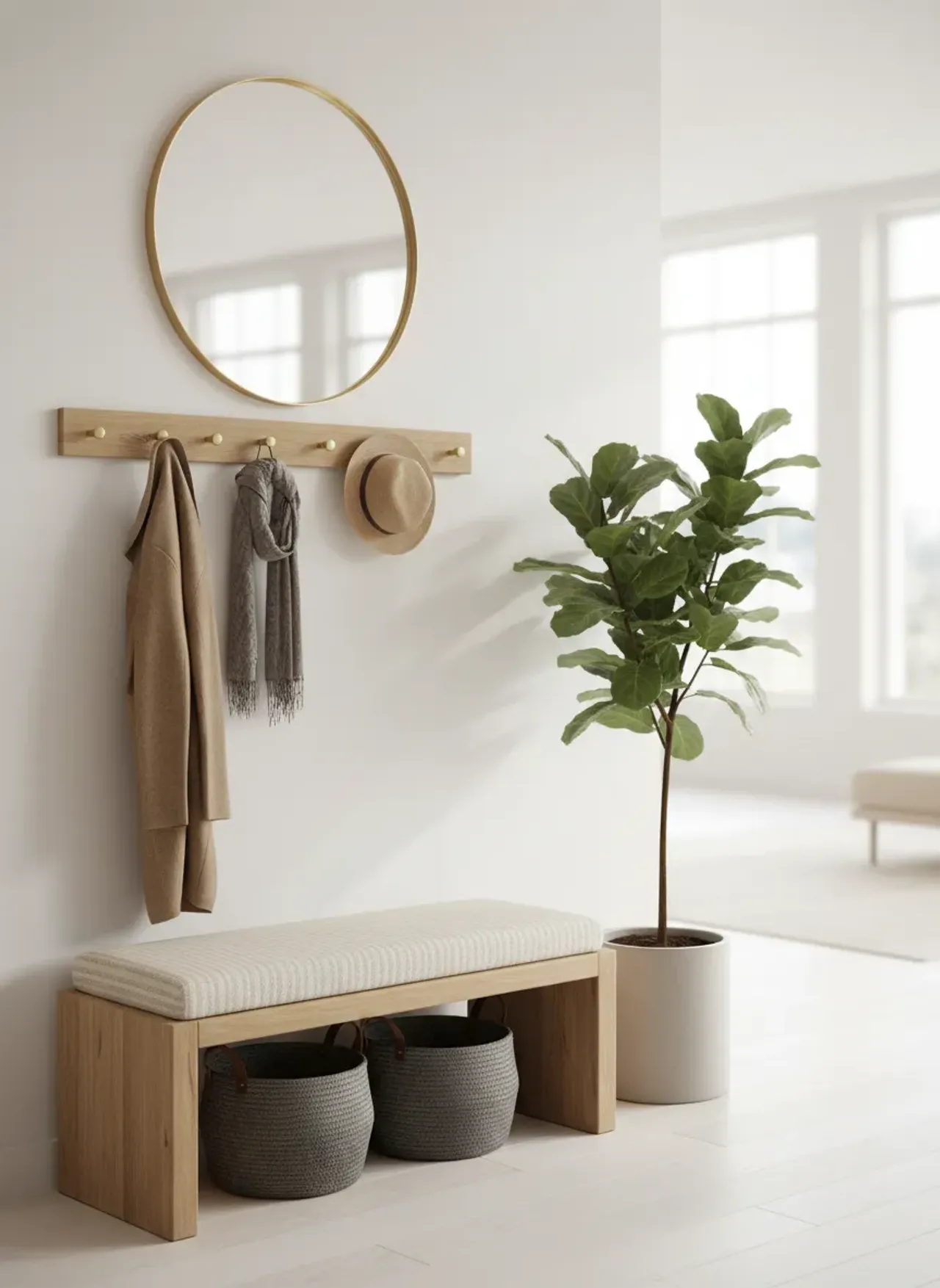
Mar 15, 2026 - Written by: Linda Wise
You walk through the front door, exhausted. Your foot immediately clips a stray sneaker. As you blindly reach out to steady yourself, a heavy winter parka slides off a flimsy wall hook, draping over your head like a pathetic, insulated ghost. We have all been there.
The entryway is the most punishing transitional zone in your entire home. It acts as the primary filtration system between the chaotic outside world and your private sanctuary. When this space lacks structural organization, that external chaos bleeds directly into your living room. A standalone shoe rack is rarely enough. A scattering of wall hooks inevitably leads to drywall damage. You need a unified, architectural solution.
I’ve personally found that the absolute most effective intervention for foyer clutter is a high-quality entryway bench integrated with a coat rack—often referred to in the furniture trade as a hall tree. These hybrid units leverage vertical real estate, providing a defined “drop zone” that forces organization through sheer convenience.
Before we tear into the granular mechanics of spatial planning, material durability, and ergonomic hook heights, let’s look at the standout contenders that are currently dominating the market.
Quick Comparison: Top Picks
| Product | Rating | Check Price |
|---|---|---|
| VASAGLE Industrial Hall Tree | ⭐⭐⭐⭐⭐ | View on Amazon |
| Bush Furniture Salinas Hall Tree | ⭐⭐⭐⭐½ | View on Amazon |
| Prepac Wide Hall Tree | ⭐⭐⭐⭐ | View on Amazon |
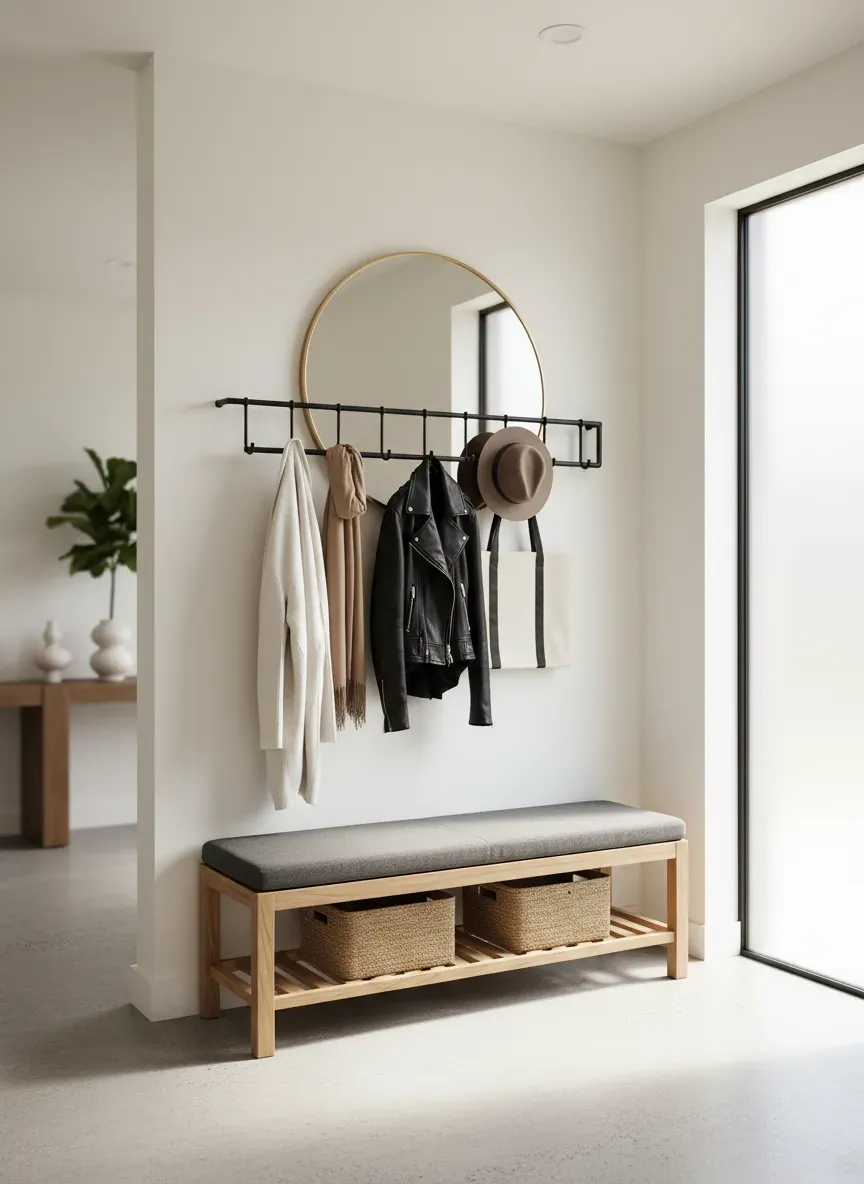
The Psychology and Physics of the “Drop Zone”
Why do we abandon our belongings the second we cross the threshold? It comes down to basic human behavioral friction. When you are carrying groceries, wrangling a toddler, or simply exhausted after a ten-hour shift, any organizational task that requires more than two physical steps will be bypassed.
If opening a closet door, reaching for a hanger, and perfectly draping a coat takes ten seconds, your brain will reject the task. You will throw the coat on the nearest chair. An entryway bench with an exposed coat rack reduces this friction to zero. You sit, drop the shoes, stand, and blindly hook the coat.
Understanding Vertical Utility
Most foyers are starved for square footage. You might only have a narrow corridor to work with. By utilizing a tall, unified piece of furniture, you are capturing vertical airspace that otherwise goes to waste.
Here is the real kicker: a poorly designed hall tree can actually make your space feel smaller. If the unit is too deep, it chokes the walkway. If it is too shallow, adult-sized boots will protrude into the walking path, creating a tripping hazard. If you are trying to maximize storage without encroaching on walkway clearance, understanding proper mudroom locker depth guidelines becomes paramount.
Anatomy of a High-Performance Entryway Bench
Not all hall trees are created equal. I’ve tested units that looked stunning in catalog photos but wobbled terrifyingly the moment I hung a wet wool peacoat on them. When evaluating these pieces, you have to look past the veneer and analyze the structural geometry.
1. The Seating Deck
The bench itself must be deep enough to comfortably support an adult sitting down to tie their laces, but not so deep that it mimics a lounge chair. The golden ratio for bench depth hovers right around 15 to 18 inches. Anything less, and you feel like you are perched on a tightrope. Anything more, and it becomes a repository for junk mail and amazon packages rather than a functional seat.
2. Hook Distribution and Geometry
Look closely at how the manufacturer has staggered the hardware. A single, horizontal row of hooks is an amateur design flaw. When heavy winter coats are hung shoulder-to-shoulder, they bulk up and push against each other, eventually forcing garments off the hooks and onto the floor.
The best designs utilize a tiered or staggered hook system. High hooks accommodate long trench coats and heavy parkas, while lower hooks are reserved for scarves, dog leashes, hats, and children’s jackets.
3. Base Stability and Center of Gravity
A tall, narrow piece of furniture loaded with heavy textiles at the very top is a fundamental tipping hazard. The base must be significantly heavier and wider than the upper rack. This is why many superior designs incorporate dense shoe cubbies or heavy, solid-wood lower trunks.
Pro Tip: Never trust a freestanding hall tree that lacks an anti-tip wall anchor kit. No matter how heavy the base is, the sheer leverage generated by someone pulling a snagged coat off a top hook can bring the entire unit down. Always locate a stud and secure the unit to your drywall.
Product Deep Dives: Engineering Meets Aesthetics
Let’s dissect exactly why our top three recommendations consistently outperform the competition. I’m not just looking at aesthetics here; I’m evaluating lateral stability, hardware quality, and everyday friction points.
The Rugged Pragmatist: VASAGLE Industrial Hall Tree
For homes leaning into urban, modern, or rustic aesthetics, the VASAGLE Industrial Hall Tree is a masterclass in mixed-material engineering.
Structural Analysis: VASAGLE utilizes a powder-coated steel frame paired with engineered wood decking. The genius of this design lies in its skeletal frame. Because the upper half is essentially open steel tubing, it doesn’t block sightlines. It allows light to pass through the entryway, making tight corridors feel significantly more expansive.
The bench incorporates a dual-tier mesh shoe rack at the base. Mesh is vastly superior to solid shelving for footwear because it allows ambient air to circulate around wet, muddy soles, drastically accelerating the drying time and preventing that notorious “stagnant foyer” smell.
Key Takeaways:
- Open visual footprint prevents spatial claustrophobia.
- Powder-coated steel resists chipping from metal coat zippers.
- Dual-mesh racks allow for high-capacity, ventilated shoe storage.
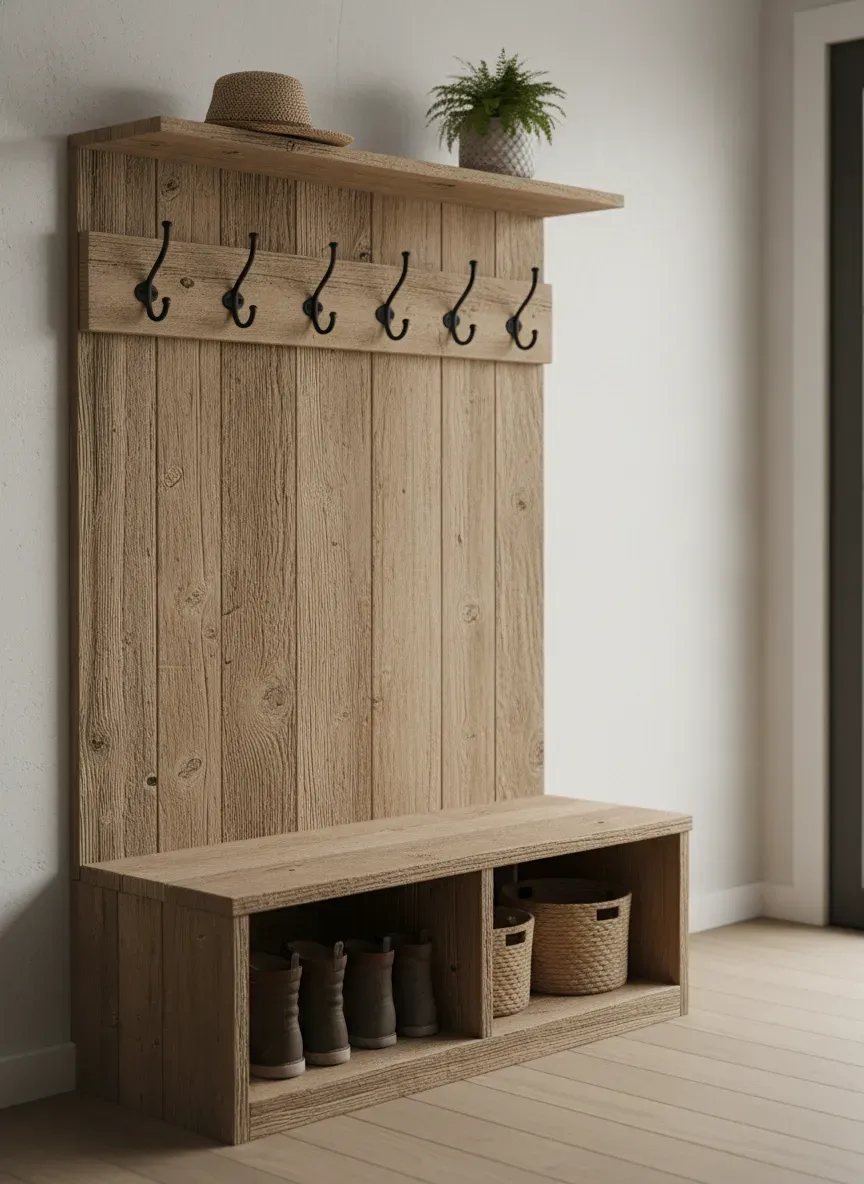
The Heritage Classic: Bush Furniture Salinas Hall Tree
If industrial steel feels too austere for your home, the Bush Furniture Salinas Hall Tree offers a completely different architectural vocabulary. This piece leans heavily into farmhouse and coastal design languages.
Structural Analysis: The Salinas features a solid, beadboard-inspired back panel. This is critical for homes where the drywall behind the bench is prone to scuffing. Instead of damp coats rubbing directly against your expensive Benjamin Moore paint job, the hall tree provides its own protective barrier.
You’ll notice that the bench conceals its shoe storage behind drop-down cabinet doors. This is a massive psychological advantage. Open cubbies can quickly look chaotic if shoes aren’t perfectly aligned. Concealed storage allows you to hide the visual noise of mismatched sneakers and muddy work boots, presenting a pristine, clean facade to incoming guests.
Key Takeaways:
- Full back paneling protects your home’s drywall from moisture and scuffs.
- Concealed lower cabinetry hides visual clutter.
- Tapered legs and curved base rails elevate the piece, allowing for easy vacuuming underneath.
The Volume Maximizer: Prepac Wide Hall Tree
For large families, or households residing in extreme four-season climates, a delicate metal rack simply won’t survive the winter. The Prepac Wide Hall Tree is built like a locker room fixture.
Structural Analysis: Prepac takes a modular, high-density approach. Instead of an open bench underneath, it features a grid of distinct cubbies. This allows you to assign specific, territorial storage zones to different family members.
The upper section is equally aggressive, featuring a deep upper shelf that acts as a structural canopy. This top shelf is perfect for out-of-season storage—think wicker baskets holding winter gloves during the summer, or vice versa. When dealing with tight floor plans, navigating the crucial 12 to 24 inches of transitional storage space can be the difference between a highly functional foyer and a cramped, unusable corridor. Prepac maximizes every available inch of that footprint.
Key Takeaways:
- High-density cubby system enforces strict organizational boundaries.
- Integrated upper canopy shelf captures dead airspace near the ceiling.
- Substantial base weight creates exceptional lateral stability.
Material Science: Surviving the Elements
Entryway furniture takes more environmental abuse than almost anything else in your home, save for the kitchen counters. You are bringing in ultraviolet light through open doors, freezing temperatures, dripping rainwater, road salt, and abrasive mud.
Solid Wood vs. Engineered MDF
Solid wood (oak, maple, walnut) is the gold standard for longevity. It handles moisture variations well, provided it is properly sealed with a polyurethane topcoat. If a solid wood bench gets gouged by an aggressive metal boot cleat, you can sand it out and refinish it.
Medium Density Fiberboard (MDF) and particleboard are incredibly common in modern hall trees. They are cost-effective and perfectly flat. However, they are highly vulnerable to moisture. If the laminate veneer cracks, and a wet snow boot sits on that exposed crack, the MDF will swell, blister, and eventually disintegrate. If you opt for engineered wood, you must ensure the edge-banding is flawless and immediately wipe up standing puddles.
The Metal Component
Hooks should ideally be made of cast iron, forged steel, or heavy-duty zinc alloys. Beware of cheap, hollow aluminum hooks painted to look like iron. Take a close look at the mounting hardware. A hook secured by a single, tiny half-inch wood screw will rip out of the back panel the moment you hang a heavy leather motorcycle jacket on it. You want hooks that feature dual mounting points, preferably secured with robust pan-head screws.
Spatial Ergonomics & Installation Strategies
Buying the right bench is only fifty percent of the battle. How you position and install it dictates its ultimate utility.
Baseboard Interference
Most people push their new hall tree against the wall, only to find a glaring two-inch gap at the top. Why? Because the unit is hitting the floor baseboards.
Premium entryway benches feature an architectural cutout at the bottom rear—a notch designed specifically to clear standard baseboard profiles. If your chosen unit lacks this, you have two choices: accept the gap (which creates a treacherous trap for keys and mail to fall down), or carefully notch the back of the furniture yourself using a jigsaw.
Floor Leveling
Foyer floors, especially in older homes, are rarely perfectly level. Hardwood transitions into tile, or the subfloor has settled over the decades. A hall tree with four rigid legs will inevitably wobble.
Pro Tip: Always seek out units that feature adjustable leveling feet. These discrete, threaded glides allow you to micro-adjust each corner independently, ensuring the bench sits dead flat even on aggressive slopes.
Advanced Organizational Frameworks
Once your bench is installed, you need an operational strategy. Left to their own devices, your family will revert to their base instincts and pile everything onto a single hook until the structural integrity fails.
The “One-In, One-Out” Seasonal Rotation
A hall tree is not long-term storage; it is active staging. You should not have heavy wool scarves hanging on the hooks in July. Implement a strict seasonal rotation. Keep only the outer layers currently required by the week’s weather forecast on the exposed rack. Everything else moves to the primary hall closet or deep storage.
Micro-Zoning with Baskets
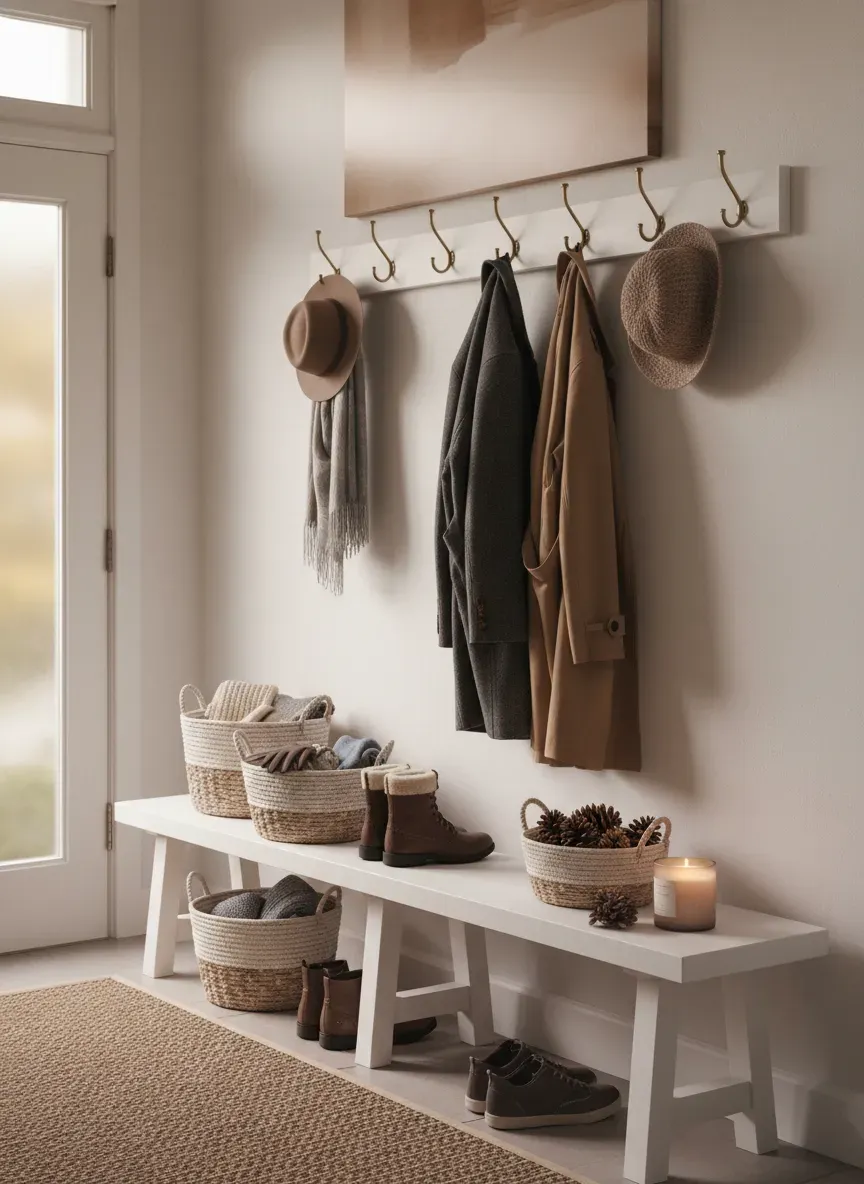
The bench seat is a magnet for stray keys, sunglasses, and loose mail. To prevent the seating area from becoming useless, deploy structural barriers. Place a small, heavy ceramic or wooden tray at one extreme end of the bench. This creates a psychological boundary: “Keys go in the tray, not scattered across the seat.”
If your bench features an upper shelf, utilize uniform, opaque baskets. Woven hyacinth or thick felt bins are ideal. Opaque containers hide the chaotic geometry of winter hats and gloves, reducing the visual noise of the entryway while keeping the items easily accessible.
The Bottom Line: A well-engineered entryway bench with an integrated coat rack is the single highest-ROI furniture investment you can make for your home’s daily operational flow. It transitions the foyer from a stressful obstacle course into a calming, highly functional decompression zone.
The Ultimate Alternative: Taking Control of Your Craft
After testing dozens of commercial hall trees over the years, I’ve realized something frustrating. Even the best mass-produced furniture forces you to compromise. Maybe the dimensions are two inches too wide for your specific hallway. Maybe the MDF backing doesn’t inspire confidence when you hang a heavy wet coat. Maybe the aesthetic is just slightly off from your home’s unique character.
If you are tired of settling for flat-pack particle board, wobbling joints, and generic designs, it is time to stop buying and start building. Woodworking gives you absolute control over the dimensions, the material quality, and the exact hook placement your family needs.
You don’t need a master’s degree in carpentry to build a stunning, heirloom-quality hall tree that will outlast anything sold in a big-box store. You just need the right blueprints.
I highly recommend checking out Ted’s Woodworking. This is an absolute treasure trove for anyone looking to build their own custom pieces. You get instant access to over 16,000 step-by-step woodworking plans, including brilliant, structurally sound designs for entryway benches, mudroom lockers, and bespoke coat racks.
Right now, they are offering a massive 75% discount on the entire database. It completely eliminates the guesswork out of measurements, joinery, and material lists. If you want a foyer piece that is truly built to withstand the chaos of your daily life, grab these plans and build it right the first time.