
Best Paint for High-traffic Areas (and the Sealants That Make It Last)
Best paint for high traffic areas, plus the sealants that make it last: satin and semi-gloss sheens, polycrylic vs. polyurethane vs. wax, in paint order.
Feb 20, 2026 · Linda Wise
15 min readHigh-traffic walls and furniture need two things: a scrubbable paint and a clear sealant — here’s the combination that survives kids, pets, and keys.
I’ve watched this scene in literally dozens of DIY entryway builds: three weekends of measuring, cutting, and assembling, a gorgeous paint job, and then six months later the bench seat is peeling where people sit, the cubbies are scarred with dark rubber marks from boots, and the finish feels tacky when the humidity climbs. Every single time, the fix was the same two-part habit the project skipped — the right sheen and a proper clear coat. Get those two right and your paint will outlast your enthusiasm.
Best Paint for High-Traffic Areas (sheen matters: satin & semi-gloss)
The single most common mistake in high-traffic painting is choosing by color and ignoring sheen. Flat paint is a sponge with a color; it absorbs scuffs, fingerprints, and every attempt to wipe them off. In an entryway, flat paint is a weekly argument waiting to happen.
The best paint for high traffic areas comes in two sheens, and the choice is a straight line:
- Satin is the default for walls. Low enough to feel soft, high enough to wipe clean with a damp cloth, forgiving of imperfect drywall. This is your entryway wall sheen unless you specifically want the next step up.
- Semi-gloss is the workhorse for trim, doors, and furniture — anything a hand, a bag, or a soccer ball will touch. It scrubs noticeably better than satin and holds up to solvents, at the cost of showing every imperfection in the surface underneath.
Within those sheens, reach for a scrubbable formulation: a waterborne alkyd (hybrid) or a urethane-modified acrylic. Both cure to an enamel-hard shell that flat latex never will, they clean up with soap and water, and they’re what the pros use on doors and cabinetry for a reason. Flat or matte has exactly one home in the entryway — the ceiling. Gloss has none.
What Is a Paint Sealant, Really?
A paint sealant is a clear topcoat — a transparent finish applied over cured paint that adds a second, harder layer between the color and the world. Paint protects the wood; the sealer protects the paint. It’s the difference between an entryway bench that looks new for years and one that looks “loved” after a single mud season.
Sealers do two jobs. First, abrasion: every time a bag slides across the bench or a boot drags through the cubby, the wear hits the sealer first — and the sealer is far harder than any paint film. Second, moisture: wet coats and dripping umbrellas bead and wipe off instead of soaking toward the paint and the wood underneath. For horizontal surfaces — bench seats, cubby floors, shelf tops — a sealer is the difference between “maintainable” and “repaint in a year.” Vertical surfaces like locker sides get away with paint alone if the paint itself is a hard enamel; the horizontal tops are where the sealer earns its can.
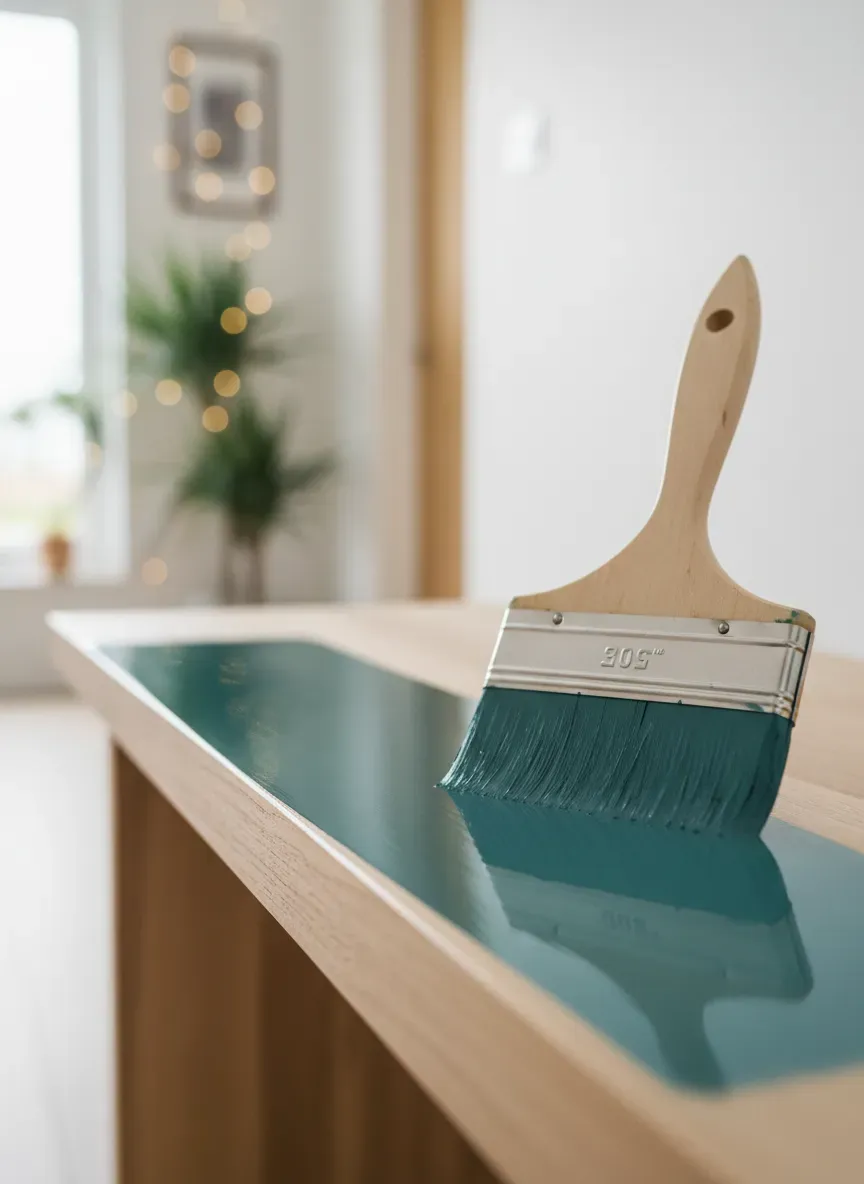
Best Sealers for Painted Furniture (polycrylic vs. polyurethane vs. wax)
Three clear finishes dominate the paint aisle, and they are not interchangeable. Here’s the honest comparison:
| Sealer | Durability | Appearance | Dry / cure | Recoat | Best for | Skip if |
|---|---|---|---|---|---|---|
| Water-based polyurethane | High | Clear, slight warm cast on some woods | 2–4 hrs / 2–3 wks | 2–3 hrs | Bench tops, cubbies, everything high-touch | You want a dead-flat look |
| Polycrylic | Medium | Crystal clear, stays white | 1–2 hrs / 1–2 wks | 2 hrs | White and light-painted furniture | The worst-scrubbed surfaces |
| Wax (paste/furniture wax) | Low–medium | Soft, matte, feels loved | 20 min / days | Anytime | Unpainted wood, wax-only finishes | Any piece that meets kids and keys |
| Oil-based polyurethane | Very high | Amber, yellowing over white | 6–10 hrs / 3–4 wks | Overnight | Stained wood, heritage pieces | White paint; it will yellow it |
The short version: polycrylic for light colors — it stays crystal clear over white and pastel paint, and for a bench that gets moderate use it’s plenty. Water-based polyurethane for everything else — the toughness-per-effort champion, clear enough for most colors and hard enough for boot heels. Wax for display pieces only — it’s beautiful, matte, and tactile, and it will surrender within a week to a wet muddy boot. If someone tells you wax is a high-traffic sealer, they haven’t owned a dog and a foyer.
For painted furniture that sees real traffic, coat with two to three thin layers of your chosen sealer, sanding lightly with 220-grit between coats. Thin coats matter: sealer thickens as it cures, and a heavy coat turns into a sticky, sad wrinkled film.
Entryway-Specific: Matte Walls With a Hero Coat of Sealer
The entryway has a cheat code worth naming: you can keep matte walls — because matte is the loveliest sheen and the worst, simultaneously — if you put the sealer where the traffic actually goes.
The strategy is the “hero coat.” Keep the wall above shoulder height in the matte color you love, and seal the surfaces that people actually touch: a clear waterborne poly on the wainscoting, the bench seat, the cubby tops and fronts, the shelf edges, and the back panels of any built-in where bags land. In practical terms, follow the finger path — wherever a hand, hip, or backpack presses, there’s a hero coat.
This approach shines in DIY entryway builds: paint the whole unit in matte for the look, then hero-coat the horizontal tops and edges where the abrasion lives. The same logic protects the lockers and cubbies of a real mudroom — the mudroom lockers guide builds the full run of these high-traffic units, and sealing their seats and door edges is the difference between year-one-fresh and year-three-weathered. One more entryway-specific: don’t forget the touch-up jar. After the sealer cures, fill a small labeled jar with your paint color and keep it in the utility drawer — a scuffed corner touched up in ninety seconds beats a repaint every time.
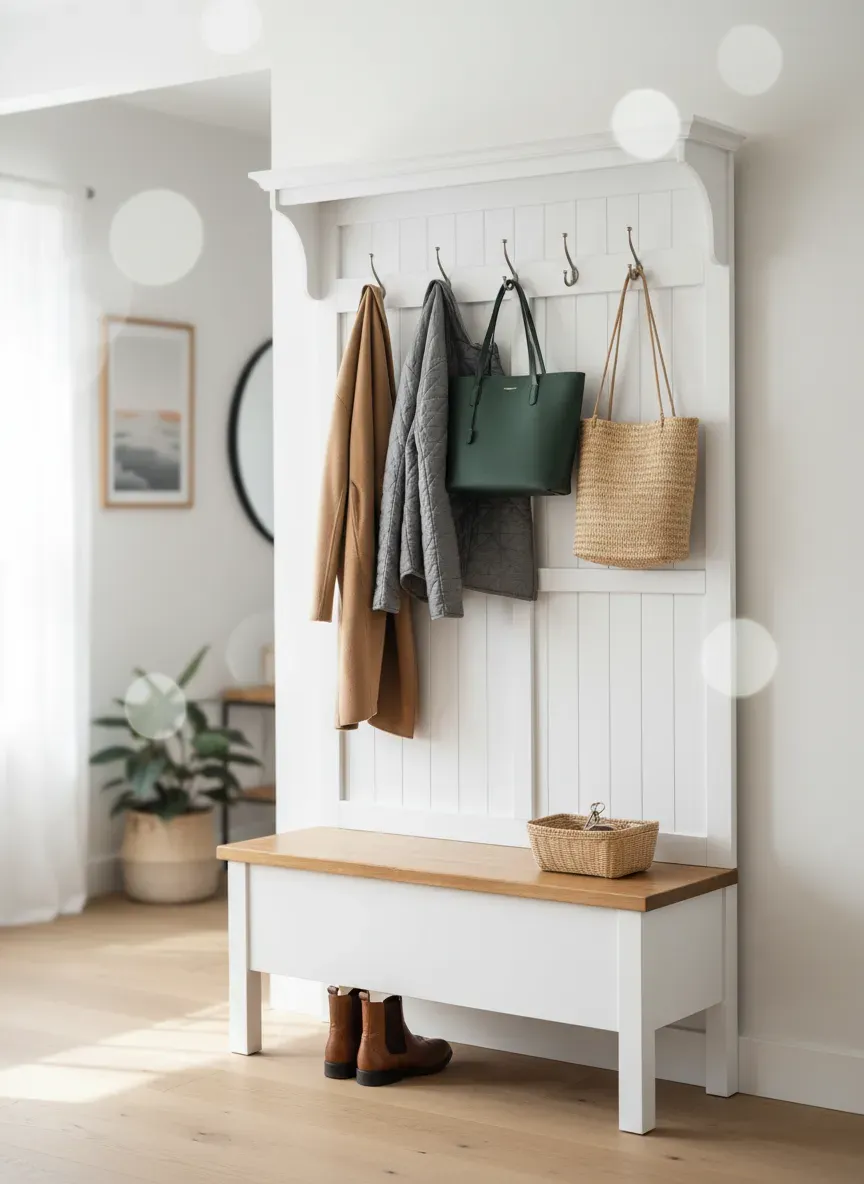
Application Order (paint → cure → seal)
The order is fixed, and skipping any step resets the clock on the whole project:
- Prepare. Sand raw wood to 120–220 grit, wipe with a tack cloth, and seal knots with shellac primer so tannins can’t bleed through white paint over time.
- Sand between coats. Two coats of your high-traffic paint — satin or semi-gloss, scrubbable formulation — with a light 180–220 pass and tack cloth between coats. Every skipped sand is a brush ridge you’ll feel forever.
- Cure before you seal. This is the step everyone skips. The paint must be fully cured, not just dry, before a sealer goes over it — for a waterborne alkyd, that’s about seven days at normal room temperature. Sealing over day-old paint traps solvent and softens the whole sandwich.
- Seal. Two to three thin coats of polycrylic (light colors) or water-based polyurethane (everything else), 220-grit between coats, each coat fully dry before the next.
- Cure before you live on it. The sealer needs its own cure time: about three weeks for full hardness on a water-based poly.
And on that cure time, one more time, with feeling: Read the cure time. Just because it’s dry doesn’t mean it’s ready for the soccer bag. Dry-to-the-touch at noon is not cured at noon-plus-one-hour; a heavy backpack parked on a not-yet-cured bench will leave its shape in the finish for years, and every “it’s fine, I know better” cure-speedrun ends in a sticky-forever bench.
Do the steps in order and the finish rewards you: scrubbable paint in satin or semi-gloss, a hero coat of clear sealer on every horizontal surface, and the cure time actually respected. Kids, pets, keys, and the entire winter — the paint takes the color, the sealer takes the beating, and your entryway keeps looking finished.

Stop Guessing Measurements. Build Your Dream Entryway with Confidence.
Transform awkward hallways, cramped foyers, and cluttered mudrooms into organized sanctuaries. Includes 20 CAD floor plans, facing real-home photo spreads, the 36-Inch Clearance Rule, the Shoe Pairs Formula, and 7 printable worksheets.
Core Edition ($17.99) · Flagship Photo Edition v5 ($39.99)
