
Choosing the Right Color & Finish for Your Entryway: Paint + Sealants
Choosing the right color finish your entryway is a science and an art—here's how to pick a washable paint and sealant that survives muddy boots.
Jan 29, 2026 · Linda Wise
15 min readThe right entryway color is the one you still love at 7 a.m. in bad light — and the right finish is the one that wipes down after muddy boots.
Choosing the perfect color for your entryway comes down to two questions: how much natural light the space gets, and how much daily abuse the walls and furniture will take. If the room is small or dark, reach for light-reflective tones; then match the finish grade to how much traffic that surface actually sees.
Everything else — the mood, the resale value — follows from those two decisions.
Choosing the Right Color & Finish for Your Entryway (the whole process)
Treat this like a design recipe, not a gamble, with four steps — skipping any of them is how you end up with chalky walls and scuffed cabinets by October.
- Assess the light. Walk the entryway at morning, noon, and evening — a north-facing foyer never sees warm afternoon light, which changes every swatch you audition.
- Audit the traffic. Count how many boots, bags, and dogs pass through daily; that number decides your sheen before your color does.
- Anchor the palette. Pull one tone from your flooring or trim and build out from there, keeping the entryway continuous with the hallway it feeds into.
- Test, never trust. Paint 12-by-12-inch swatches on the actual wall in the exact finish grade you intend to buy, and live with them for a week.
Get the stack right and the color becomes almost a bonus. Get it wrong and no shade of blue can save you.
Colors That Flatter Small Entryways
Most entryways are narrow, short on windows, or both — so the color has to do double duty as lighting. Light, airy tones are the workhorses: warm whites, pale greiges, soft sage, and butter creams bounce what little daylight exists around the room instead of swallowing it. A satin white on lower walls will visually widen a 4-foot hall faster than any mirror.
That does not mean banning dark paint entirely. Deep navy, forest green, and charcoal work beautifully when confined to lower walls, a single accent wall behind the bench, or a painted door — the dark band grounds the space while the upper half keeps it open. For a shortcut through the color-versus-layout decision, two-tone mudroom ideas show how a light top and darker bottom divide a small room into zones.
Two chemist’s rules while you audition: warm-toned paint leans further into yellow under hallway light, and flat finishes darken every color by a couple of shades — so test the exact sheen you intend to buy.
Finish Grades: Eggshell vs. Satin vs. Semi-Gloss (traffic math)
Here is the honest math, simpler than the paint aisle wants it to be. Sheen equals protection plus cleanability, minus forgiveness: the shinier the finish, the more it wipes clean — and the more it shows every roller mark and fingerprint.
| Finish | Sheen | Washability | Where it earns its keep |
|---|---|---|---|
| Eggshell | Velvety, low reflectivity | Scrubbable, but repeated wiping will burnish the surface | Low-traffic hallway walls above the wainscot — nothing touches it, so nothing fights it |
| Satin | Soft glow, slight mirror | Wipes clean without burnishing; resists scuffs | The entryway sweet spot: walls at boot level, bench backs, cubbie fronts |
| Semi-gloss | Noticeable shine | Rock-hard film; soap-and-water clean with zero damage | Trim, doors, and furniture — the parts hands and shoes actually graze |
The traffic math in one line: eggshell belongs to walls that only see eyes, satin owns the walls boots brush past, and semi-gloss takes everything people grab. Paint the whole entryway in eggshell because you like the flat look and the spot behind the door will be a gray smudge by spring.
Best Paint & Sealants for High-Traffic Areas
When people search for the best paint sealants high traffic, what they are really asking is: what will survive a New England winter of wet coats and salt-crusted boots? The honest shortlist, in generic terms that any store can match:
- Scrubbable acrylic-latex wall paint in satin. Look for “scrubbable” or “stain-resistant” on the can — those survive a hundred passes with a damp sponge before dulling. This is your wall workhorse.
- Alkyd or urethane-modified enamel for trim, doors, and cabinet fronts. Enamel cures to a hard, soap-and-water-cleanable film that laughs at fingerprints; modern water-based urethane-enamels give most of the hardness with soap-and-water cleanup.
- High-gloss or semi-gloss enamel on banisters and push-plates, the rare spot where maximum sheen is a pure maintenance decision, since those surfaces get touched a hundred times a day.
Two warnings from the field. First, high-traffic paint without primer is a lease on failure: bare or patched drywall drinks the first coat unevenly. Second, if a painter offers one sheen for the whole room, decline — that is a shortcut for them and a five-year regret for you. For the layer-by-layer breakdown of which coatings survive real traffic, see our guide to the best paint and sealants for high-traffic entryways.
Sealing Furniture Pieces (benches, cabinets)
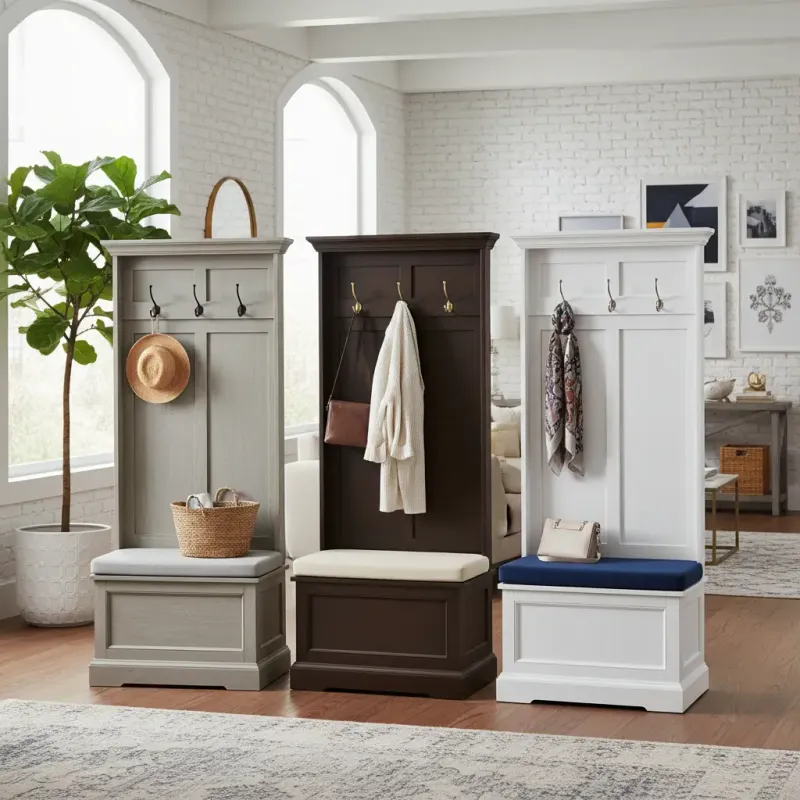
Your bench and storage cabinets are not walls, so do not paint them like one. Painted furniture takes photo-collision damage — wet seats, dragging bags, dog claws — and needs a top coat physically harder than wall paint.
For painted wood furniture, water-based polyurethane is the sensible default: it dries clear, adds real abrasion resistance, and cleans up with soap and water. Two coats on the seat and armrests, drying flat between coats, with one light 220-grit sanding pass between applications so the next layer can bite. Use satin for the body and semi-gloss on the seat, where moisture sits longest.
The exception is high-touch units — cabinet doors, drawer fronts, and anything with hardware that gets yanked all day. Here, a water-based alkyd/urethane enamel is the better pick: it cures like a baked-on finish, resists greasy fingerprints, and still allows recoating when a scratch appears. Keep a matching touch-up can in the mudroom drawer anyway — chips happen to everyone.
Two honesty notes on furniture sheen. A glossier seat will show every water ring unless you are diligent about dry boots, so accept that trade knowingly. And anything catching direct sun needs a UV-stable top coat — non-UV-rated polyurethane yellows within a couple of years. If the cubby backs stay unpainted, they are prime scuff territory too — wallpaper cubby backs is a gentle, decorative alternative that protects the wood without a single brushstroke.
Before you seal anything, prepare the surface: sand lightly, vacuum the dust, and wipe with a tack cloth — a sealant over dusty wood peels within seasons.
The One-Line Takeaway
Color sets the mood at 7 a.m.; the finish survives what happens at 7 p.m. Put light-reflective paint on the walls in the sheen the traffic demands, hard enamel where hands and boots land, and polyurethane on anything you want to wipe down again — and your entryway will greet you well in bad light, after muddy boots, for years of both.

Stop Guessing Measurements. Build Your Dream Entryway with Confidence.
Transform awkward hallways, cramped foyers, and cluttered mudrooms into organized sanctuaries. Includes 20 CAD floor plans, facing real-home photo spreads, the 36-Inch Clearance Rule, the Shoe Pairs Formula, and 7 printable worksheets.
Core Edition ($17.99) · Flagship Photo Edition v5 ($39.99)
