
The Best Wall-Mounted Entryway Shoe Racks for Vertical Storage
Maximize your hallway space with our guide to the best wall-mounted entryway shoe racks. Discover stylish, vertical storage solutions for a clutter-free home.
Feb 5, 2026 - Written by: linda wise

The entryway is the handshake of the home. It is the first space that greets you upon arrival and the last thing you see before departing. Yet, in many residences—particularly urban apartments and townhouses—this critical transition zone is often plagued by a lack of square footage. The result is a phenomenon familiar to many: the accumulation of footwear near the door, creating a tripping hazard and a visual chaotic mess that disrupts the serenity of the home environment.
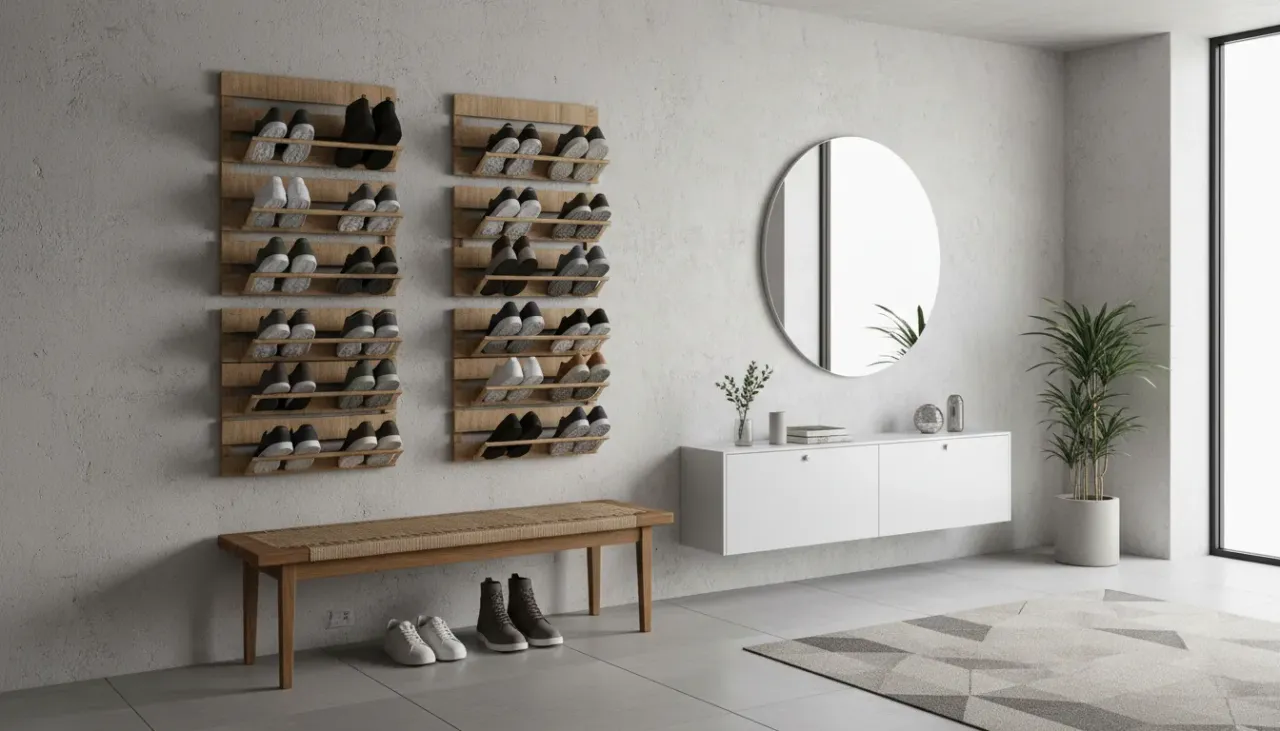
When floor space is at a premium, the solution lies not in sprawling outward, but in reaching upward. Vertical storage is the cornerstone of efficient interior design for compact spaces. Wall-mounted shoe racks offer a sophisticated, ergonomic, and highly functional remedy to entryway clutter. By elevating footwear off the floor, homeowners can reclaim valuable ground space, facilitate easier cleaning, and transform a utilitarian necessity into a design feature.
This comprehensive guide explores the top wall-mounted shoe storage solutions available, dissecting the materials, designs, and installation methods that define the best products on the market. Whether you favor the industrial chic of metal piping or the Scandinavian minimalism of floating timber, there is a vertical solution to suit your aesthetic.
The Case for Verticality: Why Mount Your Shoe Storage?
Before delving into specific product recommendations, it is essential to understand why wall-mounted systems often outperform traditional floor-standing racks. The benefits extend beyond mere organization; they influence the perception of space and the hygiene of the home.
Maximizing Perceived Space
Floor space is the most valuable real estate in a narrow hallway. When furniture sits directly on the floor, it visually shrinks the room’s footprint. Wall-mounted units, which float above the ground, expose the flooring underneath. This continuous line of sight along the floorboards or tiles tricks the eye into perceiving the room as larger and more open.
Improved Hygiene and Maintenance
Entryways accumulate dust, dirt, and debris more rapidly than any other area of the house. Traditional shoe racks act as barriers to cleaning, requiring one to move the entire unit to sweep or vacuum effectively. Wall-mounted racks eliminate this obstacle. The space beneath the rack remains accessible for robotic vacuums or a quick sweep, ensuring the entry remains pristine.
Ergonomic Accessibility
Bending down to retrieve shoes from a low-profile floor rack can be cumbersome. Vertical storage allows you to mount the rack at a custom height that suits your reach. This is particularly beneficial for individuals with mobility issues or for keeping expensive footwear out of reach of pets and small children.
Evaluating Wall-Mounted Shoe Racks: Key Criteria
Not all wall-mounted solutions are created equal. When selecting the ideal rack for your entryway, consider the following technical and aesthetic factors.
Depth and Profile
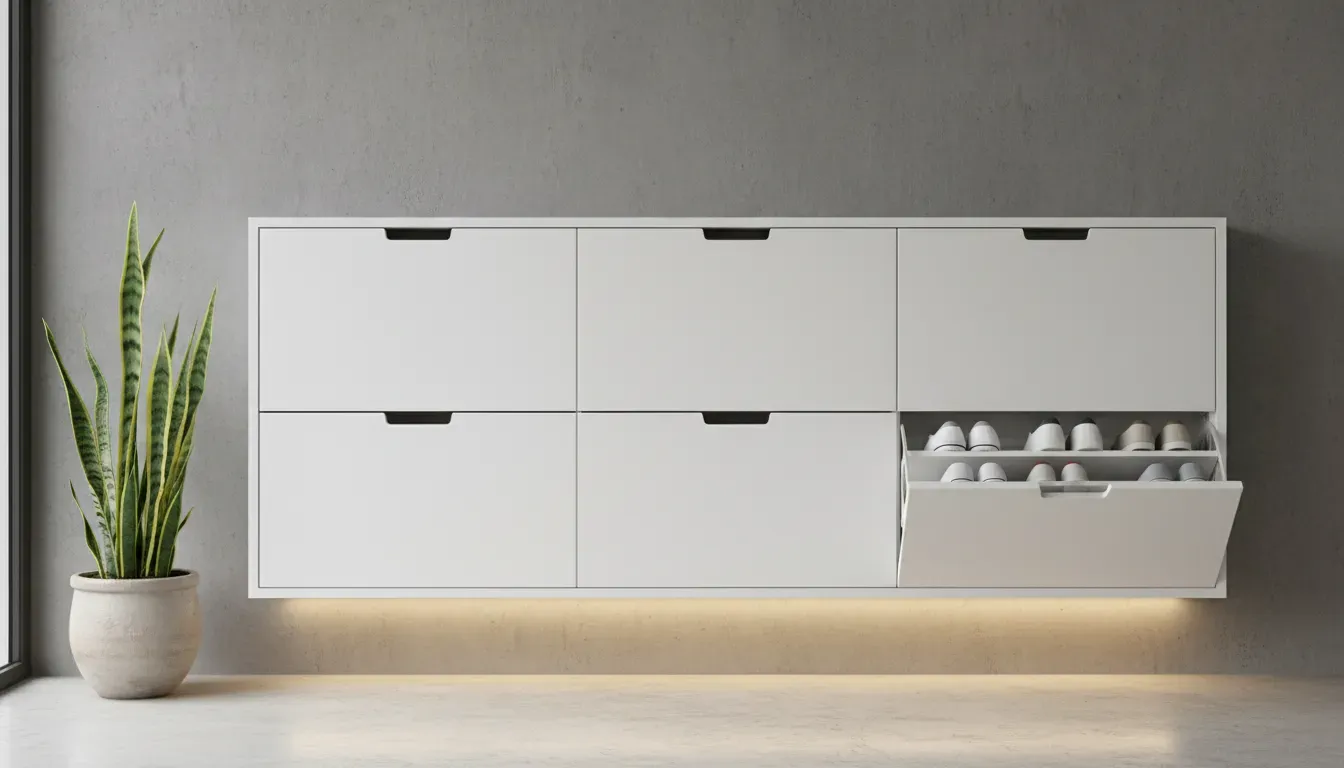
The primary constraint in a hallway is width. A rack that protrudes too far from the wall can impede traffic flow. The ideal wall-mounted rack should have a slim profile. Tipping bucket cabinets, for example, utilize a pivoting mechanism to store shoes vertically, often requiring less than 10 inches of depth while accommodating large sizes.
Weight Capacity and Anchoring
Footwear is surprisingly heavy. A collection of winter boots, leather dress shoes, and sneakers adds significant load to a shelving unit. It is imperative to assess the weight capacity of the rack and, more importantly, the integrity of the wall. We will discuss installation in detail later, but prioritizing racks with robust mounting hardware is a non-negotiable safety requirement.
Ventilation
Shoes require air circulation to dissipate moisture and odors. Completely enclosed cabinets can trap humidity, leading to mold or degradation of leather. Look for designs that incorporate slats, mesh, or open backs to promote airflow.
Top Categories and Recommendations
We have categorized the best solutions based on design philosophy and functional mechanics. Below are curated recommendations for optimizing your entryway.
1. The Slim-Profile Tipping Cabinet
For those who prefer their storage to remain invisible, the tipping shoe cabinet is the gold standard. These units feature doors that pull down and pivot, revealing pockets where shoes are stored vertically or at an angle. When closed, they resemble a sleek console table.
These cabinets are typically constructed from engineered wood or metal and can be mounted flush against the wall. The top surface serves as a convenient drop zone for keys, mail, and decorative trays.
Top Recommendation: The modern market offers slim tipping cabinets that are specifically engineered for narrow corridors. Look for units with a depth under 10 inches to ensure seamless integration into tight spaces.
- Recommended Product Search: Slim Tipping Shoe Cabinet
2. Industrial Rail and Pipe Systems
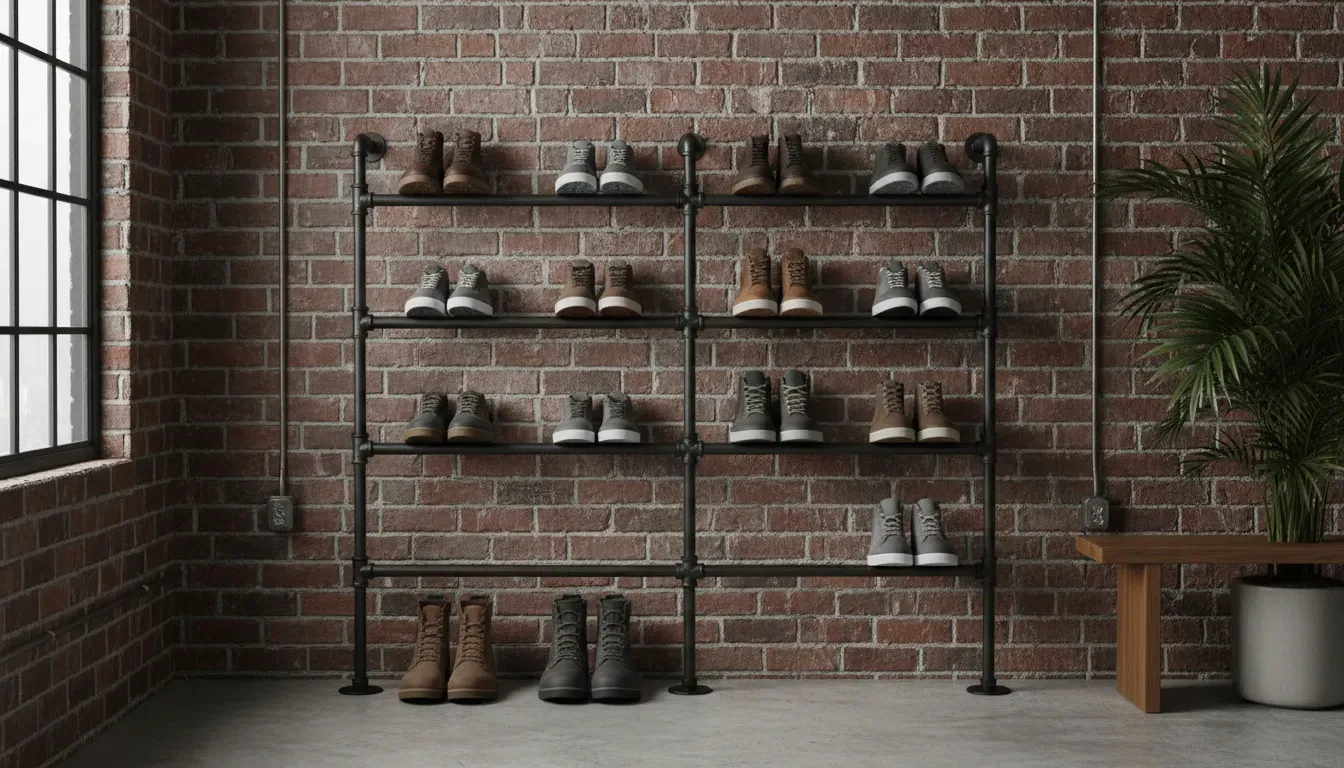
For a more rugged, open-concept look, industrial metal racks are exceptional. These usually consist of horizontal bars or pipes mounted to the wall. Shoes are held in place by resting the toe on a rear bar and the heel on a front bar, or simply by hooking the heel over a single rail.
This style is particularly effective for sneakers and boots. The metal construction is impervious to mud and moisture, making it a durable choice for climates with harsh weather. Furthermore, the open design ensures maximum ventilation.
Top Recommendation: Seek out powder-coated steel options or matte black iron piping. These materials provide high tensile strength and resist corrosion from wet soles.
- Recommended Product Search: Wall Mounted Metal Shoe Rack
3. Acrylic and Floating Shelves
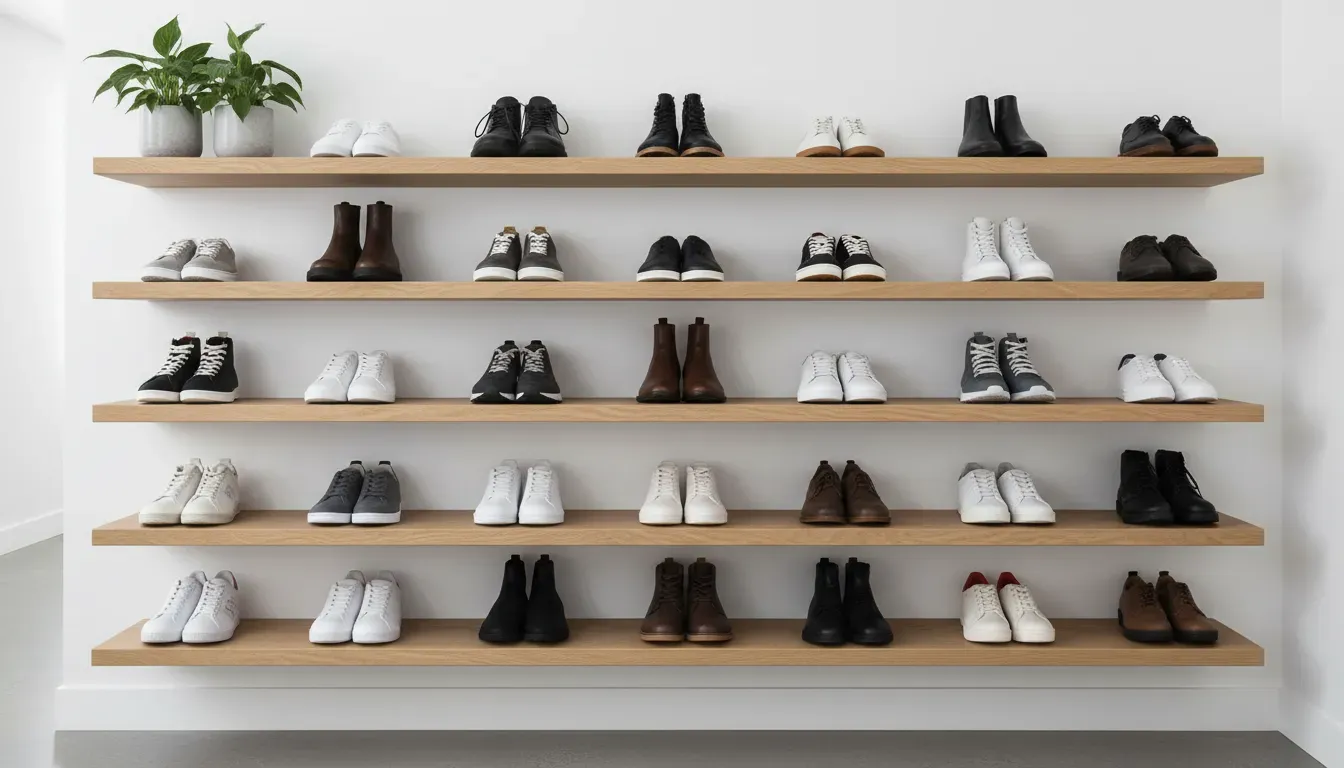
Minimalism dictates that the storage mechanism should recede, allowing the object itself to take center stage. Floating shelves, particularly those made of clear acrylic or simple wood ledges, turn your footwear into a display. This is a favored approach for sneaker enthusiasts who view their collection as art.
Individual floating shelves allow for a modular layout. You can stack them in a single vertical column, stagger them, or arrange them horizontally depending on the available wall space.
Top Recommendation: Acrylic shelves are ideal for small, dark entryways as they do not block light or create visual bulk. They offer a “barely there” aesthetic that keeps the focus entirely on the shoes.
- Recommended Product Search: Floating Shoe Shelves Acrylic
Installation: Ensuring Structural Integrity
The success of a wall-mounted shoe rack depends entirely on the installation. Unlike a picture frame, a shoe rack endures dynamic loading—the weight changes constantly as shoes are added and removed. Furthermore, the act of pulling open a cabinet door creates leverage that can pull screws out of drywall.
Locating Studs
Ideally, at least one side of your rack should be anchored into a wooden wall stud. Use a magnetic or electronic stud finder to locate the framing behind the drywall. Anchoring into a stud provides the highest weight capacity and security.
Heavy-Duty Anchors
If the placement of your rack does not align with the studs, or if the unit is narrow, you must use high-quality drywall anchors. Avoid the small plastic conical plugs that often come with furniture; they are rarely sufficient for load-bearing shelving. Instead, opt for toggle bolts or self-drilling metal anchors (often called zip-toggles or snaptoggles). These expand behind the drywall to distribute the weight over a larger area.
Leveling
Visual balance is critical in an entryway. Use a spirit level (or a laser level for precision) to ensure the rack is perfectly horizontal. Even a slight tilt can cause shoes to slide or cabinet doors to swing open unexpectedly.
Design Integration: Styling Your Vertical Storage
A shoe rack should not look like an afterthought. To elevate the aesthetic of your entryway, treat the rack as a piece of furniture.
The “landing Strip” Concept
If you utilize a low-profile tipping cabinet, use the top surface to create a vignette. Place a mirror above the unit to reflect light and allow for a final appearance check before leaving. Add a small bowl for keys and a slender vase with greenery to soften the hard lines of the cabinetry.
Color Camouflage vs. Contrast
There are two schools of thought regarding color.
- Camouflage: Paint the rack the same color as the wall. This makes the unit disappear, reducing visual clutter and making the space feel larger.
- Contrast: Choose a rack in a bold material, such as walnut wood against a white wall or black metal against brick. This highlights the structure as an architectural element.
Lighting
Consider installing LED strip lighting beneath floating shelves. This not only highlights your footwear collection but also provides ambient lighting for the hallway, functioning as a nightlight and adding a layer of sophistication.
Material Selection: Durability Meets Aesthetics
The material of your shoe rack dictates its longevity and maintenance requirements.
Wood and Engineered Wood
Wood offers warmth and texture. Solid wood is durable but heavy, requiring substantial anchoring. Engineered wood (MDF or particle board) is lighter and often used for tipping cabinets. While cost-effective, engineered wood can swell if exposed to excessive moisture. If you live in a rainy climate, ensure wet shoes are dried on a mat before being placed in a wooden cabinet.
Metal
Metal is the utilitarian choice. It is easy to clean, generally lighter than solid wood, and impervious to water damage. Stainless steel, aluminum, and powder-coated iron are excellent choices. For a modern industrial look, metal is superior.
Plastic and Acrylic
High-quality ABS plastic and acrylic are lightweight and waterproof. They are often used for modular systems. While they may lack the “premium” feel of wood or metal, they are highly functional for organizing children’s shoes or for use inside closet doors.
Addressing Specific Entryway Challenges
The “Zero-Space” Entryway
Some apartments open directly into a living room with no defined foyer. In this instance, a wall-mounted rack acts as a room divider or a defining feature. A tall, narrow column of floating shelves can signal where the “entry” ends and the “living” space begins.
The Narrow Corridor
In hallways less than 36 inches wide, protruding objects are a nuisance. Here, the tipping cabinet is the only viable option. Alternatively, look for vertical tension rod systems that press between the floor and ceiling, offering hooks and small trays that sit flat against the wall.
The Rental Constraint
Renters may be hesitant to drill heavy holes into walls. However, some wall-mounted systems utilize a French cleat mechanism, which requires minimal drilling relative to the weight it supports. If drilling is strictly prohibited, over-the-door vertical racks are a temporary alternative, though they lack the polished aesthetic of wall-mounted units.
Conclusion
The transition from floor-based storage to wall-mounted systems is a transformative step in home organization. It acknowledges that in the modern home, space is a luxury that must be curated, not squandered. By selecting the best wall-mounted entryway shoe rack, you do more than tidy up a pile of sneakers; you reclaim your floor, streamline your daily routine, and set a tone of order and sophistication the moment you walk through the door.
Whether you opt for the concealed elegance of a tipping cabinet, the rugged utility of industrial rails, or the gallery-style presentation of floating shelves, the vertical approach is the superior strategy for the contemporary entryway. Assess your wall type, measure your space twice, and invest in a solution that marries function with your personal design ethos.
For more insights on maximizing every square inch of your home, explore our guide on small hallway storage ideas to continue your organization journey.