
Calculating Load Bearing: Understanding the Weight Limits of Your Entryway Hooks
Master the mechanics of entryway storage. Learn to calculate load capacity, choose the right anchors, and secure heavy winter gear safely and stylishly.
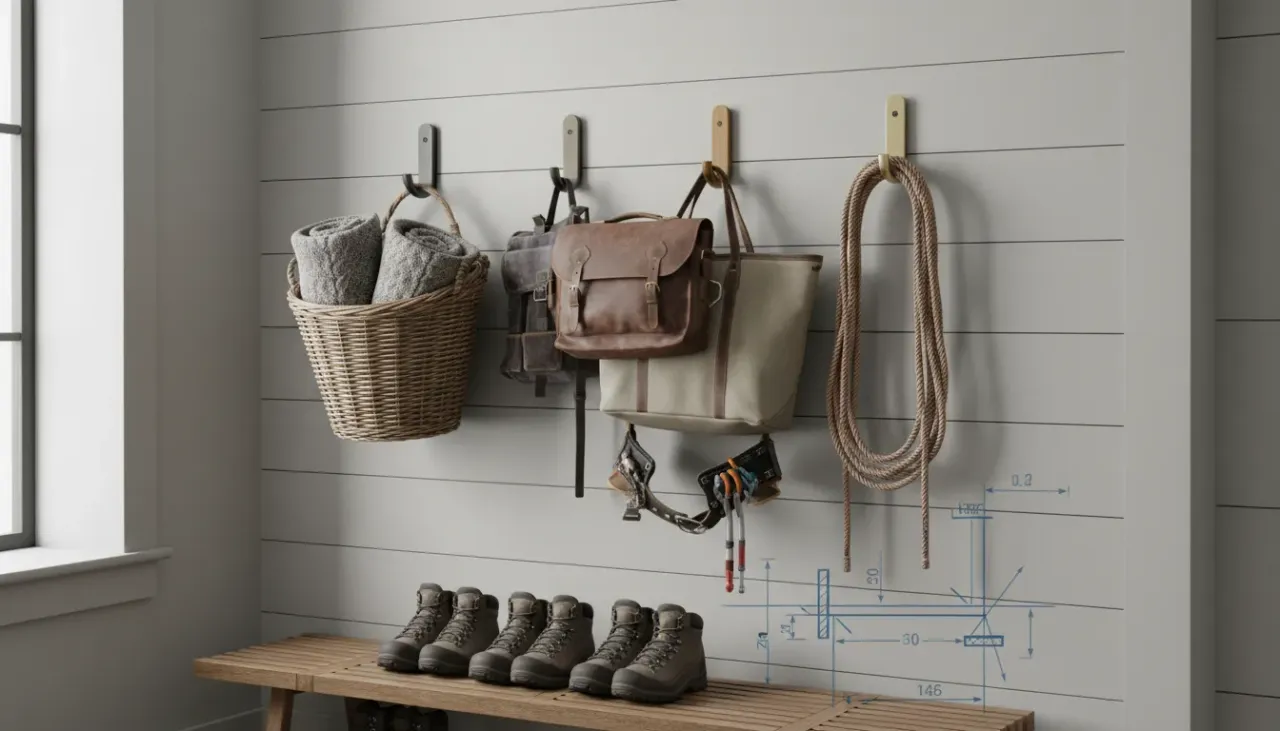
Feb 5, 2026 - Written by: linda wise

There is a distinct, disheartening sound known to many homeowners: the sudden crash of an overloaded coat rack pulling away from the drywall in the middle of the night. It is a failure of physics, often resulting in damaged plaster, ruined paint, and a chaotic pile of outerwear. While the entryway is frequently treated as a purely aesthetic transition space, it functions mechanically as a high-traffic utility zone. The hardware we install there must endure significant stress, varying from the static load of a rain-soaked wool coat to the dynamic force of a backpack being hastily tossed onto a peg.
Understanding the load-bearing capacity of your entryway hooks is not merely about avoiding wall damage; it is about ensuring safety and longevity in your home organization systems. To create a storage solution that is as resilient as it is beautiful, one must look beyond the decorative finish of a hook and understand the engineering principles that keep it secured to the wall. This guide will delve into the mechanics of hanging hardware, the structural properties of wall substrates, and the calculations required to ensure your entryway stands the test of time.
The Physics of Hanging Hardware
To determine how much weight a hook can hold, we must first understand the forces acting upon it. When you hang an object on a hook, you are not simply applying a downward force; you are introducing complex stresses to the hardware and the wall.
Shear Strength vs. Pull-Out Force
There are two primary forces at play when a hook is under load: shear force and pull-out (or tension) force.
Shear force acts perpendicularly to the fastener’s axis. In simpler terms, gravity pulls the object down, trying to slice the screw in half or drag it vertically down through the wall material. Most metal screws have incredibly high shear strength; it is rare for a steel screw to snap purely from the weight of a coat. However, the wall material surrounding the screw often fails under shear stress, leading to the hole elongating into an oval shape.
Pull-out force is the tension that attempts to rip the fastener straight out of the wall. This is where most failures occur in entryway storage. Because hooks protrude from the wall, the weight of the hanging object creates leverage. The farther the hook sticks out, and the further out on the hook the item is placed, the greater the leverage. This leverage translates vertical weight into horizontal tension, pulling the top of the hook away from the wall.
The Leverage Effect (Torque)
The geometry of the hook is just as critical as the material it is made from. A short, stubby knob hook exerts mostly shear force on the screw. However, a long, decorative “swan neck” hook acts as a lever arm.
Mathematically, this is expressed as Torque = Force × Distance. If you hang a 10-pound bag on a hook that extends 1 inch from the wall, the torque is manageable. If you hang that same 10-pound bag on a hook extending 6 inches from the wall, the rotational force trying to rip the top screw out of the drywall increases significantly.
When selecting hardware, consider the projection. If you require deep hooks to hold multiple items, you must compensate for the increased torque by using more robust anchoring systems or securing the hardware directly into structural studs.
Analyzing Your Substrate: Wall Material Matters
A hook is only as strong as the material it is fastened to. A heavy-duty cast iron hook rated for 50 pounds is effectively useless if it is screwed into a crumbly half-inch of degraded plaster without an anchor. Identifying your wall type is the first step in calculating load limits.
Drywall (Gypsum Board)
Standard residential construction typically utilizes 1/2-inch drywall. While convenient for finishing, gypsum is essentially compressed chalk wrapped in paper. It has very low structural integrity. A screw driven directly into drywall without an anchor has a holding power of only a few pounds. Under the weight of a heavy winter jacket, the threads will pulverize the gypsum, and the hook will fail.
For drywall installations, the load limit is entirely dependent on the quality of the hollow-wall anchor used, not the hook itself.
Plaster and Lath
Found in older homes (typically pre-1950s), this wall system consists of horizontal wood slats (lath) covered in layers of hardened plaster. Plaster is harder and more brittle than drywall. While the wood lath offers excellent holding power if you are lucky enough to hit it, the plaster alone can crack and crumble. Installing hooks here often requires pre-drilling masonry bits to avoid cracking the surface, followed by toggle-style anchors if a stud or lath strip cannot be located.
Masonry and Brick
Entryways in industrial lofts or mudrooms often feature exposed brick or concrete. These materials offer immense compression strength but require specialized installation. You cannot simply drive a wood screw into concrete. You must use lead shields, sleeve anchors, or masonry screws (such as Tapcons). When properly anchored, masonry walls provide the highest load-bearing capacity, limited only by the shear strength of the steel screw itself.
Wood Studs: The Gold Standard
For maximum load bearing, there is no substitute for anchoring directly into the wooden structural studs behind the drywall. A #8 wood screw driven 1.5 inches into a fir or pine stud can support upwards of 80 to 100 pounds of shear weight. If you are installing a rail system or a heavy coat rack, locating the studs is non-negotiable.
Types of Hooks and Their Rated Limits
Not all hooks are created equal. The manufacturing process and material composition dictate the hardware’s inherent strength limits before it bends or snaps.
Adhesive Hooks
While popular for renters, adhesive hooks rely on chemical bonding rather than mechanical fastening. Their limits are strictly defined by the manufacturer, usually ranging from 0.5 pounds to 5 pounds. Factors such as humidity, wall texture, and paint quality can drastically reduce this capacity. In an entryway context, these should be reserved for keys or very lightweight scarves. They are structurally insufficient for outerwear or bags.
Zinc Die-Cast vs. Forged Iron
Many decorative hooks found at big-box stores are made of zinc die-cast metal. While they can look like brass or iron, zinc is a relatively brittle metal. Under extreme stress, it may snap suddenly rather than bending.
In contrast, forged iron or solid brass hooks possess greater tensile strength. If overloaded, they tend to deform (bend) before breaking, giving you a visual warning of failure. For a robust entryway capable of handling heavy loads, prioritize forged metals or heavy-gauge steel.
If you are looking to upgrade your hardware to something that can handle the weight of heavy winter gear, consider sourcing industrial-strength options.
https://www.amazon.com/s?k=heavy+duty+cast+iron+coat+hooks&tag=hats0f8-20
Bolt and Toggle Systems
For floating shelves or hooks that require substantial weight support in hollow walls, the hardware often includes a backplate. This distributes the pressure over a wider area of the drywall, reducing the chance of the hook crushing the gypsum surface.
The Crucial Role of Anchors
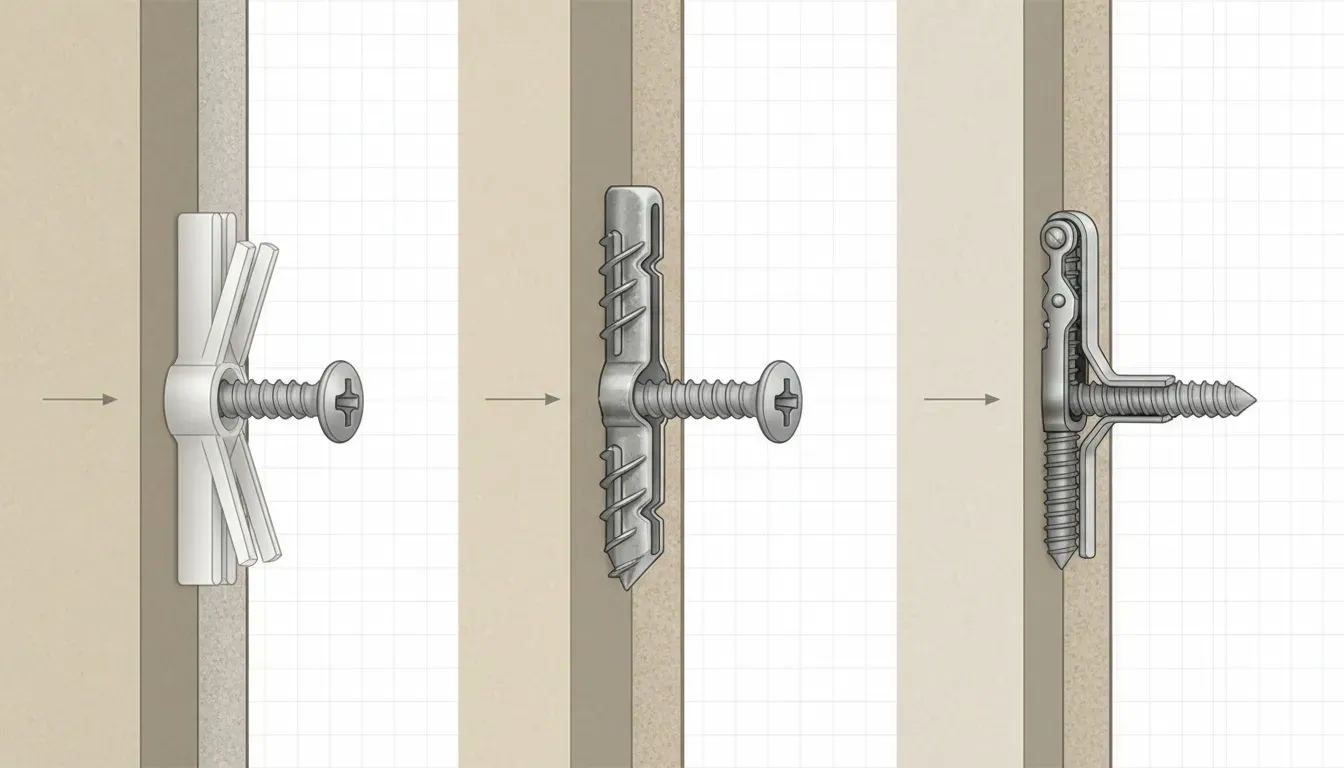
When a stud is unavailable, the anchor acts as the intermediary, spreading the load across a larger surface area behind the wall.
Plastic Expansion Anchors
These are the small, often colorful plastic tubes that come free with most hooks. They work by expanding slightly when a screw is inserted. In drywall, they provide minimal pull-out resistance—often less than 10 to 15 pounds. Over time, the wiggling caused by taking coats on and off will loosen these anchors, causing them to pull free. Avoid these for primary coat storage.
Threaded Drywall Anchors
These substantial plastic or zinc anchors look like large screws themselves. They self-drill into the drywall and have deep threads that grip the gypsum. They offer significantly better holding power than expansion plugs, generally rated for 25 to 50 pounds depending on the brand. They are suitable for individual hooks holding moderate weight, like light jackets or purses.
Toggle Bolts and Molly Bolts
For heavy loads in hollow walls, toggle bolts are the superior choice. A toggle bolt features spring-loaded wings that fold down to pass through a hole and spring open behind the wall. The screw pulls the wings against the backside of the drywall, effectively sandwiching the wall material. A 1/8-inch toggle bolt can often support over 50 pounds in 1/2-inch drywall.
The downside is that they require a larger installation hole and are difficult to remove. However, if you must hang a heavy backpack on a section of drywall with no stud, a toggle bolt is the only responsible choice.
Calculating the Load: What Are You Actually Hanging?
Homeowners often underestimate the weight of their entryway items. To calculate load bearing requirements, you must account for the “worst-case scenario” weight of your items.
Weighing Winter Gear
A dry down jacket is light. A heavy wool peacoat soaked in rain or snow, however, can weigh upwards of 8 to 10 pounds. If you layer a scarf and a hat on the same hook, you are quickly approaching the limit of a standard plastic wall anchor.
Backpacks and Bags: The Hidden Danger
The heaviest items in the modern entryway are rarely coats; they are bags. A student’s backpack loaded with textbooks and a laptop can easily weigh 20 to 30 pounds. A leather briefcase or a gym bag with shoes and water bottles carries similar density.
If you have children or teenagers, assume that they will not gently place these bags on the floor. They will hang them. Therefore, hooks intended for bags must be anchored into studs or secured with high-capacity toggle bolts. To accurately assess your needs, it is wise to actually weigh your heaviest frequently used bags.
https://www.amazon.com/s?k=digital+luggage+scale&tag=hats0f8-20
Static Load vs. Dynamic Load
Static load is the weight of the object hanging still. Dynamic load is the force exerted when the object is in motion.
When you toss a 10-pound coat onto a hook from a foot away, the momentary force exerted on the hook at the point of impact is significantly higher than 10 pounds—potentially double or triple depending on the velocity. This “shock load” is what usually causes brittle plastic anchors to snap or loose screws to strip out of wood. Always build a safety margin of at least 50% into your load calculations to account for dynamic loading. If you expect to hang 20 pounds, install a system rated for 30 or 40 pounds.
Installation Best Practices for Maximum Hold
Proper installation technique can double the effective holding power of your hooks.
Finding the Stud
Use a high-quality stud finder to locate the edges and center of the framing. Studs are typically spaced 16 inches apart on center (sometimes 24 inches in older homes). If your desired hook placement does not align with a stud, consider mounting a horizontal wood rail or backboard. You can screw the backboard into the studs, and then mount your hooks anywhere along that board. This transfers the load from the hooks to the board, and from the board to the structural frame of the house.
Pilot Holes
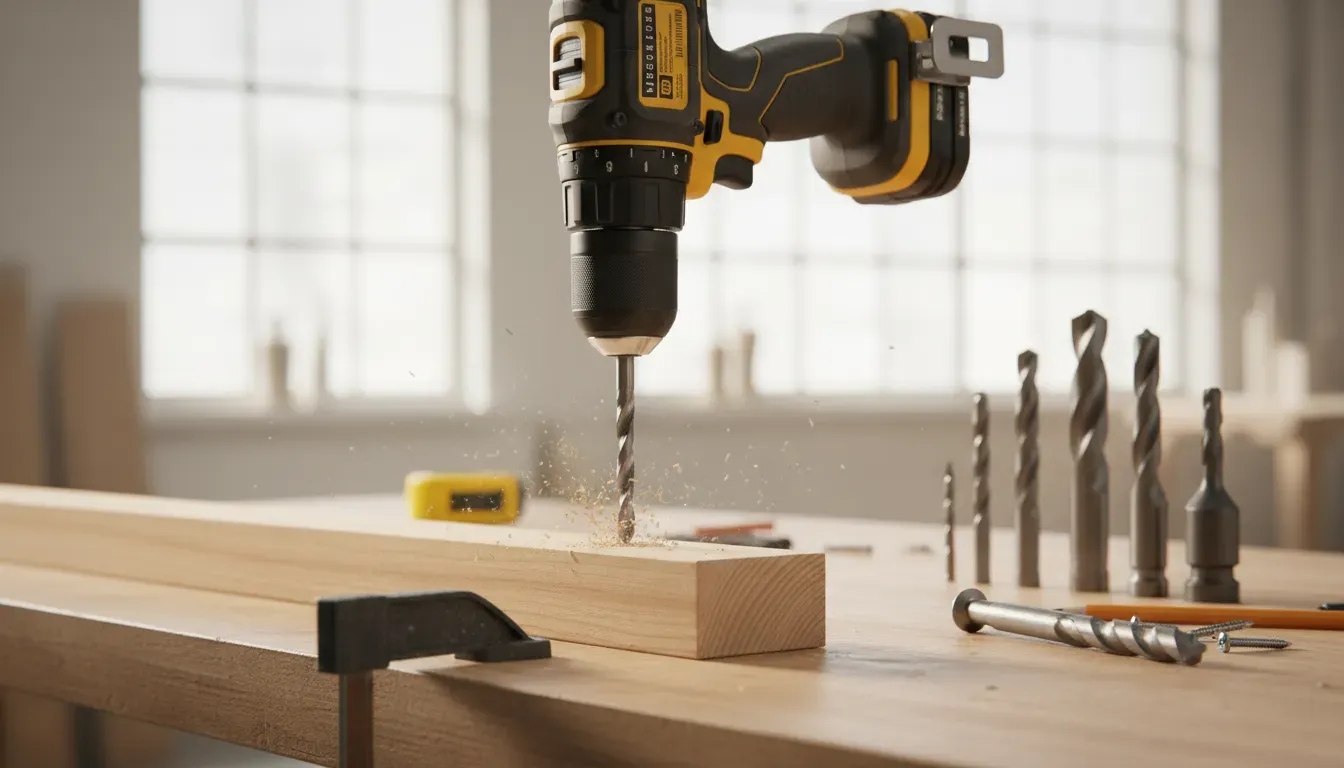
Never drive a screw directly into wood without drilling a pilot hole. Forcing a screw in can split the wood fibers, reducing holding power. A pilot hole should be slightly smaller than the diameter of the screw shank (the solid interior part of the screw, not the threads). This clears room for the shaft while leaving wood for the threads to bite into.
Spacing and Distribution
Do not overcrowd hooks. If hooks are placed too close together (less than 8-10 inches apart), the items hanging on them will overlap. This encourages users to hang multiple items on a single hook to save space, inadvertently overloading it. Proper spacing ensures each hook carries only its intended load. For more on optimizing space in tight areas, see our guide on Small Entryway Organization.
Troubleshooting and Repairing Failures
If a hook has already pulled out of the wall, you cannot simply put a screw back in the same hole. The structural integrity of that specific spot is compromised.
- Move the location: The simplest fix is to patch the hole and move the hook up or down a few inches to fresh drywall.
- Upgrade the anchor: If the hole is enlarged, you may be able to step up to a larger toggle bolt that requires a wider hole anyway.
- The Dutch Patch: For large holes in drywall, you may need to insert a small block of wood or a fresh square of drywall, tape, mud, and repaint before reinstalling hardware.
For a comprehensive look at maintaining your entryway walls, refer to our article on Wall Maintenance and Repair.
Selecting the Right Aesthetic for the Weight
Functionality does not require sacrificing style, but your aesthetic choices should inform your hardware selection.
Minimalist vs. Industrial
Minimalist designs often favor single pegs or small hooks. Because these have small contact points with the wall, they are prone to crushing the drywall if overloaded. If you love the minimalist look but have heavy coats, look for “floating” racks that utilize a hidden cleat system (French cleat) to distribute weight.
Industrial styles often utilize flanges or backplates with four screw holes. These are excellent for distributing load. Even if you don’t hit a stud, four moderate drywall anchors in a single flange can hold considerable weight.
For those seeking a balance of style and robust structural integrity, a rail system is often the best compromise. It allows you to anchor the wood rail to studs while placing hooks exactly where you need them visually.
https://www.amazon.com/s?k=solid+wood+wall+mounted+coat+rack&tag=hats0f8-20
Safety and Longevity
The entryway is the gateway to your home. It sets the tone for your interior design, but it also serves a critical function. A collapsed coat rack is not just an inconvenience; it can be a safety hazard, particularly for small children or pets who might be underneath it.
By taking the time to understand the physics of leverage, the properties of your wall material, and the specifications of your hardware, you can build an entryway storage system that is virtually indestructible.
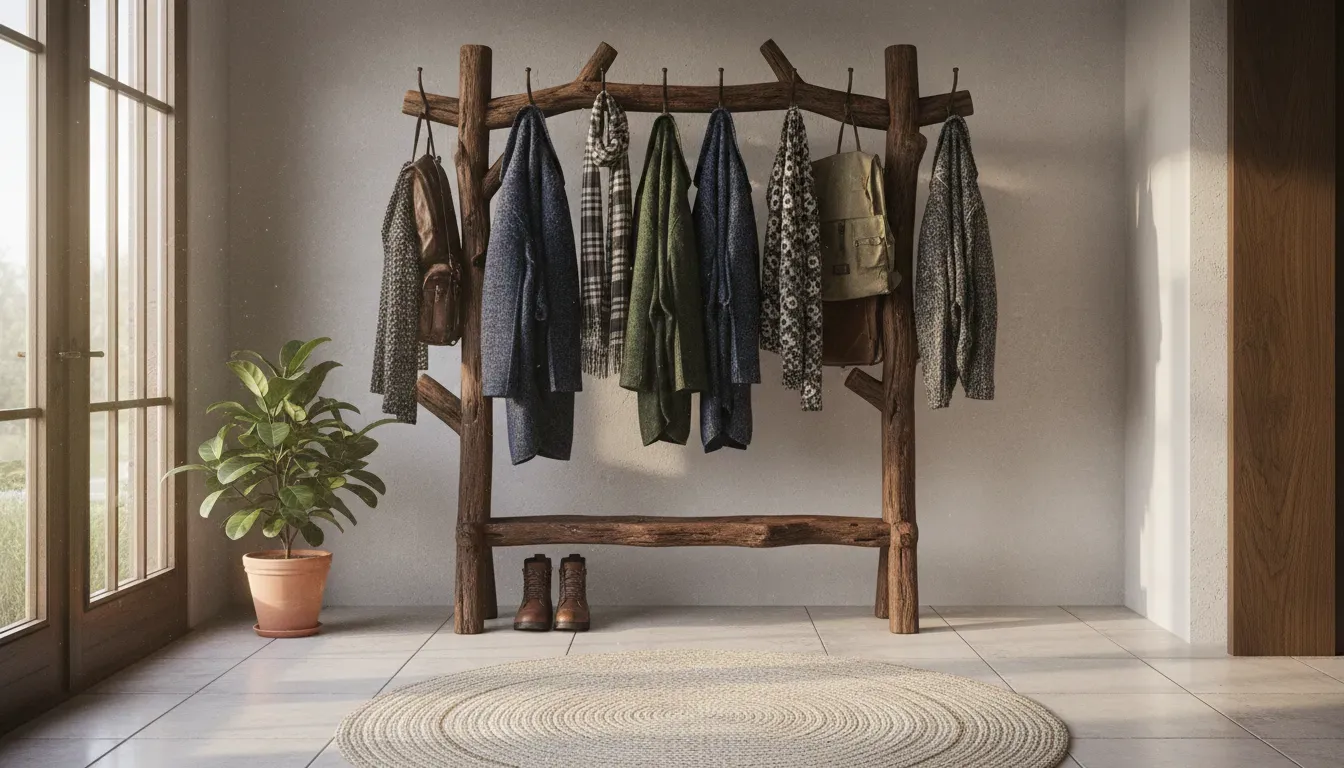
Calculating load bearing is about respecting the limits of materials. When you respect those limits and install accordingly, you gain the peace of mind that comes with knowing your home is as solid as it is welcoming. Whether you are renovating a mudroom or simply putting up a hook for your keys, treat the installation with the precision of a carpenter, and your entryway will serve you faithfully for years to come.