
The Best Wood for Diy Entryway Furniture
Choosing the right wood for DIY entryway furniture: best wood by part—tops, frames, boxes, shelves—plus plywood for entryway furniture grades and budget math.
Mar 1, 2026 · Linda Wise
15 min readThe best wood for entryway furniture balances looks, price, and abuse-tolerance — and for most DIYers, the answer is plywood with a wood edge for the box and solid wood for the top.
The entryway is the hardest room in the house on furniture: wet boots, slushy hems, dropped backpacks, and the humidity swing of a door that opens two hundred times a week. The shopping-mall advice — “just pick something pretty” — produces pretty failure by November. Choosing the right wood for DIY entryway furniture is an engineering decision with a style budget, and once you see it that way, every board in the lumberyard sorts itself into a job.
Plywood gets no respect and does all the work. Solid tops get the respect and take the abuse. Use both.
Choosing the Right Wood for DIY Entryway Furniture (the decision guide)
Before a single cut, answer three questions about your project:
1. What part is it? The top takes the abuse of sitting, bags, and boots — it wants solid wood. The box takes the humidity swings and holds the screws — it wants plywood. Frames and shelves sit in between. One project, two answers, and both are cheap.
2. What finish does it wear? Painted pieces are completely different animals than clear-finished ones: paint hides grain, so the wood beneath only needs to be stable and smooth — which is exactly what good plywood is. Clear finishes demand visible grain you actually like, which shifts you toward solid oak or maple.
3. What is the traffic? A bench that hosts the whole family’s morning rush wants hardness and repairability (oak tops, brass-wood joint strength). A key-and-mail console sees a tray and a plant — poplar or good plywood is honestly overkill-proofed.
If the project is a bench with storage, this decision guide pairs naturally with our walkthrough of entryway benches with storage — the design there assumes the same split: solid top, plywood box.
For the deeper material science — plywood grades, hardwood species for high-moisture mudrooms, and what sags vs. lasts a lifetime — read choosing the best plywood and lumber for durable DIY entryway organization.
Best Wood by Part: Top, Frame, Box, Shelves (table)
| Part | Best wood | Why |
|---|---|---|
| Seat / top | Solid oak, maple, or acacia | Takes sitting, drops, and wet bags; sandable and repairable for decades |
| Frame / legs | Solid maple, oak, or poplar | Joints (dowels, mortise-and-tenon) need real wood to bite into |
| Box / carcass | BB/BB or Baltic birch plywood | Dimensionally stable; screws hold; no seasonal warping |
| Shelves | Birch plywood or clear pine | Bridge spans without sagging; cheap to replace if ruined |
The table is the whole argument in one glance: the two parts that flex and get hit — top and frame — buy solid wood; the two parts that quietly hang — box and shelves — buy plywood. Matching the wood to the job is what separates a piece that groans from a piece that shrugs.
Plywood for Entryway Furniture: Grades (in the mudroom, BB/BB or better)
Plywood for entryway furniture is the single most underrated material in the shop, and the reason is grades — the two-letter code on the face. For a mudroom box, buying BB/BB or better plywood is the difference between a cabinet that lasts and a cabinet that swells into a wavy mess by spring:
- CDX / sheathing: construction-grade, voids in the core, one good face at best. Fine for shop fixtures, wrong for a hallway your guests see.
- BC: one clean face, one imperfect back. Acceptable for hidden shelving and drawer boxes.
- BB/BB: both faces clean and void-free — the workhorse grade for painted and veneered cabinet bodies. In the mudroom, BB/BB or better.
- Baltic birch: premium void-free cores, beautiful edge grain. The top shelf for furniture-grade boxes; the striped edge has become a design feature of its own.
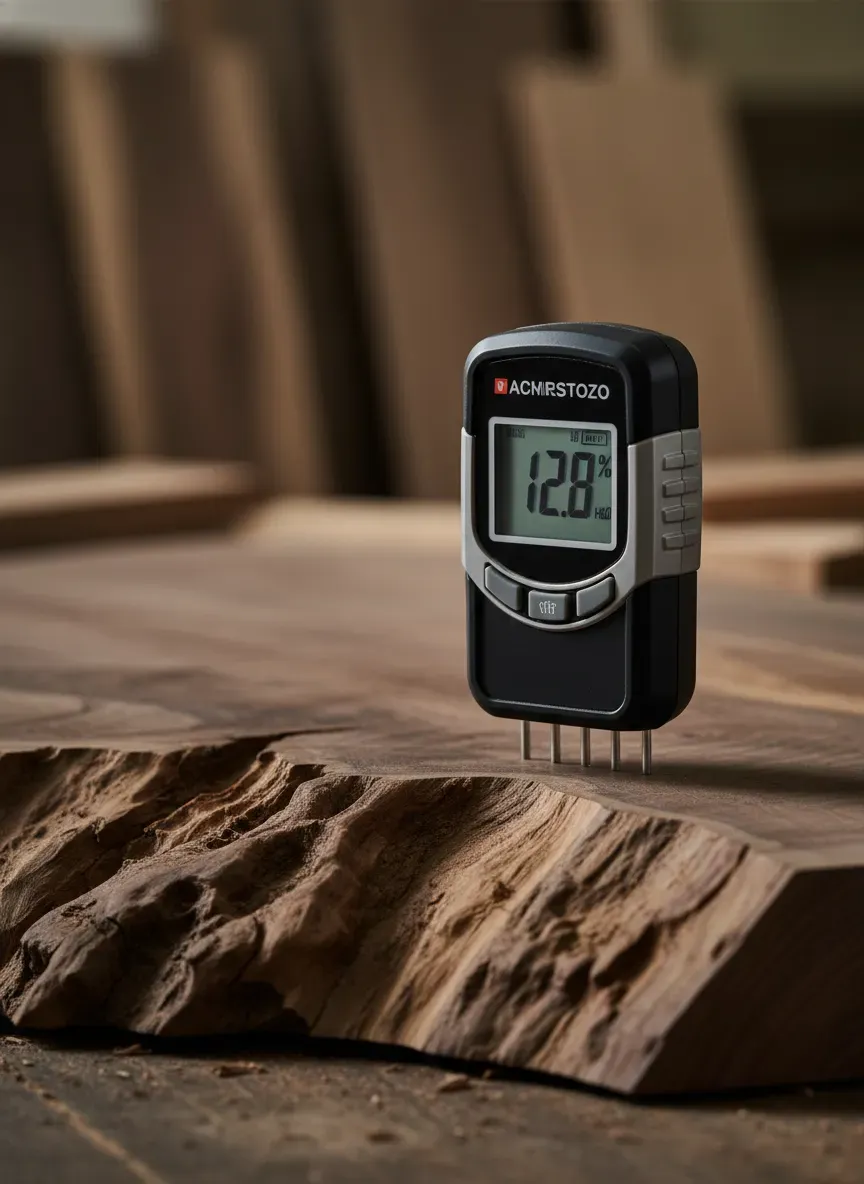
Three plywood rules from the field: seal the cut edges (raw edges are moisture’s entry door), buy the full sheet even if you need half (cuts cost nothing; tears cost everything), and — the quiet one — check the moisture content before you build. The sheet standing in the aisle is dry; the sheet that has been leaning on the cold delivery dock is not. Let plywood and lumber acclimate indoors for a week, and both keep their winter promises.
Solid Wood Species Quick Guide (oak, maple, poplar, pine)
The solid wood species for the top and frame, ranked by the bench’s point of view:
Oak (Janka ~1290). The king: hard, water-tolerant, and honest. White oak especially — its pores are plugged with tyloses, which is why it built ships and barrels. It takes clear finishes beautifully and punishes nothing but the saw blade’s budget.
Maple (Janka ~1450). The tank: hardest common domestic wood, tight grain, gorgeous under paint as well as clear. A maple top takes the dog, the backpack, and the moving crew without a dent — and seven years later you can refinish it like new. It’s also the pick when the box gets painted.
Poplar (Janka ~540). The paint-grade workhorse: soft, cheap, stable, and utterly unexciting when clear-finished — which is precisely why it hides under a painted frame or the back of a bench. For painted entryway projects, poplar is the honest budget choice.
Pine (Janka ~380–690). The beginner’s friend and the cruelest teacher: soft enough to dent with a fingernail, knots that move as they dry. Pine is fine for shelves and crates, and for low-traffic pieces where the dents will become character. It is not the wood for a bench a 220-pound dad sits on twice a day.
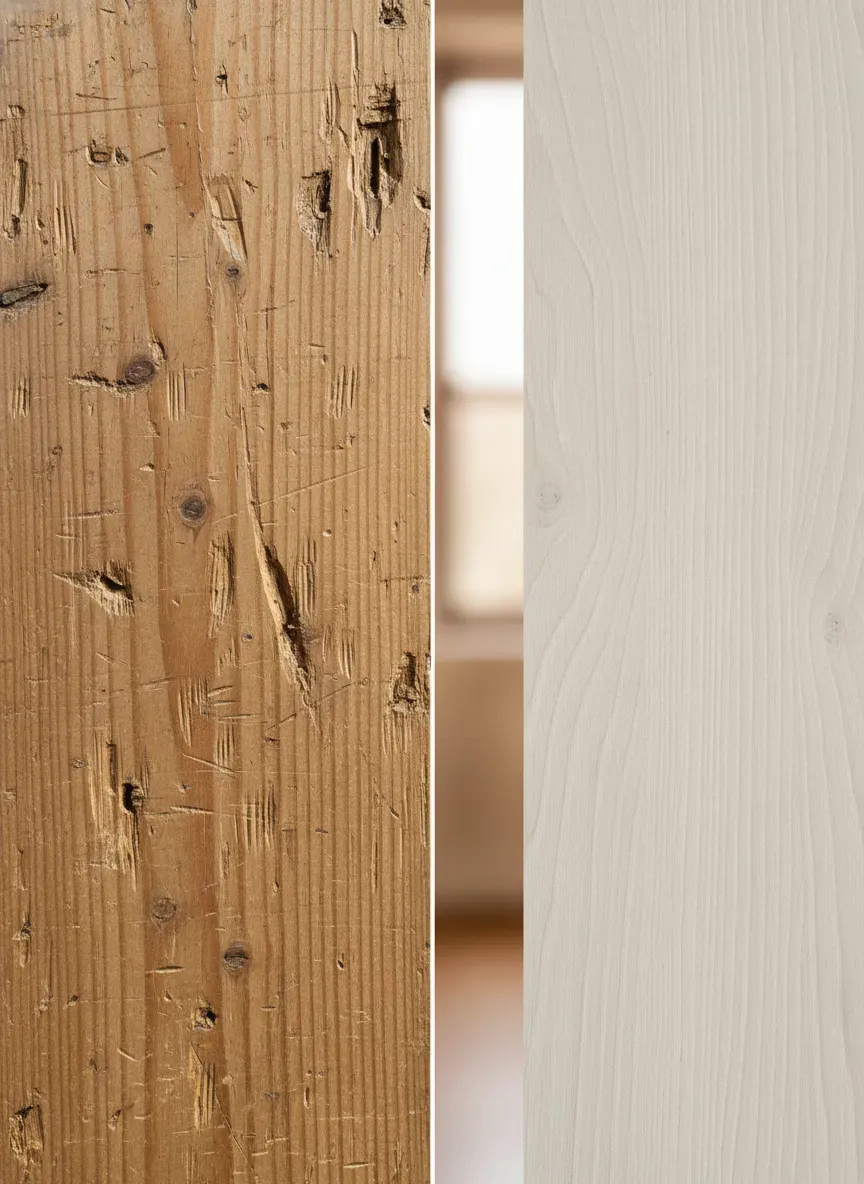
The species cheat code: if you can’t decide, buy oak. It is the swiss army answer to every top-and-frame question, and no entryway has ever mourned the day it got an oak bench.
Budget Math: Where Veneer Is Fine
Veneer is the budget wizard’s double agent — and deciding where it belongs is pure math. A veneered plywood panel gives you the face of the wood you love at a third of the solid price, and where it lives happily is exactly the places the box does: carcass sides, drawer fronts, shelves, storage cubbies. It lives unhappily where the abuse lands: bench tops, seat edges, and any surface that takes a boot or a wet bag repeatedly — because veneer is a paper-thin skin, and once it delaminates, it cannot be sanded back to life.
The budget math, plainly: solid wood where you sit and hit, veneered plywood where you look and store. The formula gets you 90% of the premium look at roughly half the price, and it frees the remaining budget for the joint and finish work that actually decides how long the piece survives.
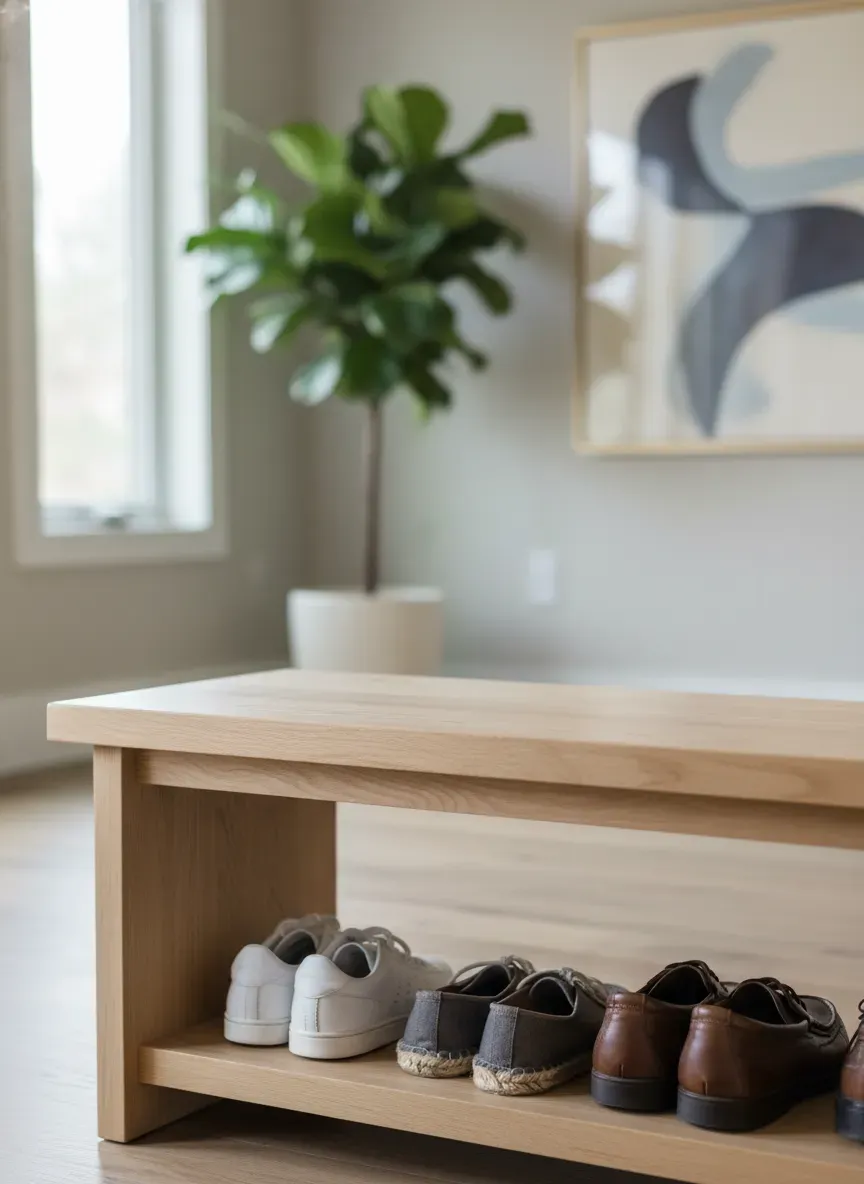
And that is the whole doctrine in a sentence: the best wood for entryway furniture is the one that matches the part, not the one that matches the catalog. Solid where the abuse lands, plywood where the structure lives, veneer where the eye looks — and one honest rule above all: plywood gets no respect and does all the work, solid tops get the respect and take the abuse, and using both is what the good builders have been quietly doing all along. If you finish the box and the top still has questions about what goes inside it, our best storage bins will settle what the shelves carry every day of the year.
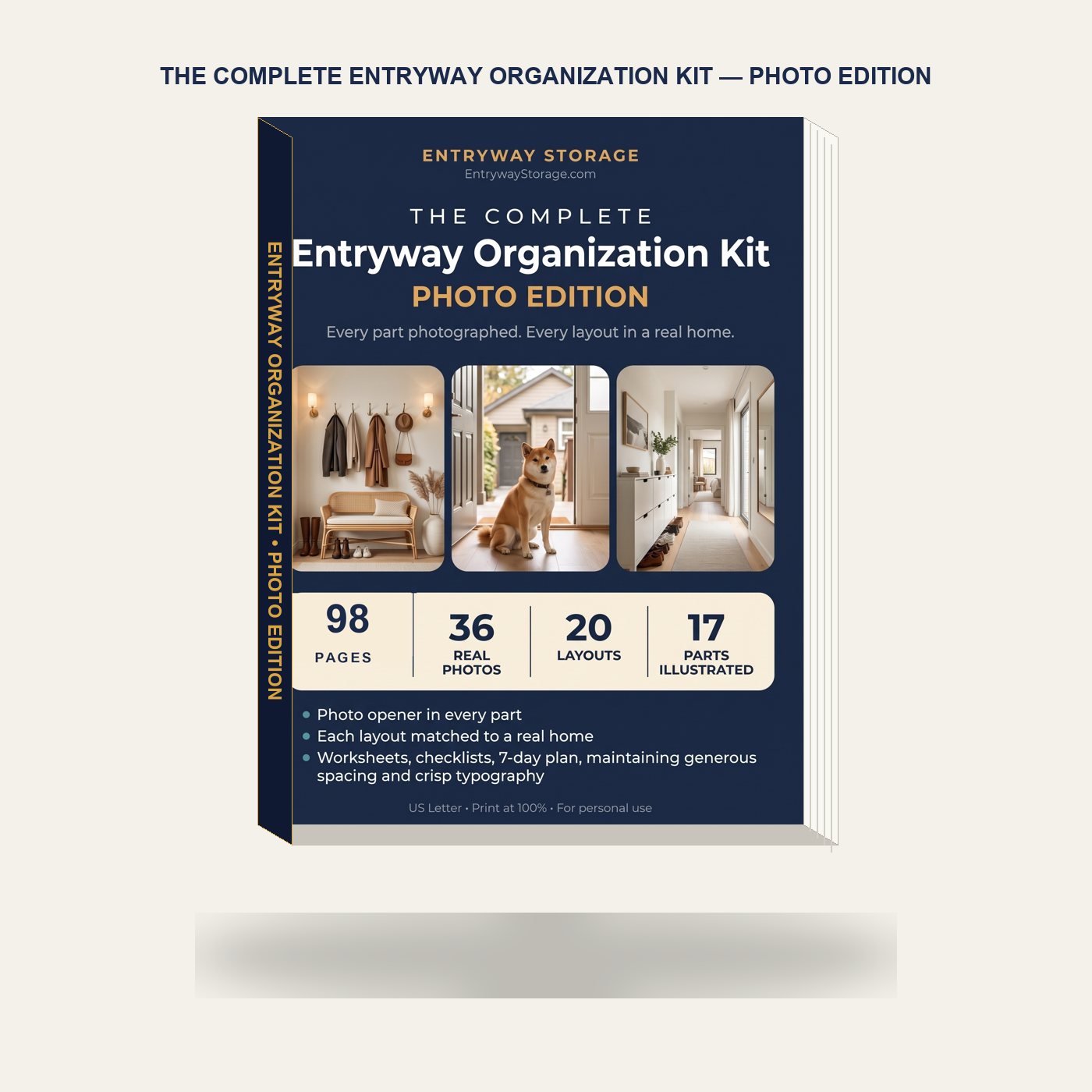
Stop Guessing Measurements. Build Your Dream Entryway with Confidence.
Transform awkward hallways, cramped foyers, and cluttered mudrooms into organized sanctuaries. Includes 20 CAD floor plans, facing real-home photo spreads, the 36-Inch Clearance Rule, the Shoe Pairs Formula, and 7 printable worksheets.
Core Edition ($17.99) · Flagship Photo Edition v5 ($39.99)
