
Deep Dive into Mudroom vs. Entryway Storage for Small Apartments
Discover how to blend mudroom functionality with entryway aesthetics in small apartments. We explore expert storage strategies, furniture choices, and layout hacks.
Feb 2, 2026 - Written by: linda wise

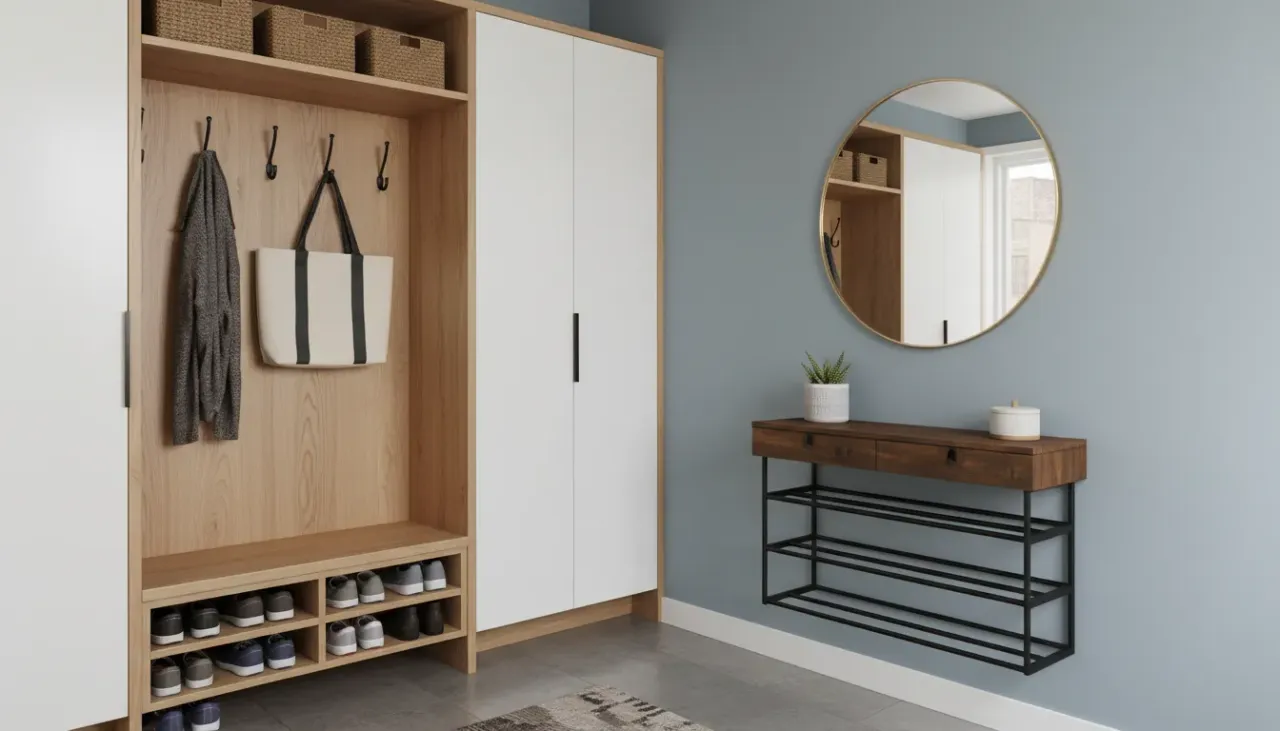
The threshold of your apartment is more than just a door; it is the psychological barrier between the chaotic outside world and your personal sanctuary. In spacious suburban homes, this transition is often managed by two distinct spaces: the formal foyer, designed to impress guests, and the utilitarian mudroom, designed to contain the mess. However, for the urban apartment dweller, this luxury of spatial bifurcation rarely exists. You likely have a singular, often cramped area that must simultaneously perform the heavy lifting of a mudroom while maintaining the welcoming aesthetics of an entryway.
This comprehensive guide explores the architectural and functional nuances between mudroom and entryway storage, specifically tailored for the spatial constraints of small apartments. We will dissect how to merge these two concepts to create a “micro-mudroom”—a hybrid space that offers high-density storage without sacrificing style.
Defining the Terms: Mudroom Utility vs. Entryway Aesthetics
To solve the storage crisis in a small apartment, one must first understand the disparate functions of the two spaces we are attempting to merge.
The Mudroom Philosophy
A traditional mudroom is a “wet zone.” It is characterized by durability and concealment. The primary goal is to capture debris—mud, snow, water, and gravel—before it migrates into the main living areas. Storage in a mudroom is often open and robust: industrial hooks for heavy coats, rubber trays for soaking boots, and deep bins for sports equipment. It prioritizes function over form.
The Entryway Philosophy
Conversely, the entryway or foyer is the “handshake” of the home. It sets the design tone for the rest of the apartment. Storage here is usually minimal: a console table for keys, a decorative mirror, and perhaps a small closet for guests’ coats. The entryway prioritizes visual flow, light, and first impressions.
The Apartment Conflict
In a 600-square-foot apartment, the front door often opens directly into the living room or a narrow hallway. You do not have the space for a dedicated wet zone, yet you still have wet shoes. You do not have a large closet, yet you have coats. The challenge lies in applying mudroom mechanics (high-volume storage) to an entryway footprint (high-visibility aesthetics).
The Vertical Imperative: Reclaiming Air Space
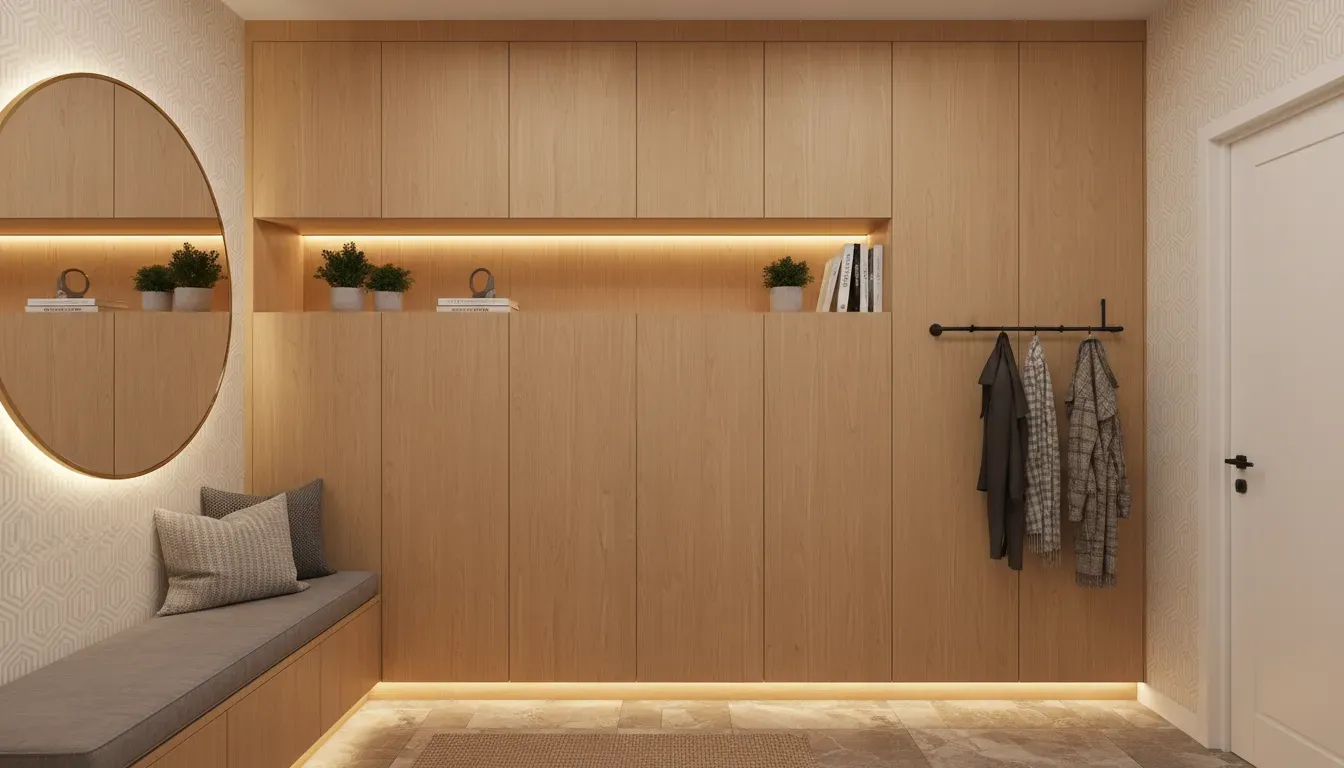
When floor space is at a premium, the only direction to expand is upward. In small apartments, the vertical plane is often underutilized. To achieve mudroom-level storage capacity in an entryway, you must exploit the wall from floor to ceiling.
The “High-Low” Hook Strategy
A common mistake is placing a single row of hooks at eye level. This creates a “coat bulge” that eats into the hallway width. Instead, implement a tiered hook system:
- High Tier (6+ feet): Install hooks or a shelf with under-hooks for items used less frequently, such as off-season scarves, guest coats, or hats.
- Mid Tier (Standard height): This is for your daily wear—the jacket you grab every morning and your primary handbag.
- Low Tier (Waist height): This is often overlooked but essential for families or pet owners. Use this space for children’s backpacks, dog leashes, or tote bags that are heavy and difficult to lift high.
By distributing items vertically, you reduce the bulk at any single point, keeping the visual profile of the wall slimmer.
Floating Cabinets and Shelves
To mimic the containment of a mudroom without the footprint of heavy furniture, utilize floating cabinetry. A wall-mounted cabinet keeps the floor visible, which tricks the eye into perceiving the room as larger.
Closed storage is vital here. While open shelving is trendy, it requires meticulous organization to look good. In a high-traffic zone, the ability to close a door on visual clutter is invaluable. Look for slim-profile wall cabinets—typically 10 to 12 inches deep—that provide enough depth for shoe boxes or folded items without encroaching on the walkway.
Shoe Storage: The Anchor of Organization
Shoes are the primary source of entryway clutter. In a mudroom, shoes are often tossed into a pile or on a rubber mat. In an apartment entryway, this looks messy and trips guests. The solution lies in specialized furniture that hides footwear while keeping it accessible.
The Slim Tipping Cabinet
For narrow hallways, the tipping shoe cabinet is a revolutionary piece of furniture. Unlike standard shelves that require 12-14 inches of depth, tipping cabinets utilize vertical angles to store shoes, often requiring only 6 to 9 inches of depth.
These units serve a dual purpose. Structurally, they act as a console table where you can place a mail tray or decorative lamp. Functionally, they swallow up the visual chaos of sneakers and boots.
If you are struggling to find a unit that fits your specific dimensions, consider this highly-rated option which balances slender design with high capacity:
Amazon Search: Slim Tipping Shoe Cabinet
The Bench Compromise
If your layout allows for slightly more depth, a storage bench creates a “landing zone.” This brings a crucial mudroom element—a place to sit and remove shoes—into the apartment context.
However, avoid open benches where shoes are shoved underneath in plain sight. Opt for a bench with a lift-top lid or sliding doors. This allows you to store bulky items that don’t fit in tipping cabinets, such as winter boots or reusable grocery bags. The top of the bench can be styled with a throw pillow to soften the look, blending the utility of the furniture with the decor of the living space.
The “Landing Strip”: Managing Micro-Clutter
Mudrooms often become catch-alls for mail, keys, sunglasses, and loose change. In a small apartment, this debris accumulates on the nearest flat surface, typically the dining table or kitchen island. To prevent this migration, you must establish a “Landing Strip” immediately adjacent to the door.
The Floating Console
If floor space prevents a traditional table, install a floating shelf specifically for pocket items. This should be positioned at elbow height. To maintain order, use the “container concept.” Never leave items loose on the surface.
- For Keys: A small ceramic bowl or magnetic key holder.
- For Mail: A vertical file sorter mounted to the wall or a dedicated tray.
- For Loose Items: A lidded box for receipts, chapstick, and transit cards.
By compartmentalizing these items, you enforce a system of organization that requires minimal effort to maintain.
Integration: The Hall Tree Solution
For renters who cannot drill into walls or homeowners who prefer a standalone solution, the hall tree is the ultimate hybrid furniture piece. It combines a bench, coat rack, and shelving into a single unit.
The danger with hall trees in small apartments is visual weight. A solid wood, farmhouse-style hall tree can feel oppressive in a small foyer. Instead, look for industrial-modern designs that utilize metal frames and open structures. The “see-through” nature of these frames allows light to pass through, preventing the hallway from feeling closed in.
To maximize this solution, choose a hall tree that offers a high weight capacity for coats and a dedicated shoe rack at the base. Here is a recommendation for a versatile unit that fits modern apartment aesthetics:
Amazon Search: Industrial Hall Tree with Shoe Storage
The Closet Conversion: Hidden Mudrooms
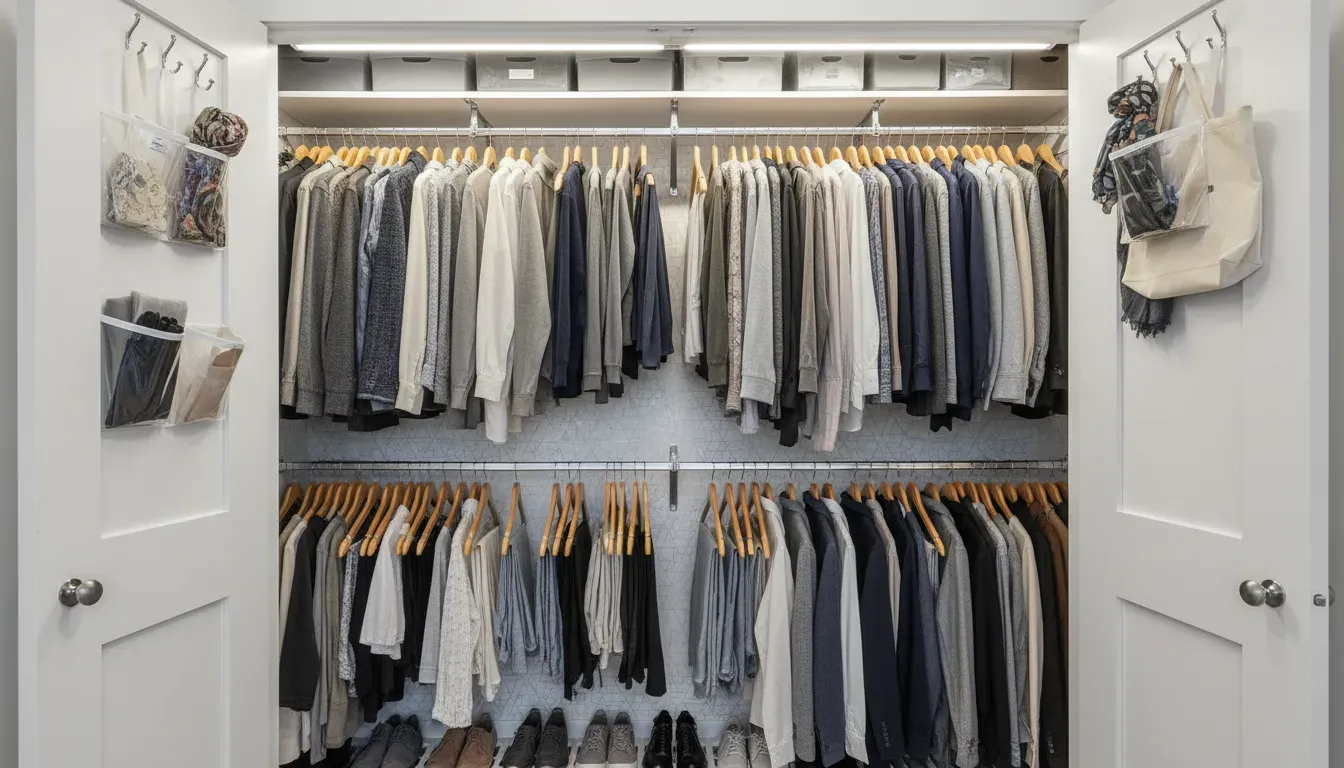
If your apartment is fortunate enough to have a coat closet near the entrance, you have the potential to create a true “hidden mudroom.” Standard coat closets are often inefficient, consisting of a single rod and a high shelf. This leaves the bottom 50% of the closet as a chaotic pile of shoes and vacuum cleaners.
Zoning the Closet
Remove the single rod and rethink the interior architecture.
- The Upper Zone: Install a high shelf for out-of-season rotation. Use uniform bins to keep this visually tidy.
- The Hanging Zone: If you don’t wear full-length trench coats daily, raise the hanging rod or use a double-hang system to double your capacity for jackets.
- The Door Storage: The back of the closet door is prime real estate. Install an over-the-door organizer for scarves, gloves, umbrellas, and cleaning supplies.
- The Floor Zone: Place a small shoe rack or stackable drawers inside the closet floor.
By maximizing the interior of the closet, you can keep the actual entryway clear of furniture entirely, achieving a minimalist aesthetic while retaining mudroom functionality. For more on maximizing hidden spaces, read our guide on Small Space Organization Hacks.
Aesthetic Cohesion: Merging Function with Style
The defining characteristic of an entryway is its design appeal. Once you have established the storage systems (the mudroom aspect), you must layer in design elements to soften the utility.
Mirrors and Lighting
A large mirror is non-negotiable in a small entryway. It allows you to check your appearance before leaving, but more importantly, it bounces light around the small space, making the hallway feel twice as wide. Pair this with strategic lighting. Avoid relying solely on the overhead ceiling light, which can cast harsh shadows. A small rechargeable sconce or a lamp on your console table adds warmth and welcomes you home.
Rugs and Runners
The floor is where the “mudroom” function is most tested. You need a rug that is durable enough to trap dirt but stylish enough to complement your home. Avoid high-pile rugs that trap moisture. Instead, opt for a flat-weave wool runner or a high-quality indoor/outdoor rug with a pattern. Patterns are excellent at concealing minor dirt spots between vacuuming.
Wall Decor as Camouflage
If you have exposed hooks, incorporate them into a gallery wall. By surrounding your functional hooks with framed art, the coats become part of the composition rather than an interruption. This technique, known as “visual distraction,” draws the eye to the art rather than the clutter.
The Seasonal Rotation Strategy
No matter how efficient your storage solutions are, a small apartment cannot hold everything at once. The secret to a functional entryway is the rigorous application of seasonal rotation.
Treat your entryway as “active storage.” Only items currently in rotation should live here.
- Summer: Heavy wool coats and snow boots must be moved to under-bed storage or a back closet. The entryway holds light jackets, sandals, and sun hats.
- Winter: Flip-flops and denim jackets are archived. Parkas, scarves, and boots take their place.
This discipline prevents the entryway from reaching critical mass. It requires a quarterly “reset,” where you swap out the contents of your bins and racks.
Dealing with “Un-storable” Items
Some items defy standard storage solutions. Strollers, bicycles, and large musical instruments present unique challenges in small apartments.
Wall Mounting for Large Items
For bicycles, get them off the floor. Vertical bike mounts can turn a bicycle into a piece of industrial art while freeing up vital floor space.
The “Drop Zone” Basket
For awkward items like yoga mats or umbrellas, a tall, sturdy woven basket is the best solution. It provides a dedicated spot for odd-shaped items, containing them in a texture that adds warmth to the room.
If you need a versatile storage solution that doubles as seating and hidden organization for these types of items, consider a lift-top ottoman or bench.
Amazon Search: Storage Ottoman Bench
Renter-Friendly Modifications
Many apartment dwellers are restricted by lease agreements that forbid heavy drilling. However, you can still achieve a built-in look with tension-based and adhesive solutions.
- Tension Rods: Use heavy-duty tension rods inside odd alcoves to create hanging space without screws.
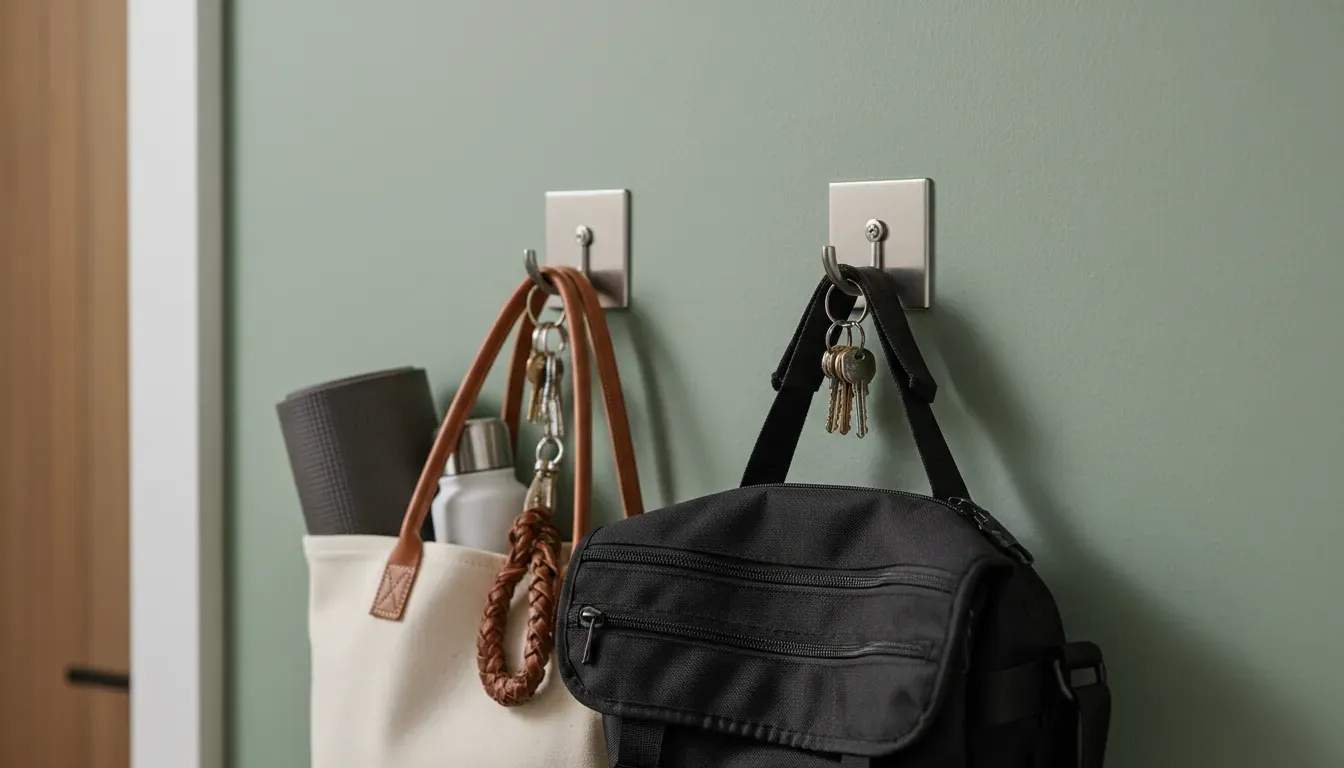
- Command Hooks: Modern adhesive hooks have high weight capacities. Use them for keys, leashes, and lightweight bags.
- Peel-and-Stick Wallpaper: Define the “entryway” zone visually by applying removable wallpaper to the wall behind your console table or coat rack. This visual demarcation psychologically separates the entry from the living room.
Conclusion: The curated Threshold
Creating a functional entryway in a small apartment is an exercise in compromise and creativity. It requires abandoning the suburban ideal of a sprawling mudroom and embracing the efficiency of the “micro-mudroom.” By utilizing vertical space, investing in dual-purpose furniture, and adhering to strict seasonal rotations, you can create a space that handles the grit of daily life while welcoming you with grace.
Remember, the goal is not to hide the fact that you live in an apartment, but to optimize the space you have. Whether you choose a slim tipping cabinet to hide your sneakers or a gallery wall to camouflage your coat hooks, the most important element is intentionality. A well-designed entryway sets the tone for your entire home, proving that even the smallest spaces can be masters of organization.
For further reading on optimizing your living area, explore our article on Minimalist Living Room Layouts. By treating your entryway with the same design attention as your living room, you ensure that coming home is always a breath of fresh air.