
Drawer vs. Cubby: Choosing the Right Entryway Benches with Storage Configuration
Discover the pros and cons of drawer versus cubby configurations for entryway benches to maximize organization, style, and functionality in your home.
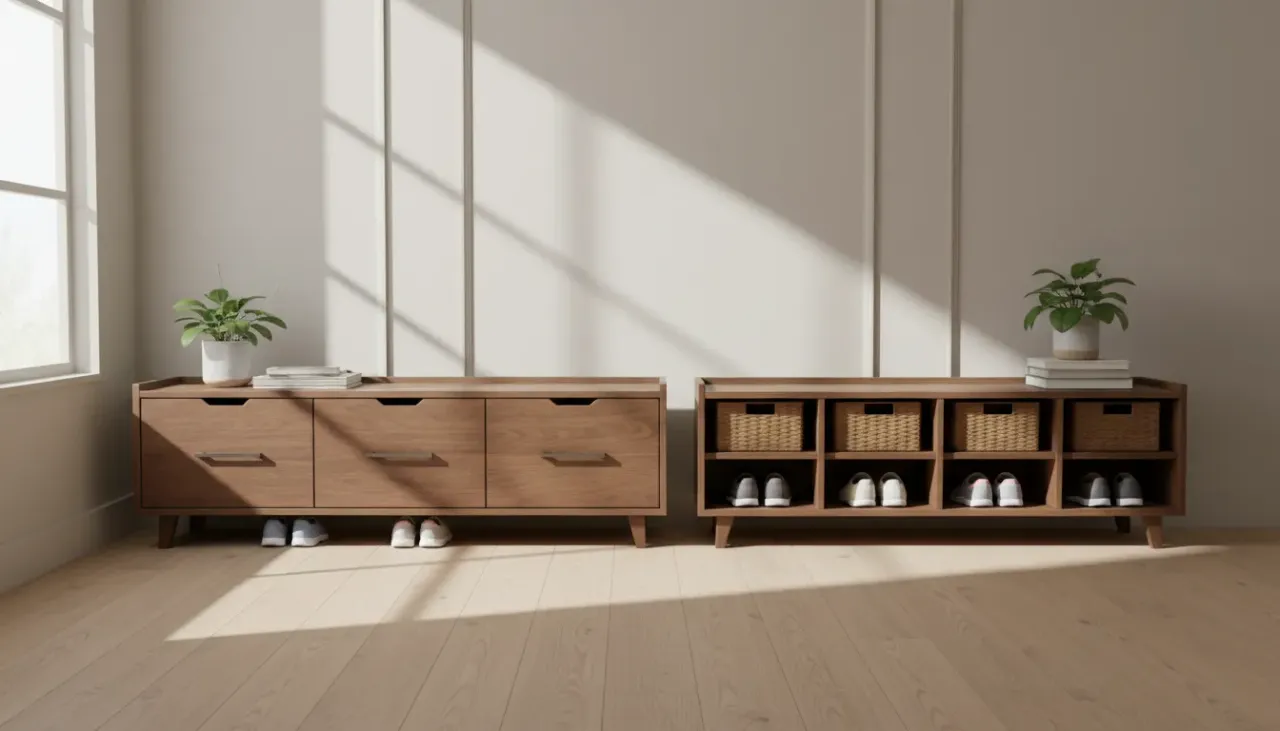
Feb 3, 2026 - Written by: linda wise

The entryway is the handshake of the home. It is the first space guests encounter and the final checkpoint before you face the world. Despite its importance, this transitional zone often falls victim to the accumulation of daily detritus: shoes kicked off in haste, mail tossed on surfaces, and seasonal accessories that lack a designated home. The solution for most households is the storage bench—a piece of furniture that marries seating with organization.
However, selecting a storage bench is not merely a matter of dimensions and upholstery. The core functionality depends entirely on the configuration of the storage itself. The two primary contenders in this arena are the drawer and the cubby. While they may seem interchangeable to the uninitiated, the choice between these two distinct storage styles dictates the flow, maintenance, and visual weight of your entryway. This comprehensive guide explores the mechanics, aesthetics, and lifestyle implications of drawer versus cubby configurations to help you make an informed decision for your space.
The Psychology of the Entryway
Before delving into the hardware and joinery of specific bench types, one must understand the psychological impact of the entryway. This space sets the tone for the rest of the residence. A clutter-free entry induces a sense of calm and order, while a chaotic one can spike cortisol levels the moment you walk through the door.
Storage benches serve a dual purpose. Functionally, they provide a place to sit while putting on or removing footwear. Organizationally, they act as a filter for items entering and leaving the house. The configuration you choose—drawer or cubby—will determine how effectively you can maintain that filter.
The Case for Cubbies: Accessibility and Versatility
The cubby configuration is characterized by open compartments, typically arranged in a grid or a linear row beneath the seat. This design is ubiquitous in mudrooms and schools for a reason: it prioritizes accessibility.
Visual Accessibility and Velocity
The primary advantage of the cubby is the “grab-and-go” factor. There are no barriers between the user and the item. For households with young children or active lifestyles, this reduction in friction is significant. A child is far more likely to kick their shoes into an open slot than they are to open a drawer, place the shoes inside, and close the drawer. The cubby demands less motor planning and less time.
Furthermore, cubbies allow for visual inventory. You can instantly see if a specific pair of boots is available or if the dog leash is in its designated spot. This transparency prevents the frantic morning search for missing items.
The Basket Hybrid Solution
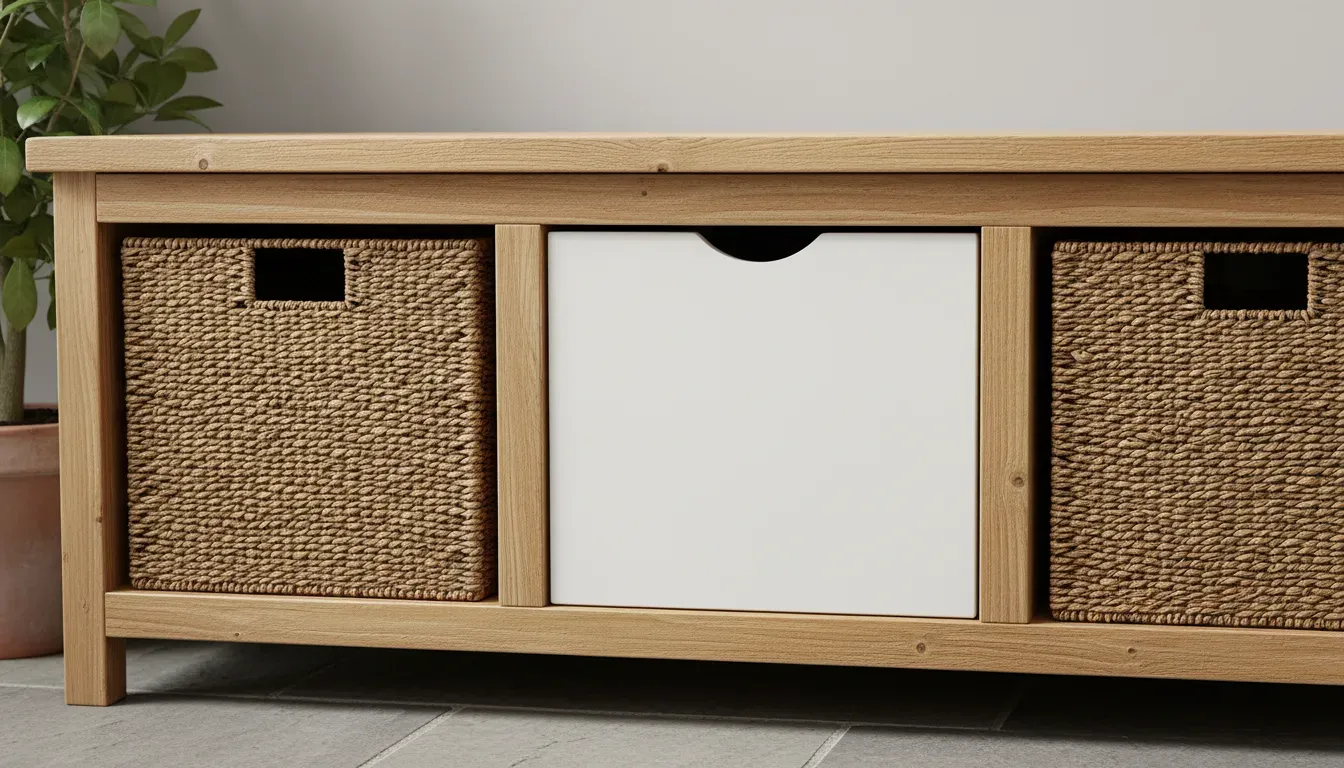
The greatest criticism of open shelving is visual clutter. However, cubbies offer a unique versatility: they can function as open shelves or be converted into “faux drawers” through the use of baskets or bins.
By utilizing woven seagrass, felt, or wire baskets, you can compartmentalize loose items like scarves, gloves, and hats. This allows the user to pull the entire container out, rummage through it, and return it. This method often surpasses drawers in functionality for bulky soft goods, as you are not limited by the rigid sides of a drawer box or the risk of items jamming the slide mechanism.
Ventilation for Footwear
If the primary purpose of your bench is shoe storage, cubbies are superior regarding airflow. Enclosing damp or worn shoes inside a dark, unventilated drawer can lead to odor accumulation and bacterial growth. Open cubbies allow air to circulate around footwear, aiding in drying and keeping the entryway smelling fresher.
For those interested in maximizing shoe organization specifically, you might find our guide on Vertical vs. Horizontal Shoe Storage helpful in conjunction with your bench selection.
The Argument for Drawers: Visual Silence and Protection
On the other side of the spectrum lies the drawer configuration. This option features sliding compartments integrated into the bench’s facade. While it may seem like a subtle difference, the presence of a drawer front completely changes the nature of the furniture.
Visual Silence and Clean Lines
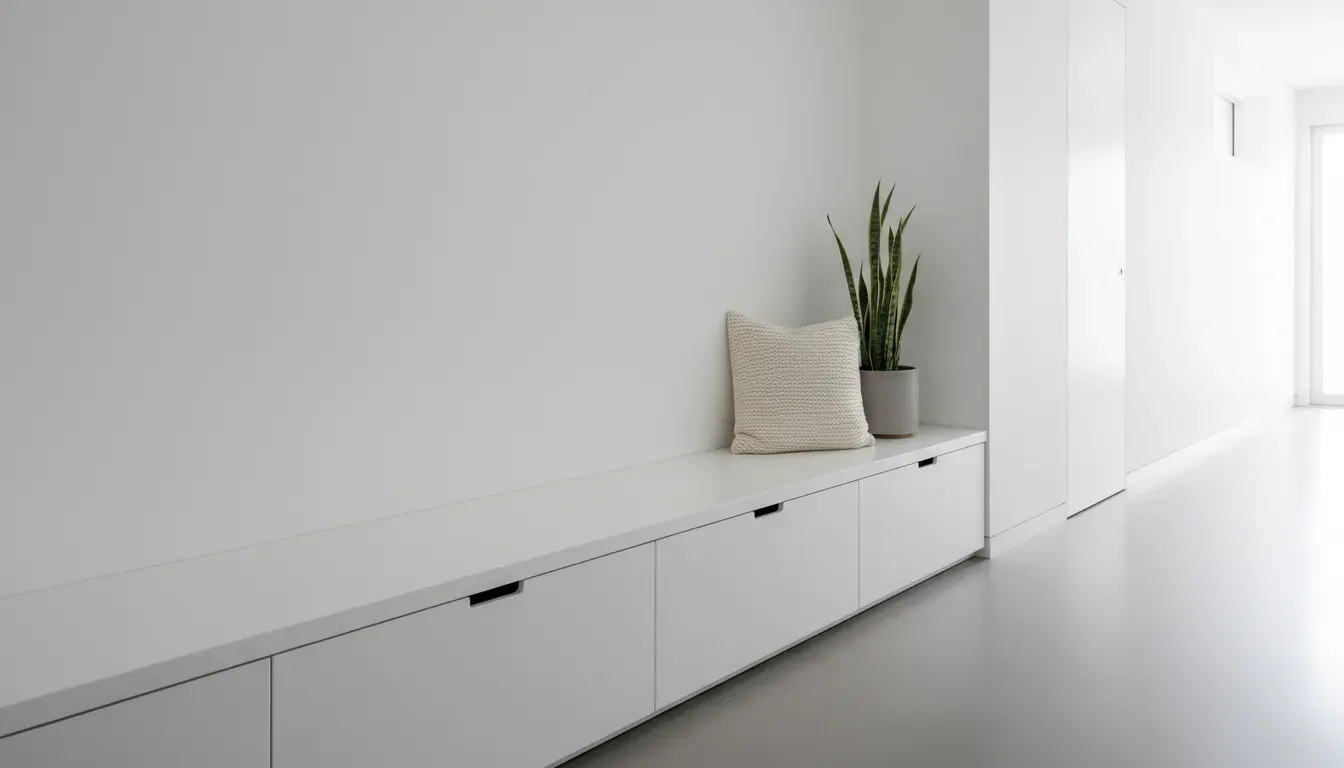
The most compelling argument for drawers is aesthetic. Drawers provide “visual silence.” Regardless of the chaos contained within—mismatched mittens, tangled leashes, or piles of mail—the exterior remains uniform and serene.
For entryways that open directly into living rooms or formal spaces, this concealment is vital. It maintains the architectural integrity of the room without exposing your storage needs to guests. A bench with drawers often reads more like a high-end piece of furniture, such as a credenza or low console, rather than a utilitarian storage unit.
Protection from Elements and Pests
Entryways are high-traffic zones subject to dust, pollen, and debris blowing in from outside. Items stored in open cubbies are constantly exposed to settling dust. If you store seasonal items that are not used daily, such as winter woolens in the summer, open cubbies will result in dusty accessories.
Drawers provide a sealed environment. They protect delicate fabrics from sunlight fading, dust accumulation, and even household pests. For homeowners with pets that enjoy chewing on shoes or stealing gloves, drawers offer a necessary physical barrier that open cubbies (even those with baskets) cannot guarantee.
Optimization for Small Items
Deep drawers are excellent, but shallow drawers have their place in the entryway as well. They are perfect for the “junk drawer” category of entryway items: keys, sunglasses, wallets, and mail. Attempting to store these small, loose items in a cubby usually results in them being pushed to the back or lost entirely. A drawer keeps these essentials contained and accessible without requiring a separate console table.
To see examples of high-quality drawer mechanisms in action, consider exploring this product category: Check Price on Amazon
Comparative Analysis: Durability and Maintenance
When investing in furniture, longevity is a key metric. The structural differences between cubbies and drawers impact how the bench ages.
Mechanical Failure Points
A cubby is essentially a box with shelves. It has no moving parts. Consequently, it is incredibly durable. There are no slides to bend, no handles to loosen, and no drawer bottoms to sag under weight.
Drawers, conversely, rely on hardware. The longevity of a drawer bench depends entirely on the quality of the joinery and the slides. Inexpensive benches often use plastic slides or weak staples that fail after repeated use. Overloading a drawer with heavy boots can cause the bottom to detach. If you choose a drawer configuration, you must prioritize construction quality, looking for dovetail joinery and ball-bearing metal slides.
Cleaning Protocols
Cleaning a cubby bench is relatively straightforward, though frequent. Because they are open, the shelves will accumulate dust and dirt from shoes. However, wiping them down is easy.
Drawers are harder to clean inside. dirt and grit from shoes can get trapped in the corners or the slide tracks, potentially affecting the smooth operation of the drawer. However, the exterior of a drawer bench is easier to maintain; a quick wipe of the drawer fronts keeps the piece looking polished, whereas keeping the contents of a cubby looking “styled” requires constant vigilance.
Design Aesthetics and Materiality
Your choice between drawer and cubby should also align with your home’s interior design language.
Modern and Minimalist
Modern design favors clean lines and concealed functions. Drawer benches, particularly those with push-to-open hardware or integrated finger pulls (omitting protruding handles), fit seamlessly into minimalist, Scandinavian, or contemporary aesthetics. The unbroken surface of wood or lacquer reduces visual noise.
Farmhouse and Traditional
Cubbies, especially when paired with wicker or rattan baskets, lean heavily into Farmhouse, Coastal, or Traditional aesthetics. The texture of the baskets adds warmth and depth to the room. This look is inherently more casual and inviting, signaling a family-oriented space.
Material Implications
The storage configuration often dictates the material construction.
- Solid Wood: Ideal for drawers to ensure the face frame can hold the weight and hardware.
- MDF/Composite: Often used for cubby dividers. While sturdy enough for shelving, low-grade particle board serves poorly for drawers as screws tend to strip out over time.
- Metal: Industrial-style benches often utilize metal mesh cubbies or lockers, which are durable and breathable but lack the concealment of wood drawers.
The Flip-Top Alternative
It is worth noting a third contender that often bridges the gap: the flip-top bench. This configuration offers the total concealment of a drawer but the deep, singular cavity of a toy chest.
While flip-top benches offer maximum volume for large items (like blankets or sports gear), they score low on accessibility. You must clear the surface of the bench—removing pillows, bags, or people—to access the storage. Therefore, flip-top benches are best for long-term storage rather than daily items like shoes. For daily use, drawers or cubbies are vastly superior.
For more on managing seasonal rotation, read our article on Optimizing Seasonal Entryway Rotations.
Sizing and Spatial Planning
Before making a purchase, precise measurement is non-negotiable. However, the configuration you choose influences how you measure.
For Drawer Benches: You must account for the “clearance zone.” When the drawer is fully extended, how much space does it occupy? If your entryway is a narrow hallway, an open drawer might block traffic or hit the opposite wall. Ensure you have at least 30 inches of clearance in front of the bench to crouch and access the drawer comfortably.
For Cubby Benches: Depth is the critical dimension here. If you plan to store men’s boots or large athletic shoes, a standard 12-inch depth may not suffice, leaving the heels protruding. Measure the longest pair of shoes in the household and ensure the cubby depth accommodates them. If using baskets, verify that the internal dimensions of the cubby match standard basket sizes, or you may struggle to find containers that fit.
To find versatile options that fit various spatial constraints, view this selection: Check Price on Amazon
Decision Matrix: Which is Right for You?
To simplify the selection process, consider these scenarios:
Choose a Cubby Configuration if:
- Velocity is priority: You have children or family members who will not take the time to open a drawer.
- Shoe focus: Your primary need is storing frequently used footwear that needs ventilation.
- Budget constraints: You want a durable option without paying a premium for high-end drawer hardware.
- Visual warmth: You enjoy the texture of baskets and a layered, lived-in look.
Choose a Drawer Configuration if:
- Visual silence is priority: The entryway is visible from formal living areas, and you hate the look of clutter.
- Protection is needed: You are storing linens, scarves, or items that need protection from dust and pets.
- Small item storage: You need to organize loose, small items that would get lost in a large bin.
- Space permits: You have a wide enough entryway to accommodate the drawer swing.
The Hybrid Approach
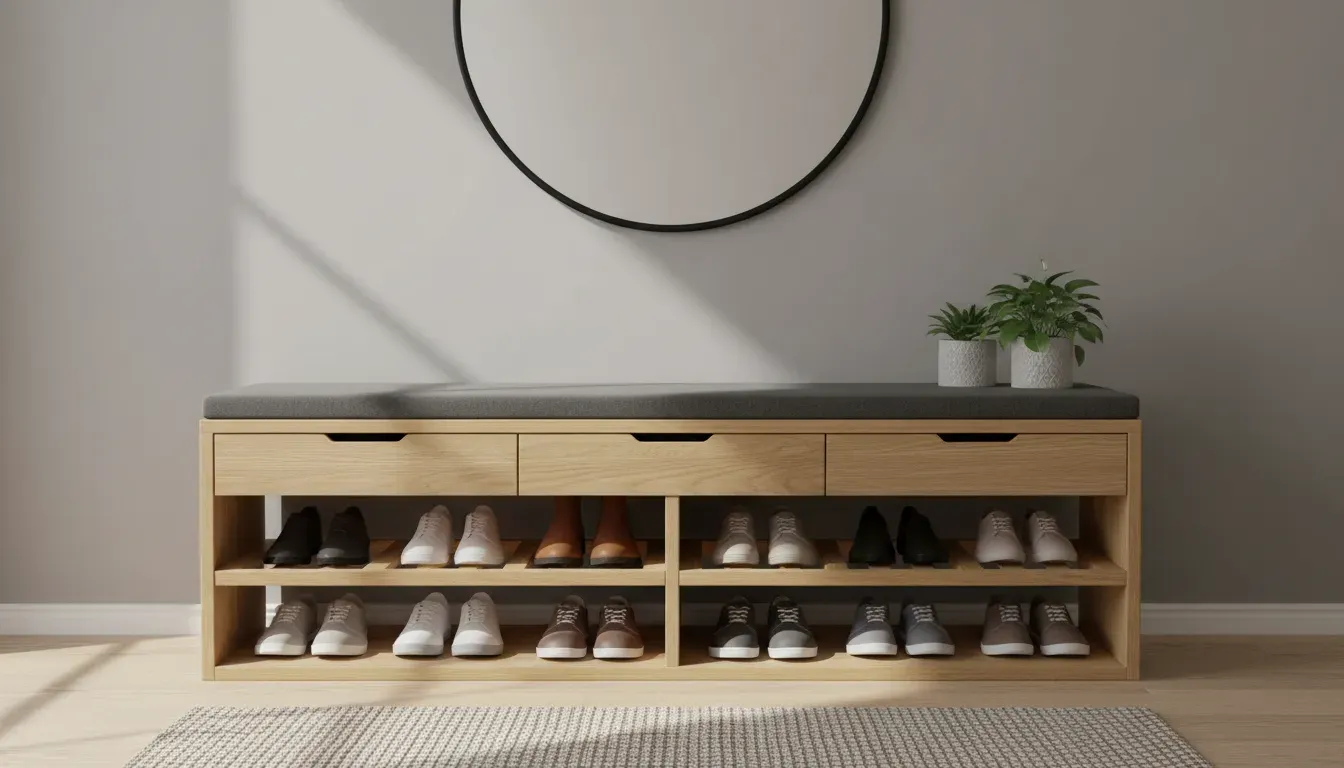
Many modern furniture designers recognize that the drawer vs. cubby debate is not binary. The market is now populated with hybrid benches. A common configuration includes a row of cubbies at the bottom for shoes (handling the dirt and ventilation issues) with a row of shallow drawers just beneath the seat for keys, mail, and gloves.
This “best of both worlds” approach allows for the segregation of messy items and clean items. If space and budget allow, a hybrid bench is often the most functional choice for a main family entryway.
Installation and Assembly Considerations
Finally, consider the assembly process.
- Cubby Benches: usually arrive flat-packed and are easy to assemble. It is mostly cam-locks and dowels.
- Drawer Benches: Assembly is significantly more complex. aligning drawer slides requires precision. If you are not handy, you may want to purchase a pre-assembled piece or hire a professional. Misaligned drawers will stick, bind, and eventually break.
If you are looking for a highly-rated hybrid option that balances these features: Check Price on Amazon
Conclusion
The choice between a drawer and a cubby entryway bench is more than a stylistic preference; it is a decision about how you live. The cubby embraces the active, fast-paced nature of modern life, offering ease and visibility. The drawer champions order and calm, concealing the chaos of the outside world to preserve the sanctity of the home interior.
By honestly assessing your household’s habits—acknowledging whether you are a “dropper” or a “folder,” a “kicker” or a “placer”—you can select a piece of furniture that not only fits your space but enhances your daily routine. Whether you opt for the open accessibility of the cubby or the sleek concealment of the drawer, the right bench will transform your entryway from a cluttered obstacle course into a welcoming passage.