
Small Shoe Benches: 7 Dual-purpose Entryway Picks
Best small shoe benches that seat and hide shoes: 7 dual-purpose entryway storage benches for bedrooms, mudrooms and foyers.
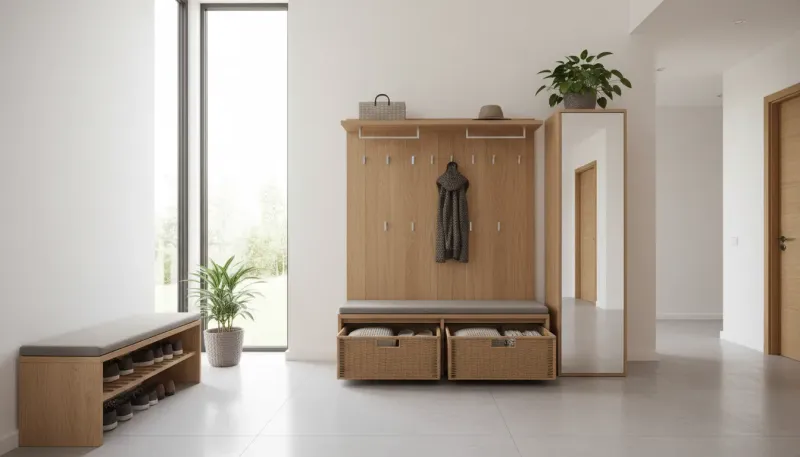
Feb 1, 2026 · Linda Wise
15 min readLooking for small shoe benches that seat you and hide shoe chaos? This guide compares 7 dual-purpose entryway storage benches that work in bedrooms, mudrooms and foyers.
A shoe storage bench is the most efficient upgrade you can make to an entryway — one piece of furniture seats you, hides the shoe chaos, and replaces the rack-plus-chair combo that eats twice the floor space. And yes: the best shoe storage benches work just as well in bedrooms, mudrooms, and offices as they do by the front door.
Most people buy a shoe bench with storage for the front door and never think about it again. It becomes the family shoe station, the backpack drop zone, and the place you sit to pull on boots. But the design logic that makes it the most useful four feet in the foyer applies anywhere there is a wall, a little open floor, and a habit of leaving things on the ground.
I have placed entryway shoe storage benches in bedrooms, home offices, nurseries, laundry rooms, and even a small photography studio. In every case the bench behaved exactly like it does by the front door: it offers a seat and gives the inevitable pile a home. The bench that saves your entryway can also end the “where do the kids’ shoes live” war upstairs.
Here is the plan: the best shoe storage bench styles for entryway duty, the direct answer to whether they belong in other rooms, how to size one correctly, and how to choose a single piece that serves two rooms at once.
Types of Shoe Storage Bench: Which Style Fits Your Space?
Not every shoe storage bench is built the same way, and the storage mechanism determines where it works best. Here are the five most common types and the situations each one handles well.
Cubby Shoe Storage Bench
The cubby bench is the classic entryway shoe storage bench. Open slots beneath the seat keep shoes separated — one pair per cubby — with no lid to lift and no basket to pull out. Children can put shoes away without help, which is why this is the most popular style for family entryways. The downside is that open cubbies collect dust and show the contents at all times, so they reward households that actually tidy.
Flip-Top Shoe Storage Bench
A flip-top shoe bench with storage hides everything inside a single deep compartment under a hinged seat. This is the style that travels best: in the entryway it holds daily shoes; in a bedroom it stores out-of-season clothes; in a home office it swallows cables, power strips, and tech clutter. The trade-off is access speed — you need to clear the seat before opening, making it better for less-frequent retrieval than for daily shoe tossing.
Basket Shoe Storage Bench
A basket bench has a fixed frame with open rails or shelves underneath the seat, designed to hold removable woven or wire baskets. This is the most flexible shoe storage bench style because the baskets can be swapped out — assign one per family member, or replace them entirely when you move the bench to another room. In a bedroom, fabric baskets look intentional; in the entryway, seagrass ones handle mud and moisture better.
Drawer Shoe Storage Bench
A drawer bench looks the most like conventional furniture, which is why it works so well in offices and guest rooms. The drawers under the seat are shallower than cubbies — typically 4 to 6 inches deep — which means flat shoes, sandals, and small accessories fit easily, but tall boots do not. If most of your shoe collection runs toward sneakers and flats, a bench with shoe storage drawers is a clean, polished option.
Shoe Storage Bench With Cushion
Most bench styles are available with or without an upholstered seat. A shoe storage bench with cushion is worth the upgrade for two reasons: comfort matters when you’re sitting to tie laces, and a cushion softens the look so the bench reads as seating first and storage second. Look for cushions with removable, machine-washable covers — entryway furniture takes abuse, and a non-washable cushion will look tired within months.
Best Shoe Storage Benches for the Entryway (Dual-Purpose Picks)
Not every bench with storage travels well. Four styles cover nearly every room-transfer situation:
| Bench style | How it stores | Best second room | What to watch |
|---|---|---|---|
| Cubby bench | Open slots keep shoes separated | Kids’ rooms | Open shelves collect dust |
| Flip-top bench | One deep hidden compartment | Offices, gyms | Clear the lid before opening |
| Basket bench | Bins and baskets on rails | Bedrooms | Basket style must match the decor |
| Drawer bench | Drawers under the seat | Home offices | Drawers are shallower than cubbies |
The cubby bench is the default answer for entryway benches with storage because it is self-organizing: one slot per pair, no lid to lift, and children can put shoes away without help. The flip-top bench wins when you need to hide large, awkward items — sports gear, seasonal blankets, a bin of winter hats — but it is slower to access, so it suits long-term storage more than the daily shoe habit.
The basket bench is the style I reach for in bedrooms: the bench anchors the room, and the baskets handle whatever the room drops. The drawer bench is the office-friendly pick because it reads as furniture rather than gym locker, and it keeps cables, chargers, and paperwork out of sight.
For the full tour of every bench-plus-storage configuration, our complete guide to using entryway benches with storage walks through the setups in detail. This article focuses on the multi-room angle.
If your priority is seating plus shoe capacity specifically, see our deep dive on shoe storage benches that double as stylish entryway seating. For tech-integrated options with charging ports and ports for devices, see smart entryway benches with storage and charging. And for historical context on how we got from blanket chests to cubby benches, browse the evolution of entryway benches with storage.
Shoe Storage Bench Sizes: What Fits and What Doesn’t
Getting the size right is the single most common mistake people make when buying a shoe storage bench. Benches that are too wide dominate a small entryway; benches that are too narrow can’t hold enough pairs to justify their footprint.
Standard Shoe Storage Bench Dimensions
Most entryway shoe storage bench options fall into three size categories:
| Bench Length | Shoe Capacity (approx.) | Best for |
|---|---|---|
| Small: 24–36 in | 6–9 pairs (cubbies) or 4–6 pairs (baskets) | Apartment entryways, narrow halls, single users |
| Medium: 36–48 in | 9–12 pairs (cubbies) or 6–9 pairs (baskets) | Standard entryways, couples, small families |
| Large: 48–60 in | 12–15 pairs (cubbies) or 9–12 pairs (baskets) | Wide foyers, families of 4+, mudrooms |
Seat Height: The Often-Overlooked Dimension
A shoe storage bench should sit between 17 and 19 inches from the floor to the top of the seat — the same height as most chairs and the comfortable range for sitting to put on shoes. Below 16 inches and adults will struggle to get up; above 20 inches and children can’t use it comfortably. If you’re adding a cushion, factor in the cushion thickness (usually 2–4 inches) and choose a bench frame slightly lower than your target seat height.
Seat Depth: How Much Room You Actually Need
Standard seat depth is 14–16 inches. This is enough to sit comfortably but doesn’t push the bench so far into the room that it becomes a trip hazard. In very narrow entryways (less than 36 inches wide), consider a bench with a shallower seat — around 12 inches — to preserve a clear walking path.
Small Shoe Storage Bench: When Space Is Limited
A small shoe storage bench — 24 to 30 inches wide — is the right call for apartment entryways, studio corridors, and any hall where width is a serious constraint. At this size, you’re looking at four to six cubby slots or one to two medium baskets. The trade-off in capacity is worth it if the alternative is no bench at all: even a small shoe bench with storage beats shoes scattered on the floor.
Can a Shoe Storage Bench Be Used in Rooms Other Than Entryways?
Yes. A shoe storage bench transitions well to other rooms as long as the space’s needs match the bench’s storage type. Four conditions make the move work:
- The seat still fits. Bench height of 17–18 inches and 15 inches of seat depth work in bedrooms and offices just as they do in the entryway.
- The storage matches the room. Shoe slots still store shoes in a bedroom; in an office, the same bench should hold rarely worn shoes or be fitted with baskets for files and gear.
- The scale doesn’t fight the room. A 60-inch bench can anchor the end of a king bed; the same bench overwhelms a nine-foot office wall.
- The floor can take it. Carpet is fine; on hardwood, put felt pads under the feet so the bench doesn’t scuff the floor when it moves.
Here is how different rooms accommodate a storage bench:
- Bedrooms. An end-of-bed flip-top bench houses out-of-season clothes, spare quilts, and the dog’s blankets. A cubby version under a window becomes a sunny sit-and-read perch with shoes off the floor.
- Home offices. A bench against the back wall with cube baskets turned into file trays gives visitors a landing spot, hides tech clutter, and creates a quiet reading corner.
- Mudrooms and laundry rooms. This is where a mudroom shoe storage bench truly belongs: wet boots, sports bags, and detergent restock all get a home, and the bench does not compete for bedroom space.
- Guest rooms. A bench with drawers doubles as luggage valet and towel storage between visits.
Dual-Purpose by Design (Seat + Storage + Step Stool + Pet Perch)
The dual-purpose claim starts with seat and storage, but a well-built shoe storage bench quietly adds two more roles:
- Step stool. A 17–18-inch bench is exactly the height a child needs to reach a light switch or coat hook, and a short adult needs to reach the top of a wardrobe.
- Pet perch. Cats love a bench in a sunny window. Dogs use it as a staging area before walks. A washable cushion keeps it practical.
The footprint math matters, too. A 36-by-18-inch shoe storage bench replaces three separate pieces — a chair, a shoe rack, and a step stool — that together would eat nearly four times the floor space. In rooms measured in square feet, that trade is the whole point of the purchase.
Bedroom & Office Shoe Storage Bench Uses
Bedroom: the end-of-bed valet. The classic placement. A shoe bench with storage at the foot of the bed catches the clothes you take off at night, holds extra quilts, and gives you somewhere to sit while you dress. Choose a low profile — under 20 inches — so it doesn’t block the sightline across the room.
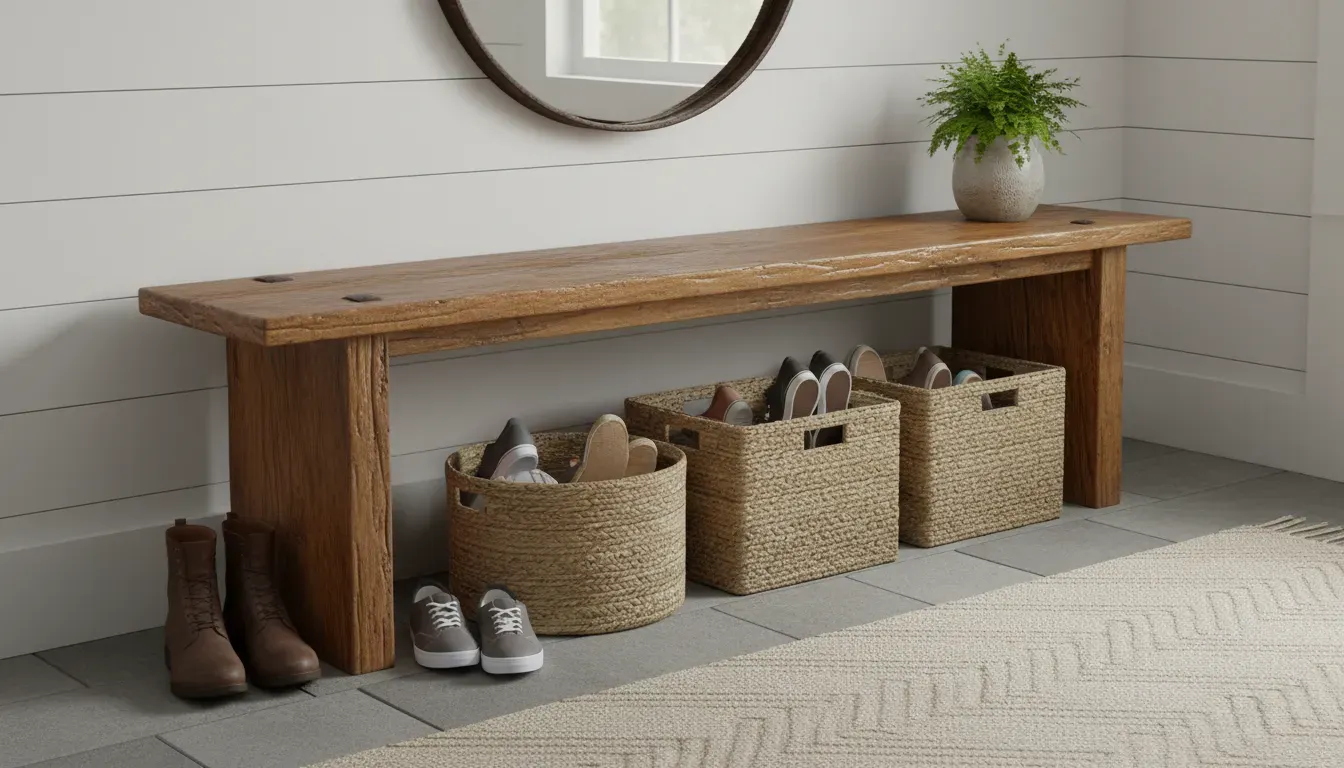
The same bench in the same spot reads as furniture rather than storage, which is the trick in bedrooms: the basket bench works because the woven bins blend with bedroom textiles.
Office: the quiet landing zone. An upholstered shoe storage bench against a wall gives visitors a seat, tucks printer paper and archive bins underneath, and makes a room feel furnished instead of merely functional. In my own office, a bench with a flip top hides power strips, cables, and a small toolkit — everything that would otherwise live on the desk.
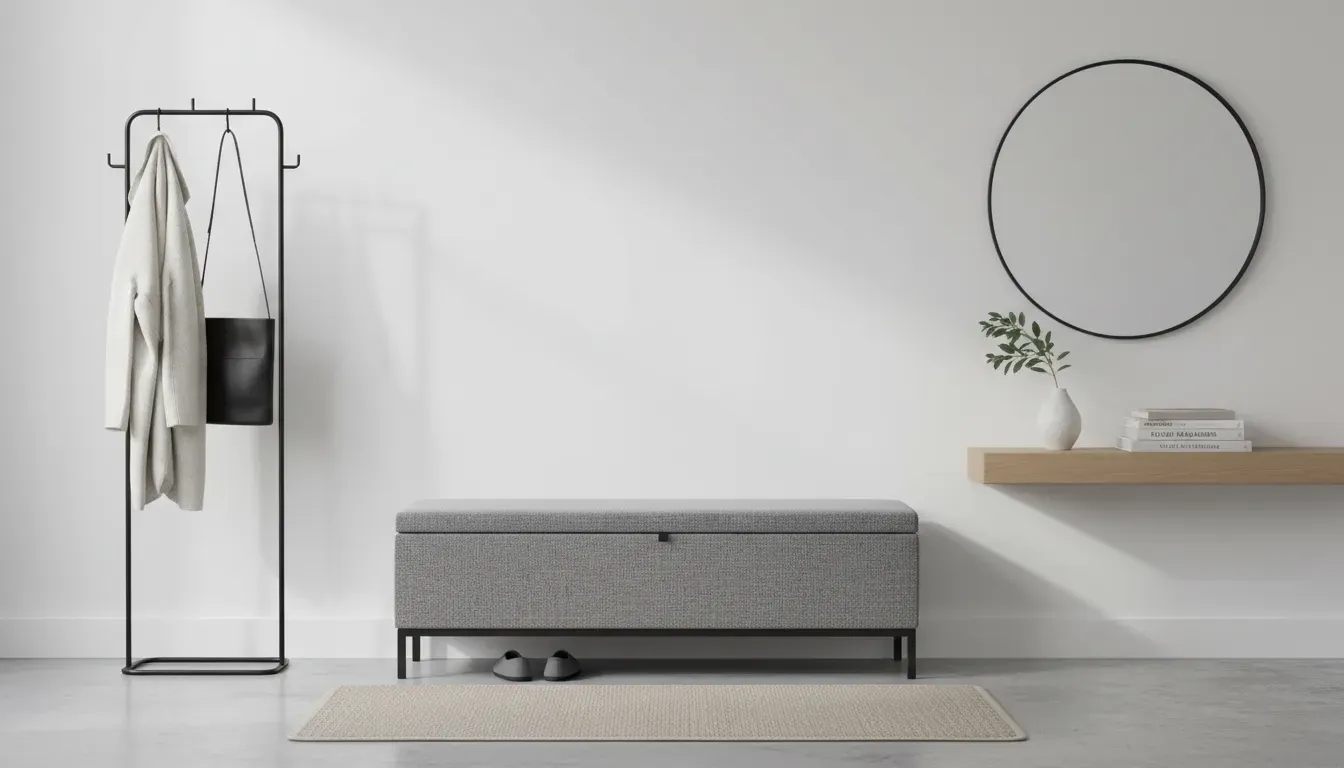
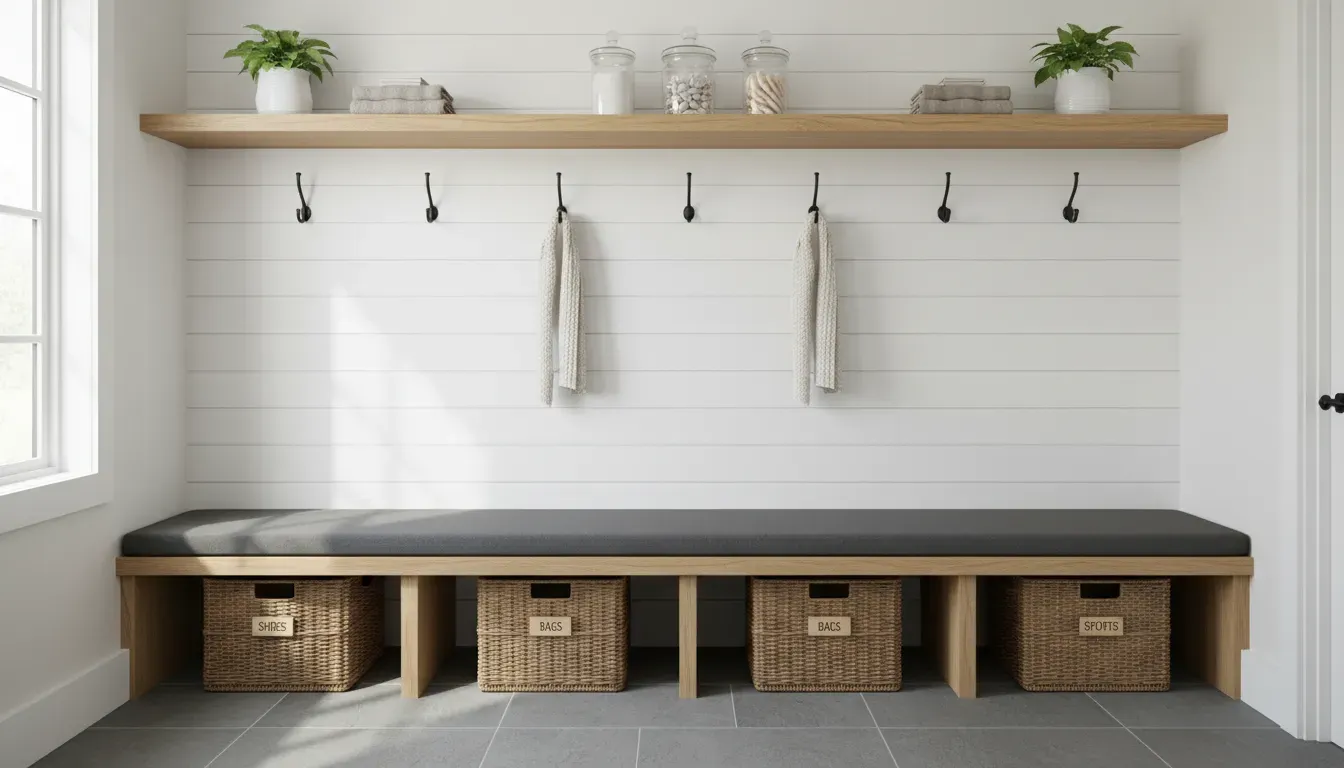
Mudroom: the home base. Whether the bench lives in the entryway full-time or rotates back in winter, the well-organized mudroom bench with hooks and labeled baskets above it remains the gold standard for shoe storage:
How to Choose a Shoe Storage Bench: Buying Guide
Shopping for the best shoe storage bench comes down to five decisions. Work through them in order and the choice becomes obvious.
1. Storage mechanism first. Open cubbies for family speed. Flip-top for maximizing hidden capacity. Baskets for flexibility. Drawers for a furniture-forward look. The mechanism you choose determines how easy the bench is to use every single day — get this right before you think about finish or style.
2. Correct length for your wall. Measure the wall, then subtract 6 inches on each side for breathing room. A bench that fills the wall exactly looks jammed in; one with space around it looks placed. If the math leaves you between sizes, go smaller — a slightly smaller bench that sits right looks better than an oversized one that crowds the space.
3. Material that matches the room’s demands. For a front-door entryway shoe storage bench, prioritize wipe-clean surfaces: painted wood, lacquered MDF, or sealed hardwood. For a bedroom bench, upholstered frames and fabric are fine. For a mudroom, look for water-resistant finishes and metal hardware that won’t rust when boots come in wet.
4. Weight capacity. Check the manufacturer’s stated weight limit. Most shoe storage benches with cushion handle 250–300 lbs on the seat, which covers most adult use. If multiple children will stand on it as a step stool, look for benches rated higher or with solid-wood frames rather than hollow MDF.
5. Cushion or no cushion. An upholstered seat makes the bench more comfortable and more room-friendly — it reads as seating, not a box with a lid. The trade-off is maintenance. A removable, washable cushion cover is non-negotiable for entryway use; fixed upholstery will look grimy within a year of regular family use.
Shoe Storage Bench Care & Maintenance
A shoe storage bench lives in the hardest-working spot in the house. Here’s how to keep it looking good for years.
Wipe the frame weekly. Mud, dust, and scuff marks accumulate faster in an entryway than anywhere else. A quick wipe with a barely damp microfibre cloth prevents buildup from setting into the finish. For painted or lacquered benches, avoid abrasive cleaners that dull the surface.
Rotate the baskets or empty the cubbies monthly. Pull every shoe out once a month, shake out the debris, and vacuum the slots or liner. Shoes carry grit that slowly abrades the bench interior. A five-minute clear-out prevents the kind of deep grime that requires real effort.
Treat the cushion like upholstery, not furniture. If your shoe storage bench with cushion has a fixed fabric seat, treat it with a fabric protector spray every six months. This creates a barrier against scuffs, dirt, and moisture before they penetrate the fibre. If the cover is removable, wash it on a cold gentle cycle every two to three months.
Check the feet. Bench feet — especially rubber or felt pads — compress and flatten over months of use. When they wear through, the bare frame scratches hardwood floors. Replace pads annually or whenever you notice the bench rocking slightly, which usually means one foot pad is gone.
Tighten the hardware twice a year. Drawer runners, hinge pins, and cubby shelf brackets loosen with daily use. A five-minute check with a screwdriver prevents the wobble that becomes a structural problem if left alone.
Styling a Shoe Storage Bench to Look Like Decor
The difference between a shoe bench with storage that looks like storage and one that looks like a deliberate design choice is a handful of styling decisions made before you buy and a few made after.
Choose a bench that matches your floor, not just your wall. Most people match the bench finish to the wall colour or a piece of furniture across the room. The better instinct is to anchor it to the floor: a warm oak bench on a warm oak floor reads as intentional; the same bench on cool grey tile reads as an afterthought.
Add a cushion in an accent color. A bench frame in a neutral — white, natural wood, black — becomes a style statement the moment you add a cushion in a color that echoes one element already in the room. A navy cushion in a cream entryway picks up the navy in a rug or a coat; a rust cushion next to a terracotta pot ties the whole entry palette together.
Style the top surface if the bench has a lid. A flip-top shoe storage bench has a flat top that’s the first thing guests see. A small tray with keys, a single potted succulent, or a framed print leaning against the wall above it transitions the bench from “functional storage” to “styled vignette.”
Keep one slot or basket visually empty. A shoe storage bench that’s packed to capacity signals chaos rather than control. Leaving one cubby or basket half-empty signals that the storage system is working — there’s room for one more pair, not a crisis. That visual breathing room makes the whole entry look tidied rather than stuffed.
Choosing One Shoe Storage Bench for Two Rooms
If one bench will serve two rooms — entryway plus bedroom, entryway plus office — work through this checklist before you buy:
- Decide the primary room first. The bench should win its main job completely; the second room is a bonus, not the plan.
- Match storage to both rooms’ contents. Shoes plus linens: choose cubbies with baskets. Shoes plus paperwork: choose a flip top or drawers.
- Pick a neutral finish. Natural wood, white, or matte black passes from a rustic entryway to a modern office without clashing.
- Measure the doorways. If the bench must move between rooms, it has to clear every doorway and stair landing in between.
- Add a cushion with a washable cover. One cover serves both rooms, and you can swap the color when the bench changes rooms.
Frequently Asked Questions About Shoe Storage Benches
What is the best type of shoe storage bench for a family entryway? A cubby shoe storage bench is the best choice for families with children. Open slots require no lids to lift or baskets to pull out — kids can toss shoes in independently, which means the system gets used consistently. Look for a bench with at least eight to ten cubby slots to accommodate a family of four’s daily shoe rotation.
How deep should a shoe storage bench be? The seat depth of a shoe bench with storage should be 14 to 16 inches for comfortable sitting. The cubby depth behind the seat needs to be at least 12 inches to fit adult sneakers fully inserted; 14 inches is better for larger shoe sizes. If the listing doesn’t specify cubby depth, check the reviews — undersized cubbies that leave heels sticking out are a common complaint.
Can a shoe storage bench hold boots? It depends on the storage type. Open-cubby shoe storage benches typically have cubbies 10 to 14 inches tall, which is not enough for knee-high or over-the-knee boots. A flip-top bench with a deep open compartment handles tall boots better. If boots are a significant part of your collection, choose a flip-top style or supplement a cubby bench with a tall woven basket beside it for boots.
What size shoe storage bench fits under a standard staircase? Under-stair space varies widely, but most residential staircases begin with a ceiling height of 6 to 7 feet at the start and taper. A small shoe storage bench — 24 to 36 inches — with a seat height of 17 to 18 inches typically fits comfortably in the first few feet of under-stair space. Always measure the actual clearance before buying, as staircase geometry is highly individual.
Is a shoe storage bench with a cushion worth it? Yes, for most households. A shoe storage bench with cushion is more comfortable to sit on when putting on shoes, reads as furniture rather than utility storage (which matters for open-plan spaces), and typically holds its value better when reselling. The condition on “worth it” is that the cushion cover must be removable and washable — entryway upholstery that can’t be cleaned will look worn within months.
How much weight can a shoe storage bench hold? Most mid-range shoe storage benches are rated for 250 to 300 lbs on the seat. Solid-wood and hardwood-frame benches tend to have higher weight limits; hollow-core MDF frames are lower. The internal shoe storage compartment typically has no stated weight limit, but overloading cubby shelves with heavy boots can cause shelves to bow — keep heavy footwear on lower cubbies and lighter shoes on upper ones.
How do I stop my shoe storage bench from smelling? Place a cedar sachet or activated charcoal insert in each cubby or inside the flip-top compartment. Cedar absorbs moisture and deters odor naturally; activated charcoal is odorless and effective at trapping shoe smells. Make sure wet shoes air out before going into the bench — a shoe storage bench is not a drying rack, and trapping moisture inside a closed compartment or cubby is the primary cause of persistent odor.
The Bottom Line
The payoff of a great shoe storage bench is real: one purchase that seats you, stores your shoes, and works in two or more rooms across the lifetime of the piece. Whether you choose a cubby bench for family entryway speed, a flip-top bench for maximum hidden capacity, or a cushioned basket bench that doubles as bedroom furniture, the decision framework is the same — get the storage mechanism right, size it to your wall, and choose a finish that travels.
Start with the complete benches-with-storage guide if you want the full configuration breakdown — then come back here and pick your rooms.

Stop Guessing Measurements. Build Your Dream Entryway with Confidence.
Transform awkward hallways, cramped foyers, and cluttered mudrooms into organized sanctuaries. Includes 20 CAD floor plans, facing real-home photo spreads, the 36-Inch Clearance Rule, the Shoe Pairs Formula, and 7 printable worksheets.
Core Edition ($17.99) · Flagship Photo Edition v5 ($39.99)
