
Entryway Storage Baskets and Bins: Choosing the Right Containers for Organization
Master entryway organization with our comprehensive guide to selecting the perfect storage baskets and bins for functionality and style.
Feb 2, 2026 - Written by: linda wise

The entryway is more than just a threshold; it is the transition point between the chaotic outside world and the sanctuary of your home. It sets the tone for your entire living space. However, as the primary drop zone for mail, shoes, keys, and seasonal gear, it is also the area most prone to immediate clutter. The psychological impact of walking into a disorganized home can be significant, elevating stress levels the moment you step through the door.
While installing expensive built-ins or purchasing large furniture pieces are viable options, the most versatile and cost-effective solution often lies in smaller, modular components: storage baskets and bins. These humble containers possess the power to transform a chaotic foyer into a streamlined, functional, and aesthetically pleasing space. This guide explores the strategic selection of entryway storage vessels, examining material durability, design cohesion, and organizational methodology to help you reclaim your foyer.
The Anatomy of an Organized Entryway
Before purchasing containers, it is imperative to analyze the specific needs of your space. An entryway in a sprawling suburban home has different requirements than a tight urban apartment corridor. The first step in choosing the right storage is not aesthetic selection, but rather a functional audit of your current habits.
Assessing Vertical vs. Floor Space
The available real estate in your foyer dictates the type of containers you should prioritize. If you possess ample floor space but limited wall area, large, sturdy floor baskets are ideal for housing bulky items like umbrellas, oversized bags, or throw blankets. Conversely, narrow hallways require vertical solutions. This involves utilizing wall-mounted shelving or console tables, which necessitate smaller, shallower bins that do not protrude into the walkway.
For those with existing furniture, such as a bench or a console table, the measurements must be precise. There is nothing more frustrating than purchasing a set of beautiful wicker baskets only to find they are half an inch too tall for your cubbies. Always measure the height, width, and depth of your shelves, leaving at least one inch of clearance on all sides to allow for easy sliding.
Identifying the Clutter Culprits
What exactly lands on your floor? If your primary issue is a mountain of shoes, you need rigid, easy-to-clean bins located at ground level. If the problem is paper clutter—bills, flyers, and school permissions slips—you require smaller, compartmentalized baskets placed at waist height or eye level. Understanding the “clutter profile” of your household ensures that the containers you choose solve the actual problem rather than just hiding it.
Material Matters: Texture, Durability, and Style
The material of your storage baskets is not merely a stylistic choice; it determines the longevity and utility of the storage solution. Entryways are high-traffic zones exposed to moisture, dirt, and constant handling.
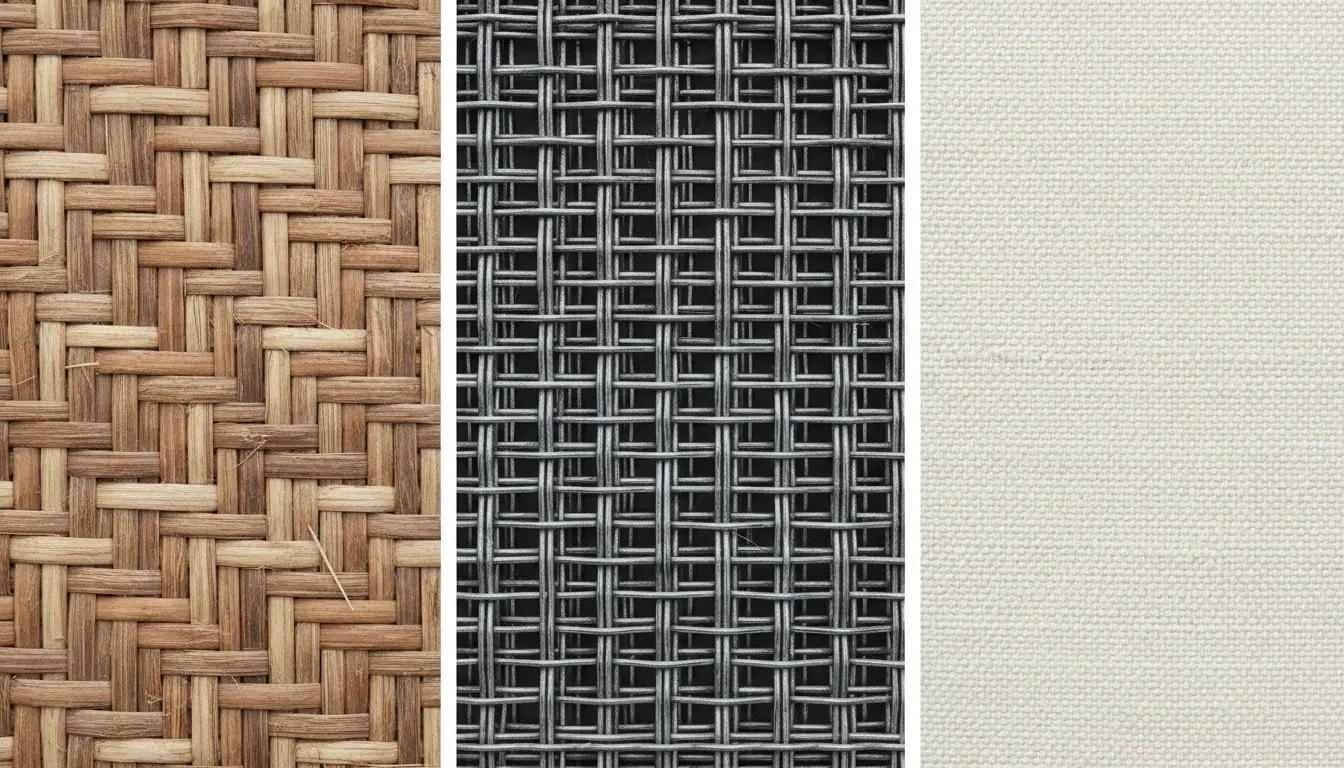
Wicker, Rattan, and Seagrass
Natural fibers are the gold standard for entryway aesthetics. They add warmth, texture, and an organic element that softens the hard lines of doors and architectural features.
- Rattan and Wicker: These are incredibly durable and rigid, making them excellent for heavy items like shoes or books. They hold their shape well over time.
- Seagrass and Water Hyacinth: These offer a softer, chunkier weave. While beautiful, they can be prone to shedding if dragged frequently across rough surfaces. They are best suited for items that are not accessed daily, such as seasonal winter gear stored on a top shelf.
One caveat with natural fibers is their interaction with delicate fabrics. A rough wicker basket can snag wool scarves or silk linings. If you plan to store delicate textiles, look for baskets that come with cloth liners or choose a material with a tighter, smoother weave.
Wire and Metal
For a modern, industrial, or farmhouse aesthetic, wire baskets are a superior choice. Their primary advantage is visibility; you can instantly see what is inside, which is helpful for finding specific items like heavy winter gloves or pet leashes. Metal bins are also impervious to moisture, making them an excellent choice for holding damp items that need air circulation.
However, the visibility factor is a double-edged sword. If the contents of the basket are messy, the room will look messy. Wire baskets are best used for uniform items or organized categories, rather than a “catch-all” junk bin.
Canvas and Fabric
Fabric bins are versatile, often collapsible, and gentle on furniture finishes. They are particularly safe for households with young children, as there are no sharp edges or heavy materials that could cause injury if pulled down from a shelf. High-quality canvas bins often feature reinforced handles and stiff inserts to maintain their structure. These are excellent for concealing eclectic clutter because they offer full coverage.
Sizing Up: Fitting Containers to Your Furniture
The visual success of using baskets and bins relies heavily on scale. A tiny basket on a large shelf looks cluttered, while an oversized bin on a narrow table feels precarious.
Console Tables and Open Shelving
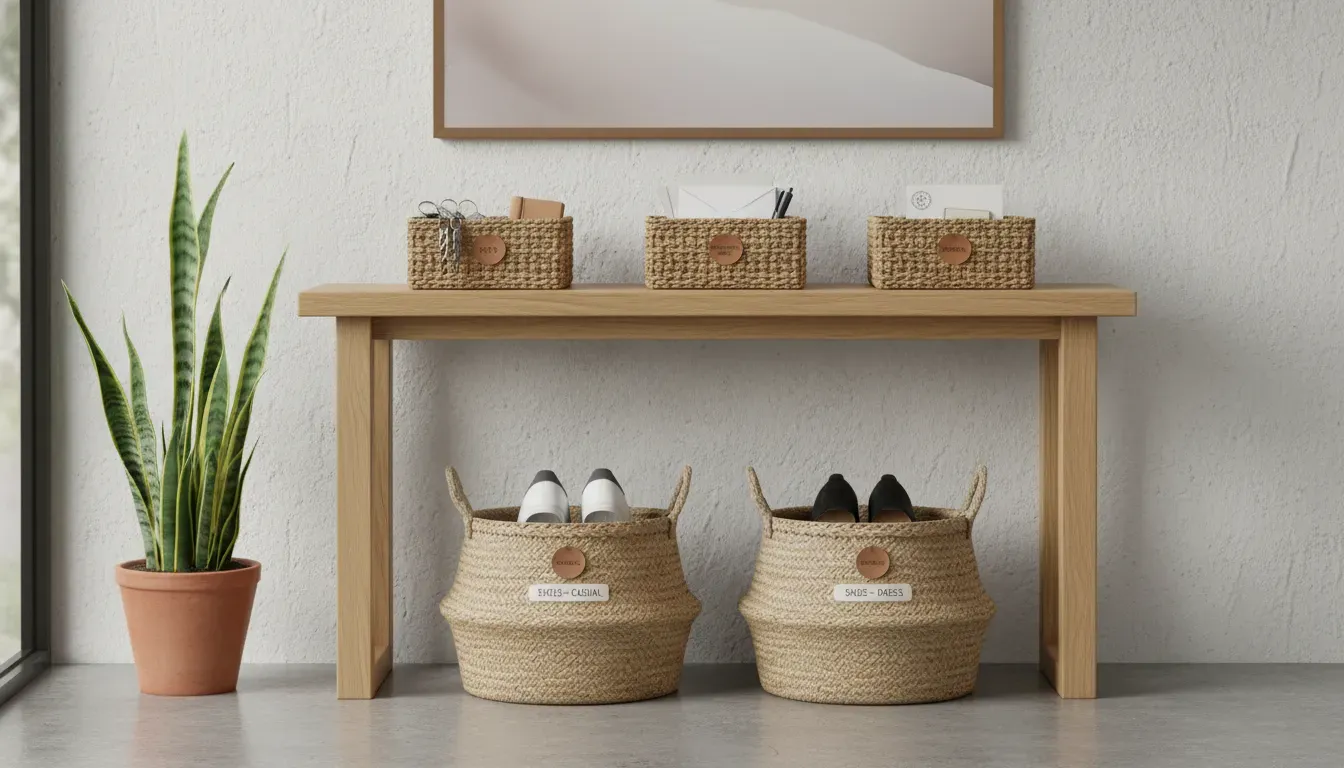
For open shelving, symmetry is your ally. Using identical baskets creates a sense of rhythm and order. If your console table has a bottom shelf, large rectangular baskets can act as drawers, effectively doubling your concealed storage capacity.
When selecting bins for a console table, consider the “visual weight.” Dark, heavy weaves anchor the space and are best placed on lower shelves. Lighter-colored canvas or wire baskets work well on higher shelves to keep the area feeling open and airy.
Bench Storage and Cubbies
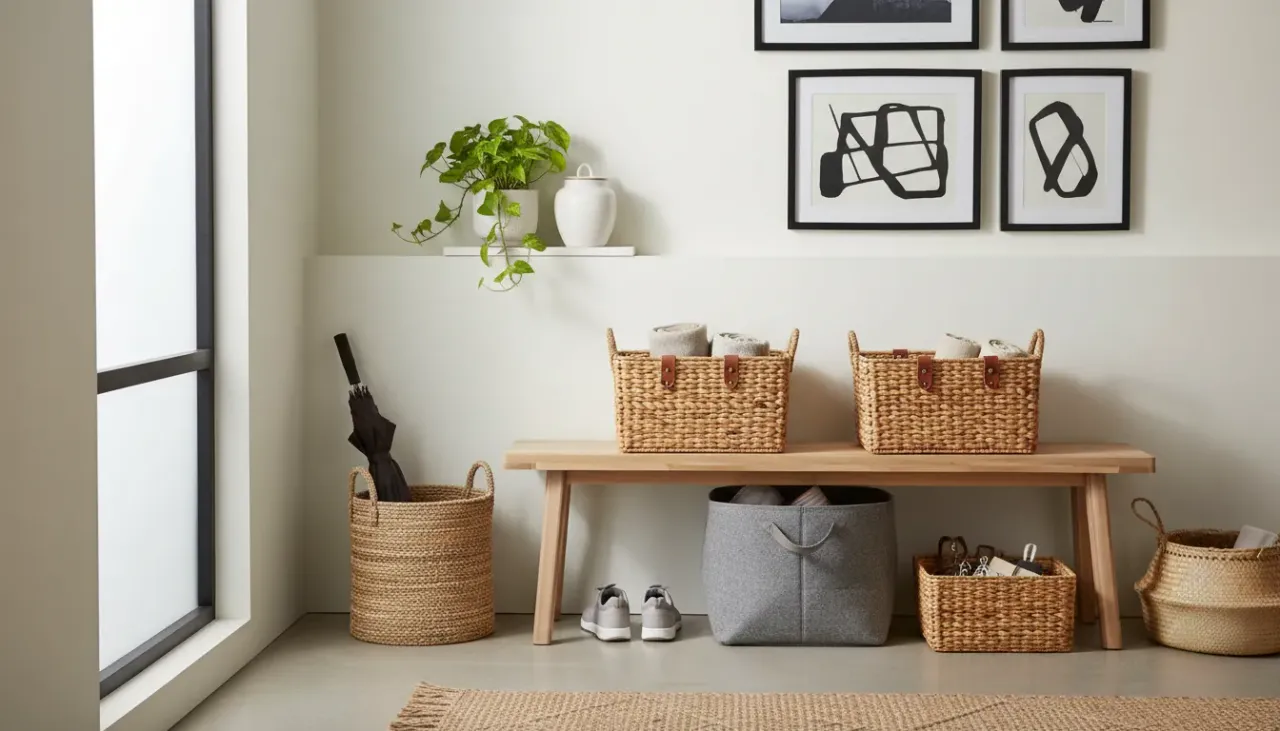
Entryway benches with open cubbies underneath are a classic storage solution. To maximize this space, select bins that fill the cubby almost entirely. This creates a “built-in” look that appears custom-designed. For a highly durable option that fits standard cubby dimensions, consider using reinforced fabric bins that can withstand the friction of being pulled in and out daily.
For those needing a robust solution for shoe storage that fits perfectly into standard shelving, specific products offer the right balance of rigidity and aesthetics.
Amazon Product Recommendation 1
Wall-Mounted Solutions
If floor space is non-existent, wall-mounted wire baskets or hanging woven pockets are essential. These should be reserved for lightweight items like mail, keys, and sunglasses. Ensure that the mounting hardware is anchored properly, as these baskets often end up holding more weight than intended over time.
Strategic Categorization for Maximum Efficiency
Buying the baskets is the easy part; deciding what goes inside them is where true organization happens. A common mistake is creating “miscellaneous” bins. These inevitably become black holes where items go to disappear. Instead, assign a specific category to every single container.
The Shoe Situation
Shoes are the nemesis of a tidy entryway. If you have a “shoes off” policy, you need a dedicated system.
- The Individual Method: Assign one large basket per family member. This works well for households with children, as it limits the number of pairs they can keep by the door.
- The Category Method: Use one large bin for “everyday sneakers,” one for “sandals/slides,” and a separate area for boots.
Baskets for shoes must be breathable. Avoid sealed plastic bins which can trap odors and moisture. Wicker or wire are the superior choices here.
Seasonal Gear
Winter accessories—hats, gloves, and scarves—can quickly overrun a coat rack. Dedicate specific bins for these items. In the summer, these bins can be moved to a high shelf or a closet, swapped out for bins containing sunscreen, bug spray, and hats. This concept of “rotating inventory” keeps your entryway relevant to the current season.
For more insights on managing seasonal transitions in your home, read our guide on Seasonal Decor Swaps.
The “Drop Zone”
This is the most critical category for mental clarity. Keys, wallets, sunglasses, and mail need a dedicated home. Large floor baskets are useless for these tiny items. Instead, utilize small, shallow trays or bowls placed on a console table, or small woven baskets on a high shelf.
For mail, consider a two-basket system: “Action Required” and “Recycle/File.” This prevents paper clutter from migrating to the dining table or kitchen counter.
Design Aesthetics: Blending Function with Style
Your storage solutions should complement your home’s interior design style. Baskets are functional, but they are also decor.
Farmhouse and Rustic
This style leans heavily on natural materials. Chunky knit baskets, galvanized metal bins, and rough-hewn wood crates fit perfectly. The color palette should remain neutral—creams, beiges, and grays. Lining wire baskets with linen fabric can soften the industrial edge of the metal, bridging the gap between rustic and industrial.
Modern and Minimalist
Minimalism demands clean lines and a lack of visual noise. Solid-colored felt bins, sleek matte-black wire baskets, or smooth bamboo containers work best. The goal is uniformity. If you use three baskets, they should be identical in color and size. Avoid intricate weave patterns that create visual texture; opt for smooth surfaces.
For a modern aesthetic that combines texture with a clean silhouette, woven rope baskets are an excellent choice. They offer a sophisticated look that blends with contemporary furniture.
Amazon Product Recommendation 2
Boho and Eclectic
This style allows for more freedom. You can mix and match materials—perhaps a seagrass basket next to a colorful fabric bin. Look for baskets with embellishments like tassels, patterns, or painted details. However, maintain a common thread, such as a similar color family, to prevent the look from becoming chaotic.
Maintenance and Longevity
Entryway baskets endure significant wear and tear. To ensure your investment lasts, regular maintenance is required.
Cleaning Your Baskets
- Wicker/Seagrass: Vacuum regularly using the brush attachment to remove dust from the crevices. If they become muddy, wipe them with a damp cloth and mild soap, but ensure they dry completely to prevent mold.
- Fabric: Check the care label. Many fabric bins have cardboard inserts, meaning they cannot be machine washed. Spot clean these with upholstery cleaner.
- Wire/Metal: Wipe down with a damp cloth. If you live in a humid climate or near the coast, check occasionally for rust and treat immediately.
Protecting the Floor
Rough wicker or metal baskets can scratch hardwood floors or snag carpet loops. Always apply felt furniture pads to the bottom of floor baskets. This not only protects your flooring but also makes it easier to slide the baskets in and out.
Kid-Friendly and Pet-Proof Storage
If your household includes children or pets, your storage strategy must adapt.
Accessible Heights and Safe Materials
For children to participate in keeping the entryway tidy, storage must be accessible. Place their specific bins on the floor or the lowest shelf. Avoid heavy wooden crates that could smash fingers or wire baskets with sharp protruding ends. Soft, flexible cotton rope baskets are the safest option for toddlers.
Labeling Systems
Labels are the secret weapon of organization. They eliminate the question “Where does this go?” and enforce accountability.
- Clip-on Labels: Ideal for bins where adhesive won’t stick, like wicker or wire.
- Chalkboard Tags: Great for baskets that change contents frequently (e.g., “Winter Gear” becomes “Beach Toys”).
- Embroidery: For fabric bins, embroidered names add a personalized, high-end touch.
Pet Considerations
If you have a dog, you likely have leashes, waste bags, and perhaps a towel for muddy paws. Dedicate a specific “Pet Station” bin. If your pet is prone to chewing, avoid wicker or sea grass, as these are satisfying textures for animals to destroy. Metal or heavy-duty canvas is preferable.
DIY vs. High-End Investment
There is a vast price range for storage containers. Is it worth splurging on high-end baskets?
When to Splurge
Invest in quality for the baskets that will see the most use. The primary shoe basket or the main catch-all bin should be constructed of high-grade materials with reinforced frames. Cheap wicker will unravel within months under daily use, and cheap fabric bins will lose their shape and look sloppy.
Upcycling and DIY
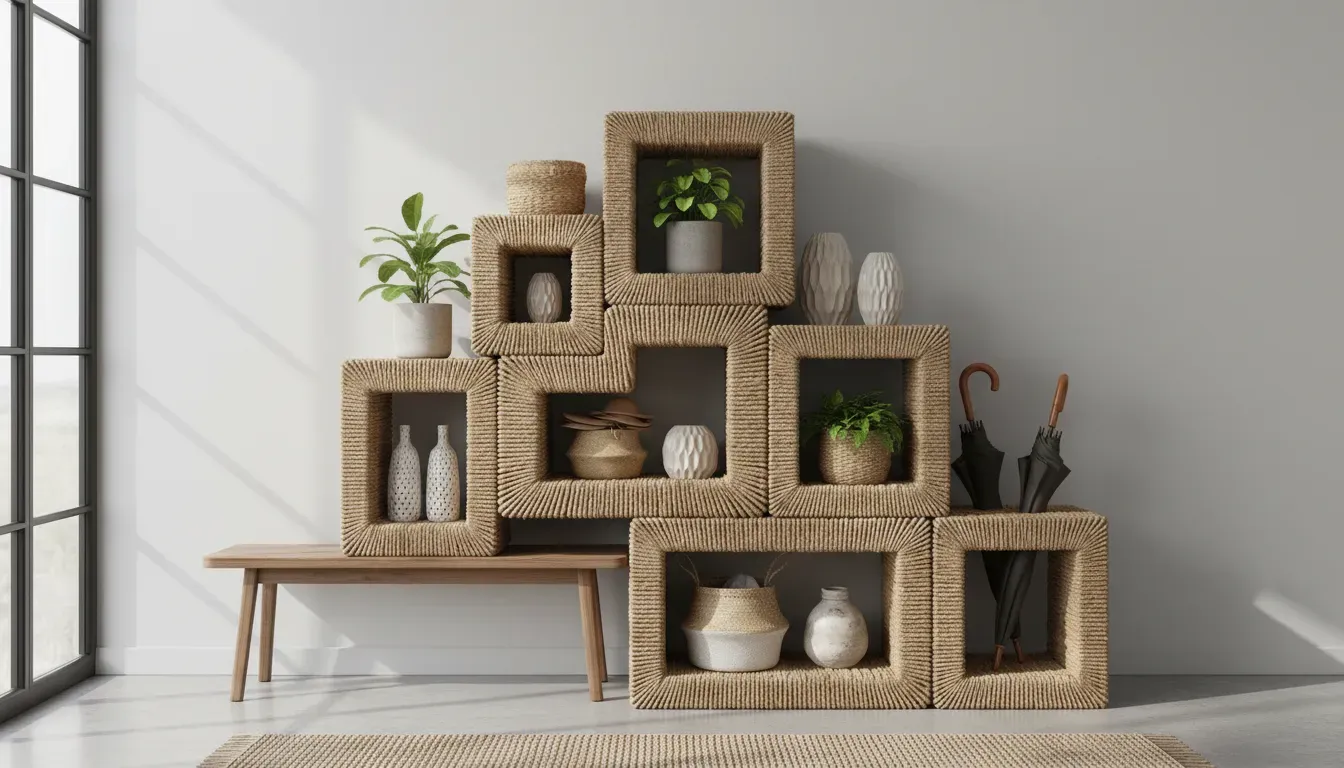
For less visible storage, such as bins on a high shelf or inside a closet, you can save money. Upcycling sturdy cardboard boxes by wrapping them in jute rope or covering them with contact paper can yield surprisingly stylish results.
If you are looking for a versatile, wall-mounted option that balances cost and durability for smaller items, metal wire organizers are often the most practical choice.
Amazon Product Recommendation 3
Troubleshooting Common Issues
Even with the best intentions, storage systems can fail. Here is how to address common problems.
The “Overflow” Problem
If a basket is constantly overflowing, the solution is not a bigger basket—it is a purge. A container sets a physical limit on how much stuff you can keep. If the shoe bin is full, a pair must be moved to a bedroom closet before a new pair can enter the entryway.
The “Hidden Junk” Problem
Opaque bins are great for hiding clutter, but they can also hide lost items. If you find yourself searching through five different bins to find your keys, your system is too broad. Sub-categorize. Use small pouches within the larger bin to separate items.
For more tips on maintaining a clutter-free home, explore our article on Minimalist Entryway Design.
Frequently Asked Questions
Q: How do I stop baskets from scratching my shelves? A: Apply self-adhesive felt pads to the bottom of the baskets. For wire baskets, you can also wrap the bottom wires in felt tape.
Q: Can I mix different types of baskets? A: Yes, but follow the rule of repetition. Repeat a material or color at least twice to make the design look intentional rather than accidental.
Q: How do I clean mold off a wicker basket? A: Take the basket outside. Brush off surface mold. Wipe with a solution of water and white vinegar. Let it dry in direct sunlight to kill remaining spores.
Q: What is the best basket material for damp climates? A: Synthetic wicker (resin), metal wire, or treated plastic. Avoid untreated natural fibers like water hyacinth, which absorb moisture easily.
Conclusion
Selecting the right entryway storage baskets and bins is a balance of art and engineering. It requires accurate measurement, an honest assessment of your family’s habits, and a keen eye for design. By choosing the right materials—whether it be the warmth of rattan, the industrial edge of wire, or the softness of canvas—you create a system that withstands the daily rush.
Remember that organization is not a one-time event, but a maintenance habit. The best containers in the world cannot clean up after you, but they can make the process significantly easier and more aesthetically pleasing. When every item has a designated home, the entryway transforms from a source of stress into a welcoming embrace, setting a tone of calm and order for the rest of your home. Start small, measure carefully, and choose quality containers that bring you joy every time you walk through the door.