
Entryway Storage Ideas for Small Spaces: Organization Systems That Work
The best entryway storage ideas and organization systems for small spaces. Covers hallway organization ideas, small entryway organizers, entryway storage solutions, and how to organize a small entryway step by step.
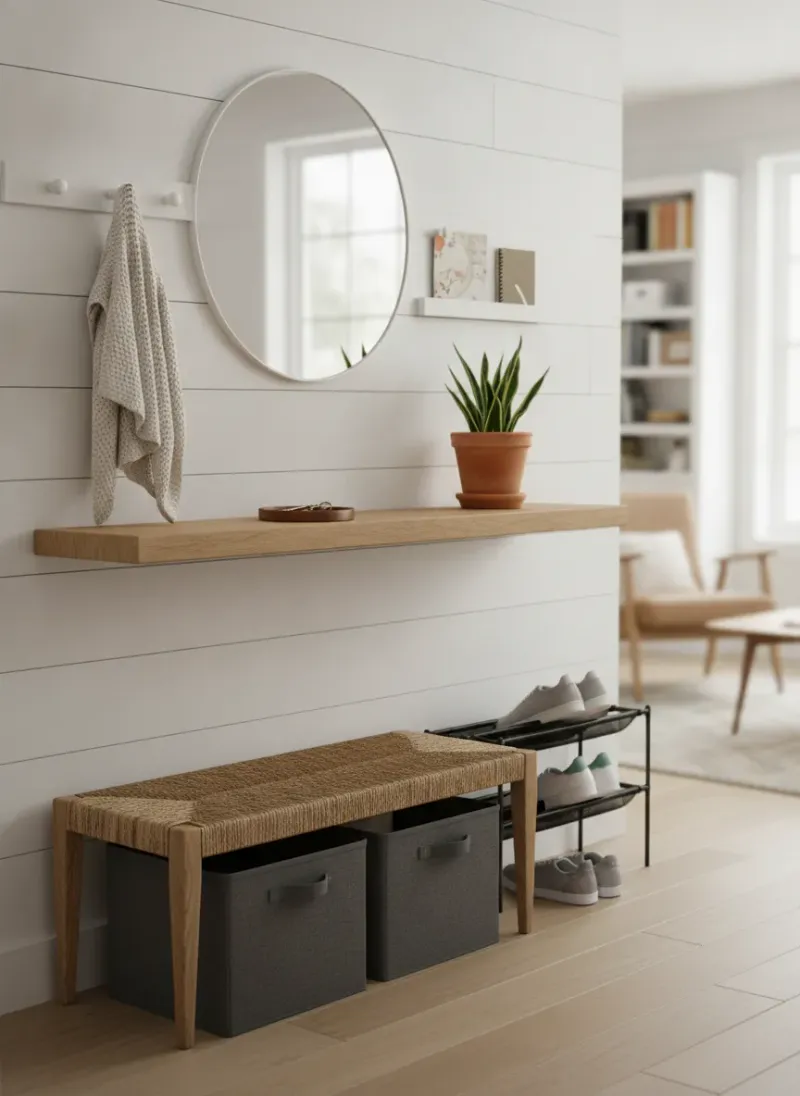
Jun 8, 2026 · Linda Wise
15 min readThe entryway is the most demanding zone in any home. It serves as a decompression chamber — the transitional threshold where the chaos of the outside world meets the sanctuary of your living space. When this area is constrained by tight square footage, it quickly devolves into a disaster zone of discarded shoes, tangled dog leashes, errant mail, and coats draped over whatever surface is closest.
To solve this, we must look beyond basic organization. Managing a small entryway requires an intentional strategy that balances spatial geometry, human behavior, and high-utility design.
If your front door opens directly into a narrow hallway, a cramped corner, or straight into your living room, you do not need more space. You need a better entryway organization system.
This guide covers every entryway storage idea you need — from hallway organization ideas for tight corridors to full entryway organization systems for families — all mapped to the real challenges of small spaces.
Below is a quick breakdown of three proven tools that form the foundation of a highly functional entryway organizer setup.
At a Glance: Entryway Storage Ideas by Space Size
| Space Size | Best Entryway Storage Solution | Key Priority |
|---|---|---|
| Ultra-narrow hallway (< 36 in wide) | Wall-mounted hooks + over-door organizer | Zero floor footprint |
| Narrow entryway (36–48 in wide) | Slim bench (14 in deep) + pegboard | Seat + vertical storage |
| Small entryway (no closet) | Hall tree / coat rack bench | All-in-one organizer |
| Apartment entry (shared hallway) | Freestanding shoe rack + command hooks | Renter-friendly |
| Family entryway (kids + pets) | Multi-hook rail + cubby bench + boot tray | High-capacity, low-friction |
The Psychology and Physics of the Micro-Entryway
To design a storage system that actually works, we have to understand why entryways fail in the first place. It is rarely a lack of willpower; it is a mismatch between human habits and spatial design.
When you walk through your front door after a long day, your cognitive load is high, and your physical energy is low. You are biologically programmed to take the path of least resistance. If putting away your coat requires opening a closet door, sliding a hanger off a rod, hanging the coat, and closing the door, you probably won’t do it. Instead, you will toss the coat onto the nearest chair.
This is what organization experts call “friction.” To keep a small space organized, you must reduce friction to near zero.
[High-Friction System] -> [Door -> Closet -> Hanger -> Close] = Chaos
[Low-Friction System] -> [Door -> Wall-Mounted Hook] = Order
Additionally, small entryways suffer from severe physical constraints. Standard hallways are often only 36 to 42 inches wide. Traditional furniture, which typically measures 18 to 24 inches deep, chokes these pathways, creating a claustrophobic bottleneck.
Our goal is to preserve floor space while maximizing storage capacity. We achieve this by redirecting our focus upward, downward, and into the very walls themselves.
Entryway Organizing Ideas: Vertical Storage Is the #1 Space Hack
When floor space is limited, the walls are your most valuable asset. Vertical storage is not just about hanging things up; it is about creating a tiered system that utilizes every inch of vertical space from the baseboards to the ceiling.
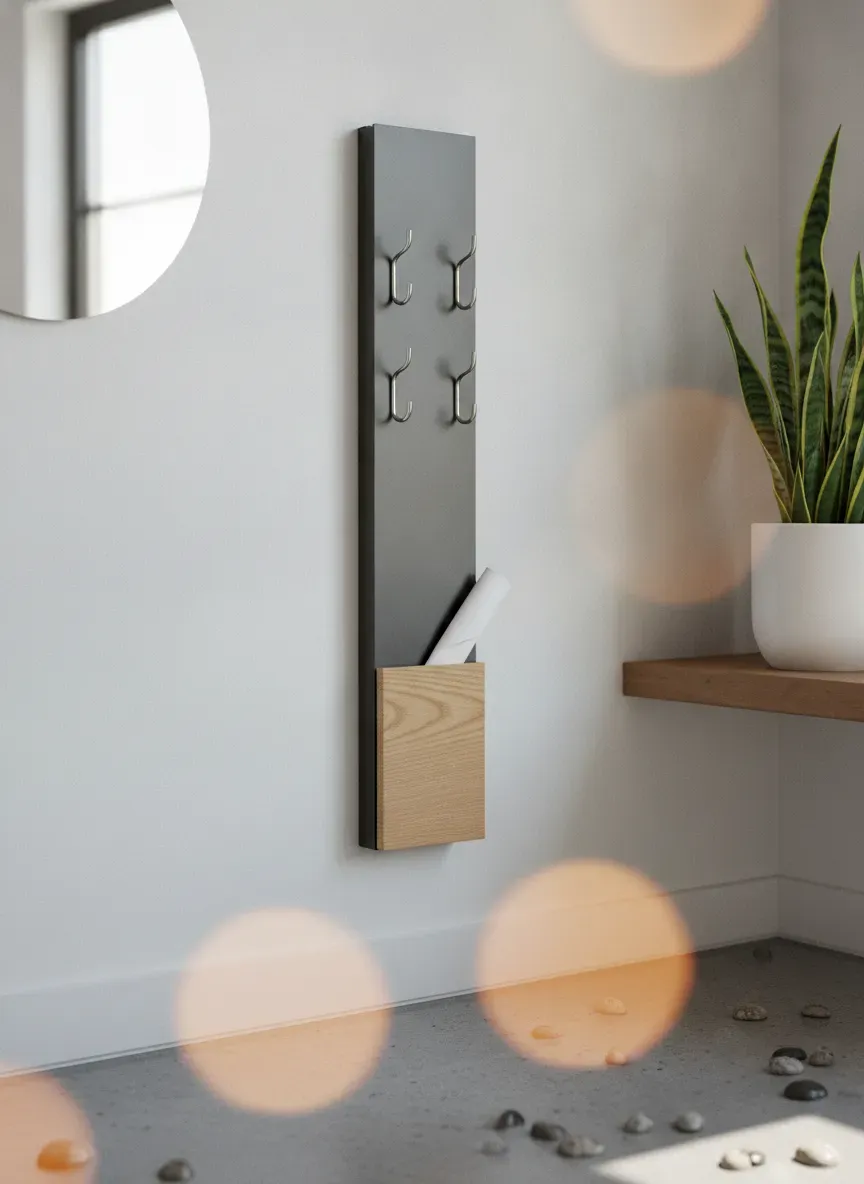
The Three-Zone Vertical System
A highly functional wall-mounted system divides your vertical space into three distinct zones:
- The High Zone (Above 6 feet): This area is reserved for deep, passive storage. Think high-mounted shelves holding woven baskets for out-of-season gear, hats, or infrequently used items.
- The Active Zone (3 to 6 feet): This is your high-touch area. It should feature robust hooks, mail organizers, and key drops. Everything here must be accessible without bending down or reaching excessively.
- The Low Zone (Below 3 feet): This zone is dedicated to shoes, boots, and heavy bags. It is the foundation of your entryway, keeping heavy items low to ground your space visually and physically.
Architectural Rail Systems and Pegboards
Instead of scattered, individual hooks that can make a wall look cluttered, consider an architectural rail system or a modular pegboard.
A heavy-duty shaker peg rail running the entire length of your entry wall provides a clean, continuous line that draws the eye forward, visually lengthening a cramped space. It also offers endless flexibility; you can hang coats directly on the pegs, loop umbrella straps over them, or hang canvas tote bags to organize incoming mail and dry cleaning.
Modular wooden pegboards offer a clean, modern aesthetic. You can reposition shelves, pegs, and small baskets as your storage needs change throughout the seasons.
Pro Tip: Mount your primary coat hooks at alternating heights. Instead of a single horizontal row, install a double-row zig-zag pattern. This prevents coats from bunching up on top of one another, keeping the profile slim and close to the wall.
Small Entryway Organizer Picks: Dual-Purpose Furniture
Every piece of furniture placed in a small entryway must earn its keep by performing at least two functions. If a bench only offers a place to sit, it is wasting space. It must also store shoes, hide clutter, or hold incoming mail.
The Anatomy of the Perfect Entryway Bench
An ideal entryway bench balances a slim depth with heavy-duty storage capacity. It should be no deeper than 14 to 16 inches—just wide enough to sit on comfortably without blocking the hallway.
A stellar example of this design philosophy is the Vasagle Industrial Coat Rack Shoe Bench. This unit is an all-in-one entryway solution, combining a sturdy seat, a two-tier shoe rack, and nine robust coat hooks into a compact footprint.
The open metal grid structure keeps the piece visually light, allowing light to pass through so your entryway feels larger. It utilizes a vertical frame to organize coats and bags without needing to be mounted to the wall, making it a fantastic option for renters.
For homes with narrow pathways, look for benches with sliding doors or open cubbies rather than pull-out drawers. Drawers require physical clearance to open, which can block your hallway during busy morning departures. Open cubbies fitted with snug, slide-out canvas baskets offer a clean look while keeping items like dog toys and cold-weather gear out of sight.
Slimline Console Tables
If you do not need a bench, a ultra-slim console table is a great alternative. Look for tables with a depth of 8 to 10 inches.
These tables are perfect for tight hallways. They provide a stable surface for a “landing pad” (a catch-all tray for keys, wallets, and sunglasses) while leaving the space underneath open for shoe trays or storage baskets.
Entryway Organization Systems: Which Setup Is Right for You?
Choosing the right entryway organization system depends on your household size, hallway width, and the type of gear you manage daily. Here are the four most effective systems:
System 1: The Wall-Only System (Ultra-Narrow Hallways)
Ideal for hallways under 36 inches wide where no floor furniture can fit:
- Full-length shaker peg rail or pegboard at eye height
- Floating shelf above for baskets (seasonal items)
- Over-door organizer on back of front door for shoes/mail
- Command hook strip for keys at elbow height
System 2: The Bench + Wall System (Most Common Small Entryway)
The workhorse setup for most small entryways:
- Slim bench (14–16 inches deep) with under-seat shoe storage
- Wall-mounted hooks above the bench at 60–66 inches for adults
- Lower hooks at 42–48 inches for children’s bags and jackets
- Landing pad tray on bench surface for keys and mail
System 3: The All-in-One Hall Tree (No-Closet Entries)
The most space-efficient single-unit entryway organizer:
- Combines hooks, bench seat, shoe rack, and sometimes mirror
- Best for rentals or spaces where wall mounting isn’t possible
- Look for units under 18 inches deep to preserve walkway
System 4: The Modular System (Families, High-Traffic Entries)
Designed to scale with a growing household:
- Pegboard or rail system with repositionable components
- Labeled cubbies per family member (one cubby = one person)
- Dedicated boot tray at ground level with river stones for wet gear
- Seasonal rotation bins on high shelves
Pro Tip: The best entryway organization system is the one with the least friction. If putting something away takes more than two steps, you won’t do it consistently.
The Shoe Dilemma: Eradicating the Floor Pile
Shoes are the primary source of entryway clutter. They are bulky, dirty, and have a habit of multiplying near the front door. Leaving them scattered on the floor ruins the look of your space and creates a major tripping hazard.
[Scattered Shoes on Floor] = Visual noise + physical obstacle + dirt tracking
[Elevated, Slatted Rack] = Air circulation + clear floor + defined boundaries
Open vs. Closed Shoe Storage
When deciding how to store shoes in a small space, you have two options: open shelving or closed cabinetry.
- Open Storage: This is the lowest-friction option. It is perfect for daily footwear because you can slip shoes on and off without opening doors. The key here is to keep the rack elevated off the floor to make cleaning easy.
- Closed Storage: This is the best choice for a sleek, minimalist look. Slim, wall-mounted shoe cabinets (which feature tipping drawers that store shoes vertically) are incredibly space-efficient, often measuring just 6 inches deep.
For a versatile, breathable, and natural option, the Songmics 3-Tier Bamboo Shoe Rack is a brilliant choice. Bamboo is naturally moisture-resistant, making it perfect for damp shoes.
The slatted shelves allow air to circulate freely around your footwear, preventing odors and letting wet soles dry quickly. With its compact footprint and stackable design, this rack fits easily into tight closets or sits neatly beneath a wall-mounted coat rack.
To keep your shoe storage organized, try implementing a strict “rule of two.” Each family member is allowed to keep two pairs of shoes on the active entryway rack. Any additional shoes must be stored in their bedroom closets. This simple habit keeps your entryway rack from overflowing.
Small Entryway Storage Ideas: Keys, Mail, and Everyday Carry
While coats and shoes occupy the most physical space, small items create the most mental clutter. When you cannot find your keys or wallet as you are trying to run out the door, your entire day starts with unnecessary stress.
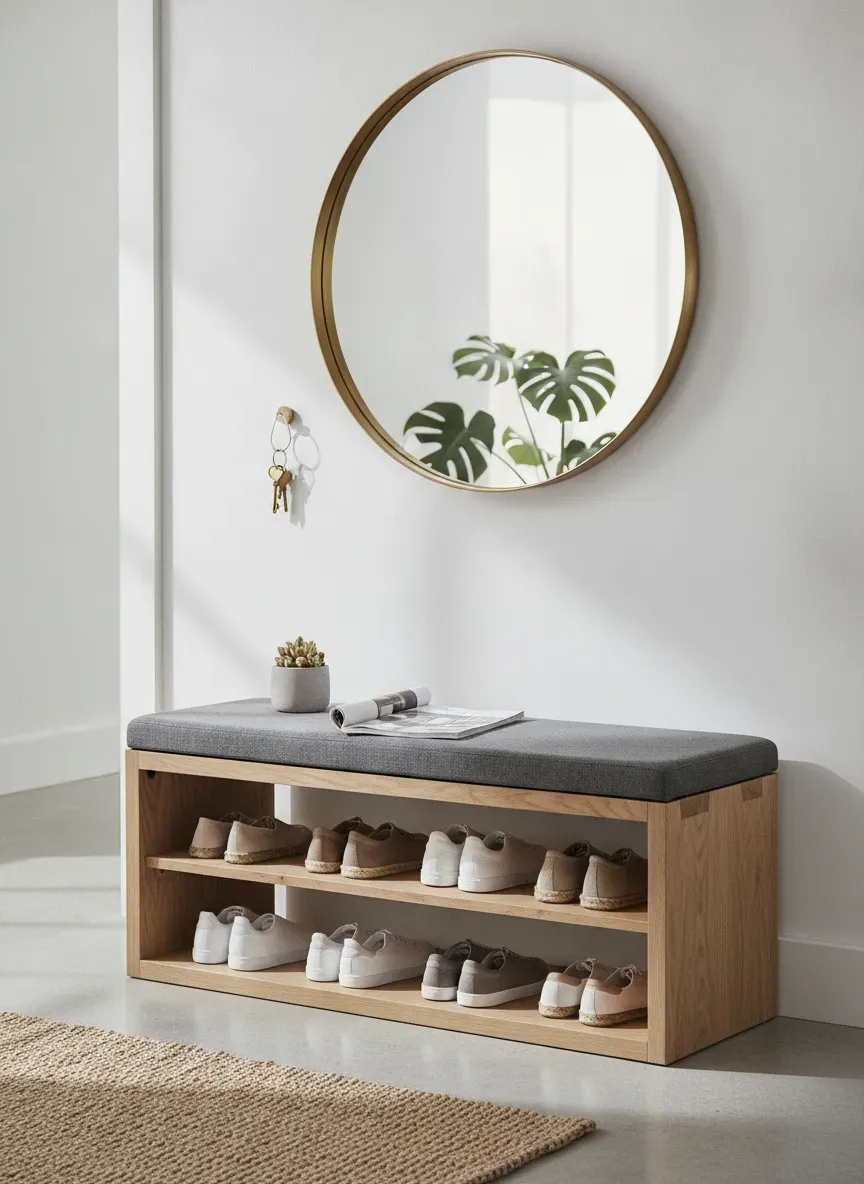
Creating a Landing Pad
Every entryway needs a dedicated landing pad. This is a designated spot where your everyday carry items live. It should be located at elbow height, right next to the door.
A landing pad can be as simple as a beautiful ceramic bowl, a leather valet tray, or a small wall-mounted shelf. The key is consistency: your keys, wallet, work badge, and sunglasses must go into this tray the moment you step inside.
Managing the Paper Trail
Mail is a major source of paper clutter. To keep it from piling up on your kitchen counters or entryway table, set up a simple sorting station right at your front door.
Install a dual-compartment wall organizer. Label one side “Action” (bills, RSVPs, important letters) and the other “Recycle.”
Sort your mail the second you walk inside. Toss junk mail directly into the recycling bin, place important documents in the “Action” slot, and never let unsorted paper touch your flat surfaces.
Sleek, Low-Profile Hanging Solutions
If you do not have room for a console table or a standing coat tree, wall space is your best friend. In ultra-tight spaces, even standard coat hooks can feel intrusive when they are not in use.
The Umbra Flip Wall Mounted Floating Coat Rack solves this problem beautifully. This smart design features hooks that flip up into the wooden rail when they are not being used, leaving you with a clean, sculptural piece of wall art.
When you need to hang a coat, scarf, or bag, simply flip a hook down. Its ultra-slim profile and hidden mounting hardware make it a perfect fit for tight hallways, behind-the-door spaces, or narrow entry vestibules.
Entryway Storage Design: Visual Tricks to Make Small Spaces Feel Larger
Keeping a small entryway organized is not just about physical storage; it is also about visual design. How the space feels when you walk in has a major impact on your mood. You can use a few simple design techniques to make a cramped entryway feel bright, open, and welcoming.
The Power of Reflection
A mirror is an essential design element for any small entryway. It serves two important purposes:
- Functional: It gives you a spot for a quick appearance check before you head out the door.
- Spatial: It bounces light around the room, making a dark, narrow hallway feel twice as wide.
For the best results, hang a large round or arched mirror directly above your console table or bench. The soft, curved lines help break up the harsh angles of doors and hallways, adding a touch of elegance to your entry.
Strategic Lighting
Dark corners make a space feel smaller. Since many entryways lack windows, you need to be intentional with your lighting.
Avoid harsh overhead lights that cast deep shadows. Instead, layer your lighting with soft, warm options:
- Sconces: Install wall-mounted sconces on either side of your mirror to frame the space and provide even, welcoming light.
- Under-Cabinet LEDs: Use battery-powered, motion-activated LED strip lights under your wall shelves or shoe racks. They add a high-end look and turn on automatically when you walk through the door at night.
Color Drenching and Material Continuity
To make a small entryway feel larger, paint the walls, trim, and doors the exact same color. This technique, called “color drenching,” hides the harsh lines of your walls, tricking your eyes into seeing a seamless, open space.
Opt for light, reflective neutrals like soft alabaster, warm gray, or muted sage. If you prefer a bold look, dark charcoal or deep navy can create a cozy, dramatic entry that makes the adjoining rooms feel bright and spacious by contrast.
Hallway Organization Ideas: Seasonal Rotation for Sustained Order
The biggest mistake people make with entryway storage is treating it as a permanent home for all their gear. Your entryway is a high-traffic transit zone, not a storage closet. To keep it organized year-round, you must implement a seasonal rotation system.
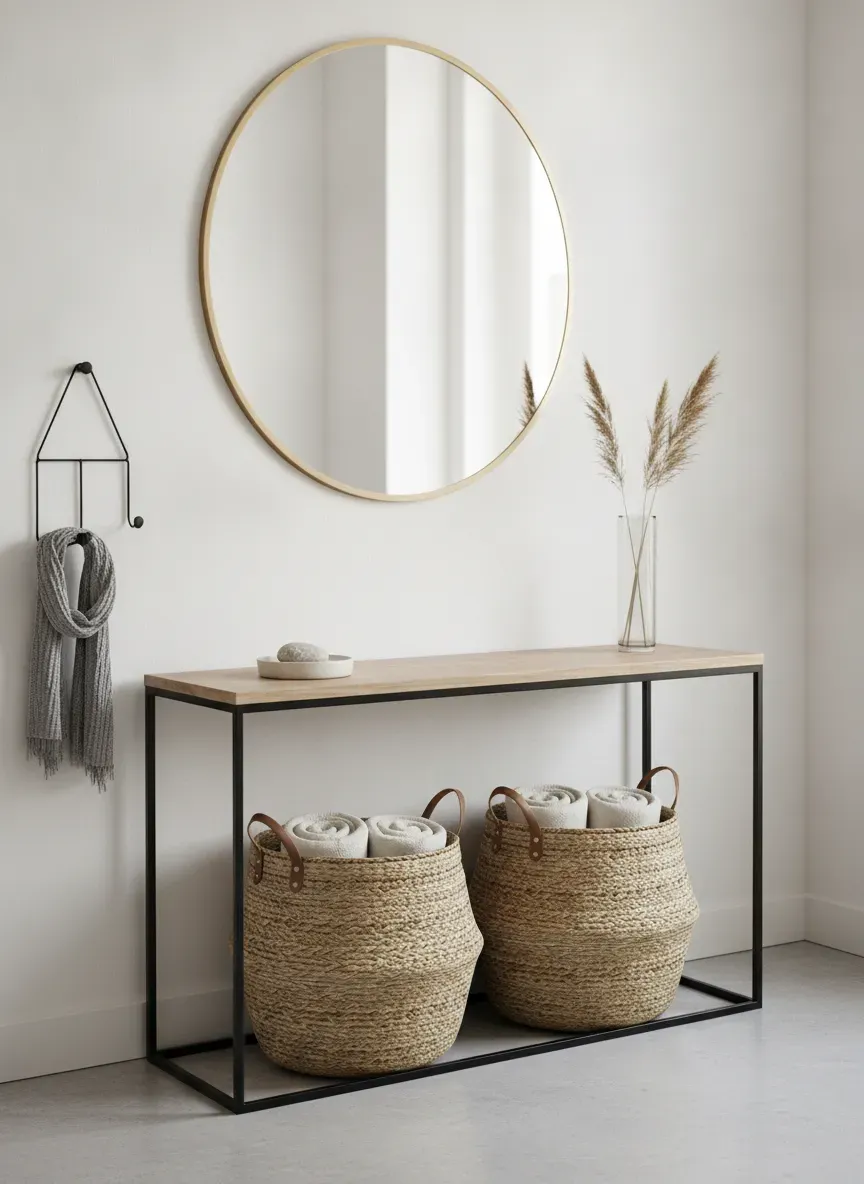
When the seasons change, your entryway setup should change too:
- Spring & Summer: Store heavy coats, boots, gloves, and scarves in deep storage (like your bedroom closet or under-bed bins). Fill your entryway hooks with light jackets, sun hats, and canvas tote bags. Swap out boot trays for slim shoe racks.
- Autumn & Winter: Bring your heavy coats, rain boots, and winter gear back to the active entryway zone. Add a durable, heavy-duty boot tray filled with river stones to catch melting snow and rain, keeping your floors clean and dry.
The “One-In, One-Out” Rule
To prevent clutter from building up over time, practice the “one-in, one-out” rule. If you buy a new winter coat and hang it in the entryway, an older coat must be moved to a closet or donated. This simple boundary keeps your entryway storage from exceeding its physical capacity.
How to Organize a Small Entryway: Step-by-Step Blueprint
Ready to transform your cramped entryway into an organized, welcoming space? Follow this step-by-step guide — the same process professional organizers use when tackling small entryway organization ideas for clients:
Step 1: The Purge and Inventory
Empty your entryway completely. Clear off every hook, shelf, and floor space until the area is bare. Group everything into piles: shoes, coats, bags, keys, mail, and miscellaneous items.
Be honest about what actually needs to live at the front door. If you do not use an item daily, move it to another room or store it away.
Step 2: Measure with Precision
Measure your entryway’s dimensions, keeping a close eye on door swings, baseboards, electrical outlets, and light switches. Note the maximum depth your furniture can be without blocking your walkway. Write these measurements down and keep them handy when shopping for new pieces.
Width of Hallway - Door Swing Clearance = Maximum Furniture DepthStep 3: Choose Your Anchors
Select your main furniture pieces based on your unique needs and space limitations:
- If you need a place to sit and have at least 15 inches of depth, go with a multi-functional hall tree like the Vasagle Industrial Coat Rack Shoe Bench.
- If your hallway is ultra-narrow, pair a wall-mounted rack like the Umbra Flip Wall Mounted Floating Coat Rack with a slim shoe rack like the Songmics 3-Tier Bamboo Shoe Rack.
Step 4: Map Out Your Drop Zones
Install your wall hooks, shelves, and landing pad. Make sure your keys and mail organizers are at an easy, comfortable height right next to the door. Place shoe racks directly below your hanging storage to create a clean, vertical line.
Step 5: Personalize and Style
Add your finishing touches. Hang a beautiful mirror to bounce light around the room, lay down a durable rug (like a washable flat-weave or natural sisal runner) to define the space and catch dirt, and place a small candle or diffuser on your landing pad to welcome you home with a comforting scent.
Entryway Storage Solutions: Common Pitfalls to Avoid
Even the most well-intentioned organizing plans can hit a snag. To ensure your new entryway system stands the test of time, keep these common pitfalls in mind:
- Choosing Style Over Utility: Never buy a piece of furniture just because it looks pretty online. If a console table is beautiful but lacks drawers or shelf space, it will quickly become a cluttered mess. Always prioritize function first, then find a style that matches your home.
- Ignoring the “Wet Factor”: Don’t forget about rainy days and snowy winters. Placing wet umbrellas and muddy boots directly onto wood floors or carpet will ruin them over time. Always include a waterproof boot tray and a dedicated umbrella stand in your design.
- Setting Hooks Too High for Kids: If you have children, mount a few sturdy hooks at their eye level. If they cannot reach the hangers easily, their backpacks and jackets will end up on the floor every time they walk in.
- Skipping Weekly Maintenance: No system is completely self-sustaining. Spend five minutes every Sunday sorting through mail, returning misplaced items to their proper homes, and wiping down surfaces. This simple routine keeps clutter from building up and keeps your entry looking great.
Organizing Small Entryways: Quick-Reference Summary
| Goal | Best Entryway Storage Idea |
|---|---|
| No floor space | Wall-mounted pegboard or shaker rail |
| Need seating | Slim bench (14–16 in deep) with cubby storage |
| Eliminate shoe piles | Tiered bamboo rack or wall-mounted tipping cabinet |
| Renter-friendly setup | Freestanding hall tree + over-door organizer |
| Family with kids | Multi-height hook rail + labeled cubbies |
| Hallway with no closet | All-in-one coat rack bench (hall tree) |
| Small entryway organization | Three-Zone Vertical System (high / active / low) |
| Stop key and mail clutter | Landing pad tray + dual-slot wall mail organizer |
| Make space feel bigger | Large round mirror + warm layered lighting |
The Bottom Line
An organized entryway is about more than just a clean space — it is about creating a smooth, stress-free transition into your home. By embracing vertical storage, investing in multi-functional furniture, choosing the right entryway organization system for your space size, and establishing simple low-friction habits, you can turn even the smallest entryway into a beautiful, highly functional space that welcomes you home every single day.
Whether you are organizing a narrow apartment hallway, a no-closet entry, or a busy family mudroom, the entryway storage ideas in this guide give you a complete toolkit — from hallway organization ideas that require zero floor space to full entryway storage solutions that scale with your household.
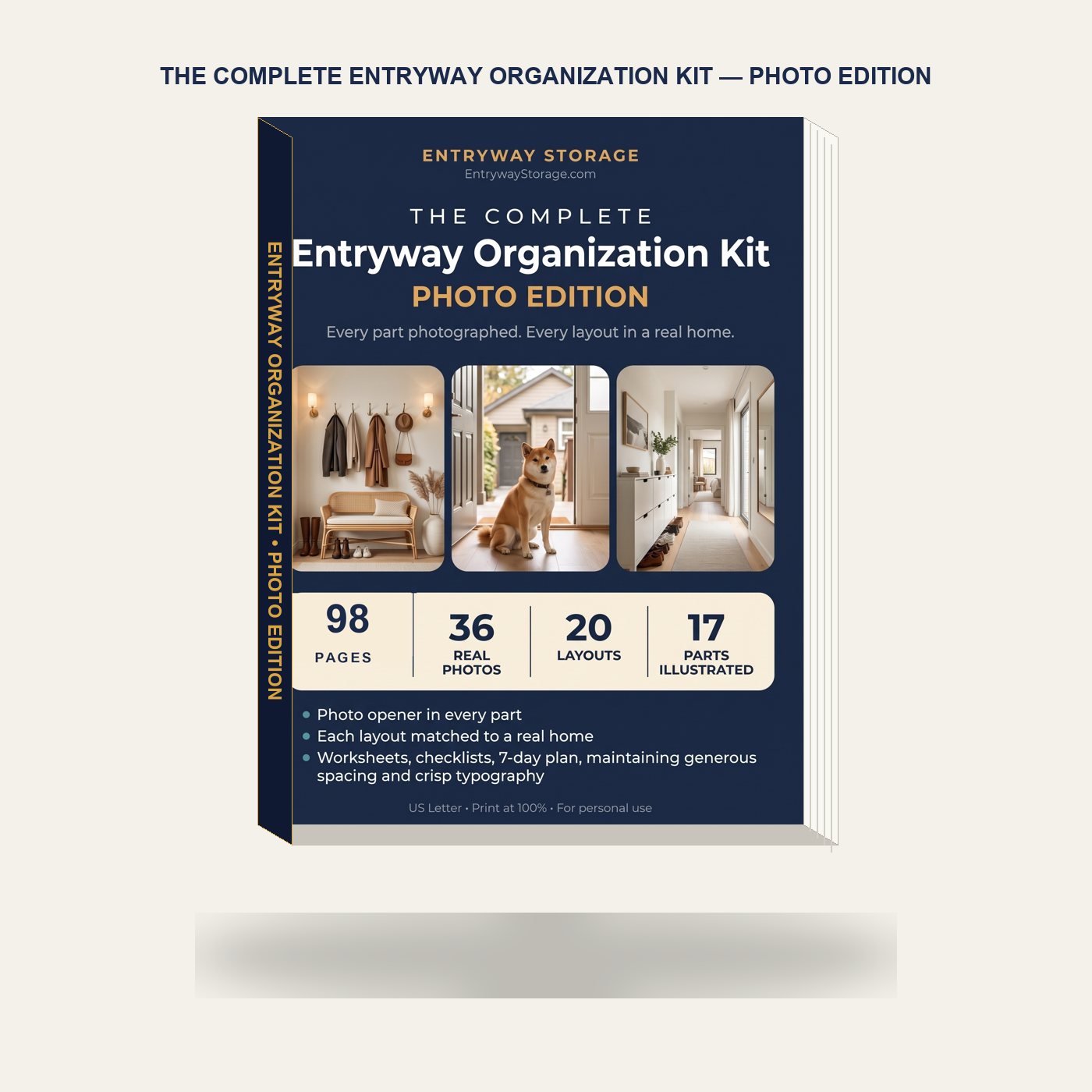
Stop Guessing Measurements. Build Your Dream Entryway with Confidence.
Transform awkward hallways, cramped foyers, and cluttered mudrooms into organized sanctuaries. Includes 20 measured floor plans, facing photo spreads, the 36-inch planning rule, the shoe pairs formula, and 7 printable worksheets.
Core Edition ($17.99) · Flagship Photo Edition v5 ($39.99) — compare editions
Frequently Asked Questions
What are the best entryway storage ideas for small spaces?
The best small entryway storage ideas combine vertical wall hooks, a slim entryway bench with under-seat storage, a wall-mounted shoe rack, and a landing pad tray for keys and mail. The key is choosing furniture no deeper than 14 inches so it doesn't block the walkway.
How do I organize a small entryway?
To organize a small entryway: 1) Purge everything that doesn't belong near the door. 2) Install wall hooks at three heights for coats, bags, and kids' items. 3) Add a slim shoe rack or tiered shelf below the hooks. 4) Place a landing pad tray at elbow height for keys and mail. 5) Use a mirror to make the space feel larger.
What is the best entryway organization system for a small space?
The most effective entryway organization system for small spaces is the Three-Zone Vertical System: a high zone (above 6 feet) for seasonal storage baskets, an active zone (3–6 feet) for hooks and mail organizers, and a low zone (below 3 feet) for shoes and bags. This system maximizes storage without using any floor space.
What are good hallway organization ideas when there is no closet?
For hallways with no closet, use a wall-mounted shaker peg rail or pegboard for coats, a slim over-the-door organizer for small items, a stackable bamboo shoe rack on the floor, and floating shelves above for baskets. A hall tree or coat rack bench is also ideal as an all-in-one entryway organizer.
What entryway storage solutions work for renters?
Renter-friendly entryway storage solutions include freestanding coat rack shoe benches (no wall drilling needed), over-the-door hooks and organizers, command-strip mounted hooks, and freestanding shoe racks. These options provide full entryway organization without permanent modifications.
