
FreedomRail Closet System Review: Is This Adjustable System Worth the Cost?
FreedomRail closet system review: how the rail-and-bracket system works, real costs, installation difficulty, load limits, and who should skip it.
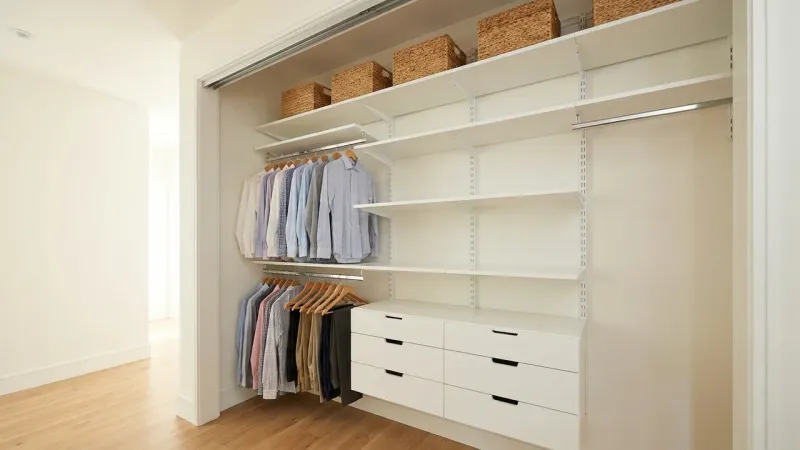
Published · Updated · Linda Wise
6 min readLast updated: November 6, 2026 | Reviewed by: Linda Wise, managing editor
FreedomRail is the closet system people discover after they have already outgrown a basic wire shelf. It looks custom, it moves when your needs change, and it costs enough that you want to be sure before you order a cart full of components.
This review focuses on the questions that decide the purchase: how the system works, what a complete closet actually costs, how hard it is to install, and where the premium is not worth paying.
The Short Answer
FreedomRail is a wall-mounted, adjustable closet system made by Organized Living. It uses a horizontal steel rail anchored to the wall, with vertical standards that hang from the rail. Shelves, hang rods, drawers, and baskets attach to those standards.
The advantage is reconfiguration. Because the main rail carries the system, you can move shelves and rods along the standards without drilling a new set of holes every time your storage needs change. The disadvantage is cost and installation: it is a premium system that requires a level rail and a wall you are allowed to drill.
Buy it if: you want a built-in look, you plan to stay in the home, and you value the ability to reconfigure.
Skip it if: you have a 24-inch-wide reach-in, a tight budget, or a rental wall you cannot modify.
How FreedomRail Works
A typical FreedomRail installation has four layers:
- The hang rail. A horizontal steel rail screwed into wall studs. This is the structural backbone.
- The vertical standards. These hang from the rail and provide the mounting points for shelves and rods.
- The shelves and rods. Available in multiple widths and depths, with brackets that attach to the standards.
- The accessories. Drawers, baskets, shoe shelves, tie racks, and other inserts that turn the frame into a full closet.
The rail is the key difference from a conventional bracket-and-standard system. Instead of drilling a separate vertical track for every shelf position, you install one level rail and hang the adjustable components from it. That is why the system can be reconfigured without patching a wall full of holes.
What “adjustable” actually means
Adjustable does not mean tool-free. It means the components are designed to move along a standard. You may need to loosen brackets, reposition them, and re-tighten. The payoff is that a change of season, a new roommate, or a shift from hanging to folded storage does not require a new closet.
What a Complete Closet Costs
Prices vary by retailer, width, finish, and promotion. Use the ranges below as a budget framework, not a quote.
| Closet size | Typical component cost | What drives the price |
|---|---|---|
| 4-foot reach-in, basic | $250-$450 | Rail, two standards, two shelves, one rod |
| 6-foot reach-in, complete | $400-$750 | More shelves, drawers, shoe storage |
| 8-foot wall, complete | $650-$1,100 | Wider shelves, multiple rods, accessories |
| Walk-in, two walls | $1,000-$2,000+ | Full layout, drawers, corner pieces |
| Accessory drawer unit | $100-$250 each | Drawer count, finish, glides |
The number that surprises most buyers is the accessory total. A base shelf-and-rod layout can look affordable; adding drawers, baskets, and shoe shelves can double the project. Price the entire layout before you commit to the system.
FreedomRail vs. other closet systems
| System | Adjustability | Built-in look | Typical cost | Best for |
|---|---|---|---|---|
| FreedomRail | High | High | $$$ | Reconfigurable primary closets |
| ClosetMaid ShelfTrack | Medium | Medium | $$ | Budget reach-ins |
| Rubbermaid Configurations | Medium | Medium | $$ | DIY reach-ins |
| IKEA BOAXEL | High | Medium | $$ | Modern, modular closets |
| Elfa | High | High | $$$$ | Premium walk-ins |
| Wire shelf kit | Low | Low | $ | Rental closets and garages |
FreedomRail sits in the middle of the premium tier: more expensive than a basic rail kit, less expensive than a fully designed Elfa system. Its closest competitor is probably IKEA BOAXEL for shoppers who want adjustability at a lower price, though the finish and component selection differ.
Installation: The Real Difficulty
FreedomRail is a DIY-friendly system if the wall is straight and you can find the studs. The installation sequence is straightforward:
- Empty the closet and remove the old system.
- Find the studs with a stud finder and mark them.
- Draw a level line at the rail height. Do not trust the ceiling or floor to be level.
- Drill and anchor the rail into studs. Use the manufacturer’s specified fasteners.
- Hang the standards and check plumb.
- Attach shelves and rods, then test the load before filling the closet.
- Add accessories last, after the basic layout works.
The hard parts are not the steps; they are the level line, the wall material, and the weight of long shelves. A 6-foot shelf is awkward to lift alone, and a rail that is off-level by a quarter inch will make every shelf look wrong.
Tools you will need
- Stud finder
- Drill and driver bits
- Level (a 4-foot level is better than a torpedo level for long rails)
- Tape measure
- Pencil
- Step ladder
- Helper for long shelves
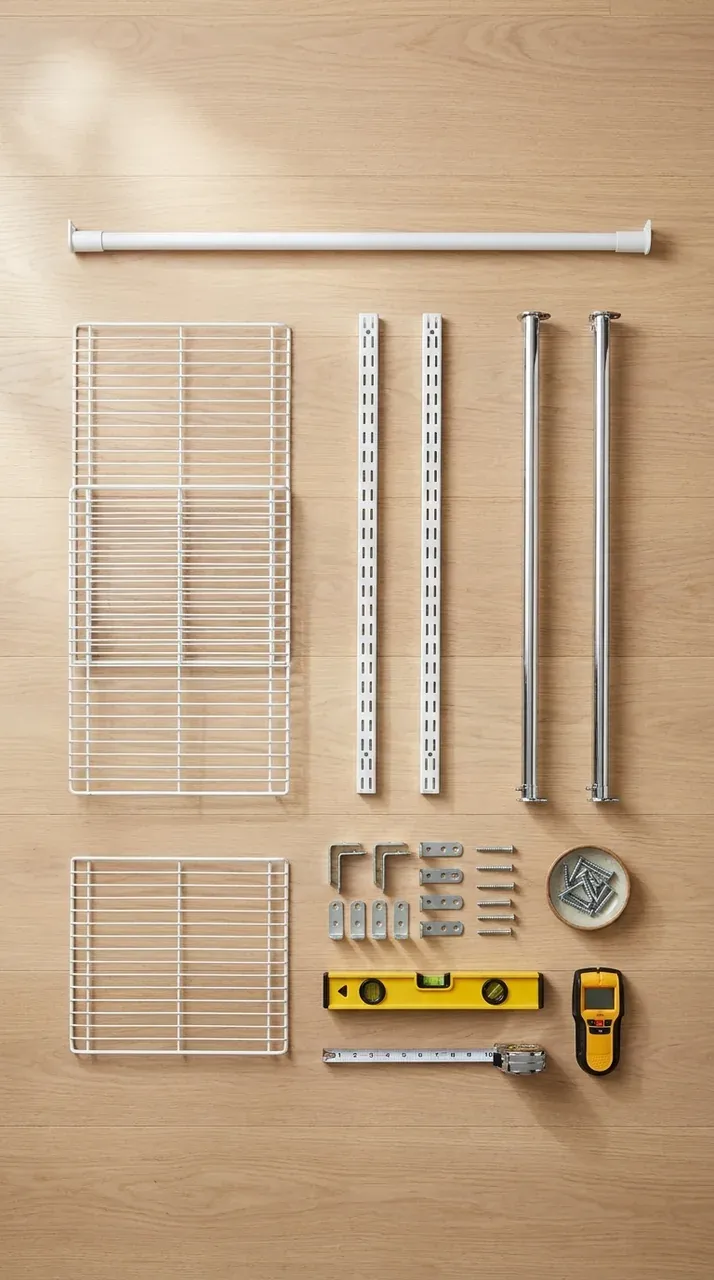
Image: price the complete component list—rail, standards, shelves, rods, brackets, and fasteners—before ordering.
Wall types to consider
- Drywall with wood studs: the easiest and most common.
- Plaster: harder to anchor cleanly; use the correct anchors and expect slower work.
- Concrete or brick: possible, but requires masonry anchors and more planning.
- Rental drywall: check your lease before drilling. A rail leaves a long line of holes to patch.
Performance and Durability
FreedomRail’s steel rail and standards are the strongest part of the system. The shelves are typically laminated or melamine-faced, so they resist moisture better than unfinished wood but can still swell if water sits on an exposed edge.
Three durability rules matter more than brand claims:
- Respect the shelf load rating. Long shelves sag when overloaded, especially in the middle.
- Keep heavy items near the standards. The ends of a shelf deflect more than the supports.
- Do not hang wet items directly over the shelf. Moisture is the enemy of every closet system, regardless of price.
Owner feedback on premium rail systems tends to focus on two issues: shelf sag when the span is long and the load is heavy, and finish chipping at cut edges. Both are preventable with proper support and edge sealing.
Pros and Cons
Pros
- Reconfigurable without re-drilling the whole wall.
- Clean, built-in appearance with hidden rail hardware.
- Strong steel rail and standards.
- Wide range of shelves, rods, drawers, and accessories.
- Works in closets, pantries, laundry rooms, and mudrooms.
Cons
- Premium price, especially when accessories are added.
- Requires a level rail and stud anchoring.
- Not rental-friendly if drilling is restricted.
- Component availability can vary by retailer.
- Long shelves still need support to avoid sag.
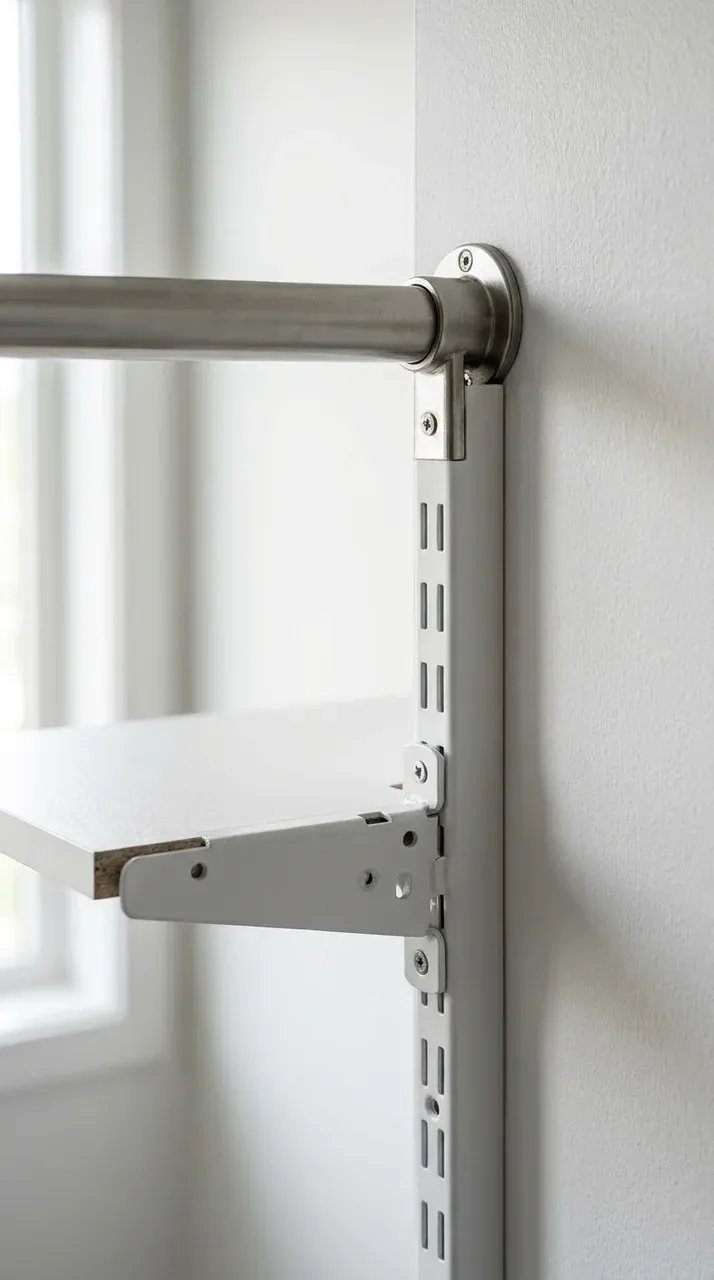
Image: the rail carries the system; the standards let you move shelves and rods without adding new wall holes.
Who Should Buy FreedomRail?
Good fit
- Homeowners planning a primary closet or walk-in.
- Families whose storage needs change as kids grow.
- Anyone who has outgrown a fixed wire shelf and wants a furniture-grade look.
- Laundry rooms and pantries that need adjustable shelving more than hanging space.
Poor fit
- Renters who cannot drill a long rail into studs.
- Tiny reach-in closets under 30 inches wide, where a simple shelf and rod is more efficient.
- Shoppers on a strict budget who mainly need hanging space.
- Walls that are severely out of level or bowed, unless you are prepared to shim.
The Cheaper Alternative
If the FreedomRail quote is too high, a basic rail-and-standard kit from ClosetMaid or Rubbermaid can deliver 80% of the function for a fraction of the price. The trade-off is a less refined look and fewer accessory options.
Costway’s closet and storage organizers are another budget-friendly option for reach-in closets, entryways, and laundry rooms. Affiliate link: we may earn a commission at no extra cost to you. Compare the shelf depth and load rating with your closet dimensions before ordering.
For a full lineup of lower-cost systems, see our best affordable closet organization systems. If your closet is narrow, start with the narrow closet organizer kits guide.
Bottom Line
FreedomRail is a good system with a narrow ideal buyer. If you own your home, plan to stay, and want a closet that can change with you, the premium is defensible. If you just need a shelf and a rod in a standard reach-in, the money is better spent on a simpler kit and a good set of bins.
The question is not “Is FreedomRail the best closet system?” It is “Will I actually reconfigure it?” If the answer is yes, the adjustability earns its keep. If the answer is no, you are paying for a feature you will never use.
For a built-in look at a lower price, compare the picks in our affordable closet systems guide.
Shop Entryway Furniture & Storage Deals on Costway
Factory-direct pricing on entryway benches, shoe cabinets, hall trees, and organizers with fast, free US delivery.
* Affiliate disclosure: We may earn a commission if you shop through this link at no added cost to you.
Check Costway Entryway DealsFrequently Asked Questions
How much does a FreedomRail closet system cost?
A small reach-in closet typically runs about $300-$700 in components, while a full wall or walk-in can exceed $1,000. The exact price depends on width, shelf count, drawer units, accessories, and current promotions. Always price the complete layout, including brackets and end panels, not just the shelves.
Does FreedomRail require drilling into the wall?
Yes. The system hangs from a horizontal rail that must be anchored into wall studs. That is how it supports shelves and hanging clothes without putting the load on a few isolated brackets. If you cannot drill, choose a freestanding or tension-based system instead.
Can I install FreedomRail myself?
Yes, if you are comfortable finding studs, drilling a level line, and lifting long shelves. Most DIYers can install a basic reach-in in two to four hours. A helper makes the job safer and faster, especially for shelves wider than 4 feet.
Is FreedomRail better than ClosetMaid ShelfTrack?
FreedomRail is more adjustable and generally looks more built-in, but it costs more. ClosetMaid ShelfTrack is the better value for a basic reach-in on a budget. Choose FreedomRail when you expect to change the layout or want a furniture-grade finish.
Can FreedomRail be used in a laundry room or pantry?
Yes. The same rail-and-standard system works in laundry rooms, pantries, garages, and mudrooms. Use shelves and bins rather than clothing rods, and check the load rating for the specific shelf and bracket you are buying.