
The Simple Tidying Buying Guide: Must-Have Basics for an Organized Home
A simple tidying buying guide: the 12 basics worth buying, what to skip, and a measure-first process that keeps your home organized without clutter.
Published · Updated · Linda Wise
6 min readLast updated: November 6, 2026 | Reviewed by: Linda Wise, managing editor
The most expensive organizing mistake is buying containers before you know what you own. The second most expensive is buying a matching set for a space you have not measured.
This guide is deliberately short on shopping and long on sequence. The goal is not a beautiful haul; it is a home where everything has a place and the system survives a normal Tuesday.
The Five-Step Buying Process
1. Declutter first
Empty one shelf, drawer, or closet at a time. Sort into keep, donate, relocate, and trash. Do not buy a single bin until you know the keep pile’s volume.
Rule: if you have not used it in a year, it does not get a container. It gets a decision.
2. Measure the space
Measure the internal dimensions of the shelf, drawer, or closet. Note the height clearance, depth, and the narrowest point of the opening. Write the numbers down; do not trust your memory in the store.
3. Define zones
Group items by where they are used, not by what they are. Coffee belongs near the kettle, not with the baking supplies. Entryway items belong near the door, not in a bedroom drawer.
4. Choose one system per zone
Pick one bin style, one label style, and one color family per zone. Consistency is what makes inexpensive storage look intentional.
5. Label and live with it
Label the bin, not the lid. Use the system for a week before buying more. You will learn more from one week of use than from an hour of planning.
The 12 Must-Have Basics
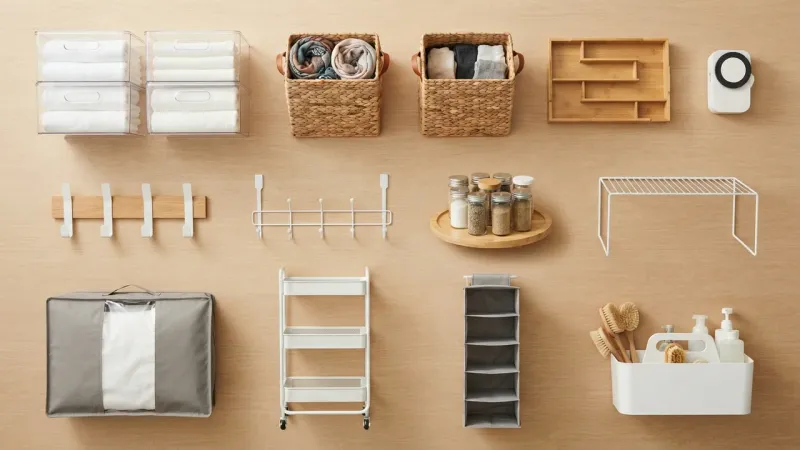
| # | Basic | Best for | Typical price | Buy if |
|---|---|---|---|---|
| 1 | Clear stackable bins | Pantry, bathroom, craft | $8-$20 | You need to see contents |
| 2 | Opaque fabric or woven bins | Open shelving, living room | $8-$20 | You want visual calm |
| 3 | Drawer dividers | Clothes, utensils, office | $8-$15 | Drawers are a pile |
| 4 | Label maker or labels | Shared bins, pantry | $10-$20 | More than one person uses the system |
| 5 | Wall hooks | Entry, bath, kitchen | $5-$15 | Floor space is tight |
| 6 | Over-door rack | Entry, bedroom, bath | $8-$15 | You cannot drill |
| 7 | Lazy Susan | Deep cabinets, pantry | $8-$15 | You cannot reach the back |
| 8 | Shelf riser | Kitchen, pantry | $10-$18 | Short items waste height |
| 9 | Under-bed bins | Bedroom | $10-$20 | The bed frame has clearance |
| 10 | Slim rolling cart | Kitchen, bath, office | $20-$30 | You have a narrow gap |
| 11 | Hanging closet organizer | Closet | $15-$25 | The rod is underused |
| 12 | Cleaning caddy | Under sink, utility | $10-$20 | Supplies are scattered |
What each basic actually solves
- Clear stackable bins — visibility. Use them where you need to find things fast.
- Opaque bins — visual noise. Use them on open shelves and in living areas.
- Drawer dividers — sprawl. Use them in every drawer that currently requires digging.
- Labels — shared memory. A label is a tiny instruction manual.
- Wall hooks — floor space. The cheapest storage upgrade in any home.
- Over-door rack — rental-friendly hanging storage.
- Lazy Susan — deep-corner access. Best for oils, spices, and condiments.
- Shelf riser — vertical layering. Best for cans, mugs, and pantry boxes.
- Under-bed bins — hidden volume. Best for seasonal clothes and bedding.
- Slim rolling cart — gap storage. Best for cleaning supplies and snacks.
- Hanging closet organizer — shelf tiers without drilling.
- Cleaning caddy — portability. Keeps supplies together and easy to carry.
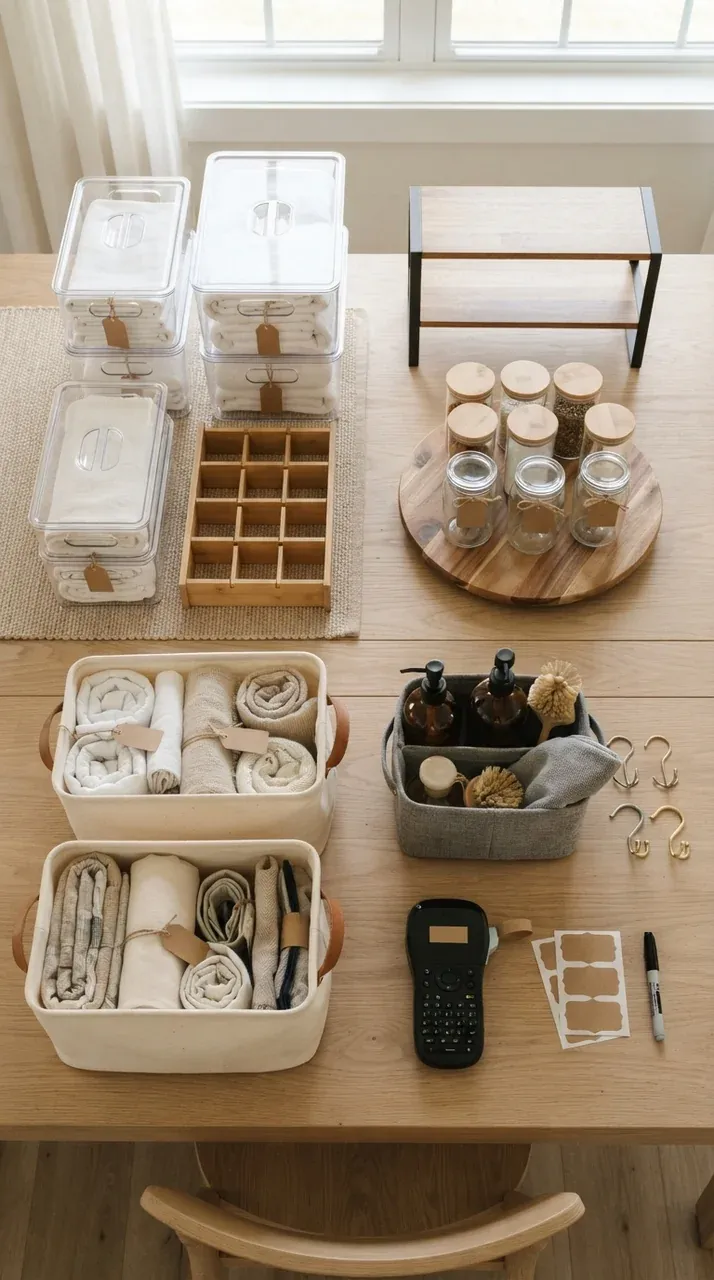
Image: the essentials are boring on purpose. Bins, dividers, labels, and hooks solve most rooms.
What Not to Buy
- Single-use gadgets. An avocado slicer, a banana holder, or a specialty bag clip adds clutter.
- Tiny containers that do not fit real items. Measure the tallest bottle, box, or utensil before buying.
- Matching sets with non-standard sizes. If you cannot buy a replacement later, the set is disposable.
- Deep drawer towers in narrow closets. They block the aisle and hide the back.
- Adhesive shelves on textured walls. They fail under load.
- Bins without a plan. A bin is not an organization system; it is a container.
- Too many labels. If everything is labeled, nothing stands out. Label categories, not individual items.
How Many Containers Do You Actually Need?
Use this simple formula:
One bin per category + one overflow bin per room.
A bedroom might need:
- One bin for socks and underwear.
- One bin for off-season accessories.
- One bin for sentimental items.
- One overflow bin for items that do not yet have a home.
A pantry might need:
- Two large bins for flour and sugar.
- Four medium bins for cereal, pasta, rice, and snacks.
- Four small bins for spices, nuts, baking decorations, and tea.
Start there. Add more only when a category consistently overflows.
Clear vs. Opaque: A Simple Rule
Clear bins go inside cabinets, drawers, and closets where you need to identify contents quickly.
Opaque bins go on open shelves, in living rooms, and anywhere visual clutter is the problem.
Mixed systems work if the bin shape is consistent. A clear bin and an opaque bin of the same footprint can coexist; a round basket next to a square bin usually looks accidental.
Materials: What Lasts
| Material | Best for | Avoid for |
|---|---|---|
| Polypropylene (PP) | Pantry, bathroom, office | Heavy tools |
| Acrylic | Vanity, desk, display | High-traffic kids’ areas |
| Woven seagrass/rattan | Living room, entry | Wet items |
| Canvas/fabric | Closets, toys | Damp basements |
| Wire | Garage, utility | Small items that fall through |
| Glass | Pantry, leftovers | High shelves, kids’ rooms |
Budget Tiers
Under $50
- Two clear bins.
- One set of drawer dividers.
- One pack of labels.
- One over-door rack.
This covers a bathroom or a single closet.
$50-$150
- Four to six bins.
- A label maker.
- Wall hooks.
- A lazy Susan.
- A slim cart.
This covers a kitchen, entryway, and bathroom.
$150-$300
- A closet kit or cube system.
- Matching bins.
- Under-bed storage.
- A rolling cart.
This covers a bedroom or a full entryway reset.
Maintenance: The Part Nobody Buys
Organization products do not maintain themselves. The system needs a rhythm:
- Daily: five-minute reset in the entryway and kitchen.
- Weekly: return stray items to their zones.
- Monthly: check pantry expiration dates and donate unused items.
- Seasonal: rotate clothes and bedding; clean under-bed bins.
- Yearly: review the system. Remove bins that no longer fit the household.
If a system requires more than five minutes a day, it is too complicated. Simplify the labels, reduce the number of categories, or move the bin closer to where the item is used.
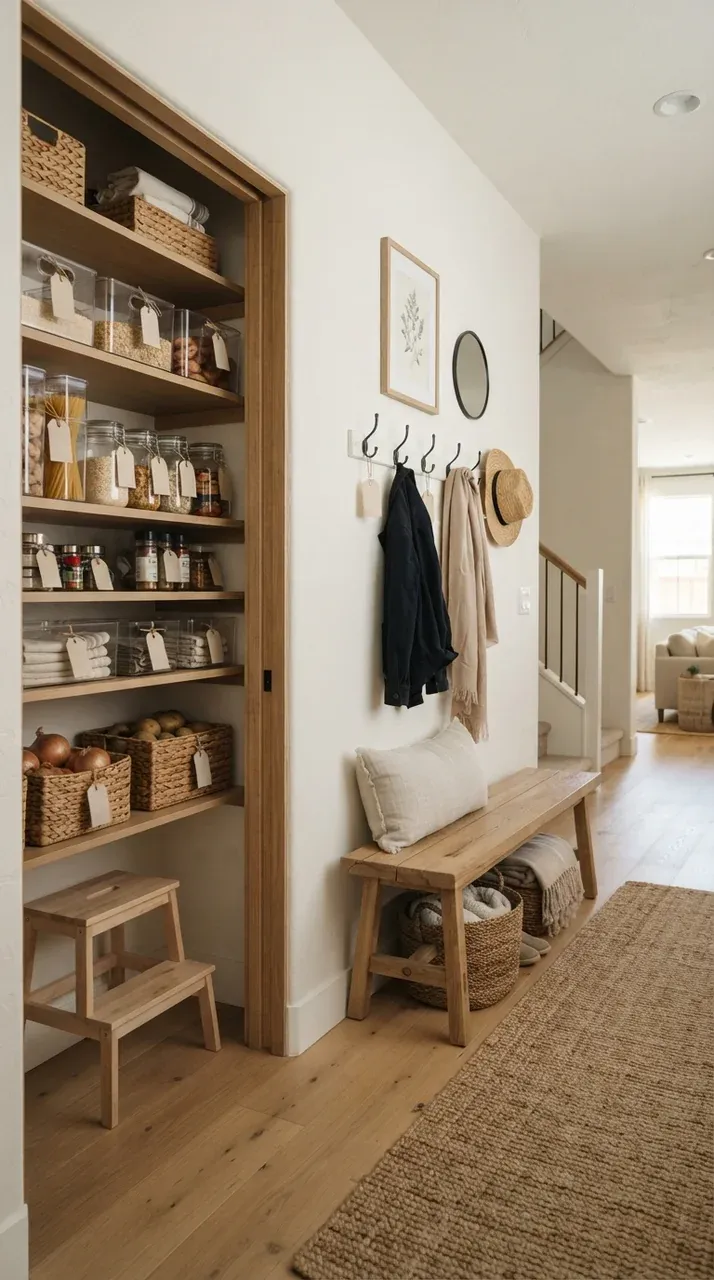
Image: the best system is the one everyone in the house can reset in five minutes.
A Realistic Starter Shopping List
If you are starting from zero and want the best return for about $100:
- Two clear stackable bins — pantry or bathroom.
- Two opaque fabric bins — open shelving.
- One set of drawer dividers — bedroom or kitchen.
- One label maker — shared systems.
- One over-door rack — entryway.
- One lazy Susan — kitchen cabinet.
- One pack of wall hooks — entry or bath.
That is enough to fix the three rooms that cause the most daily friction. Add the rest only when a specific problem appears.
Where to shop the basics
Costway’s home storage and organization range includes stackable bins, foldable baskets, slim carts, and closet organizers at factory-direct prices. Affiliate link: we may earn a commission at no extra cost to you. Measure first, and buy one sample before committing to a matching set.
For room-specific picks, see our cute and cheap organizers guide and our small apartment storage solutions.
Bottom Line
The simple tidying buying guide is really a sequence: declutter, measure, zone, choose one system, label, and live with it. The products are secondary.
Buy the basics that solve a specific problem, skip the matching sets, and keep the system simple enough for everyone in the house to use. That is what turns a tidy weekend into an organized home.
For a deeper pantry-specific plan, read our pantry and countertop container guide.
Shop Entryway Furniture & Storage Deals on Costway
Factory-direct pricing on entryway benches, shoe cabinets, hall trees, and organizers with fast, free US delivery.
* Affiliate disclosure: We may earn a commission if you shop through this link at no added cost to you.
Check Costway Entryway DealsFrequently Asked Questions
What should I buy first to organize my home?
Buy nothing until you have decluttered one room and measured the storage you already have. Then start with clear bins, drawer dividers, and labels for the worst-performing drawer or shelf. Add hooks and a lazy Susan next. This sequence prevents buying containers for things you are about to donate.
How many storage bins do I need?
Start with one bin per category, not one per item. A typical room needs three to five bins. Label them, live with the setup for a week, and add more only if a category overflows. Buying a matching set before you know the volume is the most common organizing mistake.
Are clear storage bins always better?
Clear bins are best for items you need to identify quickly, such as pantry food, craft supplies, and bathroom refills. Opaque bins are better for visual calm in living areas and for items that look messy. Use clear inside cabinets and opaque on open shelves.
What organization products are a waste of money?
Single-use gadgets, tiny containers that do not fit real items, matching sets with non-standard sizes, and anything that requires you to buy refills forever. Also skip deep drawer towers in narrow closets, adhesive shelves on textured walls, and bins without a replacement option.
How do I keep the house organized after buying supplies?
Use a five-minute daily reset, label every shared bin, and follow the one-in-one-out rule for new purchases. Organization fails when containers have no home or when the system is too complicated for the household. Keep the rules visible and simple.