
What Is the Easiest Type of Freezer to Organize? (Chest vs. Upright vs. Bottom Drawer)
Chest, upright, or bottom-drawer freezer—which is easiest to organize? Compare access, visibility, capacity, energy use, and the bin system that fits each.
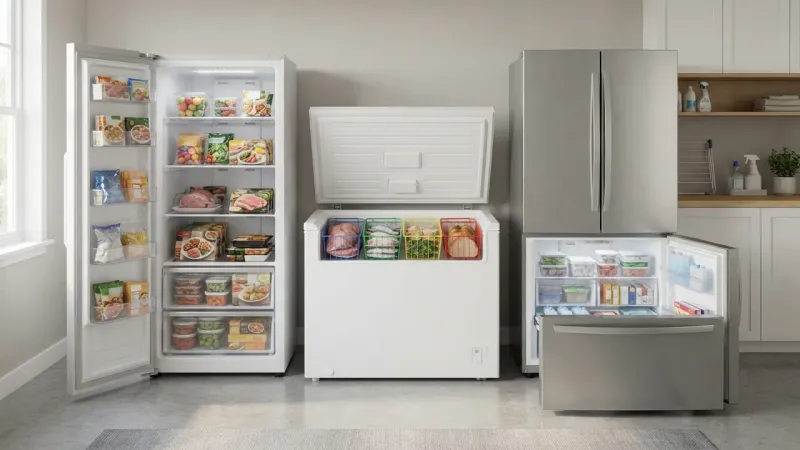
Published · Updated · Linda Wise
6 min readLast updated: November 6, 2026 | Reviewed by: Linda Wise, managing editor
The easiest freezer to organize is not the one with the most shelves. It is the one that lets you see what you have, reach it without unloading half the freezer, and put it back in the same place.
That definition points to an upright freezer for most households. But the full answer depends on how you use the freezer: daily meal prep, bulk meat, breast milk, garden produce, or a once-a-month shopping trip.
The Short Answer
| Freezer type | Ease of organization | Visibility | Daily access | Energy use | Best for |
|---|---|---|---|---|---|
| Upright | Easiest | High | High | Moderate | Most families, meal prep, mixed food |
| Bottom drawer | Easy | High | Easiest | Moderate | Daily kitchen use, ergonomic access |
| Chest | Hardest | Low | Low | Lowest | Bulk meat, produce, long-term storage |
Choose an upright if you want the simplest system and a clear view of everything. Choose a bottom-drawer if bending and digging are a problem, or if you want freezer access at waist height. Choose a chest if you buy in bulk, hunt, garden, or need the most efficient long-term storage.
Why Upright Freezers Are Easiest to Organize
An upright freezer works like a refrigerator: a door opens to shelves, drawers, and door bins. That vertical layout matches how people organize food.
- Shelves create natural zones. Top shelf for rarely used items, middle for daily meals, bottom for bulk.
- Door bins hold small items. Butter, herbs, ice packs, and small bags stay visible.
- Everything faces you. You can scan the shelves without lifting anything.
- Bins slide out. A labeled bin turns a shelf into a drawer.
The trade-off is cold-air loss. Every time the door opens, heavier cold air spills out, so the compressor has to work a little harder. That is a comfort and energy trade-off, not an organizational one.
Best organization system for an upright
- Top shelf: rarely used items, backup ice, bulk bags.
- Middle shelves: daily meals, leftovers, frozen vegetables, open bags.
- Bottom shelf: large roasts, whole chickens, bulky boxes.
- Door bins: butter, herbs, ice packs, small portions.
- Drawers (if equipped): meat, fish, or produce by category.
Use clear or wire bins so you can see through them. Avoid stacking loose bags on top of each other; that is how food becomes anonymous.
Bottom-Drawer Freezers: Easiest Daily Access
A bottom-drawer freezer is usually part of a French-door refrigerator. The drawer pulls out at waist height, and some models have multiple compartments with dividers.
Why it is easy: you pull once and see the whole contents. No bending, no reaching into a dark cavity. The drawer itself acts as a giant bin.
Why it is not always the best: capacity is limited compared with a standalone upright or chest freezer, and the compartments can be shallow. Tall items may not fit, and the drawer slides take up space.
Best organization system for a bottom drawer
- Use shallow, square bins that fit the drawer height.
- Group by meal or protein: chicken, beef, fish, vegetables, desserts.
- Keep a freezer inventory card on the fridge or inside the drawer.
- Put the oldest items in front; restock from the back.
- Use dividers to stop bags from sliding when the drawer opens.
Chest Freezers: Hardest to Organize, Best for Bulk
A chest freezer is a deep box with a top-opening lid. Cold air stays inside when you open it, which makes it the most energy-efficient design. It is also the hardest to organize because everything is at the bottom of a deep well.
The classic failure mode: you buy a chest freezer, fill it with bags, and discover a year-old roast at the bottom that you forgot about. The fix is not a better memory. It is a physical system.
The basket system that works
- Measure the interior width, depth, and height. Buy baskets that fit with a 1-2 inch gap around the sides.
- Choose one color per category. Red for beef, blue for fish, green for vegetables, yellow for prepared meals.
- Use baskets with handles. You need to lift them out, not drag them.
- Keep a written inventory. Tape a list to the lid or use a magnetic whiteboard nearby.
- Date everything. Masking tape and a marker are enough.
- Leave a 2-inch gap around the walls and vents. Airflow matters.
- Do not overfill. A freezer packed to the lid is a freezer where food gets lost.
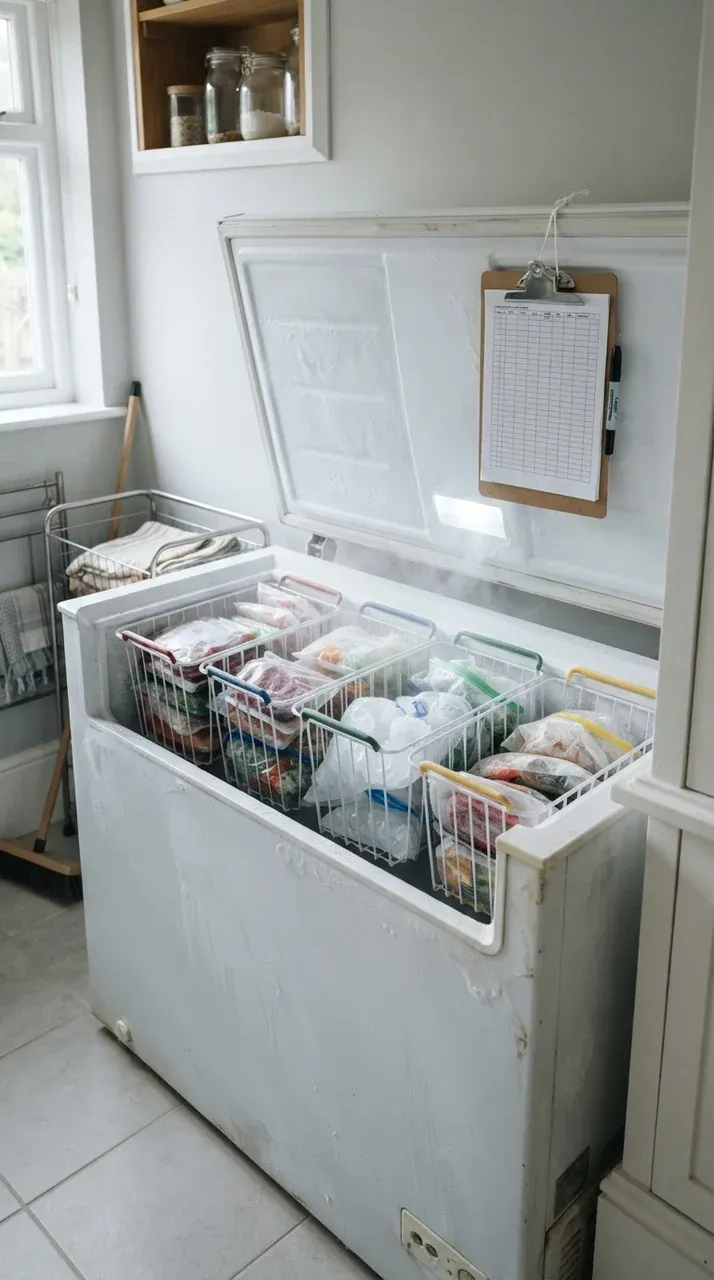
Image: color-coded baskets and a written inventory turn a deep chest freezer into a system you can see.
Chest freezer zone map
| Zone | What goes there | Why |
|---|---|---|
| Front baskets | Daily or weekly items | Easy reach |
| Middle baskets | Meat, fish, prepared meals | Category separation |
| Back baskets | Bulk or long-term items | Less frequent access |
| Bottom layer | Large roasts, whole birds | Fits the depth |
| Door/lid area | Small bags, ice packs | Quick access |
The Organization Scorecard
| Factor | Upright | Bottom drawer | Chest |
|---|---|---|---|
| See everything at once | 5/5 | 5/5 | 2/5 |
| Reach without bending | 4/5 | 5/5 | 1/5 |
| Use of vertical space | 5/5 | 3/5 | 2/5 |
| Bulk capacity | 4/5 | 2/5 | 5/5 |
| Energy efficiency | 3/5 | 3/5 | 5/5 |
| Food waste risk | Low | Low | High without inventory |
| Setup cost | Moderate | High (often part of fridge) | Low-moderate |
What to Store Where
Upright
- Door: butter, herbs, small bags, ice packs.
- Top shelf: backup bread, ice, rarely used items.
- Middle: frozen vegetables, leftovers, daily meals.
- Bottom: large cuts, whole birds, bulky boxes.
Bottom drawer
- Top drawer: daily items, snacks, ice cream.
- Middle drawer: meat and fish.
- Bottom drawer: bulk vegetables, bread, backup items.
Chest
- Front baskets: this week’s meals.
- Middle baskets: category bins.
- Back baskets: long-term bulk.
- Bottom: large roasts and whole birds.
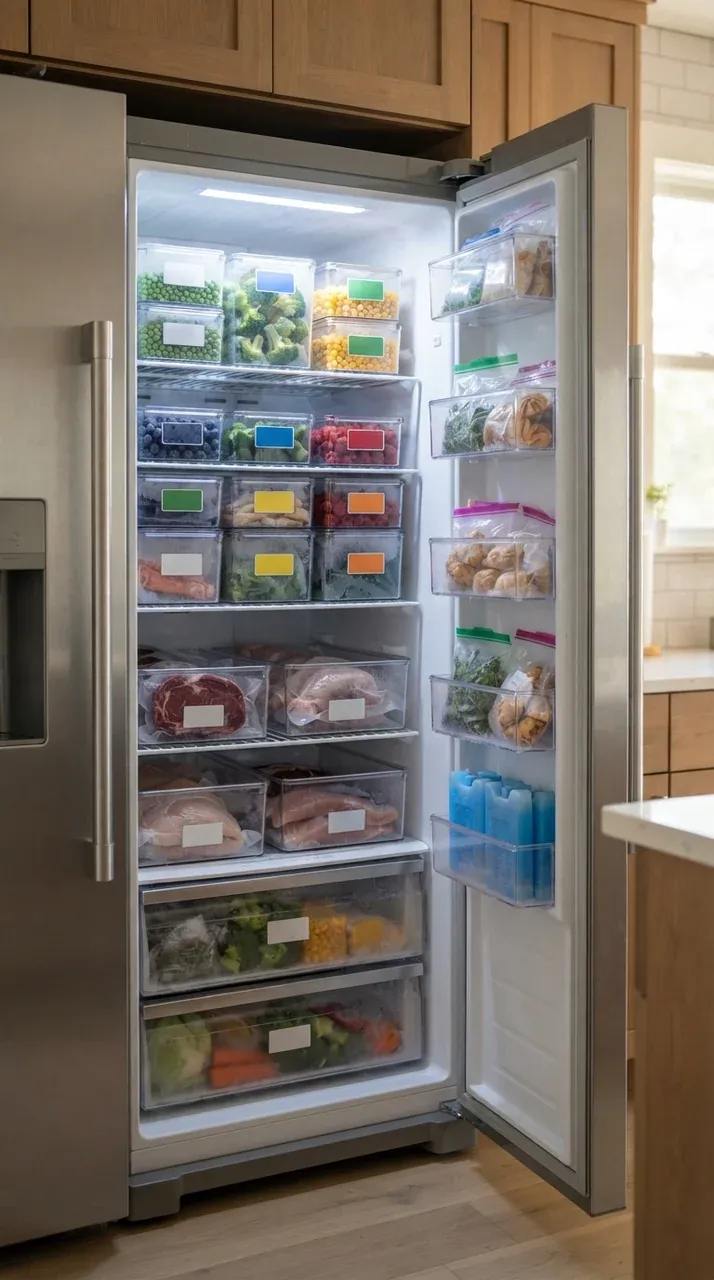
Image: an upright freezer is easiest to organize because every shelf is visible when the door opens.
Food Safety Rules That Affect Organization
Organization is not just aesthetics. A poorly organized freezer leads to open bags, freezer burn, and food that never gets eaten.
- Set the freezer to 0°F (-18°C) or lower. Verify with a thermometer.
- Leave space around vents. Blocking airflow creates warm spots.
- Cool food before freezing. A hot container raises the internal temperature.
- Freeze in portions. Thin, flat bags freeze faster and stack better.
- Remove as much air as possible. Use a vacuum sealer or press the air out of zip-top bags.
- Label with contents and date. Use a marker on tape, not a sticky note.
- Use FIFO: first in, first out. Put new items behind old ones.
- Defrost manual freezers when ice builds up about 1/4 inch.
Bins and Containers That Actually Help
The best freezer containers are:
- Clear or wire so you can see the contents.
- Square or rectangular to minimize wasted space.
- Stackable with a stable base.
- Labeled on the front, not the lid.
- Freezer-safe at 0°F; not every plastic bin is.
Avoid:
- Round bowls that waste corners.
- Thin bags that tear when frozen.
- Oversized bins you cannot lift out of a chest freezer.
- Glass containers that are not marked freezer-safe.
A budget-friendly bin setup
Costway’s storage bins and kitchen organizers include stackable baskets, clear containers, and labels that work in pantries and upright freezers. Affiliate link: we may earn a commission at no extra cost to you. Check that each bin is freezer-safe and fits your shelf height before ordering.
For pantry containers, see our pantry and countertop container guide. For a full kitchen reset, pair this with the simple tidying buying guide.
Which Freezer Should You Buy?
Buy an upright if:
- You want the easiest organization.
- You store a mix of meat, vegetables, meals, and desserts.
- You have floor space for a tall unit.
- You want a clear view of everything.
Buy a bottom-drawer if:
- You use the freezer every day.
- Bending and reaching are difficult.
- You are already buying a French-door refrigerator.
- You prefer pull-out access over maximum capacity.
Buy a chest if:
- You buy meat in bulk or freeze garden produce.
- You need the most capacity for the lowest price.
- You can commit to a basket and inventory system.
- Energy efficiency is a priority.
Bottom Line
Upright freezers are the easiest to organize because they combine vertical shelves, door bins, and eye-level visibility. Bottom-drawer freezers are the easiest to access daily. Chest freezers are the hardest to organize but the best for bulk and efficiency.
The best choice is the one that matches your shopping habits. If you cannot see it, you will not eat it—so pick the freezer that makes visibility easy, then add bins and labels to close the gap.
For more kitchen organization, read our pantry container guide and small apartment storage solutions.
Shop Entryway Furniture & Storage Deals on Costway
Factory-direct pricing on entryway benches, shoe cabinets, hall trees, and organizers with fast, free US delivery.
* Affiliate disclosure: We may earn a commission if you shop through this link at no added cost to you.
Check Costway Entryway DealsFrequently Asked Questions
Which freezer is easiest to organize, chest or upright?
An upright freezer is easier to organize because it has shelves and door bins that keep food visible and accessible. A chest freezer requires baskets and a disciplined inventory system because items tend to sink to the bottom. Upright wins on organization; chest wins on energy efficiency and bulk capacity.
Is a bottom-drawer freezer easier than an upright?
For daily access, yes. The drawers pull out at waist height, so you can see and reach everything without bending or digging. For total capacity and long-term storage, an upright usually wins. Bottom-drawer freezers are often part of a French-door refrigerator rather than a standalone unit.
How do I organize a chest freezer so food does not get lost?
Use color-coded baskets with handles, group food by category, and keep a written inventory on the lid or a nearby note. Place the oldest items in the front basket and date everything. Leave a 2-inch gap around the walls and vents so cold air can circulate.
What temperature should a freezer be set to?
Set it to 0°F (-18°C) or lower. Use a refrigerator/freezer thermometer to verify the actual temperature, not just the dial. A freezer holds temperature better when it is reasonably full, but leave space around the vents and do not pack items above the manufacturer's load line.
Do upright freezers use more energy than chest freezers?
Generally, yes. Chest freezers lose less cold air when opened because cold air stays inside, while upright freezers spill cold air every time the door opens. The difference varies by model, size, and usage. Look at the annual energy label rather than assuming one type is always better.